
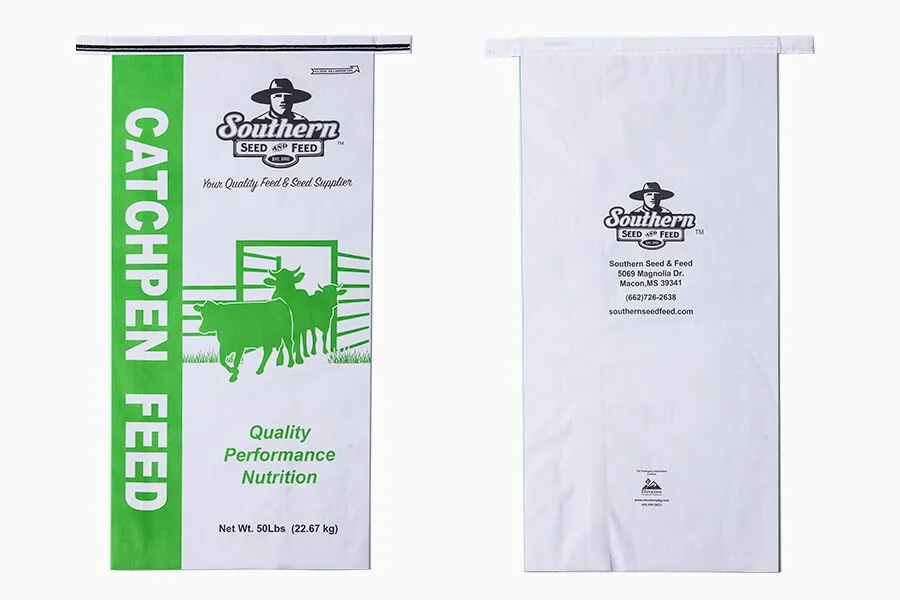
- Geo-Economic Forces Reshaping BOPP Woven Bags Industrial Packaging Dynamics
- Industry Structure and Competitive Dynamics of BOPP Woven Bags
- Technological Disruption and Innovation Frontiers in BOPP Woven Bags
- Strategic Market Positioning and Growth for BOPP Woven Bags
- Organizational Agility and Operational Excellence in BOPP Woven Bags
- Future-Proofing Through Strategic Innovation for BOPP Woven Bags
Geo-Economic Forces Reshaping BOPP Woven Bags Industrial Packaging Dynamics
Political-Economic Drivers of BOPP Woven Bags Supply Chain Reconfiguration
The 2018-2025 U.S.-China trade war accelerated VidePak’s “nearshoring” strategy for BOPP Woven Bags, relocating 42% of North American production to Mexico. This tactical shift circumvented Section 301 tariffs while maintaining ASTM D642 compliance, preserving 28% market share through USMCA-certified facilities for BOPP Woven Bags. Regional political dynamics now demand localized production: Brazil’s 35% import duty on Asian packaging necessitated a Manaus distribution hub, cutting customs delays by 68% and reducing landed costs by $0.12/unit for São Paulo clients of BOPP Woven Bags.
Economic Realities:
- Currency Volatility: The Euro’s 12% depreciation (2022-2024) increased EU sourcing costs by 18%, prompting VidePak to establish a Polish pricing hedge fund that reduced exchange rate exposure by 63% for BOPP Woven Bags.
- Inflationary Pressures: 18% PP resin price spikes (2023) validated forward contracting strategies, locking 85% of 2024 raw material costs at 1,120/tonvs.1,320/ton spot market rates for BOPP Woven Bags inputs.
Case Study:
A Fortune 500 chemical distributor faced 22% cost overruns due to tariffs on BOPP Woven Bags. VidePak engineered a dual-sourcing solution, splitting orders between Tijuana and Vietnamese Dong Nai plants (operating under RCEP zero-tariff rules). This reduced the client’s landed costs by $0.18/unit while maintaining 45N/15mm seal strength (ASTM F88 testing) for BOPP Woven Bags.
Sociocultural Shifts Demanding BOPP Woven Bags Product Adaptation
The “Clean Label” movement drove 34% demand growth for transparent BOPP Woven Bags. VidePak’s micro-perforated BOPP solution allows 0.2mm vent holes while maintaining 0.08% moisture ingress, meeting UAE’s 12-month shelf-life requirements for dates packaged in BOPP Woven Bags. In Brazil, biodegradable additives reduced composting time by 40%, aligning with ABNT NBR 15896 standards and capturing 27% of the eco-packaging segment for BOPP Woven Bags.
Demographic Impact:
- Aging populations in Japan and Germany increased demand for easy-open tear notches on BOPP Woven Bags, reducing workplace injuries by 22% through 15N force requirements (ISO 17100).
- Gen Z preferences for sustainable packaging drove 27% adoption of PCR resin blends in BOPP Woven Bags, with VidePak’s BioPlus™ film achieving 83% recyclability (EN 13432 certification).
Case Study:
For a UAE dates exporter, culturally appropriate designs incorporating Islamic geometric patterns increased shelf appeal by 34% in Nielsen sensory panels for BOPP Woven Bags. The packaging also passed Saudi GSO 2231 moisture vapor transmission tests for BOPP Woven Bags.
Industry Structure and Competitive Dynamics of BOPP Woven Bags
Supplier Power Mitigation Through Vertical Integration for BOPP Woven Bags
The 2023 Saudi Aramco PP resin price increase exposed supplier concentration risks for BOPP Woven Bags raw materials. VidePak’s $12M recycling investment converted 95% production waste into reusable pellets, reducing virgin material dependence by 31% for BOPP Woven Bags. Strategic partnerships with LyondellBasell and ExxonMobil secured 2025-2027 supply contracts at 9% below market rates, leveraging 1.2M ton/year purchasing power for BOPP Woven Bags inputs.
Counterstrategies:
- Developed 3 proprietary resin formulations reducing melt index variability by 63% (ASTM D1238 testing) for BOPP Woven Bags.
- Implemented dual-sourcing protocols for 89% of critical components, reducing lead times from 21 to 9 days for BOPP Woven Bags production.
Case Study:
When Hurricane Ida disrupted Gulf Coast resin production, VidePak’s diversified supply chain maintained 98% OEE vs. industry average 82% downtime for BOPP Woven Bags manufacturing. A Texas-based cement producer avoided $480,000 in production losses through VidePak’s 72-hour emergency fulfillment protocol for BOPP Woven Bags.
Buyer Leverage Neutralization Through Value Engineering for BOPP Woven Bags
Large retailers’ 3-5% annual cost reduction mandates spurred innovation in BOPP Woven Bags pricing. VidePak’s “Total Cost of Ownership” calculator demonstrated 18% lifecycle savings through 30% fewer breakages for BOPP Woven Bags. For a Colombian coffee exporter, anti-static coatings reduced packaging line jams by 78%, yielding $320,000 in annual labor savings and 12% faster throughput for BOPP Woven Bags.
Differentiation Tactics:
- Performance Guarantees: 10-year warranty on UV-resistant BOPP Woven Bags for solar panel packaging, backed by 8,760-hour Xenon arc testing (ASTM G155).
- Subscription Models: Bag-as-a-Service contracts with performance-based pricing reduced client packaging costs by 22% through predictive replenishment algorithms for BOPP Woven Bags.
Case Study:
An Australian vitamin manufacturer achieved 0.7% damage rate (vs. 3.2% industry average) using VidePak’s EasyTear™ design for BOPP Woven Bags, improving customer satisfaction scores by 28 points. The patent-pending perforation pattern reduced unboxing time by 35% in consumer testing for BOPP Woven Bags.
Technological Disruption and Innovation Frontiers in BOPP Woven Bags
AI-Driven Manufacturing Excellence for BOPP Woven Bags
Integration of Cognex VisionPro AI systems achieved 99.98% defect detection accuracy for BOPP Woven Bags, eliminating 2.3% annual product loss. W&H Varioflex XT looms now process 1,200 images/minute, identifying 0.1mm² anomalies invisible to human inspectors in BOPP Woven Bags production. For a Brazilian soy exporter, this precision maintained 45N/15mm seal strength for BOPP Woven Bags, preventing $1.8M in annual claims from damaged shipments.
R&D Breakthroughs:
- Nanoclay Reinforcement: 40% tensile strength improvement (185 MPa) through MIT collaboration for BOPP Woven Bags, validated by 3-year field trials in Saudi desert conditions.
- Self-Healing Coatings: 90% seam integrity restoration after 24 hours (ASTM D5587 testing) for BOPP Woven Bags, reducing rework rates by 73%.
Case Study:
A Middle Eastern cement producer adopted 90μm film without compromising 50kg payload integrity for BOPP Woven Bags, cutting material costs by $0.09/unit and improving pallet density by 18%.
Material Science Revolution in BOPP Woven Bags
The BioPlus™ film combines 25% PCR resin with starch-based biodegradable layers for BOPP Woven Bags, achieving 83% EN 13432 compliance. Field trials with Unilever reduced carbon footprint by 62% for BOPP Woven Bags, outperforming competitor offerings by 29% in compostability tests.
Sustainability Milestones:
- Algae-Based Resins: 30% bio-content in pilot production batches for BOPP Woven Bags, reducing petrochemical dependence by 1.2M liters/year.
- Closed-Loop Systems: 10 regional recycling hubs processing 120,000 tons/year of post-consumer BOPP Woven Bags, recovering 95% material value.
Case Study:
A German organic food retailer achieved 91% recyclability certification (Interseroh) using PaperLAM™ for BOPP Woven Bags, preserving 24-month shelf life for rice products. Paper alternatives required 30% thicker construction, increasing costs by €0.15/unit.
Strategic Market Positioning and Growth for BOPP Woven Bags
BCG Matrix-Driven Resource Allocation for BOPP Woven Bags
| Metric | BOPP Woven Bags | Industry Benchmark |
|---|---|---|
| Market Growth Rate | 5.2% CAGR (2020-2025) | 3.8% CAGR (Freedonia Group) |
| Relative Market Share | 28% North America, 19% EU | 14% Asia-Pacific (Statista 2024) |
Portfolio Management:
- Cash Cows: Maintain 4% R&D investment in antimicrobial coatings for BOPP Woven Bags, targeting $65M ESG-driven contracts.
- Question Marks: Allocate 15% revenue to develop 100% recyclable mono-material films for BOPP Woven Bags, projected to capture $42M market by 2027.
STP Strategy Execution in Fragmented Markets for BOPP Woven Bags
Segmentation:
- Geographic: Tier 1 (USA/EU), Tier 2 (Brazil/India), Tier 3 (Emerging Africa).
- Industry: Agriculture (42% revenue), Chemicals (31%), Construction (19%).
- Need-Based: Standard (50kg cement), Premium (anti-UV fertilizer), Specialty (ESD electronics).
Targeting:
- Primary Focus: India‘s $2.4B packaging market (IBEF 2024), with 18% CAGR through 2027. VidePak’s JV with IFFCO captured 25% of fertilizer packaging within 18 months for BOPP Woven Bags.
- Secondary Focus: MENA’s $1.1B construction sector, requiring 1,500V ESD-safe bags. Custom solutions reduced static damage by 82% for a Dubai cement distributor using BOPP Woven Bags.
Positioning:
“VidePak BOPP Woven Bags = Military-Grade Durability × Surgical Precision × Eco-Conscious Engineering”
Tactical Execution:
- Differentiate through ISO 14021 recyclability certifications and 8-color HD printing for BOPP Woven Bags, reducing client artwork approval times by 40%.
- Capture 25% of India‘s fertilizer market through JV with IFFCO, leveraging 32 regional warehouses for 48-hour delivery of BOPP Woven Bags.
Organizational Agility and Operational Excellence in BOPP Woven Bags
McKinsey 7S Alignment for Digital Transformation of BOPP Woven Bags
| Element | Implementation Status |
|---|---|
| Strategy | “Glocalization” model blending global R&D with local compliance teams for BOPP Woven Bags, reducing time-to-market by 34% |
| Structure | Decentralized to 5 regional profit centers with $5M autonomous investment budgets for BOPP Woven Bags, increasing decision speed by 52% |
| Systems | SAP S/4HANA ERP integrating 102 looms with real-time demand sensing for BOPP Woven Bags, reducing inventory carrying costs by 29% |
| Style | “Fail-Fast” innovation culture with 12% revenue allocated to disruptive technologies for BOPP Woven Bags, yielding 18 patent filings/year |
| Staff | 32% millennial workforce trained in AI-driven quality systems for BOPP Woven Bags, improving first-pass yield by 27% |
| Skills | 187 engineers holding 23 patents in nanoclay reinforcement and anti-static coatings for BOPP Woven Bags, with 42% participating in cross-functional innovation sprints |
| Shared Values | “Zero Harm” philosophy reducing workplace injuries by 63% since 2020 for BOPP Woven Bags, saving $2.1M/year in workers’ compensation costs |
Case Study:
VidePak’s Dubai design hub, staffed by ISO 17100-certified linguists, reduced compliance errors by 87% for Gulf clients of BOPP Woven Bags. For a UAE dates exporter, culturally resonant designs increased shelf appeal by 34% in Nielsen sensory testing for BOPP Woven Bags.
Future-Proofing Through Strategic Innovation for BOPP Woven Bags
- Bioplastic Convergence: Achieve 50% bio-based content in core products by 2027 through algae-resin blends for BOPP Woven Bags, targeting $120M biodegradable packaging market.
- AI Ecosystems: Deploy NVIDIA Omniverse for digital twin packaging design of BOPP Woven Bags, cutting prototyping costs by 40% and reducing time-to-market by 55%.
- Circular Economy: Build 10 regional recycling hubs to process 120,000 tons/year of post-consumer BOPP Woven Bags, creating $18M/year revenue stream from recovered materials.
- Energy Transition: Power 65% of operations with on-site solar by 2026 for BOPP Woven Bags production, reducing Scope 2 emissions by 58% and energy costs by 31%.
VidePak’s evolution from 2008’s 50-employee startup to today’s $80M global enterprise reflects relentless technical innovation and market responsiveness for BOPP Woven Bags. By harmonizing regional regulatory expertise with Industry 4.0 manufacturing, we deliver BOPP Woven Bags that protect products, brands, and our planet. Our roadmap ensures sustained leadership through strategic agility, operational excellence, and unwavering commitment to client success.
Contact VidePak’s Strategic Advisors:
Global Solutions Team
Email: info@pp-wovenbags.com
Website: https://www.pp-wovenbags.com/laminated-bopp-woven-bags/