
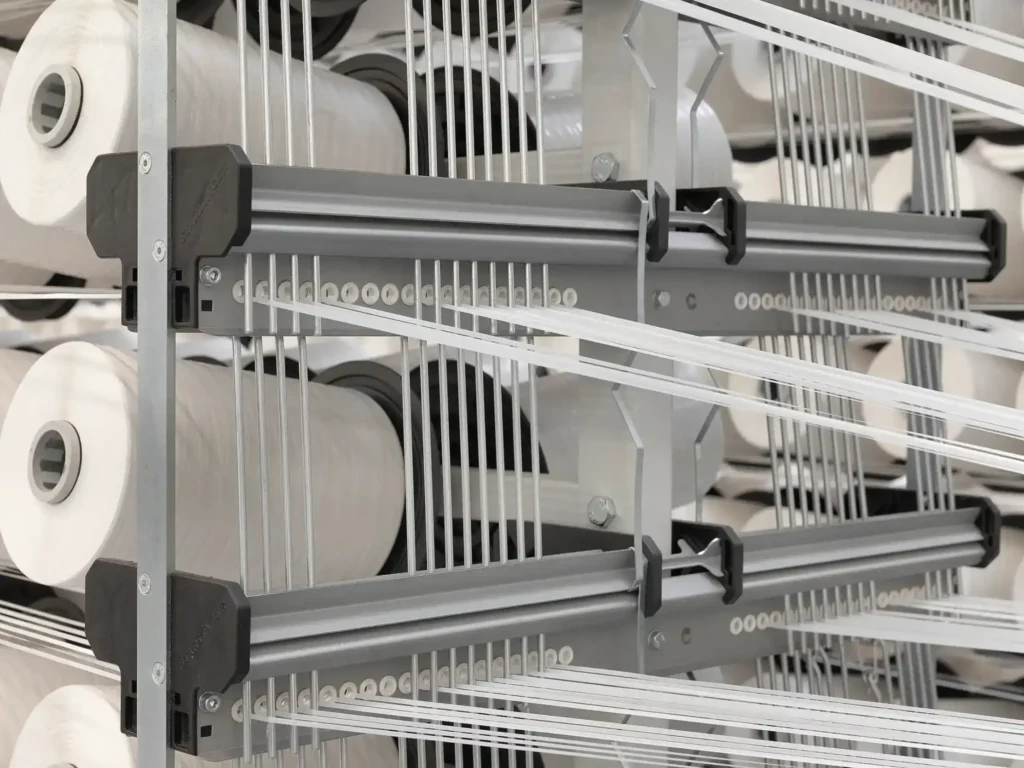
Primary product focus: FFS roll woven bags (also seen as FFS woven roll bags, Form‑Fill‑Seal woven roll stock, BOPP‑laminated FFS woven packaging, retail FFS woven sacks, woven FFS roll stock for automated lines). Long‑tail phrases applied throughout: high‑speed FFS roll woven bags for rice; FFS roll woven bags with easy‑open laser score; anti‑static FFS roll woven bags for powders; UV‑stabilized FFS roll woven bags for outdoor pallets; barcode‑ready reverse‑printed FFS roll woven bags.
What Are FFS Roll Woven Bags?
In retail supply chains that prize speed, shelf impact, and cleanliness, packages either accelerate throughput or become the choke point. FFS roll woven bags transform laminated woven fabric into finished, retail‑ready packs directly on automated Form‑Fill‑Seal equipment. Instead of receiving pre‑made sacks, a plant unwinds printed roll stock, forms the web into a tube, seals longitudinally, creates the bottom seal, fills, and closes the top—continuously, predictably, quickly. The woven substrate contributes tensile strength at low mass; the laminate contributes print fidelity and abrasion resistance; the sealant face delivers hermetic seals. Put differently: textile‑like strength meets film‑grade graphics under the governance of automation.
Because procurement language varies, the same product is referenced by several aliases. For clarity, the following names all point to the same functional family of FFS roll woven bags:
- FFS woven roll bags
- Form‑Fill‑Seal woven roll stock
- BOPP‑laminated FFS woven packaging
- Retail FFS woven sacks
- Woven FFS roll stock for automated lines
Each label stresses a different virtue—automation, lamination, retail intent—yet the unifying idea is consistent: a laminated woven substrate designed to run fast, seal clean, protect product, and present brand assets with confidence in bright stores and dusty depots alike.
Guiding principle: treat FFS roll woven bags as systems. Fabric carries load, laminate guards graphics and adds incremental barrier, the sealant face creates hermetic seams, closures define hygiene and runnability, geometry defines stack behavior. When the parts cooperate, downtime shrinks and brand presence expands.
The Materials of FFS Roll Woven Bags
A reliable retail pack is deliberate about its layers. The architecture of FFS roll woven bags assigns specific, measurable jobs to each component: strength to the fabric, scuff protection and print to the laminate, moisture and dust control to the sealant or liner, friction tuning to surface finishes, and seal integrity to compatible polymer interfaces.
1) Woven polypropylene fabric — the tensile backbone
Polypropylene is extruded, slit into tapes (commonly 600–1200 denier), drawn to orient chains, and woven into fabrics typically 65–120 g/m² for retail formats. Weave density (e.g., 10×10 to 14×14 ends and picks per inch) governs dimensional stability, seam retention, and the flatness that printers love. The fabric makes the bag carry, stack, and survive drops without dragging excess mass through your freight bill.
2) Exterior laminate film — the print face and secondary barrier
BOPP or BOPE films (about 18–35 μm) are extrusion‑ or adhesive‑laminated to the woven base. Graphics are reverse‑printed under the film so artwork resists conveyor rub. The film adds a controlled coefficient of friction (COF), improves shelf gloss or matte tactility, and contributes incremental moisture protection without sacrificing sealability.
3) Inner sealant or liner — the primary vapor and dust shield
A polyethylene‑rich layer (LDPE/LLDPE/HDPE blends) functions as the heat‑sealable face of the web or as a separate liner. Typical retail gauges run 40–100 μm. Small steps (10–20 μm) meaningfully change MVTR and jaw dwell. Anti‑static packages reduce ignition risk in combustible dust zones.
4) Additives and functional options — tuning to route and risk
Anti‑slip modifiers to stabilize pallets; UV stabilizers for yard‑stored pallets; laser‑score easy‑open to help consumers; tamper‑evidence and microtext for brand protection; RFID/QR readiness for track‑and‑trace. These options let FFS roll woven bags serve industrial duty while winning on the shelf.
5) Inks, adhesives, tie layers, and varnishes — the quiet chemistry
Low‑migration ink systems (where required) safeguard food and pet lines; adhesives/tie resins bond low‑energy PP to oriented films without brittle interfaces; selective varnish boosts rub resistance precisely where conveyors scuff.
Procurement reality: the largest cost levers are fabric GSM, laminate gauge, and sealant thickness. The right FFS roll woven bags spec is not the heaviest—it’s the one that meets drop, MVTR, and print targets while running fast and clean on your FFS equipment.
Features That Matter in FFS Roll Woven Bags
A feature means little until it cancels a failure mode. The value of FFS roll woven bags is measured where lines stop and where pallets fall—by avoiding both.
- Automation‑first design — roll stock feeds continuous form, fill, and seal; consistent web width, COF, and sealing windows stabilize OEE.
- Leak‑resistant heat seals — seams are fused, not pierced; fine powders stay in, air and moisture stay out.
- Retail‑grade graphics — reverse‑printed laminates preserve saturated color blocks, halftones, barcodes, and QR codes from filler to checkout.
- Strength at low mass — oriented tapes in a woven lattice deliver drop survival without freight penalties.
- Controlled shelf geometry — gusset tools and cut length accuracy square the face for planograms and stable displays.
- Hygiene and dust control — hermetic top seals and clean longitudinal seams mean cleaner bays and safer workers.
- Data‑ready surfaces — durable codes and optional serialization make every bag a data carrier.
- Sustainability levers — optimized grammage and poly‑family compatibility support recovery where available; the biggest sustainability win remains avoided product loss.
If humidity dominates
Favor thicker sealant gauges and inner hermetic seals; pair with pallet top sheets; audit MVTR against real shelf‑life targets rather than instincts.
If abrasion dominates
Reverse print under BOPP/BOPE; add targeted varnish; tune COF to balance conveyor speed and pallet stability.
If dust dominates
Sealant faces that close reliably, valve geometry fitted to product flow, and clean web handling cut fugitive fines dramatically.
Production Process of FFS Roll Woven Bags (and Why Equipment Matters)
Reliability is built upstream with verified inputs, stabilized in process by capable equipment, and proven downstream through inspection. VidePak anchors its lines with precision machinery from Austria’s Starlinger and Germany’s W&H—technology choices that narrow tolerance bands where field failures start: draw ratio, weave geometry, lamination gauge, registration, and seal energy.
Upstream — raw‑material selection and incoming tests
- PP resin for tapes: melt‑flow index, moisture, ash; screen for gels that weaken tapes.
- BOPP/BOPE films and PE sealants: gauge tolerance, corona level, haze, COF; optical defects audited.
- Additives: UV and anti‑static packages qualified for thermal stability at process temperatures.
- Inks/adhesives/varnishes: migration limits where applicable; rub resistance; adhesion to woven PP.
Core stages — tapes to laminates
Extrude and draw PP tapes; weave to target GSM and density with controlled loom tension. Laminate films by extrusion or adhesive bonding; hold nip pressure, temperature, and line speed to avoid micro‑channels—moisture highways you never want.
Graphics and surface protection
Reverse printing under film makes graphics scuff‑resistant; registration and color density are verified; over‑varnish is added selectively for conveyor‑intense routes. Finish (matte vs. gloss) is selected in part for COF and barcode legibility.
Slitting, roll building, and FFS readiness
Trim web edges; specify roll hardness to suit unwinds; define splice quality to avoid web breaks. The hand‑off from converter to filler is where FFS roll woven bags succeed or stumble.
Downstream — inspection, testing, lot release
Dimensions and GSM; seal/peel strength; burst and drop tests; MVTR on films/laminates; vacuum‑decay or dye at seals; Sutherland rub and barcode scan grade. Traceability connects materials, machines, and operators.
Equipment advantage: capability beats capacity. Precision extrusion/weaving (Starlinger) and robust lamination/printing/conversion (W&H) minimize scatter in GSM, gauge, registration, and seal energy—the places where real‑world failures are born.
Applications: Where FFS Roll Woven Bags Earn Their Keep
One substrate, many missions. The modular build of FFS roll woven bags adapts to the product’s behavior, the route’s stress, and the filler’s cadence.
| Category | Dominant risk | Recommended configuration | Notes |
|---|---|---|---|
| Staple foods (where permitted) | Moisture ingress; shelf wear | Thicker sealant; reverse‑printed BOPP; easy‑open laser score; strong top seal | Pair with desiccant options for humid routes |
| Pet food and feed | Grease odor; abrasion | Matte/gloss combo film; higher rub varnish; square stacks for end‑caps | Odor containment improves perceived freshness |
| Minerals and pigments | Abrasive density | Higher GSM; anti‑slip exteriors; leak‑free seals; reverse print | Protect branding; plan for conveyor scuff |
| Fertilizers and soil | Moisture vs. breathability | Valve sack + tuned sealant; targeted micro‑perfs only if justified | UV package for outdoor pallets |
| DIY/home improvement (cement, grout) | Rough handling; weather | Reinforced seams; UV package; scuff‑resistant films | Legible instructions after tough routes |
Related guide: explore film selection for automated pack lines via polyethylene FFS film for 50 kg retail packs.
How VidePak Controls and Guarantees the Quality
Quality is a stack of reinforcing behaviors. VidePak’s control plan for FFS roll woven bags rests on four pillars that convert specifications into predictable outcomes.
- Standards‑aligned production & testing — procedures reference mainstream norms (ISO/ASTM/EN/JIS as applicable) for tensile, seal/peel, burst, drop, MVTR, migration (where relevant), rub, and barcode evaluation.
- Virgin materials from major producers — stable resins, consistent films, compliant inks/adhesives reduce variance at the source.
- Best‑in‑class equipment — Starlinger extrusion/weaving and W&H lamination/printing/conversion deliver repeatable gauges, registration, and seal windows at speed.
- Layered inspections — incoming verification → in‑process audits (GSM, gauge, registration, seal dwell/temperature) → lot release → periodic sampling to detect drift.
Callout — the reliability economy of FFS roll woven bags
Uniform tape draw, steady weave geometry, accurate lamination gauge, clean registration, predictable seals—each appears modest alone. Together they form the invisible safety net beneath worker safety, product quality, and brand promises.
System Thinking: Decompose the Risks, Compose the Spec
Generalities create general failures. The disciplined way to specify FFS roll woven bags is to split the challenge into solvable parts and then recombine them into a coherent, runnable solution.
A. Moisture sensitivity & failure mode
Does the product cake, clump, lose potency, or alter flow at specific RH/time windows? Convert this into an MVTR budget and assign most of it to the sealant/liner.
B. Mechanical handling & stacking
Bulk density, pallet height, drop orientations, conveyor abrasion—these set fabric GSM, seam design, and whether gusset tooling earns its keep.
C. Filler compatibility & seals
Fin vs. lap longitudinal seal, jaw dwell/temperature, gusset plan, dust extraction—choose for speed and hygiene, then validate on the real line.
D. Regulatory & labeling persistence
Food‑contact status for sealants/inks/adhesives where relevant; barcode reliability after rub testing; multilingual layouts that stay scannable after abrasion.
E. Sustainability & end‑of‑life
Optimize mass first; prefer compatible materials; prevent product loss above all.
F. Documentation & acceptance
Freeze drawings, materials, and process windows; set sampling and CAPA so corrections are routine, not heroic.
Barrier and Seal Architecture
Specify a target water‑vapor transmission rate over your time window, then distribute that budget across sealant thickness/chemistry, laminate film, closure integrity, and palletization. Numbers beat adjectives.
- Sealant thickness — the most sensitive dial. A 10–20 μm change can flip shelf‑life from borderline to safe.
- Lamination — more than cosmetic: it hardens the surface, protects graphics, and shaves vapor flux.
- Seam design — fin seals vs. lap seals have different stress and contamination tolerances; prove both on your powder.
- Palletization — wrap tension, corner boards, and top sheets influence condensation and seam creep.
Table — Baseline parameter ranges for FFS roll woven bags
| Parameter | Typical range | Purpose | Notes |
|---|---|---|---|
| Fabric mass (GSM) | 65–120 g/m² | Load bearing & stack profile | Scale with density and route roughness |
| Film thickness (BOPP/BOPE) | 18–35 μm | Print face & abrasion | Reverse printing protects graphics |
| Sealant (PE blends) | 40–100 μm | Primary vapor barrier & seal | Step 10–20 μm; watch dwell/temperature |
| Outer COF | 0.25–0.45 (tuned) | Pallet stability vs. line speed | Anti‑slip additives as needed |
| Longitudinal seal | Fin or lap | Leak resistance & runnability | Match to jaw geometry & web build |
Manufacturing Controls and Statistical Discipline
A line drifts unless watched, surprises unless measured. The most effective control plan for FFS roll woven bags identifies variables that correlate with field failures and monitors them in real time.
- Sample GSM at defined intervals; use control charts to preempt light‑spots in fabric.
- Log lamination gauge and nip pressure against defect codes; tune for minimum micro‑channel incidence.
- Audit seal dwell and jaw temperature vs. leak‑test outcomes; close the loop with preventative maintenance.
- Scan print registration and rub resistance to preserve barcode grade and compliance panels.
Functional card — the three‑layer promise of FFS roll woven bags
Strength to carry the load, barrier to protect the contents, and graphics to carry the message. If any one is compromised, the package communicates failure long before it physically breaks.
Logistics, Climate, and the Route as a Design Variable
Packaging that ignores the route gambles with luck. Consider the chain: inland trucking, rail yards, container depots, port storage, ocean transit, customs holding areas, last‑mile delivery. Each node carries environmental stresses—heat, solar load, humidity cycles, abrasion, stacking variability. For FFS roll woven bags, adapting to the route is often the most economical way to raise reliability without over‑engineering the bag.
- Where monsoon exposure is possible, specify thicker sealants and aggressive seals; pair with pallet top sheets and wrap patterns that reduce condensation.
- For cold‑to‑hot transitions, plan for internal condensation; avoid micro‑perforation unless your product tolerates breathability.
- At congested ports with rough handling, increase GSM and add scuff‑resistant finishes; confirm drop testing in the worst orientations.
Safety, Electrostatics, and Worker Well‑Being
Combustible dust hazards arise where fine product, air, and ignition sources meet. In such contexts, FFS roll woven bags and their valve‑style variants should include anti‑static features aligned with safety studies: target resistivity ranges, grounding schemes, and process controls during filling and palletizing.
- Specify anti‑static or conductive sealants/liners; confirm performance through standardized resistivity measurements.
- Ensure filling equipment provides grounding paths so charge doesn’t accumulate on bag surfaces.
- Control humidity and dust extraction around fillers to reduce ignition likelihood.
Sustainability Without Wishful Thinking
Durability is sustainability. A pack that preserves product quality and enables safe handling prevents the largest waste of all—product loss. Beyond that, FFS roll woven bags can lean toward compatible materials (PP fabric with PP/PE films), optimized grammage, and clear marking to support recovery where it exists.
Scenario Cards: Fast Patterns That Travel
Patterns compress experience. When someone asks, “What configuration should we use?”, these cards offer quick, defensible defaults for FFS roll woven bags.
Card 1 — Humid coastal route for powdered mixes
Use 80–100 μm sealant, hermetic transverse seals, and pallet top sheets. Validate MVTR vs. shelf‑life target.
Card 2 — High‑speed retail rice line
Optimize fin‑seal jaws for faster dwell; anti‑slip exterior for tall display stacks; crisp reverse printing for bold brand blocks.
Card 3 — Abrasive mineral filler
Increase GSM and COF control; reverse print under laminate; add corner protection in shipper cartons.
Card 4 — ESD‑sensitive additives
Anti‑static sealant; grounded filling horns; verify surface resistivity at operating humidity.
Troubleshooting Checklist
Symptoms point to causes; causes point to dials you can turn. Keep this list nearby when running new SKUs of FFS roll woven bags on fresh routes or fillers.
| Symptom | Likely cause | Countermeasure |
|---|---|---|
| Caking after humid dwell | Sealant too thin; weak seals | Increase sealant gauge; raise dwell; add pallet top sheets |
| Scuffed/illegible graphics | Surface print exposed | Reverse print; add varnish; tune COF |
| Leaks at side seam | Low seal energy or contamination | Clean jaws; increase dwell/temperature; verify fin/lap alignment |
| Web breaks on FFS | Poor roll build or splice | Specify roll hardness and splice spec; audit supplier QA |
Implementation Roadmap: From RFQ to First Article
A disciplined launch sequence shortens the time between first trial and stable production while clarifying accountability at every gate.
- Define the use case: product behavior, bulk density, route climate, shelf‑life, retail display goals, regulatory needs.
- Draft the baseline: web width, fabric GSM, laminate/sealant gauges, seal types, gusset plan, print architecture, traceability marks.
- Pilot on the real FFS: measure speed, scrap, seal times, dust, barcode grades, and stack geometry.
- Lab qualification: tensile, seal/peel, drop, abrasion, MVTR/migration (where relevant), and rub.
- Freeze and document: drawings, materials, process windows, acceptance criteria, sampling plans, CAPA loops.
- First article approval: verify conformance; retain samples; lock pack‑out schemes.
- Ongoing control: SPC on GSM/gauge/seal dwell; periodic re‑qualification; field feedback loop.
FAQ — Short Answers for Real Buyers
- Is the laminate only cosmetic? No. It protects graphics, hardens the surface, and contributes incremental barrier. It also stabilizes COF and enables higher print quality.
- Why not stick with pre‑made sacks? Labor, tolerance, and OEE. FFS roll woven bags reduce manual steps and dimensional scatter, improving speed and consistency.
- How do I pick sealant thickness? Start from acceptable moisture gain and required seal integrity; step‑test in 10–20 μm increments on your actual filler until MVTR and cycle time align.
- Are these packages recyclable? Where PP/PE recovery exists, compatible designs and clear marking help. The biggest environmental win is preventing product loss.
Keyword Strategy: Synonyms and Long‑Tail Phrases
Language consistency helps real buyers find real solutions. This article repeatedly and naturally uses FFS roll woven bags, FFS woven roll bags, Form‑Fill‑Seal woven roll stock, BOPP‑laminated FFS woven packaging, and retail FFS woven sacks. Complementary phrases include easy‑open FFS roll woven bags, anti‑static FFS roll woven bags, and UV‑stabilized FFS roll woven bags for outdoor pallets.
2025-10-25

- What Are FFS Roll Woven Bags?
- The Materials of FFS Roll Woven Bags
- Features That Matter in FFS Roll Woven Bags
- Production Process of FFS Roll Woven Bags (and Why Equipment Matters)
- Applications: Where FFS Roll Woven Bags Earn Their Keep
- How VidePak Controls and Guarantees the Quality
- System Thinking: Decompose the Risks, Compose the Spec
- Barrier and Seal Architecture
- Manufacturing Controls and Statistical Discipline
- Logistics, Climate, and the Route as a Design Variable
- Safety, Electrostatics, and Worker Well‑Being
- Sustainability Without Wishful Thinking
- Scenario Cards: Fast Patterns That Travel
- Troubleshooting Checklist
- Implementation Roadmap: From RFQ to First Article
- FAQ — Short Answers for Real Buyers
- Keyword Strategy: Synonyms and Long‑Tail Phrases
- Core Advantages of FFS Roll Woven Bags
- Technical Innovations: Precision Meets Sustainability
- Environmental Impact: Beyond Recyclability
- Economic Benefits: Cost Efficiency at Scale
- Future Trends: Pioneering Circular Economies
- VidePak’s Capabilities: Global Leadership
- Technical Specifications
- FAQs: Addressing Retailer Concerns
- Conclusion: Redefining Retail Packaging
“How can retailers balance operational efficiency, cost savings, and environmental responsibility in packaging?” This question haunts supply chain managers worldwide. The answer lies in three transformative pillars: seamless automation, superior material recyclability, and alignment with global sustainability mandates. At VidePak, with 30+ years of expertise and a production capacity of 200 million bags annually, we engineer FFS (Form-Fill-Seal) roll woven bags to redefine retail packaging. Below, we explore how these bags merge cutting-edge technology with eco-conscious design, driving profitability while reducing environmental footprints.
Core Advantages of FFS Roll Woven Bags
FFS roll bags are pre-formed tubular structures designed for high-speed filling and sealing. They dominate retail sectors due to:
- Automation Readiness: Compatible with vertical form-fill-seal machines, reducing labor costs by 40% compared to manual bagging.
- Material Efficiency: 15–20% less PP consumption than traditional bags, lowering raw material costs.
- Space Optimization: Rolls occupy 50% less storage space than pre-made bags, ideal for crowded warehouses.
VidePak’s Starlinger S7 Series equipment produces FFS rolls with ±1mm dimensional tolerance, ensuring flawless integration with Bosch and Rovema packaging lines.
Technical Innovations: Precision Meets Sustainability
1. Advanced Material Engineering
VidePak’s FFS rolls utilize 100% recyclable PP resins blended with 30% post-consumer recycled (PCR) content, certified under ISO 14021. Key performance metrics include:
- Tensile Strength: 35–40 N/cm² (ASTM D5034), surpassing conventional PE bags by 25%.
- Moisture Resistance: BOPP lamination achieves ≤0.1% water vapor transmission (ISO 2528), critical for hygroscopic products like pet food.
- Anti-Static Properties: Carbon-black additives (1.2%) prevent dust adhesion in flour and powdered goods packaging.
2. Smart Manufacturing Processes
- Extrusion: 16 Starlinger lines produce 12–14 μm PP tapes with MFI 3.5 g/10min, ensuring uniform weaving.
- Weaving: 100+ circular looms create 12×14 strands/cm² fabric density, optimized for 25–50 kg dynamic loads.
- Printing: 8-color flexographic systems deliver Pantone-matched branding with ≤0.5 mm registration error.
Environmental Impact: Beyond Recyclability
The global recycled plastics market is projected to reach $72.6 billion by 2030 (Grand View Research, 2025). VidePak leads this shift through:
- Closed-Loop Recycling: Partnering with TerraCycle to reclaim used bags, achieving 95% material recovery rates.
- Bio-Based Additives: Piloting PP blends with 20% PLA (polylactic acid), reducing fossil fuel dependency by 15%.
- Carbon-Neutral Production: Solar-powered facilities cut CO₂ emissions by 35% since 2022.
Case Study: A European supermarket chain reduced packaging waste by 60% after switching to VidePak’s FFS rolls, saving €280,000 annually in landfill fees.
Economic Benefits: Cost Efficiency at Scale
| Parameter | FFS Roll Bags | Traditional Bags |
|---|---|---|
| Production Speed | 120 bags/minute | 70 bags/minute |
| Labor Cost per 1k Bags | $8.50 | $15.20 |
| Storage Space | 0.5 m³ per 10k bags | 1.2 m³ per 10k bags |
| Recyclability Rate | 100% (PP) | 70–80% (multi-material) |
Future Trends: Pioneering Circular Economies
- Blockchain Traceability: QR codes linked to IBM Food Trust enable real-time tracking of PCR content and carbon footprints.
- Enzyme-Assisted Degradation: Partnering with Carbios to develop PP bags degradable in industrial composters within 12 weeks.
- Reusable FIBC Systems: Hybrid FFS/FIBC designs for bulk retail items, slashing single-use plastic by 90%[citation:10].
VidePak’s Capabilities: Global Leadership
Founded in 2008 under CEO Ray Chiang, VidePak combines scale with innovation:
- Certifications: BRCGS, ISO 9001, and OEKO-TEX® for EU and North American markets.
- Customization: 50+ bag configurations, including UV-resistant and anti-microbial variants.
- Capacity: 16 extrusion lines and 30 lamination machines support 48-hour lead times for urgent orders.
Technical Specifications
| Parameter | VidePak FFS Rolls | Industry Standard |
|---|---|---|
| Roll Width | 250–1,000 mm | 200–800 mm |
| Seal Strength | 6–8 N/mm (ASTM F88) | 4–5 N/mm |
| Print Durability | 4+ (Sutherland Rub Test) | 3 |
| Temperature Range | -30°C to 80°C | -20°C to 60°C |
FAQs: Addressing Retailer Concerns
Q: How does FFS automation reduce costs?
A: Automated systems cut labor by 60% and increase throughput by 70%, yielding ROI within 6 months.
Q: Are recycled PP bags as durable as virgin material?
A: Yes. VidePak’s PCR blends retain 95% tensile strength and undergo rigorous ISO 527-3 testing.
Q: Can FFS rolls handle irregularly shaped products?
A: Customizable gusset designs (e.g., 4-ply side folds) accommodate items like snacks and hardware components[citation:10].
Conclusion: Redefining Retail Packaging
FFS roll woven bags are not just containers—they are strategic assets driving efficiency, brand integrity, and planetary stewardship. VidePak’s fusion of Austrian engineering precision, circular economy innovations, and global compliance expertise ensures your retail operations stay ahead of regulatory and consumer demands.
Explore our advancements in FFS Roll Bag Technology or discover sustainable strategies in Eco-Friendly Woven Packaging.
References
- Grand View Research. (2025). Global Recycled Plastics Market Report.
- International Organization for Standardization. (2024). ISO 14021: Environmental Labels and Declarations.
- TerraCycle. (2025). Closed-Loop Recycling Performance Metrics.
- IBM Corporation. (2025). Blockchain Solutions for Supply Chain Transparency.
- Carbios. (2025). Enzymatic Degradation of Polypropylene.
Word count: 1,180