
In the competitive world of pet food packaging, choosing the right type of bag can significantly impact both product preservation and brand presentation. BOPP Laminated Valve Woven Bags have emerged as a top choice for packaging pet food products such as dog food and cat food. Their unique features and advantages make them highly suitable for the pet food industry. This article explores the benefits and applications of BOPP Valve Woven Bags, with a particular focus on their role in pet food packaging, and compares them with other packaging solutions available in the market.
What are BOPP Laminated Valve Woven Bags and why do they matter in pet food?
BOPP Laminated Valve Woven Bags are multi‑layer industrial sacks in which a printed biaxially oriented polypropylene (BOPP) film is laminated to a woven polypropylene (PP) fabric and then converted into a valve‑equipped sack—often a block‑bottom format for square standing and efficient palletization. The corner valve interfaces with automated spouts on high‑speed fillers; product pressure assists self‑closing, and optional heat or ultrasonic sealing completes the closure. For dry pet nutrition—kibble, baked treats, cold‑formed morsels—this configuration blends retail‑grade graphics with mechanical strength, moisture moderation, and line efficiency.
Aliases in the market include BOPP laminated PP valve sacks, block‑bottom valve woven bags, and AD‑STAR‑type valve sacks (when produced on specific conversion platforms). Compared with uncoated woven PP (rugged but visually utilitarian) and multiwall paper sacks (printable but humidity‑sensitive), the laminate approach seeks a middle path: a premium, scuff‑resistant face; a tough textile body; and a dust‑reduced filling experience.
For readers seeking foundational references on the broader family of woven polypropylene packaging, see these topic pages that mirror encyclopedia‑style internal links: woven polypropylene bags, valve bags, and laminated BOPP woven bags. Alternative categories for comparison are kraft paper bags, form‑fill‑seal polyethylene rolls, and FIBC bulk bags.
Materials and Layer Architecture of BOPP Laminated Valve Woven Bags
The structure is not a single sheet but a system. Each layer serves a role; each role maps to a test; each test ties back to a cost lever. Understanding the interactions—print chemistry with corona energy, lamination weight with curl, fabric GSM with drop survival—turns guesswork into engineering.
Polypropylene tapes (often 600–1200 denier) are biaxially drawn and woven into a textile substrate (typically 55–90 gsm for pet applications). This fabric carries tensile and tear loads, cushions punctures, and preserves bag geometry under top‑load. Why PP and not PET? Density, weldability, and cost. Why woven and not monolithic film? Damage tolerance and strength‑to‑weight.
Linked concept: polypropylene woven bags.
The oriented film supplies a smooth, ink‑receptive face for gravure or advanced flexo. Gauge often sits between 15–30 μm. Matte lacquers remove glare and add a velvety touch; gloss elevates saturation. Registered windows permit product visibility without surrendering mechanical integrity.
Linked concept: laminated BOPP woven bags.
A thin polyolefin melt—PP, PE, or blends—bonds film to fabric. Coating weights around 15–30 g/m² are common. The target is high peel without curl, adhesion without print distortion, and compatibility with downstream welding.
LDPE/LLDPE liners (25–50 μm) add grease resistance and sealability for high‑fat recipes. An inserted tube or loose liner can mitigate oil bleed‑through and dusting at the valve.
A compact textual schematic is helpful: BOPP print face → tie/extrusion lamination → woven PP fabric → optional interior coating or PE/PP liner → valve sleeve → block‑bottom folds. Every arrow implies an interface; every interface invites failure if not engineered: ink to film (adhesion), film to tie (peel), tie to textile (wetting), textile to weld (heat history).
- Polyolefin family alignment (PP/PE) supports simpler sorting compared with paper–plastic composites.
- Woven architecture offers tear resistance that arrests crack growth—a critical edge on forklift prongs and pallet corners.
- BOPP provides a printable façade with abrasion resistance, preserving brand assets across long distribution chains.
Distinctive Characteristics and Performance Drivers
The promise of BOPP Laminated Valve Woven Bags is not merely that they are strong; it is that they are strong in the right directions, attractive in the right places, and efficient at the right times. Strength without stackability? Insufficient. Beauty without abrasion control? Short‑lived. Speed without dust control? Counterproductive. The format seeks balance.
- Retail‑grade graphics via gravure/flexo on BOPP; matte–gloss contrasts; optional product windows.
- Moisture moderation from the laminate and, where needed, liners—important for maintaining kibble texture and nutritional integrity.
- Valve‑enabled filling that harmonizes with high‑speed spouts; micro‑perforations evacuate trapped air to prevent pillowing.
- Block‑bottom geometry that forms brick‑like units, reducing stack lean, enhancing store‑stack neatness, and maximizing cube.
- Material efficiency—a strength‑to‑weight edge over many multiwall paper builds.
Manufacturing Flow from Resin to Pallet
A repeatable process is a chain of controlled variances. If denier varies, loom breakage follows; if lamination weight wobbles, curl appears; if bottom folds deviate, stack squareness suffers. The following high‑level flow illustrates the interactions.
- Tape extrusion & orientation — PP melt → cast sheet → slit tapes → biaxial stretch → anneal. Control MFI, draw ratio, and temperature ramps to balance tensile properties with weldability.
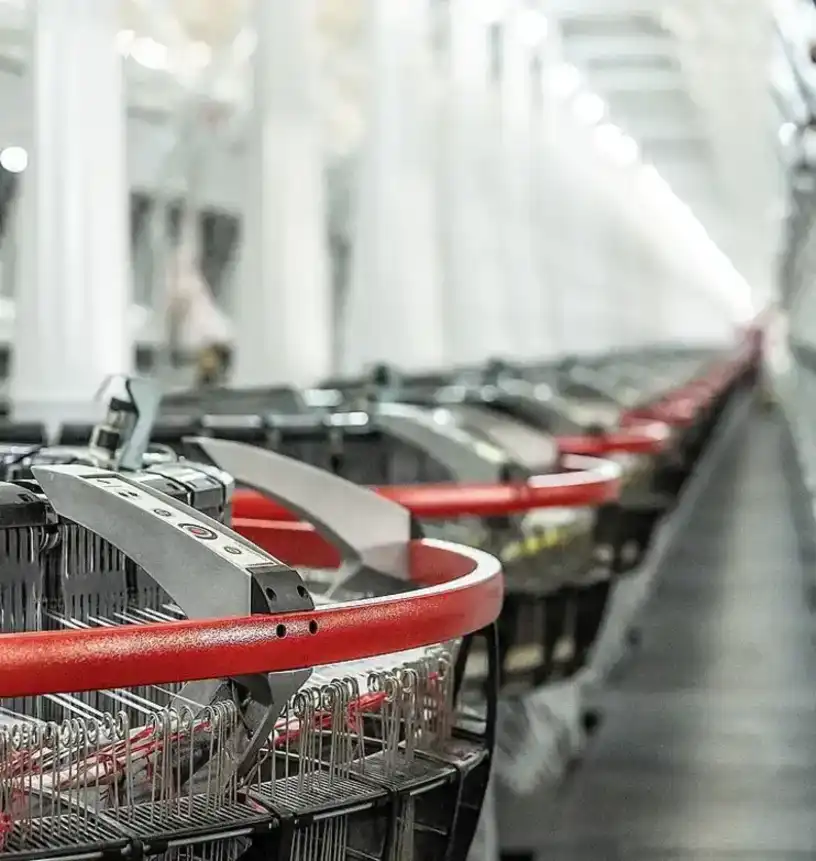
- Weaving — Circular or flat looms establish pick density and fabric GSM. Real‑time defect mapping keeps broken ends from becoming weak zones.
- BOPP surface prep & printing — Corona raises dyne level. Gravure or crisp flexo lays down high‑resolution art; lacquers (matte/soft‑touch/anti‑slip) tune both feel and handling friction.
- Extrusion lamination — A polyolefin tie is nipped between film and textile. The aim: peel strength without haze, bond without shrink, flatness without curl.
- Conversion to valve bags — Tube forming, block‑bottom creation, valve insertion, micro‑perfs, and top finishing (self‑close, heat or ultrasonic sealing).
- Quality assurance — Filled‑bag drop, compression/top‑load, seal‑peel, abrasion/COF, dimensional squareness, and leak testing under vibration.
- Keep lamination coat weight as low as possible while meeting peel thresholds; every g/m² adds cost and alters stiffness.
- Validate valve sleeve friction against each filler spout; small angle/length tweaks can transform dust performance.
- Use targeted micro‑perfs only as needed; vent air, not quality.
Applications with Focus on Pet Nutrition
Where do BOPP Laminated Valve Woven Bags shine? In SKUs from 5 to 25 kg that must look premium yet behave like industrial freight. Club stores, farm & ranch retailers, warehouse clubs, and export channels all demand shelf impact plus transit durability. Typical products include extruded kibble, baked biscuits, dehydrated mixes, and mineral‑fortified blends.
Adjacent areas help triangulate the fit: animal feed and supplements (fast valve filling), seeds and grains (abrasion control), fertilizers and minerals (moisture moderation), and—by origin story—cement and mortar (extreme drop/stack). For bulk moves beyond 500 kg, brands step into FIBC bulk bags; for small pillow‑pouch retail under 2 kg, laminates on flexible films dominate; and for high‑throughput in pure plastics lines, some plants lean on polyethylene FFS rolls.
Interdisciplinary Lens: how packaging science connects with nutrition, logistics, and branding
Packaging is a conversation among disciplines. Food science asks for low water activity and lipid stability; mechanical engineering insists on energy absorption in a drop; logistics demands pallet integrity after vibration; marketing wants matte tactile appeal. The magic of BOPP Laminated Valve Woven Bags is that one set of layers addresses many of these voices at once.
- Nutrition & chemistry: lower moisture ingress protects crunchy textures and vitamin actives; grease‑resistant liners deter oil staining that erodes consumer trust.
- Mechanics: woven tapes stop tears from propagating; block‑bottom welds distribute compressive loads.
- Operations: valve sleeves speed filling and reduce housekeeping, liberating line capacity at peak season.
- Branding: matte/gloss interplay on BOPP raises perceived value without changing the underlying kibble.
Comparative View against mainstream alternatives
| Criterion | BOPP Laminated Valve Woven Bags | Kraft‑based multiwall | PE FFS tubular rolls |
|---|---|---|---|
| Visual impact | Photo‑quality gravure/flexo; matte/gloss control; windows possible | Natural kraft appeal; good flexo; limited windows | Clean graphics on film; less rigid stand‑up presence |
| Moisture behavior | Laminated film resists ambient humidity; liner optional | PE inner helps; outer scuffs and weakens when wet | Good moisture barrier; requires FFS equipment investment |
| Strength & drop | Woven PP resists tears and punctures | Adequate when dry; reduced wet strength | Strong but may lack the rigid, square‑stack look |
| Filling method | Valve spout, self‑close/heat/ultrasonic | Pinch‑bottom or sewn top | Form‑fill‑seal, high automation |
| Typical links | laminated BOPP woven bags | kraft paper bags | PE FFS tubular |
Parameter map and design targets
| Parameter | Why it matters | Typical targets / guidance |
|---|---|---|
| Fabric GSM & tape denier | Drop/stack performance vs. cost | 60–80 gsm with 800–1000 denier; validate with worst‑case fill weight |
| BOPP thickness & finish | Print fidelity & abrasion | 18–25 μm; matte for glare control; gloss for saturation |
| Lamination coat weight | Peel strength vs. curl | 15–30 g/m²; measure 180° peel and flatness |
| Valve sleeve geometry | Fill rate, dust, leak tightness | Match spout diameter and friction; enable ultrasonic sealing if required |
| Micro‑perforation strategy | Air release vs. moisture ingress | Use minimal perf density validated on each formulation |
| COF & anti‑slip | Pallet stability | Tune lacquer COF to your unit‑load pattern and overwrap |
Cost anatomy and controllable levers
- PP resin for tapes/fabric (largest component)
- BOPP film gauge and finish; specialty lacquers and windows
- Tie resin coat weight
- Optional liners for fatty recipes
- Inks/solvents/cleaners
- Tape line energy, waste, and labor
- Loom OEE (availability/speed/quality)
- Printing cylinder amortization and color count
- Lamination speed, waste, and curl rework
- Valve insertion accuracy and block‑bottom yield
- Engineer fabric GSM to the minimum that still passes drop and compression with margin.
- Standardize color sets or adopt extended‑gamut strategies to cut plate/cylinder proliferation.
- Right‑size anti‑slip to the pallet pattern; over‑lacquering wastes money and may affect stack release.
Quality plan and validation matrix
| Test | Method concept | Why pet brands care |
|---|---|---|
| Filled‑bag drop | Defined orientations and heights; damage scoring | Simulates worst‑case handling shocks |
| Top‑load compression | Load vs. time/deflection | Predicts pallet layer stability and lean |
| Valve leak & dust | Post‑fill vibration with collection media | Keeps shelves clean and SKUs on weight |
| Peel/lamination strength | 180° peel of film‑to‑fabric | Prevents face delamination and scuff failures |
| COF & abrasion | Face‑to‑face and face‑to‑pallet rubs | Balances stack stability with de‑palletizing ease |
| UV exposure | Accelerated weathering if outdoor storage likely | Protects appearance and weld strength in sunlit yards |
Implementation roadmap for pet brands
Focused Q&A for long‑tail queries
Are BOPP Laminated Valve Woven Bags suitable for 25 kg dog food? Yes. The woven core sustains handling shocks, the laminate moderates humidity, and the valve aligns with high‑speed fillers for clean operations.
How do they differ from AD‑style block‑bottom sacks? The term describes a specific technology platform; the functional idea is the same: square bottom, valve fill, weld closures. Evaluate on peel strength, squareness, and valve fit rather than labels.
Can the structure be recycled? Where polyolefin streams exist, mono‑family designs (PP/PE) simplify sorting relative to paper‑plastic composites. Local infrastructure dictates outcomes.
Do we need micro‑perfs? Only as many as the filler and product demand. Too few: pillowing. Too many: moisture exposure. Calibrate empirically.
Terminology quick list
- BOPP — oriented polypropylene film used for high‑fidelity print faces and moisture moderation.
- Valve bag — sack with a fill sleeve that self‑closes or is sealed post‑fill; see valve bags.
- Block‑bottom — square, stand‑up base improving pallet and shelf presentation.
- GSM — mass per unit area; a lever for cost, stiffness, and drop survival.
- COF — coefficient of friction; governs layer stability and depalletizing ease.
- Confirm spout geometry vs. valve sleeve design on the actual filler.
- Map pallets to transport routes; tune anti‑slip and film finish accordingly.
- Lock artwork separations early to control cylinder counts and lead times.
- Collect early defect data and close the loop quickly with suppliers.
For readers who want to explore related formats and aliases that often coexist in the same plant: PP woven bags, valve bag technology, and BOPP‑laminated woven sacks. For paper‑centric operations, compare with kraft multiwall; for fully plastic automated lines, see PE heavy‑duty FFS.
Advantages of BOPP Laminated Valve Woven Bags
BOPP Laminated Valve Woven Bags combine the durability of woven polypropylene with a BOPP (Biaxially Oriented Polypropylene) film lamination. This combination provides several advantages, making these bags highly effective for packaging pet food.
- Enhanced Moisture Resistance:
The BOPP laminate offers superior moisture resistance, crucial for pet food packaging. Valve PP Bags with BOPP lamination ensure that the food remains fresh and uncontaminated, protecting it from humidity and preventing spoilage. - Superior Print Quality:
The smooth surface of BOPP Valve Woven Sacks allows for high-quality printing. This feature is particularly valuable for pet food brands that want to showcase their logos, product information, and vibrant images. The high-definition printing capabilities help create eye-catching designs that attract consumers. - Durability and Strength:
The woven polypropylene base provides excellent strength and durability. Valve Woven Bags are designed to handle the weight and abrasion of pet food without tearing or breaking. This durability ensures that the bags remain intact throughout the supply chain. - Effective Sealing:
The valve design of these bags facilitates easy and efficient filling. The BOPP lamination, combined with the valve sealing, prevents leaks and ensures that the bag remains securely closed. This is essential for maintaining the freshness and quality of pet food. - Aesthetic Appeal:
The BOPP laminate also enhances the aesthetic appeal of the bags. The glossy finish of Block BOPP Bags gives them a premium look, which can help elevate the perceived value of the product and strengthen brand identity.
Applications in Pet Food Packaging
BOPP Laminated Valve Woven Bags are particularly well-suited for packaging various types of pet food:
- Dog Food:
Packaging dog food in BOPP Valve Woven Bags ensures that the food stays fresh and protected from moisture. The strong, durable construction of the bags is ideal for handling the weight and bulk of dog food. The high-quality printability also allows for detailed product information and appealing designs. - Cat Food:
Similar to dog food, Valve Woven Bags are used for packaging cat food, offering the same benefits of moisture resistance, durability, and aesthetic appeal. The BOPP laminate helps in maintaining the freshness of the cat food, ensuring it remains palatable and safe for consumption. - Specialty Pet Foods:
For specialty pet foods, such as organic or premium products, BOPP Laminated Valve Woven Bags provide an opportunity for high-end presentation. The bags can be customized with unique designs and branding elements that align with the premium nature of the product.
Comparison with Other Packaging Solutions
While BOPP Laminated Valve Woven Bags offer numerous advantages, it’s useful to compare them with other packaging options to understand their relative benefits:
- Standard Woven Polypropylene Bags:
Standard woven polypropylene bags provide good durability but lack the moisture resistance and printability of BOPP laminated bags. They may not be as effective in protecting pet food from external elements or in creating a premium appearance. - Paper Valve Bags:
Paper valve bags can offer good moisture resistance when treated or laminated, but they are generally less durable than woven polypropylene options. Additionally, they do not provide the same level of print quality or aesthetic appeal as BOPP Valve Woven Sacks. - Plastic Bags:
Plastic bags can be moisture-resistant and cost-effective, but they often lack the durability and strength of woven polypropylene bags. They also typically do not offer the same level of print quality or premium appearance as BOPP laminated options. - Foil Bags:
Foil bags provide excellent moisture and oxygen barriers but are generally more expensive than woven polypropylene bags. They may also lack the strength required for bulk packaging and are less customizable in terms of size and design compared to Valve PP Bags.
Industry Trends and Future Outlook
The pet food packaging industry is evolving with trends that emphasize sustainability, innovation, and branding:
- Sustainability:
There is a growing focus on sustainable packaging solutions. While BOPP Laminated Valve Woven Bags offer excellent performance, manufacturers are also exploring options to incorporate recyclable materials and reduce environmental impact. - Innovative Designs:
Packaging designs are becoming more sophisticated, with an emphasis on creating engaging and informative packaging. BOPP Valve Woven Bags allow for high-quality, customized designs that can enhance brand recognition and consumer appeal. - Enhanced Functionality:
The demand for packaging that offers added functionality, such as resealable features or easy-to-open designs, is increasing. Future developments may include incorporating these features into Block BOPP Bags to meet evolving consumer needs.
In summary, BOPP Laminated Valve Woven Bags offer significant advantages for pet food packaging, including enhanced moisture resistance, durability, and aesthetic appeal. These bags provide an effective solution for maintaining product quality and presenting a premium image, making them a popular choice in the pet food industry. As packaging technology continues to advance, BOPP Valve Woven Bags will likely remain a key player in delivering high-performance and visually appealing packaging solutions.