
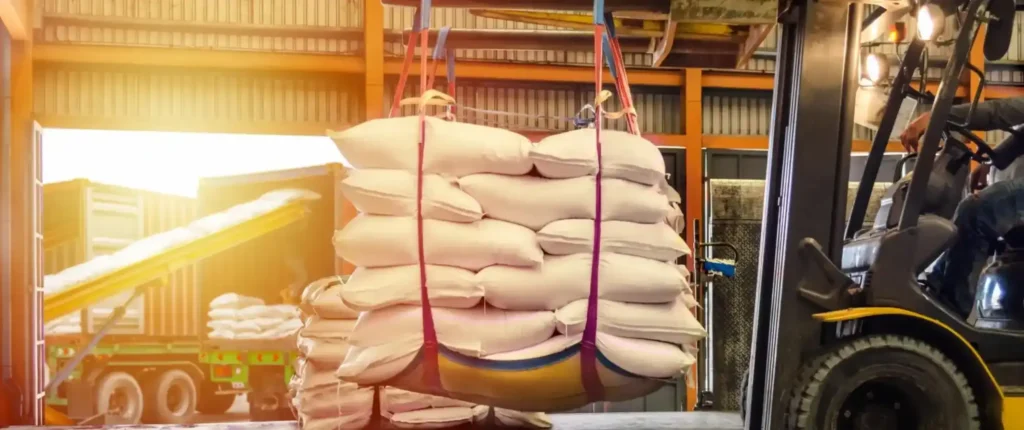
Primary product focus: Poly‑paper Bags for health‑ and safety‑critical powder packaging. Synonyms used intentionally throughout for clarity and search alignment: Kraft‑Poly Bags, Paper/Poly laminated sacks, Paper‑laminated PP woven bags, Poly‑lined paper bags, PBOM paper–poly bags, and block‑bottom poly‑paper valve bags.
What Are Poly‑paper Bags?
In modern powder logistics, where a few grams of airborne dust can trigger alarms and a few droplets of ambient moisture can upend an entire batch, the container is not just a container; it is a control surface. Poly‑paper Bags—hybrids that marry polymer strength with paper clarity—sit at the intersection of hygiene, handling, and communication. Built as multi‑layer sacks that combine a structural polymer backbone with kraft paper facings (and often a dedicated polyethylene liner), they carry kilograms with composure, carry labels with fidelity, and carry responsibility without complaint. They serve flour and sugar, yes; but also mineral pigments, nutraceutical premixes, fertilizers, dry mortar, and chemical salts whose performance can be ruined by a small humidity lapse or a misread barcode.
The same concept appears across purchase orders and plant floor conversations under a family of names. To anchor expectations, here is a compact, practical roster of aliases for Poly‑paper Bags that buyers and converters use interchangeably:
- Kraft‑Poly Bags
- Paper/Poly laminated sacks
- Paper‑laminated PP woven bags
- Poly‑lined paper bags
- PBOM paper–poly bags (pinch‑bottom open‑mouth)
- Block‑bottom poly‑paper valve bags
Different labels, same ambition: safer handling for workers, cleaner deliveries for customers, steadier audits for regulators. If a specification cannot explain how each layer contributes to that ambition, it is not yet a specification—it is a wish.
Guiding idea: Treat Poly‑paper Bags as a system, not a shell. Paper gives stiffness and print fidelity; the woven polymer or film gives strength and abrasion resistance; the liner governs water‑vapor ingress and dust egress; the closure eliminates leak paths; the geometry stabilizes pallets. Neglect any one and the others are forced to do the impossible.
The Materials of Poly‑paper Bags
A credible bill of materials clarifies not only what a bag is made of but why—where each component lives, what function it delivers, what dial it turns on cost, throughput, and shelf‑life. In Poly‑paper Bags, those components collaborate rather than compete.
1) Kraft paper plies — the structural skin and print surface
Machine‑finished (MF) or machine‑glazed (MG) kraft, bleached or unbleached, typically 70–120 g/m² per ply, builds the familiar Poly‑paper Bags look and feel. Paper stabilizes edges for tidy stacks, presents an ink‑friendly face for regulatory icons and barcodes, and adds a stiff hand that aids pallet stability. More plies add stiffness and scuff resistance, but also mass; spec the minimum that survives your intended route and drop height.
2) Woven polypropylene fabric — the tensile backbone
Slit PP tapes, drawn for molecular orientation, are woven 10×10 to 14×14 tapes per inch to create a grid that carries load without excess resin. Bursts are resisted, seams are retained, punctures are localized. In paper‑faced builds, this fabric hides behind the scenes—quietly converting a lightweight sack into a workhorse that tolerates rail yards, conveyors, and forklifts.
3) Polyethylene liner — the primary vapor shield
LDPE/LLDPE/HDPE blends, 50–120 μm, inserted as a tube or formed to the bag, provide the most decisive barrier for hygroscopic goods. The liner enables hygienic, heat‑sealed closures even when the exterior is stitched or pinch‑sealed. Small thickness steps—10–20 μm—can alter MVTR and sealing dwell in measurable ways; choose with data, not hope.
4) BOPP film — the abrasion skin and incremental barrier
Biaxially oriented polypropylene (18–35 μm) is often reverse‑printed and then laminated to the outer face. It hardens the surface, protects artwork and compliance marks, and shaves water‑vapor transmission. Matte/gloss options tune friction and shelf presentation; window features can display contents without leaving graphics to rub off in transit.
5) Tie‑layers, adhesives, and coatings — the quiet glue logic
Extrusion coating with LDPE or selected hot‑melts bonds paper to polymer while filling micro‑voids that could become leak paths. Over‑varnishes raise scuff resistance; low‑migration, food‑contact inks keep risk where it belongs—far from the product and far from auditors’ red pens.
6) Additives and options — tuning for the route
UV stabilizers when pallets sun‑bathe in yards; anti‑slip packages for safer stacks; anti‑static systems for combustible dust zones; color masterbatches for instant SKU recognition; micro‑perforation only when the product benefits from controlled breathability (rare for truly hygroscopic powders).
Procurement tip: Mass and complexity drive cost. Paper basis weights, fabric GSM, film thickness, and liner gauge are the main levers. The best Poly‑paper Bags are not “heavy”; they are appropriate—light enough to run fast, strong enough to survive, and sealed enough to protect.
What Distinguishes Poly‑paper Bags?
Features only matter when they neutralize real risks. The value of Poly‑paper Bags emerges from how they manage moisture, dust, mechanics, and information—simultaneously.
- Health and hygiene first — Liners and pinch/heat seals reduce airborne fines at fillers and keep powders clean through transit. Workers inhale less; customers receive more.
- Strength without excess mass — Woven PP and multi‑ply paper cooperate: one carries tensile load; the other preserves geometry. The result is drop confidence without the penalty of thick monolithic plastic.
- Moisture management by numbers — WVTR targets are assigned and met by liner thickness, film gauge, and closure integrity rather than slogans about “moisture‑proof.”
- Print clarity under abuse — Reverse‑printed films shield hazard icons, nutrition panels, and barcodes against conveyors and pallets.
- Closure versatility — Sewn open‑mouth (SOM), pinch‑bottom open‑mouth (PBOM), heat‑sealed, or valve: choose what your filler and hygiene plan require.
- Stable pallets — Block‑bottom geometry, tuned COF, and consistent cut length reduce shear and topple risk in real warehouses, not just lab diagrams.
- Responsible design — Optimized grammage and compatible materials enable better end‑of‑life pathways where infrastructure exists; durability avoids the biggest waste of all—product loss.
When moisture dominates
Favor thicker liners and inner heat seals; maintain pallet top sheets during humid dwell. Numbers beat hopes.
When abrasion dominates
Reverse‑printed BOPP and, where needed, over‑varnish keep labels alive through rough handling.
When dust dominates
Valve modules sized to the product; liners long enough to heat‑seal; stitching only where the economics are decisive.
Production Process of Poly‑paper Bags (With VidePak’s Equipment Edge)
Reliability is manufactured upstream, stabilized in process, and proven downstream. VidePak runs precision platforms from Austria’s Starlinger and Germany’s W&H to minimize variance where it starts: in extrusion draw ratios, weave geometry, lamination gauge, print registration, and seal energy delivery.
Upstream — raw‑material selection and incoming tests
- Kraft paper rolls: basis weight, moisture, Cobb sizing, tensile and tear; edges checked for damage.
- PP resin (virgin): melt‑flow index, ash, moisture; contamination sieving to prevent gels that weaken tapes.
- PE liner resins: melt index, density, haze; slip/anti‑static packages verified for the safety study.
- BOPP film: gauge tolerance (±2–5%), corona level, COF; optical defects audited before lamination.
- Adhesives/tie layers: food‑contact status and adhesion to both fiber and poly confirmed by peel tests.
- Inks/varnishes: rub resistance, migration performance, color density; barcode scans on press samples.
Core stages — tapes to laminates
Extrude and draw PP tapes; weave to the target GSM and density (10×10–14×14/inch); manage loom tension for flat fabric. Laminate paper to poly via extrusion coating or adhesive; set nip pressure and temperature to avoid micro‑channels that become vapor highways.
Graphics and surfaces — reverse print & protect
Reverse‑print under BOPP for scuff‑proof compliance; verify registration and dot gain; add selective over‑varnish where conveyors are brutal. Finish choice (matte vs. gloss) also tunes outer COF for safe pallets.
Conversion — cutting, liners, closures, geometry
Cut length and width to tight tolerances for stack consistency; integrate liners (loose, stitched‑in, form‑fit); select SOM, PBOM, heat‑sealed, or valve closures. Validate heat‑seal dwell/pressure/temperature windows on the real filler with the real powder.
Downstream — inspection, testing, and lot release
Dimensions and GSM; seam peel/shear; burst and drop tests at agreed heights/orientations; WVTR on liner films; seal integrity via vacuum‑decay or dye; print rub and barcode readability. Traceability ties materials, machines, and operators into one auditable line.
Equipment advantage: Capability beats capacity. Starlinger extrusion/weaving and W&H converting/printing hold tolerances that cheaper lines can only approximate—fewer defects by design, not by luck.
Applications: From Food Ingredients to Mineral Powders
Because the build is modular, Poly‑paper Bags adapt—tuned to the product’s failure modes, the route’s stresses, and the filler’s cadence. Below, colored tables visualize common matches.
| Category | Dominant risk | Recommended configuration | Notes |
|---|---|---|---|
| Flour, sugar, starches | Hygiene & moisture drift | PBOM with PE liner; reverse‑printed BOPP window optional | Clear compliance panels; tamper‑evident seals favored |
| Nutraceutical premixes | Dust exposure & traceability | Anti‑static liners; high‑contrast paper faces; QR/lot codes | Small formats; seal audits frequent |
| Animal feed & pet food | Abrasion & odor | BOPP skins; block‑bottom; robust seals | Color coding simplifies warehouse life |
| TiO₂, CaCO₃, talc, kaolin | Abrasive & dense | Higher GSM; valve format; anti‑slip exterior | Protect branding with reverse printing |
| Cement & dry mortar | Rough handling; weather | Reinforced seams; UV package; robust fabric | Define drop orientations in the spec |
Related resource: Explore advanced paper–poly builds for longer routes and harsher climates: multi‑ply paper–poly constructions with PE liners.
How VidePak Controls and Guarantees Quality
Quality is a stack that reinforces itself: standards define behaviors; materials reduce variance; equipment holds tolerances; inspection closes the loop. VidePak’s program for Poly‑paper Bags follows this logic step by step.
- Standards‑aligned production & testing — Operating procedures reference mainstream norms such as ISO/ASTM/EN/JIS as applicable; tensile, seam, drop, rub, and WVTR methods are trained and audited.
- Virgin materials from major producers — Virgin PP for draw stability; certified BOPP and PE for predictable gauges and seals; paper mills with tight basis‑weight control for consistent printing and closures.
- Best‑in‑class equipment — Starlinger looms/extrusion and W&H converting/printing platforms are selected for repeatability, not just throughput.
- Layered inspection — Incoming verification → in‑process audits (GSM, gauge, registration, seal dwell) → lot release on dimensions/strength/barrier → periodic sampling to catch drift.
Callout — The reliability economy of Poly‑paper Bags
Uniform tape draw, stable weave geometry, consistent lamination gauge, clean registration, predictable seals—each seems small in isolation. Together they form the invisible safety net beneath your product quality, your worker safety, and your brand promises.
System Thinking: Decompose the Risks, Compose the Spec
Generalities produce general failures. The disciplined way to specify Poly‑paper Bags is to break the challenge into smaller questions, answer each with evidence, and reassemble a coherent solution that a line can run and a route can survive.
A. Moisture sensitivity & failure mode
Does the product cake, clump, lose potency, or alter flow at certain RH/time windows? Convert that into a WVTR budget and allocate most of it to the liner.
B. Mechanical handling & stacking
Bulk density, pallet height, drop orientations, conveyor abrasion—these decide fabric GSM, seam design, and whether block‑bottom geometry earns its keep.
C. Filler compatibility & closures
Gravity vs. auger, valve vs. open‑mouth, stitching vs. heat‑seal. Pick for speed and hygiene, then validate seals on the actual line.
D. Regulatory & labeling persistence
Food‑contact status for liners/inks/adhesives; barcode/scanner reliability; multilingual layouts that remain legible after abrasion.
E. Sustainability & end‑of‑life
Favor compatible materials where recovery exists; prioritize durability to avoid the much larger footprint of spoiled product.
F. Documentation & acceptance
Freeze drawings, materials, and process windows; set sampling and CAPA so corrections are routine rather than heroic.
Technical Parameters and Colored Tables
Numbers turn intention into control. The following colored tables summarize typical ranges and their practical consequences in Poly‑paper Bags. Adapt to your powder, route, and filler.
Table A — Baseline specification matrix
| Parameter | Typical range | Function | Notes |
|---|---|---|---|
| Kraft paper basis weight | 70–120 g/m² per ply | Stiffness & print fidelity | Balance edge stability with mass |
| PP fabric GSM | 80–140 g/m² | Load & tear resistance | Scale with bulk density & route |
| Weave density | 10×10–14×14 / inch | Dimensional stability | Flatter lamination bed; cleaner cuts |
| BOPP film | 18–35 μm | Abrasion + barrier | Reverse printing protects graphics |
| PE liner | 50–120 μm | Primary vapor barrier | Step test 10–20 μm increments |
| Outer COF | Tuned by finish | Pallet safety vs. line speed | Matte/gloss & anti‑slip packages |
| Seam/Seal strength | Application‑specific | Prevent burst/leakage | Test peel & shear, post‑aging |
| Electrostatics | 10^6–10^11 Ω/sq (if used) | Dust ignition control | Verify per safety plan |
Table B — Failure symptom → likely cause → countermeasure
| Symptom | Likely cause | Countermeasure |
|---|---|---|
| Caking after humid dwell | Liner too thin; weak seals | Increase liner gauge; inner heat seal; pallet top sheets |
| Unreadable hazard icons | Surface print scuffed | Reverse print; add varnish; tune COF |
| Dust around fillers | Valve misfit; short liner; needle holes | Optimize valve; extend liner; heat‑sealed closures |
| Pallet shear/collapse | Low COF; inconsistent geometry | Anti‑slip; block‑bottom; length tolerance |
Table C — Layer roles in Poly‑paper Bags
| Layer | Primary role | Secondary role | Risks if neglected |
|---|---|---|---|
| Kraft paper | Stiffness & print | Scuff resistance | Collapsed stacks; label loss |
| PP woven fabric | Tensile & tear | Puncture resistance | Burst; seam creep |
| PE liner | Vapor barrier | Dust containment | Caking; contamination |
| BOPP film | Abrasion skin | Incremental barrier | Graphics damage; COF drift |
| Adhesive/tie | Cohesion | Micro‑void fill | Moisture channels; delamination |
Scenario Cards: Fast Patterns That Travel
Decision patterns reduce debate. These cards compress experience into quick, defensible choices for Poly‑paper Bags.
Card 1 — Hygroscopic salt in monsoon season
≥100 μm PE liner; PBOM or heat‑sealed closure; reverse‑printed BOPP; pallet top sheets. Goal: zero needle holes, redundant moisture defenses.
Card 2 — Abrasive pigment for urban warehouses
Higher GSM; anti‑slip outer; valve format for cadence; reverse printing to protect branding. Goal: clean labels and fewer reworks.
Card 3 — Masterbatch with ESD concern
Anti‑static liner; grounded fillers; seal integrity confirmed via vacuum‑decay. Goal: low alarms, clean bays.
Card 4 — Dry mortar on rough rail
Reinforced seams; UV package; drop test in multiple orientations; block‑bottom for stable stacks. Goal: intact pallets after long inland hauls.
Implementation Roadmap: From RFQ to First Article
A disciplined launch sequence shortens the distance between trial and success and clarifies accountability at each gate.
- Define the use case: product behavior, bulk density, route climate, shelf‑life, regulatory surface.
- Draft the baseline: paper basis weights, PP GSM, film/liner gauges, closure type, geometry, print layout, traceability marks.
- Pilot on the real filler: measure cadence, dust, seal time, pallet stability, barcode readability.
- Lab qualification: tensile, seam, drop, abrasion, WVTR/migration as applicable.
- Freeze the spec: drawings, BOM, process windows, acceptance criteria, sampling plans, CAPA.
- First article approval: verify conformance; retain samples; lock pack‑out schemes.
- Ongoing control: SPC on GSM/gauge/seal dwell; periodic re‑qualification; field feedback loop.
Troubleshooting Checklist
Symptoms point to causes; causes point to dials you can turn. Keep this short list near the line when running Poly‑paper Bags on new fillers or routes.
- Powder caking → raise liner thickness; review closure integrity; manage pallet wrap and warehouse RH.
- Label rub‑off → switch to reverse printing; add varnish; tune outer COF.
- Dusting at fill → resize valve; extend liner; prefer heat‑sealed closures where possible.
- Pallet slide → adopt anti‑slip finishes; consider block‑bottom; re‑teach stack patterns.
Safety, Electrostatics, and Worker Well‑Being
Health and safety are not generic checkboxes; they are specific behaviors: fewer airborne fines at the filler, lower static accumulation on the sack, better signal for the scanner. Poly‑paper Bags help by combining dust‑tight closures with stable surfaces that remain readable after the journey.
- Anti‑static liners and grounding keep charge within safe bounds in combustible dust zones.
- Heat‑sealed inner closures remove needle‑hole leak paths where stitching is still used outside.
- Large, flat paper faces and protected film graphics improve compliance clarity and speed audits.
Sustainability That Respects Physics
Real sustainability begins with avoided waste. A sack that preserves product quality and enables safe handling is already doing the heaviest environmental lifting. Beyond that, Poly‑paper Bags can lean toward compatible materials, optimized grammage, and clear labeling to support recovery streams where they exist.
FAQ — Quick Answers for Real Buyers
- Is the film just cosmetic? No. It protects graphics, hardens the surface, and contributes incremental barrier.
- Do stitched closures still make sense? Yes for economy—provided the inner liner heat‑seals separately. For strict hygiene, use PBOM or fully heat‑sealed formats.
- How do I choose liner thickness? Start from acceptable moisture gain over the storage window; convert to a WVTR budget; step‑test 10–20 μm changes while measuring seal time.
- Are these sacks recyclable? Where PP/PE and paper streams exist, compatible builds and clear marking help. The largest environmental win remains preventing product loss.
Keyword Strategy: Synonyms and Long‑Tail Phrases
To align real buyer language with solution discovery, this article repeats key variants naturally: Poly‑paper Bags, Kraft‑Poly Bags, Paper/Poly laminated sacks, Paper‑laminated PP woven bags, Poly‑lined paper bags, PBOM paper–poly bags, and block‑bottom poly‑paper valve bags. Complementary phrases include moisture‑resistant paper–poly packaging, laminated kraft‑poly sacks for hygiene, valve paper‑poly bags for powders, and anti‑static paper–poly sacks for combustible dust environments.
2025-10-25
- What Are Poly‑paper Bags?
- The Materials of Poly‑paper Bags
- What Distinguishes Poly‑paper Bags?
- Production Process of Poly‑paper Bags (With VidePak’s Equipment Edge)
- Applications: From Food Ingredients to Mineral Powders
- How VidePak Controls and Guarantees Quality
- System Thinking: Decompose the Risks, Compose the Spec
- Technical Parameters and Colored Tables
- Scenario Cards: Fast Patterns That Travel
- Implementation Roadmap: From RFQ to First Article
- Troubleshooting Checklist
- Safety, Electrostatics, and Worker Well‑Being
- Sustainability That Respects Physics
- FAQ — Quick Answers for Real Buyers
- Keyword Strategy: Synonyms and Long‑Tail Phrases
In the realm of packaging, Poly-paper Bags are becoming increasingly popular due to their unique combination of materials that enhance both functionality and sustainability. These bags are designed to meet a variety of needs across different industries, particularly in the agricultural and food sectors. This article will explore the advantages of using Poly-paper sacks, the characteristics of the materials involved, and how they contribute to health and safety, especially in the production of food-grade packaging.
Understanding Poly-paper Bags
Poly-paper Bags are made from a combination of polyethylene (PE) and paper, typically kraft paper. This hybrid structure leverages the strengths of both materials, creating a packaging solution that is durable, flexible, and environmentally friendly. The outer layer is usually kraft paper, which provides a natural look and feel, while the inner layer is made of polyethylene, which offers moisture resistance and structural integrity.
- Durability: The combination of paper and polyethylene enhances the strength of the bags, making them suitable for heavy products without compromising on performance.
- Moisture Resistance: The polyethylene layer prevents moisture from penetrating the bag, which is crucial for protecting contents such as food and agricultural products.
- Sustainability: By using paper, a renewable resource, alongside recyclable polyethylene, Poly-paper Bags are an eco-friendly option compared to conventional plastic bags.
Advantages of the Combined Materials
The synergy of paper and polyethylene in Kraft Paper Woven Bags or Kraft Paper PP Bags offers several distinct advantages:
- Strength and Flexibility: The kraft paper provides rigidity, while the polyethylene adds flexibility, allowing the bags to maintain their shape even under pressure.
- Customizability: These bags can be easily printed with branding and product information, enhancing marketing efforts while maintaining functionality.
- Versatile Applications: Poly-paper Bags can be used for a wide range of products, from grains and seeds to snacks and powdered materials.
Health and Safety Considerations
From a health and safety perspective, the materials used in Kraft Paper Woven Sack production play a crucial role in ensuring that packaging is safe for food contact. Here are key factors to consider:
- Non-toxic Additives: The production of Poly-paper Bags often involves strict adherence to health regulations, ensuring that no toxic additives are used. This is particularly important for food packaging, where safety is paramount.
- Food-grade Packaging: Because of their non-toxic nature, Poly-paper Bags can be produced as food-grade packaging. This makes them suitable for a variety of applications, including:
- Packaging agricultural products like grains and seeds.
- Storing and transporting various food additives, ensuring their safety and quality.
- Hygienic Properties: The smooth inner layer of polyethylene prevents the absorption of moisture and contaminants, making these bags hygienic for food applications.
Key Features and Parameters
To better understand the benefits and applications of Poly-paper Bags, the following table summarizes important features and parameters:
| Product Type | Material Composition | Primary Applications | Health & Safety Features |
|---|---|---|---|
| Poly-paper Bags | Kraft Paper + Polyethylene | Food, Agriculture | Non-toxic, Food-grade compliant |
| Poly-paper Sacks | Kraft Paper + Polyethylene | Heavy-duty storage | Resistant to moisture and contaminants |
| Kraft Paper Woven Bag | Woven Paper + Polyethylene | Bulk products, industrial use | Hygienic, safe for food contact |
| Kraft Paper PP Bag | Kraft Paper + Polypropylene | Food additives, grains | Non-toxic materials |
| Kraft Paper Woven Sack | Woven Kraft Paper + PE | Agriculture, construction materials | Durable, moisture resistant |
| Laminated Woven Bags | Woven Fabric + Laminated Film | Food packaging, chemicals | High barrier properties |
Environmental Impact
The use of Poly-paper Bags is also a step towards more sustainable packaging solutions. The environmental benefits include:
- Reduced Plastic Waste: By combining paper and polyethylene, the reliance on single-use plastics can be diminished.
- Recyclability: Both paper and polyethylene can be recycled, contributing to a circular economy and reducing landfill waste.
- Sustainable Sourcing: Kraft paper is often sourced from sustainably managed forests, aligning with environmental stewardship goals.
Applications in Food and Agriculture
The versatility of Poly-paper Bags makes them suitable for various applications in food and agriculture. They are commonly used for:
- Grains and Seeds: Providing protection against moisture and pests while allowing for safe transport and storage.
- Food Additives: Ensuring that sensitive materials are packaged in a manner that maintains their integrity and safety.
- Consumer Goods: Used in retail for packaging snacks and other food items, these bags are appealing to consumers seeking environmentally friendly options.
Future Trends in Poly-paper Packaging
As consumer preferences continue to evolve, the demand for innovative and sustainable packaging solutions is likely to grow. Trends to watch for include:
- Smart Packaging: Integration of technology to monitor product freshness and safety in real-time.
- Enhanced Customization: As branding becomes increasingly important, the ability to customize Poly-paper Bags with unique designs and information will continue to be a valuable asset.
- Sustainability Certifications: More brands will seek certifications to showcase their commitment to sustainable practices, influencing packaging choices.
Conclusion
Poly-paper Bags represent a significant advancement in the packaging industry, offering a combination of durability, moisture resistance, and safety for food applications. By utilizing non-toxic materials and adhering to health regulations, these bags ensure that products remain safe for consumption. The versatility and sustainability of Poly-paper sacks make them an attractive option for businesses looking to enhance their packaging solutions while prioritizing health and safety.
At VidePak, we are committed to producing high-quality Poly-paper Bags that meet the diverse needs of our clients, from agriculture to food products. Our focus on material quality and safety positions us as a leader in the packaging industry, ready to meet the challenges of the future.
References
- J. H. Smith, “Sustainable Packaging Solutions: The Role of Poly-paper in Modern Packaging,” Journal of Environmental Packaging, 2021.
- L. T. Wong, “Health and Safety Standards in Food Packaging,” International Journal of Food Safety, 2020.
- R. L. Evans, “Material Properties of Poly-paper Bags: A Comprehensive Review,” Journal of Packaging Science, 2022.
This exploration of Poly-paper Bags highlights their numerous advantages, particularly regarding health and safety, making them a preferred choice in the packaging of various products.