
- What Is Tubular FFS Films with Micro‑perforations?
- Why Venting Changes Everything: The Physics Behind Tubular FFS Films with Micro‑perforations
- Materials and Layer Design: Where Smooth Running Begins
- Micro‑perforation Engineering: Small Holes, Big Consequences
- De‑aeration on FFS Lines: From Powder Rheology to Pallet Physics
- System Thinking: Sub‑Problems and Mini‑Solutions that Add Up
- Problem → Solution → Result: Data‑Tinged Narratives
- Production Process: End‑to‑End, with the Crucial Details that Avoid Headaches
- Printing & Surface: When the Bag Becomes a Billboard
- Failure Modes to Watch—and How the Spec Prevents Them
- Market and Route Customization Map
- Technical Parameters and Options — Snapshot for Tubular FFS Films with Micro‑perforations
- From RFQ to First Pallet: A Playbook that Prevents Surprises
- Introduction — What Tubular FFS Films with Micro‑perforations Are, Why They Matter, and Where They Fit
- Problem Framing — The Operational Risks Tubular FFS Films with Micro‑perforations Are Built to Solve
- Methods — Turning Requirements into a Robust Spec for Tubular FFS Films with Micro‑perforations
- Results — What Changes on the Filler and the Pallet with Tubular FFS Films with Micro‑perforations
- Discussion — Horizontal Comparisons and Vertical Causality
- System Thinking — Sub‑Problems, Mini‑Solutions, One Integrated Outcome
- Material & Process Insights — Why Tubular FFS Films with Micro‑perforations Feel “Easy” on the Line
- Techniques for Perforation & Sealing — Getting Tubular FFS Films with Micro‑perforations Right
- Practical Guidance — From RFQ to First Shipment of Tubular FFS Films with Micro‑perforations
- Specification Snapshot — Parameters for Tubular FFS Films with Micro‑perforations
- Case Vignettes — Problem → Solution → Result with Tubular FFS Films with Micro‑perforations
- References
What Is Tubular FFS Films with Micro‑perforations?
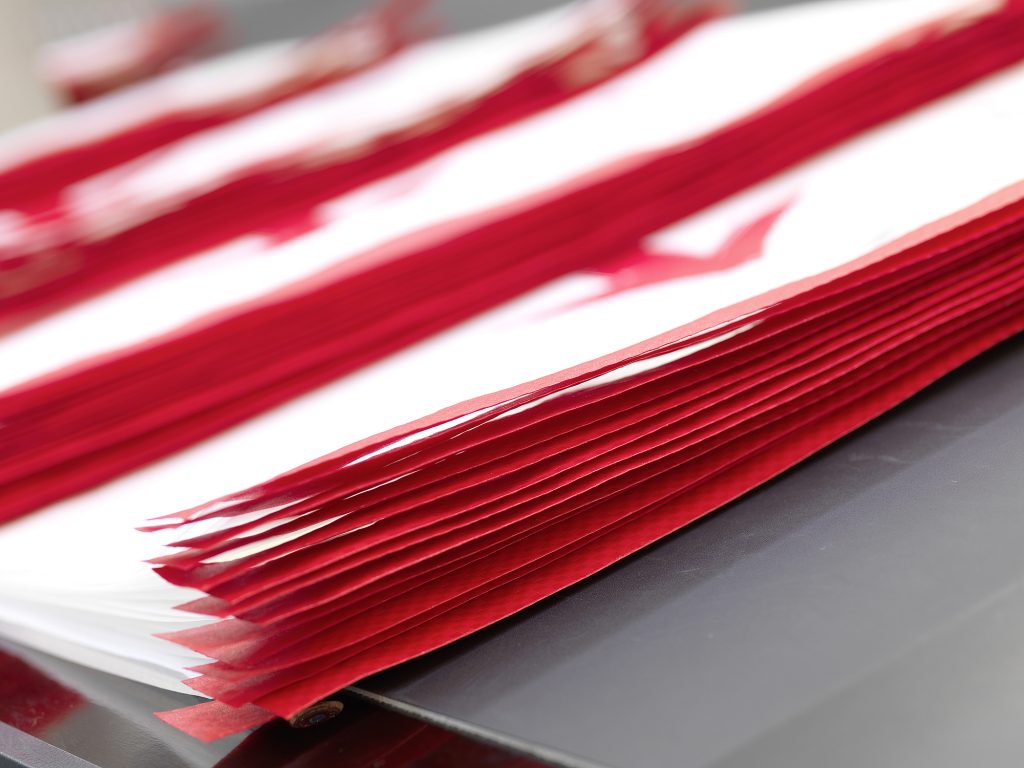
Tubular FFS Films with Micro‑perforations are heavy‑duty polyethylene (PE) rollstocks supplied as continuous tubes—sometimes with side gussets—that have been engineered with microscopic vent holes to accelerate de‑aeration during high‑speed Form‑Fill‑Seal (FFS) packaging. In practice, the format is also described as micro‑vented FFS tubular film, perforated heavy‑duty FFS tubes, micro‑perforated polyethylene sack film, and vented HDSS tubes. Though the names vary, the intent is constant: let entrained air escape quickly while maintaining dust control, seal integrity, pallet stability, and a brand‑ready surface. For a category overview and options, see Tubular FFS Films with Micro‑perforations.
Defining features. The tube format removes side seams and standardizes seal geometry; the micro‑perforation layer provides tunable venting without visible macro‑holes; modified PE blends (mLLDPE/HDPE) deliver high dart impact, wide hot‑tack windows, and stable coefficient of friction (COF); surface treatments (corona/primer) lock in ink; finishes can be glossy for shelf pop or matte for scanner readability; optional UV packages extend outdoor life. The combined effect is a film that runs smoothly, resists crease memory, and avoids stress‑whitening, even under strap tension.
How it is made. Typical structures are 3–5‑layer blown films. Resins are gravimetrically blended and co‑extruded through spiral‑mandrel or multi‑manifold dies; internal bubble cooling (IBC) stabilizes the bubble; thickness is closed‑loop controlled. The layflat tube is corona‑treated and, if needed, reverse‑ or surface‑printed. Micro‑perforations are added inline (laser/hot‑needle) or offline in a controlled map near the seal or shoulder. Rolls are wound with torque‑managed tension to prevent telescoping and crease set.
What it’s used for. Tubular FFS Films with Micro‑perforations are specified for polymer resin sacks (PE/PP pellets), fertilizers and agricultural inputs, industrial salts and minerals, construction powders (cement, gypsum, mortar), sugar and specialty food ingredients (with appropriate food‑contact declarations), and metallurgical additives—any free‑flowing, air‑entraining product that benefits from fast, clean, consistent packaging.
Why Venting Changes Everything: The Physics Behind Tubular FFS Films with Micro‑perforations
Air is the invisible saboteur of heavy‑duty packaging. Powders and granules trap air as they fall; that air must exit the bag quickly or it inflates like a pillow, deforms on the pallet, and loses stability in transit. Classic answers—large needle holes or fabric pores—solve the venting but invite dust, moisture ingress, and label contamination. Tubular FFS Films with Micro‑perforations take a subtler path: many small vents, precisely mapped, that bleed air during milliseconds of fill but go quiet afterward.
Consider the chain of events on an FFS line. Product drops; head pressure builds; the tube length seals; trapped air searches for exit paths. If vents are too sparse, fill height stalls and “bag shaping” time grows. If vents are too aggressive, fines escape and audit scores plummet. A good film behaves like a well‑designed lung: inhale fast, exhale faster, then hold.
Materials and Layer Design: Where Smooth Running Begins
Tubular FFS Films with Micro‑perforations are only as good as their resin architecture. We exploit the complementarity of metallocene LLDPE (mLLDPE) and HDPE: mLLDPE skins for toughness, clarity, and uniform slip response; HDPE in the core for stiffness and creep resistance under stack loads. Long‑chain‑branched components raise melt strength, relaxing orientation gradients that otherwise lock in crease memory. Slip/antiblock packages are calibrated in ppm—too little and stacks block; too much and early bloom drives COF instability. Inks adhere because surface energy doesn’t drift; seals hold because the hot‑tack window is wide; bags run because the film edges don’t “chatter” through nips.
Horizontally, these choices echo principles in rheology, optics, and tribology; vertically, they explain outcomes on a real line: fewer microstops, steadier web tracking, more predictable registration, and fewer barcode failures after wrap abrasion.
Micro‑perforation Engineering: Small Holes, Big Consequences
Micro‑perforations are not random pinpricks; they are engineered airflow devices.
Perforation methods. Laser perforation (CO₂ or diode) delivers clean, repeatable holes with tight diameter control and minimal burr; hot‑needle arrays create thermally stabilized holes with slight lip formation that can aid dust resistance; mechanical micro‑pins are economical but demand meticulous maintenance to avoid tear starters.
Key variables. Hole diameter (often tens to hundreds of microns), hole density (holes/m²), pattern geometry (rows, chevrons, rings), and placement (near the mouth, shoulder, or side panels). Each variable tweaks the transient airflow during fill. We treat venting capacity in equivalent flow terms and tune it to line speed, product particle size, and desired brick‑like shape on the discharge conveyor.
Trade‑offs. More holes vent faster but raise the risk of sifting and moisture ingress; fewer holes protect the product but slow the line and encourage ballooning. The sweet spot is application‑specific, which is why Tubular FFS Films with Micro‑perforations are validated against a map—not a guess.
De‑aeration on FFS Lines: From Powder Rheology to Pallet Physics
A simple thought experiment: if you halve the time that trapped air remains in a bag, you shorten shaping time, regularize bag geometry, and reduce inter‑bag voids on pallets. Those voids cause strap over‑tension, which creates corner whitening and label scuff. By contrast, Tubular FFS Films with Micro‑perforations encourage uniform brick formation. Granules interlock; layer friction rises; tilt moments decline. The pallet rides straighter, unloads cleaner, and needs less wrap.
Now the vertical dimension: speed, sifting, stability. Raise line speed and you must increase venting; increase venting and you must protect against fines and humidity; protect against fines and you target weld geometry and seal strength. It’s a living equation. That is why our specs synchronize perforation maps with seal widths, hot‑bar temperatures, and dwell times.
System Thinking: Sub‑Problems and Mini‑Solutions that Add Up
Break the job into solvable parts, then reassemble.
Climate & route. Monsoon corridors, coastal yards, and freeze‑thaw rail legs punish films differently. Mini‑solution: match perforation zones to the mouth/shoulder area, pick matte skins for low‑glare scanning in humid warehouses, add UV stabilizers where yard storage is routine.
Product rheology & particle geometry. Abrasive minerals attack surfaces; fluffy premixes trap more air. Mini‑solution: raise fabric stiffness via HDPE in the core, choose dart‑impact‑tough skins, and widen the hot‑tack window to hold seals despite dust.
Line speed & automation. High‑speed FFS punishes friction spikes. Mini‑solution: COF band 0.20–0.35 that stays in band; tight layflat tolerance; controlled tube ovality; micro‑perf density calibrated to bags per minute.
Regulatory & brand. Dense multilingual labels and QR/GS1 codes must survive rub and condensation. Mini‑solution: reserve quiet zones for codes; choose matte for readability; proof rub resistance; print with CI flexo or gravure depending on artwork.
Lifecycle & documentation. Auditors want proof. Mini‑solution: site certificates, material declarations, retained samples, and lot‑level test sheets that convert claims into evidence.
Integrated, these mini‑solutions make Tubular FFS Films with Micro‑perforations feel “easy” on the line and “boring” in complaints—the best compliment in packaging.
Problem → Solution → Result: Data‑Tinged Narratives
Problem: Ballooning and pallet lean on 50‑kg cement. The film trapped air; operators massaged each bag; tiers drifted in transit.
Solution: Re‑mapped micro‑perfs as a double chevron near the mouth (higher flow at the earliest fill stage), increased seal width by 2 mm, and shifted skins to a slightly stiffer blend for edge support.
Result: Fill time fell by ~7%; bag shaping motions disappeared; pallet lean events dropped; film consumption for stretch wrap decreased because layers sat square.
—
Problem: Sifting fines on a fertilizer route with high humidity. Aggressive perf patterns vented well but dusted the conveyors; labels smudged after dew cycles.
Solution: Switched to laser micro‑perfs with reduced diameter, moved the densest zone 40 mm away from the final seal, and specified matte skins with improved ink rub resistance. UV stabilizer added for yard storage.
Result: Dust alarms fell below audit thresholds; QR codes scanned after arrival; claims halved despite monsoon season.
—
Problem: Inconsistent feed on an inland resin line. COF scatter caused misfeeds and web chatter; early slip bloom changed over a weekend.
Solution: Re‑balanced slip/antiblock ppm, introduced silicone‑based slip for long‑term stability, and tightened layflat tolerance to ±2 mm. Kept micro‑perf minimal (resins need little venting) but preserved a small shoulder zone to remove entrained air at high rates.
Result: Bags per hour rose by double digits; web breaks nearly vanished; COF stayed in band for the full shelf life.
Production Process: End‑to‑End, with the Crucial Details that Avoid Headaches
1. Resin selection & blending
We start with certified grades—mLLDPE for toughness and sealability, HDPE for stiffness and creep resistance, optional long‑chain‑branched components for melt strength. Additives (slip, antiblock, UV) are gravimetrically dosed; pigments and white masterbatch are screened for low plate‑out and stable optics.
2. Co‑extrusion on IBC lines
A 3–5‑layer architecture (ABA/ABCBA) is co‑extruded through a spiral‑mandrel die. Internal bubble cooling shrinks frost line height and stabilizes layflat. Closed‑loop thickness control keeps gauges in band; bubble stability means fewer gauge bands and calmer winding.
3. Surface activation & printing
Corona or primer elevates surface energy (≥38 dynes). Artwork runs on CI flexo for durable text or gravure for photo‑grade solids. We control ΔE color drift and reserve code quiet zones.
4. Micro‑perforation mapping
Perfs are added inline (laser or hot‑needle) with real‑time inspection for hole count and diameter. Maps are documented—rows, offsets, densities—and linked to the SKU spec so line crews have a visual playbook.
5. Rewinding & tension control
Torque‑managed winding prevents telescoping; nip pressure avoids entrapped air. Annealing sections can be used to relax orientation and reduce crease memory. Cores are humidity‑protected to prevent telescoping during storage.
6. QA regimes
Incoming, in‑process, and outgoing tests check dart impact (ASTM D1709), tensile/elongation (ASTM D882/ISO 527), COF (ASTM D1894), seal strength and hot‑tack (ASTM F88, method‑aligned), haze/gloss (ASTM D1003/523), and WVTR/OTR when food‑adjacent (ASTM F1249/D3985). Micro‑perf audits verify hole density and diameter using microscopy; seal samples are dropped in flat, edge, and corner orientations to simulate reality.
Printing & Surface: When the Bag Becomes a Billboard
Tubular FFS Films with Micro‑perforations must communicate as well as contain. Matte finishes minimize scanner glare and hide scuffs, perfect for dense regulatory blocks; glossy skins saturate color and clean easily, ideal for retail‑visible polymer sacks. CI flexo with high‑line‑screen anilox rolls yields crisp small text; gravure produces deep solids and gradients. Pair finish choice with the channel environment: strip‑lit warehouses love matte; bright showrooms reward gloss.
Failure Modes to Watch—and How the Spec Prevents Them
Crease memory. Caused by orientation gradients and rapid crystallization. Prevented by LCB‑assisted melt strength, tuned cooling, and torque‑managed winding.
Stress‑whitening at straps. Caused by micro‑voiding under concentrated loads. Prevented by tough skins, proper strap corner protection, and reduced MD/TD imbalance.
Sifting. Caused by over‑perforation or seam leaks. Prevented by laser perfs of controlled diameter, densest maps away from the final seal, and higher seal widths.
COF drift. Caused by slip bloom or additive migration. Prevented by ppm‑calibrated packages and silicone‑based slip alternatives for long‑term stability.
Barcode failure. Caused by rub, glare, or curvature near the seal. Prevented by matte faces, reserved quiet zones, and code placement away from fold radii.
Market and Route Customization Map
Polymer resins (dry inland routes). Minimal perf, glossy skins, lowest practical COF, high dart; emphasize print brilliance for brand blocks.
Fertilizers (humid coastal/monsoon). Moderate perf near mouth/shoulder, matte skins, UV stabilizer, and rub‑resistant inks; seal width and hot‑bar dwell increased.
Industrial salts (hygroscopic). Micro‑perf restrained; stronger seals; anti‑sift focus; matte faces for warehouse scanning.
Construction powders (abrasive). Higher thickness window; tougher skins; denser perf maps early in fill; anti‑slip zones for pallet stability.
Each profile is a template; real specs are tuned after short trials on the customer’s worst route.
Technical Parameters and Options — Snapshot for Tubular FFS Films with Micro‑perforations
| Category | Typical Option / Range | Notes |
|---|---|---|
| Structure | 3–5 layers (ABA/ABCBA) | Skins tuned for COF & print; core for stiffness/toughness |
| Thickness | 100–180 μm (custom 80–200 μm) | 25–50 kg heavy‑duty sacks |
| Layflat width | 350–1200 mm | With/without side gussets |
| COF (film/film) | 0.20–0.35 (stable over aging) | ASTM D1894 measured and trended |
| Dart impact | 300–1200 g | ASTM D1709, Method A/B; route‑dependent |
| Tensile/Elongation | Per ASTM D882 / ISO 527 | Draw ratios tuned to avoid crease memory |
| Seal strength | ≥20–40 N/25 mm | ASTM F88; matched to drop height & mass |
| Hot‑tack window | Wide, multi‑set temperatures | For high‑speed impulse sealing |
| Haze / Gloss | Haze < 12% or engineered matte; Gloss 45–80 GU | Channel‑driven; barcode readability vs saturation |
| WVTR / OTR | Per ASTM F1249 / D3985 | For food‑adjacent SKUs |
| UV stabilization | 0–3% | Yard storage resistance |
| Perforation method | Laser or hot‑needle | Laser for diameter control; needle for economy |
| Perf diameter | ~50–250 μm | Product/line‑speed dependent |
| Perf density | 50–800 holes/m² (zoned) | Calibrated to de‑aeration need |
| Perf placement | Mouth/shoulder bands, optional side rows | Keep densest zone offset from final seal |
| Printing | CI flexo up to 8C; gravure up to 10–12C | Corona ≥38 dynes; ΔE targets defined |
Values are representative of widely used, verifiable windows; final specifications are engineered to product density, route climate, and filler speed.
From RFQ to First Pallet: A Playbook that Prevents Surprises
- Discovery. Capture density, flow behavior, target line speed, route climate, audit gates, and channel visuals. Decide whether mono‑material claims or recycled content targets apply.
- Spec draft. Choose layer architecture, thickness, layflat, COF band, seal spec, and micro‑perf map (method, diameter, density, placement). Define finish and printing process, plus barcode grade targets.
- Pilot. Run on the worst route; measure fill time, shaping seconds, bag geometry, drop survival (flat/edge/corner), dust counts, label rub, and scanner success after wrap.
- Lock. Freeze resin/additive packages; set SPC limits on gauge, COF, dart, and seal; document perf maps and seal windows on one page for operators.
- Monitor. Track complaints per million, moisture gain on arrival, pallet lean incidents, barcode grades, and OEE. Adjust one lever at a time and document changes.
When this loop runs, Tubular FFS Films with Micro‑perforations stop being a commodity and start behaving like a predictable part of the line—quiet, fast, and dependable.

Introduction — What Tubular FFS Films with Micro‑perforations Are, Why They Matter, and Where They Fit
Tubular FFS Films with Micro‑perforations are heavy‑duty polyethylene tubes—supplied as continuous rollstock—that are converted on Form‑Fill‑Seal lines into sealed industrial sacks. In the trade, the format is also described as micro‑vented FFS tubular film, perforated heavy‑duty FFS tubes, and vented HDSS tubes. Put simply, Tubular FFS Films with Micro‑perforations remove side seams, standardize seal geometry, and embed a finely tuned venting layer so trapped air can escape during filling while dust stays put. For a concise overview of options and configurations, see Tubular FFS Films with Micro‑perforations. Key features include smooth runability (stable COF), crease‑free layflat, anti‑whitening under strap pressure, wide hot‑tack windows for high‑speed sealing, and printable surfaces (matte for scanners, gloss for shelf appeal). Typical uses cover polymer resin sacks (PE/PP pellets), fertilizers and agricultural inputs, industrial salts and minerals, construction powders (cement, gypsum, mortar), and sugar or specialty food ingredients when backed by food‑contact declarations.
Problem Framing — The Operational Risks Tubular FFS Films with Micro‑perforations Are Built to Solve
Packaging fails for familiar reasons: powders entrap air, bags balloon, pallets lean; humidity creeps, labels smudge, barcodes won’t scan; friction spikes trip feeders; folds set as creases and turn white under tension. Tubular FFS Films with Micro‑perforations attack these failure chains at their source. Horizontally, the solution blends rheology (mLLDPE/HDPE architecture), tribology (controlled slip/antiblock), and airflow engineering (perforation diameter, density, and placement). Vertically, it addresses cause → effect: air retention → shaping delays → unstable stacks; over‑perforation → sifting → audit findings; poor surface energy → weak ink adhesion → unreadable codes.
Methods — Turning Requirements into a Robust Spec for Tubular FFS Films with Micro‑perforations
We build a repeatable specification by decomposing the system, setting measurable targets, then recombining:
- Climate & route. Pick thickness (100–180 μm), UV packages (0–3%) for yard storage, and perf maps that vent during milliseconds of fill yet seal tight post‑fill. In humid corridors, Tubular FFS Films with Micro‑perforations place the densest micro‑holes near the mouth but offset from the final seal.
- Product rheology. Abrasive minerals want tougher skins and higher dart impact; fluffy premixes want more venting but smaller hole diameters. The core/skin mix in Tubular FFS Films with Micro‑perforations (HDPE for stiffness, mLLDPE for toughness) balances drop survival with fold resistance.
- Line speed & ergonomics. Target COF 0.20–0.35 that stays in band; keep layflat tolerance to ±2–3 mm; specify tube ovality limits; define hot‑tack windows so seals form cleanly at speed. Here, Tubular FFS Films with Micro‑perforations earn minutes per shift in fewer microstops.
- Brand & readability. Reserve quiet zones for GS1/QR; choose matte faces where scanners dominate and gloss where color saturation matters; maintain surface energy ≥38 dynes for consistent ink wet‑out on Tubular FFS Films with Micro‑perforations.
- Compliance. Back claims with site certificates and material declarations; trend dart impact, COF, and seal strength lot‑to‑lot for Tubular FFS Films with Micro‑perforations.
Results — What Changes on the Filler and the Pallet with Tubular FFS Films with Micro‑perforations
Lines run faster because air escapes at the rate the process needs, not at the rate chance allows. Bags land brick‑like rather than puffed; operators stop “massaging” corners; pallets build tighter and travel straighter. With Tubular FFS Films with Micro‑perforations, dust counts drop, wrap film usage shrinks, and label readability survives rub and condensation. The net effect: lower rework, cleaner floors, quieter complaint logs.
Discussion — Horizontal Comparisons and Vertical Causality
Compared with unperforated heavy‑duty films, Tubular FFS Films with Micro‑perforations trade a marginally more complex spec for shorter shaping time and better cube efficiency. Compared with coarse needle punching, Tubular FFS Films with Micro‑perforations vent just as effectively but control fines and moisture ingress far better. Vertically, every lever touches another: raise perf density and line speed improves, yet seal design and hole placement must tighten; thicken the film to resist abrasion and drop shock, yet COF and hot‑tack must be retuned so conveyors don’t stall. The win is orchestration, not any single knob.
System Thinking — Sub‑Problems, Mini‑Solutions, One Integrated Outcome
- Air entrapment. Mini‑solution: laser micro‑holes of 80–180 μm in a chevron band near the mouth; in Tubular FFS Films with Micro‑perforations this map accelerates de‑aeration during the first thirds of fill.
- Sifting & hygiene. Mini‑solution: densest perfs offset 30–50 mm from the final seal; welded seal widths increased by 2–3 mm; dust levels on conveyors fall for Tubular FFS Films with Micro‑perforations.
- Crease memory & whitening. Mini‑solution: LCB‑assisted cores and torque‑managed winding; Tubular FFS Films with Micro‑perforations unwind flat and stay flat, with no chalky folds under straps.
- Barcode failure. Mini‑solution: matte faces and reserved quiet zones; Tubular FFS Films with Micro‑perforations keep codes gradeable after wrap abrasion.
The integrated outcome is predictable: faster fills, squarer layers, readable panels, quieter audits.
Material & Process Insights — Why Tubular FFS Films with Micro‑perforations Feel “Easy” on the Line
Metallocene LLDPE skins cut gel defects and stabilize slip response; HDPE backbones carry compressive loads at tier three. Long‑chain branching raises melt strength so orientation gradients relax instead of freezing into creases. Corona activation keeps surface energy high; gravure or CI flexo applies either photo‑grade solids or ultra‑legible microtext. Micro‑perfs—laser or hot‑needle—are inspected inline for diameter and count. The practical payoff is simple: Tubular FFS Films with Micro‑perforations thread without chatter, seal without fuss, and stack like bricks, not pillows.
Techniques for Perforation & Sealing — Getting Tubular FFS Films with Micro‑perforations Right
- Perforation diameter. Small enough to block fines, large enough to vent fast. In practice, Tubular FFS Films with Micro‑perforations operate best with 50–250 μm holes matched to particle size and rate.
- Perforation density. Expressed as holes/m²; zone densest bands early in fill. Tubular FFS Films with Micro‑perforations often use 100–600 holes/m² in shoulder bands.
- Placement. Keep the densest map offset from the final seal; add sparse side rows only when brick formation still lags. That keeps Tubular FFS Films with Micro‑perforations clean and compliant.
- Seal geometry. Wider seals with longer dwell protect against humid routes; Tubular FFS Films with Micro‑perforations specify hot‑tack windows to avoid weak seams at speed.
Practical Guidance — From RFQ to First Shipment of Tubular FFS Films with Micro‑perforations
- Discovery. Capture density, flow, target speed, climate, and channel visuals. Decide whether mono‑material claims or food‑contact apply to Tubular FFS Films with Micro‑perforations.
- Spec writing. Lock layer design (ABA/ABCBA), thickness, layflat, COF band, seal targets, and perf map (method, diameter, density, placement) for Tubular FFS Films with Micro‑perforations.
- Validation. Pilot on worst routes; measure fill time, shaping seconds, drop survival (flat/edge/corner), dust counts, rub resistance, and barcode grades on Tubular FFS Films with Micro‑perforations.
- Launch & monitor. Freeze resin/additive packages; trend COF/dart/seal in SPC; document perf maps visually. Adjust one lever at a time; every change on Tubular FFS Films with Micro‑perforations gets a batch note.
Specification Snapshot — Parameters for Tubular FFS Films with Micro‑perforations
| Category | Typical Option / Range | Notes |
|---|---|---|
| Structure | 3–5 layers (ABA/ABCBA) | Skins for COF & print; core for stiffness/toughness |
| Thickness | 100–180 μm (custom 80–200 μm) | 25–50 kg heavy‑duty sacks |
| Layflat width | 350–1200 mm | With or without side gussets |
| COF (film/film) | 0.20–0.35 (stable) | ASTM D1894 measured and trended |
| Dart impact | 300–1200 g | ASTM D1709 A/B; route‑dependent |
| Tensile/Elongation | Per ASTM D882 / ISO 527 | Draw ratios tuned to avoid crease memory |
| Seal strength | ≥20–40 N/25 mm | ASTM F88; matched to mass & drop height |
| Hot‑tack | Wide, multi‑set temperatures | For high‑speed impulse sealing |
| Haze / Gloss | Haze < 12% or engineered matte; Gloss 45–80 GU | Readability vs saturation |
| UV stabilization | 0–3% | Yard storage resistance |
| Perf method | Laser or hot‑needle | Laser for diameter control; needle for economy |
| Perf diameter | ~50–250 μm | Product/line‑speed dependent |
| Perf density | 50–800 holes/m² (zoned) | Calibrated to de‑aeration need |
| Perf placement | Mouth/shoulder bands, optional side rows | Offset densest zone from final seal |
| Printing | CI flexo up to 8C; gravure up to 10–12C | Corona ≥38 dynes; ΔE targets defined |
Case Vignettes — Problem → Solution → Result with Tubular FFS Films with Micro‑perforations
Coastal fertilizer. Problem: caking and label smear after dew. Solution: laser‑perfs with reduced diameter, densest band 40 mm from final seal, matte skins and rub‑resistant inks. Result: dust alarms fell; codes scanned at arrival; claims halved—an outcome driven by Tubular FFS Films with Micro‑perforations tuned to climate.
Resins on inland routes. Problem: COF drift and misfeeds over weekend storage. Solution: silicone‑based slip for long‑term stability, tighter layflat tolerance, minimal shoulder perf. Result: throughput rose double‑digits, web breaks nearly vanished; Tubular FFS Films with Micro‑perforations held COF in band across shelf life.
Abrasive construction powders. Problem: puncture and slow brick formation. Solution: thickness +20 μm, tougher skins, two chevron perf bands early in fill. Result: faster shaping, stable pallets, fewer strap marks—again owed to correctly tuned Tubular FFS Films with Micro‑perforations.
References
- ASTM D1709 — Impact Resistance of Plastic Film by Free‑Falling Dart.
- ASTM D1894 — Static and Kinetic Coefficients of Friction of Plastic Film and Sheeting.
- ASTM D882 / ISO 527 — Tensile Properties of Thin Plastic Sheeting.
- ASTM F88 — Seal Strength of Flexible Barrier Materials.
- ASTM F1249 — Water Vapor Transmission Rate through Plastic Film.
- TAPPI T830 — Ink rub resistance for printed packaging surfaces.
- ISO 6383 — Tear resistance of plastic films.