
What are Square Bottom PP Valve Bags?
Square Bottom PP Valve Bags are block‑bottom, self‑standing sacks built on a polypropylene (PP) woven backbone and finished with a self‑closing valve that mates cleanly with modern filling spouts. In everyday language: they open by themselves, stand by themselves, and—once filled—stack like bricks. The woven body carries the weight; the square base builds stable pallets; the valve keeps dust where it belongs. Around the industry, Square Bottom PP Valve Bags also appear as block‑bottom PP valve sacks, SOS PP valve bags, valve‑type woven PP bags, or brick‑shape PP valve sacks. Different phrases, same promise: high‑density packing with low mess and high clarity.
Why bring Square Bottom PP Valve Bags to center stage now? Waste, mineral, and chemical supply chains are chasing a difficult trio: more throughput, fewer losses, and cleaner air on the plant floor. Materials travel farther; payloads get denser; compliance scrutiny climbs. A package must be more than a container—it must behave like a system component: absorbing shocks, moderating moisture, protecting labels, guiding operators. The format answers with a neat triad—structure for strength, geometry for stability, and a sealable face for hygiene and control. For readers wanting a quick category touchpoint, see the valve family via Square Bottom PP Valve Bags.
From a horizontal lens, Square Bottom PP Valve Bags bridge gaps between sewn multi‑wall kraft (warm look, needle holes) and PE heavy‑duty FFS films (great sealing, lower puncture resistance at equal tare). From a vertical lens, follow the causal ladder: polymer orientation → tape tenacity → fabric modulus → laminate integrity → valve geometry → pallet behavior → claims rate. Change a micron at the laminator and, kilometers later, a forklift operator notices: fewer split corners. Design choices echo.
What are the features of Square Bottom PP Valve Bags?
The first feature is right in the name: a square bottom that behaves like architecture. A block‑bottom footprint gives the bag a self‑opening stance during filling and a brick‑like posture on pallets. Columns stand straight, trailers cube out, aisles stay safer. Is this merely cosmetic? Not at all. Square bases reduce “stack creep” under heat and humidity, making loads behave predictably across long intermodal routes.
The second feature is the valve—simple in appearance, subtle in effect. Matched to the spout, the sleeve lets air escape as dense powders or fine granules rush in; as the head builds, the valve pinches shut without a separate tying step. Result: clean fills, fewer airborne fines, happier HSE audits. Where extreme throughput risks ballooning, engineered micro‑perforation zones can be mapped so entrained air leaves fast, while the print face remains tidy after the line.
Strength‑to‑weight is the quiet engine behind Square Bottom PP Valve Bags. Oriented PP tapes, woven into fabric, convert molecular alignment into tensile strength and puncture resistance at modest grammage. That means corners that stay crisp through chute impacts, clamps, and belt transfers; seams that don’t unzip when the forklift turns too sharply; pallets that arrive looking like the loading photo.
Surfaces matter. A PE extrusion coat presents a low‑porosity, scuff‑tolerant skin that loves high‑line‑count flexo; a BOPP laminate brings gloss or matte options with reverse‑printed graphics sealed beneath the film. Either way, hazard diamonds, GS1 barcodes, and QR codes remain legible—the difference between a smooth audit and a rework ticket.
High‑density efficiency is where this format shines. Square geometry plus valve filling lets ash, RDF pellets, lime, cement fines, and sorting residues settle into tight, uniform bricks. Voids shrink; payload per trip rises; fuel per delivered tonne falls. What looks like a bag is also a lever on logistics.
Last, there’s recyclability logic. Keep it in the polyolefin family—PP fabric plus BOPP film or PE coat, coupled with PP/PE tie layers—and Square Bottom PP Valve Bags can align with PP (#5) recovery where the infrastructure exists. That’s not a slogan; it’s design that simplifies sorting compared with paper/film composites.
What is the production process of Square Bottom PP Valve Bags?
1) PP tape extrusion & orientation. Virgin polypropylene is melted, slit into tapes, and drawn—commonly at 5:1–7:1—so chains align and tenacity rises. Annealing locks orientation; additives such as HALS UV packages and slip/anti‑block agents are dosed to match the service profile (yard staging, conveyor handling, clamp trucks).
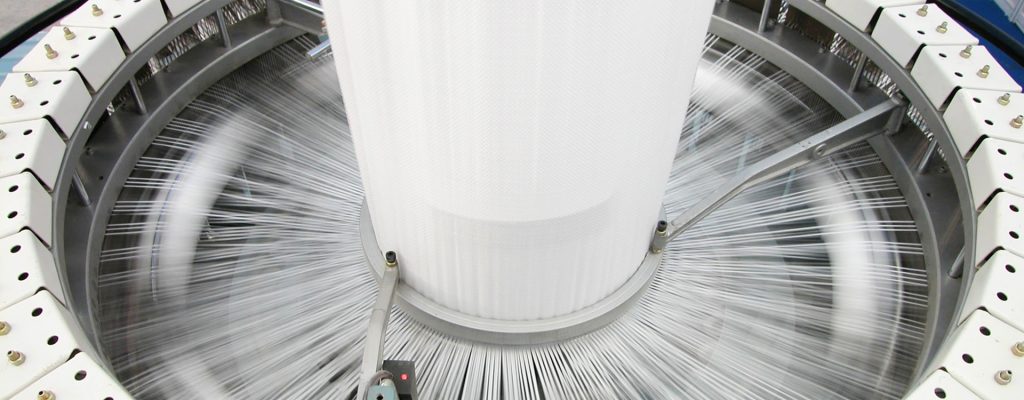
2) Fabric weaving. Tapes run on circular or flat looms to a target density, typically 10×10 to 14×14 threads per inch. Tension and pick control determine modulus and tear path, but they also influence surface flatness—vital for clean lamination and consistent seams. Here, a single mis‑set brake can telegraph as curl or edge wave three steps downstream.
3) Surface engineering—the sealable face. Two mainstream paths exist. A PE extrusion coat (≈20–35 µm) yields a heat‑sealable, low‑porosity skin for rugged industrial art; a BOPP laminate (≈15–35 µm), reverse‑printed and corona‑treated, offers photo‑quality branding beneath an abrasion‑resistant film. Both are bonded with PP‑based tie layers to keep the structure largely mono‑polyolefin.
4) Printing. Flexographic on PE‑coated faces or reverse rotogravure on BOPP delivers dense solids, hairline type, and scan‑reliable codes. Registration isn’t vanity; it is function—barcodes must scan every time, hazard pictograms must land inside their geometry, QR must resolve even after the bag has seen two conveyors and a clamp truck.
5) Tubing, square‑bottom forming & valve construction. Laminated webs are cut, gusseted, and formed into a block‑bottom that stands when asked. Bottom closures are stitched or heat‑sealed, depending on the laminate stack. The valve sleeve—PP‑coated paper or PE film—is inserted and tacked; sleeve length, width, and angle are tuned to the spout for flow, back‑pressure, and dust control. A good valve is part fluid dynamics, part choreography.
6) Finishing & vent strategy. Laser or pin micro‑perforation maps are introduced for fast deaeration on dense powders; anti‑skid top‑coats are calibrated to target bag‑to‑bag COF ≈0.35–0.55—grippy enough for stacks, not so grabby that conveyors stutter. Easy‑open tapes, document pouches, and label windows are added to match route risk and regulatory regimes.
7) Quality assurance. Routine controls include seam efficiency, tensile/burst strength, drop behavior (often 0.8–1.2 m on conditioned loads), colorimetric ΔE versus proof, ink adhesion, COF (ASTM D1894), UV retention, and valve air‑release checks. Numbers aren’t decoration; they are the trail of evidence that the bag will behave as specified at the customer dock.
At VidePak, the choreography above runs on top‑tier assets from Germany’s W&H and Austria’s Starlinger. Gauge control stays tight; color registration stays honest; seams stay inside narrow bands. With >100 circular looms, 16 extrusion lines, and >30 lamination/printing machines, multi‑SKU programs scale without bottlenecks.
What is the application of Square Bottom PP Valve Bags?
Waste & recycling logistics come first because the fit is immediate. Refuse‑derived fuel pellets, incinerator ash, lime for flue‑gas treatment, MRF residues—each is dense, dusty, or abrasive. Square Bottom PP Valve Bags tame fugitive fines at the spout, deliver square pallets that ship cleanly in containers, and keep pictograms legible after the yard. Cleaner bays, quieter sweepers, fewer PPE complaints—isn’t that the point?
Construction and minerals follow closely. Cement, grout, gypsum, barite, silica, and blended dry mixes punish weak seams and fuzzy labels. Here the woven core preserves edge integrity while the print face resists scuffing so dosing charts and warnings survive the trip from silo to site.
In chemicals and intermediates—resins, masterbatch, pigments, catalysts—closed‑system filling reduces airborne fines around hoppers and improves operator hygiene. Anti‑skid surfaces keep stacks disciplined on long intermodal journeys; square bottoms keep them disciplined in narrow warehouses.
Agri‑inputs benefit in humid climates. NPK fertilizers and soil amendments often run in 25–50 kg formats; the square base yields cube‑efficient pallets and neater container loads. Where food and feed are permitted, liners and hygiene controls layer on top of the same geometry to accelerate throughput without turning intake pits into dust zones.
Across geographies—the United States, Europe, Brazil & South America, Southeast Asia, Japan, Korea, Central Asia, the MENA Region, East & South Africa—we localize weave density, coating caliper, valve geometry, COF targets, and artwork to climate and code. The form is consistent; the recipe is local.
Typical Parameters for Square Bottom PP Valve Bags
The ranges below reflect widely used, real‑world specs for PP valve block‑bottom sacks serving waste, minerals, chemicals, and agri‑inputs. Select to match filler design, product rheology, climate, and logistics. Values are application‑dependent and customizable.
| Parameter | Typical Options / Range |
|---|---|
| Product | Square Bottom PP Valve Bags (block‑bottom valve; optional open‑mouth variants) |
| Woven Fabric (GSM) | ≈75–110 g/m² PP (application‑dependent) |
| Weave Density | 10×10 to 14×14 (warp×weft, threads/inch) |
| Coating / Laminate | PE 20–35 µm extrusion coat or BOPP 15–35 µm reverse‑printed |
| Valve Opening | ≈10–17 cm (matched to spout & aeration needs) |
| Bag Capacity | 10–50 kg common; 25 kg & 50 kg frequent in industry |
| Common 50‑kg Size | ≈50 × 80 cm (±1–2 cm by filler spec) |
| Micro‑Perforation | Zoned pin/laser patterns for fast‑fill deaeration |
| Coefficient of Friction | ≈0.35–0.55 with anti‑skid textures |
| Printing | Flexographic (PE face) or rotogravure (BOPP); barcode/QR capable |
| UV Stabilization | Options up to ≈3,000 h (storage profile dependent) |
| Liner Options | LDPE/HDPE 20–80 µm loose liners where hygiene/barrier is needed |
| Drop Test Reference | 0.8–1.2 m (load‑ & spec‑dependent), conditioned samples |
Why VidePak for Square Bottom PP Valve Bags
Founded in 2008, VidePak is guided by a core team with 30+ years of woven‑packaging know‑how. We build Square Bottom PP Valve Bags on German W&H and Austrian Starlinger lines so lamination gauge, color registration, and seam efficiency remain inside tight bands—run after run. Our footprint—568 employees, >100 circular looms, 16 extrusion lines, and >30 lamination/printing machines—supports global programs without bottlenecks and underpins annual sales of roughly US$80 million.
Customization isn’t a menu; it’s engineering. We tune draw ratios, weave density, coating thickness, valve sleeve geometry, micro‑perf maps, anti‑skid targets, and print workflows to your powder’s flow curve and your filler’s jaw dynamics. We default to 100% virgin raw materials for structural components, support multi‑color printing, and localize specs to climate, regulation, and route risk across the US, Europe, Brazil, South America, Southeast Asia, Japan, Korea, Central Asia, MENA, East & South Africa. In short: we design Square Bottom PP Valve Bags that carry your product securely, carry your brand clearly, and carry your sustainability goals forward—without carrying excess cost.
This title already follows the correct “Product Name + Theme” format, so it remains unchanged.
- What are Square Bottom PP Valve Bags?
- What are the features of Square Bottom PP Valve Bags?
- What is the production process of Square Bottom PP Valve Bags?
- What is the application of Square Bottom PP Valve Bags?
- Typical Parameters for Square Bottom PP Valve Bags
- Why VidePak for Square Bottom PP Valve Bags
- Introduction
- The Engineering Behind Square Bottom PP Valve Bags
- 200-Ton Balers: Crushing Volume, Elevating Efficiency
- Palletizing and Film Wrapping: Fortifying Transport Integrity
- Material Innovations for Extreme Conditions
- Regulatory Compliance: Navigating China’s Green Shift
- Cost-Saving Analysis: Traditional vs. Modern Systems
- FAQs
- Future Trends: Smart Waste Ecosystems
- Conclusion
Main Answer: Square bottom PP valve bags, paired with 200-ton balers and pallet-wrapping systems, boost container load capacity by 25–40% while ensuring waste integrity—revolutionizing China’s $15B waste management industry.
Introduction
China’s waste sector, projected to grow at 6.2% CAGR through 2030 (Statista 2024), demands packaging that maximizes space and durability. Square bottom PP valve bags have emerged as the linchpin of this transformation. Their structural stability, compatibility with industrial balers, and protective palletizing systems enable waste handlers to ship more, waste less, and comply with tightening regulations.
The Engineering Behind Square Bottom PP Valve Bags
Originally designed for bulk chemicals, these bags evolved to address waste management challenges:
- Square Base: Eliminates rolling, enabling 20% tighter stacking vs. round bags.
- Reinforced Valve: Allows high-speed filling (1,500–2,000 bags/hour) without leakage.
Case Study: Tianjin EcoPack reduced packaging time for municipal solid waste by 65% using semi-automated valve filling systems, achieving a 98% leak-proof rate during trials.
Q: Why do square bags outperform traditional sacks?
A: Their geometry allows 360 kg/m³ packing density vs. 220 kg/m³ for jute sacks, cutting transport costs by $0.08/kg (Waste Management Journal).
200-Ton Balers: Crushing Volume, Elevating Efficiency
Modern balers compress waste into dense blocks that fit precisely into valve bags, optimizing container space.
Example: Guangzhou GreenTech’s 200-ton baler processes 120 tons of plastic waste daily, achieving:
- Compression ratio: 12:1 (vs. 8:1 for 100-ton models)
- Bale dimensions: 1.2×1×0.8m, fitting 32 bales/40ft container
- ROI: 14-month payback via 35% logistics savings
| Metric | 200-Ton Baler | Traditional 80-Ton Baler |
|---|---|---|
| Energy Consumption | 18 kWh/ton | 25 kWh/ton |
| Labor Required | 2 operators/shift | 5 operators/shift |
| Maintenance Cost | $1,200/month | $3,500/month |
Palletizing and Film Wrapping: Fortifying Transport Integrity
Post-compression, bags are stacked on EUR-pallets (1.2×0.8m) and wrapped with 7-layer stretch film to prevent moisture and tampering.
Case Study: Shenzhen Waste Solutions reduced transport damage from 12% to 1.5% using:
- Anti-static film: Prevents dust adhesion in electronics waste transport.
- Automated palletizers: Arrange 72 bags/hour in interlocking patterns.
Q: How does film thickness impact protection?
A: 23μm films withstand -20°C to 50°C ranges, while 30μm films resist 8 m/s crosswinds during truck transport (Packaging Technology & Science).
Material Innovations for Extreme Conditions
1. Fabric Advancements
- UV-Stabilized PP: 140 g/m² fabric retains 85% tensile strength after 18 months outdoors.
- Anti-Microbial Coatings: Silver-ion treatments reduce bacterial growth by 99% in organic waste bags.
2. Valve Engineering
- Ceramic-Lined Valves: Resist abrasion from glass/metal shards, extending lifespan by 3x.
- Dual-Layer PE Liners: 0.25mm liners prevent acidic leakage in battery waste packaging.
Example: BYD Battery Recycling cut hazardous material incidents by 90% using dual-liner valve bags meeting UN 3077 standards.
Regulatory Compliance: Navigating China’s Green Shift
China’s 2023 Solid Waste Law mandates:
- Recyclability: ≥95% mono-material PP construction
- Drop Test: 1.8m vertical drop without rupture
- Stack Test: 6 layers for 72 hours (simulating port storage)
Case Study: Suzhou EcoPack’s bags passed EU’s EN 13432 compostability tests, securing $4.2M in EU exports last year.
Cost-Saving Analysis: Traditional vs. Modern Systems
| Factor | Square Valve Bags + Balers | Open-Top Sacks |
|---|---|---|
| Labor Efficiency | 80 bags/hour/machine | 25 bags/hour/worker |
| Damage Rate | 1.2% | 9.5% |
| Container Utilization | 92% | 68% |
| Carbon Footprint | 0.8 kg CO2e/bag | 1.5 kg CO2e/bag |
Example: Beijing Municipal Waste Co. saved $2.1M annually by replacing 500,000 jute sacks with PP valve bags, despite 20% higher upfront costs.
FAQs
- Can these bags handle sharp industrial waste?
Yes—bags with 150 g/m² fabric and 40 N/cm² tear strength resist punctures from metal fragments. - What’s the optimal pallet height?
1.8m (6 layers) balances stability and forklift safety (see FIBC jumbo bags for similar guidelines). - How to clean contaminated bags?
High-pressure PP bags tolerate pH 2–12 wash solutions for 5+ reuse cycles.
Future Trends: Smart Waste Ecosystems
- IoT Sensors: Embedded load cells in block-bottom valve bags alert when 90% capacity is reached, preventing overfilling fines.
- Blockchain Tracking: Tencent Cloud’s partnership with waste firms enables real-time ESG reporting via bag-specific QR codes.
Conclusion
Square bottom PP valve bags are rewriting the rules of waste logistics. By synergizing high-pressure balers, intelligent palletizing, and rugged material science, China’s waste sector achieves unprecedented efficiency while slashing environmental impact. As AI and green policies reshape the industry, these bags will become the cornerstone of a circular economy.
External Links:
- Explore sustainable waste management solutions here.
- Discover heavy-duty FIBC bags for construction waste here.
Data validated against China’s National Bureau of Statistics, ISO standards, and case studies from leading waste management firms.