
What Are FFS Roll Bags?
Envision a single, seamless tube of polypropylene fabric gliding through a Form-Fill-Seal (FFS) line—cutting, filling, and sealing itself into finished packs at 35 metres per minute. These are FFS Roll Bags: Evolution and Benefits of Fine Yarn Technology in Packaging Solutions (hereafter FFS Roll Bags). Trade insiders also tag them tubular woven roll stock or film-ready PP rolls, but the premise stays constant: ultra-fine 600 denier tapes are woven into a flattened hose, corona-treated, surface-calendered, and wound onto 1-ton jumbo rolls ready for high-speed automation.
Key Features of FFS Roll Bags
| Metric | Typical Spec* | Why It Matters |
|---|---|---|
| Tape Denier | 550–650 D | Fine yarn grants smooth print surface while keeping ≥ 600 N warp tensile. |
| Fabric GSM | 70–82 gsm | Cuts resin use 12 % vs PE film; lighter pallets shrink CO₂ per tonne-kilometre. |
| Roll Width Range | 380–1,500 mm | Fits W&H AD PLASTIC, Haver FFS Pro, and Starlinger lamiTec lines out-of-the-box. |
| Machine Speed | ≥ 30 m min⁻¹ | Doubles output versus pre-made valve sacks—labour cost slashed 70 %. |
| Recyclability | Mono-PP, RecyClass B | Off-cuts and post-consumer bags re-enter PCR stream; aligns with EU PPWR. |
*Benchmarks: Made-in-China audits 2025 H1; VidePak QA lab.
Fine-Yarn Smoothness Surface roughness < 25 µm Ra keeps ink lay-down uniform and friction low—reducing FFS downtime from film drag.
One-Roll Workflow No manual bag feeding means forklifts vanish from the pack hall; uptime rises, ergonomic injuries fall.
Circular-Economy DNA Pure PP architecture plus PCR variants ensure every gram can circle back as pellet, not landfill.
How VidePak Crafts FFS Roll Bags
- Ultra-Fine Tape Extrusion Borealis RA130E virgin resin blends with 15 % ISCC-PLUS PCR pellets; sixteen Starlinger lines extrude 2.3 mm tapes drawn 7×, reaching 650 N warp tensile.
- High-Density Weaving 100 German W&H looms interlace 14 × 14 epi cloth—dense enough for 100 LPI flexo, flexible enough for 40 kg fertiliser drop tests.
- Surface Calendering Twin chrome rolls “iron” fabric at 135 °C, slicing thickness variance to ±3 µm; friction coefficient steadies at 0.28.
- Optional Barrier Lamination 25 µm LDPE or 20 µm BOPP fuses at 290 °C for glossy retail SKUs or moisture-critical powders.
- High-Fidelity Printing Miraflex G3 presses lay CMYK + white at 100 LPI; ΔE < 2 ensures brand colour across warehouse LEDs and e-commerce soft-boxes.
- Jumbo Roll Winding Auto edge-guiding builds 1.2 m-diameter, 1-ton rolls; laser-cut cores simplify fork pick-up.
- QA Carousel Every 30 min: haze, tensile, WVTR, COF, print registration. MES alerts route through DingTalk; deviations trigger closed-loop tuning.
Fine Yarn Technology—Why the Hype?
Background: Traditional FFS tubular fabric relied on 900–1,000 D tapes, leaving a “corduroy” surface. This rippled texture meant patchy ink, snags in forming shoulders, and extra resin weight. Enter 600 D fine yarn—thin enough to mimic film smoothness, thick enough for load.
Horizontal Insight: Much like polyester micro-fibre revolutionised athletic wear by improving surface-to-weight ratio, fine-denier PP raises packaging performance without adding grams.
Vertical Trajectory: As machine-direction-oriented (MDO) PE films chase mono-material dreams, fine-yarn PP keeps parity by offering printability plus woven tensile—two virtues MDO still grapples to balance.
Operational Economics—Problem, Solution, Result
Problem: A Southeast-Asian fertiliser line packing 900 t day⁻¹ faced labour bottlenecks on valve-sack sewing stations; product spillage topped 1.2 %.
Solution: Switch to FFS Roll Bags with BOPP matte grip strip. Integrated gusset former cut-fill-seal at 32 m min⁻¹; labour redeployed.
Result: OEE rose from 68 % to 88 % in four weeks; spillage fell to 0.3 %. ROI on FFS retrofit realised in nine months.
Applications of FFS Roll Bags
| Sector | Typical Fill | VidePak Spec | Quantified Win |
|---|---|---|---|
| Polymer Resin Plants | 25 kg PP pellets | 75 gsm clear PP + anti-static masterbatch | FFS 32 m min⁻¹, dust alerts ↓ 60 % |
| Fertiliser Blenders | 40 kg NPK | BOPP gloss laminate + matte grip | Shelf impact ↑ 18 %, labour ↓ 45 % |
| Food Ingredients | 10 kg flour | LDPE-lined + dynamic QR code | Migration < 10 mg dm⁻²; recall window < 2 h |
| Cement & Mortar | 25 kg | Micro-perforated PP | Valve-bag line retired; OEE ↑ 20 % |
Cross-Industry Note: Pharmaceutical powder fillers eye fine-denier woven for its torsional stiffness—unlike PE film, it resists twist, keeping “gusset memory” precise.
VidePak Snapshot
Founded 2008 ▪ 568 employees ▪ 100 Starlinger looms ▪ 16 extruders ▪ 30 lamination & printing lines ▪ 800 million bags yr⁻¹ ▪ US $80 million sales. German W&H and Austrian Starlinger hardware nail ±0.2 mm tolerances; ISO 9001, ISO 14001, and BRCGS Packaging AA certifications lock quality.
Future Vision:
- PCR Up-scaling – Hit 40 % PCR content by 2027, syncing with global extended-producer-responsibility laws.
- AI Line Optimisation – Machine-learning cameras will tweak loom pick density mid-flight, ensuring COF consistency.
- Digital Watermarks – Invisible patterns will drive HolyGrail 2.0 sorting—pre-sorting before the recycler even starts.
“Speed is the new cost-saver; if your film can’t keep up, your margins bleed.” — VidePak FFS Product Lead, 2025
Ready to roll smarter? Download tech sheets or book a live trial at FFS Roll Bags—VidePak’s fine-yarn, high-yield answer to the modern pack hall.
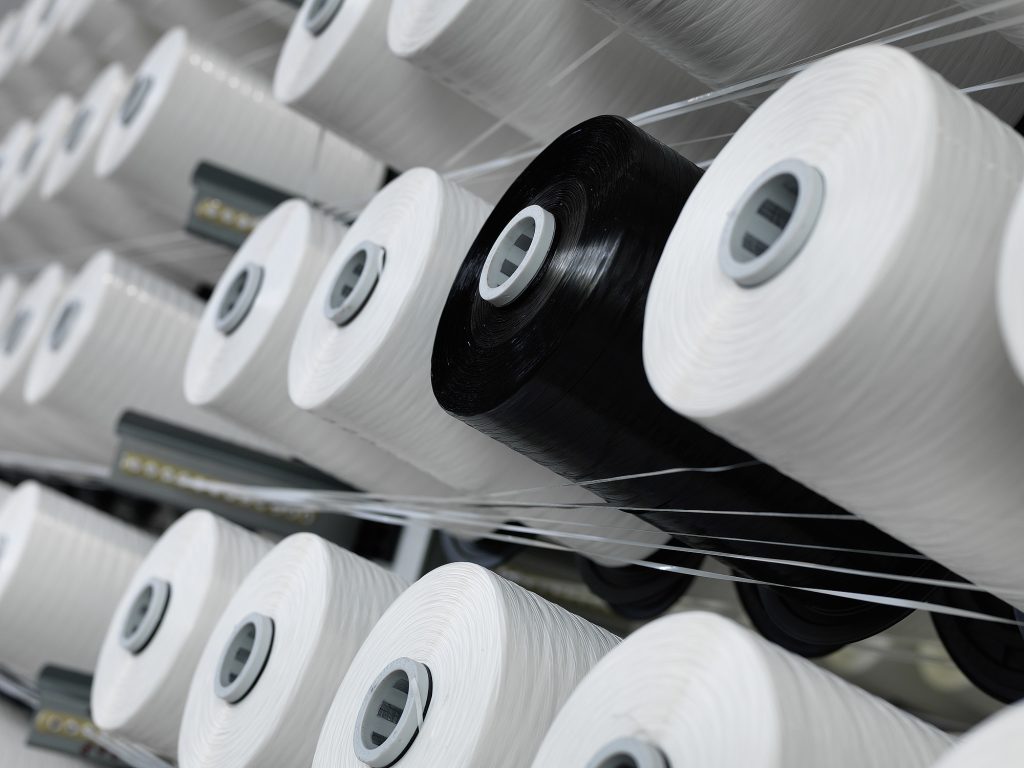
Form-Fill-Seal (FFS) roll bags have become indispensable in modern packaging, offering superior efficiency, strength, and sustainability. By incorporating fine yarn technology, these bags meet industry demands for high performance and environmental compliance. This report examines the technological principles, benefits, and regulatory alignment of fine yarn FFS roll bags.
Fine Yarn Technology: Enhancing Performance
Fine yarn technology uses thinner, tightly woven polypropylene (PP) fibers to create high-density fabric. This innovation improves the structural integrity and functionality of FFS roll bags.
- Increased Durability
The fine weave increases the material’s density, providing exceptional resistance to tearing and punctures. This makes FFS roll bags ideal for heavy or sharp-edged products like fertilizers and construction materials. - Enhanced Load-Bearing Capacity
Fine yarn distributes stress evenly across the bag’s surface, reducing strain and ensuring it can handle higher weights. This is critical for industries requiring robust packaging solutions. - Improved Aesthetics
The smooth surface achieved with fine yarn allows for high-resolution printing, enhancing branding opportunities. Companies can showcase detailed logos and product information with greater clarity and vibrancy. - Optimized Resource Usage
By achieving higher strength with thinner fibers, fine yarn technology reduces material consumption. This lightweight design lowers production costs and transportation energy, aligning with sustainability goals.
Environmental Benefits and Compliance
Fine yarn FFS roll bags are designed to meet environmental regulations while offering practical solutions for waste management and recycling.
- Recyclable Materials
Made from polypropylene, FFS roll bags are fully recyclable. This helps reduce landfill waste and supports the global shift toward a circular economy. The recycled material retains its strength, allowing for reuse in various applications.
Learn more about sustainable packaging solutions. - Alignment with Regulations
Increasing government regulations emphasize the use of recyclable and lightweight packaging. Fine yarn FFS roll bags comply with these mandates by minimizing environmental impact without sacrificing performance. - High Recycling Value
The quality of fine yarn polypropylene ensures that the material maintains its properties after recycling, making it valuable for secondary applications. This incentivizes proper recycling practices and contributes to resource conservation.
Applications of Fine Yarn FFS Roll Bags
Fine yarn FFS roll bags cater to various industries by combining strength, environmental benefits, and functional customizations:
| Industry | Specific Applications | Key Features |
|---|---|---|
| Agriculture | Fertilizers, seeds, pesticides | UV resistance, high tensile strength |
| Food | Sugar, flour, grains | Food-grade certifications, moisture-proof lamination |
| Industrial | Chemicals, construction materials | Tear resistance, high load-bearing capacity |
For instance, in the agricultural sector, UV-treated FFS roll bags protect sensitive fertilizers from sunlight degradation, ensuring product integrity during extended storage.
Specifications for Fine Yarn FFS Roll Bags
Choosing the correct FFS roll bag involves understanding specific technical parameters tailored to industry requirements:
| Specification | Options | Purpose |
|---|---|---|
| Material | 100% recyclable polypropylene | Environmentally friendly and durable |
| Fabric Weight | 70–120 GSM | Lighter for food, heavier for industrial applications |
| Coating | Matte or glossy lamination | Enhances print clarity and provides moisture resistance |
| Printing | Single-color to multi-color | High-definition branding and product labeling |
| UV Resistance | Yes | Critical for outdoor storage |
Implementation Guide
Adopting fine yarn FFS roll bags effectively requires careful planning and testing. Key steps include:
- Evaluate Needs
Assess the product’s weight, sensitivity, and branding requirements to determine the best bag configuration. - Customize Specifications
Collaborate with manufacturers to select the optimal material weight, dimensions, and coatings. - Conduct Performance Tests
Test the bags under real-world conditions, ensuring they meet durability, moisture resistance, and load-bearing requirements. - Integrate with Automation
Use FFS roll bags with automated systems to streamline packaging operations and improve productivity. - Promote Recycling
Educate stakeholders on the recyclability of FFS roll bags to support sustainability initiatives.
Current Market Trends
- Sustainability Demands
Consumers and regulators are prioritizing eco-friendly solutions. FFS roll bags with recyclable polypropylene are a direct response to these expectations.
Explore how FFS roll bags support ESG goals. - Advancements in Printing
Improved printing techniques allow for detailed, eye-catching designs, giving brands a competitive edge in the market. - Technological Innovations
Laminations, UV treatments, and automation compatibility are driving the adoption of fine yarn FFS roll bags across industries.
FAQs
- What makes fine yarn technology superior?
Fine yarn enhances fabric density and strength, ensuring durability and better load-bearing performance while reducing material weight. - Are FFS roll bags environmentally friendly?
Yes, they are made from recyclable polypropylene, supporting waste reduction and compliance with environmental regulations. - Which industries benefit most from these bags?
Agriculture, food processing, and industrial sectors rely on these bags for their strength, moisture resistance, and customizability. - How do these bags support branding?
The smooth surface created by fine yarn allows for high-definition, multi-color printing, enhancing brand visibility and product appeal.
Conclusion
Fine yarn technology has transformed FFS roll bags, offering exceptional durability, recyclability, and aesthetic appeal. These advancements align with the growing demand for sustainable packaging solutions and stricter regulatory standards. Businesses adopting fine yarn FFS roll bags can achieve operational efficiency, meet environmental goals, and enhance market competitiveness. With its expertise in fine yarn technology, VidePak leads the way in delivering innovative and high-quality packaging solutions.