

Custom Woven Bags: The Evolution and Quality Control from VidePak
What are Custom Woven Bags and how do they differ from stock packaging?
Custom Woven Bags are engineered sacks and totes built from woven polymer tapes—most commonly polypropylene (PP)—and tailored to exact specifications: dimensions, graphics, closures, barrier strategy, coefficient of friction, even the porosity that governs how well a powder vents during filling. Unlike stock bags that ask your product to conform to a one‑size geometry, Custom Woven Bags are specified from the product outward: bulk density, particle size, abrasion risk, and moisture sensitivity are translated into fabric denier, GSM, pick density, lamination options, and closure style. The result is a package that lifts more weight with less mass, looks better for longer, and runs faster on the line.
Also known as (aliases):
- PP woven bags
- woven polypropylene sacks
- BOPP laminated woven bags
- block‑bottom woven valve bags
- pinch bottom woven bags
- open‑mouth woven sacks
- liner inserted woven bags
- reusable woven shopping totes
These aliases emphasize geometry (block‑bottom, valve, open‑mouth), finishing (laminated, matte/gloss), or the use case (agriculture, construction, consumer). The common denominator is a woven PP backbone that trades very high specific strength for very low weight—an elegant formula in modern logistics.
Materials and Layer Architecture: what goes into Custom Woven Bags
Customization starts with the bill of materials. Each layer earns its place by neutralizing a real‑world risk—tears, punctures, humidity uptake, scuffing, dusting, or pallet slip. The anatomy of Custom Woven Bags is rational: a fabric to carry load, a face to carry graphics and reduce moisture, a bond to glue the system together, and a closure to control dust while enabling speed.
| Subsystem | What it is | Engineering job | Levers & trade‑offs |
|---|---|---|---|
| Woven PP fabric | Extruded PP tapes (drawn), woven on circular/flat looms to a target GSM and pick density | Tensile/tear backbone; dimensional stability; abrasion tolerance | Tape denier, pick density, UV stabilizers; more mass improves drop/stack but raises cost |
| BOPP film face (optional) | Biaxially oriented PP film, reverse‑printed and laminated | High‑fidelity graphics; scuff defense; incremental moisture barrier | Matte/gloss in register; anti‑slip zones; metallized options; adds cost and stiffness |
| Tie layer / adhesive | Extrusion lamination with PP/PE; occasionally PU adhesive lamination | Bond integrity under rub, fold, and temperature cycles | Peel strength vs. curl; solvent‑free speed vs. PU decorative options |
| Liners/inserts | Thin PE tube or free film as an inner sleeve | Short‑term moisture defense for hygroscopic powders | Only as needed; liners add grams and affect end‑of‑life |
| Closures & reinforcements | Valve patches, pinch‑tops, SOM stitching, tear tapes, handles | Contain dust, enable speed, define opening ritual on site | Valve for impeller speed; pinch for hermeticity; SOM for legacy lines |
Where do these layers live? From the outside world inward: reverse‑printed BOPP (if used) → extrusion tie → woven PP fabric → optional liner → product. The outside resists abrasion and carries the message; the inside resists humidity and contains dust; the middle arrests tears and carries compressive loads.
Ply count and GSM dominate cost; laminations add value where graphics matter or humidity is high; liners earn their grams only when climate or chemistry demands them. Right‑weighting starts after drop/stack targets are met, not before.
In rainy corridors, water‑repellent faces and minimal liners reduce failures. In controlled storage, film‑free designs preserve fabric handfeel and simplify end‑of‑life.
Feature Set: translating specifications into field behavior
The measure of Custom Woven Bags is taken not on a datasheet but on concrete: a forklift tine, a pallet corner, a wet loading dock. The features below map cause to effect.
Woven tapes carry tensile and resist tear with very little mass. That means more product per truck and fewer cracked corners per pallet.
Paper breathes; films seal; Custom Woven Bags sit smartly between. Porous enough to vent air on fill, tight enough—when laminated or lined—to blunt ambient humidity.
Reverse‑printed BOPP places ink under film. Add scuff‑resistant edges and you preserve logos, QR codes, and instructions through rough distribution.
Valve geometries for impeller speed; pinch‑tops for hermeticity; COF‑tuned bands for pallet stability and clean de‑palletization.
Self‑sealing valves, covered stitches, and well‑activated pinch seams reduce sifting. Cleaner pallets mean fewer claims and faster receiving.
Monomaterial PP stacks maintain polymer family integrity; film‑free SKUs simplify sorting. Right‑weighting removes grams after passing performance tests.
Production Process: from resin to repeatable performance
The factory is a choreography; each station prepares the next. Miss a step and the echo is heard on the customer’s filler. The sequence below captures current best practice for Custom Woven Bags.
- Resin prep and tape extrusion. Polypropylene pellets are dried as needed and dosed into extruders. A flat die casts a film that is slit to tapes and drawn to target denier. Additives—UV stabilizers, antioxidants, slip—are applied purposefully. QC: melt‑flow index, tape width, tensile, elongation.
- Weaving. Circular or flat looms interlace tapes into fabric at a specified pick density and GSM. Loom health shows up as uniform GSM and clean edges. QC: GSM, pick count, broken ends, splice quality.
- Printing path A (fabric print). For unlaminated SKUs, the fabric is surface‑treated and printed. QC: adhesion, rub after simulated conveyor cycles.
- Printing path B (reverse‑print film) and lamination. When a BOPP face is specified, reverse printing occurs first. The film is then extrusion‑laminated to the woven fabric. QC: peel strength, curl/layflat, registration for matte/gloss windows.
- Conversion. Webs are slit, gusseted, and formed to sacks. Open‑mouth edges are stitched or pinch‑sealed; block‑bottoms are formed for valve sacks; valve patches are inserted and sealed. Liners, where specified, are inserted or blown in.
- Feature integration. Anti‑slip bands, micro‑perfs, die‑cut handles, zippers, tear tapes, and instruction windows are applied. QC: COF, dimensional checks, zipper fatigue where relevant.
- Final QA and packing. Batches see drop, burst, and creep tests; seam and bond strengths are sampled; moisture exposure simulations may run for sensitive SKUs. Packs are lot‑marked for traceability.
Applications: where Custom Woven Bags earn their keep
Because they carry both mass and message, Custom Woven Bags excel wherever a product is dense, dusty, abrasive—or all three—and where labeling must remain legible after long journeys.
| Segment | Operational need | Specification cues |
|---|---|---|
| Construction powders | Fast impeller filling; humidity resistance; pallet stability | Valve block‑bottom; high‑porosity plies; water‑repellent face; optional liner |
| Agriculture & feed | Outdoor storage; UV exposure; flow tuning | UV‑stabilized tapes; venting pattern; SOM or valve by line |
| Pet food (dry) | Premium graphics; aroma retention; reclosure | BOPP laminate; zipper; anti‑scuff edges; handle |
| Chemicals & minerals | Abrasive powders; dust control | Heavier denier fabric; reinforced seams; selective liners |
| Retail reusable totes | High cycles; comfort; brand impact | Stitched handles; edge binding; matte/gloss graphics |
For readers comparing valve formats and filling advantages, consult this background reference on valve bags, which outlines geometries widely used in woven systems.
The Evolution and Quality Control from VidePak
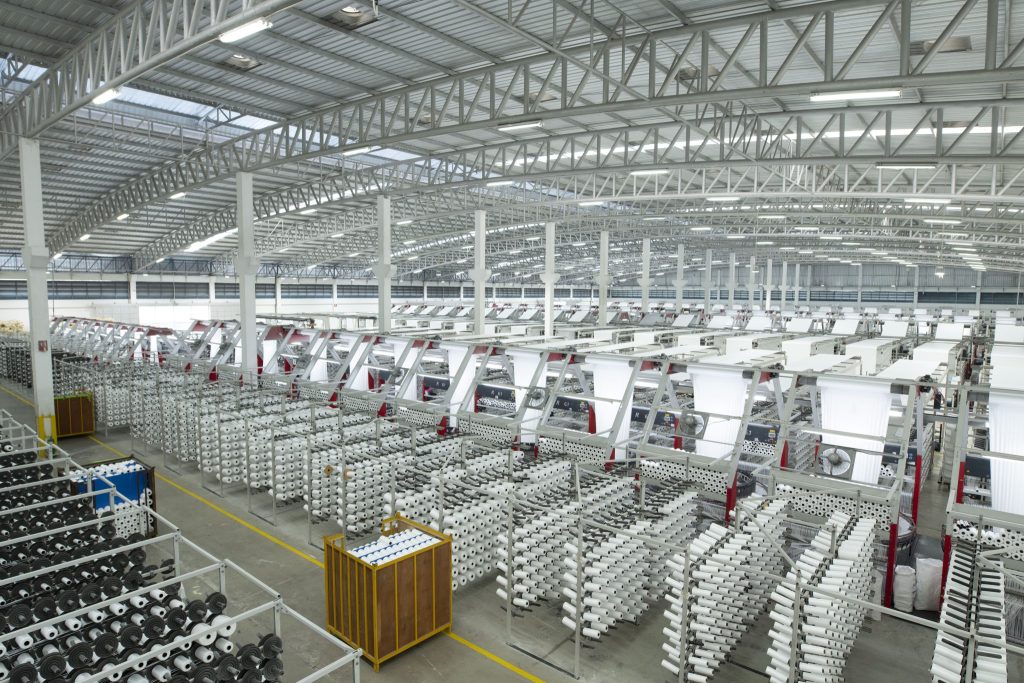
Evolution is not rhetoric; it is a tangible shift in how woven packaging is specified, produced, and assured. Older sack programs were commodity: simple fabrics, stitched seams, faint graphics. Today’s Custom Woven Bags emerge from an integrated line—tape, weave, print, laminate, convert—with closed feedback loops and codified controls.
Performance definitions—drop height, stack compression, moisture exposure, line speed—come first. Materials come second. Fabric denier, GSM, finishing, and closure are picked to hit the targets with margin, then grams are removed prudently.
Modern looms and lamination/printing equipment stabilize tension, registration, and coat weights. Reverse‑printed BOPP relies on cylinder or plate fidelity; extrusion lamination windows define bond durability without over‑gelling adhesives. Fewer rejects, cleaner stacks.
Gate checks map to ISO‑aligned regimes and common test families (ASTM, EN, JIS). Raw materials are verified; in‑process tapes and fabrics are sampled; post‑process bonds and seams are challenged; application simulations confirm line fitness.
Lot marking and QR‑addressable COAs close the loop from field complaint to denier, GSM, or cure windows that may have drifted. Repeatability is not luck; it is logged.
System Thinking: decompose risk, recombine into specs
Do not over‑engineer to soothe nerves; do not under‑engineer to save pennies. Decompose, then recombine. The framework below turns vague goals into measurable, defendable choices for Custom Woven Bags.
- Product: moisture sensitivity, abrasion, aroma retention, puncture risk.
- Filling: impeller vs auger vs gravity; target BPM; venting headspace.
- Logistics: pallet height, wrap recipe, double‑stacking, yard storage.
- Communication: mandatory labeling, batch/QR traceability, instruction legibility.
- End‑of‑life: polymer family consistency, film‑free where feasible, reusability where valued.
- Cost in use: grams, rejects, claims, speed losses, space utilization.
- Backbone: tape denier, GSM, and pick density to pass drop/stack with margin, then right‑weight.
- Face: film‑free fabric print vs BOPP laminate; matte/gloss in register; anti‑scuff zones.
- Bond: extrusion lamination for speed and solvent‑free operation; adhesive where decorative or technical goals demand.
- Closure: valve for speed; pinch‑top for hermeticity; SOM for legacy compatibility.
- Porosity: high‑porosity plies or micro‑perfs aligned to filler airflow; avoid over‑perforation in oily powders.
- COF: anti‑slip bands in pallet‑contact regions; still allow smooth de‑palletization.
- Coding: durable panels for batch, hazard pictograms, and QR; rub‑tested.
| Use case | Coherent structure | Controls |
|---|---|---|
| Cement 25 kg (humid) | 3‑ply woven PP; reverse‑printed BOPP; reinforced valve; anti‑slip bands; thin PE liner | Peel strength; valve seal; drop/stack; short wetting cycles |
| Pet food 15 kg (premium) | Woven PP + matte/gloss BOPP; zipper; handle; anti‑scuff edges | Peel; zipper fatigue; print rub; COF |
| Seeds/fertilizer 20–25 kg (outdoor) | UV‑stabilized fabric; film‑free or coated; SOM or valve; micro‑perfs | UV aging; tear propagation after cycles; skid tests |
Technical Parameters and QC Bands
Numbers discipline intuition. The bands below are widely used in recent converter guidance and form a practical vocabulary for specifying Custom Woven Bags. Your final values should be proven on the actual filler.
| Metric | Typical band or method | Why it matters | Notes |
|---|---|---|---|
| Resin MFI | ~2–12 g/10 min (tapes), application dependent | Governs draw and mechanicals; extremes hurt process or strength | Verify against supplier COA; spot check in house |
| Tape denier | Tuned to load case | Sets tensile and tear propagation behavior | Higher denier ≈ higher strength with mass penalty |
| Fabric GSM | ~55–110 GSM | Controls drop strength and pallet compression | Right‑weight after validating performance |
| Pick density | As specified for loom | Influences puncture resistance and seam performance | Uniformity signals loom control |
| Lamination peel | >2–3 N/15 mm (application dependent) | Prevents delam at high rub points | Balance bond with layflat (avoid curl) |
| COF (bag‑to‑bag) | ~0.30–0.50 | Stabilizes pallets while allowing de‑palletization | Tune bands to pallet pattern and wrap |
- Incoming: resin COA, additive verification, film dyne and gauge checks.
- In‑process: tape width/tensile/elongation; fabric GSM and PPI; web tension.
- Post‑process: lamination peel; seam and valve adhesion; COF; print rub.
- Application: drop, compression creep, humidity exposure, live filler trials.
Decision Framework for Spec and Sourcing
Four lenses keep teams aligned and prevent mismatched expectations. Ask, then answer, then specify. And if a choice seems trivial, turn it into a test.
- Product. Particle size, bulk density, oil/fat content, moisture sensitivity. Does the product demand post‑fill hermeticity or short‑term ambient defense? That single answer shifts you between valve and pinch‑top, between film‑free and laminated.
- Process. Filler type (impeller/auger/gravity) and target BPM govern porosity, closure, COF, and gusset geometry. Weight tolerance and dust limits are set at the packer, not on a brochure.
- Planet. Favor polymer family consistency. Film‑free designs simplify sorting; reusable totes win by service life. Where liners are needed, keep gauges minimal and say so clearly.
- Price. Optimize total cost in use—not paper or resin $/kg alone. Track grams per bag, scrap, claims, pallet density, and line speed. The cheapest bag is the one that ships product, not dust.
Frequently Asked Questions (engineering‑centric)
Are these bags food‑contact suitable? For dry foods and feeds, structures and inks are selected to meet the relevant frameworks. Inks/adhesives sit behind functional barriers (e.g., BOPP). Migration testing is aligned to the intended use.
What fails most often in field complaints? Sifting at closures or delamination at high rub points. Both are mitigated with competent valve patch design, verified pinch activation, and peel strengths above threshold.
Do graphics survive rough handling? Reverse‑printed BOPP protects ink; scuff‑resistant varnish protects corners and edges. For fabric‑print SKUs, choose ink systems validated for expected rub cycles.
Can Custom Woven Bags fit recyclability roadmaps? Monomaterial PP pathways exist in several markets. Film‑free designs simplify sorting; PP‑family laminates maintain polymer consistency. For consumer totes, longevity is the sustainability story.
Why choose valve over open‑mouth? Valve sacks excel on high‑speed impeller lines with free‑flowing powders, minimizing dust and improving weight control. Open‑mouth pinch‑tops are preferred where hermeticity after fill is essential or where lines do not support valves.
Example Specifications by Segment
| Segment | Construction | Key controls |
|---|---|---|
| Cement 25 kg (humid) | 3‑ply woven PP; reverse‑printed BOPP; reinforced valve; anti‑slip bands; thin PE liner | Peel strength; valve seal; drop/stack; humidity cycles |
| Pet food 15 kg (premium) | Woven PP + matte/gloss BOPP; zipper; handle | Zipper fatigue; rub; COF; optional OTR/WVTR |
| Seeds 20 kg (outdoor) | UV‑stabilized fabric; film‑free; SOM or valve; micro‑perfs | UV aging; tear after cycles; skid tests |
| Retail tote (reusable) | Heavier denier fabric; stitched handles; edge binding | Handle pull; seam strength; rub; washability (if claimed) |
Keyword family and natural phrasing
To keep language natural yet discoverable across documentation and training, weave these near‑synonyms throughout: Custom Woven Bags; woven polypropylene sacks; PP woven bags with liners; BOPP laminated woven bags; block‑bottom woven valve bags; pinch bottom woven bags; reusable woven shopping totes; customized woven sacks for cement; custom pet food woven packaging; high‑porosity woven valve bags; matte‑registered BOPP woven sacks; anti‑slip coated woven bags; UV‑stabilized woven PP fabric.
- Custom Woven Bags: The Evolution and Quality Control from VidePak
- What are Custom Woven Bags and how do they differ from stock packaging?
- Materials and Layer Architecture: what goes into Custom Woven Bags
- Feature Set: translating specifications into field behavior
- Production Process: from resin to repeatable performance
- Applications: where Custom Woven Bags earn their keep
- The Evolution and Quality Control from VidePak
- System Thinking: decompose risk, recombine into specs
- Technical Parameters and QC Bands
- Decision Framework for Spec and Sourcing
- Frequently Asked Questions (engineering‑centric)
- Example Specifications by Segment
- Keyword family and natural phrasing
- 1. Evolution of Custom Woven Bags: From Utility to Precision
- 2. Leak-Proof Technologies for Hazardous Chemical Packaging
- 3. Global Standards and Parameter Selection
- 4. Quality Control: Ensuring Reliability at Scale
- 5. Market Dynamics and Competitive Differentiation
- 6. FAQs: Addressing Client Concerns
- 7. Future Trends: Sustainability and Smart Packaging
“Why are custom woven bags critical for modern industrial packaging?”
This question resonates deeply within sectors like chemical manufacturing, where packaging integrity directly impacts safety and efficiency. The answer lies in their adaptability to stringent global standards, advanced leak-proof technologies, and the ability to balance cost-effectiveness with high performance—factors that position custom woven bags as indispensable for hazardous material handling.
At VidePak, a global leader in woven bag manufacturing since 2008, these qualities are not optional but foundational. With 526 employees, $80 million annual revenue, and Austrian Starlinger machinery, the company has mastered the art of blending innovation with compliance, serving clients across 30+ countries in industries ranging from agrochemicals to specialty chemicals.
1. Evolution of Custom Woven Bags: From Utility to Precision
1.1 Historical Shift to High-Performance Materials
Initially designed for basic agricultural use, woven bags have evolved into specialized solutions for chemical packaging. VidePak’s adoption of 100% virgin polypropylene (PP) ensures material purity, avoiding contaminants common in recycled resins. This is critical for sensitive chemicals like titanium dioxide and calcium titanate, where even minor impurities can degrade product quality.
1.2 Automation and Starlinger Technology
VidePak’s Starlinger AD*Star looms achieve production speeds of 200 bags per minute with ±0.2 mm dimensional accuracy. For example, a German silicone powder producer reduced spillage by 22% after switching to VidePak’s block-bottom valve bags, engineered with double-stitched seams and 12 N/m² tensile strength.
2. Leak-Proof Technologies for Hazardous Chemical Packaging
2.1 Multi-Layer Barrier Systems
To prevent leakage of fine powders (e.g., zinc sulfate, sodium carbonate), VidePak employs:
- PE/PP Lamination: Reduces porosity by 95%, validated by ASTM D5260 tests.
- Integrated Inner Liners: High-density polyethylene (HDPE) liners with heat-sealed seams block particles as small as 10 microns.
Case Study: A Japanese titanium dioxide supplier eliminated cross-contamination using VidePak’s 3-layer laminated bags with anti-static coatings, complying with JIS Z 1707 food-grade standards.
2.2 Advanced Sealing Techniques
- Ultrasonic Sealing: Ensures seam integrity under 50 kg loads, critical for bulk sodium carbonate transport.
- Valve Pocket Designs: Minimize dust emission during filling, as demonstrated in a 2024 Australian mineral powder project.
3. Global Standards and Parameter Selection
3.1 Compliance with International Regulations
| Standard | Requirement | VidePak’s Solution |
|---|---|---|
| EU EN 13432 | Compostability for PE coatings | Recyclable PE blends reduce carbon footprint by 35% |
| US FDA 21 CFR | Food-grade safety for additives | Phthalate-free inks and adhesives |
| China GB/T 8946 | Tensile strength ≥10 N/m² | 12–14 threads/cm² weave density |
3.2 Parameter Optimization Guide
| Chemical Type | Recommended GSM | Lamination | Inner Liner | Rationale |
|---|---|---|---|---|
| Hygroscopic (e.g., silica gel) | 110–120 | PE Coated | HDPE | Blocks moisture ingress |
| Fine Powders (e.g., TiO₂) | 100–110 | BOPP | None | Relies on tight weave (14 threads/cm²) |
4. Quality Control: Ensuring Reliability at Scale
4.1 Multi-Stage Testing Protocols
- Tensile Strength Tests: Bags withstand 15% above industry averages (12 N/m² vs. 10 N/m²).
- Accelerated Aging: Simulates 5 years of UV exposure without degradation.
Table 1: VidePak’s Quality Metrics
| Metric | Performance | Global Standard |
|---|---|---|
| Leakage Rate | ≤0.1% | ASTM D5260 |
| Color Fastness | ΔE ≤1.5 after 500h UV | ISO 105-B06 |
4.2 AI-Driven Defect Detection
VidePak’s AI systems, integrated with Starlinger machinery, achieve a 99.8% defect-free rate, as validated by a 2024 audit by a Swiss chemical conglomerate.
5. Market Dynamics and Competitive Differentiation
The global chemical packaging market, valued at $63.2 billion in 2024, demands solutions that balance safety and branding. VidePak’s QR-code-enabled bags allow real-time tracking of hazardous materials, addressing EU’s REACH traceability mandates. A Brazilian latex powder client reported a 30% reduction in logistics disputes using this feature.
6. FAQs: Addressing Client Concerns
Q: How do I choose between laminated and non-laminated bags?
A: Lamination is essential for humid climates (>70% RH) or hygroscopic powders. Non-laminated options reduce costs by 15% in dry environments.
Q: Can these bags withstand freezing temperatures?
A: Yes. VidePak’s low-temperature PP resin maintains flexibility at -30°C, ideal for cryogenic chemical storage.
Q: What is the ROI of custom printing?
A: Clients recover costs within 6–8 months via reduced counterfeit incidents and enhanced shelf appeal.
7. Future Trends: Sustainability and Smart Packaging
VidePak is piloting biodegradable PLA coatings (90% compostable by 2026) and NFC-enabled bags for real-time chemical integrity monitoring. These align with the EU’s Circular Economy Action Plan, targeting 50% recycled content by 2030.
Conclusion
Custom woven bags are no longer passive containers but active safeguards in chemical logistics. VidePak’s fusion of Austrian engineering precision, regulatory expertise, and leak-proof innovation positions it as the partner of choice for industries navigating safety, compliance, and sustainability challenges.
External Resources:
- Learn how block-bottom bags enhance chemical safety.
- Explore global compliance strategies for polypropylene packaging.