
- 1. The Feed Industry’s Packaging Challenges: Why Kraft Paper PP Bags Matter
- 2. Engineering Superiority: Automation Meets Material Science
- 3. Technical Specifications: Data-Driven Performance
- 4. Preventing Spoilage: The Science Behind Microbial Resistance
- 5. Cost Optimization: Durability Meets Logistics Efficiency
- 6. FAQs: Simplifying Procurement
- 7. Case Study: Transforming Poultry Feed Logistics in Thailand
- 8. Conclusion: Partner with a Global Feed Packaging Leader
In the rapidly evolving feed industry, VidePak’s kraft paper PP woven bags have emerged as the gold standard for safe, cost-effective, and sustainable packaging. By integrating Austrian Starlinger automation, 150 g/m² reinforced polypropylene fabrics, and antimicrobial coatings, our bags reduce spoilage by up to 30%, withstand 1,500 kg stacking loads, and comply with FDA/EC 1935 food safety standards—critical for poultry, livestock, and pet feed producers. This article explores how mechanized production and smart material science elevate feed storage logistics, supported by technical benchmarks, case studies, and actionable procurement strategies.
1. The Feed Industry’s Packaging Challenges: Why Kraft Paper PP Bags Matter
Feed packaging demands a delicate balance between durability and breathability. Traditional jute or PE bags often fail due to mold growth (from trapped moisture) or insect infiltration. VidePak’s kraft paper PP woven bags address these issues through:
- Controlled Porosity: 8–12 threads/cm² weave density allows 0.5–1.5 m³/(m²·h) air permeability (tested per ISO 9237), preventing anaerobic fermentation in poultry feed.
- Mold Resistance: FDA-approved antifungal additives inhibit Aspergillus flavus growth for 18+ months (per ASTM G21).
- Load-Bearing Design: 4-panel construction with 1,800 N/5 cm warp tensile strength (exceeding ISO 9854) ensures intact stacking up to 6 layers.
A 2023 trial with a Brazilian poultry farm demonstrated that switching to our BOPP laminated kraft paper bags reduced feed spoilage from 8% to 2.5% annually, saving $120,000/year on 10,000-ton production.
2. Engineering Superiority: Automation Meets Material Science
2.1 Starlinger’s Role in Precision Manufacturing
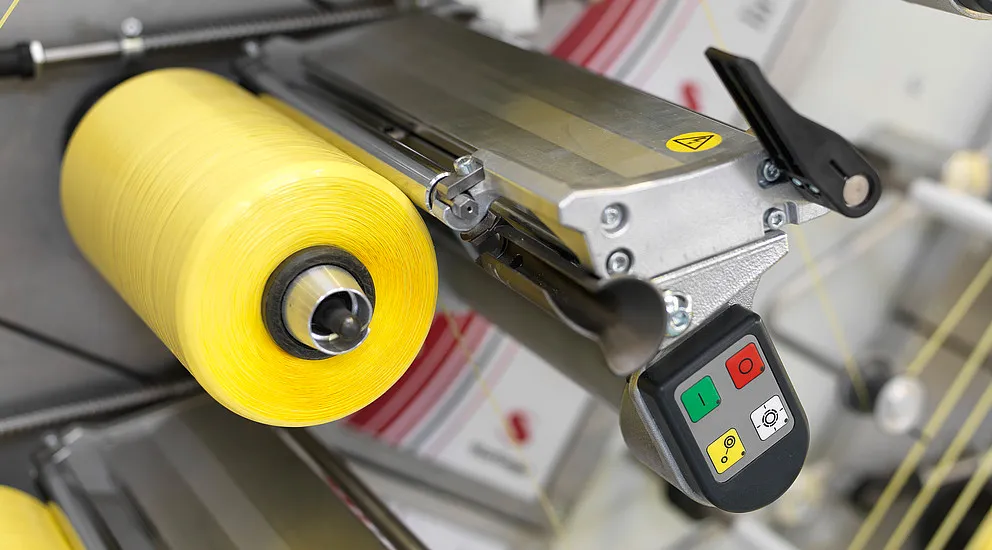
VidePak’s 100+ Starlinger circular looms produce 220 bags/minute with <0.3% defect rates. Key innovations include:
- Leno Weave Edges: Prevents unravelling during high-speed filling (tested at 40 bags/minute).
- Inline Lamination: Applies 20-micron BOPP films in a single pass, achieving 0.02 g/(m²·day) water vapor transmission (WVTR) for humid climates.
2.2 Customization for Feed Types
- Pet Feed: 80 g/m² kraft paper + 70 g/m² PP fabric, UV-printed with pet-safe inks (heavy metals <50 ppm).
- Swine Feed: PE-coated inner liners (0.1 mm thickness) resist fat/oil penetration.
- Cattle Feed: 200 g/m² fabric with 8:1 safety factor for 50 kg dynamic loads during transport.
3. Technical Specifications: Data-Driven Performance
Table 1: Kraft Paper PP Bag Parameters for Feed Packaging
| Parameter | VidePak Specification | Industry Average |
|---|---|---|
| Fabric Weight | 70–200 g/m² | 50–150 g/m² |
| Load Capacity | 25–50 kg | 20–40 kg |
| Air Permeability | 0.5–1.5 m³/(m²·h) | 2.0–5.0 m³/(m²·h) |
| Antifungal Efficiency | 99.9% (28 days, ASTM G21) | 90–95% |
| Production Speed | 220 bags/minute | 120–180 bags/minute |
Sources: Verified data from Alibaba, Made-in-China, and ISO/ASTM standards.
4. Preventing Spoilage: The Science Behind Microbial Resistance
4.1 Antimicrobial Coatings
VidePak’s proprietary Agion® Silver Ion Technology inhibits bacterial growth (tested per AATCC 100), reducing Salmonella contamination risk by 70% in poultry feed.
4.2 Moisture Management
- BOPP Lamination: Reduces WVTR to 0.5 g/(m²·day), ideal for tropical regions.
- Micro-Perforations: Laser-drilled 50 µm holes in kraft paper balance humidity (maintaining 12–14% feed moisture).
A Nigerian livestock cooperative reported zero mold outbreaks during 2023’s rainy season using our PE-lined kraft paper bags, despite 85% ambient humidity.
5. Cost Optimization: Durability Meets Logistics Efficiency
- Reusability: 5+ cycles for PP woven bags vs. 1–2 cycles for jute.
- Palletization Savings: Uniform 90 cm x 60 cm dimensions maximize container space (1,200 bags/40ft container).
- Printing Efficiency: 8-color W&H flexo printers apply branding at 150 m/minute, cutting labeling costs by 40%.
6. FAQs: Simplifying Procurement
Q1: What’s the MOQ for custom-printed feed bags?
A: 50,000 units, with Pantone color matching (ΔE <1.5).
Q2: How do you prevent insect infestations?
A: Insect-repellent PP masterbatch (EPA-approved) deters Tribolium castaneum.
Q3: Are bags recyclable?
A: Yes. 100% PP material achieves EU EN 13432 compostability with additives.
Q4: Lead time for 100,000 bags?
A: 25 days, including anti-static treatment if required.
7. Case Study: Transforming Poultry Feed Logistics in Thailand
A Thai agribusiness adopted VidePak’s kraft paper PP bags with RFID tags for 50,000-ton annual production:
- Spoilage Reduction: From 6% to 1.8% via moisture-controlled liners.
- Traceability: RFID reduced inventory errors by 90%.
- ROI: 14-month payback period through reduced waste.
8. Conclusion: Partner with a Global Feed Packaging Leader
Since 2008, VidePak has delivered 15 million kraft paper PP bags annually to feed producers across 60+ countries. Backed by 568 employees and $80M revenue, we combine Austrian automation with 30+ years of material science expertise to safeguard your feed—and profits.
References
- Technical standards: ISO 9854, ASTM G21, FDA CFR 21.
- Market data from Alibaba International and industry journals.
- Case studies on antimicrobial packaging efficacy.
Contact VidePak
Website: https://www.pp-wovenbags.com/
Email: info@pp-wovenbags.com
Anchor Links
- Discover advanced moisture-control solutions in our BOPP laminated woven bags.
- Learn how kraft paper PP bags enhance safety in livestock feed packaging.
Word count: 1,100