
Definition, Identity, And Scope Of Poly Paper Bags
What exactly are Poly Paper Bags? They are hybrid industrial sacks that marry a printable, fiber-based exterior with a polymer-reinforced interior, yielding a structure that looks like paper, handles like paper, yet performs like a high-strength, moisture-guarding plastic package. In a typical configuration, a kraft face is bonded to polypropylene- or polyethylene-based layers, sometimes including a woven polypropylene fabric that provides a lightweight yet remarkably strong skeleton. The result is a packaging format designed for punishing fill lines, rough logistics, and humidity swings—situations where a strictly paper sack may fatigue or a purely plastic sack may lack shelf-friendly tactility. The essence of these bags is duality: appearance and performance, touch and toughness, printability and process reliability.
Aliases and near-synonyms frequently used in industry: paper–poly bags, poly–paper sacks, paper laminated woven polypropylene, BOPP laminated woven sacks, kraft laminated PP woven bags, paper/PE multi-wall sacks, paper laminated poly woven packaging, paper-faced polypropylene bags. Labels shift across regions and sectors, yet the architectural intent is consistent: one or more paper plies integrated with polymer layers for strength, sealing, and moisture control.
Is it a compromise? Or is it a synthesis? The latter. Poly Paper Bags deliver the haptic appeal of paper and the rugged reliability of polymer science. They are chosen not simply to split the difference but to multiply benefits: cleaner fills, steadier pallets, better print panels, and fewer damaged shipments.
Constituent Materials, Micro-Properties, And Functional Roles
Any laminate is only as reliable as its ingredients and the way those ingredients are bonded together. The principal material families in Poly Paper Bags include the kraft paper face, polypropylene-based substrates (woven or film), polyethylene sealants or liners, and auxiliary chemistries (adhesives, inks, coatings, stabilizers). Each contributes a distinct set of micro-properties that cascade into macro-performance on filling lines and in real transport.
- Kraft paper face: provides a printable, scuff-resilient exterior with a natural tactile feel. Its tear index and tensile energy absorption can be tuned through fiber selection and refining. White-bleached grades elevate color gamut for branding; natural kraft often increases surface friction for pallet stability.
- Woven polypropylene fabric: a mesh of drawn PP tapes woven on circular or flat looms to deliver high tensile and tear resistance with low mass. It is particularly valuable for dense powders, sharp-edged products, and high-drop environments.
- BOPP film: the biaxially oriented PP layer often used as a reverse-printed graphic carrier and abrasion-resistant surface; it contributes to moisture management and maintains color fidelity under handling.
- PE liners and sealant films: enable dust-tight closures, heat sealing, and moisture protection. Coextruded constructions can define seal temperature windows, lower WVTR, and improve sifting performance.
- Adhesives and tie layers: solvent-less polyurethane systems, hot melts, or extrusion ties that provide inter-ply cohesion while respecting line speed and end-of-life considerations.
- Inks, coatings, and additives: water-based or solvent-based inks matched to print method; anti-slip coatings to raise COF; UV stabilizers for outdoor storage; anti-static treatments for dusty product handling.
Typical laminations used in the field: paper/film laminate (kraft + BOPP or PE), paper-laminated woven PP (kraft + adhesive + woven PP + optional liner), and multi-wall hybrids (paper exterior + film/coat + optional inner liner). The correct stack-up is chosen based on powder fineness, bulk density, target drop height, storage humidity, and print requirements.
| Subsystem | Options | Functional contribution | Trade-offs |
|---|---|---|---|
| Face layer | Natural kraft or white-bleached kraft | Printability, scuff control, higher COF for pallet stability | White grades cost more; natural grades limit color brilliance |
| Structural core | Woven PP fabric or paper-only multi-wall | Tensile and tear strength with low mass | Requires PP recovery stream if mono-material recycling is targeted |
| Film layer | BOPP (reverse print), PE sealant | Abrasion resistance, moisture control, graphic fidelity | Adds lamination step and grams |
| Inner liner | PE mono or coex | Heat-sealability and dust-tightness | Increases material usage; seal window must be controlled |
| Adhesives | Solvent-less PU, hot-melts, extrusion ties | Inter-ply cohesion, high-speed lamination | Cure control is crucial to avoid delamination |
Signature Features That Differentiate Poly Paper Bags
What distinguishes Poly Paper Bags from ordinary sacks is not one superpower but an ensemble of properties that interact constructively. Strength-to-weight, moisture management, print readiness, pallet behavior, sealing diversity—each matters on its own; together they deliver a packaging system that improves reliability and brand expression while curbing hidden logistics cost.
- Strength-to-weight advantage: woven PP and reinforced film layers deliver drop resistance without brute mass, reducing burst failures and in-transit tears.
- Moisture management: multilayer barriers and optional liners protect hygroscopic powders; selected constructions retain enough breathability to reduce condensation.
- Print and panel quality: paper faces accept high-line-screen graphics; BOPP maintains photographic detail under abrasion.
- Handling and pallet stability: higher surface friction, plus block-bottom geometry, produce square, stable stacks.
- Sealing flexibility: from sewn open-mouth to pinch-bottom heat seal to high-speed valves, closures adapt to the filling line rather than forcing the line to adapt to the bag.
- Configurable barrier: match BOPP grade, PE thickness, or coatings to aroma retention, grease resistance, or UV exposure.
The practical outcome is lifecycle efficiency: lower damage rates, better cube utilization, fewer repacks, and steadier OEE on filling lines. In sectors where every percentage point of damage translates into tons of lost product, the systemic gain is nontrivial.
Manufacturing Flow: From Qualified Inputs To Verified Outputs
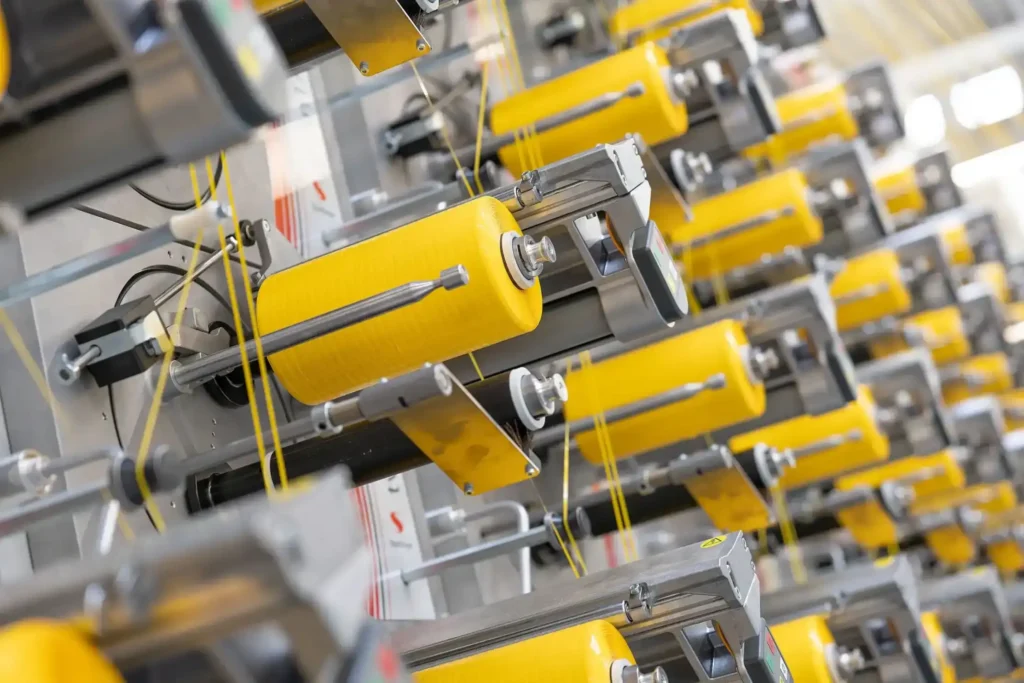
The conversion of raw materials into repeatable performance follows a disciplined flow. Vendor qualification filters variability; incoming inspections set the baseline; in-process controls tighten the distribution; finished-bag audits certify the lot. Precision machinery is the backbone: reliable extrusion for PP tapes, consistent weaving for the fabric, tight-register printing for graphics, and clean lamination bonds for structural integrity.
- Vendor and material qualification: screening of mills and resin suppliers for consistency, traceability, compliance; collection of COAs and lot data.
- Incoming inspections: basis weight, moisture, tensile/tear for paper; gauge, tensile, puncture, dyne/corona for films; tensile and seam efficiency for woven rolls.
- Printing and adhesion trials: delta-E checks for color accuracy; peel tests and bond strength verification under production speeds.
- Core converting: tape extrusion, weaving, treatment, printing, lamination, tube forming, bottom construction (pinch or block-bottom), valve insertion, liner insertion as specified, followed by venting and final finishing.
- Downstream QA: in-process SPC, drop and burst tests, sift-proofing trials, pallet compression/vibration simulations, and UV exposure where outdoor storage is likely.
Why the emphasis on machinery? Because the slightest variance in film gauge, adhesive laydown, or print registration can turn into real-world failures—splits, leakers, scuffs, or unreadable labels. Facilities built on precision platforms translate engineering intent into consistent, commercial performance.
Use-Case Landscape: Where Poly Paper Bags Excel
The versatility of Poly Paper Bags is easiest to grasp by observing where they are repeatedly selected: building materials, agriculture, food ingredients, chemicals, and retail club packs. Across these, two practical questions recur: how fast can the bag be filled and closed, and how well will it survive transport and storage without shedding dust or collapsing stacks?
| Sector | Typical products | Preferred formats | Key drivers |
|---|---|---|---|
| Building materials | Cement, mortar, gypsum, tile adhesives | Block-bottom valve, PBOM | High-drop strength, dust control, fast fill |
| Agriculture | Seed, fertilizer, animal feed | Valve or OM heat-seal | UV stability, tear resistance, moisture control |
| Food ingredients | Flour, grain, starches, sugar blends, premixes | OM heat-seal, PBOM | Hygiene, label readability, sift-proof |
| Chemicals & minerals | Calcium carbonate, silica, additives | Valve, PBOM | Sift-proofing, seam efficiency |
Choices among open-mouth sewn (OM-S), open-mouth heat-seal (OM-H), pinch-bottom open-mouth (PBOM), and valve bag formats depend on fill speed, cleanliness, and automation level. Valve systems excel at high speeds and cleanliness; PBOM excels where sift-proofing is paramount; OM-H balances hygiene and cost.
Quality Governance: Standards, Sampling, And SPC In Practice
A credible quality system for Poly Paper Bags rests on four pillars: standards-aligned procedures, virgin raw materials from vetted vendors, high-precision equipment, and layered inspection. From incoming basis-weight checks to out-going drop matrices, the aim is narrow distributions and predictable outcomes. Over time, capability indices (CP/CPK) are raised via corrective actions and process tuning.
- Production and testing aligned with mainstream norms where applicable to paper, films, inks, seals, and package performance.
- Virgin, tier-one materials with lot-linked COAs and auditable traceability.
- Precision equipment to curb variation, improve uptime, and drive consistent panel and seam integrity.
- Inspection at four layers: incoming, in-process, finished-bag audits, and randomized sampling from ship-ready pallets.
Typical tests include basis weight, moisture, Cobb, tensile, COF, bond and seal strength, drop, Mullen burst, sift-proofing, and valve integrity. Results are logged for trend analysis, and outliers trigger root-cause methods—5 Whys, cause-and-effect charts, and prioritized CAPA implementations.
Sustainability And Economics: System-Level Gains Over Unit Costs
The unit cost of a bag is visible on a purchase order, but the economics that truly matter are often hidden in operations: damage rates, line speed, pallet stability, and returns. Poly Paper Bags earn their keep by making lines cleaner, stacks straighter, and claims rarer. In parallel, sustainability advances when damage is avoided and grams are right-sized to performance.
- Damage avoidance: fewer tears and moisture strikes reduce write-offs and cleanup labor.
- Right-weighting: strength-to-weight lets converters shed grams without ceding drop performance, lowering freight emissions per delivered kilogram.
- Transport efficiency: block-bottom geometry and higher COF improve pallet stability and cube utilization.
- Label integrity: paper faces keep regulatory panels crisp, aiding wayfinding and reducing mis-picks.
- Lifecycle options: depending on local infrastructure, builds can be biased toward paper-forward or PP-forward recovery paths, with peelable or low-contamination designs.
Design Levers And Countermeasures For Common Failure Modes
Typical failure modes in powder packaging—delamination, seam rupture, sifting at closures, pallet lean—are not mysteries but engineering invitations. Matching structure to stress and closure to cleanliness is the craft. Consider the following pattern-response pairs:
| Failure pattern | Probable cause | Countermeasure |
|---|---|---|
| Ply delamination | Low adhesive coat weight or under-cure | Increase coat weight; verify cure; SPC on nip temperature/pressure |
| Top sifting/leakers | Insufficient seal energy; valve not collapsing | Map seal curve; raise dwell; add heat-sealable valve patches |
| Stack lean | Low COF face; geometry not square | Anti-slip coatings; block-bottom form; optimized pallet patterns |
| Label rub-off | Inadequate varnish; abrasive conveyors | Higher rub topcoats; smoother guides; print on BOPP where suitable |
The principle is recursive: observe the failure, tighten the lever, measure the effect, and lock the gain. Over time, Poly Paper Bags can be tuned like an instrument—string by string, layer by layer—until the performance chord is stable across seasons and lanes.
Implementation Roadmap: From Pilot To Plant Standard
Adoption follows a familiar arc: define the use case, select a baseline, trial on running lines, tune closures, lock graphics and QA, then monitor post-launch. The goal is not a static spec sheet but a living standard that evolves with new resins, print chemistries, and recycling pathways.
- Define the critical use case: powder fineness, bulk density, hygroscopicity, fill speed, storage humidity, target drop height.
- Select a baseline structure: paper laminated woven PP for rugged SKUs; paper + film for hygiene-forward SKUs.
- Pilot on production lines: measure dust, fill time, seal integrity, pallet behavior.
- Tune closures: choose OM-S, OM-H, PBOM, or valve based on cleanliness and automation.
- Finalize graphics and compliance: ensure label legibility; run rub/smudge testing; integrate QR if desired.
- Lock QA: set CTQs and sampling plans; chart SPC for bond, seal, COF, registration.
- Monitor and iterate: track claims and returns; use CAPA to harden the spec.
Keyword Strategy And Semantic Coverage
To assist discoverability while remaining useful to engineers and buyers, this document distributes primary and long-tail phrases naturally. The anchor is Poly Paper Bags. Complementary phrases include paper laminated woven polypropylene, BOPP laminated woven sacks, paper poly woven packaging, paper-faced polypropylene bags, block-bottom valve bags, and pinch-bottom open-mouth bags. Within the body, key terms are emphasized to signal relevance to both human readers and indexing systems without resorting to keyword stuffing.
For applications seeking a deeper view of kraft + PP hybrid configurations, see the following related resource: advanced kraft + PP bag configurations for heavy-duty duty use.
Frequently Asked Questions In Practice
Are Poly Paper Bags recyclable? Designs vary. Paper-forward builds may be suitable for repulping where mills accept light polymer presence. PP-forward builds align with polypropylene recovery where available. The decisive factor is local infrastructure and the chosen laminate. What about sizes? Common fills run 10–50 kg; the geometry is tuned to pallet footprints and compression profiles. Which closure is best? For speed and cleanliness, valves excel; for maximum sift-proofing, PBOM staples the brief; for breathable products and cost control, OM-S remains serviceable. Can graphics truly match retail quality? Paper faces and BOPP layers enable high-fidelity color, protected by rub-resistant topcoats.
Rhetorical Close: Not A Compromise, A Convergence
Why choose between touch and toughness when both are possible? Why accept smudged panels or leaky seams when there is a format that prints crisply and seals cleanly? Why carry avoidable grams when a woven core can shoulder the load? The answer is clear: Poly Paper Bags are neither half-paper nor half-plastic; they are the better sum, the crafted convergence, the practical harmony of printability, strength, and moisture control. They do not ask operations to work around them; they are engineered to work with operations—on the line, on the pallet, on the road.
October 30, 2025
- Definition, Identity, And Scope Of Poly Paper Bags
- Constituent Materials, Micro-Properties, And Functional Roles
- Signature Features That Differentiate Poly Paper Bags
- Manufacturing Flow: From Qualified Inputs To Verified Outputs
- Use-Case Landscape: Where Poly Paper Bags Excel
- Quality Governance: Standards, Sampling, And SPC In Practice
- Sustainability And Economics: System-Level Gains Over Unit Costs
- Design Levers And Countermeasures For Common Failure Modes
- Implementation Roadmap: From Pilot To Plant Standard
- Keyword Strategy And Semantic Coverage
- Frequently Asked Questions In Practice
- Rhetorical Close: Not A Compromise, A Convergence
Poly fabric bags, commonly referred to as poly woven bags, have become a cornerstone of the packaging industry, offering a robust solution for a variety of applications. In recent years, the growth of poly fabric bags in the Chinese market has reflected not only advancements in material science but also shifts in consumer preferences and industry standards. This article will explore the evolution of poly fabric bags in China, discuss the future trends of branding within the industry, and highlight how VidePak distinguishes itself from other manufacturers through a focus on quality and long-term brand reputation.
Understanding Poly Fabric Bags
Poly fabric bags are made from woven polypropylene, a type of plastic that is durable, lightweight, and resistant to moisture. These bags are utilized in diverse sectors, including agriculture, food, chemicals, and construction. The inherent properties of polypropylene make these bags a popular choice among consumers and manufacturers alike.
Key Features of Poly Fabric Bags
- Durability: Poly woven bags are designed to withstand significant weights and resist tearing or puncturing, making them suitable for heavy-duty applications.
- Moisture Resistance: The material is inherently resistant to moisture, helping to protect contents from environmental factors.
- Customizable: Poly fabric bags can be tailored in terms of size, shape, color, and printing options, allowing brands to create unique packaging solutions.
- Sustainability: Increasingly, manufacturers are exploring options for recyclable and eco-friendly materials to produce poly fabric bags.
| Feature | Description |
|---|---|
| Material | Woven polypropylene, lightweight and durable |
| Strength | High tensile strength to carry heavy loads |
| Moisture Barrier | Protects contents from moisture and contaminants |
| Customization | Various sizes, colors, and printing options available |
The Development Path of Poly Fabric Bags in China
Historical Context
The introduction of poly fabric bags in China can be traced back to the rise of modern manufacturing techniques in the late 20th century. As China’s economy began to open up and embrace globalization, the demand for versatile and cost-effective packaging solutions surged. This led to increased investments in manufacturing technologies and the establishment of numerous woven bag suppliers across the country.
Current Market Landscape
Today, the Chinese market for poly fabric bags is expansive and diverse. Various sectors utilize these bags, with agriculture being one of the largest consumers. Poly woven bags are used extensively for packaging grains, fertilizers, and animal feed. The construction industry also relies on these bags for transporting materials such as sand, cement, and gravel.
With the rapid urbanization and industrialization of China, the demand for poly fabric bags is projected to continue growing. Manufacturers are increasingly focusing on innovation, quality improvement, and sustainability to stay competitive in this evolving market.
Future Branding Trends in the Poly Fabric Bag Industry
As the packaging industry becomes more competitive, branding is emerging as a key differentiator for manufacturers. The shift toward brand recognition and reputation is particularly important in the Chinese market, where consumers are becoming more discerning and environmentally conscious.
1. Shift Towards Brand Loyalty
In the past, price was often the primary factor driving purchasing decisions. However, with the increased availability of poly fabric bags, consumers are now looking for brands that they can trust. Building brand loyalty involves not only providing high-quality products but also delivering excellent customer service and engaging in ethical manufacturing practices.
2. Emphasis on Quality
Quality has become paramount in the poly fabric bag market. Manufacturers must invest in superior raw materials and advanced production techniques to ensure that their products meet international quality standards. Brands that prioritize quality will gain a competitive edge and build a loyal customer base.
3. Sustainability Initiatives
With growing awareness of environmental issues, brands that adopt sustainable practices will attract eco-conscious consumers. The future will likely see more companies implementing recycling initiatives, using biodegradable materials, and reducing their overall carbon footprint. Poly fabric bags can be made from recycled materials or produced with eco-friendly processes, enhancing their appeal.
4. Digital Transformation
The rise of e-commerce has transformed how brands communicate with consumers. Companies that leverage digital marketing, social media, and online sales platforms will be better positioned to reach their target audiences. Building a strong online presence and engaging with customers through digital channels will be crucial for brand growth.
How VidePak Stands Out in the Market
While many Chinese manufacturers focus solely on production volume and cost-efficiency, VidePak distinguishes itself by emphasizing brand reputation, long-term development, and unwavering quality.
1. Commitment to Quality
At VidePak, quality is not just a buzzword; it is the foundation of our business philosophy. We use high-grade polypropylene materials and cutting-edge technology to produce poly fabric bags that meet rigorous quality standards. Our bags undergo comprehensive testing for strength, durability, and moisture resistance, ensuring they perform exceptionally in various applications.
2. Long-Term Vision
Unlike many manufacturers that prioritize short-term gains, VidePak is committed to sustainable growth and brand building. We believe that a strong brand is built over time through consistent quality, transparency, and customer engagement. By fostering long-term relationships with our customers and suppliers, we aim to create a legacy of trust and reliability in the industry.
3. Innovative Solutions
We recognize the importance of innovation in staying ahead of market trends. Our R&D team continuously explores new materials and technologies to enhance our product offerings. This commitment to innovation allows us to provide customized solutions that meet the evolving needs of our clients.
4. Eco-Friendly Initiatives
VidePak is actively working towards sustainability by incorporating recycled materials into our poly fabric bags and adopting eco-friendly manufacturing practices. We believe that our responsibility extends beyond just producing quality products; it includes contributing to a healthier planet.
Conclusion
Poly fabric bags have solidified their position as a vital component of the packaging industry, particularly in China. As consumer preferences shift toward quality and sustainability, the focus on branding and reputation will become increasingly important for manufacturers. VidePak’s commitment to quality, long-term development, and innovative solutions sets us apart from the competition, allowing us to thrive in a rapidly changing market.
In the years to come, we will continue to adapt to the needs of our clients and the expectations of consumers, ensuring that our poly woven bags remain a trusted choice in the industry. As we move forward, our dedication to quality and sustainability will guide our path, allowing us to build a brand that resonates with consumers and stands the test of time.
Product Parameter Overview
| Parameter | Specification |
|---|---|
| Material | Woven polypropylene |
| Weight Capacity | 10 kg to 100 kg |
| Thickness | 80-250 microns |
| Color Options | Customizable colors available |
| Printing Options | Up to 8-color printing for branding |
| Closure Options | Heat sealed, stitched, or tied |
With these insights into the evolving landscape of poly fabric bags in China, it is clear that companies like VidePak are not just participating in the market; they are shaping its future through a commitment to excellence, innovation, and sustainability.