
What Are BOPP Woven Bags? (Also Called BOPP‑Laminated PP Woven Sacks)
BOPP Woven Bags are hybrid packaging structures that pair a strength‑bearing polypropylene (PP) woven fabric with a print‑ready Biaxially Oriented Polypropylene (BOPP) film. The PP fabric provides the skeletal integrity—tensile strength, tear resistance, puncture toughness—while the BOPP face delivers photo‑grade graphics, moisture beading, and a smooth, scuff‑resistant surface. In daily conversation you may also hear BOPP Woven Bags described as BOPP‑laminated woven bags, poly woven bags with BOPP film, BOPP composite sacks, or BOPP‑woven sacks; the aliases differ, but the proposition remains: a bag that looks premium and behaves industrial.
Why does this pairing matter now? Because the future of shelf packaging is a negotiation between performance, presentation, and planet. BOPP Woven Bags sit at that junction: they move heavy product without collapsing, project high‑fidelity branding without fragile varnishes, and—when designed as mono‑polyolefin systems—signal an end‑of‑life pathway aligned with many PP‑dominant streams. For format options and deeper technical notes, see our hub on BOPP Woven Bags.
What Are the Features of BOPP Woven Bags?
A useful way to understand the feature set is to see how each trait answers a real failure mode. Conveyor abrasion? The reverse‑printed BOPP film shelters inks under a protective layer. Pallet lean and slip? Panel‑wise coefficient‑of‑friction (COF) tuning lets the machine‑facing panel glide (~0.25–0.35) while the pallet face grips (~0.45–0.60). Rain in the yard? Film lamination promotes moisture beading and preserves legibility. Harsh clamp handling? The woven PP core spreads loads across oriented tapes instead of punishing isolated fibers.
From a design lens, BOPP Woven Bags are remarkably expressive: full‑bleed photography, crisp small type, matte‑gloss contrasts, even registered textures that guide the hand as much as the eye. From an operations lens, they are predictable: square‑tracking mouths, robust seams, and surfaces tuned for line speed rather than brochure shots. And from a sustainability lens, a compelling detail emerges—because both layers are polyolefins (PP fabric + BOPP film), post‑industrial scrap consolidation is simpler than with paper‑plastic or PET‑PE hybrids. Not a silver bullet, but a clearer path.
Horizontally, these features link disciplines that rarely meet: color science informs scanner physics; tribology (COF) governs palletizer algorithms; polymer orientation at the tape level influences how a loaded pallet rides out a thousand kilometers of vibration. Vertically, they connect molecule to marketplace: resin MFI → tape draw → fabric modulus → mouth stiffness → bagger throughput → pallet stability → retail presentation.
What Is the Production Process of BOPP Woven Bags?
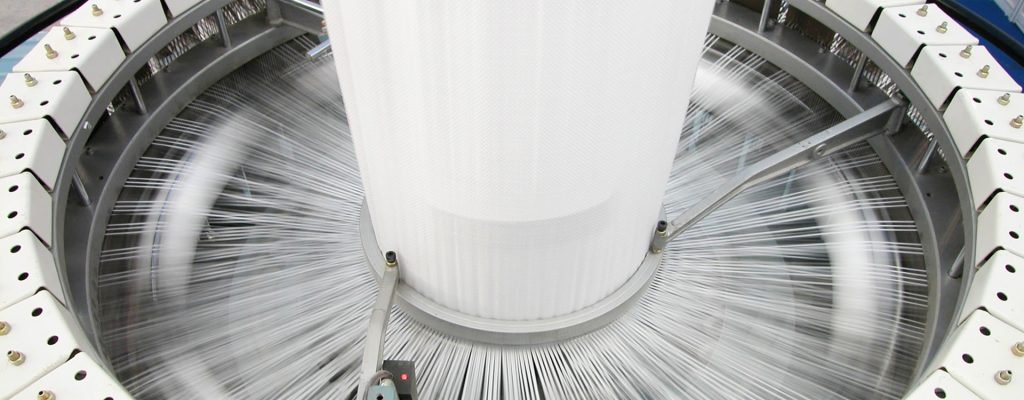
Performance begins upstream and is verified downstream. Virgin PP is extruded into a sheet, slit into flat tapes, and oriented to raise tenacity without adding mass. Circular or flat looms interlace these tapes into a stable cloth—typical meshes 10×10 to 14×14—balancing seam capture and print flatness. In parallel, BOPP film—often 12–25 μm, ordered in matte, gloss, or mixed finishes—is reverse‑printed so inks sit behind the film, insulated from hands, cartons, and rails. Logos may run as Pantone spot inks for brand fidelity; photography in profiled CMYK to respect gamut limits.
Lamination then marries film to fabric. Two families dominate:
• Adhesive lamination (PU solvent/solventless). Wide operating windows and excellent wet‑out; fast cure profiles when needed; traceable bond metrics.
• Extrusion lamination (poly tie). A pure polyolefin tie layer that can simplify stream compatibility; tighter process discipline on neck‑in, nip pressure, and chill roll control.
Converted tubes proceed to bottoms and mouths: sewn open‑mouth for manual dosing or sand/aggregate; folded/pasted block‑bottom valve for clean, high‑speed filling of powders. Finishing adds anti‑slip lacquers on the pallet face, matte windows to calm barcode glare, easy‑open tapes for consumer formats, and micro‑ or macro‑vents to evacuate trapped air without escorting fines. QC closes the loop with COF (ASTM D1894), tensile & elongation (ASTM D882), tear (ASTM D1922), dart impact (ASTM D1709), rub resistance (ASTM D5264), drop tests (ASTM D5276), and—if barrier is specified—WVTR checks (ASTM F1249). Traceability ties resin, film, ink, adhesive, and fabric lots to each shipment, so audits move from guesswork to evidence.
The rhetoric of quality is everywhere; the practice is rare. BOPP Woven Bags that survive reality are built on this practice.
What Is the Application of BOPP Woven Bags?
Where does this format shine? In categories that demand both shelf impact and field durability: dry foods (rice, flour, pulses, grains), pet nutrition (kibble, bird seed), home & garden (soil, compost, fertilizer), building materials (cement additives, mortar mixes, salt, mineral fillers), and agrochemicals & fertilizers. Valve (AD‑style) versions suit 25–50 kg powders on high‑speed formers, balancing dust control with stack geometry. Sewn open‑mouth versions suit sands, aggregates, or manual dosing in 5–25 kg. Retail‑adjacent SKUs gain billboard‑grade graphics; industrial SKUs gain barcodes and hazard pictograms that remain readable after long, wet routes.
Ask a practical question: will consumers or operators notice the difference? They will when they don’t—when stacks stay square, when labels scan on the first beep, when bags resist scuff so the brand looks new on day 30 as it did on day one. That quiet reliability is the calling card of well‑specified BOPP Woven Bags.
Product Parameters for BOPP Woven Bags (Typical, Real‑World Ranges)
| Parameter | Typical Range / Spec | Technical Note |
|---|---|---|
| Product | BOPP Woven Bags | PP woven sacks laminated with BOPP film |
| Fabric mesh | 10×10 to 14×14 | Higher pick density improves seam capture & print flatness |
| Fabric mass (GSM) | ~60–120 g/m² | Tuned to duty: rice/pet vs. minerals/mortar |
| BOPP film gauge | ~12–25 μm (matte/gloss) | Reverse‑printed for rub‑resistant, full‑bleed graphics |
| Coating/adhesive | PP/PE coat ~15–30 g/m² or PU adhesive | Drives bond strength & moisture beading |
| Common size windows | 5–25 kg (retail); 25–50 kg (industrial) | Width ~35–55 cm; length ~60–95 cm depending on SKU |
| COF targets (panel‑wise) | Machine face ~0.25–0.35; Pallet face ~0.45–0.60 | Glide on the former, grip on the pallet |
| UV stabilization | 200–1000 h xenon‑arc equivalence | For outdoor display and sun exposure |
| Print colors | Up to 8–10 | HD gravure or CI‑flexo; Pantone + LAB governance |
These ranges mirror widely published listings and peer datasheets. The right numbers depend on particle shape and density, route climate, handling style, and the desired aesthetic (matte vs. gloss, tactile vs. sleek).
Why VidePak for BOPP Woven Bags
Since 2008, VidePak has treated packaging as a governed system, not a commodity. Our core team brings 30+ years of field experience and a workforce of 568. We serve the United States, Europe, Brazil, South America, Southeast Asia, Japan, Korea, Central Asia, the MENA region, East Africa, and South Africa with a portfolio centered on BOPP Woven Bags, valve bags, and kraft‑paper woven bags. To lock in quality and process stability, we run top‑tier equipment from W&H (Germany) and Starlinger (Austria)—over 100 circular looms, 16 extrusion lines, and 30+ lamination/printing machines. We specify 100% virgin materials, support custom dimensions, gussets, and multi‑color artwork, and scale predictably—annual sales around USD 80 million affirm the trust customers place in our cadence.
What sets VidePak apart is discipline that shows up when the dock is busy and the weather is unkind: panel‑wise COF windows published on the spec; seam‑pull targets validated on worst‑case solids; ΔE* color tolerances that stop drift before it becomes complaint; line‑speed trials at real BPM, not in slow‑motion. In short, BOPP Woven Bags that track straight on the former, stack square on the pallet, and stay legible at the destination—season after season, route after route.
- What Are BOPP Woven Bags? (Also Called BOPP‑Laminated PP Woven Sacks)
- What Are the Features of BOPP Woven Bags?
- What Is the Production Process of BOPP Woven Bags?
- What Is the Application of BOPP Woven Bags?
- Product Parameters for BOPP Woven Bags (Typical, Real‑World Ranges)
- Why VidePak for BOPP Woven Bags
BOPP woven bags are a transformative solution for feed packaging, offering unmatched durability, environmental sustainability, and customizable designs to meet the growing demands of global markets. These features make them indispensable in the livestock and poultry feed industry, where high standards of safety, performance, and branding are essential.
The Essential Role of BOPP Woven Bags in Feed Packaging
BOPP (Biaxially Oriented Polypropylene) woven bags have gained prominence due to their unique blend of strength and aesthetic versatility. They are particularly valuable for packaging a wide array of livestock and poultry feed products, including:
- Pig Feed
- Chicken Feed
- Turkey Feed
- Cattle and Sheep Feed
- Fish and Shrimp Feed
- Premixed Feed and Additives
- Veterinary Medicines
These applications demand high-performance packaging solutions that protect feed integrity during transportation and storage, ensuring product safety and customer satisfaction.
Key Considerations for Choosing BOPP Woven Bags
1. Cost Efficiency
- BOPP woven bags offer a cost-effective packaging solution due to their longevity and reusability.
- Their high-quality materials, coupled with competitive pricing, particularly from Chinese manufacturers, provide significant value for global businesses.
2. Load Capacity and Strength
- Designed to handle weights ranging from 5 kg to 50 kg, BOPP woven bags excel in durability.
- Reinforced seams and optional lamination enhance structural integrity, meeting diverse load requirements.
3. Safety and Hygiene
- Antimicrobial coatings help prevent contamination, ensuring the feed remains safe and fresh.
- Moisture-resistant liners protect against humidity, a critical factor in maintaining feed quality.
4. Breathability
- The woven structure allows controlled airflow, preventing spoilage due to moisture buildup while maintaining feed freshness.
5. Customization Options
- Thickness: Customizable from 40 GSM to 200 GSM based on application.
- Weight: Tailored for lightweight or heavy-duty purposes.
- Size: Standard or bespoke dimensions to suit specific requirements.
- Lamination and Liners: Options for external lamination and internal liners for added protection.
Recommended Product Specifications
| Parameter | Range | Applications |
|---|---|---|
| Thickness (GSM) | 40-200 | Lightweight to heavy-duty packaging |
| Load Capacity | 5-50 kg | Suitable for diverse feed types |
| Outer Layer | Laminated/Non-Laminated | Branding and weather protection |
| Inner Liner | Optional | Moisture-sensitive feeds |
| Antimicrobial Coating | Available | Prevents mold and bacterial contamination |
Sustainable Solutions in BOPP Woven Bags
1. Eco-Friendly Materials
- Made from recyclable polypropylene, BOPP bags align with sustainability goals by minimizing environmental impact.
2. Waste Reduction
- Advanced manufacturing techniques ensure minimal material waste, contributing to resource conservation.
3. Compliance with Global Standards
- Leading manufacturers adhere to international environmental standards such as ISO 14001 and sustainable supply chain practices.
For detailed insights into eco-friendly packaging, explore The Future of BOPP Woven Bags.
Competitive Advantages of Chinese Manufacturers
1. Global Affordability
- Economies of scale enable Chinese manufacturers to offer competitive pricing without compromising on quality.
2. Quick Turnaround
- Efficient production facilities ensure rapid delivery, meeting global supply chain demands.
3. Consistent Quality
- Comprehensive quality control systems guarantee high standards across all product batches.
4. Worldwide Logistics
- Established logistics networks facilitate seamless international trade, reducing lead times and operational costs.
Innovations in Feed Packaging
1. Antimicrobial Treatments
- Specialized coatings provide an extra layer of protection against bacteria and mold, maintaining feed integrity.
2. Moisture-Resistant Liners
- Optional internal liners shield contents from humidity, crucial for tropical climates and prolonged storage.
3. Advanced Printing Techniques
- High-definition printing enhances branding opportunities, enabling detailed product and brand messaging.
4. Smart Packaging
- Integration of QR codes and RFID technology for traceability and real-time tracking is revolutionizing the packaging industry.
For tailored solutions, visit Custom Printed Woven Bags.
FAQs About BOPP Woven Bags
Q1: Why are BOPP woven bags ideal for livestock feed packaging?
BOPP woven bags are durable, moisture-resistant, and offer excellent breathability, ensuring feed freshness and safety.
Q2: Can BOPP bags accommodate custom sizes and branding?
Yes, BOPP bags can be customized in size, thickness, and design, allowing for versatile branding options.
Q3: How do BOPP bags prevent mold growth?
The combination of antimicrobial treatments and moisture-resistant liners effectively prevents mold and bacterial growth.
Q4: Are BOPP woven bags environmentally friendly?
Yes, they are made from recyclable polypropylene, supporting sustainable packaging initiatives.
Q5: What weight capacities are available?
BOPP woven bags can handle capacities ranging from 5 kg to 50 kg, catering to various packaging needs.
Conclusion
BOPP woven bags represent the future of feed packaging by seamlessly combining sustainability and functionality. Their adaptability for diverse applications, coupled with cost-effectiveness and global availability, positions them as an essential solution for businesses worldwide. By leveraging advancements in customization and eco-friendly materials, these bags are redefining industry standards, ensuring long-term value and environmental stewardship.