
Definition, Scope, and Why Ultrasonic Matters
Eco‑Friendly Woven Bags are industrial packaging built from polypropylene (PP) tapes woven into a textile body and finished with a mono‑material sealing skin. When this format is joined using ultrasonic energy rather than needles or hot melt, the result is a tighter seam, a cleaner floor, and a simpler end‑of‑life story. In procurement shorthand you may also see eco woven PP sacks, mono‑material woven bags, or ultrasonically welded woven sacks—many labels pointing to one intent: a recyclable, robust container that runs fast and leaves less mess. For a practical overview of compatible base structures, see Eco‑Friendly Woven Bags.
Why does ultrasonic welding matter? Because seams are where bags live or die. Stitching pierces; adhesives cure; heat bars need time and temperature. Ultrasonic energy, by contrast, focuses vibration at the interface, melting a narrow zone inside the laminate and fusing layers from the inside out. Less external heat, fewer pinholes, more repeatable seals—seams you can trust. And trust, in packaging, cascades: a trustworthy seam supports faster filling, faster palletizing, and fewer claims.
Materials Architecture: Cross‑disciplinary DNA
Horizontal thinking puts Eco‑Friendly Woven Bags at the junction of textiles, flexible films, and automation. From textiles we take denier arithmetic and weave geometry; from films we borrow dyne control, seal windows, and coefficient of friction (COF); from automation we adopt web guidance, tension control, and in‑line QA. Vertical thinking traces cause to effect: resin → tape → fabric → coating → surface energy → weld parameters → pallet behavior. Change a resin melt flow index (MFI) and you nudge draw ratio; nudge draw and you alter denier uniformity; alter denier and you change weave planarity; planarity influences coating laydown, and laydown shifts weld latitude. A ladder of decisions becomes a map for performance.
The woven base—typically 10×10 to 14×14 mesh at ~60–120 g/m² for 5–50 kg lanes—supplies tensile and tear strength at low tare. The outer skin—often a PE‑rich extrusion coat of ~20–35 μm, or a PP/PE tie layer—bridges inter‑tape voids, widens the seal window, and moderates moisture ingress. Corona treatment to ≥38 dynes anchors inks and overprint varnishes so brand panels and GS1 codes remain legible after belts and straps. Additives are tuned to the route: UV stabilization (200–1,600 h) for yard storage, anti‑static packages where dust clouds threaten ignition, antiskid textures when pallet patterns are aggressive.
Feature Set: What Ultrasonic Welding Adds (and What It Avoids)
Leak paths reduced, not just managed. Needle holes are literal highways for fines and vapor; ultrasonic seams eliminate the puncture and fuse the web internally. The payoff is visible: fewer dust plumes at the filler, less product snow on the floor, cleaner intake filters, calmer audits.
Tighter process windows, faster cycles. Ultrasonic welding converts electrical energy into high‑frequency mechanical motion (commonly 20–40 kHz). A sonotrode (horn) contacts the web against an anvil; localized friction heats the interface rapidly; the molten zone collapses; pressure holds; the seam solidifies in milliseconds. Because energy is focused and time is short, line speeds climb without cooking the whole panel.
Mono‑material integrity. With PP fabric plus PP/PE sealing layers, Eco‑Friendly Woven Bags remain predominantly polyolefin, easing mechanical recycling after paper and other contaminants are kept out. No sewing thread to remove; no foreign adhesive spine; less dismantling.
Seam geometry that resists peel and shear. Ultrasonic patterns emboss micro‑ridges into the seam to increase area and interlock. The practical signal: higher peel strengths for the same seam width, and more consistent burst behavior under drop or compression.
Cleaner aesthetics, stronger codes. No stitch ladders, no solvent halo—just a flat, printable face. Barcode quiet zones remain flat, matte panels keep glare down, and strap rub meets varnish prepared for it.
Production Process and the Vertical Traceability Chain
Predictability isn’t a slogan; it’s an ordered sequence with numbers at each step.
1) Tape extrusion & draw. Virgin PP is extruded into flat tapes and oriented to target denier (≈600–1,200 D). Draw ratio builds tensile and controls creep; online denier control keeps loom behavior steady.
2) Weaving (tubular or flat). Circular looms interlace tapes into meshes of 10×10 to 14×14. GSM is selected to balance drop survival with fold behavior; planarity here determines coating flatness and later weld uniformity.
3) Surface engineering. A PE‑rich coat (~20–35 μm) or PP/PE tie layer is extruded onto the fabric. Corona treatment to ≥38 dynes ensures ink wet‑out and adhesive‑free weldability. Coat weight is SPC‑controlled; a wandering coat is a wandering seam.
4) Printing. High‑definition flexo (6–8 colors) or rotogravure (8–9 colors on laminated panels) lays down dense solids, crisp microtype, and high‑contrast codes. Rub/UV targets are validated with strap‑rub simulation so pictograms and barcodes survive drayage.
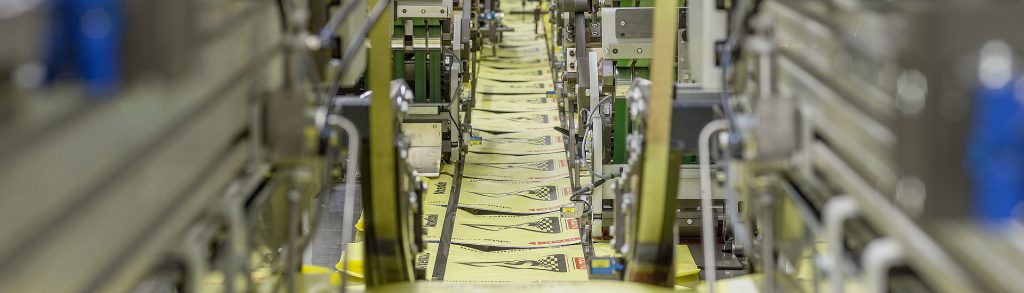
5) Conversion & ultrasonic welding. Cut to length or prepare roll webs; add gussets or shape formers for block‑bottom outcomes. Ultrasonic stations set frequency (20–40 kHz), amplitude (often 20–50 µm, peak‑to‑peak), downforce, and weld time (≈0.15–0.8 s) to match thickness and fabric architecture. Energy directors (embossed ribs) on the anvil promote rapid melt initiation and uniform flow.
6) Venting strategy (if required). Micro‑perforation bands of 20–60 holes/cm² are positioned above the settled product level to bleed headspace air during fill without releasing fines. Hermetic builds for hygroscopic goods pair zero‑perf webs with collars or liners.
7) QA dossier. Thickness mapping; inner/outer COF; dyne retention; seam width and T‑peel/shear strength measured on coupons; burst/drop profiles on formed samples; barcode grade (ANSI/ISO) pre‑ and post‑strap rub; visual AQL. Food‑adjacent variants ship with material declarations to destination requirements. Numbers travel with the lot so receiving can trust rather than test.
Horizontal vs. Vertical Thinking—Two Ways to Get to Better Bags
Horizontal borrowing. From pouches: seal‑window discipline and varnish logic. From corrugate: stack‑math and the gospel of straight pallets. From labeling: quiet zones, minimum module sizes, contrast ratios. Eco‑Friendly Woven Bags braid these lessons into a single web.
Vertical tracing. Melt flow → draw ratio → denier stability → weave planarity → coat laydown → dyne & COF → weld parameter windows → seam behavior → pallet stability. Change a knob upstream and a different pallet arrives downstream. Seeing the ladder is how you tune the line rather than chasing symptoms.
Applications: Where Ultrasonic Seams Pay for Themselves
Fertilizers & agro‑chemicals. Hygroscopic blends in humid lanes need clean, needle‑free seams and moisture‑aware coats. Ultrasonic welds reduce stitch‑line leaks; upper‑band micro‑vents maintain speed without turning the plant into a snow globe.
Cement, dry mixes & minerals. Abrasive, dense powders reward higher GSM, square block‑bottom forming, and ultrasonic seam widths sized for shear. Pallets travel straighter; claims fall.
Food ingredients (where materials comply). Sugar, rice, flour, premixes—matte print faces keep barcodes scannable; welded seams reduce dusting and fiber contamination; optional liners extend aroma and humidity control.
Plastic resins & masterbatch. High bulk density pushes for stiffer bodies and antiskid outer COF; ultrasonic closure trims sifting and preserves ID panels through drayage.
Salts, charcoal & specialty chemicals. Yard storage argues for UV stabilization; weld patterns tuned for impact and sliding resist rough depots; codes remain legible.
Across all lanes, the equation repeats: less mess + more speed = better OEE.
Print & Code Strategy: The Message Must Survive the Miles
What good is a strong container if its label whispers at the dock? On Eco‑Friendly Woven Bags, the print architecture is part of the safety plan. Corona‑treated faces keep dyne ≥38 so inks wet out; matte or white panels manage glare; overprint varnishes resist strap abrasion; GS1 barcodes and QR codes are designed with generous quiet zones. Selective lamination—a white/matte BOPP patch over the print panel—adds scuff armor where routes are harsh while keeping the rest of the body breathable and formable for fast filling.
Customization Toolkit—Tuning the Same Web for Different Lanes
- Layflat & length. 300–600 mm layflat widths matched to 5–50 kg fills; lengths scaled to bulk density for target height on pallet.
- Gussets & bottoms. Side gussets for volume; block‑bottom forming for brick‑like stacks and safer cubes.
- Venting profiles. Micro‑perf density 20–60 holes/cm² in a top “breathing band”; zero‑perf for hermetic builds with liners.
- COF packages. Inner 0.18–0.30 for calm feeding; outer 0.35–0.55 for pallet grip; antiskid textures where stack patterns are aggressive.
- UV & anti‑static. Stabilization windows 200–1,600 h; anti‑static dosing where MIE/ESD rules demand.
- Graphics. Flexo 6–8c or gravure panels 8–9c; high‑opacity whites to lift code contrast; varnishes tuned to rub/UV.
- Documentation. Lot files with COF, dyne, thickness maps, weld/peel windows, barcode grades—data that makes troubleshooting short and boring.
Indicative Parameters — Eco‑Friendly Woven Bags
| Attribute | Typical Options / Ranges | Role in Performance | Notes |
|---|---|---|---|
| Product | Eco‑Friendly Woven Bags | Mono‑material PP woven sacks | Designed for ultrasonic or heat‑seal closure |
| Fabric GSM | ~60–120 g/m² (5–50 kg lanes) | Drop/tear vs. fold behavior | Heavier GSM for abrasive minerals |
| Mesh (warp×weft) | 10×10 to 14×14 | Porosity; lamination/print flatness | Finer mesh → smoother print face |
| Tape Denier | 600–1,200 D | Tensile & creep resistance | Stable denier = stable weaving |
| Outer Skin | PE coat ~20–35 μm; PP/PE tie | Heat‑sealability; bridges inter‑tape voids | Thicker coats lower WVTR but may whiten creases |
| Ultrasonic Frequency | 20–40 kHz | Energy focus; seam quality | Match horn/anvil to fabric thickness |
| Ultrasonic Amplitude | ~20–50 µm (p‑p) | Melt initiation speed | Higher amplitude for thicker builds |
| Weld Time / Hold | ~0.15–0.8 s / 0.1–0.5 s | Seam consolidation | Tune with downforce and energy mode |
| Seam Width | ~8–20 mm | Peel and shear capacity | Patterned anvils raise effective area |
| Seal / Peel Strength | Structure‑dependent (map on coupons) | Drop and burst survival | Validate by T‑peel & shear tests |
| Micro‑Perforation | 20–60 holes/cm² (top band) | Headspace air release | Keep above settled product level |
| COF (inner / outer) | 0.18–0.30 / 0.35–0.55 | Feeding vs. pallet grip | Antiskid textures optional |
| Printing | Flexo 6–8c; Gravure panels 8–9c | Brand impact; code legibility | Matte whites reduce scanner glare |
| UV Stabilization | 200–1,600 h | Outdoor storage resilience | Match to expected yard dwell |
| Sizes | Layflat 300–600 mm; length by density | Pallet fit & cube efficiency | Block‑bottom improves stacking |
| QA Metrics | Dyne; COF; thickness SPC; barcode grade; weld/peel map; drop/burst profiles | Objective acceptance & repeatability | Material declarations for food‑adjacent builds |
All ranges reflect widely published export‑grade practice across Made‑in‑China/Alibaba‑class catalogs and peer manufacturers. Final set‑points depend on bulk density, fines %, climate, and handling severity; this is a sourcing window, not a prescription.
From Questions to a Working Spec (Short Decision Loop)
Payload map. Mass, bulk density, edge sharpness, drop frequency, climate, expected storage.
Face & barrier. Coating gauge and chemistry; dyne and ink system; rub/UV targets.
Closure. Ultrasonic seam pattern and width; horn/anvil geometry; hold pressure and dwell.
Venting. Whether to vent, where to vent, and how much to vent—always above the settled product level.
Handling & palletizing. Inner/outer COF; antiskid textures; block‑bottom forming targets; strap tension and corner boards.
Verification. Which numbers define “pass”: T‑peel/shear, COF, barcode grade, drop/stack, WVTR coupons.
Treat Eco‑Friendly Woven Bags as calibrated parts of a line, not as generic consumables, and they return the favor: quieter shifts, straighter pallets, clearer scans, and fewer apologies on delivery notes.
- Definition, Scope, and Why Ultrasonic Matters
- Materials Architecture: Cross‑disciplinary DNA
- Feature Set: What Ultrasonic Welding Adds (and What It Avoids)
- Production Process and the Vertical Traceability Chain
- Horizontal vs. Vertical Thinking—Two Ways to Get to Better Bags
- Applications: Where Ultrasonic Seams Pay for Themselves
- Print & Code Strategy: The Message Must Survive the Miles
- Customization Toolkit—Tuning the Same Web for Different Lanes
- Indicative Parameters — Eco‑Friendly Woven Bags
- From Questions to a Working Spec (Short Decision Loop)
- What is Ultrasonic Welding Technology?
- Advancements in Ultrasonic Welding for Woven Bags
- Key Product Parameters of Ultrasonic-Welded Woven Bags
- Environmental Benefits of Ultrasonic Welding in Woven Bags
- How Ultrasonic Welding is Shaping the Future of Woven Bags
- Frequently Asked Questions (FAQs)
- 1. What are the primary advantages of ultrasonic welding over traditional stitching or heat sealing?
- 2. Are ultrasonic-welded woven bags recyclable?
- 3. Can ultrasonic welding be used with recycled materials?
- 4. How does ultrasonic welding improve the environmental footprint of woven bags?
- 5. Will ultrasonic welding technology become more widely used in the future?
- Conclusion
The demand for eco-friendly packaging has surged over the past decade, driven by both consumer awareness and increasing environmental regulations. One area where this is most apparent is in the production of woven bags, particularly those made from polypropylene (PP). These bags are widely used across industries, from agriculture to construction, due to their strength, versatility, and recyclability. However, as sustainability concerns grow, manufacturers are seeking new methods to improve the eco-friendliness and performance of these products.
One of the most exciting innovations in this field is the use of ultrasonic welding technology in the manufacturing of eco-friendly woven bags. This cutting-edge technique offers a range of benefits, including stronger seams, reduced material waste, and increased production efficiency. In this blog, we will explore how ultrasonic welding is revolutionizing the production of woven bags, its benefits, and the future of these sustainable packaging solutions.
What is Ultrasonic Welding Technology?
Ultrasonic welding is a process that uses high-frequency ultrasonic vibrations to create solid-state welds between materials. In the case of woven bags, ultrasonic energy is applied to the areas where the bags’ seams are formed. The vibrations cause the materials to melt at the interface, allowing them to fuse together without the need for additional adhesives or stitching.
The primary advantages of ultrasonic welding over traditional methods, such as sewing or heat sealing, are its speed, precision, and the fact that it does not require consumable materials (such as thread or glue). This makes the process cleaner, more efficient, and more eco-friendly.
Advancements in Ultrasonic Welding for Woven Bags
The integration of ultrasonic welding technology into the production of woven bags has been a game-changer. Several advancements have been made in recent years to improve the overall performance and sustainability of these products. Below are some key innovations:
- Stronger Seams and Durability
Ultrasonic welding creates seams that are stronger and more durable than traditional sewn or heat-sealed seams. This improves the overall strength of the bag, making it more resistant to wear and tear. The result is a longer-lasting product that performs better in demanding applications, such as in construction or bulk material packaging. - Reduced Material Waste
Traditional sewing methods often result in a significant amount of material waste, particularly when it comes to threads or adhesives. Ultrasonic welding, on the other hand, fuses the materials together without the need for any additional components. This not only reduces waste but also decreases the overall environmental footprint of the product. - Energy Efficiency
The energy required for ultrasonic welding is minimal compared to traditional heat sealing or sewing methods. This leads to lower energy consumption in the production process, further enhancing the eco-friendly credentials of ultrasonic-welded woven bags. - Faster Production Times
Ultrasonic welding is faster than traditional methods, which means manufacturers can produce more bags in a shorter amount of time. This increase in production speed is particularly important for meeting the growing demand for sustainable packaging solutions. - Customization and Precision
Ultrasonic welding allows for precise, consistent welds. This makes it easier for manufacturers to create customized woven bags with exact specifications, such as specific shapes or sizes. The precision of the welding also ensures that each bag has uniform strength and durability, contributing to overall quality control.
Key Product Parameters of Ultrasonic-Welded Woven Bags
To better understand the impact of ultrasonic welding on woven bags, let’s take a closer look at the product parameters that benefit from this advanced technology.
| Parameter | Traditional Methods | Ultrasonic Welding |
|---|---|---|
| Seam Strength | Variable, dependent on sewing technique | Consistently strong, more durable |
| Material Waste | High (due to thread and adhesives) | Minimal (no consumables needed) |
| Energy Consumption | High (requires heat sealing or stitching) | Low (energy-efficient process) |
| Production Speed | Slower (manual labor required) | Faster (automated process) |
| Customization | Limited to thread or adhesive design | High precision, custom shapes/sizes |
| Durability | Subject to wear over time | Increased resistance to wear |
Environmental Benefits of Ultrasonic Welding in Woven Bags
The move toward eco-friendly packaging is driven by the need to reduce waste, lower carbon footprints, and promote sustainability. Ultrasonic welding directly contributes to these goals in several ways:
- Less Material Waste: As mentioned earlier, ultrasonic welding eliminates the need for consumable materials like thread, glue, or tapes, which reduces waste during the manufacturing process.
- Recyclability: Woven bags produced with ultrasonic welding are fully recyclable, as they do not contain non-recyclable materials like adhesives or synthetic threads.
- Energy Efficiency: Ultrasonic welding uses less energy than traditional manufacturing methods, making it a more sustainable choice for producing woven bags.
- Stronger, Longer-Lasting Products: Bags that last longer help reduce the need for frequent replacements, which in turn reduces the environmental impact over time.
How Ultrasonic Welding is Shaping the Future of Woven Bags
Looking ahead, the future of eco-friendly woven bags will likely see even more innovations in ultrasonic welding technology. As demand for sustainable packaging continues to rise, ultrasonic welding will play a key role in reducing waste, improving bag durability, and enhancing production efficiency.
- Integration with Other Sustainable Materials
One exciting possibility is the use of ultrasonic welding in conjunction with bio-based or recycled materials. Manufacturers may develop woven bags made from sustainable materials like recycled PET (rPET) or biodegradable fibers, and ultrasonic welding will provide a non-toxic, energy-efficient method for joining these materials. - Automation and Smart Manufacturing
As automation in manufacturing continues to improve, ultrasonic welding systems will become increasingly sophisticated. Smart systems could allow for real-time monitoring of weld quality, ensuring consistency and reducing the likelihood of defects. This could lead to even higher production efficiency and lower costs for eco-friendly woven bags. - Customization for Niche Markets
As the demand for customized packaging grows, ultrasonic welding will enable manufacturers to produce woven bags with specialized features, such as multi-compartment designs, unique shapes, or specialized coatings. This will be especially beneficial for industries that require specific packaging solutions, such as food, chemicals, and construction.
Frequently Asked Questions (FAQs)
1. What are the primary advantages of ultrasonic welding over traditional stitching or heat sealing?
Ultrasonic welding offers several advantages, including stronger, more durable seams, reduced material waste, lower energy consumption, faster production speeds, and greater precision in custom designs.
2. Are ultrasonic-welded woven bags recyclable?
Yes, ultrasonic-welded woven bags are fully recyclable, as they do not use non-recyclable materials like adhesives or synthetic threads.
3. Can ultrasonic welding be used with recycled materials?
Yes, ultrasonic welding can be effectively used with recycled materials, including recycled polypropylene (rPP) or other sustainable fibers. This makes it a suitable option for eco-friendly packaging solutions.
4. How does ultrasonic welding improve the environmental footprint of woven bags?
Ultrasonic welding reduces waste by eliminating the need for thread or glue, lowers energy consumption in the production process, and creates longer-lasting products that do not need frequent replacement.
5. Will ultrasonic welding technology become more widely used in the future?
Yes, as demand for sustainable packaging increases, ultrasonic welding is expected to play an even larger role in the production of eco-friendly woven bags, helping to meet the growing need for environmentally responsible packaging solutions.
Conclusion
The future of eco-friendly woven bags is undoubtedly intertwined with advancements in ultrasonic welding technology. With benefits ranging from stronger seams to reduced environmental impact, this innovative technique is transforming the way woven bags are manufactured. As sustainability continues to be a driving force in global packaging trends, ultrasonic welding will remain at the forefront, providing manufacturers with a more efficient, eco-friendly, and customizable solution for producing durable woven bags.
For more on the role of ultrasonic sealing in packaging innovations, check out this article on advancements in FIBC bulk bags with ultrasonic sealing and explore VidePak’s commitment to sustainability.