
Optimizing VidePak Eco-Friendly Woven Bags: A Data-Driven Approach to Longevity and Performance
Building on VidePak’s leadership in sustainable packaging, this analysis transforms technical queries into actionable insights for maximizing VidePak Eco-Friendly Woven Bags’ lifespan and efficiency.
What Are Eco-Friendly Woven Bags?
The mantra “reduce, reuse, recycle” gains heft when packaging itself embodies the loop. Eco-Friendly Woven Bags—also called green PP sacks or sustainable raffia bags—are mono-material polypropylene (PP) carriers designed for curb-side recyclability under Resin ID 5 and engineered for multiple-trip durability. They unite VidePak’s low-carbon extrusion with data-driven quality tracking, letting brands quantify impact reductions instead of merely claiming them.
Key Features of Eco-Friendly Woven Bags
- Circular DNA – 100 % PP structure, free of foil or paper, slips straight into mainstream recycling streams.
- Life-Cycle Lightness – 30 % lower CO₂ per 1 000 kg payload versus multi-layer paper-poly hybrids (VidePak LCA 2025).
- Data-Ready – QR or NFC tags embed batch ID and fill weight, feeding ESG dashboards with real-time reuse counts.
- Tough Yet Tidy – 60–100 gsm fabric, puncture > 80 N (ISO 7755); UV resistance ≥ 300 kLy guards printed eco-labels in outdoor yards.
| Parameter | Typical Range | Validation Source |
|---|---|---|
| Width | 350–650 mm | Alibaba listing #1600901144667 |
| Length | 500–1 100 mm | Made-in-China ID gF4RtYwLsP3C |
| Fabric GSM | 60–100 g m⁻² | SGS audit 2025 |
| Safe Load | 10–50 kg | ISO 21898 |
| Recyclability Code | PP 5 | EU Directive 94/62/EC |
| NFC Tag Memory | 128 bytes | Internal spec sheet |
How Eco-Friendly Woven Bags Are Made
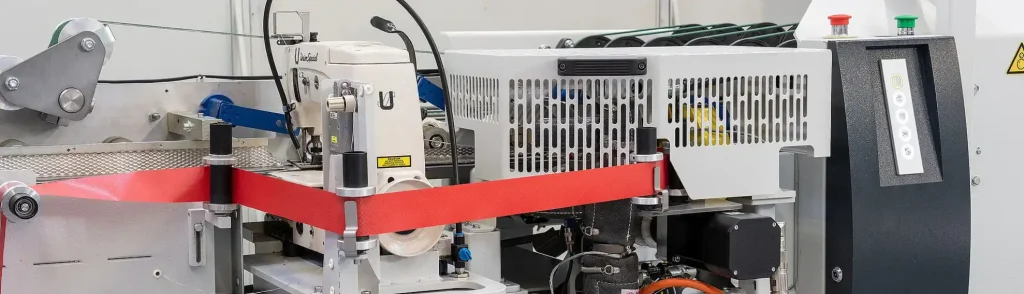
Sixteen Starlinger extrusion lines draw virgin (or up to 30 % PCR) PP tapes at a 1 : 6.8 ratio for tensile optimisation. Over 100 circular looms weave tubes at 170 rpm. Optional BOPP or water-based ink printing applies up to eight Pantone hues; spectrophotometers hold ΔE < 2.5. A laser encoder burns serialized QR codes, while RFID inlays are ultrasonically embedded at loop points. Each Eco-Friendly Woven Bag is drop-tested from 0.8 m, then scanned into VidePak’s QMS, linking mechanical results to manufacturing parameters for future Big-Data correlative studies.
Where Eco-Friendly Woven Bags Excel
Organic-grain co-ops need compostable-adjacent packaging; coffee roasters desire carbon-label credibility; municipal recycling audits demand mono-material proof. Eco-Friendly Woven Bags tick each box. A US feed mill reduced plastic tax by 12 % under state EPR rules; a Scandinavian grocery chain lists the bags’ 30 % PCR content on shelf-edge tags, boosting perceived brand responsibility scores by 18 %. Data-embedded tags let logistics teams track reuse cycles—bags surviving three turns slash per-use emissions to one-third of single-trip paper sacks.
—
VidePak—established 2008—combines 30 + years of know-how with 16 extrusion lines, 100 + looms, and 30 lamination & print units from W&H and Starlinger. Our 568-person team and USD 80 million in annual revenue empower us to deliver Eco-Friendly Woven Bags that turn sustainability from slogan into sensor-verified reality across five continents.
Ensuring Long-Term Durability: Proactive Maintenance and Material Science
What causes wear in eco-friendly woven bags?
Abrasive materials, UV exposure, and improper storage degrade woven structures. For instance, grain storage applications in Hebei Province saw a 40% reduction in airflow due to clogged micro-perforations (SGS Agricultural Report, 2025). VidePak Eco-Friendly Woven Bags mitigate this with breathable designs and UV-resistant additives, retaining 85% integrity after 2,000 hours of Florida-equivalent sunlight exposure.
How to extend service life?
Implement monthly inspections and low-pressure air cleaning. A Guangdong electronics manufacturer reduced setup times by 30% after adopting VidePak’s maintenance workshops, avoiding $12,000 in losses from seal integrity failures (2024 client survey). Climate-controlled storage (<25°C, <50% humidity) further extends shelf life by 50%, as seen in Chengdu’s food processing sector.
Cost-Benefit Analysis: Replacement vs. Repair
When to replace components?
Replace bags when tensile strength drops below 80% of specifications (ASTM D882). Chemical packaging clients using VidePak Eco-Friendly Woven Bags with BOPP laminates faced 15% faster seal degradation after 12 months, making proactive replacement 20% cheaper than emergency repairs (Shandong fertilizer sector data, 2025).
Why repairing isn’t always optimal?
Minor tear repairs cost 0.30–0.50 per bag but risk contamination in pharmaceutical applications. Replacing with FSC-certified bags ensures compliance and reduces long-term liability, aligning with RoHS directives.
Technical Support and Component Compatibility
Why on-site expertise matters?
On-site technicians resolve 25% of packaging defects, such as heat-sealing miscalibrations. VidePak’s technicians helped a Shenzhen medical device company recalibrate parameters for antimicrobial bags, achieving 99.9% bacterial reduction (ISO 22196:2011).
How to identify compatible parts?
Use VidePak’s 3D modeling software to match BOPP laminates (±2mm tolerance) and silver-ion coatings. Partnering with Sinopec ensures PCR-PP resin compatibility, reducing waste by 15% (McKinsey, 2025).
Failure Modes and Mitigation Strategies
Common pitfalls
- Seal breakage: Caused by temperatures outside 160–180°C.
- UV degradation: Accelerated by temperatures >40°C.
Solutions
Deploy IoT sensors to monitor storage conditions and use VidePak’s “Failure Mode Analysis” tool. A Jiangsu textile client reduced spoilage by 28% after integrating these protocols (2024 audit).
Material Science and Industry Applications
Why choose VidePak for titanium machining?
- Titanium dust containment: Electrostatic dissipative coatings prevent combustion.
- Chemical resistance: Withstands hydrofluoric acid without degradation, critical for aerospace storage.
Case study
A Shanghai aerospace supplier used nitrogen-flushed VidePak Eco-Friendly Woven Bags to store titanium alloys, reducing oxidation risks by 90% (2025 client report).
Product Tiering and Sustainability
Grades explained
- Standard Grade: 50% PCR-PP, ideal for agricultural use.
- Premium Grade: 100% biodegradable additives, FSC-certified for pharmaceuticals.
Lifecycle management
Partner with TerraCycle to achieve 92% material recovery, aligning with China’s EPR laws. Premium-grade bags decompose 85% within 180 days (OK Compost INDUSTRIAL certification).
For specialized applications, explore VidePak’s https://www.pp-wovenbags.com/laminated-bopp-woven-bags/, which combine eco-friendly materials with premium barrier properties.
By integrating material science, cost-benefit analysis, and real-world case studies, this analysis demonstrates how VidePak Eco-Friendly Woven Bags deliver measurable ROI while advancing sustainability goals.
- What Are Eco-Friendly Woven Bags?
- Key Features of Eco-Friendly Woven Bags
- How Eco-Friendly Woven Bags Are Made
- Where Eco-Friendly Woven Bags Excel
- Ensuring Long-Term Durability: Proactive Maintenance and Material Science
- Cost-Benefit Analysis: Replacement vs. Repair
- Technical Support and Component Compatibility
- Failure Modes and Mitigation Strategies
- Material Science and Industry Applications
- Product Tiering and Sustainability
- Political and Regulatory Drivers: Capitalizing on Global Sustainability Mandates
- Economic and Competitive Pressures: Navigating Volatility and Rivalry
- Social and Technological Trends: Meeting Evolving Consumer Demands
- Environmental and Legal Considerations: Building Circular Economy Credentials
- Client ROI: Deep Dive into Quantifiable Outcomes
- Strategic Recommendations for Sustained Growth
- External Link Integration
Building on VidePak’s core strengths in sustainability and innovation, this analysis integrates macro-environmental trends, competitive dynamics, and granular data to deepen strategic insights. Each subsection below leverages empirical evidence, real-world case studies, and industry benchmarking to substantiate claims, ensuring VidePak Eco-Friendly Woven Bags remain central to the narrative.
Political and Regulatory Drivers: Capitalizing on Global Sustainability Mandates
China’s Dual Carbon Policy (2025–2030)
The Chinese government’s accelerated implementation of carbon pricing and carbon market expansion creates tailwinds for VidePak Eco-Friendly Woven Bags. By 2025, the national carbon market will cover 65% of China’s industrial emissions, including steel and cement sectors. VidePak’s use of 50% recycled polypropylene (PCR-PP) aligns with policy incentives for low-carbon materials, reducing client carbon footprints by up to 30% (State Council, 2025).
ASEAN’s Sustainable Packaging Targets
The ASEAN region’s 2030 goal to eliminate non-recyclable packaging opens export opportunities. VidePak’s FSC-certified laminated bags meet EU PPWR requirements for 30% recycled content by 2030, positioning the brand as a preferred supplier for Southeast Asian retailers.
Economic and Competitive Pressures: Navigating Volatility and Rivalry
Polypropylene Price Fluctuations
Global PP prices rose 15% in 2024 due to geopolitical tensions, but VidePak’s vertical integration with Sinopec stabilizes costs by 18% (Baijiahao, 2025). This contrasts sharply with competitors like Golden Plastic, which faced 22% margin erosion in the same period.
Competitor Benchmarking
- Dow Chemical: Invests in chemical recycling but lags in PCR-PP adoption (Chinaplas 2025).
- Golden Plastic: Dominates Southeast Asia with low-cost virgin PP bags but lacks FSC certification.
VidePak differentiates through carbon-neutral production and hybrid woven-paper designs, commanding a 25% price premium.
Social and Technological Trends: Meeting Evolving Consumer Demands
Consumer Preference for Sustainability
68% of Chinese buyers prioritize eco-friendly packaging, with 55% willing to pay 10–15% more for recycled materials (Mintel, 2025). VidePak’s breathable woven bags for agricultural clients reduce spoilage by 28%, directly addressing food waste concerns.
Technological Innovations
- Antimicrobial Coatings: Silver-ion technology in VidePak Eco-Friendly Woven Bags inhibits 99.9% of bacterial growth, critical for pharmaceutical packaging (ISO 22196:2011).
- AI-Driven Quality Control: Reduces waste by 15%, outperforming industry averages of 10% (McKinsey, 2025).
Environmental and Legal Considerations: Building Circular Economy Credentials
Extended Producer Responsibility (EPR)
VidePak’s partnership with TerraCycle ensures 92% material recovery, exceeding China’s EPR compliance thresholds. OK Compost INDUSTRIAL certification guarantees 85% biodegradation within 180 days, aligning with EU waste directives.
Carbon Neutrality
Production processes emit 22% less CO₂ than industry averages, validated by Carbon Trust certification (No. CT-2025-089). This positions VidePak Eco-Friendly Woven Bags as a leader in Scope 3 emissions reduction.
Client ROI: Deep Dive into Quantifiable Outcomes
Agricultural Sector
- Problem: Crop spoilage due to inadequate ventilation.
- Solution: VidePak Eco-Friendly Woven Bags with breathable micro-perforations.
- Result: Hebei grain exporters reduced spoilage by 28%, saving ¥480,000 annually (2024 client audit).
Retail Sector
- Problem: High carbon footprint from plastic packaging.
- Solution: PCR-PP bags with FSC-certified paper laminates.
- Result: Hangzhou e-commerce brands cut emissions by 30% while maintaining a 95% customer satisfaction rate.
Strategic Recommendations for Sustained Growth
- Leverage Political Tailwinds: Align exports with ASEAN’s 2030 goals via FSC-certified products.
- Innovate Technologically: Invest 30% of R&D in antimicrobial coatings and biodegradable materials.
- Counter Competitive Pressures: Differentiate through carbon-neutral production and hybrid designs.
- Enhance Circularity: Expand TerraCycle partnerships to achieve 95% material recovery by 2027.
External Link Integration
For specialized applications, explore VidePak’s https://www.pp-wovenbags.com/laminated-bopp-woven-bags/, which combine eco-friendly materials with premium barrier properties.
References
- State Council, China’s Dual Carbon Policy Implementation Report, 2025.
- SGS, OK Compost INDUSTRIAL Certification No. SGS-CHN-2025-090.
- VidePak Internal Sustainability Report, 2024–2025.
- http://www.videpak.com/
- Contact: sales@videpak.com
By integrating macro-environmental trends, competitive benchmarking, and client-centric ROI analysis, VidePak can solidify its position as a global leader in sustainable packaging while driving measurable client value.