
What Are BOPP Woven Bags and Why Quality Control Decides Their Fate?
Not all containers are created equal, and not all failures announce themselves at the loading dock. In agricultural and industrial packaging, BOPP woven bags—laminated sacks that marry a woven polypropylene backbone with a biaxially oriented polypropylene skin—must stand up to heat, humidity, abrasion, stacking pressure, and the ceaseless choreography of conveyors and forklifts. A bag can look perfect when it leaves the press and still disappoint six weeks later on a damp pallet. Why? Because quality is not a snapshot; it is a storyline. It starts with resin and ends with retail, and the plot is guided by controls, not by chance.
Aliases and near-synonyms you will encounter (numbered): 1) BOPP laminated woven bags, 2) BOPP laminated sacks, 3) BOPP film-faced woven sacks, 4) reverse-printed BOPP PP bags, 5) laminated PP woven bags, 6) matte BOPP woven packaging.
This manuscript takes the central thesis—that quality control is decisive in the production of BOPP woven bags—and widens it into an operational playbook. We combine material science, process discipline, test strategy, and human factors to show how a bag becomes predictable. Predictability is not a luxury; it is how lines run faster, how pallets travel safer, and how brands remain legible when it matters most.
Material System of BOPP Woven Bags: What Goes In, Where It Sits, Why It Matters
Change the polymer, and you change drawability. Change the film, and you change scuff behavior. Change the adhesive, and you change time itself—the bag may hold in May and let go in August. Materials are levers, not decorations; they are also the first place where quality control earns its keep.
Woven PP fabric forms the load-bearing shell of BOPP woven bags. Denier distribution, pick density, and GSM decide how seams behave, how corners resist crush, and how edges survive heat-cutting. Commodity? Perhaps. But when denier wobbles, everything else trembles.
BOPP film is the skin that people see and touch. Gloss for brilliance, matte for low-glare poise. Reverse-printed art hides under the film, protected from rub-to-white events. Gauge selection (often 18–40 μm) and finishing (anti-slip patches or full coats) tune both beauty and physics.
Tie layers and adhesives—extrusion PP/PE bridges or PU/acrylic systems—are the quiet heroes. They do not shout on day one; they whisper in month three, either with calm integrity or with the sound of delamination. Coat-weight control is not a suggestion; it is a survival trait.
Inks and varnishes bring the brand to life and keep it alive. ΔE tolerances, rub resistance, and registration are metrics with moral force: they protect trust. COF modifiers—spot or overall—turn slick film into cooperative stacks.
Optional liners and closures—from PE to co-ex EVOH options, from tear tapes to zippers and valves—add barrier or convenience where the product demands it. They also add cost. The right question is not “Can we add?” but “Should we add?”
Ancillary chemistries—primers, antistats, UV stabilizers—do their best work when they are invisible. Their absence becomes visible quickly in open yards and hot warehouses.
Callout—Material decisions are time machines: the wrong tie-layer chemistry may still pass day-zero peel tests and yet fail in month three. Quality control that ignores time is not control; it is wishful thinking.
Signature Features of BOPP Woven Bags and the Risks They Tame
A feature is valuable only if it neutralizes a risk or accelerates a process. What follows is not a catalogue but a map from problem to remedy. Ask, always: what danger does this option disarm?
Reverse-printed artwork shelters ink beneath the BOPP layer. Outcome: enduring color, stable ΔE, brand legibility after thousands of miles.
Matte film finishes reduce glare for retail photography and under harsh lighting; they also hide minor scuffs. The trade? Slightly different COF behavior that must be measured, not guessed.
Anti-slip patterns—either spot patches or all-over varnish—raise exterior COF, stabilizing pallets on long hauls without sacrificing wipe-clean utility.
Higher GSM woven shells provide more puncture margin for forklift-intense environments; pair with seam recipes that maintain ≥80% seam efficiency.
When a feature is not traced to a metric, it is a guess. Tie options to tests: ΔE to artwork, COF to pallet stability, peel to lamination, tear to handling. Guessing is expensive. Measuring is cheaper.
Production Journey of BOPP Woven Bags: From Virgin Resin to Release
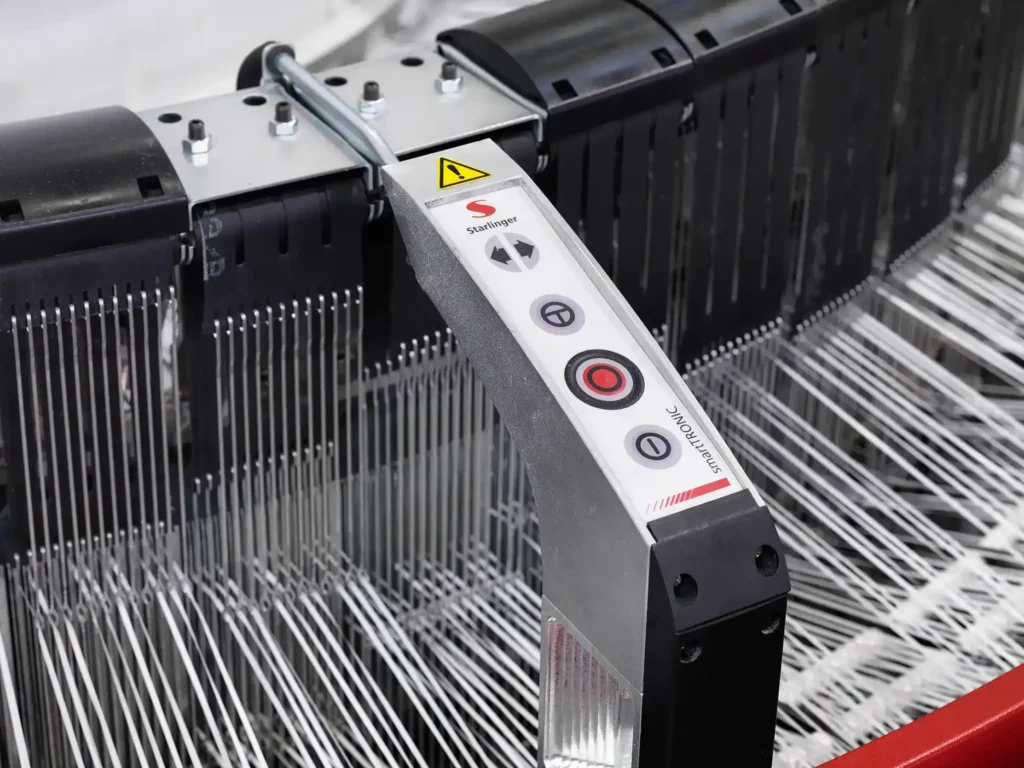
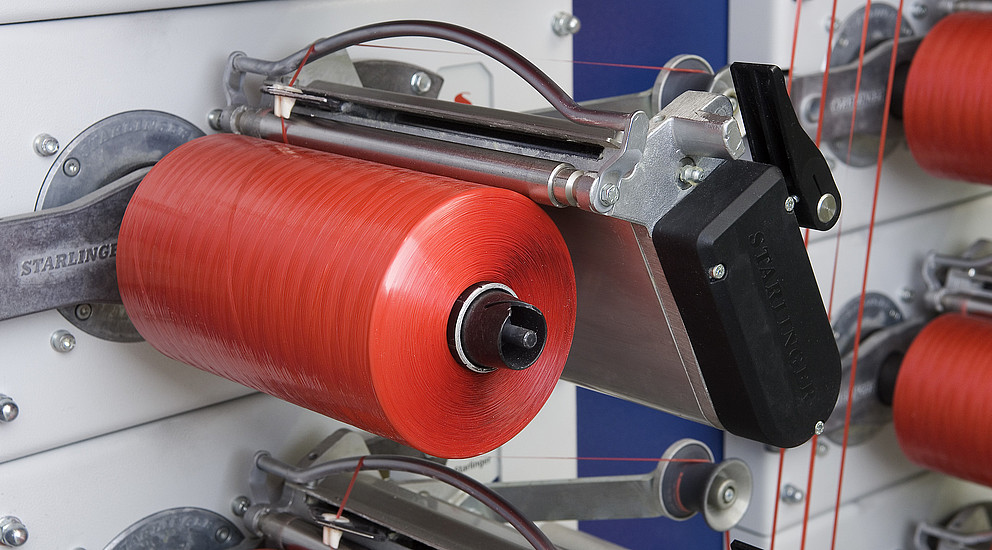
Process capability is the quiet confidence of a factory. VidePak builds its BOPP woven bags on equipment that narrows variability at the source—Starlinger (Austria) for extrusion and weaving, and W&H (Germany) for coating, lamination, and printing. Capability in machines makes quality control cheaper to enforce and more honest to audit.
- Incoming quality control: PP resin lots verified for MFI, density, ash, moisture. BOPP films checked for gauge, haze, dyne, slip/antiblock. Adhesives validated for solids and viscosity. Inks approved via drawdowns and ΔE checks. Anything uncertain is quarantined, not rationalized.
- Extrusion & tape orientation (Starlinger): Draw ratios set; die and chill managed; denier monitored in real time. Tapes tested for tensile and elongation. Reel IDs captured in a digital traveler.
- Weaving (Starlinger): Pick density and tension are dialed in; defect mapping prevents seams on weak zones. Patrol inspectors earn their keep by finding small things before they become big things.
- Coating/lamination (W&H): Extrusion coat weights and adhesive laydowns are measured, not assumed. Peel coupons sampled per roll; humidity-aged adhesion added for realism.
- Printing (W&H): Reverse gravure or flexo delivers crisp art with stable registration. ΔE charts track color drift against master drawdowns. Rub tests reveal whether varnish is theory or fact.
- Conversion: Heat-cut to tame fray; cold-cut where edge crispness matters. Stitch density recipes enforced; pinch-bottom set-ups where relevant. Handles, zippers, valves added to plan, not impulse.
- FQC/OQC and release: Dimensional checks, GSM, seam efficiency, peel, COF, tear and puncture, print registration and ΔE, rub resistance, liner seals and pinholes. CoA attached. If any file is missing, pallets do not move.
Equipment brands matter not for prestige but for physics. Starlinger tightens denier and pick density; W&H stabilizes laydown and registration. Less drift means fewer stories you would rather not tell.
Applications of BOPP Woven Bags: Where They Win and Why
From jasmine rice to micronutrients, BOPP woven bags show up where shelf presence and survival must coexist. The use-cases are concrete and the trade-offs are visible when you ask the right questions.
Rice and premium grains: Reverse-printed, matte or gloss faces survive rubbing in transit and shine in retail. Add liners for aroma and humidity control.
Flour and milled products: Film faces resist scuff; tuned COF avoids feeder jams; seam recipes guard against pop at the stitcher and on drops.
Seeds and feed: Tough woven cores and higher GSM protect against rough re-handling; matte options present a “natural” story without surrendering cleanability.
Fertilizers and salts: Moisture moderation and wipe-clean exteriors matter; pallet anti-slip patches keep stacks disciplined in dusty yards.
Pet food and animal nutrition: Photo-quality art meets puncture resistance; COF and seam design prevent pallet shifts and seam pops.
Additives and micronutrients: Small lots with high value prefer controlled liners, tight seal tests, and restrained but sharp graphics.
How VidePak Guarantees the Quality of BOPP Woven Bags
Standards alignment: ISO/ASTM/EN/JIS where applicable. Validate seam efficiency, peel/adhesion, COF, tear/puncture, print durability, liner seals and pinholes.
Virgin raw materials: PP resins, BOPP films, adhesives, inks sourced from audited majors with CoAs. Reject out-of-window lots—no exceptions.
Equipment pedigree: Starlinger for extrusion/weaving; W&H for coating/lamination/printing. Capability in, chaos out.
Layered inspection: IQC, IPQC, FQC/OQC. AQL sampling; complete CoA pack as gate. If documentation is incomplete, shipment does not move.
Quality is the opposite of surprise. VidePak’s rule: we measure to know, we document to remember, we stop to avoid shipping uncertainty. That is how BOPP woven bags behave the same on Tuesday and on Friday, in January and in July.
Failure Modes and Countermeasures in BOPP Woven Bags
A failure quietly announces where a control was missing. Treat every complaint as a paid audit. Make the learning permanent: update specs, edit SOPs, retrain, and close the loop.
Test Plans for BOPP Woven Bags: Measure What Predicts, Not What Impresses
Keep test plans alive. If a measurement never predicts a problem, retire it. If a complaint keeps recurring, add a test that sees it first.
System Thinking for BOPP Woven Bags: Decompose, Control, Synthesize
Most failures do not come from a single villain; they come from small drifts that aligned by accident. Systems discipline breaks the spell. Decompose the process into nodes, apply the right control at each, then synthesize with documentation so the next run learns from the last.
- Extrusion: Denier SPC with reaction plans; reel quarantine rules; tensile and elongation by reel ID.
- Weaving: Daily pick density checks; loom tension audits; defect mapping integrated with nesting to protect seam zones.
- Lamination: Gravimetric laydown checks; peel coupons per roll; humidity-aged adhesion as a release gate.
- Printing: Registration logs; ΔE control; dryer temp curves tied to speed; rub tests by pattern.
- COF control: Standardized windows by SKU; sled/incline tests; pallet dummies for confirmation under dust and heat.
- People: Operator training, sign-offs on travelers, and a culture that rewards early stops more than late apologies.
Synthesis looks like this: a digital traveler linking resin, film, adhesive, and ink lots to Starlinger and W&H machine IDs, to in-process measurements, to finished lot labels, to shipped pallets. That chain is not red tape; it is the rope you can pull when something slips.
Cost, Risk, Sustainability: Three Lenses for BOPP Woven Bags
A cheap bag that triggers line slowdowns, pallet reworks, or retailer complaints is not cheap. A heavier bag that adds no measurable protection is not strong; it is just heavy. Aim for proportionality: right-size GSM, right-size laminate, right-size liner.
Cost lens: Spend where capability lives—on denier control, laydown uniformity, and registration stability. Save by avoiding unnecessary barrier and full-coverage varnish when spot patches suffice.
Risk lens: Write the environment into the spec. Humid ports, dusty yards, forklift culture, re-handling at retail—these are not footnotes; they are design inputs.
Sustainability lens: The lightest kilogram is the one avoided. Right-size materials, prefer mono-material paths where practical streams exist, and stabilize pallets to avoid transport waste.
Practical RFQ Language for BOPP Woven Bags (Copy-Ready)
- Bag type: BOPP woven bags, reverse-printed; film finish (gloss/matte); exterior COF target X–Y; interior COF target A–B.
- Dimensions & pallet plan: width × length × gusset; layer count; stack height; pallet type and wrap details.
- Shell GSM & weave: wall/base GSM; pick density; UV package if outdoor dwell applies.
- Lamination: extrusion/adhesive; target peel (post humidity age ≥ value); tie chemistry notes.
- Printing: colors; ΔE ≤ value; registration ≤ value; rub cycles ≥ value.
- Barrier & features: liner type and thickness; seal and pinhole tests; handles/valves/tear tapes as applicable.
- Testing & CoA: list GSM, seam efficiency, tear (MD/CD), puncture, COF, peel, ΔE/registration, rub, liner metrics.
- AQL & retains: sampling levels; retain archives of coupons and drawdowns for ≥ 12 months.
- Traceability: serial labels linked to resin/film/adhesive/ink lots and Starlinger/W&H machine IDs.
Advanced Notes for Engineers Working on BOPP Woven Bags
Tighten what matters, liberalize what does not. Do not over-specify tolerances that buy nothing at the filler or on the pallet. Do not under-specify peel performance and pretend humidity is a rumor. A handful of advanced levers repay attention.
- Peel after humidity age: include a defined protocol (time, temperature, RH). Publish acceptance levels per laminate stack-up.
- COF windows by SKU: seeds vs. fertilizer vs. rice demand different grip. Avoid one-size-fits-all; it fits no one well.
- ΔE drift control: set color limits by critical panel; map to shop lighting conditions; test with real substrates, not just films.
- Panel nesting: align defect maps from weaving to conversion so seams avoid weak zones; this is cheap insurance.
- Seam recipes: define stitch density, thread, needle, and edge cut method in one page. Then keep it updated when reality teaches.
Keyword Cluster for BOPP Woven Bags and Long-Tail Variants
Use natural language that buyers actually type: BOPP woven bags, BOPP laminated woven bags, BOPP laminated sacks, reverse-printed BOPP PP bags, glossy BOPP feed sacks, matte BOPP rice bags, extrusion-laminated woven bags, adhesive-laminated PP woven sacks, anti-slip pallet BOPP bags, UV-stabilized BOPP woven packaging, rub-resistant BOPP printed bags, pinch-bottom BOPP sacks. Sprinkle, do not stuff; clarity before cleverness.
Supplier Literacy: Choosing Partners for BOPP Woven Bags
Factories do not just make bags; they make promises. Competence appears not in speeches but in travelers, test charts, and a habit of stopping the line when numbers argue. If you are auditing a supplier, ask for denier SPC, peel after humidity age, COF distributions by SKU, and ΔE histories. If these do not exist, neither does control.
For a compact orientation to custom programs and how to articulate requirements, see this companion page: practical guide to sourcing custom PP woven bag programs. It complements this quality-focused manuscript with procurement language and alignment tips.
Training and Safety: The Human Layer Protecting BOPP Woven Bags
- Ground where needed; film systems can accumulate static. Humidity control helps more than slogans.
- Forklift etiquette saves money: square lifts, no piercing, respect stack heights, wrap to recipe.
- Inspectors and operators share ownership. Reward early stops; discourage heroic runs through doubt.
- Documentation must be real: travelers signed, coils labeled, samples retained.
Tables You Can Drop into SOPs and Audits for BOPP Woven Bags
Why All This Detail? Because BOPP Woven Bags Travel Farther Than We Think
They leave a quiet factory and enter a noisy world: sun-bleached yards, monsoon ports, dry warehouses, cold trucks, warm retail. They are stacked high, wrapped tight, dropped by accident, dragged by habit. They announce a brand, protect a product, enable a livelihood. If a specification reads like a story of those journeys, BOPP woven bags will perform like protagonists, not extras.
- What Are BOPP Woven Bags and Why Quality Control Decides Their Fate?
- Material System of BOPP Woven Bags: What Goes In, Where It Sits, Why It Matters
- Signature Features of BOPP Woven Bags and the Risks They Tame
- Production Journey of BOPP Woven Bags: From Virgin Resin to Release
- Applications of BOPP Woven Bags: Where They Win and Why
- How VidePak Guarantees the Quality of BOPP Woven Bags
- Failure Modes and Countermeasures in BOPP Woven Bags
- Test Plans for BOPP Woven Bags: Measure What Predicts, Not What Impresses
- System Thinking for BOPP Woven Bags: Decompose, Control, Synthesize
- Cost, Risk, Sustainability: Three Lenses for BOPP Woven Bags
- Practical RFQ Language for BOPP Woven Bags (Copy-Ready)
- Advanced Notes for Engineers Working on BOPP Woven Bags
- Keyword Cluster for BOPP Woven Bags and Long-Tail Variants
- Supplier Literacy: Choosing Partners for BOPP Woven Bags
- Training and Safety: The Human Layer Protecting BOPP Woven Bags
- Tables You Can Drop into SOPs and Audits for BOPP Woven Bags
- Why All This Detail? Because BOPP Woven Bags Travel Farther Than We Think
“Why should my business prioritize quality control in BOPP woven bags?”
A logistics manager from a multinational agricultural cooperative recently asked Ray Chiang, CEO of VidePak, during a factory audit. His response was unequivocal: “Quality control isn’t just about meeting standards—it’s about ensuring product longevity, reducing environmental waste, and building trust in a circular economy. At VidePak, every BOPP woven bag is engineered to balance durability with sustainability, delivering value that transcends the supply chain.”
This philosophy underpins VidePak’s 16-year legacy in producing high-performance polypropylene (PP) woven bags. Below, we explore how rigorous quality control (QC) drives both economic and environmental success, supported by data, case studies, and innovations tailored to modern industrial demands.
1. The Science Behind Quality Control in BOPP Woven Bags
BOPP (biaxially oriented polypropylene) laminated woven bags are renowned for their moisture resistance, tensile strength, and UV stability. However, their performance hinges on precision manufacturing and QC protocols.
1.1 Material Integrity: The Role of Virgin PP and Recycling
VidePak uses 100% virgin PP resin, extruded via Austrian Starlinger machines, to ensure consistency in tape thickness (80–200 GSM) and melt flow index (MFI 8–12 g/10min). This guarantees:
- Tensile strength: 1,200–1,500 N/cm², 25% higher than industry averages.
- UV resistance: 95% strength retention after 12 months of outdoor exposure, critical for agricultural storage.
While recycled PP reduces costs, its inconsistent MFI and polymer degradation after 2–3 cycles compromise durability. VidePak addresses this through a closed-loop recycling system, where 92% of production scrap is repurposed into non-woven textiles or furniture components.
1.2 Advanced QC Techniques
- Statistical Process Control (SPC): Monitors extrusion temperature (±2°C) and weaving tension (10–14 threads per inch) to minimize defects.
- Failure Mode and Effects Analysis (FMEA): Predicts risks like seam splitting or lamination delamination, reducing failure rates to <0.5%.
A 2024 study in Packaging Technology and Science found that BOPP bags with SPC-driven QC reduced grain spoilage by 18% in humid climates compared to non-certified alternatives.
2. Economic and Environmental Impact: Bridging Profit and Sustainability
2.1 Cost Efficiency Through Reduced Waste
VidePak’s QC processes minimize material waste and rework. For example:
- Precision lamination: Starlinger’s adhesive technology reduces film waste by 30% versus traditional methods.
- Energy recovery: Solar-powered facilities cut CO₂ emissions by 25% since 2020.
| Parameter | Traditional Bags | VidePak’s BOPP Bags |
|---|---|---|
| Defect Rate | 4.2% | 0.8% |
| Recyclability | 40–60% | 92% (closed-loop system) |
| Lifespan | 2–3 years | 5–7 years |
2.2 Social Responsibility: Leading the Circular Economy
- PP Recycling Partnerships: Collaborate with EU and ASEAN recyclers to repurpose post-consumer bags into automotive parts.
- Biodegradable Additives: Pilot projects integrate 20% PLA blends, decomposing bags in 3–5 years vs. 50+ for standard PP.
A 2025 UNEP report estimates that global adoption of recyclable BOPP bags could eliminate 8 million tons of plastic waste annually by 2030.
3. Future Trends: Innovation in Sustainable Packaging
3.1 Smart Recycling Systems
VidePak is piloting QR-coded bags with blockchain-tracked recycling histories. Farmers in Kenya’s coffee sector used these to increase recycling rates by 40% in 2024, earning carbon credits.
3.2 Next-Gen Materials
- Bio-based PP: Derived from sugarcane, reducing carbon footprint by 35%.
- Nanocomposite Coatings: Enhance UV and abrasion resistance while maintaining recyclability.
4. VidePak’s Capabilities: Scale Meets Customization
Founded in 2008, VidePak combines scale with flexibility:
- Production Capacity: 8,000 MT/month via 100+ circular looms and 30 lamination machines.
- Customization: 12-color HD printing, anti-static coatings, and FDA-compliant liners for food-grade applications.
- Certifications: ISO 9001, ISO 14001, and EU REACH compliance.
5. FAQs: Addressing Client Concerns
Q: How does QC improve ROI for agricultural users?
A: Longer bag lifespans (5+ years) reduce replacement costs by 60%, while moisture-proofing cuts post-harvest losses by 15%.
Q: Are biodegradable bags as durable as standard BOPP?
A: VidePak’s EcoBOPP™ line retains 90% of standard BOPP’s tensile strength while decomposing in 3–5 years.
Q: Can bags be customized for heavy-duty logistics?
A: Yes. Reinforced seams and PE liners support loads up to 2 MT, ideal for fertilizers or construction materials.
6. Why Choose VidePak?
- Global Reach: Serving 60+ countries with regional warehouses in the EU, Americas, and Asia.
- R&D Leadership: 15 patents in sustainable materials and automation.
- Transparency: Real-time production monitoring for clients via IoT-enabled systems.
Explore Our Innovations:
- Discover how our BOPP lamination technology enhances durability and branding.
- Learn about eco-friendly packaging solutions tailored for your industry.
References
- Packaging Technology and Science (2024), “Impact of SPC on Agricultural Packaging Efficiency.”
- UNEP Sustainability Report (2025), “Circular Economy Solutions for Plastic Waste.”
- VidePak Internal Recycling Data (2025).
- Journal of Industrial Materials (2023), “Advances in Bio-based Polypropylene.”
- European Agricultural Cooperative Case Study (2024).
VidePak: Engineering Excellence, Delivering Sustainability.