
What is BOPP Woven Bags Supplier?
Packaging is no longer a passive wrapper; it is a structural component in the supply chain, a moving web in automation, and a persistent brand surface in retail. A BOPP Woven Bags Supplier sits where these demands collide—less a commodity vendor, more a systems architect. The platform combines woven polypropylene (PP) raffia—made from oriented tape yarns—with a bi‑axially oriented polypropylene (BOPP) film that is typically reverse‑printed so graphics live beneath a hard, scuff‑resistant finish. Where line sealing is required, a polyethylene (PE) skin is added to create a forgiving thermal window. Strong enough for forklifts, clean enough for food aisles, sharp enough for shelf psychology—that’s the paradox the format resolves.
In RFQs and export paperwork, the same family appears as BOPP laminated PP woven sacks, BOPP laminated raffia bags, or BOPP woven valve bags when block‑bottom/valve formats are used. Buyers increasingly evaluate a BOPP Woven Bags Supplier on its ability to specify reverse‑printed BOPP faces, optional PE sealing skins, anti‑slip surfaces, and roll geometries tuned for vertical and horizontal form‑fill‑seal (FFS) equipment. For a concise orientation anchored on the term itself, see: BOPP Woven Bags Supplier.
Horizontally, this platform borrows from textile engineering (denier ↔ tear and abrasion), flexible packaging (reverse printing ↔ scuff resistance), and logistics (coefficient of friction ↔ pallet stability). Vertically, decisions cascade: draw ratio in tape orientation sets modulus; mesh density informs porosity; lamination chemistry determines peel strength; bottom architecture governs drop survival. Tighten mesh from 12×12 to 14×14 and the ripple is immediate—ink laydown shifts, seal faces settle differently, stacked pallets behave better. A BOPP Woven Bags Supplier that models these couplings early reduces line stoppages and post‑shipment claims.
Paper struggles in humid lanes, labor scarcity accelerates automation, retailers demand photo‑true imagery. A seasoned BOPP Woven Bags Supplier meets these vectors simultaneously: raffia + bonded films for moisture tolerance, roll‑fed efficiency for fewer touches, high‑fidelity BOPP graphics that still resist rub‑off after a thousand miles of handling. Widely published commercial windows converge around fabric weights of 70–120 g/m² for 10–50 kg fills, BOPP film at 18–25 µm for high‑fidelity print, and optional PE sealing skins at 20–30 µm for clean thermal seals. A regional rice brand shifting from paper multiwall to laminated woven recorded fewer corner scuffs, cleaner pallets during humid seasons, and a measurable lift in on‑shelf conversion; rupture‑related returns declined. Versus paper multiwall, laminated woven shrugs off humidity and edge chipping; versus uncoated woven, it adds print depth and sift‑proofing; versus plain PE FFS film, it offers superior puncture and drop behavior at comparable mass when the bondline is correctly specified.
What is the features of BOPP Woven Bags Supplier?
Feature stack framed as engineering levers. A BOPP Woven Bags Supplier orchestrates five levers that determine how a package behaves on the filler and out in the field.
- Fabric backbone. Woven PP typically 70–120 g/m² with 10×10–14×14 pick densities. Push GSM/denier upward to increase tensile and seam strength; tighten mesh to lower pre‑coating porosity and reduce fines egress. The fabric is the skeleton—light enough to fold, tough enough to endure.
- BOPP lamination. Reverse‑printed 18–25 µm BOPP delivers gloss, color depth, and abrasion resistance. Corona treatment and PP/PE tie layers tune peel strength so graphics survive forming shoulders, conveyors, and warehouse rub. Print like a catalog; wear like equipment.
- Sealing and closures. Heat‑seal tops, pinch‑bottom formats, or hybrid stitched/heat‑sealed bottoms are chosen by product granularity and filler geometry. Anti‑sift seam tapes shield stitch penetrations when very fine powders (e.g., calcium carbonate, TiO₂) are in scope. The seam is where theory meets gravity.
- Surface engineering. Matte/gloss pairings cue premium positioning; anti‑slip finishes target COF ≥ 0.5 to calm pallets in humid warehouses; controlled micro‑perfs vent entrained air so seals set without fish‑eyes. Friction where you need it, venting where you don’t.
- Regulatory options. Food‑contact SKUs specify polymers/inks/adhesives aligned with FDA 21 CFR 177.1520 and EU 10/2011; UV‑stabilized tapes extend yard life for fertilizers and salts stored outdoors. Compliance as design input, not afterthought paperwork.
Horizontal and vertical thinking. Horizontally, these levers echo outdoor‑gear logic: denier for endurance, coatings for weather defense, seam architecture for leak control. Vertically, every adjustment propagates: alter lamination thickness and you shift formability, jaw temperatures, and surface COF; modify seam recipe and you redistribute drop energy and allowable line speed. A BOPP Woven Bags Supplier that treats the bag as a coupled system shortens commissioning and stabilizes OEE.
Data reinforcement | Case analysis | Comparative study. Commercial specs commonly cite 8–10‑color gravure under BOPP, seal windows around 140–180 °C when a PE skin is present, and puncture resistance ≥ ~85 N in the 70–110 g/m² fabric band. A pet‑food packer introduced anti‑slip emboss on the BOPP face and saw pallet topples decline during humid transit; shrink‑wrap usage fell without sacrificing stack integrity. BOPP vs PE coatings? BOPP maximizes image fidelity and scuff resistance; PE coatings prioritize weldability and toughness. Liner‑added vs coating‑only? Liners deliver maximum barrier yet can slow packing; coatings suppress weave porosity with better machinability. Often the winning recipe is a hybrid tuned SKU by SKU.
What is the production process of BOPP Woven Bags Supplier?
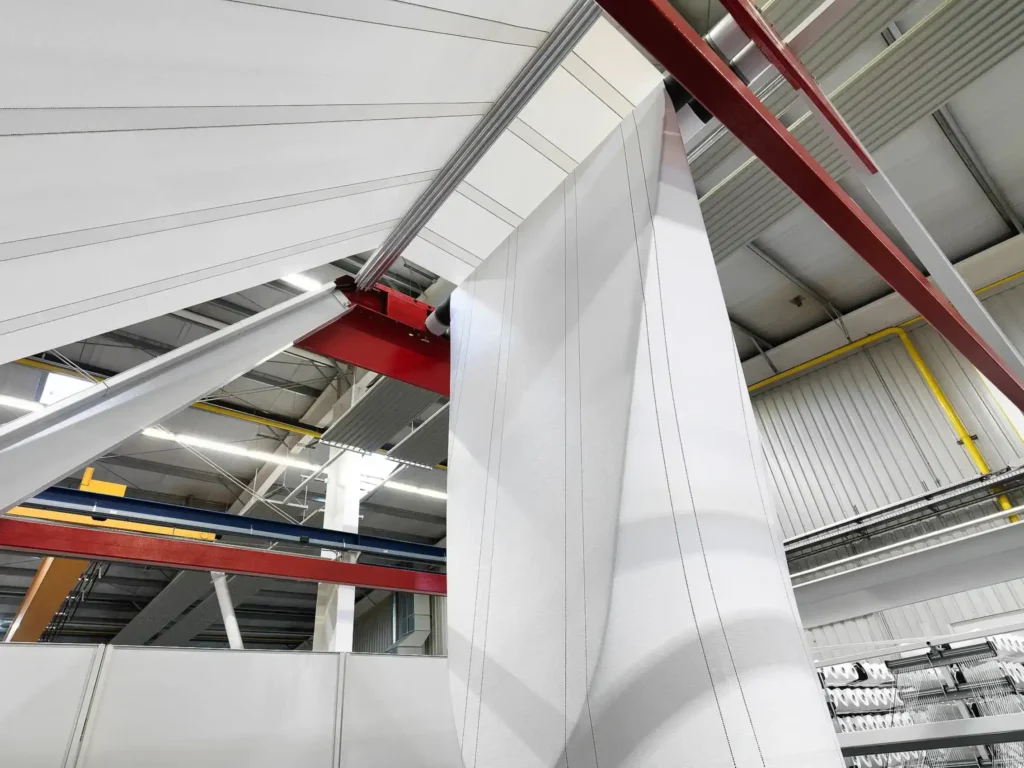
Starlinger‑enabled value chain. Efficiency starts at the machine. A BOPP Woven Bags Supplier running Starlinger tape lines, circular/flat looms, lamination, and conversion technology can control variation from pellets to pallets—one control philosophy, fewer variables.
- Tape extrusion & orientation. PP is cast into film, slit, and stretch‑oriented into tapes; draw ratio sets modulus—the true source of strength long before any seam exists. Orientation is the quiet engine of durability.
- Weaving on circular/flat looms. Starlinger RX‑class looms produce fabrics with balanced warp/weft tension and tight pick control, stabilizing downstream lamination and printing. Regularity here prevents headaches later.
- Printing and lamination. Reverse gravure prints the BOPP; extrusion lamination bonds film to raffia via PP/PE tie layers (e.g., 18–25 µm BOPP + 20–30 µm PE skin for sealability). Adhesion is tuned to survive forming shoulders and pallet rub without delamination.
- Conversion. For block‑bottom/valve sacks, Starlinger conversion (ad‑star‑type systems) forms robust bottoms; for open‑mouth sacks, stitch/heat hybrids are pre‑validated to the buyer’s jaw geometry and throughput targets. Bottoms decide whether a bag lands well—literally.
- Roll build & registration. Roll width (commonly 400–650 mm), OD, core ID, splice protocols, and eye marks are managed for clean tracking through VFFS/HFFS. Poor roll build is a silent OEE killer; great roll build is invisible, as it should be.
- QA & compliance. Filled‑bag drop tests, seam tensile and peel curves, dart impact on laminates, and COF checks on printed faces. Food‑contact variants compile supplier Declarations of Compliance aligned with FDA 21 CFR 177.1520 and EU 10/2011. Where dangerous goods are in scope, woven plastic bag design types 5H1/5H2/5H3 are qualified to the requirements codified under 49 CFR §178.518, with drop orientation documented.
Horizontal and vertical thinking. Horizontally, this line mirrors apparel’s fiber‑to‑fabric chain fused with flexible‑packaging disciplines in lamination and printing. Vertically, each station inherits constraints: extrusion sets crystallinity; weaving translates it to biaxial tensile; lamination adds barrier/print; conversion decides whether theory survives a high‑speed filler. A BOPP Woven Bags Supplier that instruments each station spends less time firefighting and more time delivering repeatability.
Data reinforcement | Case analysis | Comparative study. Typical lamination stacks (18–25 µm BOPP; 20–30 µm PE skin) and fabric weights (70–120 g/m²) are widely available across peer listings and align with tender norms. Instituting peel‑adhesion audits at the rewinder has caught tie‑layer temperature drift before it turned into scuff complaints—fewer returns, steadier forming. Starlinger’s integrated path (tape → loom → lamination → conversion) reduces fit‑up variability; mixed‑vendor lines can work, but they demand higher vigilance around tension and register.
What is the application of BOPP Woven Bags Supplier?
Where they win. Food grains and staples (rice, flour, sugar) need shelf‑level persuasion and moisture defense; pet food calls for scuff‑resistant faces and easy‑open ergonomics; fertilizers and salts face UV and humidity in open yards; industrial minerals and pigments punish any seam or film that yields to abrasion. Across these contexts, a BOPP Woven Bags Supplier dials GSM, mesh, lamination, liner, and seam strategy to SKU behavior rather than forcing one spec across an entire portfolio.
Horizontal and vertical thinking. Horizontally, the segments share aims—containment, communication, compliance—while diverging in risk profile: consumer touch versus yard abuse, moisture sensitivity versus dust hygiene. Vertically, SKUs within a segment differ: jasmine versus long‑grain rice; coarse kibble versus fine meal; coarse versus micronized minerals. Platform logic lets one specification tree branch sensibly without multiplying factories or fragmenting QA.
Data reinforcement | Case analysis | Comparative study. Safe‑load bands commonly 10–50 kg with seams and weave tuned to payload density; compatible FFS lines run ~25–35 m·min⁻¹ where roll geometry is in spec; COF ≥ 0.5 reduces pallet slides in humid warehouses. A fertilizer exporter who replaced uncoated woven with laminated woven plus anti‑sift seam tape reported lower powder leakage and cleaner pallets without modifying fillers. Compared with paper multiwall, the laminated woven stack resists humidity and corner impact; compared with plain woven, it offers richer print and better scuff resistance; compared with PE film sacks, it delivers superior drop/puncture at similar mass when adhesion is correct.
What is the application of BOPP Woven Bags Supplier? (Extended mapping)
Compliance as an application filter. For transport, woven plastic bags are designated 5H1 (unlined), 5H2 (sift‑proof via coating/liner), and 5H3 (water‑resistant). Selection depends on product granularity, leakage risk, and lane exposure; qualification follows 49 CFR §178.518 with filled‑package drop‑test orientation recorded. For food contact, a BOPP Woven Bags Supplier specifies PP/PE grades that fit FDA 21 CFR 177.1520 and EU 10/2011, backed by supplier Declarations of Compliance and lab migration data. National and industry standards such as GB/T 8946 provide general guides for tensile and seam checks. In retail/e‑commerce, BOPP faces with anti‑slip coatings and easy‑open features reduce returns and damage while keeping graphics legible after long distribution cycles.
Data reinforcement | Case analysis | Comparative study. A pet‑food brand split its portfolio: coating‑only (no liner) for coarse kibble to maximize machinability, liner‑retained for fine meals to maximize barrier—one platform, two settings, lower changeover overhead. In wet docks or open yards, 5H3 constructions tolerate rain splash better than paper or uncoated woven; in dust‑sensitive powders, 5H2 + liner outperforms paper on hygiene.
Key Technical Specs (reference ranges)
The following parameters reflect widely available, field‑proven ranges delivered by a BOPP Woven Bags Supplier. Lock final targets to product granularity, moisture sensitivity, and line conditions.
| Parameter | Typical Options / Ranges | Engineering Notes | Reference Test / Control |
|---|---|---|---|
| Fabric weight (GSM) | 70–120 g/m² (10–50 kg fills) | Higher GSM → higher tear/puncture; coordinate with mesh | GB/T 8946 (tensile/seam) |
| Mesh density | 10×10–14×14 | Tighter mesh lowers porosity before coating | Factory QC |
| BOPP film thickness | 18–25 µm | Reverse printed for scuff resistance & color depth | Internal peel/adhesion |
| PE sealing skin (optional) | 20–30 µm | Seal window ~140–180 °C; validate on plant jaws | Seal/peel curves |
| Coefficient of friction | ≥ 0.5 (anti‑slip) | Stabilizes pallet stacks in humid lanes | ASTM D1894 (typical) |
| Puncture resistance | ≥ ~85 N (70–110 g/m² band) | Supports yard handling and rough conveyors | Customer‑specified |
| Throughput (FFS) | ~25–35 m·min⁻¹ | When roll build & register are in tolerance | Line OEE logs |
| UN design type | 5H1 / 5H2 / 5H3 | Match leakage/moisture risk and route | 49 CFR §178.518 |
| Food‑contact | FDA 21 CFR 177.1520; EU 10/2011 | Supplier DoC + migration tests retained on file | DoC + lab reports |
Certification & Test Anchors (for RFQs and datasheets)
Transport safety. Woven plastic bags are identified under 5H1/5H2/5H3 with construction and testing codified in 49 CFR §178.518. Filled‑package drop testing with documented orientation—and, where applicable, leakproofness testing—remain core requirements where risk justifies the mark.
Food‑contact safety. Choose PP/PE materials intended for contact use and obtain supplier Declarations of Compliance aligned to FDA 21 CFR 177.1520 and EU 10/2011; keep migration data on file for retailer and auditor requests. Compliance is not an afterthought—it is an engineered input.
General performance. Refer to GB/T 8946 for baseline tensile, seam, and dimensional checks; specify lamination peel targets and COF ranges as QA control knobs. A BOPP Woven Bags Supplier that treats these anchors as part of the recipe—not paperwork—delivers steadier quality across runs.
Copy Block (ready for brochure or PDP)
A BOPP Woven Bags Supplier fuses raffia strength, photo‑true print, and predictable sealing into a pack that survives forklifts, humid docks, and retail scrutiny. With Starlinger tape lines, looms, lamination, and conversion, the format runs cleanly on VFFS/HFFS equipment, holds graphics through abrasion, and documents design type to route risk. Choose uncoated builds for rugged granules, specify laminates and liners for hygroscopic powders, or adopt block‑bottom/valve formats for high‑speed filling. Strong, clean, compliant—and unmistakably on brand.
In the competitive landscape of packaging, efficiency and quality are paramount. BOPP Woven Bags have become a staple in various industries due to their strength, durability, and versatility. At the forefront of this evolution, VidePak distinguishes itself as a leading BOPP Woven Bags Supplier, utilizing advanced technology to ensure superior product quality and exceptional production efficiency. Central to this achievement is the integration of Starlinger’s state-of-the-art equipment, which enhances every aspect of the manufacturing process.
The Evolution of BOPP Laminated Woven Bags
BOPP Laminated Woven Bags are crafted by applying a layer of Biaxially Oriented Polypropylene (BOPP) film onto woven polypropylene (PP) fabric. This lamination process provides several key advantages:
- Enhanced Durability: The BOPP film adds a protective layer that enhances the bag’s resistance to moisture, UV rays, and physical wear. This makes the bags ideal for various applications, including agricultural products, chemicals, and construction materials.
- Superior Print Quality: The BOPP film allows for high-resolution printing, ensuring that branding and product information are clearly visible and aesthetically appealing. This feature is particularly valuable for marketing and product differentiation.
- Increased Strength: The lamination process reinforces the woven fabric, providing additional strength and load-bearing capacity. This ensures that the bags can handle heavy loads and rough handling during transport and storage.
Starlinger’s Cutting-Edge Equipment
VidePak’s commitment to quality and efficiency is exemplified by its use of Starlinger’s full suite of equipment. Starlinger, a renowned name in the packaging industry, provides advanced machinery that significantly boosts production capabilities. The features and benefits of this equipment include:
High Automation
Starlinger’s equipment is characterized by high levels of automation, which streamlines the production process and reduces the need for manual intervention. Automated systems handle various stages, including weaving, lamination, and printing, ensuring consistent quality and reducing the likelihood of errors.
High Line Speed
The machinery’s ability to operate at speeds exceeding 200 meters per minute allows VidePak to produce a large volume of bags in a shorter time frame. This high line speed is crucial for meeting the demands of large-scale orders and ensuring timely delivery to clients.
Multi-Machine Coordination
Starlinger’s equipment features multi-machine coordination, which integrates several production lines to work simultaneously. This interconnected approach maximizes efficiency by optimizing resource use and minimizing downtime.
Precision and Consistency
The advanced technology ensures precise control over every aspect of production, from fabric weaving to lamination and printing. This precision guarantees that each bag meets stringent quality standards, providing reliable performance and durability.
The Advantages of Working with VidePak
As a leading BOPP Woven Bags Supplier, VidePak leverages Starlinger’s advanced technology to offer a range of benefits to its clients:
Enhanced Production Capacity
With high-speed, automated equipment, VidePak can handle large-scale production runs with ease. This capability ensures that clients receive their orders promptly and can meet their own market demands effectively.
Customizable Solutions
VidePak provides a variety of customization options, including different lamination finishes, printing designs, and bag sizes. This flexibility allows clients to tailor the bags to their specific requirements and branding needs.
Consistent Quality
The integration of Starlinger’s equipment ensures that every bag produced is of the highest quality. Consistent quality is achieved through advanced technology that controls every stage of production, from fabric weaving to final inspection.
Sustainability and Efficiency
VidePak is committed to sustainable practices and efficient resource use. The advanced machinery not only enhances production efficiency but also minimizes waste and energy consumption, aligning with environmentally responsible manufacturing practices.
Applications of BOPP Laminated Woven Bags
BOPP Laminated Woven Bags are used across various industries due to their versatility and durability. Some common applications include:
Agriculture
In the agricultural sector, these bags are used for packaging seeds, grains, and fertilizers. The moisture-resistant properties and strength of the bags ensure that agricultural products remain protected during storage and transport.
Chemicals
For the chemical industry, BOPP Laminated Woven Bags provide reliable containment for chemicals and powders. The bags’ resistance to moisture and chemicals ensures that the contents are securely packaged and protected from external elements.
Construction
In the construction industry, these bags are ideal for packaging bulk materials such as cement, sand, and gravel. The added strength and durability of the bags handle the rough conditions typical of construction sites.
Retail
The high-quality printability of BOPP Laminated Woven Bags makes them suitable for retail applications. The bags can be customized with vibrant designs and branding elements, enhancing product presentation and appeal.
VidePak’s Role in the Industry
VidePak’s adoption of Starlinger’s technology represents a significant advancement in the production of BOPP Laminated Woven Bags. The combination of high automation, precision, and efficiency positions VidePak as a leading player in the packaging industry. By continually investing in cutting-edge equipment and innovative manufacturing processes, VidePak ensures that it remains at the forefront of packaging solutions, delivering superior products to clients worldwide.
In summary, the integration of Starlinger’s advanced equipment has revolutionized the production of BOPP Laminated Woven Bags, enhancing efficiency and quality. As a prominent BOPP Woven Bags Supplier, VidePak is dedicated to providing top-tier packaging solutions that meet the diverse needs of its clients across various industries.