
What Are Aluminum Foil Composite Bags?
Aluminum Foil Composite Bags are high‑spec, multi‑layer industrial sacks designed for construction chemicals that refuse compromise—powders that cake when damp, additives that oxidize when exposed, and job sites that punish packaging with sun, dust, and handling shock. The outer face typically employs sack‑grade kraft paper for stiffness, stackability, and a readable print surface; the core is a continuous aluminum foil delivering ultra‑low gas and moisture permeability; the product‑contact wall is a heat‑sealable polyethylene (PE) film that enables clean discharge and consistent closure. Depending on region and converter, Aluminum Foil Composite Bags may be described as foil‑laminated paper valve bags, foil‑lined composite paper sacks, paper‑foil pinch‑bottom sacks, or foil composite valve bags—different names, same architecture: paper outside for communication and pallet discipline, foil in the middle for barrier, poly inside for sealing and hygiene. For closely related paper‑faced solutions and format context, see Aluminum Foil Composite Bags.
Viewed horizontally, Aluminum Foil Composite Bags merge paper mechanics (modulus, caliper), metallized‑layer barrier physics (OTR/WVTR), polymer sealing windows, and print durability into a single governed structure. Viewed vertically, they connect resin selection → lamination bond → seam geometry → pallet behavior → code readability at receiving. Ask a practical question: if one pack can keep powders dry, labels legible, and auditors satisfied—why keep managing three separate problems?
What Are the Features of Aluminum Foil Composite Bags?
Barrier tailored to chemistry. The aluminum core drives oxygen transmission rate (OTR) toward negligible values and forces water‑vapor transmission rate (WVTR) into very low territory—often <0.1 g/m²·day at 38 °C / 90% RH when foil gauge and lamination integrity are specified correctly. Result: hydroscopic/oxidation‑sensitive ingredients—RDP powders, accelerators, colorants, calcium chloride—arrive free‑flowing and on‑spec rather than as bricks.
Mechanical integrity with a familiar, paper face. Multi‑ply sack kraft (commonly 60–90 g/m² per ply) supplies stiffness and print hold‑out; foil helps arrest puncture propagation; the inner PE film provides consistent, heat‑sealable closure. The bag still looks and handles like paper—easy to stage, easier to read—while quietly performing like a barrier pouch.
Clean, fast, dust‑controlled filling. In block‑bottom valve formats, pre‑formed valves mate to packer spouts; engineered micro‑vents evacuate air without escorting fines; internal pressure helps the sleeve close, cutting dust halos and eliminating a separate tying step. Pinch‑bottom and sewn open‑mouth builds support semi‑auto or manual fillers.
Friction tuned by panel. A lower coefficient of friction (COF) on the machine‑facing panel keeps bags gliding across formers; a higher COF on the pallet face stabilizes stacks through transport vibration. Glide in the packer, grip on the truck—two behaviors, one result.
Graphics that keep their voice. Flexo or gravure up to 8–10 colors renders crisp pictograms, QR codes, and multilingual instructions. Reverse printing beneath a transparent film/varnish shelters ink from rain splash, clamp‑truck abrasion, and shelf rub. Matte barcode windows defeat glare so scanners read on the first pass.
Auditable quality and compliance. A typical QA toolkit references ASTM D1894 (COF), D882 (tensile/elongation), D1922 (tear), D1709 (dart impact), D5264 (print rub), D5276 (drop), F1249 (WVTR), and D3985 (OTR). For food‑adjacent additives, structures can be built with polymer declarations and migration summaries—compliance by documentation, not declaration.
ESG‑aligned choices. Solventless adhesive lamination options cut VOCs; robust foil cores extend shelf life and reduce rewrap waste; paper exteriors feel familiar to crews who prefer a paper look, while the mono‑material poly inner layer simplifies sealing and dosing hygiene. Responsible by design, not by slogan.
Horizontally, these attributes link color science to scanner physics, tribology to palletizer mechanics, barrier math to materials purchasing. Vertically, they run from foil gauge → laminate bond → seam path → drop survival → pallet lean over time.
What Is the Production Process of Aluminum Foil Composite Bags?
1) Paper ply preparation. Sack‑grade kraft is selected (typically 60–90 g/m² per ply) for stiffness and controlled porosity. Primers may be applied to stabilize print and improve adhesive wet‑out.
2) Foil and sealant configuration. Aluminum foil—often 7–12 μm—is chosen for barrier and fold endurance. The product‑contact layer is a PE sealant film (around 60–100 μm) engineered for clean heat seals and smooth discharge.
3) Lamination. Paper/foil/PE are joined via solventless polyurethane adhesive or extrusion lamination. Web tension, nip pressure, line temperature, and chill roll settings govern bond strength, curl, and lay‑flat—variables that later control registration and forming consistency.
4) Conversion. Laminates are tubed and finished as block‑bottom valve sacks for high‑BPM, dust‑controlled filling, or as pinch‑bottom/open‑mouth for semi‑auto lines. Options include die‑cut handles, easy‑open tear tapes, registered anti‑slip stripes, matte barcode windows, and micro‑vent patterns matched to the product’s air profile.
5) Printing and finishing. CI‑flexo or gravure places branding and regulatory marks on one to four panels. Pantone/LAB governance keeps “your orange” the same orange from batch to batch. Anti‑slip back coats raise pallet‑face COF without sacrificing machine glide on the front.
6) Quality control. Every lot is checked for dimensions/squareness, panel‑wise COF (ASTM D1894), tensile/tear/impact (ASTM D882/D1922/D1709), seal/seam integrity, and, for barrier builds, WVTR/OTR (ASTM F1249/D3985). Traceability ties resin, foil, adhesive, ink, and paper lots to each shipment, turning investigations from anecdotes into evidence.
Vertical logic binds the chain (resin → laminate bond → seam → pallet), while horizontal thinking aligns the pack with its environment (forklift tine radius, deck friction, climate, and storage SOPs).
What Is the Application of Aluminum Foil Composite Bags?
Dry mortar and tile adhesive. Polymer‑modified mortars and tile adhesives lose workability when they drink ambient moisture. Aluminum Foil Composite Bags keep WVTR low, so the powder stays reactive. Valve formats speed fills and build square, export‑friendly pallets.
Gypsum and plaster systems. Gypsum reactivity is time and humidity sensitive. Foil‑core laminates extend the useful window and keep setting instructions legible after yard exposure.
Cement additives and specialty admixtures. Accelerators, plasticizers, retarders, and color packs often move in 25–40 kg lots. Dust‑tight valves, anti‑sift seams, and matte barcode windows make warehouses cleaner and scans predictable.
Waterproofing and repair compounds. Cementitious waterproofers, injection grouts, and patching blends demand moisture control plus rugged corners for clamp‑truck handling—an everyday lane for Aluminum Foil Composite Bags.
Salt, desiccants, and reactive powders. Calcium chloride and similar hygroscopic materials require true barrier; the PE sealant layer also improves discharge cleanliness during dosing.
Export logistics and tropical routes. Ocean legs and humid ports punish fragile sacks. Reverse‑printed exteriors preserve color and microtype so codes scan at destination and pallets remain square.
Cross‑category thinking accelerates spec work: if a tile adhesive SKU must stage outdoors like a gypsum product, borrow the UV and anti‑slip package from the gypsum program; if a colorant needs ultra‑low OTR like a polymer powder, step up foil gauge and verify bond—same physics, different contents.
Product Parameters — Aluminum Foil Composite Bags (Typical, Real‑World Ranges)
| Item | Typical Range / Spec | Notes |
|---|---|---|
| Product | Aluminum Foil Composite Bags | Paper/foil/PE laminate sacks for construction powders |
| Paper ply (sack kraft) | ~60–90 g/m² per ply; 1–3 plies | Stiffness & printability; natural exterior |
| Aluminum foil gauge | ~7–12 μm | Drives ultra‑low OTR & WVTR |
| Inner sealant (PE) | ~60–100 μm | Reliable heat seals; clean discharge |
| Common capacity | 25–40 kg (duty‑dependent) | Valve or pinch/open‑mouth formats |
| Typical dimensions | W 48–55 cm × L 75–95 cm | Export‑friendly bricks on pallets |
| Bottom style | Block‑bottom (pasted valve) or pinch‑bottom | Square stacks; fast changeovers |
| Venting options | Micro‑perfs / porous patches | Air release without product loss |
| COF targets (panel‑wise) | Machine 0.25–0.35; Pallet 0.45–0.60 | Glide in machine; grip on pallet |
| Print colors | Up to 8–10 | CI‑flexo or gravure; barcode quiet zones kept |
| WVTR (barrier spec) | Often <0.1 g/m²·day @ 38 °C/90% RH | Requires continuous foil and sound bonds |
| OTR (barrier spec) | Often <0.1 cc/m²·day | For oxidation‑sensitive powders |
| Test methods | ASTM D1894, D882, D1922, D1709, D5264, D5276, F1249, D3985 | Typical QA toolkit |
Values reflect ranges widely published on Made‑in‑China/Alibaba and peer supplier datasheets. Tune to product density, filler speed, humidity, and route rigor. MOQ is intentionally not discussed.
Why VidePak for Aluminum Foil Composite Bags
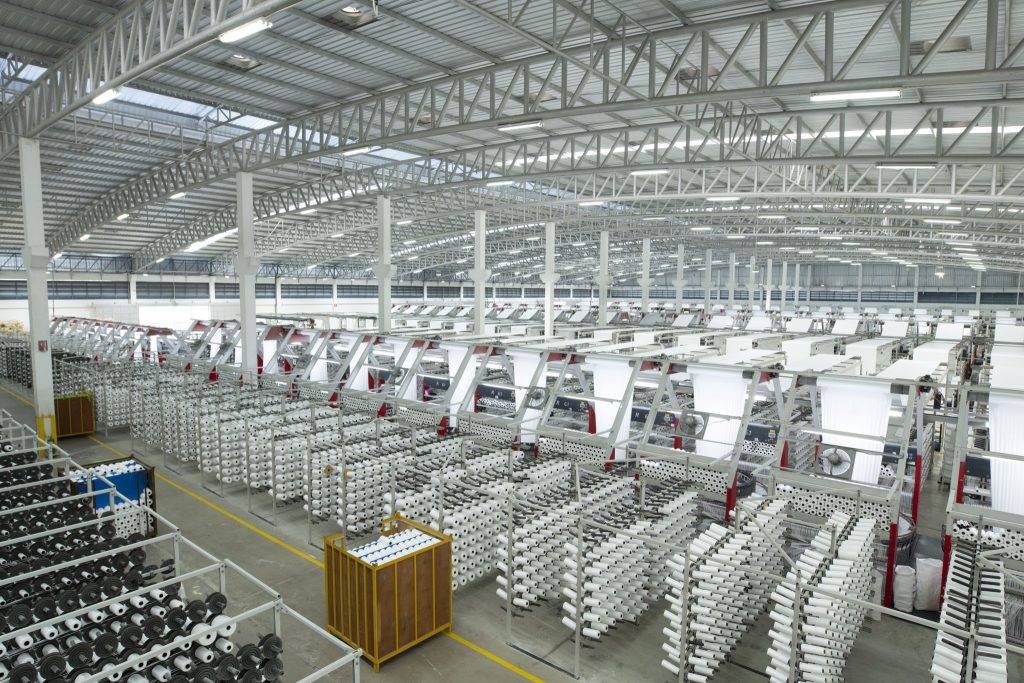
Founded in 2008, VidePak couples scale with discipline: a core team with 30+ years of field experience, a workforce of 568, and a global footprint across the United States, Europe, Brazil, South America, Southeast Asia, Japan, Korea, Central Asia, the MENA Region, East Africa, and South Africa. We operate top‑tier assets from W&H (Germany) and Starlinger (Austria)—100+ circular looms, 16 extrusion lines, and 30+ lamination/printing machines—locking in process stability, tight dimensional tolerances, and repeatable COF windows.
Materials & customization. We run 100% virgin raw materials, support custom dimensions and multi‑color graphics, and manage Pantone/RAL color with LAB controls. Registered anti‑slip stripes, matte/gloss contrasts, valve sleeve variants, and easy‑open features are routine, not experiments.
Quality you can audit. Each Aluminum Foil Composite Bags SKU ships with a one‑page spec covering dimensions and tolerances, panel‑wise COF bands, seam‑pull and drop targets, laminate bond, rub‑life acceptance, and—where relevant—WVTR/OTR checks. Change‑control on inks, adhesives, coatings, and foil grades ensures that approved performance stays approved.
Operational partnership. We help teams match barrier level to moisture sensitivity, align venting to particle size and bulk density, set UV packages for outdoor staging, and optimize bundle counts to your changeover cadence. Measurable outcomes follow: cleaner fills, faster BPM, squarer pallets, legible labels at destination.
One final nudge, framed as a question: if your powder must stay dry, your label must stay readable, and your audit must stay painless—why not specify Aluminum Foil Composite Bags once, and let the specification do the heavy lifting every day after?
- What Are Aluminum Foil Composite Bags?
- What Are the Features of Aluminum Foil Composite Bags?
- What Is the Production Process of Aluminum Foil Composite Bags?
- What Is the Application of Aluminum Foil Composite Bags?
- Product Parameters — Aluminum Foil Composite Bags (Typical, Real‑World Ranges)
- Why VidePak for Aluminum Foil Composite Bags
- What Are Aluminum Foil Composite Bags?
- Why Are Aluminum Foil Composite Bags Ideal for the Construction Industry?
- Key Features and Benefits of Aluminum Foil Composite Bags
- Applications in the Construction Industry
- VidePak’s Expertise in Aluminum Foil Composite Bags
- FAQs About Aluminum Foil Composite Bags in Construction
- The Future of Aluminum Foil Composite Bags in Construction
In the construction industry, packaging solutions play a crucial role in ensuring the safe and efficient transport of materials, from raw products to finished goods. One such solution gaining increasing attention is aluminum foil composite bags. These bags offer a combination of durability, moisture resistance, and cost-effectiveness, making them an ideal choice for various construction applications. At VidePak, a company with over 30 years of industry experience, we have seen firsthand how these bags contribute to solving packaging challenges in the construction sector. In this blog, we will explore the role of aluminum foil composite bags in the construction industry, highlighting their benefits, applications, and the expertise that VidePak brings to this specialized packaging solution.
What Are Aluminum Foil Composite Bags?
Aluminum foil composite bags are made from a layered structure that typically includes a combination of aluminum foil, polypropylene (PP) woven fabric, and sometimes polyethylene (PE). The construction of these bags provides several benefits, including:
- Moisture and UV Protection: Aluminum foil’s barrier properties protect contents from moisture, light, and air, making them ideal for construction materials that require such protection.
- Durability: The multi-layered construction makes these bags extremely durable and resistant to tears, punctures, and other physical stresses often encountered during transport and storage.
- Lightweight but Strong: Despite their robustness, aluminum foil composite bags are relatively lightweight, making them easy to handle while maintaining high strength.
- Cost-Effective: They offer a cost-effective alternative to other packaging materials without compromising performance.
Why Are Aluminum Foil Composite Bags Ideal for the Construction Industry?
The construction industry demands packaging solutions that can withstand the harsh conditions of transportation, storage, and use on-site. Aluminum foil composite bags meet these needs in several ways:
- Weather Resistance: Construction materials like cement, sand, adhesives, and chemicals need protection from the elements. Aluminum foil composite bags provide a high degree of weather resistance, safeguarding the contents from moisture, dust, and UV exposure.
- Versatility in Application: These bags can be customized in terms of size, shape, and material, making them versatile enough for a wide range of construction applications, from small bags for chemicals to large bulk bags for aggregates.
- Sustainability: As the construction industry moves toward more sustainable practices, the ability to reuse and recycle aluminum foil composite bags plays a key role. VidePak uses advanced technologies that enhance the recyclability of these bags, supporting sustainability goals in the industry.
- Improved Safety and Handling: The strength and integrity of aluminum foil composite bags ensure that they can handle the heavy weight of construction materials without breaking or spilling, preventing on-site accidents and material loss.
Key Features and Benefits of Aluminum Foil Composite Bags
Let’s take a closer look at the core attributes of these bags and how they can benefit the construction industry:
| Feature | Benefit |
|---|---|
| Moisture Barrier | Protects sensitive materials (e.g., cement, chemicals) from absorbing moisture, which could lead to spoilage or decreased quality. |
| Durability | Can withstand rough handling, heavy loads, and outdoor conditions, ensuring that bags remain intact throughout transport. |
| UV Resistance | Shields contents from harmful UV rays that can degrade sensitive materials like adhesives, paints, or coatings. |
| Customizable Sizes | Bags can be made in various sizes, from small for chemicals to large for bulk aggregates, catering to diverse construction needs. |
| Lightweight | Easier handling and reduced transportation costs without sacrificing strength or protection. |
| Cost Efficiency | Offers an affordable packaging solution that doesn’t compromise on quality. |
| Recyclable | Supports sustainability by allowing for easier recycling compared to single-material alternatives. |
Applications in the Construction Industry
The versatility of aluminum foil composite bags makes them suitable for a range of construction applications. Below are some of the most common uses:
- Cement and Dry Mixes: These bags protect cement and dry mixes from moisture and air, ensuring the materials retain their properties during transportation and storage.
- Adhesives and Sealants: Aluminum foil composite bags provide the necessary barrier to keep adhesives, paints, and sealants from drying out or degrading due to environmental factors.
- Aggregates and Chemicals: For bulk materials such as sand, gravel, or chemical compounds, these bags provide both strength and moisture resistance, ensuring the material stays intact and of good quality.
- Construction Waste Management: Used for packaging construction debris and waste, these bags ensure that the waste is securely contained and ready for transportation or disposal.
VidePak’s Expertise in Aluminum Foil Composite Bags
At VidePak, we understand that each construction project has its unique packaging requirements. Our aluminum foil composite bags are designed with customization in mind to suit specific industry needs. We leverage over 30 years of experience to provide our clients with the best solutions in the market. Here’s why VidePak stands out:
- Advanced Technology and Equipment: We use state-of-the-art manufacturing equipment, including Starlinger’s technology, which ensures that our bags are of the highest quality. Our production capabilities include multiple extrusion lines, printing machines, and lamination machines to create customized, high-performance bags.
- Customization for Specific Applications: Whether you need moisture-resistant bags for chemicals or UV-protected bags for paints, VidePak works closely with you to ensure that the bags are tailored to your exact specifications.
- Global Reach: With a presence in multiple global markets, including North America, Europe, and Southeast Asia, VidePak has the experience and resources to meet the packaging demands of international construction companies.
FAQs About Aluminum Foil Composite Bags in Construction
1. What types of materials can be packaged in aluminum foil composite bags?
Aluminum foil composite bags are ideal for packaging cement, adhesives, dry mixes, chemicals, aggregates, paints, sealants, and even construction waste. They protect materials from moisture, UV rays, and air exposure, ensuring quality during transport and storage.
2. How do aluminum foil composite bags contribute to sustainability?
These bags are recyclable, and their durable design reduces the need for frequent replacements. VidePak also uses advanced materials that ensure the bags can be reused and recycled, aligning with the construction industry’s growing focus on sustainability.
3. Are aluminum foil composite bags resistant to punctures and tears?
Yes, these bags are extremely durable and can withstand rough handling, heavy loads, and outdoor conditions. The combination of aluminum foil and woven PP fabric gives them the strength required for tough construction environments.
4. Can these bags be customized for specific construction needs?
Absolutely! VidePak offers a wide range of customization options, from bag size and shape to material combinations and print designs. This ensures that the packaging solution aligns perfectly with your needs.
The Future of Aluminum Foil Composite Bags in Construction
As the construction industry increasingly focuses on sustainability, durability, and cost-efficiency, aluminum foil composite bags are becoming an even more vital packaging solution. With advancements in production techniques and greater demand for eco-friendly options, we can expect these bags to continue evolving to meet the diverse needs of the industry.
At VidePak, we remain committed to innovation, ensuring that our aluminum foil composite bags remain a key part of the construction industry’s packaging solutions.
For more detailed insights on packaging solutions in the construction industry, check out The Role of Waterproof Woven Bags in Waste Management and Kraft Paper Woven Bags: Revolutionizing Packaging with Advanced Techniques.