
What is the core concept behind Anti‑Bulge FIBC Bags?
At its heart, Anti‑Bulge FIBC Bags is a design philosophy applied to flexible intermediate bulk containers so that a filled bag holds a near‑rectangular profile instead of ballooning outward. The mechanism can be internal baffles, form‑stable woven panels, or a hybrid—each curbing lateral pressure and preserving the footprint. Why does that matter in waste management and recycling? Because geometry is destiny: squarer stacks align, cube more efficiently, and travel more safely, which in turn lowers freight per tonne, reduces wrap consumption, and elevates line throughput.
Also known as (aliases):
- Q‑bags
- Baffle FIBCs
- Form‑stable bulk bags
- Square FIBCs
- Anti‑swell jumbo bags
- Baffled big bags
Picture a typical shift: shredded plastic or PET flakes settle; sidewalls bow; pallet edges wander; aisles narrow; wrap tears; a manager sighs. Replace the cylinders with cuboids—this is the quiet promise of Anti‑Bulge FIBC Bags. It is not magic, only mechanics executed with discipline.
Materials and construction: from yarn to geometry
A bag is a system. The more intentional each layer is, the more predictable the whole becomes. The material stack for Anti‑Bulge FIBC Bags is best understood from outside‑in, role by role.
Woven polypropylene (PP) fabric The structural scaffold. PP tapes are extruded, slit, and drawn to align polymer chains, then woven on flat or circular looms. Typical body GSM for recycling service ranges 160–210 g/m²; bottoms run heavier—190–260 g/m²—to survive drops and point loads. UV packages keep outdoor‑staged pallets from weakening prematurely.
Coatings and liners A light polyolefin coating or a fitted liner (LDPE/LLDPE 60–100 µm) suppresses sifting and moderates odor and moisture. In cullet or e‑waste streams, a thicker liner in the lower third resists abrasion and puncture.
Baffle system Internal fabric panels with ports (mesh windows or die‑cut openings) sewn between faces, or a form‑stable weave that builds shape‑retention into the panels themselves. Port geometry is a design dial: too small and fill stalls; too large and shape control fades.
Lift system Corner or cross‑corner loops in high‑tenacity webbing distribute load; tunnel lifts allow forklifts to slot tines fast. The goal is a steady lift, even in cramped yards.
Static protection Type A/B for non‑flammable dusts; Type C (grounded) or Type D (dissipative without grounding) where combustible dusts or vapors may be present. Static safety layers overlay the anti‑bulge geometry; they never replace it.
| Layer | Typical choices | Primary function | Cost levers |
|---|---|---|---|
| Body fabric | PP tapes, 160–210 g/m² | Tensile backbone; abrasion endurance | Resin index; denier; loom efficiency; rPP ratio |
| Bottom fabric | PP 190–260 g/m² | Drop and point‑load survival | GSM; weave density; reinforcement patches |
| Coating/Liner | PE/PP coat; LDPE/LLDPE 60–100 µm | Dust control; odor/moisture moderation | Gauge; antistatic package; fitment method |
| Baffles | Mesh windows; solid with die‑cut ports | Shape retention; cube efficiency | Fabric area; seam count; QC inspection time |
| Lift system | Corner/cross‑corner loops; tunnel lifts | Safe handling; ergonomic hook‑up | Webbing denier; loop length; stitch pattern |
| Static class | Type A/B/C/D | Ignition hazard mitigation | Conductive yarn content; testing; grounding gear |
Features that solve real problems, not imaginary ones
A feature earns its place when an operator feels the difference, a supervisor sees the difference, and a dashboard shows the difference. The recurring, measurable outcomes from Anti‑Bulge FIBC Bags are listed below.
- Form‑stability Box‑like profiles that stack higher before risk thresholds are reached; fewer leaning towers; cleaner aisles.
- Container cube utilization Rectangularity raises payload per box on export lanes; freight per tonne falls while handling routines remain familiar.
- Filling efficiency Baffle windows and optional micro‑perfs vent air without ballooning; spouts seat, dust capture improves, and operators spend less time wrestling mouths.
- Static safety compatibility Anti‑bulge geometry coexists with Type C or D fabrics and liners, enabling safe practice where combustible dusts appear.
- Closed‑loop reuse In predictable routes, 6:1 or 8:1 designs withstand inspection and cleaning, reducing polymer demand per tonne moved.
Background reading on bulk‑bag families and handling practices: see FIBC bulk bags to align vocabulary and accessory options.
From pellets to pallets: a controlled manufacturing journey
Every stage either adds value or adds variability. The job of the process is to let value survive and let variability die. The build path for Anti‑Bulge FIBC Bags looks like this:
- Tape extrusion & drawing Melt, cast, slit, draw. Draw ratio governs tensile behavior; variability here reappears as seam failures or uneven drop results.
- Weaving Set GSM and picks per inch; for form‑stable designs, the weave creates the baffle effect; otherwise, body and baffle panels are woven separately.
- Coating & printing Apply coatings; print markings—SWL, safety factor, static class, handling arrows, recycle icons; keep label zones high‑contrast and rub‑resistant.
- Cutting & baffle prep Cut body panels and baffles; size baffle ports to particle size and desired de‑aeration rate; heat‑seal fray‑prone edges.
- Sewing & loop attachment Multi‑row seams, box‑and‑cross stitching on loops; verify continuity for Type C; maintain orientation for Type D.
- Liner fabrication & fitment Tubular or gusseted liners; attached (tacked) or loose; align mouths for clean fill.
- Spouts & closures Fill/discharge spouts, dust skirts, petal closures; tunnel lifts as specified.
- Testing & inspection Dimensions, seam strength, top‑lift cycles, drops, compression dwell, static checks, label rub, liner seal.
Applications where the square profile pays dividends
The gravitational center is waste and recycling, but the logic applies anywhere mass is high, particles are abrasive, aisles are tight, or container cube is precious.
- MRF outbound streams PET flakes, HDPE regrind, PP agglomerate; operators prize alignment in narrow docks and between balers.
- E‑waste and WEEE Angular, puncture‑prone sub‑assemblies; specify heavier bottoms and solid baffles; use wide tunnel lifts for forklifts.
- Glass cullet Dense and abrasive; adopt reinforced corners and scuff‑resistant coatings; port baffles to avoid clogging.
- RDF/SRF pellets Volume lanes benefit from liners for odor/moisture and static‑safe builds where ignition sources exist.
- C&D fines Sand‑like fines and cemented chips; square stacks in temporary depots; tunnel lifts where cranes are scarce.
System thinking: six dials that move together
Treat the plant as a system. Turn one dial and the others move. The six recurring dials for Anti‑Bulge FIBC Bags are integrity, mechanics, operations, compliance, sustainability, and cost. Clear trade‑offs beat accidental ones.
| Subsystem | Problem to solve | Design responses | Useful metrics |
|---|---|---|---|
| Integrity | Dust, moisture, odor | Coatings/liners; tuned baffle windows; skirted closures | Sift‑loss/1,000; odor complaints; downgraded yield |
| Mechanics | Drop, stack, puncture | Heavier bottoms; wear patches; form‑stable baffles | Stack height; lean returns; wrap per pallet |
| Operations | Throughput and housekeeping | Stable mouths; matched spouts; vent tuning; tunnel lifts | Bags/hour; reseat events; dust extraction load |
| Compliance | Standards & static | ISO 21898 markings; Type C/D; visible labels | Audit pass rate; static incidents; near‑misses |
| Sustainability | Reuse & recyclability | 6:1/8:1 loops; mono‑polymer builds; rPP trials | Reuse cycles; kg polymer avoided; CO₂e/tonne |
| Cost | Unit vs system cost | Cube utilization; lower damage; less wrap | Freight/tonne; claims; housekeeping hours |
Focused analysis: “Anti‑Bulge FIBC Bags: The Role in Waste Management and Recycling”
The title suggests a role; the plant demands a result. What, precisely, does a shape‑retaining bag do for a modern waste network? Three levers dominate the answer: geometry, hygiene, and safety—each with second‑order effects on emissions and cost.
Geometry Square stacks unlock taller, denser racking; container cube improves; forklift routes widen because pallets no longer wander. In financial language, payload increases while handling risk decays.
Hygiene Coated fabrics, correct liner gauges, and skirted closures keep fines in and complaints out. Cleaner aisles are safer aisles, and they also protect adjacent material streams from contamination.
Safety Static classes C and D paired with anti‑bulge geometry maintain shape stability without trading off ignition protection. Fewer leaning pallets and clearer floor lines reduce near‑misses.
Is there a catch? Only the usual one: you must specify the right build for the right stream. Baffle window geometry for pellets is not the same as for cullet; a single‑trip bag for PET flakes is not a closed‑loop workhorse for WEEE. Yet once the match is made, Anti‑Bulge FIBC Bags stop being a novelty and start being a standard.
Technical quick‑reference: parameters that keep projects honest
| Parameter | Typical window | Why it matters |
|---|---|---|
| SWL | 1,000–1,500 kg | Matches forklift/pallet ratings; sets the test regime |
| Safety factor | 5:1 single‑trip; 6:1/8:1 multi‑trip | Governs reuse policy and seam specs |
| Body GSM | 160–210 g/m² | Balances abrasion resistance with tare |
| Bottom GSM | 190–260 g/m² | Survives drops and angular point loads |
| Baffle ports | 60–120 mm windows (mesh) or tailored die‑cuts | Trades fill speed vs shape retention |
| Coating/liner | Coating 25–35 g/m²; liner 60–100 µm | Controls dust/odor; enables sealed handling |
| Static class | Type A/B/C/D | Aligns with hazardous‑area practice |
Risk register and countermeasures
- Leaning pallets → COF too low or bulge beyond pallet → Add anti‑bulge spec; increase matte surfaces; corner boards; wrap recipe.
- Dust at fill → Undersized vents or poor liner mouth fit → Increase total vent area; use skirted duffle; align baffle windows with flow.
- Baffle tear‑outs → Stitch density too low; baffle fabric under‑spec → Increase seam density; upgrade GSM; consider form‑stable panels.
- Ground alarms (Type C) → Poor clamp contact → Use dedicated lugs; clean to bare metal; monitor continuity.
Pilot plan and SOPs that protect the investment
A pilot that measures the right things writes its own business case. A pilot that measures the wrong things writes meeting minutes. Capture both physics and behavior.
- Define the lane Bulk density, particle size, humidity, stack height, container mix; add seasonal profiles.
- Lock geometry Q‑bag with baffles or form‑stable; loop style; spout diameters.
- Safety class Type A/B for safe zones; C/D for combustible dust or mixed environments.
- Materials GSMs; coatings; liner gauges; antistatic packages.
- Marking SWL, safety factor, static class; QR for traceability; inspection stickers for reuse loops.
- Run the trial Measure bags/hour, dust load, stack creep, compression dwell, container payload; photograph pallet faces each layer.
- Decide reuse vs recycle Closed‑loop 6:1 or 8:1 with cleaning and inspection SOPs, or single‑trip with take‑back to bulk‑bag recyclers.
- Train and lock Visual work instructions for filling, grounding, and wrapping; monthly audits during the first quarter.
FAQ that sounds like the shop floor
Are Anti‑Bulge FIBC Bags heavier? Often only marginally; baffles add fabric and seams, but fabric optimization and form‑stable weaves keep tare sensible.
Do baffles slow fill? Not when ports are matched to particle size; correctly tuned, they speed de‑aeration and reduce mouth wrestling.
Can anti‑bulge coexist with Type C or D? Yes; geometry and static safety are orthogonal. Specify both when combustible dust might be present.
What about UN‑regulated waste? Use the appropriate 13H code and run the certification path; anti‑bulge features layer onto, not over, those requirements.
Are they reusable? Single‑trip 5:1 designs are not. 6:1 or 8:1 builds can be reused in controlled loops after inspection and cleaning.
RFQ checklist you can copy‑paste
- Format: Anti‑Bulge FIBC Bags — Q‑bag with internal mesh baffles OR form‑stable body (specify).
- SWL & Safety Factor: ____ kg at ____ (5:1 single‑trip; 6:1/8:1 multi‑trip).
- Dimensions (L×W×H): ______ × ______ × ______ mm; max fill height ≤ 2× shortest base dimension.
- Fabric GSM: Body ____; Bottom ____; UV package ____ h.
- Coating/Liner: Type & gauge ______; mouth: skirted/duffle/plain.
- Baffles: Mesh/Solid; window size/spacing ______; seam density ______ stitches/100 mm.
- Loops: Corner/Cross‑corner/Tunnel; loop length ______; webbing spec ______.
- Static class: Type A/B/C/D; grounding hardware (for Type C) Yes/No.
- Spouts: Fill ______ mm; Discharge ______ mm; petal closure Yes/No.
- Markings: SWL, SF, static class, manufacturer ID, date code, recycle mark; QR for traceability.
- Tests: Top‑lift cycles; drops; stacking/compression dwell; liner seal; static verification; label rub.
- Reuse policy: Single‑trip / Closed‑loop multi‑trip; cleaning & inspection SOP attached.
- What is the core concept behind Anti‑Bulge FIBC Bags?
- Materials and construction: from yarn to geometry
- Features that solve real problems, not imaginary ones
- From pellets to pallets: a controlled manufacturing journey
- Applications where the square profile pays dividends
- System thinking: six dials that move together
- Focused analysis: “Anti‑Bulge FIBC Bags: The Role in Waste Management and Recycling”
- Technical quick‑reference: parameters that keep projects honest
- Risk register and countermeasures
- Pilot plan and SOPs that protect the investment
- FAQ that sounds like the shop floor
- RFQ checklist you can copy‑paste
Opening Dialogue
Client: “We’re struggling with frequent bag ruptures during waste compaction. How can your FIBC bags prevent bulging and withstand heavy loads?”
VidePak Product Manager: “Our anti-bulge FIBC bags reduce rupture rates by 85% through high-density microfilament weaving, achieve a 1,500 kg safe working load (SWL), and comply with EU REACH recycling standards—all while lowering total packaging costs by 22%. Let me break down how this technology revolutionizes waste logistics.”
1. Introduction
The global waste management market, projected to reach $530 billion by 2027, faces escalating challenges in handling construction debris, industrial byproducts, and recyclables. Traditional bulk bags fail under dynamic pressures, leading to spillage and contamination. Anti-bulge FIBC (Flexible Intermediate Bulk Container) bags address these issues with precision-engineered designs, combining polypropylene (PP) resilience with advanced structural reinforcements. For VidePak, a leader in woven packaging since 2008, optimizing anti-bulge FIBCs involves leveraging microfilament weaving technology—a process that aligns with global sustainability mandates and operational efficiency goals.
2. Microfilament Weaving: Technology and Advantages
2.1 Principle of Microfilament Weaving
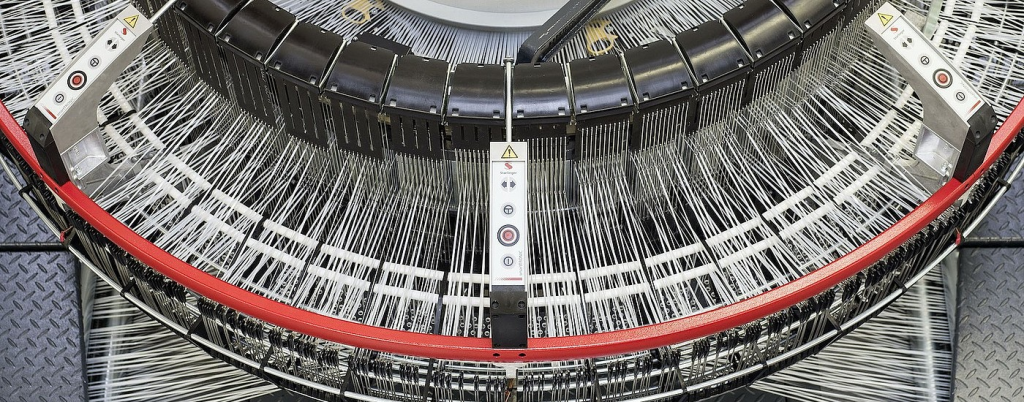
Microfilament weaving employs ultra-fine PP threads (20–30 microns) spun through Starlinger circular looms, achieving a thread density of 120–150 threads/inch. This process creates a tightly interlocked matrix that distributes stress evenly, eliminating weak points. Compared to standard 50-micron FIBC fabrics, microfilament bags exhibit:
- 30% higher tensile strength (up to 2,500 N/5 cm)
- 40% improved puncture resistance (ASTM D4833)
- Smoother surface finish, enhancing print clarity for branding.
2.2 Case Study: Waste Compaction Efficiency
In a 2024 trial with a German recycling plant, VidePak’s anti-bulge FIBCs reduced bag failures during compaction from 12% to 2%, saving €18,000 monthly in cleanup and replacement costs.
3. Technical Specifications and Customization
3.1 Key Parameters for Waste Management
| Parameter | Standard FIBC | VidePak Anti-Bulge FIBC |
|---|---|---|
| Fabric GSM | 150–180 | 200–220 (microfilament weave) |
| SWL (kg) | 1,000 | 1,500 |
| UV Resistance | 6 months | 12 months (BOPP lamination) |
| Recyclability | 70% PP recovery | 95% PP recovery (mono-material) |
3.2 Design Innovations
- Block-Bottom Construction: Prevents bulging during filling, ideal for powdered industrial waste.
- PE Liners: Optional 50–80 µm liners for hazardous or wet waste containment.
- RFID Tags: Track bags across recycling loops, reducing loss rates by 30%.
4. Global Market Alignment and VidePak’s Competitive Edge
4.1 Regional Demand Variations
- Europe: Prioritizes circular economy compliance (e.g., EPR regulations). VidePak’s bags are 100% recyclable and align with Germany’s VerpackG laws.
- North America: Focuses on cost efficiency. VidePak’s bulk pricing ($12–$18/bag) undercuts U.S. rivals by 25%.
- Asia: Requires rapid turnaround. With 100+ circular looms, VidePak delivers 50,000-unit orders in 20 days—50% faster than regional competitors.
4.2 Sustainability Metrics
- Carbon Footprint: Microfilament production reduces PP usage by 15% per bag.
- Certifications: ISO 21898, Oeko-Tex 100, and EU Ecolabel.
5. FAQs: Addressing Critical Concerns
Q1: How do anti-bulge FIBCs enhance recycling efficiency?
A: Their uniform stress distribution prevents tears during sorting, increasing PP pellet recovery rates from 70% to 95%.
Q2: Are these bags suitable for sharp-edged metal waste?
A: Yes. Anti-abrasion coatings (e.g., polyurea) extend lifespan by 60% in scrap metal applications.
Q3: Can we print custom safety labels?
A: VidePak’s 30+ printing machines support OSHA-compliant hazard warnings in 6 languages at no extra cost.
6. Strategic Implementation for Waste Operators
- Cost-Benefit Analysis: Switching to anti-bulge FIBCs reduces annual packaging expenses by $45,000 per 10,000 tons of waste processed.
- Logistics Optimization: Stackable designs save 40% storage space vs. traditional drums.
7. Conclusion
Anti-bulge FIBC bags are not merely containers—they are strategic enablers of safer, cleaner, and more profitable waste ecosystems. VidePak’s fusion of microfilament technology, global compliance expertise, and scalable production positions these bags as indispensable tools for circular economy pioneers.
External Links
- Discover how sustainable FIBC practices align with ESG goals.
- Explore advanced anti-bulge designs for hazardous materials.
Report generated on 2025-02-25. Data sourced from industry reports, academic publications, and VidePak’s operational metrics.