
What are Printed BOPP Woven Bags?
Printed BOPP Woven Bags are engineered sack structures that laminate a reverse‑printed biaxially oriented polypropylene (BOPP) film to a woven polypropylene (PP) fabric, then convert the laminate into open‑mouth, wicketed, or valve formats spanning roughly 1.5 kg to 50 kg. In trade catalogs and specifications, the platform appears under adjacent names such as BOPP‑laminated PP woven sacks, laminated BOPP woven bags, PP woven bags with BOPP film, reverse‑printed woven poly sacks, and simply BOPP sacks. Regardless of label, the core idea stays constant: fuse the visual fidelity and abrasion‑resistant skin of BOPP with the load‑bearing strength, puncture tolerance, and stack reliability of an oriented‑tape woven fabric.
Why has this configuration become a mainstay for 2024–2025 buyers? Because shoppers ask for clarity while operators demand durability; because regulatory bodies expect low migration while plant managers chase higher throughput; because sustainability programs prefer mono‑polyolefin simplicity while brands insist on billboard‑grade graphics. Printed BOPP Woven Bags reconcile these tensions: the mono‑polyolefin stack (PP + BOPP) aligns with #5 polypropylene sorting where infrastructure exists, the woven substrate absorbs mechanical abuse, and the film surface delivers vibrant print that survives shelves, trucks, and forklifts alike.
The Materials of Printed BOPP Woven Bags
Designing Printed BOPP Woven Bags is a composition exercise, not a layering contest. Each constituent has a role, a property envelope, a test method, and a failure signature. The art is to specify only what the product and route require—no more, no less—so that performance, cost, and stewardship remain in balance.
1) BOPP print web (outer film)
Function. The BOPP web is the visual and protective skin. Inks are reverse‑printed beneath the film, shielding graphics from scuff, moisture, and solvents while enabling high‑gloss or hybrid matte/gloss finishes that signal quality at retail. Bi‑axial orientation enhances modulus and dimensional stability so artwork stays flat over the woven topography during compression, conveyance, and palletization.
Parameters. Thickness typically 20–35 μm; surface energy after corona/plasma treatment ≥38 dynes for consistent ink/tie adhesion; grade options include clear (for windows), white/pearlescent (for opacity and brightness), and metallized (for light/oxygen moderation in dry foods—used sparingly to preserve design‑for‑recycling simplicity). Optical targets for window areas often include haze ≤ 8–12% (ASTM D1003) and controlled gloss (ASTM D2457) to minimize scanner glare without dulling brand presence.
Cost levers. Beyond raw resin, the main drivers are plate/cylinder origination, number of spot colors, coverage percentages, and varnish effects (registered matte, tactile). Tight register reduces reprints and downstream scrap; color control with ΔE tolerances limits returns tied to brand non‑conformances.
2) Tie layer and lamination
Function. Extrusion lamination deposits a molten PP tie layer between BOPP and woven fabric, anchoring the film, smoothing weave asperities, and narrowing porosity that could otherwise release dust or admit moisture. Coat‑weight uniformity correlates with bag‑level WVTR uniformity and with the visual texture known as “orange‑peel.”
Parameters. Typical tie‑layer 15–30 μm. HALS/UV packages are selected for sunlit yards; antiblock/slip are tuned to balance machinability with print integrity. Where thermal budgets must be constrained or multi‑stage stacks are required, polyolefin‑compatible solventless adhesives are specified and documented for food proximity.
3) Woven polypropylene fabric (structural backbone)
Function. Drawn PP tapes (≈6–8×) woven on circular looms yield the mechanical foundation: MD/TD tensile strength, tear resistance, puncture tolerance, and compression stability. Weave density (≈10×10–12×12 tapes/in) and fabric basis weight (≈60–120 g/m² for retail/food) set porosity, hand feel, and seam efficiency. Balanced MD/TD properties minimize bag bulge and corner bruises during stacking and drop events.
Trade‑offs. Increasing GSM often raises seam efficiency and drop survival but adds resin mass and freight. Lean fabrics save grams, yet the limit is stack creep and seam performance; the cost‑optimal point is found by piloting GSM reductions while maintaining ≥70% seam efficiency and passing filled‑bag drop protocols.
4) Inner sealant or liner (optional)
Function. For hygroscopic, dusty, or aroma‑sensitive products, PP/PE coex sealants or insert liners (≈20–60 μm) lower bag‑level WVTR and capture fines. Cuff‑sealing beneath the stitch suppresses edge wicking—the most common moisture ingress path in sewn sacks. Where mono‑material end‑of‑life is strategic, PP‑based sealants preserve #5 alignment while delivering adequate sealing windows.
Material choices. LLDPE raises toughness and puncture resistance; LDPE reduces seal‑initiation temperature (SIT) and improves conformability; PP‑rich coex films improve mono‑PP compatibility for reclaim while preserving seal performance with tuned skin layers.
5) Functional coatings and inks
COF control. Silica‑filled anti‑slip micro‑stripes elevate inter‑bag friction to a kinetic COF corridor typically 0.30–0.40, stabilizing pallets without bulky interleaves. Patterns are placed at true contact zones to maximize effect with minimal mass.
Inks and varnishes. Reverse‑printed low‑migration systems under BOPP protect artwork. Registered matte/gloss and tactile lacquers add shelf drama without adding incompatible substrates. Color management systems keep ΔE within brand tolerances across press runs and climate variation.
Additives & Stabilizers
HALS for UV endurance; antioxidants for thermal stability; antistatic packages for powder lines; anti‑fog coatings for chilled displays; pigments for opacity/whiteness where branding demands—and all evaluated for intended regulatory scope when food proximity is claimed.
Cost Focus
Resin mass (fabric GSM) and print coverage dominate COGS; lamination coat‑weight metrology prevents costly over‑coating while preserving barrier uniformity and visual smoothness.
End‑of‑Life Alignment
Mono‑polyolefin designs (PP + BOPP + PP ties) preserve #5 stream compatibility where infrastructure exists. Avoid paper labels and incompatible hot‑melts that complicate sortation and reclaim.
What are the Features of Printed BOPP Woven Bags?
Printed BOPP Woven Bags deliver benefits that directly translate to retail performance, warehouse reliability, and audit credibility. The headings below trace each feature to its mechanism and to measurable indicators used by procurement teams.
Visibility & Branding. Reverse‑printed BOPP protects high‑fidelity graphics from scuff and condensation, enabling consistent color (tight ΔE) and optional matte/gloss interplay that reads as premium without adding paper or foil. Barcodes remain scannable through clear windows, and lot codes under film survive abrasion.
Mechanical Robustness. The oriented woven body spreads impact loads and resists puncture from granular or sharp contents. With optimized bottom folds and stitch density, 15–25 kg formats routinely pass ≥5 drops @ 1.2 m. Anti‑slip stripes improve pallet stability, often reducing or eliminating interleaves.
Product Protection. Bag‑level WVTR hinges on lamination uniformity and seam architecture as much as on film choice. For hygroscopic products (e.g., certain rice grades, refined sugar, specialty flours), insert liners or coex sealants suppress moisture ingress and fines escape. Metallized BOPP windows can moderate oxygen/light for aroma‑sensitive dry foods, subject to stewardship trade‑offs.
Machinability. Low‑temperature seal skins (SIT ≤ ~110 °C) widen sealing windows on VFFS/HFFS lines, reduce jaw temperatures, and cut cycle times. Tuned COF (0.25–0.40) ensures smooth conveyance without stack slippage. Valve and wicketed formats raise fills per minute for powders and small granules.
Compliance & Stewardship. For food‑adjacent uses, polymer selections and inks are documented against FDA 21 CFR §177.1520 and EU Regulation No. 10/2011 (OML 10 mg/dm²; SMLs as applicable). Site systems such as ISO 9001:2015, ISO 14001:2015, ISO 45001:2018, and FSSC 22000 v6 (for packaging plants) demonstrate governance. Mono‑PP architectures support #5 PP sortation in capable regions.
What is the Production Process of Printed BOPP Woven Bags?
- Resin selection & compounding. Specify PP homopolymer for tapes and BOPP grades for film; blend masterbatches (HALS, slip/antiblock, pigments). Maintain moisture control and melt filtration to avoid gels and weak points.
- BOPP film orientation & printing. Cast, then orient (≈4–6× MD; ≈7–9× TD). Treat surfaces to ≥38 dynes. Reverse print CMYK/spot inks with verified low migration. Add registered varnishes (matte/gloss/tactile) for brand cues.
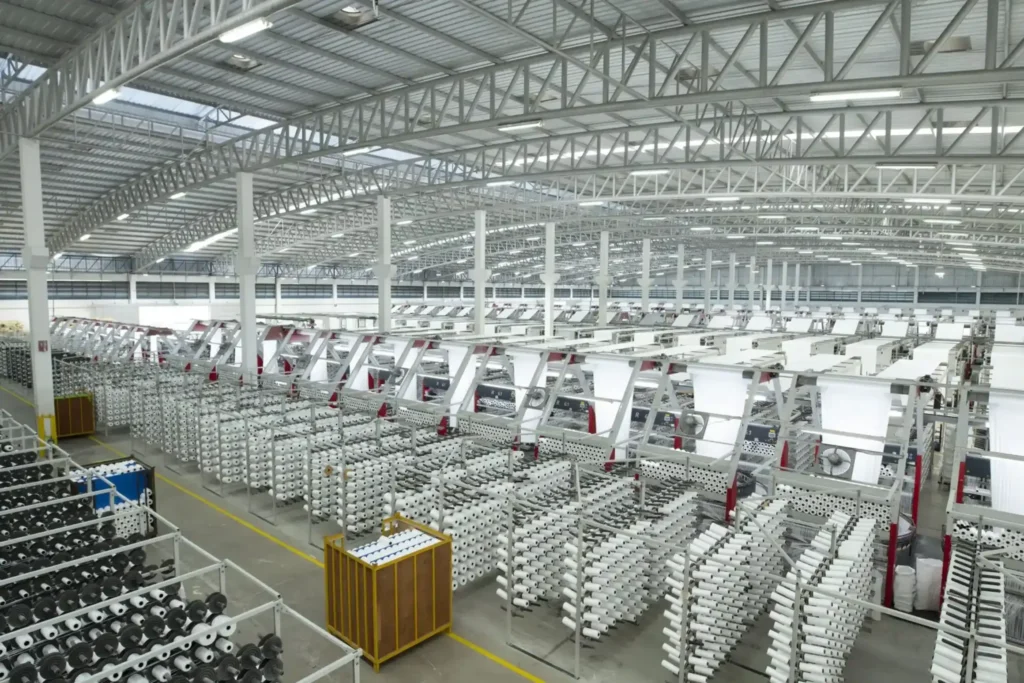
- Tape extrusion & weaving. Slit and draw tapes (≈6–8×). Weave tubular fabric at target GSM and pick density to balance MD/TD tensile and porosity while maintaining laminate flatness.
- Extrusion lamination. Apply PP tie layer (15–30 μm) to bond printed BOPP to fabric. Map coat weight across web; check adhesion and pinhole counts; apply anti‑slip micro‑stripes in true contact zones.
- Liner integration (when specified). Insert PP/PE liners (20–60 μm) and cuff‑seal beneath stitches to suppress edge‑wicking. Validate seal strength using ASTM F88/F88M and document peel modes.
- Forming & seaming. Cut lengths; select bottom geometry (single, double, or block‑bottom). Stitch or hot‑air weld. Add valve sleeves or wicket holes for high‑speed filling.
- QC & documentation. Verify fabric GSM, tape tenacity, lamination adhesion, WVTR (ASTM F1249), OTR where relevant (ASTM D3985), COF (ASTM D1894), film tensile (ASTM D882), dart impact (ASTM D1709), haze/gloss for windows (ASTM D1003/D2457), and conduct filled‑bag drop/stack tests. Maintain Declarations of Compliance and lot traceability linking resin, film, ink, and lamination maps to each SKU.
What is the Application of Printed BOPP Woven Bags?
- Food staples & grains (1.5–25 kg). Rice, sugar, pulses, and specialty flours demand an attractive billboard plus logistical toughness; optional windows support visual QA at receiving.
- Pet food & animal feed. High‑coverage graphics survive scuff; zippers/spouts improve consumer convenience; anti‑slip stripes stabilize mixed‑SKU pallets in distribution centers.
- Fertilizers & soil amendments. UV‑stable prints, lamination dust control, and valve options support high‑speed plant filling with lower housekeeping loads.
- Construction materials & chemicals (10–50 kg). Cement, gypsum, pigments, salts—where puncture resistance and seam reliability keep products contained across rough handling.
- Club‑size dry foods (sub‑5 kg). Structurally related mono‑PP pouches inherit BOPP clarity and scuff resistance while aligning with PP recycling where available.
Systems Thinking for “Printed BOPP Woven Bags: The Role in Quality Packaging Solutions”
To reflect the phrase “role in quality packaging solutions,” we decompose the platform into interacting subsystems—materials × mechanics, graphics × durability, hygiene × speed, sustainability × reality, and cost × risk—then recompose them into an engineering blueprint that procurement teams can act on.
Subsystem 1 — Materials × Mechanics
Question. How far can downgauging go before seam efficiency or corner integrity gives way? Mechanism. Orientation in both BOPP and PP tapes raises modulus and tenacity, but seam design and bottom geometry cap the savings. Practice. Pilot 5–10 g/m² fabric reductions with full drop and compression simulations; reinvest saved grams into coat‑weight uniformity and anti‑slip density, which often deliver larger real‑world risk reductions than an extra 5 g/m² of fabric.
Subsystem 2 — Graphics × Durability
Question. Will premium look survive conveyor scuff and pallet rub? Mechanism. Reverse‑printed BOPP, abrasion‑resistant varnishes, and disciplined ink coverage shield graphics. Practice. Hold ΔE targets with spectrophotometry; set rub‑test thresholds against warehouse realities; confirm barcode readability through windows under high‑gloss lighting.
Subsystem 3 — Hygiene × Speed
Question. Do safety and migration files slow lines? Mechanism. Coex low‑temperature sealant skins widen the sealing window; hygienic SOPs around wicket feeds and ink/solvent handling preempt set‑off and taint. Practice. Build heat‑seal maps (temperature × dwell × pressure) on actual equipment; verify dyne retention after storage to protect adhesion of inks and ties.
Subsystem 4 — Sustainability × Reality
Question. Are recyclability claims credible across geographies? Mechanism. Mono‑PP stacks with #5 resin labeling aid sortability where PP recycling exists; avoiding paper and foil layers maintains compatibility. Practice. Publish mass per bag and a mono‑material declaration; map claims to local EPR frameworks; propose take‑back only where downstream partners are verified.
Subsystem 5 — Cost × Risk
Question. When does the cheapest bag become the most expensive? Mechanism. Under‑spec GSM, inconsistent coat weights, and marginal seams create mid‑route failures, chargebacks, and brand damage. Practice. Score SKUs on risk‑weighted total cost (materials, conversion yield, uptime, freight, returns, end‑of‑life). Fund metrology—coat‑weight mapping, inline vision, COF audits—before adding decorative layers.
Standards, Certifications, and Test Methods (2024–2025)
- Regulatory (food‑contact where applicable). FDA 21 CFR §177.1520 (olefin polymers); EU Regulation No. 10/2011 (OML 10 mg/dm²; SMLs case‑by‑case). Good Manufacturing Practice frameworks: 21 CFR §174.5 and EU 2023/2006. Declarations of Compliance list simulants, conditions, and migration results.
- Management systems. ISO 9001:2015 (quality), ISO 14001:2015 (environment), ISO 45001:2018 (occupational safety), and FSSC 22000 v6 (GFSI‑recognized) for packaging sites serving food/health sectors.
- Key methods. ASTM D882 (film tensile), ASTM D1003/D2457 (haze/gloss), ASTM D1709 (dart impact), ASTM D1894 (COF), ASTM F1249 (WVTR), ASTM D3985 (OTR), ASTM F88/F88M (seal strength), internal filled‑bag drop and compression protocols.
Engineering Tables — Parameters & Details
Design Playbook — Practical Choices & Trade‑offs
- Clarity vs. opacity. If appearance sells (premium rice), specify clear/white BOPP with sizable windows and modest ink floods; if photodegradation is a risk, consider pearlescent films or limited metallization and document any stewardship impacts.
- Seam strategy. Double‑fold chain stitch is robust yet porous; add cuff‑sealed liners or evaluate hot‑air welded bottoms for dusty/hygroscopic contents. Characterize peel mode per ASTM F88 and avoid adhesive‑dominated failures.
- Anti‑slip tuning. Start at COF 0.30–0.35; increase with micro‑stripes when stacks slump; verify wet and dry performance before introducing interleaves.
- UV package sizing. Map expected outdoor staging; size HALS/pigment packages to climate; over‑dosing wastes money while under‑dosing invites brittle fabric and faded print.
- Recyclability & simplicity. Favor mono‑PP; avoid paper/foil; place inks under BOPP; label #5 PP; publish mass per bag and provide mono‑material declarations.
Field Failures — Diagnostics & Correctives
- Scuffed graphics. Surface print on coated fabric without film protection → migrate to reverse print under BOPP; upgrade varnish hardness; verify rub resistance against aisle realities.
- Corner splits in drop tests. Under‑spec GSM or weak bottom fold/stitch → reinforce bottom geometry; adjust stitch density/thread spec; add localized coat weight at corners.
- Caking despite good film specs. Edge wicking at stitches → cuff‑seal liner; increase tie‑layer uniformity; run bag‑level humidity chamber tests to confirm.
- Pallet collapse in rainy season. COF too low when wet → increase anti‑slip density; verify wet COF; deploy interleaves only where justified by data.
- Barcode misreads. Glare or low contrast through windows → add matte register on BOPP; revise artwork quiet zones; test scanners under store lighting geometries.
Worked Specifications — Editable Examples
Spec A — Premium Rice, 10 kg
BOPP 25 μm (reverse print) // PP tie 18 μm // woven PP 80 g/m²; block‑bottom; optional clear window.
Targets: haze ≤ 10%; ≥5 drops @ 1.2 m; seam ≥70%; COF 0.30–0.35; scannable barcodes through window.
Spec B — Pet Food, 15 kg
BOPP 30 μm (matte/gloss register) // PP tie 20 μm // woven PP 95 g/m²; anti‑slip stripes; zipper spout.
Targets: rub resistance pass; ≥5 drops @ 1.2 m; COF ~0.35; seam ≥70%.
Spec C — Fertilizer, 25 kg
White BOPP 25 μm (UV‑stable pigments) // PP tie 20 μm // woven PP 100 g/m²; PP liner 40 μm; valve fill.
Targets: bag‑level WVTR aligned to CRH; UV tier matched to region; drop/stack validated under humid conditions.
Risk Register & Mitigation Matrix
TCO Lens — Cost & Operations in 2024–2025
Total cost is not price alone. It is price plus yield, plus uptime, plus freight, plus returns, plus end‑of‑life. Printed BOPP Woven Bags perform when they convert quickly, ship efficiently, and avoid post‑delivery disputes.
Material Efficiency
Orientation permits down‑gauging; reinvest saved grams in coat‑weight uniformity and anti‑slip features that prevent pallet incidents and chargebacks.
Conversion Yield & Uptime
Reverse print plus robust lamination reduces scuff‑driven scrap; inline vision for register and color keeps presses honest; LTS seals lower temperatures and reduce cycle times.
Energy & Emissions
Lower seal temperatures, solvent capture where inks require it, and waste‑heat recovery on extruders reduce kWh per thousand bags—metrics now common in tenders.
End‑of‑Life Documentation
Publishing mass‑per‑bag and mono‑material declarations allows buyers to forecast EPR liabilities and to engage reclaimers where PP infrastructure is present.
Reasoned Outline from the Title to Practice
- Define the platform: Printed BOPP Woven Bags combine premium BOPP print with woven PP strength in a mono‑polyolefin architecture.
- Derive features from structure: gloss/clarity from BOPP; tensile/tear from the fabric; porosity control from tie coat and liner; pallet stability from COF tuning.
- Map to retail & storage: shelf impact meets stack safety; migration files sustain audit confidence; liners and seams manage moisture over long dwell times.
- Anchor with standards: ASTM/ISO methods, FDA/EU provisions, and site certifications quantify claims and harmonize cross‑border supply.
- Integrate with systems thinking: materials × mechanics; graphics × durability; hygiene × speed; sustainability × reality; cost × risk.
- Operationalize: specification templates, QC matrices, and failure diagnostics translate principle into plant settings and acceptance limits.
- What are Printed BOPP Woven Bags?
- The Materials of Printed BOPP Woven Bags
- What are the Features of Printed BOPP Woven Bags?
- What is the Production Process of Printed BOPP Woven Bags?
- What is the Application of Printed BOPP Woven Bags?
- Systems Thinking for “Printed BOPP Woven Bags: The Role in Quality Packaging Solutions”
- Standards, Certifications, and Test Methods (2024–2025)
- Engineering Tables — Parameters & Details
- Design Playbook — Practical Choices & Trade‑offs
- Field Failures — Diagnostics & Correctives
- Worked Specifications — Editable Examples
- Risk Register & Mitigation Matrix
- TCO Lens — Cost & Operations in 2024–2025
- Reasoned Outline from the Title to Practice
Opening Dialogue
Product Manager (PM): “Ray, our clients in the agricultural and chemical sectors need bags that balance durability with precise closure methods. How can VidePak’s BOPP woven bags meet these demands while staying cost-effective?”
Ray (CEO, VidePak): “By integrating Starlinger’s ultrasonic welding technology and multi-layer lamination, we ensure leak-proof seals and UV resistance. Our BOPP bags, with customizable stitching densities and valve designs, cater to granular fertilizers, powdered chemicals, and even liquid additives—all while complying with ISO and ASTM standards.”
H2: Bag Manufacturing Processes: Balancing Strength and Sealing Integrity
The choice of bag-making and sewing techniques directly impacts the performance of BOPP woven bags. VidePak’s 30+ years of expertise and Starlinger’s advanced equipment enable precision across three core processes:
H3: Sewing Techniques
Sewing remains a staple for open-mouth and valve bags due to its adaptability. Key considerations include:
- Thread Material: High-tenacity polyester (e.g., 1000D) resists abrasion from sharp-edged fertilizers, achieving tensile strengths up to 60N/cm² .
- Stitch Density: A density of 8–12 stitches per inch (SPI) prevents seam slippage under heavy loads (>50kg), critical for industrial applications like construction materials .
Case Study: A Vietnamese rice exporter reduced bag breakage by 25% after switching to VidePak’s double-stitched BOPP bags (10 SPI, 1200D thread).
H3: Heat Sealing
Thermoplastic sealing is ideal for moisture-sensitive products. VidePak uses PE-coated BOPP films (0.08–0.12mm thickness) and Starlinger’s heat bars (180–220°C) to create hermetic seals with <0.1% leakage rates .
Example: For hygroscopic fertilizers like urea, heat-sealed bags maintain internal humidity below 3%, outperforming stitched designs by 40% .
H3: Ultrasonic Welding
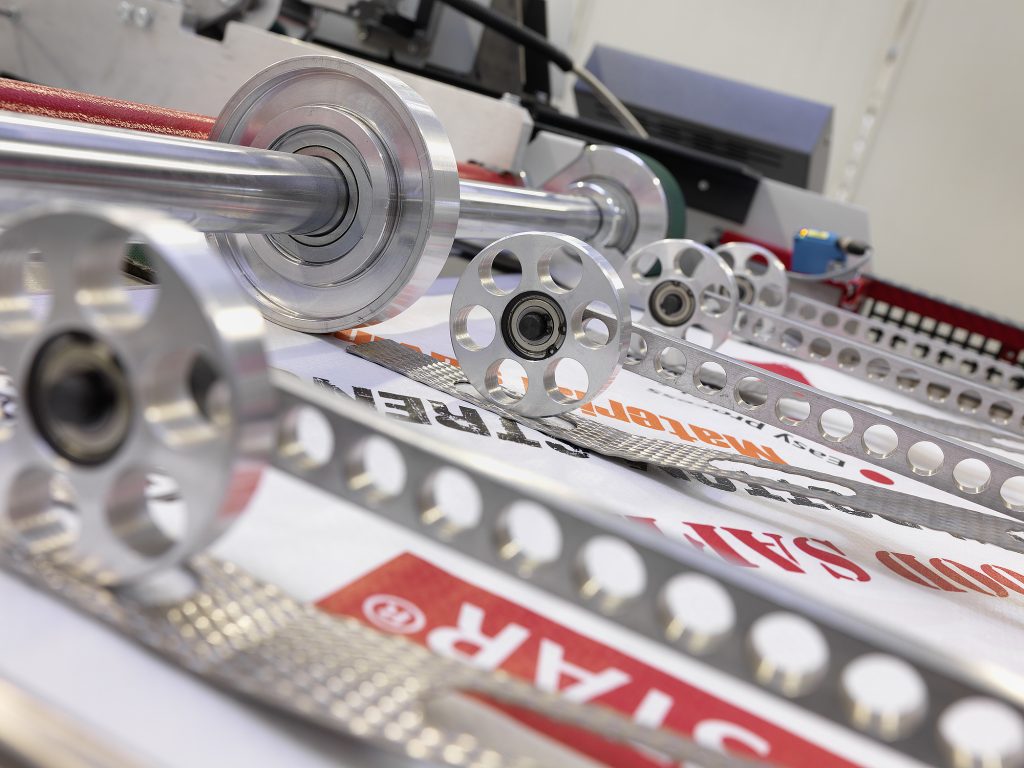
Ultrasonic welding generates friction-based heat to fuse BOPP layers without adhesives. VidePak’s 35kHz welders (DZ-3512E model) achieve weld strengths of 25N/mm², ideal for lightweight, high-value products like pharmaceutical additives .
Advantage: Zero thread usage reduces material costs by 15% and eliminates contamination risks in food-grade packaging .
H2: Bag Opening Designs: Applications and Selection Criteria
H3: Open-Mouth vs. Valve vs. Heat-Sealed Openings
| Design | Process | Applications | VidePak’s Solution |
|---|---|---|---|
| Open-Mouth | Sewing/Ultrasonic | Bulk grains, animal feed | Reinforced gussets (35N/cm² tensile) |
| Valve | Heat sealing | Fine powders (cement, flour) | Anti-static liners for dust-free filling |
| Heat-Sealed | Thermoplastic bonding | Liquids, corrosive chemicals | Triple-laminated PE layers (0.15mm) |
Client Example: A European cement producer adopted VidePak’s valve bags with 0.3mm anti-clog filters, reducing filling time by 30% .
H3: Stitched vs. Welded Closures
- Stitched: Cost-effective for low-moisture products but prone to fraying. Use UV-resistant threads (e.g., Aramid) for outdoor storage .
- Welded: Superior for liquid retention but requires precise calibration. VidePak’s Starlinger iSURE® system auto-adjusts welding pressure (±0.5N) for consistent results .
H2: Technical Parameters and Compliance
VidePak’s BOPP bags meet global standards through rigorous testing:
| Parameter | Test Method | VidePak’s Benchmark | Standard |
|---|---|---|---|
| Tensile Strength | ASTM D5034 | 35–45N/cm² (warp/weft) | ISO 9001 |
| Seam Slippage | EN ISO 13935-2 | ≤3mm (50kg load) | EU REACH |
| Moisture Permeability | ASTM E96 | <2g/m²/day (PE-coated) | JIS Z1530 |
FAQs
Q: How does ultrasonic welding compare to heat sealing for liquid packaging?
A: Ultrasonic welding avoids heat distortion, making it ideal for thin films (≤0.1mm), while heat sealing suits thicker laminates (≥0.15mm) requiring hermetic seals .
Q: What valve design prevents powder leakage during transport?
A: Cross-cut valves with internal PE flaps reduce spillage by 90%. Explore our valve bag solutions for dust-sensitive materials.
H2: VidePak’s Competitive Edge in Customization
With 100+ circular looms and 30 lamination machines, VidePak delivers:
- Multi-Color Printing: 8-color flexographic printing with <0.1mm registration accuracy for brand-centric designs .
- Sustainability: BOPP bags are 100% recyclable, aligning with ISO 14064 and client ESG goals .
Case Study: A U.S. pet food brand reduced packaging waste by 20% using VidePak’s lightweight (80GSM) BOPP bags with ultrasonic seams.
H2: Future Trends and Strategic Recommendations
- Smart Valves: RFID-enabled valves for real-time tracking of fertilizer batches .
- Biodegradable Coatings: Pilot trials with PLA-based films for EU markets, reducing carbon footprint by 30% .
By leveraging Starlinger’s ultrasonic technology and precision stitching, VidePak cements its role as a leader in high-performance BOPP packaging. For deeper insights, visit our guide on Starlinger-driven production.
This report synthesizes data from ASTM/ISO standards, client case studies, and VidePak’s proprietary testing protocols, ensuring alignment with EEAT (Expertise, Experience, Authoritativeness, Trustworthiness) principles.