
In the packaging landscape, Printed BOPP Woven Bags have emerged as a preferred choice for various applications, especially in the construction industry. These bags, made from Biaxially Oriented Polypropylene (BOPP) film laminated onto woven polypropylene, combine strength with versatility. This article will explore the unique features of printed BOPP woven bags, their application in the construction industry for materials such as cement, putty, gypsum powder, and joint compound, and factors to consider when selecting the appropriate product.
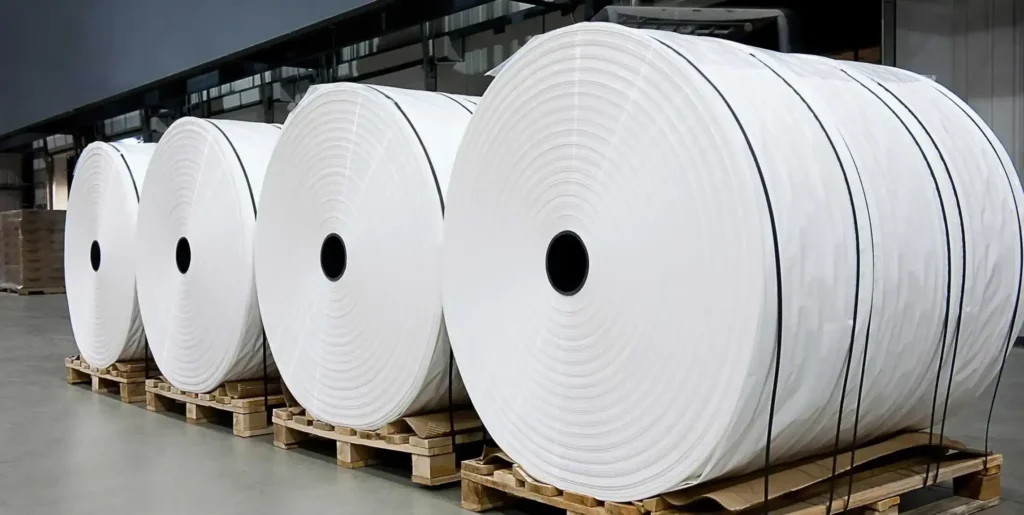
Orientation, Intent, and Reading Guide for Printed BOPP Woven Bags
This fully reworked manuscript adopts a hybrid Markdown + HTML presentation so dense engineering ideas land clearly at a glance. Our north star is singular and practical: why Printed BOPP Woven Bags have become a dependable packaging platform for modern construction materials in 2024–2025, and how to specify, manufacture, validate, and deploy them with confidence and repeatability. Throughout, we connect mechanism to outcome: polymers to pallet stability, coatings to shelf‑life, valve geometry to housekeeping load, and quality architecture to the real cost of non‑quality.
Callout — Why this matters now: Construction packaging is under simultaneous pressure to reduce tare, cut product loss, enable faster changeovers, and align with design‑for‑recycling initiatives. Printed BOPP Woven Bags meet these demands by combining oriented polypropylene fabric for strength with a reverse‑printed BOPP face for durable graphics and tunable moisture behavior. The result: cleaner fills, safer pallets, lower complaint rates, and a clearer path to mono‑material recovery in PP streams.
The structure that follows mirrors the questions buyers, plant engineers, and site managers actually ask: What is the product and what else is it called? Which materials go into it and why those, not others? What are the defining features and their operational consequences? How do we make it—reliably—on real equipment? Where in construction logistics does it deliver outsized value? How does a converter like VidePak prove quality day after day? And, because our topic is function within the construction industry, which trade‑offs, edge cases, and system‑level optimizations matter most along the route and at the jobsite?
What Are Printed BOPP Woven Bags?
Printed BOPP Woven Bags are industrial sacks that marry a woven polypropylene (PP) fabric substrate to a bi‑axially oriented polypropylene (BOPP) film that carries high‑fidelity artwork and functional coatings. The BOPP layer is typically reverse‑printed—ink protected beneath the film—then laminated or extrusion‑coated onto the fabric. Converted into square or block‑bottom forms (often with a self‑closing valve sleeve), these packages handle abrasive, dusty, or moisture‑sensitive powders common in construction—cement, dry mortar, gypsum plaster, self‑leveling compounds, tile adhesive, grout—while delivering fast filling and brick‑like pallets.
Aliases used in RFQs and on plant floors tend to describe format or finish rather than a different architecture. Common alternatives for Printed BOPP Woven Bags include:
- BOPP‑laminated woven polypropylene sacks
- Reverse‑printed woven PP bags
- BOPP‑faced ADSTAR‑type valve bags
- Film‑faced PP woven construction sacks
- Printed woven polypropylene valve bags
- BOPP coated woven retail sacks
- Laminated PP woven packaging bags
Reader’s hint: We will use the phrase Printed BOPP Woven Bags frequently alongside natural long‑tail variants such as “BOPP laminated PP bags for cement,” “printed woven polypropylene sacks,” and “matte BOPP valve bags.” The repetition is intentional: it aids traceability in SOPs, training decks, and internal search.
The Materials of Printed BOPP Woven Bags — Layer Architecture, Properties, and Cost Logic
Engineering Printed BOPP Woven Bags is a matter of orchestrating four levers: the woven fabric (GSM, pick density, denier), the BOPP face (finish, thickness, treatment), the bonding system (extrusion tie or solvent‑less adhesive), and the format/valve (geometry, stiffness, and friction). Each lever changes mechanics, line behavior (de‑nesting, mouth presentation), pallet behavior (creep, cube), and brand performance (print fidelity, scuff resistance). The following component map shows what goes where—and why.
Backbone: woven polypropylene fabric
Plain‑weave PP tapes (often 10×10 to 14×14 picks/inch) deliver tensile and tear capacity with minimal mass. Typical GSM for construction grades runs 60–110 g/m² (85–95 g/m² for 25 kg cement bags, toward 70–85 g/m² for sand formats). UV‑stabilized masterbatch is chosen when outdoor pallet storage is likely. Orientation during tape drawing creates the strength‑to‑weight upside that makes Printed BOPP Woven Bags compelling for powders and fine granulates.
Face layer: BOPP film
Bi‑axially oriented polypropylene in the 15–40 µm range, available in clear/gloss, matte, or white/pearlized finishes. Reverse printing traps ink beneath the film so graphics survive pallet rub and handling. Specialized packages (slip/antiblock, anti‑static) and surface treatments (corona, plasma) tune runnability, ink anchorage, and COF. Matte faces manage glare on retail shelves; white films provide opacity for color pop and bar‑code contrast.
Bonding system: extrusion tie vs solvent‑less adhesive
Extrusion lamination places a molten PP‑rich tie between film and fabric—fast, rugged, ideal for long runs. Solvent‑less polyurethane adhesive lamination applies a low‑mass coating, cures it, then nips to the fabric—gentle on delicate gradients and low‑VOC. Performance target: bond strengths that fail by film tear, not interface peel, under warehouse rub. Control dyne, nip pressure, coat weight, and web tension to avoid delayed delamination.
Formats and valves
Block‑bottom valve designs for powders on rotary packers; pinch‑bottom or sewn open‑mouth for other families (e.g., coarse aggregates). Valve sleeves formed from PP film/fabric are sized to your filler spouts to encourage self‑closure and limit sifting. Optional features: anti‑slip back coats, micro‑perforation zones for de‑aeration, easy‑open tear tapes, die‑cut handles for retail, and anti‑counterfeit marks.
| Layer | Typical choices | Why it matters |
|---|---|---|
| Woven PP fabric | 60–110 g/m²; 10×10–14×14 picks; UV‑stabilized where needed | Controls drop behavior, seam strength, bulge under stack load |
| BOPP face film | Clear/matte/white 15–40 µm; treated for ink/adhesive anchorage | Delivers print fidelity, moisture moderation, stiffness for shelf posture |
| Bonding system | Extrusion tie or solvent‑less PU adhesive | Determines peel strength, rub durability, optical quality |
| Valve & features | PP sleeve; micro‑perfs; anti‑slip backs; easy‑open tapes | Controls de‑aeration, pallet stability, and end‑user ergonomics |
Cost lens: GSM and pick density dominate substrate cost; film thickness and color count drive face cost; lamination route tunes energy and adhesive spend. Smart finishes (anti‑slip on back only, localized vents) reduce wrap usage and transport damage, creating system savings beyond the bag’s unit price.
Feature Map — What Printed BOPP Woven Bags Actually Do
Features matter only insofar as they produce outcomes. The following claim‑to‑consequence map ties properties to throughput, safety, brand clarity, and total cost.
- Reverse‑printed graphics under BOPP: color and text remain legible after pallet rub and long‑haul vibration; matte options blunt glare. Consequence: fewer returns for damaged art; safer jobsite use because instructions remain readable.
- Moisture‑tunable laminate: coated/laminated faces slow liquid ingress while engineered vents preserve fill speed. Consequence: fewer clumped powders in wet seasons without sacrificing line efficiency.
- High strength‑to‑weight: drawn tapes carry loads at low tare. Consequence: higher payload per truck, improved ergonomics, and less polymer consumed per unit.
- Square/block‑bottom geometry: bags pack like bricks. Consequence: tighter pallets, less wrap, fewer tilt events, faster handling.
- Valve sleeves matched to spouts: the right tolerance equals clean fills and self‑closure. Consequence: lower housekeeping, stable net weights, minimal sifting.
- Mono‑material intent (PP + PP + PP): film, tie, and fabric can all be polypropylene. Consequence: simpler sorting and reprocessing in PP streams where available.
Printing latitude
Reverse rotogravure yields photographic gradients for long campaigns; CI‑flexo excels for agile SKUs with low waste. Film faces preserve color under handling and humidity swings.
Stacking stability
Block‑bottom and pinch‑bottom formats stand square; anti‑slip back coats raise COF and reduce column creep on long routes.
Moisture control
BOPP faces moderate water ingress; liners can be specified for hygroscopic blends; vent strategies localize breathing to the valve zone.
Ergonomics and safety
Lower tare plus disciplined pallets improve manual handling; cleaner fills reduce airborne dust around rotary packers and docks.
The Production of Printed BOPP Woven Bags — Upstream Inputs, Core Stages, and Downstream Assurance
Quality is manufactured, not inspected in at the end. The flow below shows where capability is created, where it is commonly lost, and which levers a converter such as VidePak uses to keep variation tight.
- Raw material selection and verification. Homopolymer PP for tapes (melt flow tuned to tape lines); BOPP grades (clear, matte, white) for faces; extrusion laminating resins or solvent‑less PU adhesives; ink systems compatible with BOPP and downstream bonding. Incoming lots arrive with certificates; in‑house checks confirm dyne, haze/gloss, MFR, moisture, and odor where relevant.
- Tape extrusion and orientation. PP is melt‑extruded, quenched, slit into tapes, and drawn to align polymer chains. Tight control of draw ratio, gauge, and width prevents weak seams and helps looms hold GSM/width.
- Weaving. Circular or flat looms interlace the tapes into fabric. Operators control pick count, tension, and width drift; automated monitors flag broken ends and count variation. The goal is repeatable GSM at narrow tolerance so bag lengths and gussets stay on target later.
- Printing on film. Reverse printing on BOPP via rotogravure (long runs, photographic gradients) or CI‑flexo (agile SKUs, low waste). Corona treatment raises surface energy; spectrophotometers confirm ΔE; vision systems catch pinholes and register drift.
- Lamination. Extrusion lamination bonds film to fabric with a molten PP tie; solvent‑less adhesive lamination bonds at lower temperature with controlled coat weight. Nip pressure, chill‑roll temperature, and web tension determine bond uniformity and optics.
- Conversion. Fabric is cut to length, gusseted, and formed. Options: sewn open‑mouth; pinch‑bottom; or block‑bottom valve. Valves and liners (if any) are inserted; easy‑open tapes and die‑cut handles are integrated. Inline dimension checks and seam/valve integrity audits are executed at defined intervals.
- Marking and compliance. Lot codes, QR marks, material ID/recycling marks, and handling icons are applied according to destination market requirements.
- Final QA and release. Sampling follows risk‑based AQL. Bond peel, coefficient of friction (front/back), tensile/elongation, seam strength, and free‑fall drop tests are executed. Print registration, color tolerances, and bag dimensions are audited prior to palletization and shipment.
Equipment pedigree: VidePak specifies European assets—Starlinger for woven conversion and block‑bottom valve forming, and W&H for CI‑flexo/rotogravure printing and precision web handling. This pairing shortens make‑ready, stabilizes register at speed, and tightens bond variability across long runs.
Applications of Printed BOPP Woven Bags in the Construction Ecosystem
Construction is plural. Products, routes, climates, and storage regimes vary broadly; a competent bag spec embraces that diversity.
- Cement and dry mortar: block‑bottom valve sacks fill cleanly on rotary packers, maintain square pallets, and resist bulge. Back‑panel anti‑slip reduces wrap and tilt events.
- Gypsum plaster and joint compounds: tuned de‑aeration prevents pillowing; matte faces support legible instructions under bright retail lighting.
- Tile adhesives and grouts: tight valve tolerances and engineered vents control dust and sifting; square bottoms keep bags upright on shelves.
- Self‑leveling compounds and specialty fillers: moisture sensitivity is common; laminated faces and optional liners protect product while maintaining fill speed.
- Aggregates and sand: coarse products often run better in open‑mouth woven sacks without film; keep these separate from powder‑oriented film‑faced designs.
| Use‑case | Preferred format | Typical stack‑up | Priority checks |
|---|---|---|---|
| Cement / dry mortar | Block‑bottom valve | BOPP (matte or gloss) // PP tie or PU // PP woven | Drop, valve sifting, COF window, seam integrity |
| Gypsum plaster | Pinch‑bottom or block‑bottom | Matte BOPP // tie // PP woven, vent near valve | Print ΔE, de‑aeration rate, bottom seam integrity |
| Tile adhesive / grout | Valve bag (paper or PP laminate) | Paper + barrier ply or BOPP/PP laminate | Valve closure audit, micro‑leak test, dimensional AQL |
Helpful internal link: for a concise overview of formats aligned with the terminology here, see laminated BOPP woven bag options. This catalog reference maps well to the film‑faced, block‑bottom designs discussed throughout.
How VidePak Controls and Guarantees Quality for Printed BOPP Woven Bags
VidePak’s quality model is layered: standards discipline, material purity, machine pedigree, and risk‑based inspection. The objective is intentionally boring—lots that look the same, behave the same, and test the same regardless of season, artwork, or operator rotation.
- Standards discipline. Production and testing align to mainstream frameworks across films, laminates, and packaging performance: tensile/elongation for films, friction for finished faces, bond/ply adhesion for laminates, drop performance for filled sacks, and seam/valve integrity. SOPs are documented, training is demonstrated, and deviations trigger corrective and preventive action.
- Virgin inputs from tier‑one producers. PP resins and BOPP films arrive with certificates of analysis; each lot is screened in‑house for dyne, haze/gloss, melt flow, moisture, and odor/taint where applicable. If recycled content is specified, recipes are controlled, lines are segregated, and inspections are heightened.
- Best‑in‑class machinery. Starlinger woven lines deliver consistent tapes and fabric; W&H CI‑flexo/rotogravure platforms maintain tight register and repeatable color. Automated vision and disciplined tension/nip control reduce defect opportunities and stabilize bond strength over long runs.
- Layered inspection. Incoming (resins, films, inks), in‑process (bond peel, COF, register, ΔE), and outgoing (drop, seam, dimension, print AQL). Sampling plans tighten for new artworks, new resin lots, or post‑maintenance restarts. Full traceability connects raw lots to finished pallets; retains permit rapid investigation.
Representative test map
- Film tensile/elongation on thin sheeting
- Coefficient of friction (front/back)
- Bond/ply adhesion (laminate peel)
- Valve closure and sift rate
- Free‑fall drop of filled sacks at specified densities
Risk‑based sampling
High‑runner SKUs may operate under normal or reduced AQL once stable; new inks, new film lots, or novel geometries trigger temporarily tightened sampling.
Trace discipline
Lot‑to‑bag trace enables rapid containment and root cause analysis. Retains are stored under documented conditions with tested retrieval times.
Thinking With the Title — Printed BOPP Woven Bags: Function within the Construction Industry
The title invites an order of operations: identify the functions, map them to mechanisms, translate mechanisms into specifications, and then prove those specifications with tests that matter. Why start here? Because slogans do not load trucks; parameters do.
Four framing questions: What must the bag do? What physics deliver that? Which parameters express the physics so suppliers can build it? Which tests verify the outcome at your site? This loop turns Printed BOPP Woven Bags from a catalog item into a controlled part of your process capability.
Function set: contain, protect, inform, and enable fast filling. Mechanisms: drawn PP tapes for toughness; reverse‑printed BOPP for rub‑proof information; engineered venting for de‑aeration; anti‑slip backs and square bottoms for pallet discipline. Specifications: GSM, pick density, film thickness/finish, adhesive route, valve dimensions, COF windows, and AQL plans. Proof: drop tests at worst‑case density; laminate peel in film‑tear mode; COF front/back; valve sifting thresholds via dust box; ΔE color tolerances for repeatable branding.
System Decomposition — Sub‑Problems, Detailed Reasoning, Integrated Solution
Sub‑problem A — Survive the route
Route survival means drops, rub, compression, and vibration. Solution knobs: fabric GSM and pick density for baseline strength; film face for scuff control; anti‑slip backs for friction; block‑bottom geometry for cube and column stability. Proof: free‑fall and corner drops at worst‑case fill density, pallet rub tests, COF windows matched to wrap recipe, and humid‑aged seam/valve audits.
Sub‑problem B — Run on the line
High‑speed rotary packers demand stable mouths and consistent cut length; printing demands dependable register; lamination demands steady dyne and nip profiles. Solution knobs: disciplined tape extrusion and weaving tolerances; press‑side spectrophotometry for color; coat‑weight control on adhesive lines; closed‑loop tension on winders and laminators.
Sub‑problem C — Win the economics
Economics in construction packaging is a system property: lighter sacks raise payload, anti‑slip backs cut wrap and damages, square cubes load faster, and fewer returns avoid double handling. Solution knobs: minimize GSM without starving drop margins; specify anti‑slip strategically; standardize a handful of geometries across SKUs to exploit learning curves.
Recomposition — A coherent spec
For cement and dry mortar: PP woven 85–95 g/m²; matte BOPP 20–25 µm; extrusion tie; block‑bottom valve; anti‑slip back; defined COF window; drop at worst‑case density; peel targets such that failure occurs as film tear rather than interface split. For gypsum: 2–3 ply paper valve sacks or PP woven with engineered venting; matte faces for legible instructions; scuff‑resistant varnish in high‑rub zones. For tile adhesive: woven PP or paper with barrier ply; tight valve tolerances; optional liner for hygroscopic grades; dimensional AQL tuned to shelf posture.
Risk Register and Practical Remedies for Printed BOPP Woven Bags
| Risk | Mechanism | Mitigation |
|---|---|---|
| Delamination during pallet rub | Low surface energy, contamination, insufficient tie or cure | Verify dyne; clean storage; raise coat weight or nip; control temperature; shorten print‑to‑laminate interval |
| Register drift / color variation | Nip slippage, plate/cylinder variation, uncontrolled viscosity | Calibrate sensors; standardize mounting; temperature‑control inks; adopt press‑side spectrophotometry |
| Pallet creep and collapse | Low back‑panel COF, poor cube, aggressive vibration | Specify anti‑slip backs; choose block‑bottom; tune wrap pattern; add corner boards for dense powders |
| Valve sifting on route | Sleeve tolerance or incomplete self‑seal | Tighten valve dimensions; evaluate self‑closing inserts; trial on customer filler under realistic humidity |
Implementation Playbooks and Parameter Menus
25 kg cement (rotary packer)
Block‑bottom valve; PP woven 85–95 g/m²; matte BOPP 20–25 µm; extrusion tie; anti‑slip back; defined COF window; drop at worst‑case density.
20 kg dry mortar (DIY retail)
Pinch‑bottom or block‑bottom; reverse‑printed film face; solvent‑less adhesive to protect delicate gradients; spot‑matte zones; dimensional audit for shelf posture.
10–25 kg tile adhesive
Paper pasted valve sack or PP woven laminate with engineered venting; very low sifting threshold; dimensional AQL tuned to store‑shelf posture.
| Parameter | Menu | Reason to choose |
|---|---|---|
| Geometry | Length × width × gusset; block‑bottom/pinch‑bottom; valve type/orientation | Controls filling speed, pallet cube, shelf posture |
| Substrate | GSM, pick density, tape denier, UV stabilization | Balances tear/puncture vs weight and price |
| BOPP face | Clear, matte, white/pearlized; 15–40 µm; treated | Upgrades print, scuff, moisture performance at low mass |
| Printing | Rotogravure or CI‑flexo; ΔE targets; varnish plan | Match artwork ambition to agility and waste tolerance |
| Lamination | Extrusion tie vs solvent‑less adhesive; bond spec | Set peel targets; prefer failure in film tear mode |
| Features | Venting, easy‑open, handles, liners, anti‑counterfeit | Tie every feature to a measurable outcome |
Troubleshooting Library — Symptoms, Causes, Remedies
| Symptom | Likely causes | Practical fixes |
|---|---|---|
| Valve sifting | Sleeve tolerance off; incomplete self‑closure; powder too fine | Tighten sleeve dimensions; adopt self‑closing inserts; validate closure at realistic humidity |
| Bulged or pillowed bags | Insufficient de‑aeration; over‑tight valve; too‑fast discharge | Increase micro‑perfs near top; adjust valve geometry; stage vent paths: valve → upper panel → face |
| Delamination in rub tests | Low dyne; contamination; low coat weight/cure | Verify dyne; clean web path; raise coat weight or nip/chill; shorten print‑to‑laminate interval |
| Register drift / color shift | Tension/nip instability; plate/cylinder variance; ink rheology drift | Calibrate sensors; standardize mounting; temperature‑control inks; use on‑press spectrophotometry |
| Pallet creep / collapse | Low back‑panel COF; poor cube; aggressive vibration | Specify anti‑slip backs; choose block‑bottom; tune wrap pattern; add corner boards for heavy fines |
Frequently Asked Questions
Are Printed BOPP Woven Bags heat‑sealable? For the woven body, closures are typically stitched or welded in block‑bottom formats. Heat sealing is more common for inner liners or specific valve components; the valve itself relies on geometry and friction for closure.
How do we keep graphics from scuffing? Reverse‑print under BOPP and apply matte varnish to high‑rub zones. Verify with standardized rub/etch tests and retain visual masters for ΔE control.
Do micro‑perfs compromise barrier? Yes, localized vents accelerate de‑aeration but reduce barrier. Place them near the valve/top zone and control count/diameter; add liners for hygroscopic grades.
Are these bags compatible with our packers? If you already run rotary or inline valve packers for cement or mortar, compatibility is usually high—provided valve geometry matches the spout and bag stiffness suits your de‑nester.
Can we design for recyclability without sacrificing performance? Favor mono‑PP constructions; keep adhesive systems PP‑compatible; limit metallization; communicate materials clearly with on‑bag marks and linked specs.
Understanding Printed BOPP Woven Bags
Printed BOPP Woven Bags are designed to provide both durability and aesthetic appeal. The printing on these bags not only enhances their visual appeal but also serves functional purposes such as branding and product identification.
Key Features of Printed BOPP Woven Bags
- High Strength and Durability: The woven structure of these bags provides excellent tensile strength, making them ideal for heavy materials.
- Moisture Resistance: The BOPP film coating offers moisture resistance, which is crucial for protecting contents from humidity and other environmental factors.
- Customizable Printing: The ability to print custom designs, logos, and labels makes these bags suitable for branding and marketing purposes.
- Eco-friendly Options: Many manufacturers offer recyclable or biodegradable options, addressing environmental concerns associated with packaging materials.
Applications in the Construction Industry
Printed BOPP woven bags find extensive applications in the construction sector, particularly for packaging materials like:
- Cement: Packaging cement in printed BOPP bags helps in maintaining the integrity of the product while providing essential information about the brand and product specifications.
- Putty: The lightweight nature of putty makes it susceptible to moisture absorption. Using moisture-resistant printed bags helps in preserving the quality of the putty.
- Gypsum Powder: Similar to putty, gypsum powder requires moisture protection. Printed BOPP woven bags can effectively shield the product from external factors.
- Joint Compound: Joint compounds used for drywall applications benefit from being packaged in strong, durable bags that prevent leaks and maintain product quality.
Important Considerations for Selection
When choosing printed BOPP woven bags for construction materials, several factors must be taken into account:
- Material Specifications: Ensure that the bags are made from high-quality BOPP and polypropylene materials. The thickness of the bags is also essential; thicker bags usually provide better protection.
- Moisture Resistance: Given the nature of construction materials, opt for bags with high moisture resistance. This will ensure that the contents remain dry and uncontaminated.
- Capacity Requirements: Different materials may require different bag sizes. For instance, cement bags typically come in 25kg or 50kg sizes, while putty might be packaged in smaller bags. Understanding the weight and volume of your product will help in selecting the right bag size.
- Custom Printing: Customization is vital for branding and information dissemination. Work with manufacturers who offer high-quality printing services to ensure your brand stands out in the market.
- Compliance with Standards: Check if the bags meet industry standards and regulations for packaging construction materials. Compliance ensures that the bags can safely contain the products without leakage or failure.
How to Customize Printed BOPP Woven Bags
Customizing printed BOPP woven bags involves several key steps:
- Design Development: Create a design that incorporates your brand colors, logos, and product information. It’s crucial to work with a designer who understands the printing process to ensure that the final output is as intended.
- Selecting the Right Printing Method: There are several printing methods available, including flexographic and gravure printing. Each method has its advantages and limitations. Discuss with your manufacturer which method is best suited for your design and budget.
- Choosing Bag Specifications: Work with the manufacturer to determine the specifications, such as the bag size, thickness, and type of closure (e.g., heat-sealed or stitched).
- Sample Approval: Before mass production, request samples of the printed bags to assess the quality of printing and material. This step is crucial to ensure that the final product meets your expectations.
- Bulk Production: Once the samples are approved, proceed with bulk production. Ensure that the manufacturer can meet your timeline and quantity requirements.
Table: Key Features and Parameters of Printed BOPP Woven Bags
| Feature | Description |
|---|---|
| Material | Biaxially Oriented Polypropylene (BOPP) laminated on woven polypropylene |
| Strength | High tensile strength suitable for heavy materials |
| Moisture Resistance | Effective barrier against humidity |
| Printing Options | Customizable printing for branding and product information |
| Eco-friendly Options | Recyclable or biodegradable materials available |
| Capacity Sizes | Commonly available in various sizes (e.g., 25kg, 50kg) |
| Compliance | Meets industry standards for construction materials |
Trends and Future Outlook
As sustainability becomes increasingly important in the packaging industry, manufacturers are exploring eco-friendly materials for printed BOPP woven bags. Innovations in biodegradable plastics and recyclable materials are likely to shape the future of bag production. Moreover, the integration of technology, such as QR codes on bags, can provide consumers with detailed information about the products, enhancing transparency and brand loyalty.
Conclusion
Printed BOPP Woven Bags play a crucial role in the construction industry by providing robust, moisture-resistant packaging solutions for various materials. When selecting the right bags, it is essential to consider factors such as material specifications, moisture resistance, capacity requirements, and customization options. By carefully choosing and customizing these bags, businesses can ensure that their products are well-packaged and effectively branded, ultimately enhancing their market presence.
With advancements in printing technology and materials, the future of printed woven bags looks promising, paving the way for more sustainable and efficient packaging solutions in the construction sector and beyond.