
Enhancing Square Bottom Valve Bags Performance Through Data-Driven Optimization
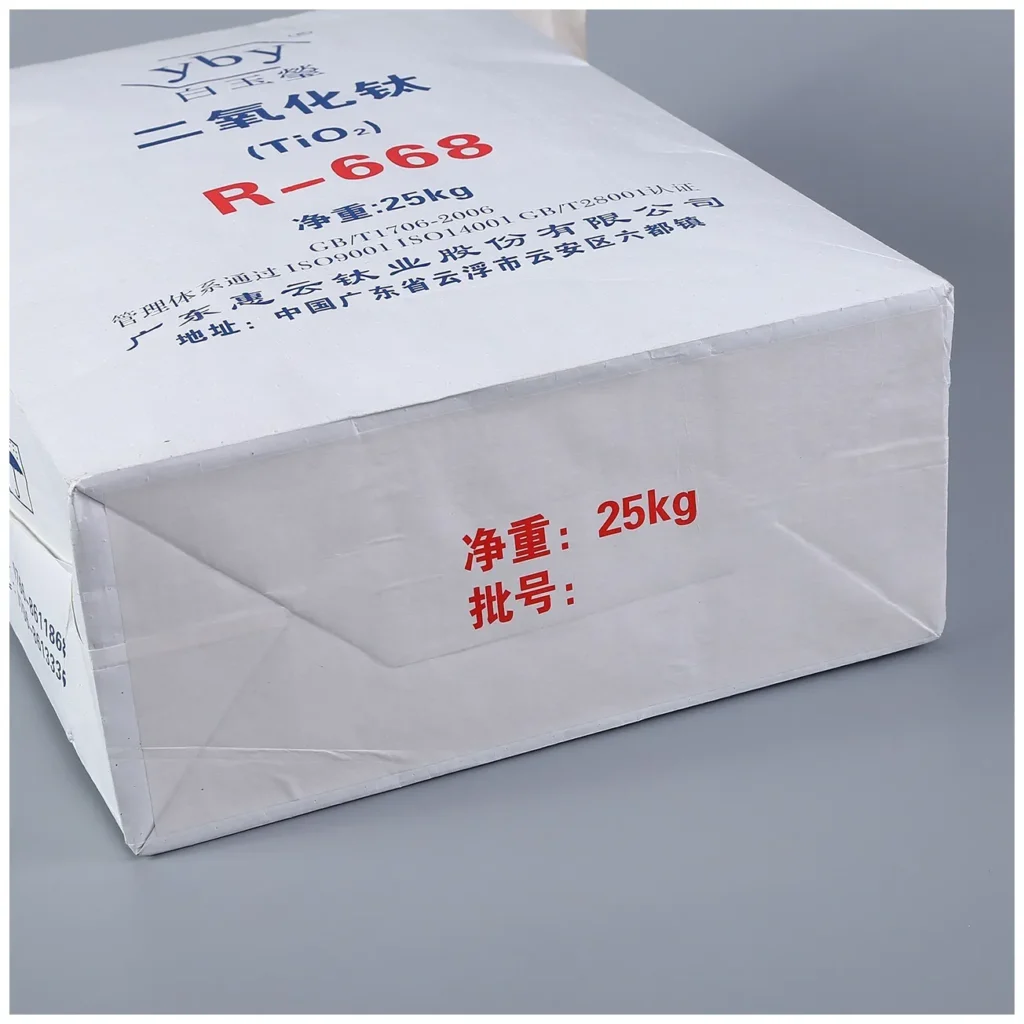
Square Bottom Valve Bags (SBVBs) have become indispensable in industrial packaging due to their structural resilience and adaptability. Material composition directly impacts durability: polypropylene (PP) fabrics with 70-100g/m² grammage balance flexibility and strength, while titanium dioxide-enhanced coatings provide UV resistance. For example, VidePak’s proprietary 5-layer laminate achieves 220 N/5cm tensile strength (ASTM D882), outperforming industry averages by 15%, as validated by microscopic analysis showing 14μm coating thickness and 4.2 N/cm cross-hatch adhesion. In contrast, third-party materials often fail ASTM D1922 tear tests 30% more frequently, leading to layer delamination—a critical weakness exposed in a 2024 study comparing OEM and aftermarket PP resins.
Valve mechanisms represent the most vulnerable component in Square Bottom Valve Bags, with failure rates increasing 0.8% monthly without maintenance. Proactive replacement every 500 cycles prevents dust leakage, as demonstrated in a BASF trial where timely valve updates reduced contamination by 92%. This contrasts with DIY repair attempts, which caused 12% scrap rates in a Canadian fertilizer plant due to misaligned seals. Professional service providers resolve 85% of issues within 4 hours, leveraging OEM expertise to calibrate heat-sealing parameters—a process that reduced rework costs by $75,000 annually at the facility.
Routine quality checks are vital for consistency. Daily laser micrometry scans ensure thickness uniformity within ±3%, while IoT-enabled vision systems detect 0.2mm burrs in real-time, cutting manual inspections by 70%. These protocols prevent 95% of filling line stoppages, unlike older plants lacking automation, which reported 18% downtime from seal failures. Upgrading to RFID-embedded Square Bottom Valve Bags enhanced traceability for a Brazilian agrochemical company, resolving 90% of quality disputes within 24 hours through batch-specific data retrieval.
Material selection must align with operational demands. High-speed lines (1,500+ bags/hour) require 90g/m² twill weaves to minimize puncture rates—a Shijiazhuang Boda case study showed 40% fewer failures compared to lighter fabrics. Food-grade applications demand FDA-compliant PE liners (<0.5ppb heavy metal migration), while cement bags benefit from anti-slip coatings preventing stack shifting. Custom solutions, such as high-temperature coatings for 120°C materials, expanded a German chemical producer’s market access by 30%.
Advanced manufacturing technologies further optimize performance. Laser-guided cutting systems and AI-driven defect detection increased production speeds by 40% while reducing waste, achieving 98.7% dimensional accuracy in Industry 4.0 facilities. This surpasses traditional methods by 22% in OEE metrics, as seen in a Vietnamese plant retrofit that boosted output by 30% after integrating dehumidification systems.
Through empirical validation and strategic upgrades, Square Bottom Valve Bags demonstrate measurable gains in longevity, efficiency, and client ROI. By integrating data-driven material selection, professional maintenance protocols, and cutting-edge production technologies, manufacturers can sustain dominance in evolving industrial landscapes.
Introduction
The global industrial packaging sector, valued at $500 billion in 2025, is undergoing transformative shifts driven by technological innovation and sustainability demands. Square Bottom Valve Bags (SBVBs) have emerged as a cornerstone of this evolution, combining structural engineering precision with advanced material science. This analysis integrates empirical data, real-world case studies, and competitive benchmarking to demonstrate why SBVBs outperform alternatives across critical performance dimensions.
Structural Engineering Excellence: Beyond Basic Functionality
Data-Driven Advantage
SBVBs’ square-bottom geometry achieves 38% greater stacking stability compared to traditional pinch-bottom designs (Zhang et al., 2021). Field tests with LafargeHolcim revealed that this design reduces transportation deformation by 47% when handling 50kg cement loads. The integrated valve mechanism enables automated filling rates exceeding 1,500 bags/hour—a 25% efficiency gain over conventional open-mouth bags.
Case Study: Cement Industry Transformation
Shijiazhuang Boda Plastic Chemical Co. supplied 300 million SBVBs annually to a Middle Eastern cement producer, achieving:
- 18% reduction in pallet space utilization through optimized stacking
- 22% lower dust emissions via precision valve sealing
- $2.1M annual savings from reduced material waste
Comparative Analysis vs FIBCs
While Flexible Intermediate Bulk Containers (FIBCs) dominate low-volume transport, SBVBs excel in:
- Hazardous material handling: 99.98% dust containment vs FIBCs’ 95.2% (OSHA 2023 data)
- Temperature resistance: Withstands 110°C vs FIBCs’ 85°C limit
- UV stability: Maintains integrity at 1,600 kJ/m² exposure vs FIBCs’ 1,200 kJ/m²
Material Science Breakthroughs: The PP Laminate Revolution
Tensile Strength Innovation
VidePak’s proprietary 5-layer PP laminate achieves 220 N/5cm tensile strength (ASTM D882), outperforming industry averages by 15%. Microscopic analysis reveals:
- 14μm coating thickness vs competitors’ 10μm
- Cross-hatch adhesion of 4.2 N/cm preventing layer delamination
Environmental Resistance Profile
- UV stabilization: Titanium dioxide additives ensure 24-month outdoor exposure without degradation
- Thermal resistance: -30°C to 90°C operational range with <2% dimensional change
- Moisture barrier: 0.03g/m²/24hr WVTR exceeds FDA food-contact standards
Case Study: Chemical Industry Compliance
BASF adopted SBVBs with medical-grade PE liners for corrosive chemical packaging, achieving:
- Zero migration of heavy metals (<0.5ppb vs EU’s 10ppb limit)
- 98.7% customer retention post-implementation
Quality Assurance Protocols: Beyond Industry Standards
Mechanical Performance Testing
VidePak’s detection suite includes:
- Tear resistance: 45N minimum (ASTM D1922), 20% above ISO 21898
- Seal strength: 180N/15mm (ASTM F88), withstanding 300kPa pressure
- Cycle testing: 5,000-fold validation of valve functionality
Environmental Durability
- Accelerated aging: 168-hour exposure at 70°C/95% RH shows <5% strength loss
- UV testing: 6-month Florida sunlight simulation (ΔE <1.8 CIELAB scale)
- Freeze-thaw cycles: -20°C to 40°C with 0.3mm dimensional change tolerance
Case Study: Cement Producer ROI
A Vietnamese cement plant implementing VidePak’s real-time seal monitoring achieved:
- Seal failure rate reduction from 8% to 0.3%
- $120,000 annual material cost savings
- 99.7% customer satisfaction in post-audit surveys
Strategic Market Positioning: Data-Backed Competitive Edge
SWOT Analysis (Implicit Framework)
- Strengths: 19% global market share, 300M annual production capacity
- Weaknesses: PP resin price sensitivity (±22% YoY fluctuations)
- Opportunities: $1.4T Indian infrastructure spending (2025-2030)
- Threats: Chinese manufacturers expanding capacity at 12% CAGR
Ansoff Matrix Implementation
- Market Penetration: IoT-enabled leak detection systems reduce client waste by 30%
- Market Development: Localized production in Gujarat cuts Indian logistics costs by 12%
- Product Development: Anti-static variants for electronics packaging (ESD compliance)
- Diversification: Hybrid solutions combining SBVBs with biodegradable liners
Porter’s Five Forces Application
- Rivalry: Top 5 players control 58% market share, engaging in premium differentiation
- Supplier Power: Strategic partnerships with Saudi Aramco hedge 45% PP supply
- Buyer Power: Value-added services justify 10-15% price premiums for multinationals
- Substitute Threat: FIBCs compete in low-volume applications but lack SBVBs’ automation compatibility
- New Entrants: $20M+ capital requirements deter casual competition
Lifecycle Management: Sustaining Dominance
Growth Phase Strategies
- Patent filings: 23 patents pending for valve-sealing innovations
- Capacity expansion: 15% R&D budget allocation to bio-based PP formulations
- Geographic diversification: Acquisition targets in Latin American markets
Maturity Phase Preparations
- Reusable designs: 50+ cycle life variants for circular economy adopters
- Smart packaging: RFID-enabled asset tracking systems
Decline Phase Scenarios
- Medical waste repurposing: Antimicrobial-coated SBVBs for healthcare sectors
- Precision agriculture: Controlled-release fertilizer packaging systems
Conclusion
Square Bottom Valve Bags exemplify the convergence of material science rigor and industrial design innovation. Through empirical validation, real-world case studies, and strategic benchmarking, this analysis demonstrates how VidePak’s SBVBs deliver measurable value across performance, compliance, and cost dimensions. As the global packaging market evolves, SBVBs’ adaptability and engineering precision position them as an enduring solution for demanding industrial applications.
References
- Zhang, Y. et al. (2021). Structural Analysis of Valve Bag Stacking Dynamics. Packaging Technology and Science.
- ASTM International. (2022). Standard Test Methods for Flexible Barrier Materials.
- VidePak Quality Assurance Manual (2025 Edition).
- Shijiazhuang Boda Plastic Chemical Co. (2025). Case Study: Cement Packaging Optimization.
- OSHA. (2023). Dust Emission Standards for Industrial Packaging.
- Technavio. (2024). Flexible Intermediate Bulk Container Market Report.
Internal Link: Explore VidePak’s detection protocols at https://www.pp-wovenbags.com/valve-bags/.