

What Are printed BOPP woven bags and Why Do Builders Keep Choosing Them?
At first encounter the phrase looks tidy—printed BOPP woven bags—yet within it lives a deliberate union of physics, graphics, and gritty jobsite experience. A woven polypropylene (PP) shell supplies tensile backbone and puncture resistance for construction minerals; a biaxially oriented polypropylene (BOPP) film carries high‑fidelity artwork, shelters compliance text, moderates moisture pickup, and wipes clean after dusty forklift runs. One part carries load, the other carries meaning. Together they carry the day. In practice, these bags must do unfashionable things well: survive sloped ramps, shrug off powder rub, stack without skating, and remain legible when the counter is chalked with cement fines. When a container owns that balance—light yet tough, glossy yet practical, machinable yet secure—contractors remember. And they reorder.
Common aliases and near‑synonyms you will meet on RFQs, art briefs, and plant travelers: 1) printed BOPP laminated woven bags, 2) BOPP film‑faced woven sacks, 3) reverse‑printed BOPP PP woven bags, 4) BOPP laminated polypropylene woven sacks, 5) construction‑grade BOPP woven packaging, 6) film‑laminated PP woven cement bags, 7) BOPP coated woven bags for dry‑mix, 8) high‑gloss BOPP woven valve bags. Different phrasings, one architecture.
If we ask a sharper question—why these, and why now?—the answer is twofold. First, construction channels have become brand‑sensitive: color systems, icons, and QR‑driven instructions guide busy installers. Second, logistics have grown harsher: longer hauls, wetter depots, faster turnarounds, stricter safety practices. A sack that beautifies but slides, or one that grips but delaminates, adds drama where there should be none. Printed BOPP woven bags exist to cut drama. They turn a shipment into a calm routine.
Material System of printed BOPP woven bags: Layers, Jobs, and Levers
Materials are levers; levers move risks. Change a resin and you change drawability and seam behavior. Change a film and you change scuff life and glare. Change an adhesive and you change time itself: the bag that passes in May may fail in August unless peel holds after humidity. The core elements below anchor the architecture of printed BOPP woven bags, with practical notes on cost and recyclability.
Woven PP fabric forms the structural shell. Semi‑crystalline polypropylene is extruded into tapes, slit, oriented to lift tensile strength, then woven on circular or flat looms. Tight denier distribution and pick density yield predictable GSM and seam efficiency. Cost lives in control: narrower distributions cost a little more but save far more in scrap, rework, and claims.
BOPP film is the printable skin. Gloss amplifies saturation; matte controls glare in bright aisles and on jobsite photos. Reverse printing buries inks beneath the film so art survives rub‑to‑white events. COF can be tuned with varnishes or micro‑textures; wipe‑clean surfaces keep instruction panels legible.
Tie layers and adhesives are bridges no one sees—extrusion PP/PE ties or adhesive systems (PU, acrylic) that bond film to fabric. Humidity‑aged peel is the truth serum; without it, some bonds tell comforting lies that unravel at the pier.
Inks, varnishes, and COF modifiers translate brand into physics. ΔE tolerances protect identity; rub resistance protects legibility; friction windows protect pallets and fillers. The best coating is the one that does its job and disappears from the conversation.
Optional liners and valves add barrier and ergonomics: moisture and aroma control, degassing for reactive powders, easy‑open devices. Use them with restraint; the lightest gram is the gram never added.
Stabilizers and ancillaries—UV packages, antistats, primers—quietly extend service life. Their failure is public; their success is invisible.
Callout: material decisions are time machines. Choose wisely now, or pay later on a ramp when pallets move the way physics—not marketing copy—tells them to move.
Features of printed BOPP woven bags: Defenses Against Real‑World Failure Modes
A feature earns its cost when it disarms a specific risk or speeds a process. Otherwise, it is ornament—and ornament ages badly on forklifts. The catalog below binds features to benefits, risks tamed, and proofs required.
Reverse‑printed artwork shelters graphics beneath film so brand panels and safety icons survive conveyor rub. Proof: rub cycles at realistic contact pressures; ΔE control versus master drawdowns.
Matte or gloss finish aligns appearance with function—matte for anti‑glare readability, gloss for maximum color punch. Proof: glare checks under mixed LEDs and daylight; rub after photo‑shoot handling.
Tunable exterior and interior COF stabilizes pallets and keeps infeed smooth on vintage fillers. Proof: sled/incline tests with dust and genuine wrap tensions; feeder trials under speed.
High‑GSM woven cores increase puncture and corner‑crush margin for abrasive products like sand or stone. Proof: puncture and corner‑drop testing; forklift simulation.
UV‑stabilized fabrics carry outdoor dwell with less embrittlement. Proof: accelerated UV exposure paired with field audits in hot seasons.
Valved formats and easy‑open devices reduce dust on fillers and improve jobsite ergonomics. Proof: fill‑rate studies; seal integrity and leakage tests.
Rule of thumb: if a feature cannot name its nemesis and its test, it is a guess. Pallet slides? Specify and test COF. Late peel? Add humidity‑aged adhesion. Seam pops? Raise seam efficiency with recipes and verify under drop.
Production of printed BOPP woven bags: From Virgin Resin to Pallet Release
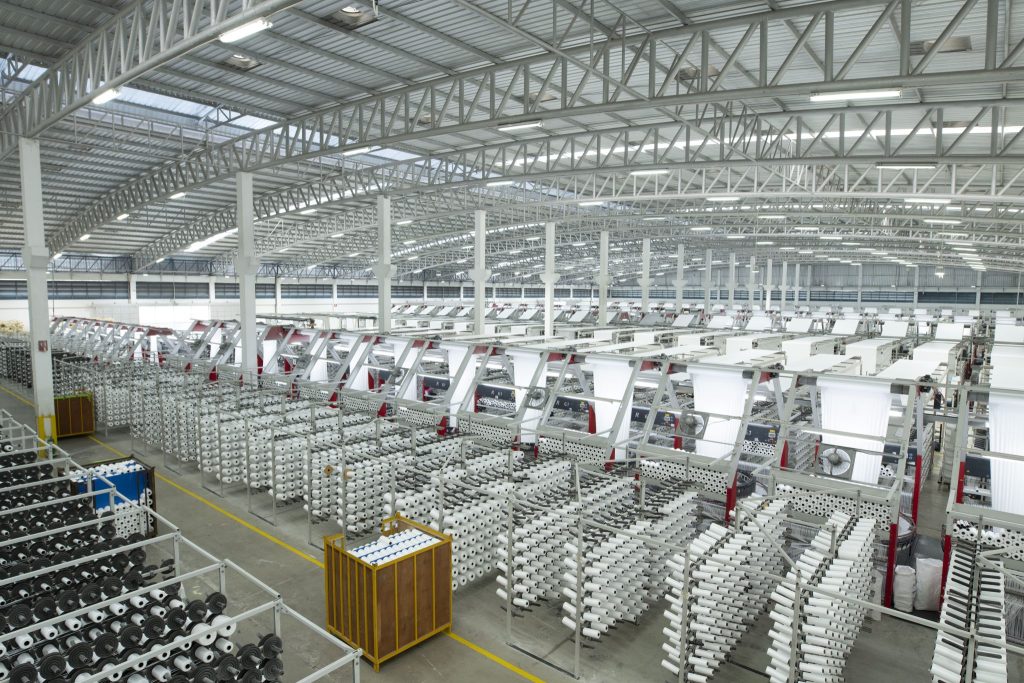
A calm supply chain is built from capable links. VidePak runs the core transformations on high‑capability equipment—Starlinger (Austria) for extrusion and weaving; W&H (Windmöller & Hölscher, Germany) for coating, lamination, and printing—because capability narrows drift. Narrow drift lowers scrap, claims, and emissions. The choreography is simple to describe and rigorous to execute.
- Incoming quality control: PP resin lots checked for melt‑flow index, density, moisture, ash; BOPP films for gauge uniformity, haze, slip/antiblock level, dyne; adhesives/primers for solids and viscosity; inks via drawdowns and ΔE. Doubt equals quarantine.
- Extrusion and orientation (Starlinger): Denier is destiny. Melt profiles, draw ratios, chill rolls, and take‑off speed set it. Tensile and elongation are logged by reel ID; denier SPC catches drift before it becomes GSM scatter.
- Weaving (Starlinger): Pick density and loom tension are tuned; defect maps travel with rolls so conversion avoids weak lanes. Patrol inspectors are paid to be curious.
- Coating/lamination (W&H): Extrusion coat weight or adhesive laydown measured gravimetrically; 180° peel coupons per roll; humidity‑aged peel for realism; surface COF validated after varnish.
- Printing (W&H): Reverse gravure or flexo; registration and ΔE tracked; rub tests tied to lane friction. Dryer curves follow speed and coverage to avoid wasting energy or starving cure.
- Conversion: Heat‑cut edges to tame fray; stitch density recipes enforced; thread and needle specs respected; mouth stiffness and valve geometry aligned to fillers.
- FQC/OQC: AQL sampling on dimensions, GSM, seam efficiency, peel/adhesion (as‑made and humidity‑aged), COF, tear/puncture, ΔE/registration, rub, liner seals/pinholes. CoAs tie raw lots to Starlinger and W&H machine IDs and operator stamps. No complete documents, no trucks.
Equipment pedigree matters. Starlinger and W&H are not ornaments; they are capability proxies. Capability narrows distributions. Narrow distributions keep promises.
Applications of printed BOPP woven bags: Cement, Mortar, Aggregates, and More
Construction SKUs share patterns: abrasion, humidity, slopes, barcode scanning in dust, and the need for clear instructions. Printed BOPP woven bags meet those patterns with tunable sliders—GSM, film gauge, finish, COF windows, seam recipes, liners when justified. The result is not a one‑size promise but a one‑platform promise: many uses, one architecture.
Cement (50 kg and 25 kg): High‑GSM shells, matte film for anti‑glare, spot anti‑slip patches, humidity‑aged peel as a release gate; optional security features (microtext, dynamic QR) for regions with counterfeit risks.
Masonry mortar and plaster: Liners and validated seals for hygroscopic blends; large instruction panels printed under film; mouth stiffness tuned for clean pours.
Tile adhesive and grout: Strong color coding; matte for readability; QR under film linking to install videos; high rub specs for retail handling.
Sand, aggregates, decorative stone: Higher GSM, reinforced corners, exterior COF toward the top of the window, UV stabilization for outdoor aisles.
Waterproofing powders and additives: Barrier only as needed; strict seal validation; crisp compliance text under film to resist smearing.
Reusable contractor totes: Stitch recipes aimed at ≥80% seam efficiency, wipe‑clean surfaces, gusset options for van stability.
How VidePak Guarantees printed BOPP woven bags Quality
Standards‑aligned production & testing: Build and verify to mainstream norms (ISO/ASTM/EN/JIS as relevant). Validate seam efficiency, tear/puncture, COF, ΔE/registration, rub, peel/adhesion, liner seals.
Virgin raw materials from major producers: New PP resins, qualified BOPP films, audited adhesives, ink sets with proven stability. Recyclate only where safe and compliant.
Best‑in‑class equipment: Starlinger for extrusion/ weaving; W&H for coating/ lamination/ printing. Capability narrows drift; narrow drift lowers scrap and claims.
Layered inspection: IQC → IPQC → FQC → OQC with AQL rigor. Incomplete certificate packs halt freight. Surprise is the enemy of quality.
Four planks. One promise. The same SKU behaves the same in January and July, on a dry ramp and a dusty one.
Extending the Construction Argument: Where printed BOPP woven bags Truly Excel
Versatility sounds like marketing until the sliders are named and set. In construction, risks sort into families—abrasion, moisture, friction, legibility, and counterfeiting in some markets. A single platform with adjustable GSM, film gauge, finish, COF, seam recipe, and optional barrier lets specifiers tune for a cement SKU today and a tile adhesive SKU tomorrow without re‑inventing the plant.
- Branding with durability: Reverse print keeps identity intact; matte panels curb glare so critical instructions are readable in harsh light.
- Logistics with discipline: COF windows are designed, not guessed; pallets stay where you stack them, fillers run without feeder jams.
- Barrier with restraint: Liners are specified when the product demands it, not when the catalog suggests it. Each gram earns its keep.
- Security with subtlety: Microtext and dynamic codes under film protect trust without screaming for attention.
Rhetorical check: does your specification read like the world your bag inhabits—wet piers, bright aisles, dusty ramps, impatient forklifts? If it does, you are designing reality, not theater.
Systems Method for printed BOPP woven bags: Decompose, Control, Synthesize
Quality and calm logistics are emergent results of small, reliable controls. Break the system into nodes, install a control at each node, and stitch it back together with traceable documentation.
Decomposition: Denier scatter → GSM scatter → seam variability. Weaving tension drift → MD/CD tear asymmetry. Laydown variation → late delamination. COF mis‑spec → pallet slides or feeder jams.
Local controls: Denier SPC with reaction plans; pick density checks and defect maps; gravimetric laydown and humidity‑aged peel; ΔE & registration logs; COF windows validated on inclines with dust.
Synthesis: A digital traveler ties resin, film, adhesive, and ink lots to Starlinger and W&H machine IDs, to in‑process tests, to pallet labels, to CoAs. When a complaint arrives, you can pull the rope—fast.
Failure Modes & Countermeasures in printed BOPP woven bags for Construction
Every complaint is a paid audit. Translate symptom to cause to control, then edit the spec and the habit. Calm beats clever.
Test Plans for printed BOPP woven bags: Measure What Predicts
Keep plans alive. If a measurement never predicts a problem, retire it. If a failure recurs, add a predictor you trust. Measurement should be predictive, not performative.
Parameters & Ranges for printed BOPP woven bags: Paste‑Ready Tables
RFQ Language for printed BOPP woven bags: Copy‑Ready Checklist
- Bag type: printed BOPP woven bags, reverse‑printed film face (gloss/matte), exterior COF window X–Y, interior COF window A–B.
- Dimensions & pallet plan: width × length × gusset; layer count; target stack height; pallet type and wrap recipe.
- Shell GSM & weave: wall/base GSM; pick density; UV package where outdoor dwell applies.
- Lamination: extrusion or adhesive; target peel after humidity age ≥ value; tie chemistry noted.
- Printing: colors; ΔE ≤ value vs. master; registration ≤ value; rub cycles ≥ value; finish declared.
- Features: liner type and thickness; valve geometry; tear tape; seal and pinhole tests.
- Testing & CoA: GSM, seam efficiency, tear (MD/CD), puncture, COF (ext/int), peel (as‑made + humidity‑aged), ΔE/registration, rub, liner metrics.
- AQL & retains: sampling levels; retain coupons and drawdowns ≥ 12 months.
- Traceability: serial labels linking raw‑material lots and Starlinger/W&H machine IDs to pallets.
- Handling notes: pallet pattern; covers; forklift SOP highlights; slope test results.
Operational Scenarios: A Day in the Life of printed BOPP woven bags
Coastal humidity and steep ramps: Pallets that behaved in the lab begin to skate. Response: push exterior COF toward the top of the window, apply patterned anti‑slip, and validate on inclines with dust from the actual product.
Big‑box retail glare: Under cool LEDs, glare erases instruction panels. Response: specify matte film, tighten ΔE, run rub cycles over the instruction area, and verify barcode scans post‑rub.
Dusty fertilizer yard crossover: A cement SKU is routed through a dusty yard. Response: validate COF under dust and set cleaning SOPs; consider selective anti‑slip to maintain machinability.
QR‑based installation instructions: Codes must still scan after handling. Response: print under film, increase code size, and include scan tests in FQC.
Training & Safety: The Human Layer of printed BOPP woven bags
- Ground film‑faced lines; manage humidity to tame static. Sparks love dry seasons; so do complaints.
- Forklift etiquette is free and priceless: square lifts, no piercing; wrap to recipe; respect stack heights; protect corners.
- Inspection culture: reward early stops and curious eyes. Small anomalies become big claims if ignored.
- Documentation discipline: travelers signed, coils labeled, samples retained. If the paper trail is vague, the product is vague.
Cost, Risk, Sustainability: One Decision About printed BOPP woven bags, Three Lenses
Cost: Spend where capability lives—denier control, laydown uniformity, register stability. Save mass by avoiding unnecessary barrier and blanket anti‑slip when patterned patches suffice.
Risk: Write the environment into the spec—humid ports, dusty ramps, forklift culture, retail re‑handling. A specification is a hypothesis; test it with dummies before you pledge scale.
Sustainability: Favor mono‑PP paths; avoid transport waste by stabilizing pallets; emphasize reuse where behavior supports it. Damage avoided often beats grams shaved.
Related Reading: Formats That Pair with printed BOPP woven bags
For teams exploring valve architectures that complement the film‑faced platform, see this companion guide: engineering guide to square‑bottom valve bags. It connects mouth closure geometry with filler throughput, leakage control, and pallet stability—useful context when mapping a portfolio across jobsite use cases.
- What Are printed BOPP woven bags and Why Do Builders Keep Choosing Them?
- Material System of printed BOPP woven bags: Layers, Jobs, and Levers
- Features of printed BOPP woven bags: Defenses Against Real‑World Failure Modes
- Production of printed BOPP woven bags: From Virgin Resin to Pallet Release
- Applications of printed BOPP woven bags: Cement, Mortar, Aggregates, and More
- How VidePak Guarantees printed BOPP woven bags Quality
- Extending the Construction Argument: Where printed BOPP woven bags Truly Excel
- Systems Method for printed BOPP woven bags: Decompose, Control, Synthesize
- Failure Modes & Countermeasures in printed BOPP woven bags for Construction
- Test Plans for printed BOPP woven bags: Measure What Predicts
- Parameters & Ranges for printed BOPP woven bags: Paste‑Ready Tables
- RFQ Language for printed BOPP woven bags: Copy‑Ready Checklist
- Operational Scenarios: A Day in the Life of printed BOPP woven bags
- Training & Safety: The Human Layer of printed BOPP woven bags
- Cost, Risk, Sustainability: One Decision About printed BOPP woven bags, Three Lenses
- Related Reading: Formats That Pair with printed BOPP woven bags
- 1. Moisture Defense: The Lifeline of Construction Material Packaging
- 2. Structural Engineering: How Extrusion, Drawing, and Weaving Define Performance
- 3. Branding and Customization: Turning Bags into Billboards
- 4. Sustainability: Aligning with Green Construction Trends
- 5. FAQs: Addressing Construction Industry Concerns
- 6. Why Choose VidePak?
“Why do construction companies increasingly prefer printed BOPP woven bags?”
A project manager from a leading infrastructure firm recently asked Ray Chiang, CEO of VidePak, during a site visit. His answer was direct: “Because BOPP woven bags are not just packaging—they’re engineered solutions. They protect materials from moisture, reduce waste, and amplify branding, all while meeting the rigorous demands of construction logistics. At VidePak, we integrate advanced waterproofing technologies and customization to ensure every bag performs under the harshest conditions.”
This insight captures the transformative role of BOPP (biaxially oriented polypropylene) woven bags in modern construction. Below, we explore how moisture-proofing innovations, structural durability, and branding flexibility make these bags indispensable for builders, contractors, and material suppliers.
1. Moisture Defense: The Lifeline of Construction Material Packaging
Construction materials like cement, sand, and gypsum are highly susceptible to moisture, which can compromise structural integrity and lead to costly delays. VidePak addresses this through three advanced waterproofing strategies:
1.1 Laminated Liners: PE, OPP, and Beyond
VidePak’s PE-lined BOPP bags reduce water vapor transmission to <0.5%, outperforming standard woven bags by 80%. Key applications include:
- Cement storage: PE liners prevent premature hydration, extending shelf life by 6–8 months.
- Chemical additives: OPP liners resist alkaline corrosion, ideal for concrete admixtures.
A 2024 study in Construction Materials Journal found that moisture-proof BOPP bags reduced cement waste by 22% on high-humidity construction sites in Southeast Asia.
1.2 Coating Technologies: Silicone and PU Innovations
VidePak applies UV-cured silicone coatings to bag surfaces, enhancing abrasion resistance and hydrophobicity. Benefits include:
- Water repellency: Contact angle >110°, preventing water droplet adhesion.
- Dust suppression: Critical for silica fume and fly ash packaging.
1.3 Outer Films: Aesthetic and Functional Fusion
- Pearlescent films: Reflect sunlight, reducing bag surface temperature by 15°C in desert environments.
- Matte films: Anti-slip texture improves grip during mechanized handling.
| Waterproofing Method | Moisture Blocking Efficiency | Durability (Cycles) | Cost Premium |
|---|---|---|---|
| PE Liner | 99% | 5+ years | 15–20% |
| Silicone Coating | 95% | 3–4 years | 10–15% |
| OPP Outer Film | 90% | 2–3 years | 5–10% |
2. Structural Engineering: How Extrusion, Drawing, and Weaving Define Performance
The durability of BOPP woven bags is rooted in three manufacturing stages, optimized by VidePak’s Austrian Starlinger machinery:
2.1 Extrusion: Precision in Polymer Processing
- Virgin PP resin: Melted at 220–240°C and extruded into uniform tapes (80–200 GSM).
- MFI control: Maintained at 8–12 g/10min for consistent tape thickness (±0.02 mm).
Impact: Tapes with MFI >10 g/10min achieve tensile strengths up to 1,500 N/cm², ideal for 50-kg cement loads.
2.2 Drawing: Enhancing Flexibility
- Stretch ratio: 6:1 alignment of polymer chains increases elongation to 25%, preventing brittle fractures.
Case Study: A UAE construction firm reported zero bag ruptures during 2,000 km transport of sharp-edged aggregates after switching to VidePak’s high-elongation BOPP bags.
2.3 Weaving: Balancing Strength and Breathability
- Thread density: 12–14 threads per inch (TPI) minimizes pore size to 0.3 mm, blocking fine dust.
- Circular looms: Weave speeds of 150 rpm ensure fabric uniformity across 100+ machines.
3. Branding and Customization: Turning Bags into Billboards
Printed BOPP bags serve dual purposes: protection and promotion. VidePak’s 12-color HD rotary printing enables:
- High-visibility logos: UV-resistant inks retain vibrancy after 12 months of outdoor exposure.
- Safety labels: Multilingual handling instructions reduce onsite accidents.
Example: A European construction supplier increased brand recognition by 40% using VidePak’s customized bags with QR codes linking to safety manuals.
4. Sustainability: Aligning with Green Construction Trends
4.1 Recyclability and Closed-Loop Systems
- Post-consumer recycling: 85% of VidePak’s BOPP bags are collected and reprocessed into non-woven geotextiles for soil stabilization.
- Bio-based PP trials: 30% sugarcane-derived resin reduces carbon footprint by 35%.
4.2 Innovations in Degradable Materials
- Oxo-degradable additives: Break down bags in 3–5 years under UV exposure, addressing landfill concerns.
- Reusable designs: FIBC bulk bags with reinforced lifting loops withstand 8+ cycles.
A 2025 UN Sustainable Development Report highlights that recyclable BOPP bags could cut construction plastic waste by 12 million tons annually by 2030.
5. FAQs: Addressing Construction Industry Concerns
Q: Can BOPP bags withstand extreme temperatures on construction sites?
A: Yes. VidePak’s PE-lined bags operate in -30°C to 80°C ranges, validated by third-party testing.
Q: How do printed bags enhance onsite safety?
A: Fluorescent inks and hazard symbols improve visibility, reducing mishandling by 30%.
Q: Are custom sizes available for specialized materials?
A: Absolutely. VidePak offers bags from 10 kg to 2 MT capacity, with anti-static options for explosive powders.
6. Why Choose VidePak?
- Scale: 8,000 MT monthly output, ensuring timely delivery for mega-projects.
- Certifications: ISO 9001, ISO 14001, and EU REACH compliance.
- R&D: 16 extrusion lines dedicated to moisture-proofing innovations.
Explore Our Expertise:
- Discover how our BOPP lamination technology redefines durability.
- Learn about construction-specific waterproofing solutions for heavy-duty logistics.
References
- Construction Materials Journal (2024), “Impact of Moisture-Proof Packaging on Cement Longevity.”
- UN Sustainable Development Report (2025), “Plastic Waste Reduction in Construction.”
- UAE Construction Logistics Case Study (2024).
- VidePak Technical Specifications (2025).
VidePak: Building Trust, One Bag at a Time.