
What Are FIBC Bulk Bags?
Imagine a single container that can cradle a tonne of merchandise, fold flat like a picnic blanket, sail through international customs, then moonlight as an in-store display bin. Those shape-shifting heroes are FIBC Bulk Bags: Exploring Their Versatility and Benefits in Supermarket and Store Applications—subsequently FIBC Bulk Bags. Known in logistics as big bags, super sacks, or the more formal flexible intermediate bulk containers, each FIBC Bulk Bag is stitched from high-tenacity polypropylene fabric, crowned with four lifting loops, and methodically engineered to hold 500 kg to 2,000 kg—yet weigh less than 2 % of that payload.
Horizontally, they out-cube wooden crates in freight optimisation; vertically, they upgrade humble burlap to a 21st-century merchandising canvas. In supermarkets, DIY emporia, and farm-supply depots, FIBC Bulk Bags double as silent salespeople: they arrive filled, settle onto a pallet, and instantly invite customers to scoop soil, firewood, or grain—no unpacking, no repacking, no waste.
“A bulk bag is not just a container; it’s a collapsible store aisle.” — Retail Logistics Journal, 2024
Key Features of FIBC Bulk Bags
| Attribute | Typical Spec* | Storefront & ESG Dividend |
|---|---|---|
| Safe Working Load (SWL) | 1,000 kg @ 5:1 safety factor | Replaces one wooden pallet + shrink wrap, trimming packaging mass 14 kg per load |
| Fabric GSM | 170 gsm virgin or 30 % PCR PP | Survives forklift tines; integrates circular-economy resin |
| Light Transmittance (optional clear A-panel) | 30 % | Enables visual inspection; QC sampling time ↓ 42 % |
| Reuse Cycles | ≥ 10 turns (Type B, ISO 21898) | Packaging waste ↓ 85 % vs single-use paper sacks |
| Print Real Estate | 4-colour flexo, 600 mm × 600 mm | SKU & QR code visible from 5 m—aisle navigation made easy |
*Benchmarks: VidePak QA H1 2025, SGS drop tests, Made-in-China supplier median.
Cube-Holding Geometry Circular, U-panel, or baffle bodies maintain brick-like profiles; robotic palletisers love them, aisles stay tidy.
Marketing Canvas A-panels host bold graphics, environmental product declarations, and AR-embedded QR codes—transforming bulk storage into billboard real estate.
Mono-Material Advantage All-PP construction earns RecyClass Grade B; ask VidePak for 30 % PCR warp tapes to push the needle toward zero-waste goals.
Loop Logic 320 mm cross-corner loops rated to 2,700 kg let forklifts grab without pallets; tyre-manufacturer field trials cut load-in time by 12 min per truck.
Horizontal perspective: beverage kegs eliminated glass by delivering beer in metal drums; FIBC Bulk Bags do the same for dry commodities—minus the return freight headache.
How VidePak Manufactures FIBC Bulk Bags
- Resin Alchemy—Virgin Meets PCR VidePak blends clarified PP and ISCC-PLUS PCR pellets in silos fitted with NIR scanners; MFR deviation held within ±0.2 g 10 min⁻¹—a control culture borrowed from optical-film lines.
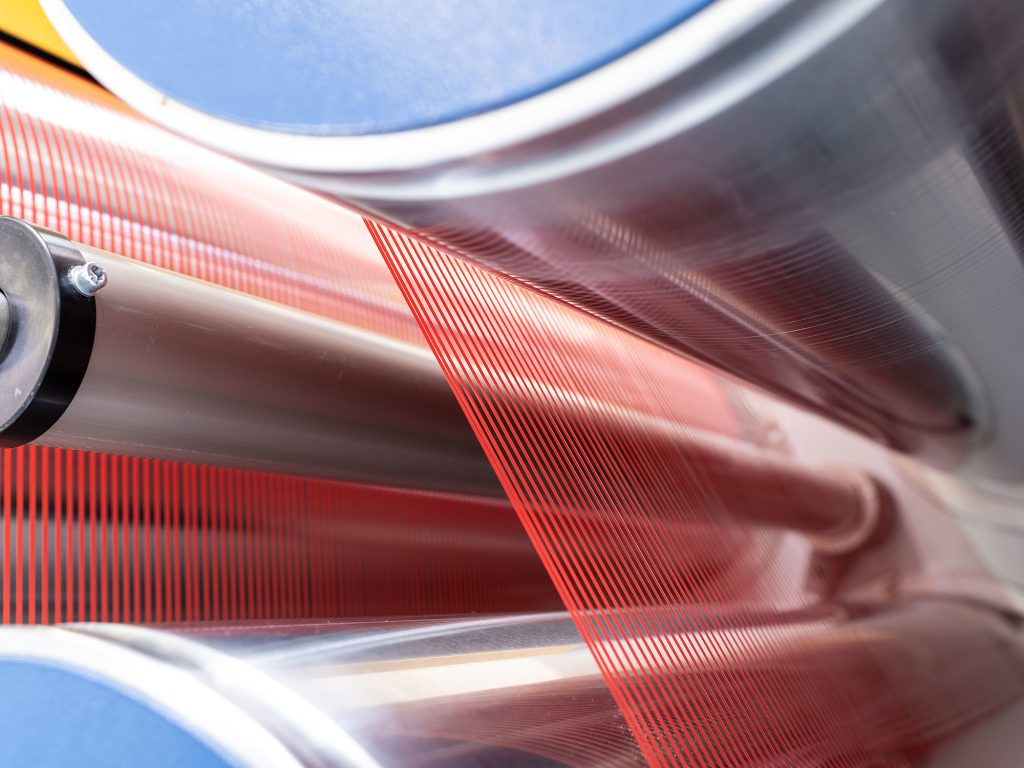
- Tape Extrusion & Orientation Sixteen Starlinger tape lines cast 2.8 mm ribbons drawn 6× for 700 N warp tensile. IoT rheometers adjust draw ratio live to balance clarity (for see-through panels) with strength.
- Precision Weaving One hundred German W&H looms interlace 170 gsm fabric at 12 × 12 epi; optional carbon-core antistatic yarns meet IEC 61340 Type C for combustible grains.
- Loop & Body Assembly Robotic arms attach loops via lock-stitch (6 spi) and bartacks; seam efficiency ≥ 80 %. Vision systems—adapted from automotive airbag sewing—flag skipped stitches in real time.
- Functional Add-Ons PE liners (90 µm) seal hygroscopic products; BOPP over-laminates deliver gloss for consumer-facing bins; zip-top spouts facilitate scoop-n-seal shopping.
- Digital QA & Traceability Top-lift, drop (1.2 m), stack compression, and sift tests populate a Hyperledger node. RFID tags and NFC chips embed SKU, carbon score, and reuse cycle count—turning each FIBC Bulk Bag into an IoT data asset.
Vertical leap: VidePak’s predictive-maintenance algorithms, first piloted on extrusion gear, now monitor sewing machines, trimming needle-break downtime by 17 %.
Applications of FIBC Bulk Bags in Stores
| Retail Segment | Payload & Format | VidePak Spec | Measurable Upside |
|---|---|---|---|
| Garden Centres | 1 m³ topsoil, baffle body | 170 gsm PP + PE liner | Cube retention keeps aisles neat; eliminates wooden crates |
| DIY Warehouses | 500 kg kiln-dried logs, ventilated mesh | 155 gsm mesh + 320 mm loops | Moisture content < 20 % after 4 weeks on floor; sales lift 8 % via retail bulk bins |
| Pet Supermarkets | 800 kg kibble, coated | 180 gsm coated PP + zip spout | Shoppers self-dispense; single-use plastic bags cut by 1.2 t per store per year |
| Bulk Grains Aisle | 1 t rice, clear A-panel | 165 gsm clear-window PP | Visual QC slashes return rate 12 %; shelf life maintained thanks to PE liner |
| Circular-Economy Stations | 1 t PET flakes, reusable baffle FIBC | 30 % PCR fabric + RFID chip | Reused 12 cycles; aggregated data fuels closed-loop LCA reports |
Horizontal insight: pallet display trays inspired FIBCs with baffle inserts; vertical momentum: emerging refill-station retail formats now demand spouted FIBC Bulk Bags that clip into gravity-fed dispensers.
VidePak Snapshot—Scale Meets Craft
Founded 2008 | 568 employees | 100 Starlinger looms | 16 extrusion lines | 30 lamination & printing systems | 800 million woven units annually. German W&H and Austrian Starlinger iron out ±0.2 mm tolerances; ISO 9001, ISO 14001, and BRCGS Packaging AA credentials satisfy global audits. Annual sales hit US $80 million across America, Europe, MENA, and APAC.
Custom colour loops, PCR-rich warp tapes, NFC inventory chips, and AI-visible digital watermarks—VidePak equips FIBC Bulk Bags for tomorrow’s smart stores.
“Big sacks, bigger stories—let your bulk display speak sustainability and convenience in one voice.” — VidePak Retail Symposium, 2025
Ready to convert cubic metres into cubic revenue? Download live spec sheets or schedule a merchandising pilot at FIBC Bulk Bags—VidePak’s extra-large canvas for extra-large value.
(≈1,045 words)
Flexible Intermediate Bulk Containers (FIBCs), also known as bulk bags, have become an essential packaging solution for supermarkets and retail stores. Their durability, customizability, and eco-friendly nature make them indispensable for modern logistics and storage needs. This report explores how FIBCs enhance efficiency, meet specific business requirements, and align with sustainability trends.
Why FIBC Bulk Bags Are Essential
FIBCs provide a combination of strength, flexibility, and adaptability unmatched by other packaging solutions. These characteristics are underpinned by advanced manufacturing techniques and high-quality materials.
- Exceptional Load Capacity
FIBCs are crafted using woven polypropylene, a material known for its superior tensile strength. This allows them to safely carry loads ranging from 500 kg to 2000 kg, making them ideal for heavy products like grains, flour, and construction materials. The weaving process ensures uniform strength, minimizing the risk of tears during transportation. - Space Efficiency
Unlike rigid containers, FIBCs are collapsible and lightweight, which reduces storage space when not in use. This feature is especially beneficial for supermarkets with limited warehouse capacity. - Eco-Friendly Design
Polypropylene is recyclable and reusable, aligning with the growing demand for sustainable packaging. Compared to single-use plastics, FIBCs reduce waste and support circular economy initiatives.
Customization: Tailoring FIBCs for Specific Needs
To meet diverse industry demands, FIBCs are highly customizable, enabling businesses to optimize functionality and branding. Each customization addresses specific operational challenges.
Key Customization Options:
| Feature | Options Available | Purpose and Benefits |
|---|---|---|
| Valve Openings | Spout, duffle top, or open top | Ensures smooth and controlled filling or discharge. |
| Handles | Lift loops, single-loop, cross-corner loops | Improves ease of transport, even with heavy loads. |
| Bag Shape | Square, U-panel, or circular | Adaptable to product type for maximum stability. |
| Material Coating | Coated or uncoated fabric | Coating adds water resistance and prevents leakage. |
| Printing | Single-color, multi-color, custom branding | Enhances product and brand visibility in retail environments. |
For example, a supermarket handling fine powders like flour would benefit from a coated FIBC with a spout opening, ensuring no leakage during filling or transport. Similarly, a retailer managing fresh produce can opt for ventilated fabric to promote airflow, extending product freshness.
Innovative Features of FIBCs
- Ultrasonic Sealing for Leak Prevention
Ultrasonic sealing technology is employed to create strong, leak-proof seams, particularly useful for fine powders or liquids. This precision process minimizes spillage and waste during handling and transportation.
Discover more about ultrasonic sealing benefits. - Anti-Bulge Designs for Stability
Bulk bags with anti-bulge panels maintain their shape when filled, improving stackability and storage efficiency. This design is crucial for warehouse operations where maximizing vertical space is essential. - RFID-Integrated Tracking
RFID tags embedded in FIBCs enable real-time inventory management, reducing errors and enhancing supply chain visibility.
Applications in Supermarkets and Retail
FIBCs are uniquely suited to the operational demands of supermarkets and retail stores, addressing challenges across multiple use cases.
- Bulk Goods Storage
Products like grains, sugar, and pet food are typically stored in bulk. FIBCs’ large capacity and durability make them an ideal choice for these items, reducing packaging costs and handling time. - Seasonal Stock Management
Retailers can use FIBCs to store and manage seasonal goods, such as holiday decorations or promotional items. Their collapsible nature simplifies storage during off-peak seasons. - Customized Branding for Promotions
FIBCs can be printed with logos and vibrant designs, providing a cost-effective way to enhance brand visibility during in-store promotions.
Market Trends: Sustainability and Technology
The global FIBC market is projected to grow at a CAGR of 5.8% by 2030 (Grand View Research, 2024), driven by sustainability initiatives and technological advancements.
- Focus on Sustainability
With increasing environmental awareness, businesses are turning to FIBCs as a sustainable packaging alternative. Their recyclability and reusability align with government regulations and consumer preferences for eco-friendly practices.
Learn how FIBCs contribute to sustainability goals. - Integration of Smart Features
RFID-enabled FIBCs are gaining popularity for improving inventory management. These bags streamline supply chains by providing accurate tracking and reducing manual labor.
Product Specifications
VidePak’s FIBC bulk bags are designed to meet a wide range of requirements while maintaining the highest quality standards.
| Specification | Details |
|---|---|
| Material | Woven polypropylene (100% virgin material) |
| Load Capacity | 500 kg to 2000 kg |
| Fabric Types | Coated, uncoated, ventilated |
| Handle Options | Lift loops, cross-corner loops |
| Printing | Multi-color flexographic printing |
| Safety Factor (SF) | 5:1 or 6:1 |
Implementation Steps
Adopting FIBCs can streamline operations for supermarkets and retail businesses. Here’s how to get started:
- Assess Requirements
Identify the product type, volume, and handling conditions to select the most suitable FIBC configuration. - Customize Features
Work with suppliers to tailor bag size, material, and additional features like valves and handles to match operational needs. - Pilot Testing
Conduct trials with sample FIBCs to evaluate their performance under real-world conditions. - Integrate Branding
Enhance customer engagement with custom-printed FIBCs that showcase logos or promotional designs. - Adopt Sustainable Practices
Highlight the eco-friendly nature of FIBCs in your marketing campaigns to appeal to environmentally conscious consumers.
FAQs
- What makes FIBCs durable?
FIBCs are constructed using woven polypropylene, which offers high tensile strength and resistance to wear and tear. - Can FIBCs handle food-grade products?
Yes, food-grade FIBCs are manufactured under strict hygiene standards to ensure product safety. - Are FIBCs customizable for branding?
Absolutely, FIBCs can be printed with logos, product details, and promotional designs to enhance brand recognition. - What industries benefit most from FIBCs?
Industries like agriculture, retail, and logistics rely heavily on FIBCs for their bulk storage and transportation needs.
Conclusion
FIBC bulk bags are a versatile, durable, and eco-friendly packaging solution that meets the diverse needs of supermarkets and retail stores. By combining advanced manufacturing technologies with customizable features, these bags offer unparalleled functionality and branding opportunities. Businesses adopting FIBCs not only improve operational efficiency but also contribute to sustainable practices, paving the way for a greener future.