
- What is Heavy Duty Woven Bags? Aliases, features, manufacturing, and uses
- Why Heavy Duty Woven Bags succeed: the physics behind denier, GSM, weave density, and safety factor
- Standards and outcome‑based design for Heavy Duty Woven Bags
- System thinking: breaking the Heavy Duty Woven Bags design into solvable sub‑problems
- Denier guidelines by load class for Heavy Duty Woven Bags
- Data, case studies, and comparisons that clarify Heavy Duty Woven Bags design
- Automated packaging that protects Heavy Duty Woven Bags from yard to harbor to hold
- A practical workflow to specify Heavy Duty Woven Bags
- Parameter summary for Heavy Duty Woven Bags (quick scoping)
- Extended technical notes on Heavy Duty Woven Bags
- Packaging configuration for Heavy Duty Woven Bags (unit load recipes)
- Questions engineers actually ask about Heavy Duty Woven Bags
- Bringing it together for Heavy Duty Woven Bags
- Introduction: What Problems Do Heavy Duty Woven Bags Solve in Modern Logistics?
- Method: A System Approach to Specifying Heavy Duty Woven Bags
- Results: Where Heavy Duty Woven Bags Show Up in Everyday Products
- Discussion: Why Heavy Duty Woven Bags Beat Alternatives Without Over‑Engineering
- Evaluating Proficiency in Building Heavy Duty Woven Bags
- Issues to Address When Requesting a Quote for Heavy Duty Woven Bags
- Supplier Evaluation: Quality Systems and Turnaround for Heavy Duty Woven Bags
- What Advanced Heavy Duty Woven Bags Engineering Adds to Bulk Packaging
- How Flat‑Panel, Circular, and Baffled Heavy Duty Woven Bags Differ
- What Materials and Add‑Ons Suit Heavy Duty Woven Bags for Different Contents
- Why Static Control and UV Stabilization Matter in Heavy Duty Woven Bags
- Beyond Lifting: The Job of Bases and Loops in Heavy Duty Woven Bags
- Why Manufacturers Favor Heavy Duty Woven Bags for Large Production Runs
- What Role Do Coatings and Surface Texture Play in Heavy Duty Woven Bags Utility?
- How Engineers Customize Non‑Standard Heavy Duty Woven Bags
- Parameter Snapshot for Heavy Duty Woven Bags (for quoting and QA)
- References (selected)
What is Heavy Duty Woven Bags? Aliases, features, manufacturing, and uses
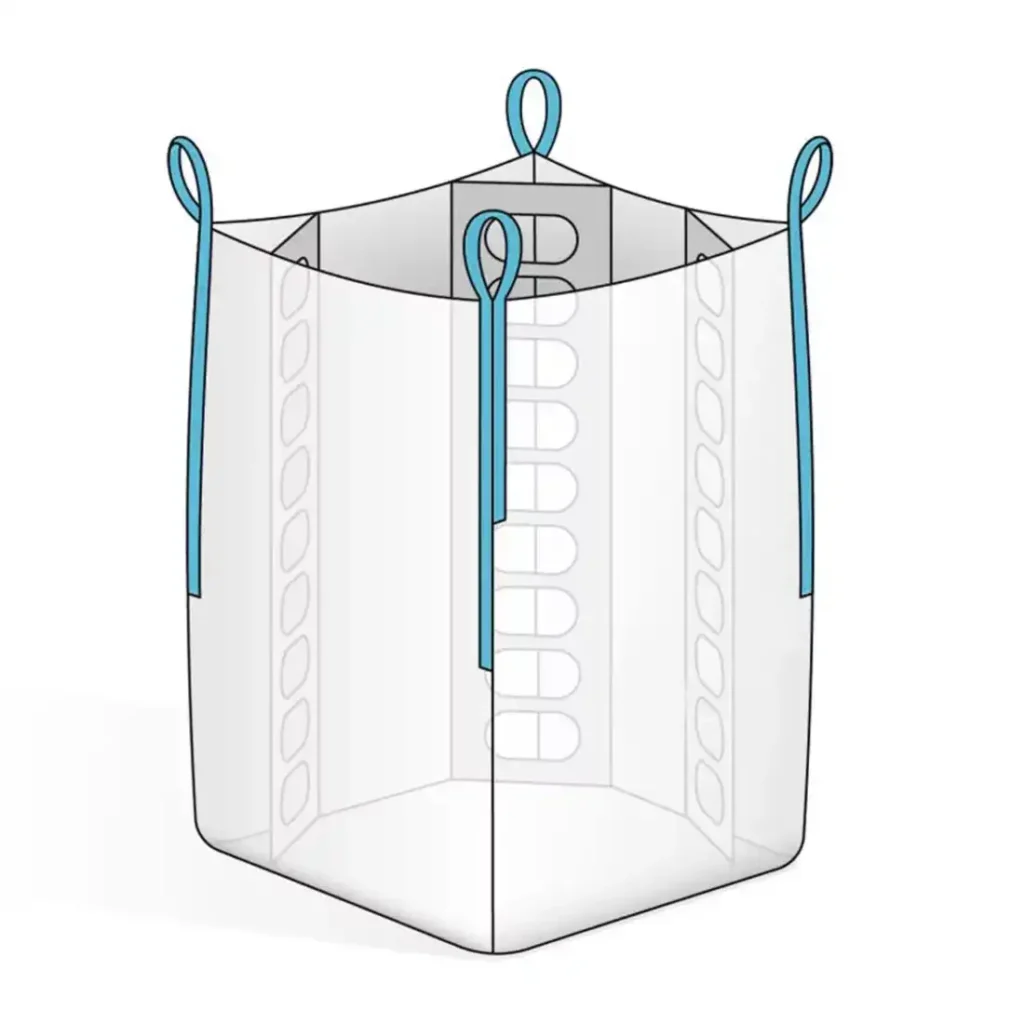
Heavy Duty Woven Bags are industrial-grade flexible containers made from polypropylene (PP) raffia tape yarn, engineered to carry substantial static and dynamic loads through filling, handling, transport, and storage. In different markets they are also called PP woven sacks, industrial woven sacks, bulk bags, super sacks, ton bags, polypropylene woven totes, and, when configured for intermediate bulk handling with lift loops, FIBCs (Flexible Intermediate Bulk Containers). If you’ve ever watched a shipyard crane hoist a cube‑shaped bag of minerals or seen a neatly stacked wall of fertilizer sacks, you’ve seen Heavy Duty Woven Bags at work.
Features of Heavy Duty Woven Bags. A high strength‑to‑weight ratio; resistance to abrasion; dimensional stability under compression; compatibility with automated filling and discharge; options for dust‑proofing, moisture protection, electrostatic control, and food‑contact hygiene; and fold‑flat efficiency for return logistics. The design scales—from 10–50 kg woven sacks to 0.5–3.0 MT loop‑lift formats—without abandoning the same core textile physics.
Manufacturing in brief. PP resin is melted and extruded into a thin film, slit into narrow tapes, stretched (drawn) to orient molecules for tensile performance, and heat‑set to lock in properties. These tapes are woven on circular or flat looms—typical set‑ups range from 10×10 to 14×14 picks per inch—then optionally laminated with PP film or coated to curb sifting and water vapor ingress. Panels are cut; seams are stitched (lockstitch with safety rows is common); lift loops or handles are fastened; spouts, duffles, or liners are added; and finished items are tested for fabric tensile, seam strength, and lifting integrity before shipment.
What are Heavy Duty Woven Bags used for? For a long list of bulk solids and granulates: cement, aggregates, fertilizers, grains, sugar, starch, animal feed, chemicals, polymer resins, metal concentrates, mineral fines, and recycled materials. They also support food ingredients, pharmaceutical excipients, and hazardous goods when designed to the appropriate hygiene or UN performance requirements.
Looking for more details or procurement? Explore Heavy Duty Woven Bags configurations, materials, and options.
Why Heavy Duty Woven Bags succeed: the physics behind denier, GSM, weave density, and safety factor
Every decision in Heavy Duty Woven Bags—from tape denier to seam geometry—trades mass, cost, and speed for measurable strength. Denier matters because it increases the load‑bearing cross‑section of each tape. GSM (grams per square meter) matters because it aggregates tape mass and weave density into areal strength. Weave density affects how force distributes and how tears propagate. The safety factor—5:1 for single trip, 6:1 for multi‑trip, 8:1 for severe duty—sets the proof loads the bag must survive in testing.
Ask a simple question: if the fabric breaks at the same load as the seam, which fails first? In reality, seams often fail earlier unless we choose the right stitch type, thread denier, seam allowance, and stitches per inch (SPI). That is why a seemingly small change—say, moving from 1200D to 1500D tapes—can demand a redesign of seam architecture to harvest the new fabric strength instead of tearing it at the needle holes.
Key variables at a glance. Denier governs individual tape tensile; GSM summarizes fabric mass; weave (10×10, 12×12, 14×14) balances crimp and cover; coatings/laminations elevate dust and moisture control; liners add hygiene or barrier; lift loops and base patches translate fabric strength into usable lifting geometry. Put together correctly, Heavy Duty Woven Bags deliver high break loads, modest creep, stable stacking, and safe discharge.
Standards and outcome‑based design for Heavy Duty Woven Bags
Performance is proven, not proclaimed. For non‑dangerous goods, widely accepted specifications define the tests: tape tensile (yarn/tape based), fabric tensile (grab/strip), seam tensile (panel seam), top‑lift cycles, stacking, drop, topple, righting, and tear propagation where applicable. For hazardous contents, UN‑rated constructions (the 13H classes) bring additional regimen items. The lesson is simple: standards codify outcomes—minimum loads, cycles, and survivals—not ingredients. This is why the correct denier is a range, not a single magic number.
When we say our body fabric for a 1‑ton application is 160–200 gsm using Heavy Duty Woven Bags, that is a starting point anchored in test outcomes. It is not an ultimatum. A 160 gsm fabric with the right weave and seam can out‑perform a 180 gsm fabric with poor seam efficiency. Conversely, a heavier denier can help cushion needle‑hole stress and raise seam survival, but only if the stitch density avoids cutting between perforations.
System thinking: breaking the Heavy Duty Woven Bags design into solvable sub‑problems
Sub‑problem A — Tape tensile → fabric tensile. We begin with tape denier and draw ratio. Higher denier increases mass per unit length; higher draw ratio increases molecular orientation. The conversion to fabric strength depends on loom crimp, tape width, and weave density. The goal: fabric grab/strip results that exceed the implied SWL×SF forces by comfortable margin.
Sub‑problem B — Seam integrity. The seam is a structural joint, not an afterthought. Stitch type (lockstitch plus safety), thread denier (to match body tapes), seam allowance (≥20 mm for heavy duty), and SPI (typically 14–18) must combine to produce seam efficiency of ~85–110% relative to the body fabric. Too few stitches and the thread breaks; too many and the fabric is perforated into weakness.
Sub‑problem C — Lift geometry and base patches. Cross‑corner loops spread the load; corner loops concentrate it. Stevedore straps adapt to crane hooks. Base patches distribute drop and righting stresses across a larger area so that the seam is not the fuse. The heavier the fill density, the more deliberate the base reinforcement.
Sub‑problem D — Environmental durability. UV, temperature cycling, and humidity degrade polypropylene. UV stabilizers within the tapes and coatings/laminations on the fabric reduce decay. Liners guard against hygroscopic contents and moisture transfer. No amount of denier substitutes for stabilization when a bag sits in outdoor yards for months.
Sub‑problem E — Manufacturability and cost. Higher denier and tighter weaves slow loom speeds and consume more resin. The optimum is never the heaviest fabric you can imagine; it is the lightest construction that repeatedly passes type‑tests with margin. That is how Heavy Duty Woven Bags stay competitive against rigid bins without compromising safety.
Denier guidelines by load class for Heavy Duty Woven Bags
These ranges reflect prevailing industrial practice for Heavy Duty Woven Bags using high‑quality PP tapes, 10×10–14×14 weaves, competent seam architecture, and appropriate coatings. Always validate by type‑tests for your specific duty cycle and content.
| Rated SWL (class) | Safety factor (typical) | Fabric GSM (uncoated) | Tape denier in body fabric | Weave (picks/in) | Seam targets | Notes |
|---|---|---|---|---|---|---|
| 1‑ton class | 5:1 single‑trip or 6:1 multi‑trip | 160–200 gsm | 1200D–1500D | 10×10 to 12×12 | Seam ≥ body; raveled‑strip > body | Ideal for cement, grains, fertilizer; add +30 gsm coating for dust‑tightness. |
| 2‑ton class | 6:1 preferred | 180–220 gsm | 1400D–1800D | 12×12 | Wider allowance; heavier thread; base patches | Circular/U‑panel bodies; consider baffles to reduce bulge and cube better. |
| 3‑ton class | 6:1 or 8:1 | 220–270 gsm (or higher) | 1800D–2400D (custom) | 12×12 to 14×14 | Multi‑row seams; lockstitch + safety | Requires stronger webbing, larger loop base, and robust corner reinforcements. |
Why this works. Moving from 1200D to 1800D increases the tape’s load‑bearing cross‑section by roughly 50%. With proper stitch design, fabric grab/strip strength rises in step, and seam tear resistance improves because each perforation removes a smaller fraction of total section. GSM climbs as well, taming bulge and resisting puncture during drop and topple.
Data, case studies, and comparisons that clarify Heavy Duty Woven Bags design
Data reinforcement. Fabric tensile scales with denier and GSM; seam efficiency rises with better stitch architecture; coatings add puncture and barrier but negligible tensile. Our production catalogs pair 160–200 gsm fabrics with 1‑ton classes and 180–220 gsm with 2‑ton classes, with 1200D–1800D tapes appearing most frequently for these ranges. Seam efficiencies of 85–110% are common when thread denier, SPI, and seam allowance are well matched.
Case study 1 — Cement blend (1‑ton). Body fabric 180 gsm, 12×12 weave, 1500D tapes; double‑needle chainstitch plus safety; 70 mm loop webbing. Result: clean passes in top‑lift cycles and 0.8 m drop without seam propagation. Substituting 1200D tapes required boosting GSM to 200 to preserve tensile margins—showing the interplay between denier and GSM.
Case study 2 — Mineral fines (2‑ton). Circular body 200 gsm laminated +30 gsm, 1700D tapes; lockstitch at 16–18 SPI with ~2100D polyester thread; baffle panels. Result: passed multi‑trip top‑lift cycles at 4× SWL; stacking stable with reduced pillaring.
Case study 3 — Smelter feed (3‑ton). U‑panel body 250 gsm, 2000–2200D tapes; heavier webbing and base patches. Result: lift and stacking passes with margin; drop tests cleared after corner reinforcement adjustments.
Comparisons that matter.
- Denier vs. weave density. Increasing denier at fixed weave (1200D→1600D) gives similar strength gains to tightening weave (10×10→14×14) at fixed denier, yet the sewing and drape behaviors differ. Tighter weaves can demand higher needle precision and may elevate the risk of needle‑hole stress.
- Denier vs. coating. Lamination improves sifting resistance and moisture barrier; it does not substitute for structural tensile. Treat coatings as protection, not a crutch.
- Denier vs. loop/webbing. Upgrading body denier without upgrading loops and base patches shifts the weak link. Design the lifting system in concert with the fabric.
Automated packaging that protects Heavy Duty Woven Bags from yard to harbor to hold
Automation is not a gimmick; it is a governor on variability. Our end‑of‑line integrates five modules so Heavy Duty Woven Bags leave the plant as robust unit loads:
- Automatic palletizing. Robots set patterns—1×2, 2×2, or staggered—aligned with the container stow plan. Placement accuracy reduces canting and friction damage.
- Automatic case forming and sealing (when shipping flat‑packed bags). Hot‑melt or tape sealing with controlled compression stabilizes cartons so edges don’t abrade during vibration.
- Automatic strapping. A default three horizontal × three vertical program applies strap width and tension matched to bag geometry and route risk. The goal: containment force without bruising the fabric.
- Automatic stretch‑wrapping. Multi‑layer, multi‑angle travel with roped bands locks the load; film pre‑stretch and wrap counts are recipe controlled per SKU and route. Moisture shedding during terminal exposure improves dramatically.
- Pallet selection matched to container. Footprints such as 1200×1000, 1200×800, 1100×1100, and 1067×1067 mm maximize pick counts in 20′/40′ containers. Static/dynamic load checks keep the platform honest.
Problem → solution → result. Irregular manual wraps, inconsistent strap tensions, and ad‑hoc pallet choices lead to load shift and corner scuffing. Automation codifies the variables into repeatable recipes. The result: lower in‑transit damage, better cube utilization, faster loading, and fewer exceptions.
Verification ladder. Conditioning to temperature/humidity set points; compression to verify stacking; random vibration to simulate transport; film and strap performance checks to assure containment after shocks. We define stop/go criteria—minimum containment force, maximum deflection—and we record the numbers.
A practical workflow to specify Heavy Duty Woven Bags
Step 1 — Define duty. SWL class (1‑, 2‑, or 3‑ton), safety factor (5:1/6:1/8:1), handling method (fork, top‑lift, crane), stacking height, discharge method, and reuse policy. Map content density and particle size to sifting risk.
Step 2 — Pre‑size the fabric. Choose a denier band: 1200–1500D for 1‑ton, 1400–1800D for 2‑ton, 1800–2400D for 3‑ton. Select weave (10×10–14×14) and compute GSM; decide on lamination and UV stabilization.
Step 3 — Engineer seams and lifting. Lockstitch + safety rows; thread denier matched to fabric; seam allowance ≥20 mm; SPI 14–18. Pick loop type (corner, cross‑corner, stevedore) and size; add base patches where drops or righting loads threaten the seam.
Step 4 — Prototype and test. Yarn/tape tensile; fabric grab and strip; seam tensile; type‑tests for lift cycles, stacking, drop, topple; tear propagation where needed. If any margin falls short, adjust denier/GSM or seam geometry, not just one variable.
Step 5 — Integrate packaging. Select pallet footprint to fit the container plan; set 3H×3V strapping; define stretch‑wrap parameters (pre‑stretch %, film gauge, wrap count, roping); if shipping flat‑packed bags, choose multi‑wall corrugated cartons and tape/hot‑melt recipes. Validate the unit load under conditioning → compression → vibration.
Parameter summary for Heavy Duty Woven Bags (quick scoping)
| Parameter | 1‑ton class | 2‑ton class | 3‑ton class |
|---|---|---|---|
| Typical tape denier | 1200–1500D | 1400–1800D | 1800–2400D (custom) |
| Fabric GSM (uncoated) | 160–200 gsm | 180–220 gsm | 220–270 gsm |
| Weave | 10×10–12×12 | 12×12 | 12×12–14×14 |
| Safety factor | 5:1 or 6:1 | 6:1 preferred | 6:1–8:1 |
| Coating/lamination | Optional +20–35 gsm | Often +30 gsm | Often +30–40 gsm |
| Seam architecture | Lockstitch + safety; seam eff. ≥85% | Wider allowance; heavier thread | Multi‑row seams; base patches |
| Loop/webbing | 50–70 mm | 60–80 mm | 70–90 mm |
| Baffle/Q options | Optional for cube | Recommended | Recommended |
| Typical uses | cement, grains, fertilizer | minerals, polymers | metal concentrates, smelter feeds |
Extended technical notes on Heavy Duty Woven Bags
A. Denier versus fabric performance
Mechanics. Denier increases tape cross‑section; tensile rises roughly linearly at constant draw. In fabric, break load is a function of denier × picks × tape width, moderated by crimp and stitch perforation.
Failure modes. Below ~1400D in the 2‑ton class, base tear‑out and seam slippage appear unless allowances and thread weights increase. Above ~2000D, returns diminish unless weave density is raised; gaps between heavier tapes can foster tear propagation.
Optimization path. For 1‑ton duty, 1200–1500D with competent seams is efficient. For 2‑ton, 1600–1800D at 12×12 gives comfortable margins. For 3‑ton, ≥2000D at 12×12–14×14 with heavy webbing and patches is sensible.
B. Seam engineering craft
Stitch type. Lockstitch backed by a safety chainstitch offers redundancy; a single failure is less likely to unzip the seam.
Thread choice. Polyester threads around ~2100D pair well with ≥1600D body tapes; PP threads simplify recycling but creep more under long‑term load. UV‑resistant options extend yard life.
Allowance and SPI. Around 20–25 mm allowance and 14–18 SPI are common sweet spots; too tight a stitch density can perforate the tape into a zipper of weakness.
C. Lifting and base design
Corner loops are simple; cross‑corner loops stabilize crane handling; stevedore straps adapt to hooks and slings. Base patches spread drop energy; double‑ply bases resist righting tears. Heavier denier fabrics reduce local stress around stitch holes during these events.
D. Environmental durability and hygiene
UV stabilizers guard against sunlight; coatings manage dust and splash; liners (LDPE/PP/EVOH) deliver moisture and oxygen barriers for sensitive goods. For food or pharma, clean‑room bagging and traceability ensure that Heavy Duty Woven Bags meet hygienic supply chain demands.
Packaging configuration for Heavy Duty Woven Bags (unit load recipes)
| Module | Default setting | Engineering note |
|---|---|---|
| Pallet | Footprint matched to container (1200×1000 / 1200×800 / 1100×1100 / 1067×1067 mm) | Choose by stow plan; verify static/dynamic load rating. |
| Strapping | 3 horizontal × 3 vertical | Tension set to hold without fabric bruising; monitor joint efficiency. |
| Stretch‑wrap | Multi‑layer, multi‑angle with roped bands | Control pre‑stretch and wrap count; add top‑sheet for yard exposure. |
| Outer carton (flat‑pack) | Multi‑wall corrugated, hot‑melt/tape seals | Protect edges; target compression for stacking. |
| Moisture control | Lamination/liner; optional desiccant | Consider dew‑point swings (“container rain”). |
Questions engineers actually ask about Heavy Duty Woven Bags
Do coatings raise load rating? Not directly. They add barrier and abrasion resistance; structural capacity still lives in denier, weave, and seams.
Can a 5:1 bag be reused? It is designed for a single trip. Reuse requires 6:1 construction and inspection between cycles.
Do baffles cut the need for heavier fabric? Baffles control bulge and improve cube utilization. They help stability; they do not replace tensile margins.
Will liners change mechanical tests? Liners mainly influence leakage and compatibility. They change shock response slightly during drops by distributing energy, but they do not raise fabric tensile.
Why not just increase GSM everywhere? Because mass costs money and time. The smarter path is balance—denier, weave density, seam design, and lift geometry—proven by type‑tests.
Bringing it together for Heavy Duty Woven Bags
The formula that keeps projects on time and shipments intact is not complicated, yet it is meticulous: specify the duty, pick the right denier and weave, design stitches that don’t sacrifice the gains, reinforce the base for real‑world handling, and unitize the load with automated consistency. Do this, and Heavy Duty Woven Bags will behave not like a mere container, but like a predictable structural component in your supply chain—strong when lifted, stable when stacked, and quiet during the long ocean miles.
Introduction: What Problems Do Heavy Duty Woven Bags Solve in Modern Logistics?
Global supply chains move powders, granules, seeds, and minerals across long distances with tight cost and safety constraints. Heavy Duty Woven Bags answer a simple but unforgiving question: how do we carry dense bulk solids securely, repeatedly, and efficiently without paying a weight penalty? Horizontal thinking compares them with drums, paper sacks, and rigid bins—identifying common goals like containment, stackability, moisture control, and mechanized handling. Vertical thinking drills into fabric physics, seam mechanics, and lift geometry. The result is a packaging platform where Heavy Duty Woven Bags minimize tare, maximize cube, and meet regulatory tests for non‑dangerous or hazardous goods, depending on configuration.
Method: A System Approach to Specifying Heavy Duty Woven Bags
A disciplined specification treats the bag as a structure, not a wrapper. We decompose the problem into five sub‑questions: (1) payload—Safe Working Load (SWL) and Safety Factor (SF); (2) textile—denier, GSM, weave density, coating; (3) joints—seam architecture, thread denier, stitches per inch; (4) lifting—loop type, base patches, righting strength; (5) environment—UV, humidity, hygiene. Integrating these sub‑solutions yields a coherent bill of materials and a test plan. Because Heavy Duty Woven Bags are outcome‑tested, every parameter maps to a measurable result such as top‑lift cycles, drop resistance, seam efficiency, and stacking performance.
Results: Where Heavy Duty Woven Bags Show Up in Everyday Products
Think of fertilizers stacked in open yards, sugar loaded in food plants, mineral fines staged at ports, or polymer resins queued for extrusion. Heavy Duty Woven Bags appear in each scene, handling 10–50 kg sack formats or loop‑lift bulk variants up to several tons. The cross‑industry commonality (horizontal lens) is stable containment and clean discharge; the vertical nuance is how denier, weave, and seam design change from hygroscopic powders to angular aggregates. By using liners, coatings, and baffles, Heavy Duty Woven Bags adapt without discarding their core architecture.
Discussion: Why Heavy Duty Woven Bags Beat Alternatives Without Over‑Engineering
Rigid bins resist puncture but waste cube and add return freight; paper sacks are cheap but vulnerable to humidity and rough handling. Heavy Duty Woven Bags chart a middle course: strong enough for crane lifts, light enough to ship flat. The trade‑off is smart design, not brute mass. Increase denier and you gain tensile; tighten weave and you curb sifting; modify stitches and you unlock seam efficiency. The system thrives on balance. That is why process discipline—not just heavier fabric—separates reliable Heavy Duty Woven Bags from risky ones.
Evaluating Proficiency in Building Heavy Duty Woven Bags
Background: textile testing governs credibility. A proficient supplier characterizes tape tensile (yarn/tape standards), fabric tensile (grab/strip), and seam strength (panel seam) before running type‑tests such as top‑lift cycles, stacking, and drop. Horizontal analysis compares this lab discipline with other quality systems like incoming resin controls or UV stabilizer assays; vertical analysis checks whether improvements in one layer (e.g., higher denier) are matched by seam redesigns to avoid needle‑hole failures. Proficiency shows up as repeatable passes, not marketing claims.
Issues to Address When Requesting a Quote for Heavy Duty Woven Bags
Quotes are only as good as the inputs. Provide SWL/SF, fill density, particle size, discharge method, target pallet footprint, container stow plan, and route conditions (yard exposure, humidity). Ask for seam type and SPI, thread denier, fabric GSM and denier, liner film type, coating gsm, loop geometry, and base reinforcement pattern. For Heavy Duty Woven Bags moving hygroscopic contents, request moisture strategy—lamination vs. liner, plus stretch‑wrap and top‑sheet parameters for the unit load. A precise RFQ converts into predictable performance.
Supplier Evaluation: Quality Systems and Turnaround for Heavy Duty Woven Bags
Screen for standards literacy, in‑house or accredited lab access, and documented type‑tests. Cross‑check production lead time with loom capacity and coating/lamination uptime; vertical scrutiny asks whether peak loads trigger subcontracting (and if so, whether the same test regime applies). For Heavy Duty Woven Bags, short lead time without test evidence is a red flag; consistent documentation—a pass report with photos and force curves—is a green one.
What Advanced Heavy Duty Woven Bags Engineering Adds to Bulk Packaging
Advanced designs stitch strength into the details: denier chosen for tensile reserves; weave density tuned for cover and tear behavior; seam architecture (lockstitch + safety) set for efficiency; loops sized for crane hooks; bases patched for drop and righting. These levers amplify the value proposition of Heavy Duty Woven Bags: lower damage, faster filling/emptying, stable stacking, safe lifting. In effect, these bags act like structural components in a unitized load.
How Flat‑Panel, Circular, and Baffled Heavy Duty Woven Bags Differ
Flat‑panel (U‑panel) bags create defined panels and strong seams; circular/tubular bodies reduce side seams; baffled (Q‑bag) versions insert internal baffles to control bulge and cube efficiency. Horizontally, these models target different warehouse and container constraints; vertically, they trade sewing complexity against shape stability. Selecting the right body for Heavy Duty Woven Bags hinges on density, stacking height, and desired footprint.
What Materials and Add‑Ons Suit Heavy Duty Woven Bags for Different Contents
Polypropylene tapes provide the backbone. Liners—LDPE, PP, or barrier films—protect hygroscopic or odor‑sensitive goods. Coatings add sifting and splash resistance. For flammable dusts, conductive or anti‑static constructions mitigate electrostatic hazards. UV stabilization combats sunlight in open yards. Through the horizontal lens, these add‑ons mirror barrier strategies in other packaging forms; through the vertical lens, each add‑on aligns with a specific failure mode in Heavy Duty Woven Bags—moisture ingress, dusting, static, or UV decay.
Why Static Control and UV Stabilization Matter in Heavy Duty Woven Bags
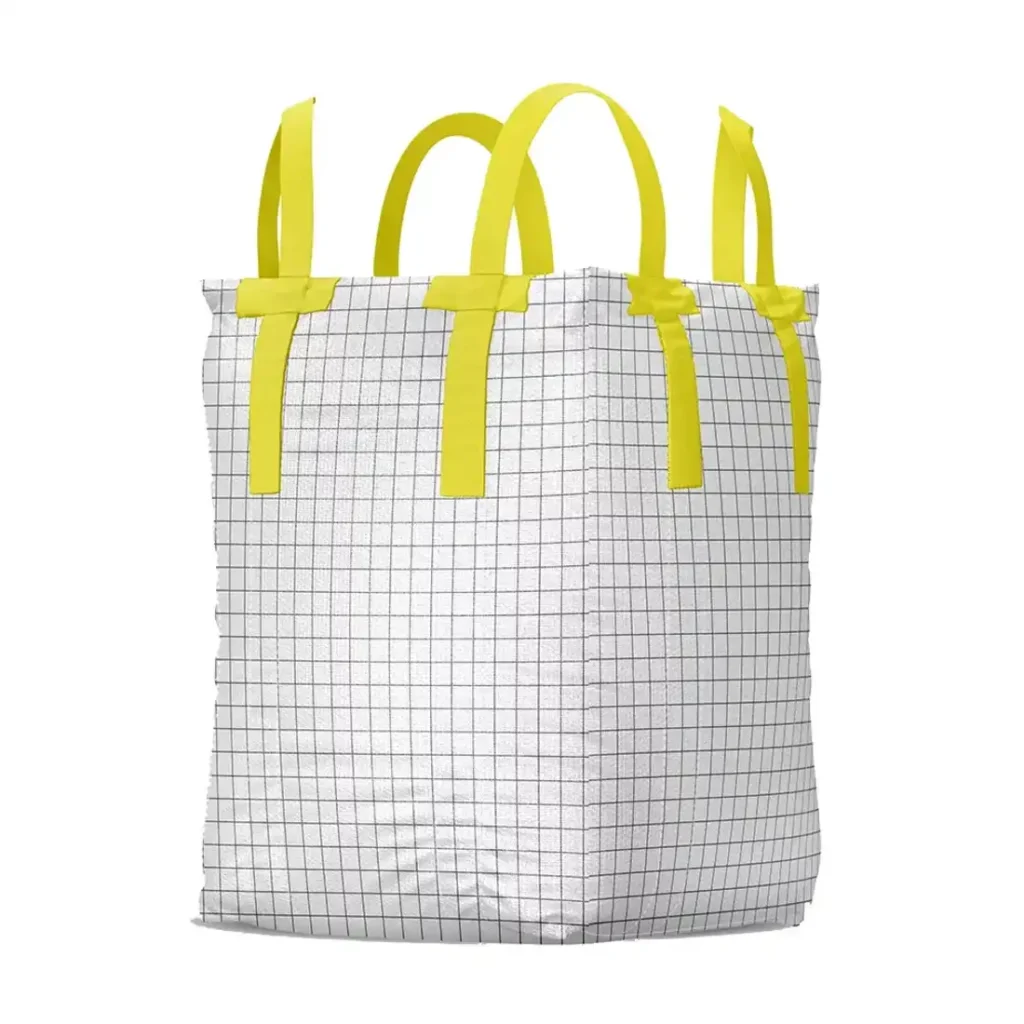
Electrostatic discharge can ignite dust clouds; UV light embrittles PP tapes. Anti‑static or conductive fabrics manage surface and volume resistivity so sparks don’t form; UV packages slow polymer chain scission. The twin lesson is preventive engineering. Heavy Duty Woven Bags built for outdoor storage or combustible powders must treat these hazards as primary requirements, not accessories.
Beyond Lifting: The Job of Bases and Loops in Heavy Duty Woven Bags
Loops translate vertical forces to the body; bases diffuse impact and prevent tear propagation. Cross‑corner loops smooth crane handling; stevedore straps adapt to hooks; base patches widen the loaded area during drops. Vertical analysis follows the force path from hook to seam to fabric; horizontal analysis compares loop and base strategies with sling practices in rigging. In Heavy Duty Woven Bags, thoughtful geometry protects the seam—the most common failure point when designs are rushed.
Why Manufacturers Favor Heavy Duty Woven Bags for Large Production Runs
Scale economics reward light, strong, flat‑shipping containers. Heavy Duty Woven Bags store by the pallet layer, fill quickly on automated lines, and stack without complex dunnage. Compared with multi‑wall paper or rigid bins, they balance cost, speed, and protection—especially when paired with unit‑load recipes (pallet footprint, three horizontal × three vertical straps, multi‑angle stretch‑wrap). More product per container, fewer damages per voyage.
What Role Do Coatings and Surface Texture Play in Heavy Duty Woven Bags Utility?
Coatings curb dusting and moisture; surface texture governs conveyor friction, pallet interlock, and manual grip. Smooth, laminated surfaces shed water yet may slide; lightly textured finishes increase friction at the cost of soil pickup. Decide based on plant handling, pallet pattern, and stow plan. In many routes, laminated Heavy Duty Woven Bags plus stretch‑wrap outperform uncoated bags during dew‑point swings in ocean freight.
How Engineers Customize Non‑Standard Heavy Duty Woven Bags
Unusual densities, narrow aisles, or specialized discharges call for bespoke solutions. Engineers adjust denier/GSM, choose body style, specify seam and thread, size loops, and select liners. They model container stowage, simulate unit‑load vibration, and right‑size the moisture strategy. The outcome is a tuned system in which Heavy Duty Woven Bags integrate with palletizing robots, strapping heads, and stretch‑wrappers for repeatable performance. Explore configurations via Heavy Duty Woven Bags to align options with your product and route.
Parameter Snapshot for Heavy Duty Woven Bags (for quoting and QA)
| Attribute | Typical Range/Option | Purpose |
|---|---|---|
| Fabric denier | 1200D–1800D standard; higher available | Adjust tensile and seam reserve |
| GSM (uncoated) | 160–240 gsm by duty class | Balance strength vs. weight |
| Weave | 10×10 to 14×14 picks/in | Control cover and tear behavior |
| Safety factor | 5:1 single‑trip; 6:1 multi‑trip; 8:1 heavy‑duty | Define proof loads and cycles |
| Seam spec | Lockstitch + safety, 14–18 SPI, ≥20 mm allowance | Achieve ≥85% seam efficiency |
| Loops | Corner/cross‑corner/stevedore; 50–90 mm webbing | Match hook, spread load |
| Base | Single or double ply; patches as required | Resist drop/righting tears |
| Coating/lamination | +20–40 gsm | Sift/moisture control |
| Liners | LDPE/PP/barrier | Hygiene and vapor barrier |
| ESD control | Anti‑static/conductive options | Dust ignition risk reduction |
| UV stabilization | Route‑specific | Yard durability |
References (selected)
- ISO 21898 — Flexible Intermediate Bulk Containers for non‑dangerous goods.
- UN Recommendations on the Transport of Dangerous Goods — FIBC types and test protocols.
- ASTM D5035 — Fabric tensile testing (grab/strip methods).
- ASTM D2256 / D7269 — Yarn/tape tensile properties for polyolefin raffia.
- ISO 13935‑1 / ASTM D1683 — Seam tensile test methods.
- FIBCA & EFIBCA technical guidance on FIBC design, handling, and safety.
- ISO 6780 & ISO 8611 — Pallet dimensions and performance for unit loads.
- ASTM D4332 / D4728 — Environmental conditioning and random vibration for distribution.