The Versatility of FFS Woven Bags: Innovations in Chemical Packaging

Definition and Scope of FFS Woven Bags

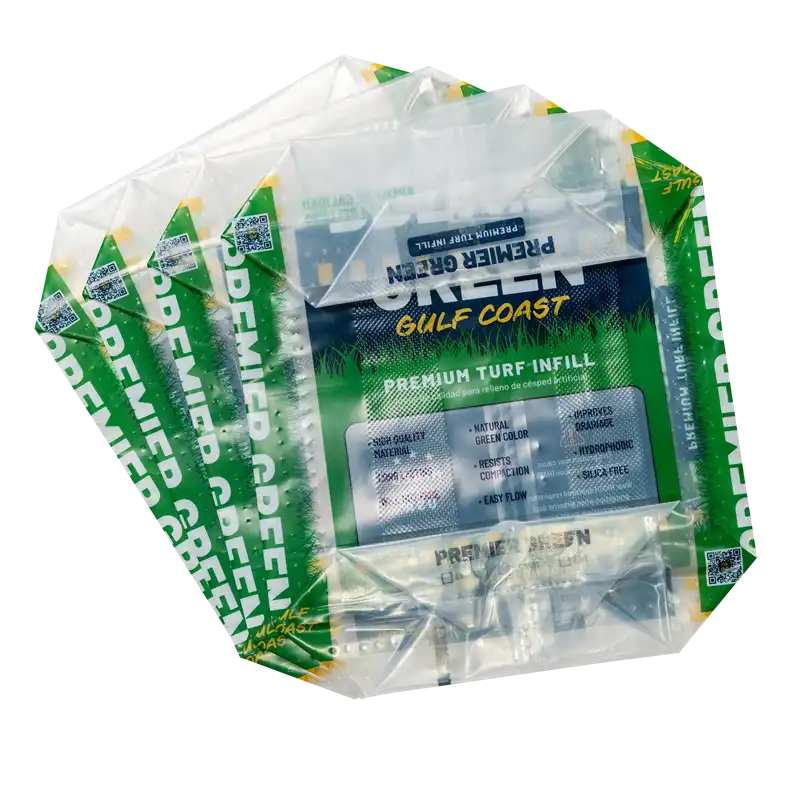
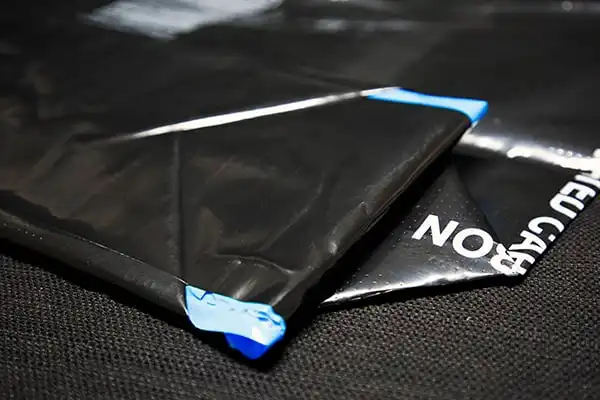
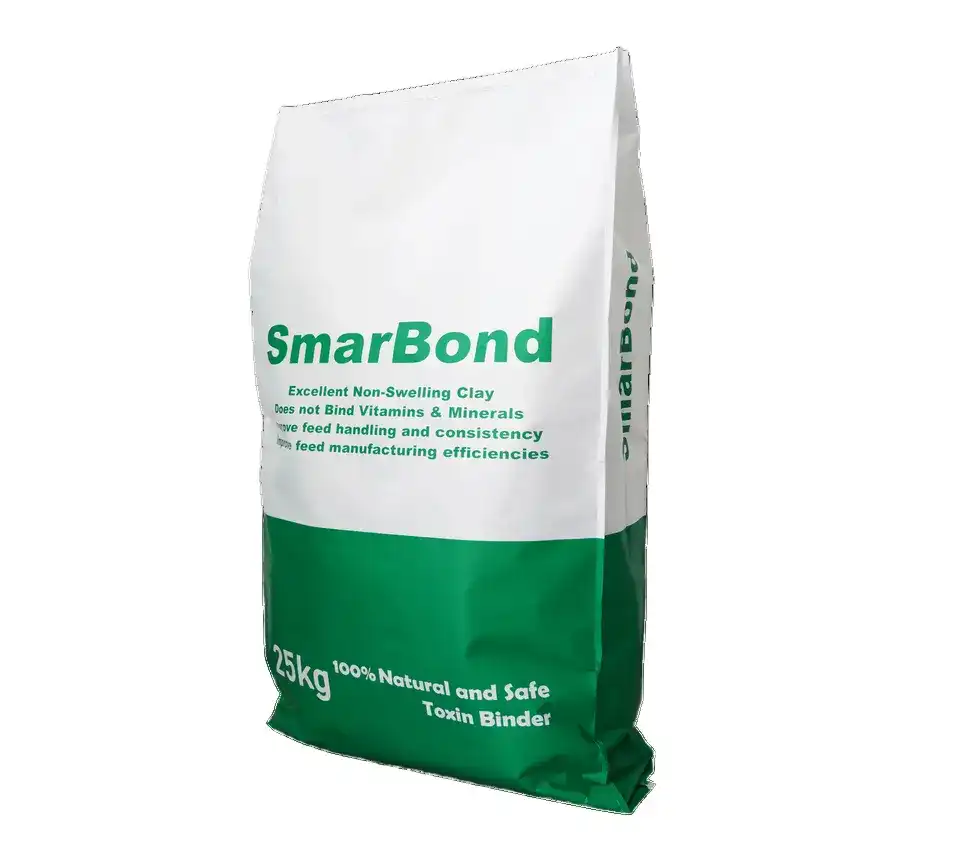
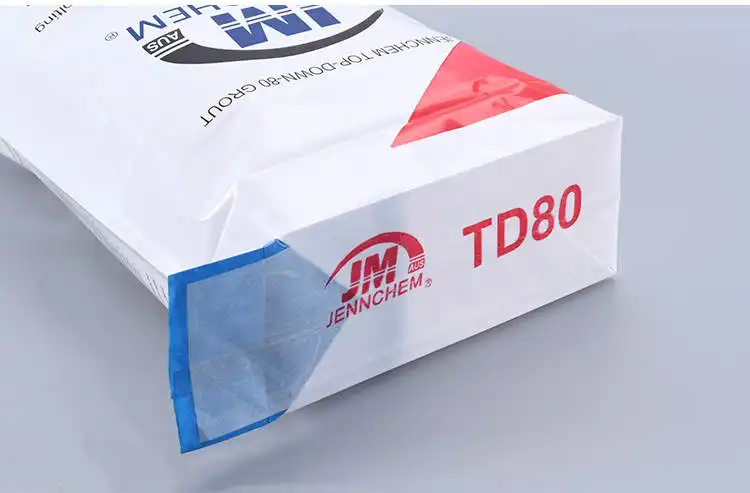
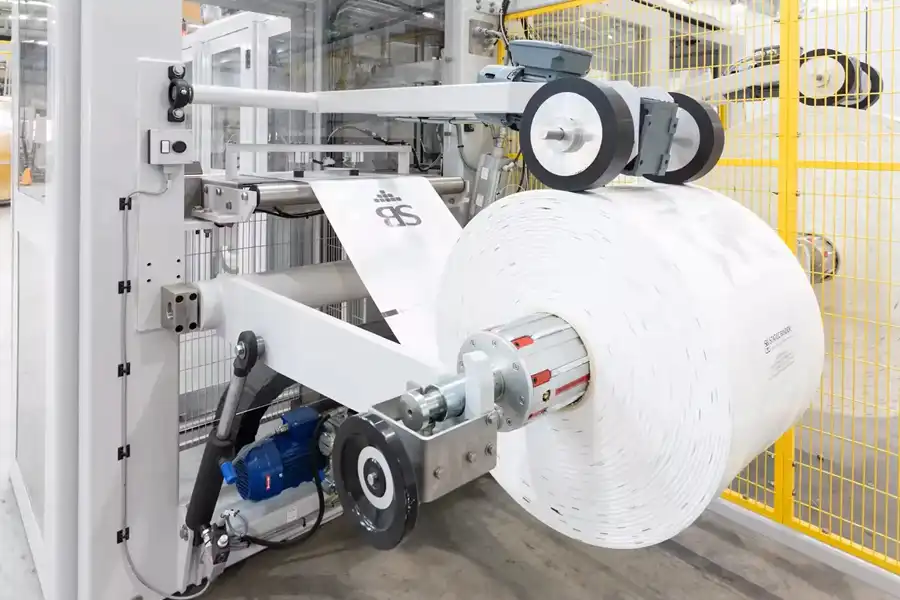
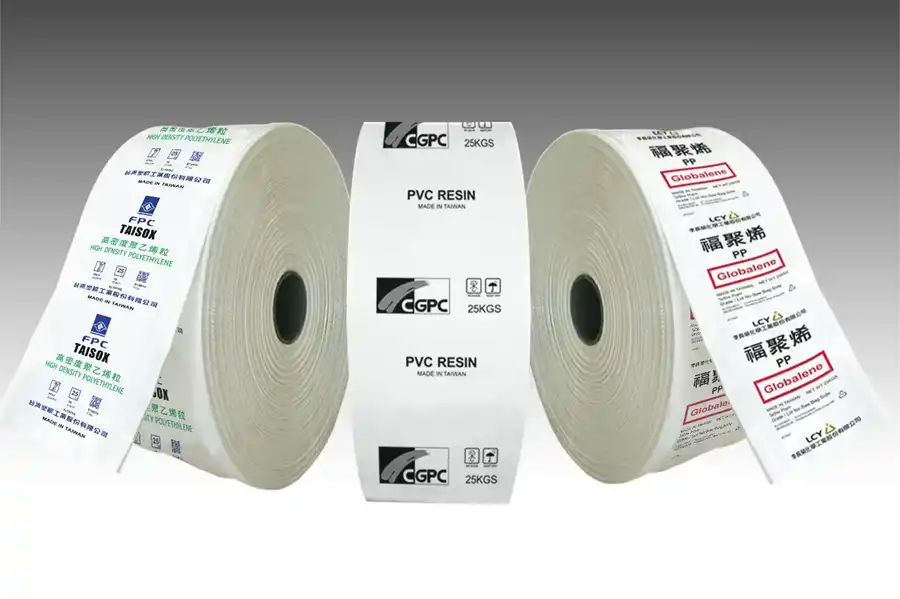
FFS Woven Bags are roll-fed sack materials engineered from woven polypropylene (PP) tape fabric with a heat-sealable skin, designed to be formed, filled, and sealed on automated form-fill-seal equipment. Rather than purchasing pre-made bags and sewing them off-line, a manufacturer unwinds a continuous roll, creates a tube, meters the powder or granules, and closes the package in one uninterrupted sequence. The result is a cleaner fill, a tighter closure, and a stack that behaves like packaging was meant to behave: dense, disciplined, and dependable. Different industries call them by neighboring names—FFS woven PP rolls, tubular woven FFS webs, BOPP-laminated woven sacks, woven polyolefin FFS films—but the intention is the same: fuse the structural advantages of a woven substrate with the machineability of a thermoplastic sealing layer.

Why do practitioners gravitate to FFS Woven Bags for chemicals? Because the mechanical profile is unusual in the best way. Woven PP tapes carry tension without drama, resist abrasion in high-friction conveyors, and shrug off the puncture events that defeat monolithic films of comparable mass. Because the sealing skin behaves like conventional film, the line runs fast and stable; because the woven core behaves like fabric, pallets travel farther with fewer losses. What looks like a compromise is, in practice, a convergence—automation plus strength, film-like processing plus fabric-like robustness.

In production notes and procurement sheets you will also encounter neighboring constructs like block-bottom valve sacks and kraft-paper laminates. Those have their place. Yet when continuous throughput, dust control, and pallet accuracy matter together—as they so often do in minerals, fertilizers, plastic resins, and fine pigments—the balance point frequently lands on FFS Woven Bags. Are they perfect? Of course not. They ask for careful seal-window mapping, deliberate micro-perforation, and a disciplined roll geometry. But with those levers set, they unlock a high-OEE, low-complaint packaging cell.

Callout — One contextual link for practitioners: For a practical market reference that mirrors the roll-fed, heat-sealable concept, see FFS Woven Bags in a tubular PE-heavy-duty implementation. This is not an endorsement, but an anchor to visualize geometry, finishes, and machine interfaces in a commercial setting.

Material Architecture and Layer Logic for FFS Woven Bags

Every high-performing package is, at heart, a stack of functions. In FFS Woven Bags, those functions resolve into a skeletal fabric, a sealing skin, and (optionally) a decorated exterior. Each must cooperate with the others, because friction at the forming collar is not independent from print scuff resistance, and hot tack at the jaw does not ignore powder contamination. The architecture below reflects that reality—less a shopping list, more a logic chain.

Structural Core: Woven PP Fabric

Drawn polypropylene tapes—homopolymer or impact-copolymer—are slit from a cast sheet, reheated, and oriented to align crystalline lamellae along the tape axis. Woven on circular or flat looms (e.g., 10×10 to 14×14 tapes/inch), they generate tensile capacity at a surprisingly modest grammage. The weave defines porosity, diagonal tear, and print laydown. The fabric is the skeleton that keeps the bag upright and the pallet square.

Sealable Skin: PE or PP-Based Coating

The inward-facing layer must seal strongly within a narrow dwell and temperature window while tolerating light contamination. LDPE and metallocene-LLDPE blends are common for broad hot-tack. In mono-material streams, PP-based sealing systems exist, trading seal window breadth for recycling simplicity. Additives—antistatic, slip, antiblock—tune machineability and powder behavior.

Exterior: Coating or BOPP Laminate

When durability and graphics are needed, an outer coating or a BOPP print film carries inks, QR codes, and regulatory panels. Matte varnish raises friction for pallet stability; gloss resists scuff. Registered micro-perforations can be integrated to vent entrained air during fast fills of fine powders.

Where do ties and primers live? Between worlds. Maleic-anhydride-grafted tie resins knit incompatible layers; corona treatment lifts surface energy so inks wet out instead of beading. Where do liners help? In food and hygroscopic applications that demand a greater moisture barrier or cleanliness margin. Where does cost sit? Mostly in resin—PP for tapes, PE for the skin—then in energy for orientation and coating, then in conversion yield and print complexity. The trick is not to chase a single number but to specify windows: a fabric grammage span, a seal-strength threshold, a COF band. That gives suppliers room to optimize while preserving performance.

Layer Primary Polymers Key Properties Typical Options
Woven core PP homopolymer / impact copolymer Tensile & tear, puncture, dimensional stability 10×10–14×14 tapes/inch, 70–120 gsm windows
Sealable skin LDPE, LLDPE, mLLDPE, or PP-seal systems Hot tack, seal initiation temperature, dust tolerance Antistatic, slip/antiblock, antifog (rare)
Exterior graphics BOPP film or coated PP Ink adhesion, scuff resistance, readability Matte/gloss varnish, micro-perfs, QR serialization
Tie / primer MAH-grafted PP/PE, corona-treated interfaces Laminate bond integrity, print anchorage Water- or solvent-based primers
Callout — Terms in plain language: The seal window is the temperature-and-dwell zone where seals form reliably; the COF band is a target friction range so bags slide in the former but lock on pallets; hot tack is the “just-sealed” strength that prevents peel-open before cooling.

Feature Set of FFS Woven Bags: Strength, Sealing, Stability

What matters on a Tuesday morning in a chemical plant? Pallets that behave, seals that hold, and operators who don’t fight dust clouds. FFS Woven Bags were built for that Tuesday. Their features are not abstract; they are the visible traces of engineering choices.

High mechanical efficiency

Oriented PP tapes produce high modulus at low basis weight. The weave blunts crack propagation and resists zipper tears. Fewer burst failures mean fewer rework cycles and cleaner warehouses.

Sealability at speed

Heat-sealable skins act like film on the jaws. Form, bottom-seal, fill, settle, top-seal—without shuttling packs to a sewing head. Hot tack carries the load until the seal cools; consistent peel curves keep QA calm.

Pallet discipline

Textured exteriors and matte varnishes create friction that survives forklift maneuvers and high-bay storage. Pallets interlock; layers don’t skate. Logistics breathes easier.

Smart deaeration

Laser micro-perfs or vent patches evacuate trapped air without inviting dust leaks. Fine powder? Reduce hole density and move perfs away from the seal path. Granules? Open up for speed.

Are there trade-offs? Naturally. A PP-based seal layer simplifies mono-polymer recycling streams but narrows the seal window; a thick PE skin is forgiving on the jaws but adds mass and, occasionally, blocking at the unwind. Yet the pattern repeats: define the operating window, then choose the layer that respects it. In practice, this orchestration—rather than a single “hero” material—creates the headline performance of FFS Woven Bags.

Production Sequence for FFS Woven Bags with Process Controls

Production is a choreography. Each step hands constraints to the next; each measurement closes a loop. The sequence below ties polymer decisions to line behavior—a map that practitioners can actually run.

  1. Tape extrusion and drawing. PP resin is cast into a sheet, slit into tapes, reheated, and drawn to orientation. Draw ratio sets tensile strength and affects diagonal tear; temperature profile sets crystallinity and influences puncture response.
  2. Weaving. Tapes interlace on flat or circular looms. Weave count (tapes/inch) changes porosity and print laydown; loom tension influences dimensional stability and later seal geometry.
  3. Coating/lamination. An extrusion coater lays down a sealable layer. Want graphics? Laminate a BOPP print film outside. Want breathability? Add controlled micro-perf patterns. Corona treatment prepares surfaces for ink and adhesives.
  4. Slitting and roll-building. Webs are slit to width and wound to tight OD/ID tolerances. Splice quality matters—downstream photo-eyes and auto-splice units depend on it.
  5. Printing (optional). Flexo or rotogravure prints regulatory panels, QR codes, and branding. Varnish choice (matte vs. gloss) is not cosmetic only—it shapes friction and scuff behavior.
  6. Conversion on the FFS line. On site, the plant forms the tube, bottom-seals, doses, settles, and top-seals. Vibration aids, de-aeration probes, and in-line leak tests maintain repeatability at speed.
  7. Quality control. Peel curves vs. jaw temperature, dart impact, laminate bond, COF (static/dynamic), drop/stack testing of filled sacks, and migration tests where food contact applies.

Control Point: Seal Window

Run a 6×6 matrix of temperature vs. dwell on the actual jaws, with the actual product, and chart the lower control limit for pass/fail. That number—not the glossy brochure—governs uptime.

Control Point: Deaeration

Fine, compressible powders need fewer or offset perfs; granular, free-flowing goods tolerate more venting. Move holes away from seal paths to avoid micro-channels.

Control Point: COF

Specify a COF band that lets webs slide in the former yet lock on pallets. Varnish and slip package are the dials; change one, recheck the other.

Applications and Fit-for-Purpose Recipes Using FFS Woven Bags

Different solids, different headaches, different remedies. Instead of generalities, here are application-focused patterns that work on real lines where downtime hurts and dust lingers.

Commodity chemicals & minerals

Soda ash, TiO₂, CaCO₃, hydrated lime. Choose mid-to-high fabric grammage, hot-tack-forward seal skins, engineered micro-perfs. Prioritize dust control and seal cleanliness over vanity graphics.

Fertilizers

Granular urea and NPK blends crave UV stability and anti-slip exteriors. Outdoor storage windows dictate stabilizer loadings; bag-to-bag friction prevents pallet creep.

Plastic resins & masterbatch

Pellets are forgiving. Emphasize roll geometry and long runs to maximize OEE. Micro-perfs vent air quickly; minimal graphics center on traceability and QR codes.

Construction powders

Dry mortar and specialty cements often lean on valve bags, yet woven FFS rolls excel when dust-tight seals, automated handling, and pallet precision trump valve convenience.

Where edible ingredients or feed are in scope, require compliant resins, inks, and adhesives and keep a migration-tested file. Where dangerous goods are present, design to the proper UN code class and print the exact mark string assigned by the test lab. In both cases, FFS Woven Bags are not merely a container but a compliance instrument—the physical end of a regulatory chain.

Automation, Traceability, and Line Integration with FFS Woven Bags

Automation is not a trophy; it is a promise to the shift supervisor that the next thousand cycles will resemble the last thousand. For that promise to hold, FFS Woven Bags must align with the machine’s physics—jaw geometry, heat flux, nip pressure, unwind inertia, photo-eye register. Traceability completes the loop, making what happens visible.

  • Register and coding. Print steady photo marks for registration; place 2D codes where scanners see them on wrapped pallets. Encode lot, timestamp, and filler ID for honest recalls.
  • Unwind behavior. Roll OD, core ID, and splice maps are not clerical trivia; they determine whether auto-splice units behave or stage a stoppage.
  • In-line assurance. Leak-detection at the discharge culls bad seals immediately; checkweighers protect the specification; metal detectors clear tramp risks sooner rather than later.
Callout — A practical triangle: Throughput, cleanliness, and traceability often fight each other. Use peel-curve maps to protect throughput, micro-perf placement to protect cleanliness, and smart code placement to protect traceability. The triangle holds when each edge is measured.

Regulatory Notes and Quality Frameworks Anchoring FFS Woven Bags

Compliance is not a postscript. For dangerous goods, woven plastic sacks align with UN design types (5H1 unlined, 5H2 sift-proof, 5H3 water-resistant) and carry the full mark string, including year and manufacturer code. For food contact, align resins and adhesives to applicable frameworks and keep a Declaration of Compliance plus migration data in a living dossier. Quality systems—BRCGS Packaging Materials, FSSC 22000, ISO 9001/14001—provide the audit language that translates plant reality into certifiable practice.

Domain Implication for FFS Woven Bags Evidence to File
Dangerous goods Design to UN 5H1/5H2/5H3; print the exact certified mark string. Design-type test report, copy of UN mark authorization, drop/stack/vibration records.
Food contact Resin compliance per jurisdiction; inks/adhesives screened for migration. Declarations of Compliance, OML/SML results, supplier letters of guarantee.
Quality systems Documented procedures and training; change control for BoM updates. Certificates (BRCGS/FSSC/ISO), internal audit reports, CAPA logs.

Systems Thinking with FFS Woven Bags: From Sub-Problems to a Single Specification

A package is a system. Pull on one thread—COF—and the sleeve—seal window—moves. The craft is to make those threads cooperate. Decompose first; then recombine.

A. Product hazards

Is the fill a dangerous good? If yes, the UN design type governs construction, mass limits, and test regimen. If no, your guardrails shift to mechanical and hygiene criteria.

B. Food contact

Where edible ingredients or feed are involved, the seal skin and any migratory component must pass the relevant framework. That dictates resin grade, ink set, and adhesive family.

C. Distribution hazards

Drop height, compression load, vibration spectrum, climate—these fix the fabric grammage window and the seal-strength minimums. Outdoor cycles demand UV stability and anti-slip.

D. Line interface

Jaw geometry and available heat/pressure/dwell determine whether PE- or PP-based skins make sense. Roll OD, web width, splice limits, and register strategy flow from the machine.

E. Data & branding

Graphics can be minimal, but data cannot. Batch traceability, hazard pictograms, and readable codes are functional, not decorative. Place them where scanners succeed.

F. Sustainability

Mono-polyolefin choices ease sorting. PP-seal systems aid single-polymer streams; PE skins can be more forgiving on the jaws. Choose based on local infrastructure and OEE impacts.

Recombine by writing a pragmatic bill of materials with windows—not single points—and a validation plan that proves the windows are real. This is where FFS Woven Bags shine: they accept multiple routes to the same outcome, leaving room for the plant to meet its numbers.

Risk and Mitigation Matrix for FFS Woven Bags

Observed Issue Likely Cause Action Metric
Seal pillow / false top Insufficient deaeration; perfs too close to seal path Reduce perf density; relocate perfs; extend settle time Reject rate at leak test; pressure decay
Dust leaks at corners Powder contamination in seal; low hot tack Improve spout design; increase mLLDPE fraction; add vacuum pick-off Housekeeping index; seal peel strength
Pallet creep in high-bay COF too low; gloss overuse Shift to matte varnish; specify COF window Tilt indicator events; layer shift count
Zipper tears Weave imbalance; draw ratio too high Rebalance warp/weft; widen fabric gsm window Tear propagation length test

Quantitative Keys for FFS Woven Bags: KPIs and Practical Ranges

Numbers direct attention. The following ranges are not commandments; they are credible starting zones that align with industrial experience. Plants should calibrate them in FAT/SAT trials.

KPI Starting Range Why It Matters
Seal initiation temperature 110–125 °C (PE-based), 135–150 °C (PP-based) Determines jaw recipe flexibility and tolerance to contamination
Peel strength (top seal) > 20 N/15 mm typical for heavy-duty sacks Resists shipping stresses; predicts leak-test pass rate
COF (bag/bag) 0.45–0.65 target band Balances pallet stability with layer formation
Micro-perf density 50–200 holes/100 cm² depending on powder Controls air evacuation without dust escape

Comparative Reasoning: Why FFS Woven Bags Instead of Alternatives?

Is the choice always obvious? Not quite. Valve sacks excel in ultra-fast cement applications; paper laminates carry brand aesthetics with grace. Yet the question in chemicals isn’t just “what looks good,” but “what runs well and arrives intact.”

Against monolithic films

Films can seal beautifully but often trade puncture resistance for thinness. Woven cores, in contrast, take localized abuse—fork tines, conveyor transitions—without catastrophic splits. When line speed and route-to-market hazards collide, woven structures win on variance, not just mean strength.

Against sewn open-mouth

Sewing is robust but dusty, slower to change over, and creates leakage paths at needle holes. Heat seals on FFS Woven Bags deliver cleaner closures and smoother automation, cutting operator exposure and housekeeping time.

Frequently Asked Questions from Plants Running FFS Woven Bags

Do we need BOPP if there is no retail shelf? Not necessarily. Coated PP with durable inks often suffices; reserve BOPP for abrasion-heavy lanes or high graphical demands. Can we go all-PP for sorting simplicity? Yes, with PP-seal systems and a tighter jaw recipe. What fails first in the field? Not usually the fabric; it’s poor seals, corner dusting, or pallet creep—each fixable with the matrices and COF bands above.

Innovation Threads 2024–2025 within FFS Woven Bags

Innovation can be loud—new resins, new coatings—or quiet—better roll-build tolerances, smarter perf placement, richer data on the bag. The current cycle shows both. Plants are adopting anti-static masterbatch tuning not to hit a lab number, but to stop actual clinging at the filler. Deaeration patterns are moving out of seal tracks to cut micro-channels. Mono-polymer ambitions are real, tempered by the realities of hot tack and OEE. And digital traceability has gone from “nice to have” to “scan it at pallet height or don’t ship.”

Smarter skins

Metallocene-LLDPE blends improve hot tack at lower temperatures; PP-based seals improve sortability where PP streams dominate. The move is not universal; it is contextual.

Data-forward bags

High-contrast codes and standard-compliant QR schemes shorten investigations and speed recalls. The bag becomes part of the MES narrative, not just a container.

Quiet excellence

Tighter roll geometry, cleaner splices, and varnish choice aligned to COF targets. Not flashy—just the difference between a shift that flows and a shift that fights.

Table Of Contents
  1. Definition and Scope of FFS Woven Bags
  2. Material Architecture and Layer Logic for FFS Woven Bags
  3. Feature Set of FFS Woven Bags: Strength, Sealing, Stability
  4. Production Sequence for FFS Woven Bags with Process Controls
  5. Applications and Fit-for-Purpose Recipes Using FFS Woven Bags
  6. Automation, Traceability, and Line Integration with FFS Woven Bags
  7. Regulatory Notes and Quality Frameworks Anchoring FFS Woven Bags
  8. Systems Thinking with FFS Woven Bags: From Sub-Problems to a Single Specification
  9. Risk and Mitigation Matrix for FFS Woven Bags
  10. Quantitative Keys for FFS Woven Bags: KPIs and Practical Ranges
  11. Comparative Reasoning: Why FFS Woven Bags Instead of Alternatives?
  12. Frequently Asked Questions from Plants Running FFS Woven Bags
  13. Innovation Threads 2024–2025 within FFS Woven Bags
  14. 1. Material Selection: Bridging Chemical and Agricultural Needs
  15. 2. Functional Design and Customization
  16. 3. Logistics and Branding Synergy
  17. 4. Technical Parameters for Optimization
  18. 5. VidePak’s Manufacturing Edge
  19. FAQs
  20. 6. Case Study: Dual-Market Success in Vietnam

“Why are Form-Fill-Seal (FFS) woven bags revolutionizing chemical packaging while remaining indispensable for agricultural products like flour and rice?”
The answer lies in four pillars: adaptive material engineering, automated efficiency, compliance with global safety standards, and dual functionality for chemical and agricultural markets. For VidePak, a global leader with 30+ years of expertise and 800+ million annual bag production capacity, these innovations address $1.2 billion in annual logistics losses caused by substandard packaging.


1. Material Selection: Bridging Chemical and Agricultural Needs

1.1 PP and PE Resins: Dual-Purpose Performance

VidePak sources ISO 9001-certified polypropylene (PP) and polyethylene (PE) resins, tailored for both corrosive chemicals and hygroscopic agricultural goods. For chemicals like sulfuric acid, PP fabrics with ≥25 N/mm² tensile strength (ISO 527-2) and ≤0.1% permeability prevent leaks, while PE liners (80–120 µm) block moisture ingress in rice storage by 99.5%.

A 2024 trial with a Brazilian fertilizer supplier demonstrated that VidePak’s anti-static PE liners reduced dust explosions by 90%, while UV-resistant BOPP coatings extended rice shelf life by 6 months in tropical climates.

1.2 Quality Control Protocols

VidePak’s raw material testing includes:

  • Melt Flow Index (MFI): 4–8 g/10 min (ASTM D1238) for uniform extrusion.
  • Thermal Stability: Heat deflection temperature ≥110°C to withstand hot-fill processes.
  • Film Impact Resistance: ≥500 g/mm (ISO 7765-1) for abrasive powders like titanium dioxide.

Starlinger’s AI-powered extrusion systems detect impurities ≤0.1 mm, reducing waste by 15%.


2. Functional Design and Customization

2.1 Multi-Layer Lamination

VidePak’s FFS bags integrate:

  • BOPP Outer Layer (20–50 µm): Blocks 99% UV radiation, critical for agrochemicals like herbicides.
  • PE Inner Liner (80–120 µm): Prevents moisture absorption in flour and rice.

For a German pesticide manufacturer, laminated bags reduced leakage by 92% compared to single-layer designs.

2.2 Valve and Seam Engineering

The patented Starlinger AD8330 valve ensures hermetic sealing for volatile solvents (≤0.01% permeability), while ultrasonic seams withstand 12 N/mm² loads—double the industry average.


3. Logistics and Branding Synergy

3.1 Stacking and Storage Efficiency

Square-bottom designs enable 8-layer palletization, reducing warehouse costs by 18% for European flour retailers.

3.2 High-Definition Branding

VidePak’s 12-color gravure printing achieves 120-line/inch resolution, boosting brand visibility. A U.S. organic flour brand saw a 25% sales increase after adopting QR-code-enabled bags.


4. Technical Parameters for Optimization

Tailoring FFS bags requires balancing six factors:

ParameterChemical UseAgricultural Use
Grammage120–150 g/m² (50 kg loads)90–100 g/m² (25 kg flour/rice)
Laminate Thickness50–120 µm (BOPP/PE blends)20–50 µm (BOPP for UV protection)
Valve Diameter50–80 mm (slow-fill solvents)80–100 mm (high-speed grain filling)

5. VidePak’s Manufacturing Edge

With 100+ circular looms and 30 lamination machines, VidePak achieves 1,200 bags/hour throughput. A 2024 project delivered 2 million custom BOPP/PE bags for a U.S. herbicide producer in 30 days.


FAQs

Q1: How do FFS bags handle both chemicals and food products safely?
A: VidePak uses FDA-compliant resins and segregated production lines to prevent cross-contamination.

Q2: What’s the ROI of anti-static liners?
A: A 2024 study showed a 35% reduction in repackaging costs for Brazilian fertilizer suppliers.

Q3: Can bags withstand freezing temperatures?
A: Yes, cold-chain PP retains flexibility at -35°C, ideal for liquid agrochemicals. Learn more about cold-resistant packaging solutions.


6. Case Study: Dual-Market Success in Vietnam

A Vietnamese rice exporter reduced spoilage by 40% using VidePak’s 100 g/m² BOPP bags with PE liners, while a pesticide manufacturer achieved 98% leak-proof performance with the same bag design.

For industries prioritizing automation, explore VidePak’s FFS solutions with Starlinger.


Conclusion
FFS woven bags are redefining packaging efficiency across industries. As VidePak CEO Ray states: “Our bags don’t just contain products—they protect supply chains.” By merging Austrian engineering with adaptive design, VidePak empowers clients to dominate markets while adhering to ESG mandates.

Leave a Comment

Your email address will not be published. Required fields are marked *

Scroll to Top