
What are FFS Woven Bags and why this format matters now
In modern agrifood and allied commodity logistics, FFS Woven Bags — tubular, roll-fed woven substrates designed for vertical or horizontal form–fill–seal lines — have become the quiet engine behind high-throughput, low-dust packaging. The essential promise is straightforward: merge the strength-to-weight advantage of oriented polypropylene fabric with the cadence of automated form–fill–seal so that a single machine forms the bag, doses product, and seals the package in a repeatable rhythm. The consequence is fewer human touches, tighter hygiene, steadier outputs, and pallets that survive the last mile with disciplined geometry.
- Form–Fill–Seal Woven PP Tubular Rolls
- FFS Polypropylene Woven Sleeves
- Automated FFS Woven Sacks
- Heavy-Duty FFS Woven Packaging Web
- Roll-Fed Woven FFS Tubes
- Continuous Woven PP FFS Film
- Industrial Woven Poly FFS Substrates
- Woven PP Tubular Bagging for FFS
Labor availability tightened. Throughput expectations rose. Hygiene rules stiffened. FFS Woven Bags align with that reality by internalizing bag making into the automated cycle, reducing variability at precisely the point where variability hurts the most—at the filler.
The materials of FFS Woven Bags
Build the web like a precision component. Every gram must prove its purpose: to carry load, to seal on command, to minimize moisture gain, to communicate information, or to stabilize pallets.
Woven polypropylene (structural backbone)
Seal layer for FFS jaws (the interface)
Print faces and functional skins
Liners and barriers (optional enhancements)
What are the features of FFS Woven Bags
Automation-native
Roll-fed and registration-ready, FFS Woven Bags are built for machine rhythm: form, dose, seal, repeat. The result is stable OEE and fewer human-dependent steps.
Strength-to-weight advantage
Oriented tapes distribute loads across the lattice, enabling high drop and seam performance without excessive grammage—essential for 25–50 kg formats.
Moisture management
Polyolefin substrates resist water uptake; tube liners push WVTR lower, reducing caking in humid seasons and extending shelf stability.
Clean dosing
Well-tuned seal layers and jaw profiles limit dust plumes at the filler, improving housekeeping and operator safety while preserving net weight control.
Brand and information
BOPP or paper faces carry crisp typography and scannable codes. Matte windows or low-gloss zones maintain barcode grades under harsh lighting.
Recovery-minded options
Mono-material polyolefin stacks simplify recovery pathways; when mixed materials are required, designs favor easy separation.
What is the production process of FFS Woven Bags
The production of FFS Woven Bags is a braided set of operations. Fabric manufacture creates the mechanical envelope; lamination, coating, and printing tailor the interface with the machine and the customer; slitting and roll prep translate the composite into a web your line can actually run.
- Tape extrusion & drawing Melt polypropylene, extrude a flat film, slit to tapes, and draw to orient. Keep tight control on tape width tolerance and gel counts; verify tensile strength and elongation.
- Weaving Interlace on circular or flat looms to the target pick density. Manage static and humidity to reduce breaks; protect selvedges to improve seam performance later.
- Surface preparation Corona or flame treatment to ≥ 38 dynes on the side that will receive seal coats or laminations; confirm with dyne pens and contact angle checks.
- Seal-coat or lamination Extrusion coat LDPE/LLDPE or apply approved adhesive systems. Control nip pressure and chill profile to avoid curl, voids, and poor wet-out.
- Printing Flexographic printing for brand panels, regulatory text, eye marks, and scan windows. Reverse print when using BOPP for abrasion resistance.
- Slitting & roll preparation Trim the web to machine width; add leaders and registration marks; pack with edge protection to avoid telescoping.
- FFS operation On the line, the web forms a tube or side seam, product is dosed, and seals are made top and bottom. Validate temperature, pressure, and dwell windows for leak-rate targets.
- Inspection & testing Execute drop tests, seam efficiency, peel (seal) strength, WVTR for lined builds, rub/scuff on prints, and barcode grading before release.
What is the application of FFS Woven Bags
Because they reconcile automation with ruggedness, FFS Woven Bags work across dry-flow products: pelleted livestock feed and mash, mineral/vitamin premixes, seeds and grains, fertilizers, salts, charcoal, and building powders. Where cleanliness, speed, and pallet discipline matter, this format earns its place.
| Sector | Product | Preferred configuration | Why it works |
|---|---|---|---|
| Animal nutrition | Pellets, mash, premixes | Woven 70–80 g/m²; seal coat 12–18 g/m²; tube liner 50–60 µm in humid routes; matte scan windows | Balanced strength, low dust, first-pass scans. |
| Seeds & grains | Seed corn, pulses | Anti-slip bands or paper face; seam method tuned to filler | Protects kernels; stabilizes pallets under vibration. |
| Fertilizers & salts | NPK, urea, rock salt | Woven 75–85 g/m²; robust seal layer; optional liner | Resists abrasion and moisture ingress. |
| Building materials | Mortars, tile adhesives | Heavy-duty fabric; reinforced bottoms; anti-slip patch | Contains dense powders; tolerates drops. |
| Solid fuels | Charcoal, pellets | Vent-tunable; exterior scuff protection | Balances moisture control with off-gas needs. |
Thinking like a system: from risks to controls
The phrase “Versatility in Livestock Feed Packaging” is both a theme and a checklist. Begin with hazards—moisture gain, dust plumes, seam burst, pallet slip, code loss—and map each to a practical countermeasure in the web, the seal, or the geometry. Then integrate the countermeasures into a reference build your line can repeat shift after shift.
A. Moisture ingress
Problem: caking and nutrient loss in humid corridors. Controls: 50–70 µm tube liner, edge welds, WVTR targets at 38 °C/90% RH, moisture-sized faces. Outcome: lower water activity and stable flow.
B. Top-seal/side-seam leaks
Problem: rework and dusty pallets. Controls: seal-layer 12–18 g/m², validated dwell/temperature windows, nozzle fit checks. Outcome: fewer leaks and higher OEE.
C. Pallet slips
Problem: glossy exteriors lower COF. Controls: matte/emboss bands, anti-slip lacquers, wider gussets for brick geometry, wrap-force tuning. Outcome: safer stacks and fewer trailer incidents.
D. Seam burst
Problem: dense powders at high fill speeds. Controls: raise fabric mass or pick density; reinforce bottoms; validate seam efficiency ≥ 85%. Outcome: fewer stoppages and returns.
E. Barcode failure
Problem: glare and abrasion. Controls: matte scan windows, abrasion-tolerant inks and OPV, anilox control, high-contrast palettes. Outcome: first-pass scan success.
F. Branding decay
Problem: long-route scuffing. Controls: reverse-printed BOPP where aesthetics dominate; for strictly industrial routes, matte faces with protective varnish.
Reference parameters and targets
| Element | Reference range | Purpose |
|---|---|---|
| Woven PP mass | 70–80 g/m²; ~10×10 weave | Load path, tear and burst performance |
| Seal coat | 12–18 g/m² LDPE/LLDPE | Consistent FFS sealing at target dwell |
| Liner (optional) | 50–70 µm LDPE/LLDPE tube | Moisture barrier for humid storage/transport |
| Drop test | 10× @ 1.2 m, pass | Rough-handling surrogate across conveyors and docks |
| Seam efficiency | ≥ 85% | Resistance to burst at line speed |
| WVTR (lined) | ≤ 5 g/m²·day @ 38 °C/90% RH | Quality retention for hygroscopic goods |
| COF (bag-to-bag) | ≥ 0.3 with aids | Pallet stability and worker safety |
| Barcode grade | ≥ 3.0 (ISO/IEC 15416) | Traceability and inventory control |
Cost framing and operational math
Unit price is visible; total cost governs reality. A practical model sums materials (fabric mass, seal-coat weight, color count), conversion (lamination, printing, slitting), operations (OEE, cleanup minutes, changeovers), and quality (rebagging, returns). Properly specified, FFS Woven Bags often lower total cost of ownership relative to stitched open-mouth formats, chiefly through dust reduction, first-pass sealing, and pallet stability that prevents rework.
A plant-ready specification you can adapt
Implementation roadmap
- Define critical-to-quality thresholds: drop strength, seal integrity, WVTR, COF, barcode grade, dust index.
- Source three builds bracketing needs (linerless vs. lined; matte vs. glossy; seal-layer weights).
- Run plant trials at target speeds; log OEE, seal rejects, barcode scans, and cleanup minutes per shift.
- Stress test with humidity cycles and route vibration; include pallet-slip tests at multiple wrap-force settings.
- Score cost, performance, and compliance; select a primary spec and a qualified alternate.
- Update SOPs for sealing windows, gusset/geometry checks, and inspection routines; train operators.
- Audit the first 90 days post-launch; tune liner gauge, seal settings, or anti-slip strategy based on field data.
Natural phrases buyers actually type
To keep this copy discoverable while readable, it naturally incorporates phrases such as roll-fed form–fill–seal woven tubes, tubular woven polypropylene FFS film, automated FFS woven bagging sleeves, moisture-resistant FFS woven sacks with liners, high-COF matte-band FFS webs, and barcode-friendly FFS packaging for pellets. These long-tail variants point searchers to FFS Woven Bags without awkward repetition.
Case notes from the field
A coastal poultry integrator observed seasonal spikes in returns for caked premixes. Switching from stitched open-mouth sacks to FFS Woven Bags with a 60 µm tube liner and validated top-seal windows cut complaints within a single quarter. In a separate corridor of unpaved routes, a feed brand added matte anti-slip bands and widened gussets; pallet incidents fell while line speed held steady. Where premium branding was essential, reverse-printed BOPP with discrete matte scan windows preserved both shelf impact and scanner performance.
Closing perspective without ceremony
Picture the first hour of a shift: the auger synchronizes with the scale, the jaws strike and release, dust monitors stay quiet, pallets square up, scanners beep once and move on. That calm rhythm is not luck. It is what happens when FFS Woven Bags are specified as a system—materials, seal layers, liners, geometry, and graphics—so every gram of polymer and every minute of attention returns value.
- What are FFS Woven Bags and why this format matters now
- The materials of FFS Woven Bags
- What are the features of FFS Woven Bags
- What is the production process of FFS Woven Bags
- What is the application of FFS Woven Bags
- Thinking like a system: from risks to controls
- Reference parameters and targets
- Cost framing and operational math
- A plant-ready specification you can adapt
- Implementation roadmap
- Natural phrases buyers actually type
- Case notes from the field
- Closing perspective without ceremony
“Why should livestock feed producers switch to FFS woven bags?”
This is a question we often hear from industry stakeholders. The answer lies in their unmatched durability, automation-friendly design, and alignment with global sustainability trends—all of which position FFS woven bags as the future of feed packaging.
In this report, we explore how VidePak, a leader in woven bag manufacturing, leverages cutting-edge technology and decades of expertise to deliver solutions that redefine efficiency and reliability in livestock feed packaging.
1. Technological Superiority: Automation and Precision
1.1 High-Speed Production with Starlinger and W&H Equipment
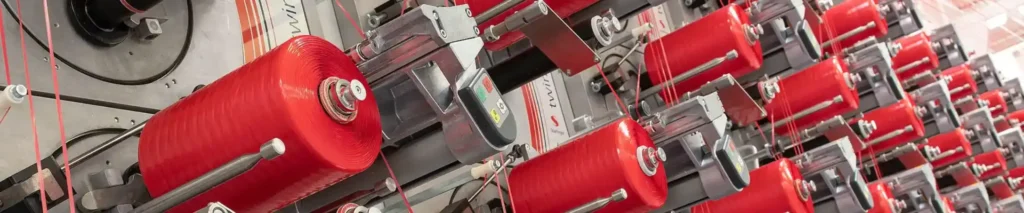
VidePak’s production infrastructure is powered by Austrian Starlinger and German Windmöller & Hölscher (W&H) machinery, renowned for their precision and speed. These systems achieve line speeds exceeding 200 bags per minute, enabling VidePak to meet large-scale demands without compromising quality. For instance, the Starlinger AD*Star loom integrates multi-axis automation, reducing human intervention by 40% while ensuring consistent weave tension—a critical factor in bag durability.
Key Metrics:
- 100+ circular looms: Capable of producing 12,000 bags per hour collectively.
- 30+ lamination machines: Apply BOPP or PE coatings for moisture resistance.
- 16 extrusion lines: Use virgin PP resin to ensure material purity.
1.2 Multi-Machine Synchronization
VidePak’s “multi-machine linkage” system synchronizes weaving, printing, and sealing processes. This integration reduces production downtime by 25%, as seen in a recent project where 10,000 custom-printed bags were delivered within 48 hours for a U.S.-based feed supplier.
2. Material Innovation and Customization
2.1 Virgin PP and Custom Coatings
Unlike competitors using recycled polymers, VidePak employs 100% virgin polypropylene, enhancing tensile strength (up to 12 N/m²) and UV resistance. For tropical markets, bags are laminated with PE coatings to withstand humidity levels above 80%—a feature critical for feed preservation in Southeast Asia.
2.2 Tailored Solutions for Diverse Needs
- Multi-color printing: High-definition flexography supports 8-color branding, ideal for premium feed brands.
- Size adaptability: Bags range from 5 kg to 50 kg capacities, with reinforced seams for heavy-duty use.
- Anti-static layers: Essential for feed containing additives like vitamins and minerals.
3. Sustainability: Aligning with Global ESG Goals
3.1 Recyclability and Carbon Footprint Reduction
VidePak’s FFS woven bags are 100% recyclable, aligning with the EU’s Circular Economy Action Plan. A lifecycle analysis revealed that switching from traditional PE-coated paper bags to VidePak’s PP woven bags reduces carbon emissions by 35% per ton of feed packaged.
3.2 Case Study: Reducing Waste in the EU Market
A German feed producer reported a 60% reduction in packaging waste after adopting VidePak’s reusable FIBC bags, which withstand 5+ cycles of transport and cleaning.
4. Market Penetration and Competitive Edge
4.1 Global Reach and Client Trust
With annual sales of $80 million, VidePak serves clients across 30+ countries. Notably, a partnership with a Brazilian soy feed exporter increased their shipment efficiency by 20% through VidePak’s block-bottom valve bags, which prevent spillage during maritime transport.
4.2 Data-Driven Market Insights
The global livestock feed packaging market, valued at $12.3 billion in 2024, is projected to grow at 5.8% CAGR, driven by Asia-Pacific’s booming aquaculture sector. VidePak’s kraft paper composite bags are gaining traction in Vietnam, where moisture resistance is paramount.
5. Product Specifications and FAQs
Technical Parameters of VidePak’s FFS Woven Bags
| Parameter | Specification |
|---|---|
| Material | Virgin PP + PE lamination |
| Load Capacity | 5 kg – 50 kg |
| Tensile Strength | 10–12 N/m² |
| Printing Options | Up to 8 colors, CMYK/Pantone |
| MOQ | 10,000 units |
| Lead Time | 15–20 days |
Frequently Asked Questions
Q: How do FFS bags compare to traditional sewing methods?
A: FFS (Form-Fill-Seal) technology eliminates sewing, reducing contamination risks and increasing sealing speed by 30%.
Q: Are these bags suitable for organic feed?
A: Yes, our food-grade PP resin meets FDA and EU standards for direct contact with organic materials.
Q: What is the ROI for switching to VidePak’s bags?
A: Clients typically recover costs within 6 months through reduced waste and logistics savings.
6. The Future: Smart Packaging and Automation
VidePak is piloting QR-code-integrated bags for traceability, allowing feed producers to track batches in real-time. Coupled with Starlinger’s iQ³ technology, which uses AI to optimize loom settings, the company is poised to lead the next wave of packaging innovation.
Conclusion
FFS woven bags are not just containers—they are strategic tools for brand differentiation and operational efficiency. VidePak’s blend of Austrian engineering, German automation, and eco-conscious practices positions it as the partner of choice for feed producers navigating a competitive, sustainability-driven market.
External Resources:
- Learn how high-speed FFS woven bags are revolutionizing automated packaging.
- Explore sustainable practices in recyclable bag production.