
What Are Form‑Fill‑Seal Woven Bags (FFS Woven Bags)?
In the language of modern packaging, Form‑Fill‑Seal Woven Bags are both machine‑ready components and brand‑building canvases. The term refers to polypropylene (PP) woven sacks—often with a BOPP or PE laminate—that are formed, filled, and sealed in a single automated pass on FFS equipment. Engineers recognize the format for its tensile strength and seal integrity; retail buyers appreciate its clean presentation and durability; marketers prize the glossy, photo‑true graphics. Some in the trade call them FFS PP woven bags, others prefer BOPP‑laminated woven FFS sacks; in either case, the core promise is consistency at speed. In supermarkets and specialty stores, these packages carry staples—rice, flour, sugar, grains, beans—as well as higher‑margin pet foods and mixes where aroma retention and scuff resistance matter.
Background and domain context: the “woven” in Form‑Fill‑Seal Woven Bags indicates a raffia‑style PP fabric made from oriented tapes, yielding a specific balance of stiffness, tear resistance, and cost. The “form‑fill‑seal” qualifier signals compatibility with horizontal or vertical bagging lines that demand uniform mouth geometry, controlled GSM, and predictable heat‑seal or pinch‑seal performance. Horizontally, one can compare Form‑Fill‑Seal Woven Bags with paper pinch‑bottom sacks, PE tubular FFS film, and stand‑up pouches: paper excels in print warmth but is moisture‑sensitive; PE film offers speed and simplicity but can underperform in puncture resistance; pouches win at convenience yet may suffer in pallet efficiency at heavier weights. Vertically, the same package must satisfy a layered logic: resin science (polymer grade, MFI), fabric architecture (mesh, orientation), laminate behavior (barrier, scuff), converting precision (gusset, cut accuracy), line compatibility (timing belts, vacuum pick), and finally retail realities (shelf impact, planogram fit). Each level constrains the next, and Form‑Fill‑Seal Woven Bags sit at the intersection where materials, machines, and merchandising converge.
As an internal reference point and resource for buyers or engineers evaluating formats, see this in‑depth overview anchored to the keyword—Form‑Fill‑Seal Woven Bags—which details laminated BOPP woven options commonly used for food packaging.
Key Features of Form‑Fill‑Seal Woven Bags for Food Retail
Strength & safety—beyond drop tests. The woven PP fabric in Form‑Fill‑Seal Woven Bags resists tearing, burst, and puncture through fiber orientation and tape draw ratios. That mechanical backbone protects product integrity as loads shuttle from the DC to the gondola. Anti‑slip coatings elevate pallet friction and curb load shift; engineered micro‑perforations allow just enough breathability for freshly milled flours while avoiding dust bloom. Horizontal view: compared with kraft paper sacks, woven PP tolerates higher humidity and rougher handling. Vertical view: at the resin level, virgin PP resins yield consistent tensile profiles; at the fabric level, GSM/mesh tuning calibrates stiffness for forming and sealing; at the line level, mouth squareness stabilizes vacuum pickup and reduces misfeeds.
Barrier & freshness—shelf life without guesswork. In Form‑Fill‑Seal Woven Bags, BOPP or PE lamination creates a moisture and aroma shield—critical for jasmine rice, powdered sugar, or high‑fat kibbles. Reverse printing under the laminate protects artwork from scuffs. Horizontally, consider aroma‑sensitive pet food: laminated woven PP competes credibly with multi‑layer PE or PET/PE pouches while delivering better puncture resistance at 10–25 kg fills. Vertically, barrier performance cascades: laminate selection → seal temperature window → dwell time → pack rate. A tight seal window widens operating latitude, reducing the operator’s need to “chase” settings during long runs.
High‑impact branding—graphics that survive logistics. Form‑Fill‑Seal Woven Bags accept CI‑flexo or gravure printing with fine halftones and wide solid coverage. Reverse‑printed BOPP preserves ink beneath the film; scuffs mark the laminate, not the artwork. Horizontally, this rivals the color vibrancy of coated paper; vertically, consistency depends on ink systems, corona treatment, and laminate adhesion so that brand hues remain stable from batch to batch.
Automation‑ready—made for uptime. Dimensional control is the quiet hero of Form‑Fill‑Seal Woven Bags. When bag width tolerance, cut length, and mouth flatness sit within spec, the line feeds smoothly—fewer recuts, fewer stoppages, fewer out‑of‑square stacks. Horizontally, this reliability bridges bag makers and machine OEMs; vertically, it links QA routines (calipers, COF tests), converting accuracy (gusset symmetry), and on‑line controls (photo‑eyes, counters).
Sustainable choices—practical pathways, not slogans. Mono‑material PP constructions simplify recyclability compared with mixed polymer structures. In the horizontal lens, Form‑Fill‑Seal Woven Bags can reduce breakage and food waste—an often overlooked sustainability win. In the vertical lens, design‑for‑recycling starts upstream: selecting compatible inks and adhesives, targeting removable features, and keeping barrier solutions fit‑for‑purpose rather than over‑engineered.
How VidePak Produces Form‑Fill‑Seal Woven Bags: From Tape Extrusion to BOPP Lamination
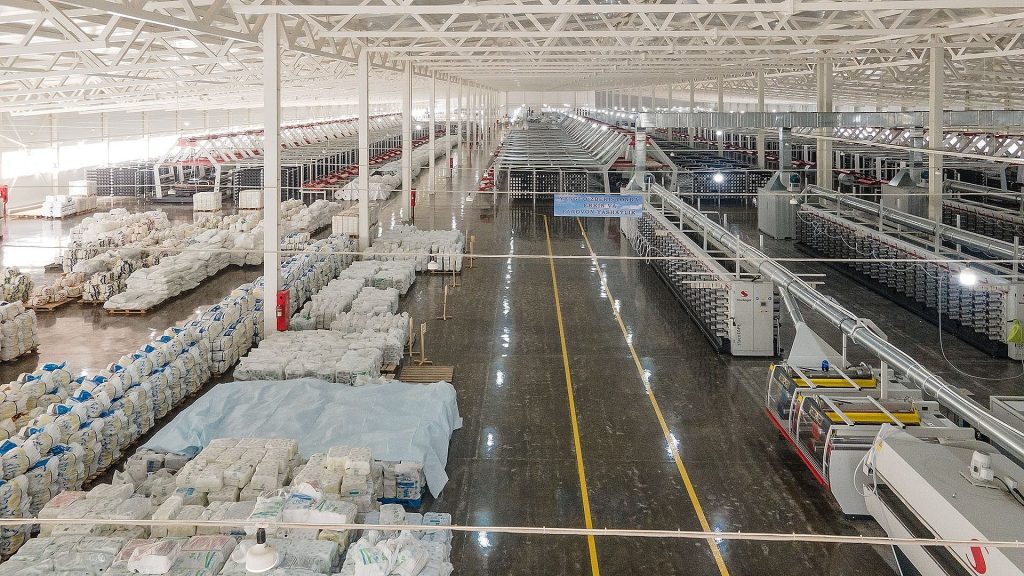
VidePak, founded in 2008, integrates over 30 years of team experience into a plant built for repeatability and scale—568 employees, annual sales around USD 80 million, and a machine park tuned for tight tolerances and fast changeovers. Why does that matter to a retailer? Because every shelf‑ready SKU is only as reliable as the weakest upstream step.
Tape extrusion (>16 lines). 100% virgin PP is drawn into high‑tenacity tapes. Horizontally, extrusion tuning (draw ratio, quench conditions) determines the tape’s modulus and thus the final bag’s tear behavior; vertically, stable tape quality simplifies weaving tension, which improves fabric flatness and ultimately seal uniformity on FFS jaws.
Weaving (100+ circular looms). Fabric GSM and mesh—often 10×10 or 12×12—are matched to target fills and drop‑test goals. In the horizontal frame, a coarser mesh may aid breathability while a tighter mesh improves print crispness; vertically, loom settings affect shrink/creep, which affects dimensional drift, which affects lineability—an unbroken chain from shuttle speed to case pack efficiency.
Lamination & conversion (30+ lamination/printing machines). Reverse‑printed BOPP or PE coatings add barrier and finish (matte, gloss, even clear windows for grain visibility). Horizontally, these choices position Form‑Fill‑Seal Woven Bags against paper/PE hybrids—matching shine while beating moisture tolerance. Vertically, adhesive systems, corona treatment, and nip pressure control determine bond strength and curl, which in turn govern mouth flatness at high speeds.
Printing (CI‑flexo or gravure). Fine halftones, large solids, and tight registration—without banding—are the litmus test. Horizontal comparison: CI‑flexo provides agility for regional SKUs; gravure shines on long, image‑heavy runs. Vertical causality: anilox selection → ink transfer → optical density → brand color DeltaE on shelf.
QA & compatibility. Bag mouths and tolerances are tailored for leading FFS systems. Equipment from Germany’s W&H and Austria’s Starlinger sets a metronome for consistency: the machine centerlines do not lie. Horizontal: machine capability must meet bag capability; vertical: spec sheets, inline inspection, and final AQL form a three‑tier defense against off‑spec runs.
Markets & reach. VidePak supplies the USA, Europe, Brazil, South America, Southeast Asia, Japan, Korea, Central Asia, MENA, East Africa, and South Africa. Core families include BOPP woven bags, valve bags, and kraft‑paper laminated woven sacks—each available with custom dimensions, finishes, and graphics. Which line serves which? Horizontally, think product density and handling: sugar vs. rice vs. kibbles. Vertically, think from SKU artwork to pallet footprint to trailer cube.
Retail Applications of Form‑Fill‑Seal Woven Bags in Supermarkets & Stores
Staple foods with tidy geometry. For 5–25 kg fills of rice, flour, sugar, beans, and grains, Form‑Fill‑Seal Woven Bags create boxy, stackable units. Aisles look orderly; pallets stay stable; end‑caps present well. Horizontal comparison: at these weights, pouches flop and paper fatigues; woven PP holds its shape. Vertical logic: gusset control → case pack integrity → pallet efficiency → fewer touchpoints and damages.
Pet & specialty foods that must smell right and arrive intact. Kibble demands aroma control; seeds and mixes punish weak fabrics. The laminated construction in Form‑Fill‑Seal Woven Bags resists puncture from sharp edges and keeps oils where they belong—inside. Horizontally, premium pouches may add convenience features for small sizes; woven PP becomes the workhorse beyond 10 kg. Vertically, choose venting for post‑fill degassing, match COF to automated case packers, and set seal dwell to withstand drop cycles.
Private label agility. Retailers shift graphics seasonally, regionally, even promotionally. With Form‑Fill‑Seal Woven Bags, artwork changes ride on stable die‑lines, letting brands roll out limited editions without re‑engineering the whole pack. Horizontal: marketing flexibility meets operations discipline. Vertical: artwork → cylinder/anilox → registration → shelf color fidelity.
Omnichannel logistics. DC‑to‑store and e‑grocery require cube efficiency and friction control. Anti‑slip finishes on Form‑Fill‑Seal Woven Bags raise pallet stability; block geometry reduces voids. Horizontally, comparable film sacks can slip; paper edges scuff. Vertically, better pallet stability → fewer stretch‑wrap layers → time saved at the dock.
Technical Summary (Food‑Grade Retail)
All product names are bolded. Specs are representative of commonly manufactured, real‑world configurations.
| Product Name | Structure & Material | Typical Size / Capacity | Fabric Spec (GSM / Mesh) | Printing | Options & Add‑ons | Retail Use Cases |
|---|---|---|---|---|---|---|
| FFS BOPP‑Laminated PP Woven Bag | Woven PP fabric + reverse‑printed BOPP laminate; mono‑material PP for recycling | 5 kg, 10 kg, 20 kg, 25 kg | ~60–120 GSM; common meshes 10×10 to 12×12 | Up to 8 colors (CI‑flexo or gravure) | Anti‑slip, micro‑perforation, matte/gloss, clear window, easy‑open notch | Rice, flour, sugar, grains, pet food |
| Woven*FFS® Sack (Starlinger) | High‑strength woven PP with laminate; engineered for FFS bagging lines | 10–25 kg retail; larger industrial sizes available | ~80–160 GSM per load target | Up to 8 colors | UV‑stabilizer option, gussets, venting patterns, liner integration | Rice, grains, salt, specialty foods |
| PP*STAR® Pinch‑Bottom Woven Bag | Woven PP + BOPP; pinch‑bottom for tidy block shape | 5–25 kg | ~70–140 GSM; fine mesh for print clarity | High‑resolution reverse print | Tear‑tape/easy open, carry punch, gloss/matte | Premium rice, pet food, mixes |
| AD*STAR® Block‑Bottom Valve Bag | Coated woven PP; block‑bottom valve for high‑speed filling | 10–25 kg retail/wholesale; larger for industry | ~80–160 GSM | Multi‑color flexo | Perforation sets, anti‑slip, food‑approved builds | Sugar, flour, specialty dry foods |
Horizontal note: specs should be tuned to product density, drop‑test targets, and line speed; vertical note: sealing windows, COF, and mouth geometry should be validated on the actual FFS machine. For buyers and engineers who want a foundational category view, consult this internal anchor—Form‑Fill‑Seal Woven Bags—for base PP woven constructions that underpin laminated formats.
Why VidePak for Form‑Fill‑Seal Woven Bags in Modern Retail
Process control that defends your uptime. Tight mouth tolerances, square bottoms, and cut‑length precision reduce stoppages on retailer and co‑packer FFS lines. Form‑Fill‑Seal Woven Bags only behave as well as their geometry allows—VidePak’s controls ensure they behave.
Graphics that sell today and still look sharp tomorrow. Photo‑grade prints, anti‑scuff laminates, matte or gloss: the effect is immediate at the shelf, the endurance visible after a week of restocking. A brand’s first job is to be seen; the second is to stay seen.
Scale plus customization. With >100 circular looms, 16 extruders, and 30+ lamination/printing lines, VidePak toggles between global rollouts and regional pilots without compromising lead times. Limited edition? New flavor? Seasonal promo? The line doesn’t flinch.
Global compliance and traceability. Food‑contact suitable constructions, migration‑safe inks, and traceable raw materials with batch records give technical teams what they need to sign off—and give retailers what they need to sleep at night.
A final question that guides specification. What must your package survive—moisture, abrasion, UV, long hauls, fast picks? Answer that, and Form‑Fill‑Seal Woven Bags can be tuned accordingly: GSM, mesh, laminate, venting, seal format. Looking for a spec or a sample? Share your target product (e.g., 10 kg jasmine rice or 20 kg pet food), intended FFS machine model, and preferred finish (matte/gloss). VidePak will return a tuned spec with dye‑lot swatches and runnability guidance.
- What Are Form‑Fill‑Seal Woven Bags (FFS Woven Bags)?
- Key Features of Form‑Fill‑Seal Woven Bags for Food Retail
- How VidePak Produces Form‑Fill‑Seal Woven Bags: From Tape Extrusion to BOPP Lamination
- Retail Applications of Form‑Fill‑Seal Woven Bags in Supermarkets & Stores
- Why VidePak for Form‑Fill‑Seal Woven Bags in Modern Retail
Form-Fill-Seal (FFS) woven bags have become a cornerstone of modern retail packaging, especially in supermarkets and stores. These bags are valued for their efficiency, durability, and adaptability to various food packaging needs. At VidePak, we leverage advanced manufacturing technologies and a deep understanding of market demands to provide superior FFS woven bags that cater to diverse applications.
Key Advantages of FFS Woven Bags
Superior Efficiency
The FFS process integrates filling and sealing into a single automated operation, significantly reducing labor costs and boosting productivity. This efficiency is particularly beneficial in high-demand retail environments where rapid turnover is essential.
Robust Durability
FFS woven bags are manufactured using 100% virgin polypropylene (PP), which provides exceptional tensile strength and resistance to wear and tear. This durability ensures that the bags can handle heavy loads and withstand rough handling during transportation and storage.
Customization for Versatility
FFS woven bags can be tailored to meet specific packaging requirements. Whether for grains, pet food, or powdered ingredients, these bags offer flexibility in size, design, and functionality, making them a versatile choice for retailers.
Meeting Diverse Market Demands
Supermarkets: Functionality Meets Branding
Supermarkets require packaging that combines practicality with strong branding potential. FFS woven bags deliver on both fronts:
- Advanced Printing Technology: We use cutting-edge printing techniques to produce vivid, long-lasting designs. This enhances shelf appeal and strengthens brand identity.
- Consumer Convenience: Features like resealable zippers and easy-to-carry handles improve user experience and increase product appeal.
- Moisture Protection: Laminated layers protect food products such as flour and sugar from humidity, preserving quality.
Specialty Stores: Tailored Solutions
Specialty stores often cater to niche markets that require customized packaging:
- Pet Food Packaging: These bags include moisture-resistant barriers to maintain freshness and prevent spoilage, a key feature for premium pet food brands.
- Bulk Grain Packaging: Reinforced stitching and UV-resistant coatings are essential for protecting agricultural products during long-term storage and transportation.
Adapting to Regional Preferences
VidePak’s extensive market knowledge allows us to adapt our products to the preferences of different regions:
- North America: Focus on eco-friendly materials and resealable options for organic products.
- Europe: Prioritize recyclable and biodegradable materials to align with stringent sustainability standards.
- Asia: Provide cost-effective solutions with high durability for bulk staples.
| Region | Key Features | Example Applications |
|---|---|---|
| North America | Eco-friendly materials, resealable features | Organic food packaging |
| Europe | Recyclable and biodegradable options | Health-conscious products |
| Asia | Affordable and durable solutions | Bulk grains and staples |
Quality Control: Ensuring Excellence
High-Quality Materials
The foundation of VidePak’s FFS woven bags is 100% virgin PP, which guarantees consistency in material strength and performance. This ensures that bags do not tear or deform under stress, even when handling heavy contents.
Rigorous Testing
Quality assurance is embedded in every stage of production:
- Tensile Strength Testing: Ensures the bags can handle heavy loads without tearing.
- Seal Integrity Checks: Confirms that seals are secure and prevent leakage or contamination.
- UV Resistance Testing: Verifies that bags can withstand prolonged exposure to sunlight, essential for outdoor storage.
Certifications
Our FFS woven bags meet international standards, including ISO 9001 for quality management and FSSC 22000 for food safety, ensuring compliance with the highest industry benchmarks.
Features That Set FFS Woven Bags Apart
FFS woven bags offer a host of features that make them indispensable in modern retail:
- Customizable Sizes and Designs: Tailored options ensure compatibility with specific packaging needs and branding goals.
- Laminated Coatings: Provide moisture and odor barriers to protect perishable items.
- Eco-Friendly Options: Fully recyclable materials support sustainability efforts and reduce environmental impact.
| Feature | Benefit | Application |
|---|---|---|
| Advanced Printing | Enhances brand visibility | Consumer goods packaging |
| Moisture Resistance | Prevents spoilage and contamination | Flour, sugar, and pet food |
| UV Protection | Ensures longevity in outdoor settings | Agricultural and bulk storage |
Sustainability: The Future of FFS Woven Bags
With sustainability becoming a priority, VidePak is committed to integrating eco-friendly practices into our production processes. Our initiatives include:
- Recyclable Materials: Using 100% recyclable PP helps reduce environmental waste.
- Innovative Biodegradable Solutions: Research into biodegradable materials is paving the way for eco-friendlier products.
- Promoting Recycling Systems: Establishing end-user recycling programs ensures a circular lifecycle for our products.
Learn more about our commitment to sustainability through our eco-friendly initiatives.
FAQs on FFS Woven Bags
Q: What makes FFS woven bags a reliable choice for food packaging?
FFS woven bags are durable, moisture-resistant, and customizable, ensuring product protection and consumer convenience.
Q: Can these bags be customized?
Yes, we offer tailored sizes, designs, and features to meet diverse market needs.
Q: How does VidePak ensure the quality of its FFS woven bags?
We use advanced Starlinger equipment and rigorous testing protocols to maintain consistent quality.
Q: Are these bags environmentally friendly?
Yes, our bags are made from recyclable polypropylene, and we are actively exploring biodegradable options.
Conclusion
FFS woven bags are an essential tool in modern retail packaging, offering unparalleled efficiency, durability, and versatility. With a focus on quality, sustainability, and market-specific customization, VidePak delivers solutions that meet the diverse needs of supermarkets and specialty stores worldwide. By combining cutting-edge technology with a commitment to excellence, we continue to set the standard for innovative food packaging solutions.