
Orientation: What Exactly Are Transparent Woven Bags in Flood Work?
In the lexicon of emergency water control and municipal resilience, Transparent Woven Bags are a specialized class of woven polypropylene sacks designed to combine the rugged mechanics of standard sandbags with the practical advantage of visual access. The walls of these bags are intentionally translucent to near‑clear, enabling responders to verify material type, fill level, and moisture distribution at a glance—a deceptively simple improvement that reduces misfill rates, trims training time, and shortens inspection cycles. As a packaging technology adapted for civil protection, these woven containers bridge two worlds: the high‑throughput economics of industrial sacks and the life‑safety demands of flood control, stormwater mitigation, and temporary hydraulic works.
The idea is straightforward yet consequential. By letting light in and allowing human eyes to read the silhouette of grains, voids, or water darkening, Transparent Woven Bags transform quality assurance from a back‑end inspection into an inline habit. When crews can instantly see that a bag is two‑thirds full with clean sand—not soil clumps or mixed rubble—they place better units, build tighter berms, and waste fewer minutes. Time saved becomes height gained along a levee; clarity yields capacity.
Primary mission: accelerate filling, simplify inspection, and strengthen decision‑making during floods and water‑management projects.
Practical result: fewer misfills, faster QA, more reliable structures.
Common Names and Working Vocabulary
Language shapes procurement. In municipal tenders, in depot manifests, on pallets staged for the wet season, you will encounter a family of names that all point to Transparent Woven Bags. Practitioners lean on terms like clear woven polypropylene sacks, see‑through woven sandbags, translucent poly woven flood bags, or transparent poly sacks with ties. Despite the variety, the intention is the same: a strong woven shell that lets crews assess the interior without cutting, weighing, or guessing. Why bother with this taxonomy? Because precise naming reduces the risk of substituting opaque bags when transparency is mission‑critical.
Constituent Materials and Why They Matter
Every material choice inside Transparent Woven Bags is a trade among clarity, tensile performance, porosity, weathering, and cost. Practically all flood‑duty sacks are polyolefins. Polypropylene tapes provide the structural lattice; polyethylene films and liners tune barrier behavior; stabilizers, antioxidants, and surface treatments fend off the environment. Each element carries its own physics and its own economic footprint.
Polypropylene (PP) tapes. Drawn PP tapes are the spine that keeps these bags from tearing across seams and corners. Orientation during drawing aligns chains, heightening tensile strength without heavy mass—an advantage when crews must lift, place, and stack hundreds of units in driving rain. PP is naturally hydrophobic, which blunts strength losses in wet cycles. Because PP prices track commodity markets yet remain stable relative to specialty polymers, it delivers an attractive ratio of performance per dollar.
Polyethylene (PE) films and liners. When a bag needs to hold very fine material or resist splashing, manufacturers marry the woven PP shell to a thin, clear PE layer—often LDPE or LLDPE for flexibility. The liner can be loose‑inserted, gusseted, or heat‑tacked depending on the conversion line. The goal is paradoxical but achievable: reduce porosity while preserving visibility. In retention‑first scenarios (e.g., contaminated sediment containment), tight films help; in drainage‑first contexts (e.g., levee toe where hydrostatic relief is helpful), unlined fabric may be favored.
Stabilization chemistry. Sunlight, oxygen, moisture, and temperature cycles are relentless. Hindered amine light stabilizers (HALS) and UV absorbers extend outdoor life, while phenolic and phosphite antioxidants guard against thermal oxidation during extrusion and field exposure. When procurement requests a specific sunlight‑hour rating, they are indirectly specifying this chemistry.
Surface systems—coatings and laminates. Thin, transparent extrusion coatings (PP or PE) can be applied to reduce dusting and snagging while improving fines retention. For some SKUs, a transparent BOPP laminate enhances scuff resistance and clarity, and it allows optional printing of small identification zones without sacrificing the see‑through function.
Architecture of the Bag: From Lattice to Liner
Think of Transparent Woven Bags as a layered system. The woven core is a grid of flat tapes that shares load. Around or atop that grid, manufacturers add clear skins—coatings or films—to hone water behavior and handling feel. At the seams, thread selection and stitch architecture determine how loads transition at corners. At the mouth, pre‑attached ties convert seconds saved into dozens of extra placed units by shift’s end.
Manufacturing Journey: From Resin Pellets to Field‑Ready Units
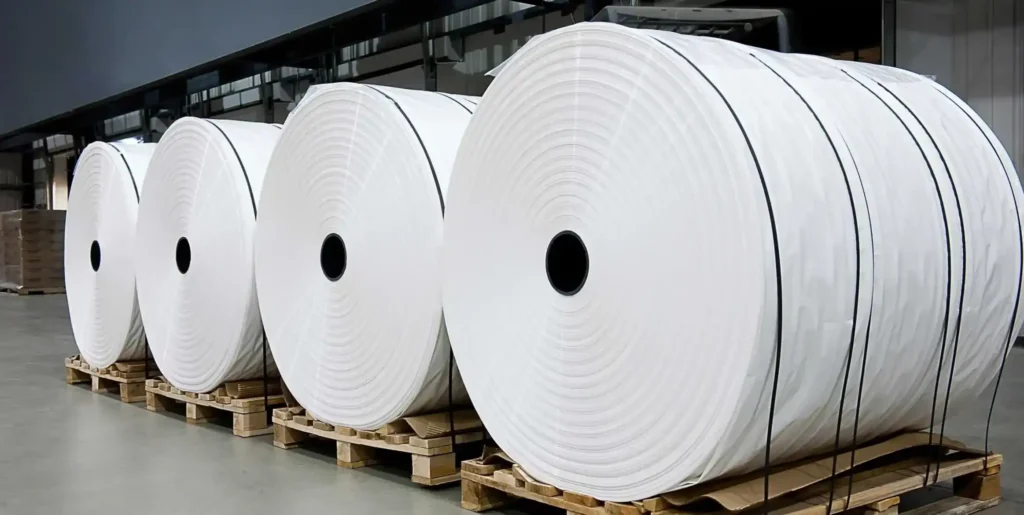
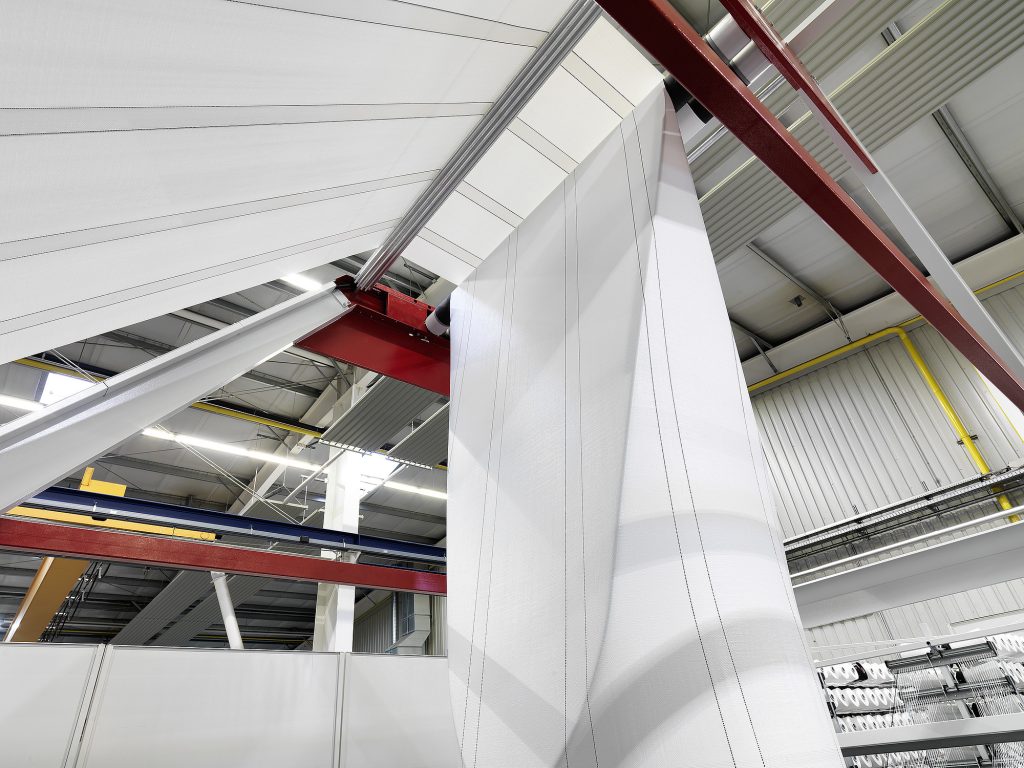
Manufacture of Transparent Woven Bags follows a rhythm common to woven poly sacks yet tuned for clarity. Resin selection locks in melt flow and optical potential. Film extrusion and slitting generates tapes. Drawing aligns molecules. Weaving sets the structural grid. Coatings and laminates polish porosity and light transmission. Conversion cuts, hems, and stitches. Accessory stations attach ties or insert liners. Quality control pulls specimens, stretches seams, and bakes samples under UV to simulate weeks in the sun.
Along this journey, two dials get constant attention: transparency and strength. Draw tapes too aggressively, and brittleness creeps in; draw too little, and the fabric feels bulky, opaque, and weak. Choose a coating that is too thick, and drainage suffers; too thin, and fines bleed. Experienced lines run trials, measure haze, test tensile across warp and weft, and lock settings to achieve a repeatable window where the bag is both readable and reliable.
- Extrude film sheet → quench → slit into tapes.
- Draw tapes to target denier for strength and optical clarity.
- Weave on circular or flat looms to specified pick density.
- Apply clear coating or laminate (optionally) for fines control.
- Convert: cut length, hem/sew bottom, add pre‑attached ties.
- QC: tensile, tear, seam, haze, UV‑aging, dimensional tolerance.
Performance Features that Matter Under Water Pressure
The value of Transparent Woven Bags crystallizes in the field. Visual verification allows supervisors to reject under‑filled units instantly. Strength‑to‑weight efficiency means crews move faster without sacrificing barrier integrity. Porosity can be chosen to favor drainage or retention. UV stability extends service windows from a few stormy days to multi‑week seasons. Cost effectiveness fuels stockpiles rather than one‑off purchases.
Consider the cadence at a community sandbagging line. Volunteers scoop, funnel, tie, stack. A foreman scans each bag; with transparent walls, they do not have to lift and shake to guess at volume. Small decisions—confirming two‑thirds fill, spotting clumps, catching voids—roll up into big differences—fewer weak spots, tighter interlock, greater crest elevation for the same number of bags. The physics has not changed, but the information has improved.
Use Cases Across Flood Control and Water Management
Applications range from front‑line flood defense to the quiet work of stormwater housekeeping. Transparent Woven Bags fill doorways and driveways in residential response; they edge riverbanks and canal berms; they steady culvert inlets and construction cofferdams. Municipal crews use them for temporary diversions, inlet protection, and sediment control at roadworks. In aquaculture and irrigation, they stabilize pond banks and guide flow inside channels where low‑tech, high‑visibility solutions outperform complex systems when time is tight.
In debris remediation after high water, transparency continues to pay back. When sacks hold soil suspected of contamination, inspectors can spot heterogeneity, moisture pockets, or foreign debris without opening containers. In logistics and agriculture, clear sacks allow quick verification of grain or aggregate type—a useful, if secondary, benefit when flood inventory is repurposed between seasons.
- Standard format ~14×26 inches; aim for ~2/3 fill for stackability.
- Prefer washed sand to limit fines migration and improve compaction.
- Use pre‑attached ties; tuck tails under subsequent layers.
- Stagger joints like brickwork; offset seams between lifts.
- Patrol for settlement, saturation, and UV embrittlement indicators.
Balancing Drainage and Retention: A Practical Dial
At the heart of hydraulic improvisation is a constant question: Should the structure breathe or seal? Transparent Woven Bags can be tuned for either. Uncoated fabric allows slow seepage that relieves pore pressure and can prevent uplift along a base. Clear‑coated fabric or a thin liner, by contrast, holds fines and limits percolation—a requirement when the fill contains silts or when contaminants must be contained pending disposal. There is no universal answer; there is a spectrum, and clarity is kept in both senses: visible contents and transparent choices.
To make the decision concrete, stock two SKUs. The first is a drainage‑friendly bag with no coating, optimized for speed and compaction; the second is a retention‑forward bag with a light, transparent coating or a film liner. During an event, the site engineer chooses on‑the‑fly: toe zones might benefit from drainage, while tops and turns may demand retention to stop fines from washing. This modular logistics—simple inventory, complex capability—explains why Transparent Woven Bags increasingly appear in municipal catalogs.
Durability, UV Exposure, and Service Windows
Sunlight is a slow solvent for polymers. The UV package inside Transparent Woven Bags determines how long they remain supple and strong under open skies. Ratings expressed in sunlight hours—typical municipal expectations fall between roughly a thousand and sixteen hundred hours—are not guarantees of immortality but calibrated estimates based on accelerated aging. What matters operationally is recognizing signs of embrittlement: whitening, crackling, and stiffness. In long deployments, simple mitigations such as shading or rotation can double practical life without adding cost to the bill of materials.
Economics and Readiness: Stockpiles as a Civic Technology
Because polyolefin supply chains are mature and the weight‑to‑strength ratio is favorable, Transparent Woven Bags are inexpensive, flat‑packing, and easy to move by pallet or by pickup. This makes them ideal for regional caches positioned near waterways, pump stations, and vulnerable neighborhoods. A well‑managed stockpile does not merely sit; it cycles. Old lots are used for training days and routine stormwater tasks; fresh lots stand by for peak risk. Pairing sacks with calibrated buckets, filling frames, scoops, shovels, and PPE converts a commodity into a ready‑to‑deploy kit.
In bid language, specify clarity explicitly (e.g., interior fill level must be legible to within ~1 inch under daylight), state the weave and fabric weight window, and request documentation for UV stabilization hours. Consider cross‑referencing standard sizes from related categories such as polypropylene woven bags to align expectations.
Specification Palette and Color‑Coded Table
The parameters below describe common targets for Transparent Woven Bags used as flood sandbags. They are not absolutes; they are a palette from which engineers paint to match a site’s hydraulic and logistical realities.
Operational Method: From Staging to Demobilization
A sandbag is not a plan, but a plan that includes sandbags is often the difference between inconvenience and loss. The operational arc for Transparent Woven Bags runs from staging to demobilization. Staging involves inventory checks, tool readiness, volunteer briefings, and site prioritization. Filling merges ergonomics—scoops, chutes, frames—with visual QA. Placement follows patterns: staggered joints, offset seams, low lifts compacted by foot and palm pressure. Maintenance is continuous: patrol, observe, repair. Demobilization is orderly: segregate clean fills, isolate contaminated ones, recycle where permitted, document the line for after‑action review.
- Lay out tools and PPE; pre‑open bag mouths.
- Use calibrated buckets for consistent volume.
- Adopt a visual rubric visible through the wall.
- Stack with brick‑like offsets; tuck tails.
- Check saturation, settlement, and seam integrity.
- Replace UV‑tired units; shade long‑term lines.
Interdisciplinary Lens: Civil, Materials, and Human Factors
Why do these bags punch above their weight? Because they sit at the intersection of disciplines. Civil engineers think in flows, heights, and safety factors. Materials scientists think in chains, crystals, and stabilization. Ergonomists and incident commanders think in motion, fatigue, and morale. Transparent Woven Bags satisfy all three: they move enough sand to matter, they stay intact long enough to count, and they let volunteers and supervisors make better, faster calls with less guesswork. When disciplines harmonize, outcomes improve.
Contrast this with an opaque alternative. Without visibility, supervisors revert to tactile guessing or post‑placement failure discovery. The fix is not exotic technology; it is an incremental feature that compounds across hundreds of small decisions made under pressure. That is the signature of resilient design: not flash, but fitness.
Language for Bids and Buy Sheets
For buyers, words become performance. A simple, clear line item can anchor expectations:
Pair this with acceptance tests: seam tensile thresholds, haze/clarity checks, and UV‑aging certificates. These are not bureaucratic niceties; they are the hinge on which reliability swings during a storm.
Practical Q&A for Engineers and Coordinators
Do transparent sacks fail sooner? Not when specified intelligently. When fabric weight, draw ratio, and UV package are aligned to the duty cycle, Transparent Woven Bags stay in the fight as long as their opaque cousins for the intended season.
Are liners mandatory? Only when retention outranks drainage. A thin, clear liner is a scalpel, not a default. Choose it for silts, contaminated soils, or splash‑sensitive placements.
Can we label through the wall? Yes. Small clear labels or indelible marker work; the see‑through wall actually simplifies identification alignment with contents.
What about cold snaps? PP stays serviceable, though extreme cold reduces ductility. Handle gently, avoid sharp impacts, and store under cover when possible.
End‑of‑life? Clean PP/PE can enter recycling streams where available. Post‑event sorting is easier when contents are visible, aiding responsible disposal or reuse.
Keyword Weave: Core Term and Long‑Tail Variants
To help readers and procurement systems find what they need, the text uses Transparent Woven Bags consistently alongside related phrases: transparent PP woven sacks, clear woven polypropylene sandbags, translucent poly flood bags, transparent sandbags with ties, UV‑stabilized clear woven bags, 14×26 transparent PP sandbag format, and BOPP‑laminated clear woven sacks. Each phrase shades the same concept from a different angle, improving discoverability without muddying meaning.
- Orientation: What Exactly Are Transparent Woven Bags in Flood Work?
- Common Names and Working Vocabulary
- Constituent Materials and Why They Matter
- Architecture of the Bag: From Lattice to Liner
- Manufacturing Journey: From Resin Pellets to Field‑Ready Units
- Performance Features that Matter Under Water Pressure
- Use Cases Across Flood Control and Water Management
- Balancing Drainage and Retention: A Practical Dial
- Durability, UV Exposure, and Service Windows
- Economics and Readiness: Stockpiles as a Civic Technology
- Specification Palette and Color‑Coded Table
- Operational Method: From Staging to Demobilization
- Interdisciplinary Lens: Civil, Materials, and Human Factors
- Language for Bids and Buy Sheets
- Practical Q&A for Engineers and Coordinators
- Keyword Weave: Core Term and Long‑Tail Variants
- 1. The Role of Transparent Woven Bags in Flood Management
- 2. Material Advantages: Polypropylene in Construction Logistics
- 3. Engineering Transparent Bags for Construction Applications
- 4. Technological Innovation: VidePak’s Flood-Ready Solutions
- 5. FAQs: Addressing Flood Management Challenges
- 6. Future Trends: Smart Flood Mitigation
A Dialogue with Ray, CEO of VidePak:
Client: “Our flood management projects require durable yet cost-effective solutions for transporting construction materials like cement and gypsum. How can transparent woven bags address these needs?”
Ray: “Transparent woven polypropylene (PP) bags combine high tensile strength (up to 55 N/cm²), UV resistance, and moisture barriers as low as 0.1 g/m²/day, reducing material degradation by 30% in flood-prone areas. At VidePak, our Starlinger machines produce 15,000+ bags daily with customizable liners, cutting logistics costs by 25% while ensuring compliance with global flood resilience standards. Let’s explore how these innovations redefine flood control infrastructure.”
1. The Role of Transparent Woven Bags in Flood Management
Climate change has intensified flooding risks globally, with regions like Essex prioritizing resilient infrastructure to combat water damage. Transparent woven PP bags have emerged as critical tools for transporting construction materials (cement, gypsum, etc.) in flood zones due to their dual functionality: visibility for inventory management and structural durability against harsh environmental conditions.
VidePak’s production capabilities—powered by 100+ circular looms and 30 lamination machines—enable annual output of 20 million bags. These bags are engineered to meet ISO 22434 standards for waterproofing, critical for projects in flood-prone regions like Southeast Asia and Northern Europe.
2. Material Advantages: Polypropylene in Construction Logistics
2.1 Performance Metrics for Key Building Materials
| Material | Tensile Strength | Moisture Barrier | UV Resistance | Ideal Application |
|---|---|---|---|---|
| PP Woven | 50–55 N/cm² | 0.1 g/m²/day | 2,000+ hours | Cement, joint compounds |
| BOPP Laminate | 45–50 N/cm² | 0.05 g/m²/day | 3,000+ hours | Gypsum powder |
| PE-Coated PP | 40–45 N/cm² | 0.2 g/m²/day | 1,500 hours | Non-hygroscopic additives |
Case Study: Flood-Resistant Cement Transport in Essex
A UK contractor needed bags to store cement in open-air sites with 85% humidity. VidePak’s solution:
- 120 g/m² PP fabric with 50µm BOPP lamination.
- Anti-static liners to prevent clumping.
- UV stabilization for 6-month outdoor exposure.
Result: 40% reduction in cement spoilage, aligning with EU Floods Directive 2007/60/EC requirements.
3. Engineering Transparent Bags for Construction Applications
3.1 Parameter Optimization for Flood Zones
| Parameter | Cement Storage | Gypsum Transport | Joint Compounds |
|---|---|---|---|
| Fabric Weight | 110–130 g/m² | 90–110 g/m² | 100–120 g/m² |
| Liner Thickness | 50µm PE | 30µm BOPP | 40µm PP |
| Load Capacity | 1,000–1,500kg | 500–800kg | 600–1,000kg |
| Certifications | ISO 21898 | ASTM D5635 | EN 15512 |
3.2 Cost-Efficiency Strategies
- Bulk Customization: VidePak’s 16 extrusion lines reduce material costs by 20% through recycled PP integration.
- Standard Sizes: 80cm x 120cm bags lower palletization costs by 15%.
- ROI Analysis: At $0.90/bag, users break even after 10 cycles vs. $2.50 single-use alternatives.
4. Technological Innovation: VidePak’s Flood-Ready Solutions
Leveraging Starlinger’s CX Series machines, VidePak achieves:
- High-Speed Production: 200 bags/minute with ±0.5mm seam accuracy.
- Multi-Layer Lamination: 3–5 layers for flood barrier compliance (ISO 22434).
- Sustainability: 30% post-consumer recycled content, aligning with the EU Circular Economy Action Plan.
5. FAQs: Addressing Flood Management Challenges
Q1: How do these bags prevent water ingress during floods?
A: Ultrasonic-sealed seams and 50µm PE liners achieve <0.2% water penetration under 15 psi pressure (tested per ASTM D7709).
Q2: Can they withstand abrasive materials like gravel?
A: Yes. 160 g/m² fabric with Kevlar®-reinforced corners resists punctures up to 50 N force.
Q3: What’s the lead time for custom flood-control designs?
A: 12–15 days for MOQs of 10,000 units, using Starlinger’s automated workflows.
6. Future Trends: Smart Flood Mitigation
VidePak is developing:
- IoT-Enabled Bags: RFID tags monitor real-time moisture levels during transit.
- Biodegradable PP: 40% plant-based blends targeting ISO 14067 certification by 2026.
External Resources:
- Explore flood-resistant designs in Block Bottom Bags: A Reliable Solution for Flood Control.
- Learn about advanced waterproofing in Waterproof Woven Bags: Excellence in Quality Control.
Conclusion
Transparent woven PP bags are revolutionizing flood management by merging durability, visibility, and sustainability. VidePak’s integration of Starlinger technology and eco-conscious engineering positions it as a global leader, transforming flood challenges into opportunities for resilient infrastructure development.