
What is Tubular Woven Bags with Form‑Fill‑Seal (FFS) System?
Tubular Woven Bags with Form‑Fill‑Seal (FFS) System describe a food‑grade, heavy‑duty packaging format that pairs a seamless tubular PP‑woven fabric with a low‑temperature heat‑sealable layer so that the package can be formed, filled, and sealed automatically on FFS machinery. In procurement and plant vernacular you may also hear the same structure called tubular PP woven FFS rolls, PE‑coated woven tubular rolls, or FFS woven polypropylene sacks. Whichever name appears on the line sheet, the idea is constant: remove the weak link—the side seam—by weaving the body as a tube; replace manual sewing with hermetic heat seals; and do it fast, clean, and repeatably under hygiene‑critical conditions.
From an engineering lens, Tubular Woven Bags with Form‑Fill‑Seal (FFS) System live where textile mechanics (orthogonal tape architecture, creep control), polymer science (seal‑initiation temperature, melt flow index, corona treatment), and automation (web handling, registration sensing, seal dwell/pressure) intersect. Horizontally comparing neighbors explains the niche: multi‑wall paper vents well but softens in humidity and loses drop performance; mono‑film PE FFS tubes seal beautifully and run fast but scuff easily and can stretch on tall stacks; conventional sewn woven bags are rugged yet shed fines along needle holes and require slower, more labor‑intensive closings. Tubular Woven Bags with Form‑Fill‑Seal (FFS) System bridge those worlds—woven strength, film‑like sealing, high‑speed automation—so a food‑grade pack can be clean to fill, clean to ship, clean to open.
A vertical view clarifies causality: resin → tape → tubular fabric → sealing skin → print & registration → lamination (if specified) → roll building → line setup → pallet behavior. Change one dial at the start (draw ratio, mesh density, coating weight) and you will hear its echo at the end (seal peel, COF, stack lean). That is why specifiers treat Tubular Woven Bags with Form‑Fill‑Seal (FFS) System not as a decorated tube, but as an engineered system with load paths, seal paths, and information paths tuned to work together. For context within the broader woven family, many buyers evaluate Tubular Woven Bags with Form‑Fill‑Seal (FFS) System alongside standard PP woven options before locking the automation brief.
What are the features of Tubular Woven Bags with Form‑Fill‑Seal (FFS) System?
Features earn their keep only when they neutralize failure: a leak at the seam, a skid on the pallet, a smear on the label, a foreign‑matter complaint. Read the attributes of Tubular Woven Bags with Form‑Fill‑Seal (FFS) System as a set of countermeasures designed for the production floor and the distribution chain.
Seamless tubular body. No side seam means fewer potential leak paths and higher circumferential burst values. Stress is distributed around the tube instead of channeled through a stitched spine, so corner knocks and clamp‑truck squeezes are resisted by a cross‑hatched network rather than a single thread line.
Low‑SIT sealing layer for speed and hygiene. A tailored PE/PP sealing skin with seal‑initiation temperature ≈ 110–125 °C supports short dwell times, lower bar temperatures, and consistent hermeticity. That translates to faster cycles and less thermal abuse to the web—good for the polymer, better for the product.
Calibrated coating weight and structure. Typical inner coating 20–35 g/m² is chosen to balance peel strength with roll flexibility. Where extra bond or barrier is needed, multi‑layer constructions can add tie resins or EVOH‑like layers without raising SIT beyond machine limits.
Food‑grade surface chemistry. Corona treatment elevates surface energy for both ink anchorage and seal reliability; ink systems can be selected from food‑contact‑compliant families where regulations require. Anti‑blocking and slip agents are tuned so faces neither stick nor skate, targeting a stacking COF ≈ 0.45–0.60.
Machine‑friendly web. Tubular rolls feed cleanly into FFS formers; photo‑eyes track registration marks; rotary knives or hot knives cut to length; hot bars or hot air close bottoms and tops. The construction tolerates ~20–50 bags/min on industrial FFS platforms, contingent on product flowability and target fill weights.
Print that informs and persuades. High‑linecount CI flexo on the coated surface yields crisp microtext, scannable barcodes, and rich solids; registered matte/gloss effects can lift shelf presence without compromising scuff. If brand storytelling demands a premium façade, a thin outer film can be laminated while maintaining a heat‑sealable inner skin.
Hygiene by design. Fewer open fibers near seals, optional dust‑tight valve geometries, and liner‑ready interiors lower the risk of foreign matter. The chain of custody becomes cleaner: from auger to bag, from bag to box, from box to pallet—less dust, less doubt.
Collect these pieces and a mantra emerges: a tube that seals fast, a skin that seals cool, a surface that prints clean, and a web that runs straight. Reliability is not an accident; it is architecture.
What is the production process of Tubular Woven Bags with Form‑Fill‑Seal (FFS) System?
Production is choreography—miss a beat and the warehouse hears it. The build of Tubular Woven Bags with Form‑Fill‑Seal (FFS) System proceeds through interlocked steps, each with technical levers and tolerances.
1) PP tape extrusion & drawing. Virgin PP is extruded to a thin film, slit into narrow tapes, then hot‑drawn to align polymer chains. Draw ratio governs tensile strength and elongation; die gap, quench rate, and anneal stabilize tape width and crystallinity. The aim is uniform modulus across kilometers of tape, because non‑uniform tapes become non‑uniform fabrics and, eventually, uneven seals.
2) Tubular weaving on circular looms. On >100 circular looms, warp and weft tapes interlace into a true tube—no side seam to become a leak path. Mesh densities typically 10×10 to 14×14 balance puncture resistance with print‑base smoothness. Tension control is critical: too tight and layflat shrinks; too loose and the former chases a wandering width.
3) Coating/lamination for sealing. A PE/PP melt curtain (≈ 20–35 g/m²) is extruded onto the fabric—most often on the inner face—to create the heat‑sealable skin. If the brief includes premium abrasion resistance or photo‑grade branding, a thin outer film (matte or gloss) can be co‑laminated while preserving a low‑SIT inner layer. Adhesion windows are guarded: too cool starves bonds; too hot distorts weave geometry.
4) Printing & registration. Corona‑treated surfaces accept high‑linecount CI flexo. ΔE color tracking keeps hues inside target bands; register marks are added for FFS sensors; human factors—legible nutrition panels, GS1‑compliant codes—are validated to survive conversion and sealing heat.
5) Slitting, roll‑up, conditioning. Layflat widths are precision‑slit; edges are trimmed; rolls are wound with controlled tensions onto 3″ or 6″ cores. Roll hardness profiles are checked so telescoping and splices do not trip the line mid‑run.
6) Quality assurance. Routine checks include fabric tensile/tear, seal strength (peel & shear), COF, layflat tolerance, core alignment, print ΔE, and filled‑bag drop tests. Food‑grade programs may add bioburden control or migration testing. Lightweight is not fragile; it is mass allocated where it carries load and seal.
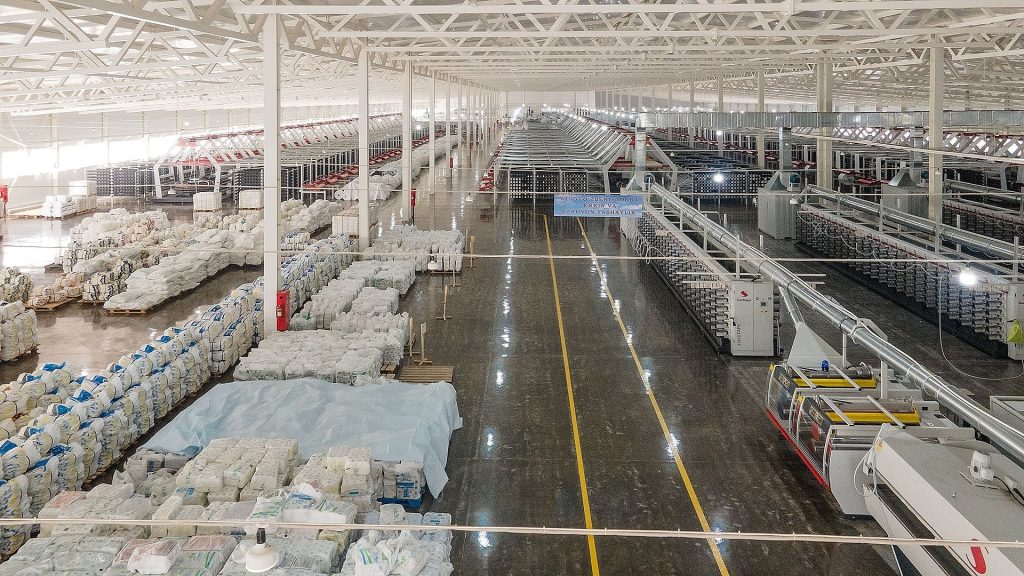
VidePak underwrites this choreography with top‑tier equipment from W&H (Germany) and Starlinger (Austria). Capacity—16 extrusion lines, 100+ circular looms, 30+ lamination/printing machines—lets adhesion, registration, and seal integrity live inside tight, documented windows. That is how a drawing becomes a pallet, reliably.
What is the application of Tubular Woven Bags with Form‑Fill‑Seal (FFS) System?
Applications are the exam and forklifts are the graders. Where hygiene, speed, and stack safety must coexist, Tubular Woven Bags with Form‑Fill‑Seal (FFS) System excel.
Food & ingredients. Rice, sugar, flour, starches, pulses—fine powders and sticky granules alike. Dust‑tight seals protect integrity; optional micro‑perfs help hot fills cool; clear print communicates origin, grade, and nutrition that won’t smear after heat.
Animal nutrition. Pet food, premixes, mineral mixes. Puncture‑resistant weaves and hermetic seals keep aroma in and contaminants out. Photo‑register graphics lift shelf presence in hybrid retail/industrial channels.
Agro‑inputs. Seeds and fertilizers need UV‑stable packs that survive yard exposure; inner low‑SIT layers enable fast, clean seals that hold through marine legs. Dust control improves housekeeping and worker comfort.
Minerals & specialty chemicals. Salt, calcium carbonate, engineered powders—abrasive, sometimes hygroscopic, always demanding. Abrasion‑tolerant fabrics resist handling damage; moderated moisture uptake reduces caking; valve or open‑mouth formats are tuned to dust profile and target speed.
Energy & pellets. Wood pellets, charcoal. Reinforced bottoms and controlled COF sustain tall, safe pallets; high‑contrast graphics carry safety and regulatory marks legibly.
These use cases span lanes from the US and Europe to Brazil & South America, Southeast Asia, Japan and Korea, Central Asia, the MENA region, East & South Africa—routes with real stressors: humidity spikes, UV load, mechanized handling, long dwell times. Tubular Woven Bags with Form‑Fill‑Seal (FFS) System meet them with tunable levers: mesh for tear paths, coat weight for humidity resistance, UV packages for sunlight, COF for stacking behavior. For teams comparing film‑first approaches, adjacent FFS solutions are natural companions—see Tubular Woven Bags with Form‑Fill‑Seal (FFS) System for tubular roll specifications commonly paired with woven builds.
Typical Parameters for Tubular Woven Bags with Form‑Fill‑Seal (FFS) System
The ranges below reflect widely available, real‑world specifications; VidePak provides application‑specific customization.
| Parameter | Typical Range / Option | Notes (for Tubular Woven Bags with Form‑Fill‑Seal (FFS) System) |
|---|---|---|
| Layflat width (tube) | 300 – 650 mm | Matches 10–50 kg classes and common former sizes |
| Fabric mesh | 10×10 – 14×14 | Balance of print base smoothness and puncture resistance |
| Fabric weight (GSM) | 65 – 110 g/m² | Tuned to fill weight and drop targets |
| Sealing coat weight | 20 – 35 g/m² | Inner PE/PP layer; SIT ≈ 110–125 °C |
| Roll length | 500 – 1,500 m | Depends on GSM and max roll OD |
| Core ID | 3″ or 6″ | Compatible with major FFS unwinds |
| Max roll OD | ≤ 1,000 mm | Line‑dependent; ensures safe handling |
| COF (stacking) | ≈ 0.45 – 0.60 | Anti‑slip emboss/spray to target window |
| UV stability | 200 – 400 hours (typical) | Package tailored to outdoor exposure |
| Printing | Flexo up to 6 colors | Registered marks for sensors; scannable codes |
| Line speed | 20 – 50 bags/min | Product‑ and weight‑dependent |
| Load capacity | 10 – 50 kg | Depends on GSM, seal design, safety factor |
Why VidePak
Founded in 2008, VidePak’s core team brings 30+ years of woven‑packaging experience and a workforce of 568 employees. We specialize in BOPP woven bags, valve bags, kraft‑paper woven bags, and Tubular Woven Bags with Form‑Fill‑Seal (FFS) System—manufactured exclusively with 100% new raw materials to stabilize mechanical properties and print outcomes. Our plant runs industry‑top equipment from W&H (Germany) and Starlinger (Austria) across 16 extrusion lines, 100+ circular looms, and 30+ lamination/printing machines. With an annual sales volume around USD 80 million and deliveries across the US, Europe, Brazil & South America, Southeast Asia, Japan, Korea, Central Asia, the MENA region, East & South Africa, we turn specifications into predictable pallets.
Ready to trial on your FFS line? Share current layflat, thickness/GSM, target speeds, fill weights, and storage conditions—we’ll engineer Tubular Woven Bags with Form‑Fill‑Seal (FFS) System that match or outperform your reference pack, and we will supply the test data to prove it.
- What is Tubular Woven Bags with Form‑Fill‑Seal (FFS) System?
- What are the features of Tubular Woven Bags with Form‑Fill‑Seal (FFS) System?
- What is the production process of Tubular Woven Bags with Form‑Fill‑Seal (FFS) System?
- What is the application of Tubular Woven Bags with Form‑Fill‑Seal (FFS) System?
- Typical Parameters for Tubular Woven Bags with Form‑Fill‑Seal (FFS) System
- Why VidePak
- Why Choose Tubular Woven Bags with FFS Systems?
- Features that Set Tubular Woven Bags Apart
- Application-Specific Solutions
- Strict Quality Control for Reliable Performance
- Printing and Branding Durability
- Frequently Asked Questions (FAQs)
- Comparative Benefits: Tubular Woven Bags vs. Traditional Packaging
- Related Resources
- Conclusion
- Typical Parameters for Tubular Woven Bags with Form‑Fill‑Seal (FFS) System
Tubular woven bags with Form-Fill-Seal (FFS) systems are the ultimate solution for food-grade packaging, offering superior durability, hygiene, and efficiency. Manufactured using advanced technology and rigorous quality control, they ensure the safe storage and transportation of sensitive food products while optimizing operational workflows.
Why Choose Tubular Woven Bags with FFS Systems?
In the realm of food-grade packaging, reliability, hygiene, and performance are non-negotiable. Tubular woven bags with FFS systems address these needs comprehensively by integrating high-quality materials, automated production, and advanced sealing techniques. They are tailored for industries handling rice, flour, grains, powdered milk, and seeds, where maintaining product integrity is critical.
Key Advantages:
- Enhanced Hygiene: Heat-sealed closures prevent contamination and ensure food safety.
- Exceptional Durability: Robust polypropylene (PP) and polyethylene (PE) materials eliminate risks of bursting.
- Cost Efficiency: Automated FFS systems reduce labor costs and improve production speed.
- Sustainability: Fully recyclable materials support eco-friendly packaging initiatives.
Features that Set Tubular Woven Bags Apart
1. Premium Material Composition
- 100% virgin polypropylene and polyethylene ensure consistency and strength.
- Positive tolerance standards maintain uniform thickness and dimensions.
2. Advanced Printing Technology
- High-definition graphics with fade-resistant inks provide durable branding.
- Specialized laminations protect against abrasion and environmental wear.
3. State-of-the-Art Manufacturing
- Manufactured using globally renowned Starlinger equipment, ensuring precision and reliability.
- Automated systems maintain quality consistency across production batches.
4. Robust Sealing Options
- Heat-sealed closures ensure airtight protection.
- Optional lamination provides additional moisture resistance.
Application-Specific Solutions
Tubular woven bags with FFS systems cater to a wide range of food-grade products. Here’s a closer look at their application and tailored solutions:
| Product Type | Requirements | Special Features |
|---|---|---|
| Rice & Grains | High moisture resistance to prevent spoilage. | Laminated surfaces for added protection. |
| Flour | Dust-proof and hygienic sealing. | Heat-sealed closures eliminate contamination. |
| Powdered Milk | Airtight barriers to ensure freshness and compliance with safety norms. | Advanced heat sealing for maximum hygiene. |
| Seeds | UV resistance to maintain quality during storage and transportation. | UV-stabilized materials prevent degradation. |
Strict Quality Control for Reliable Performance
The use of cutting-edge Starlinger equipment ensures that every bag meets rigorous quality standards. From raw material selection to the final sealing process, each step is meticulously monitored:
- Material Quality: 100% virgin PP and PE ensure strength and reliability.
- Thickness Control: Positive tolerance standards prevent issues like bursting or deformation during handling.
- Print Durability: Fade-resistant inks maintain branding integrity over time.
These measures ensure that the bags consistently perform under various environmental and logistical conditions.
Printing and Branding Durability
For industries relying on impactful branding, the printing quality of these bags is unmatched. Advanced ink technologies and laminations ensure logos and designs remain vibrant and clear, even during extended storage or transportation.
Benefits of High-Quality Printing:
- UV Resistance: Graphics remain vibrant in outdoor conditions.
- Abrasion Resistance: Prevents wear and tear during handling.
- Sustainability: Inks and coatings comply with eco-friendly standards.
Frequently Asked Questions (FAQs)
Q1: Why are tubular woven bags ideal for food-grade packaging?
These bags are manufactured using food-safe materials, ensuring they meet stringent hygiene and safety standards.
Q2: How do heat-sealed closures enhance product safety?
Heat-sealing creates an airtight barrier, preventing contamination and maintaining freshness.
Q3: Can these bags handle heavy weights?
Yes, tubular woven bags are designed to hold up to 50 kg without tearing, ensuring safe handling and transportation.
Q4: Are the materials used recyclable?
Absolutely. The use of virgin PP and PE ensures that the bags are fully recyclable.
Q5: What printing options are available?
High-definition printing with fade-resistant inks ensures durable and visually appealing branding.
Comparative Benefits: Tubular Woven Bags vs. Traditional Packaging
| Feature | Tubular Woven Bags | Traditional Packaging |
|---|---|---|
| Hygiene | Airtight and contamination-free. | Higher risk of contamination. |
| Durability | Resistant to bursting and tearing. | Less reliable under heavy loads. |
| Cost Efficiency | Reduced labor costs due to automation. | Labor-intensive processes increase costs. |
| Environmental Impact | Fully recyclable materials support sustainability. | Limited eco-friendly options. |
Related Resources
For further insights into food-grade packaging and quality control:
- FFS Woven Bags: Revolutionizing Food Packaging with Versatility and Efficiency
- Delivering Excellence in Packaging: The Role of Quality Control in FFS Roll Bags Production
Conclusion
Tubular woven bags with FFS systems represent the pinnacle of innovation in food-grade packaging. By combining advanced materials, strict quality control, and efficient automation, they ensure health, safety, and reliability across various applications. Their adaptability, coupled with exceptional durability and sustainability, makes them an indispensable choice for businesses prioritizing quality and operational efficiency.