
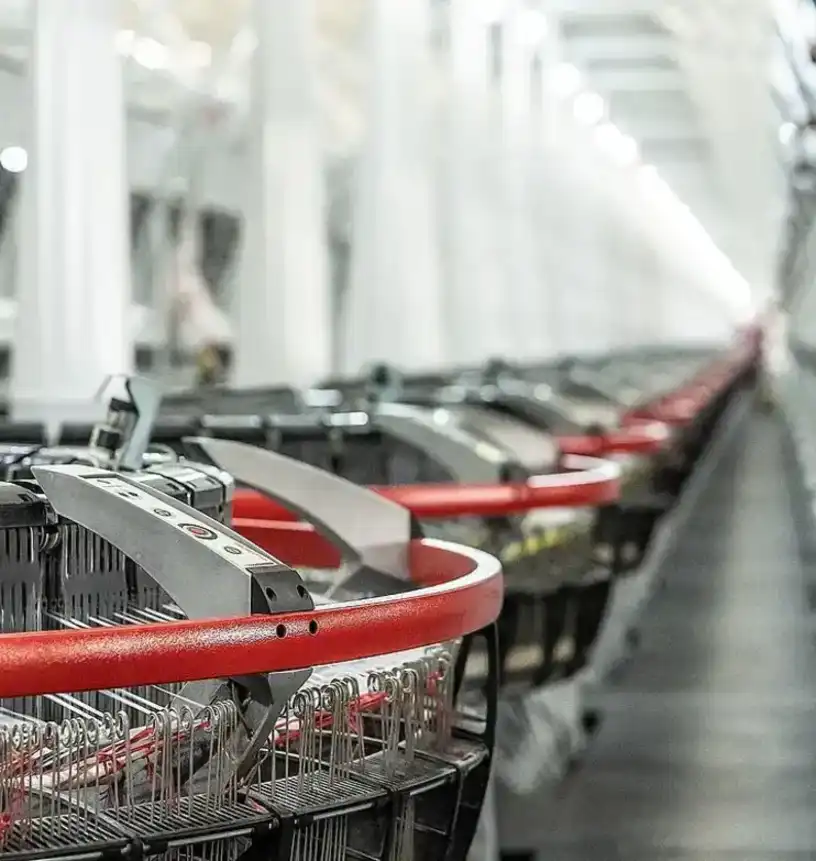
What are BOPP Laminated Valve Woven Bags and why do they matter now?
BOPP Laminated Valve Woven Bags are engineered industrial sacks that unite a woven polypropylene (PP) fabric body with a biaxially oriented polypropylene (BOPP) film laminated to one or both faces, then finished with a pre‑formed valve sleeve for rapid, low‑dust filling. The block‑bottom geometry opens into a square footprint that stands tall, stacks tight, and compresses cleanly. In one platform you get a billboard‑ready face, moisture and grease resistance, fast filling through a valve, and the ruggedness of PP raffia fabric. That is the technical proposition; the commercial proposition is simpler: fewer rejects, cleaner pallets, faster lines, and products that still look like products at the end of the journey.
If packaging is a tug of war between performance, print, and price, BOPP Laminated Valve Woven Bags pull from the middle: the woven fabric carries load, the BOPP face carries the brand, and the valve carries your throughput. When those three carry together, you win.
Across plants, purchase orders, and showrooms, the same platform travels under multiple names. The labels differ; the backbone does not. Below are the aliases most buyers and converters use for BOPP Laminated Valve Woven Bags—useful when you’re aligning specs across vendors:
- BOPP Valve Sacks
- Block‑Bottom Valve Woven Bags
- PP Woven Cement Valve Bags
- Reverse‑Printed BOPP Woven Valve Bags
- Square‑Bottom Valve Sacks
- AD‑Star‑Style Valve Bags
- Poly Woven Valve Sacks
- BOPP Film Laminated Woven Valve Bags
Where they shine
Cement, tile adhesive, grout, gypsum, calcium carbonate; fertilizers and micronutrients; animal feeds and premixes; specialty chemicals; selected dry food ingredients with liners.
Why operators care
Fast valve filling with minimal dust, brick‑like stacks, fewer scuffed returns thanks to reverse print under film, and a mono‑polymer architecture that plays well with PP reclaimers.
Why brands care
Photographic graphics, matte/gloss effects via film finish, durable barcodes and QR, and consistent pallet faces from warehouse to retail floor.
The material architecture behind BOPP Laminated Valve Woven Bags
Call it a stack or a sandwich—the structure is deliberate. Each layer does one job exceptionally well and then gets out of the way of the next. Remove the guesswork and you remove the hidden failure modes. BOPP Laminated Valve Woven Bags live or die by four interfaces: tape to tape (weaving), fabric to film (lamination), ink to film (printing), and valve to spout (filling). Get those four right and the rest is optimization.
1) Woven PP base fabric
Woven polypropylene—raffia tape yarn drawn for tenacity—is the structural backbone. Low density (~0.90 g/cm³) and high drawability allow strong fabrics at modest GSM. Fine‑denier tapes distribute stress across more strands, lowering seam spikes and improving burst. Corona or plasma treatment on the fabric surface can stabilize adhesion windows; UV stabilizers safeguard outdoor stacks. In BOPP Laminated Valve Woven Bags, the base fabric shoulders shock loads from drops and conveyors and protects the laminate from flex fatigue.
2) BOPP film—print face and protective skin
Biaxially oriented polypropylene (BOPP) delivers stiffness, clarity, scuff resistance, and dimensional stability at thin gauges—commonly 15–25 µm for heavy‑duty valve sacks. Reverse printing under BOPP shields ink from abrasion and oils. Choose gloss for “wet” color or matte for tactile, low‑glare elegance; special sand‑finish films add grip. Film gauge is a balancing act: go too thin and you trade print stability; go too thick and you add cost and curl without proportional gains.
3) Lamination adhesive—small coat, big consequences
Solventless polyurethane systems dominate because they cure fast with low emissions while offering excellent peel when metered correctly (often ~2–3 g/m² total). Interlayer peel must be validated after 24–72 h aging and after temperature cycles; corners, fold lines, and the valve side are where weak bonds reveal themselves first. In many reclaim streams, PP fabric + BOPP film with a thin PU interface is functionally mono‑material, improving the odds of post‑industrial trim recovery and post‑consumer recycling.
4) Printing inks and coatings—identity that survives reality
For high‑fidelity artwork, reverse gravure remains a mainstay; the ink lives under the film and laughs at scuff. Water‑based flexographic sets on treated film increasingly match color density while shrinking VOC footprints. Energy‑cured (UV/EB) systems bring instant cure and chemical resistance to the table—best deployed where oils and abrasion dominate. Whatever you choose, surface energy at print time is the gatekeeper; 38–42 dyn/cm is a pragmatic window for film, with primers as insurance when storage delay erodes dyne.
5) Valve sleeve and closures—the heartbeat of throughput
Internal or external sleeves in PP or PE, tuck‑in designs, sonic or hot‑air sealing—this is where filling speed meets containment. Micro‑perforations clustered around the valve shoulder let air escape during fast fills without compromising the rest of the barrier map. The sleeve’s length, diameter, and stiffness must harmonize with spout geometry; when they do, line beats per minute climb and dust complaints fall.
6) Optional layers—antiskid, liners, and functional touches
Antiskid stripes or tactile varnishes tune coefficient of friction (COF) for stable pallets. Loose or tabbed PE liners extend shelf life and hygiene for moisture‑sensitive powders. Add only what testing demands—each layer is cost and complexity you must justify.
| Component | Typical option | Primary role | Design levers |
|---|---|---|---|
| Body fabric | Woven PP, fine‑denier tapes | Tensile, tear, puncture resistance | GSM, weave density, draw ratio |
| Film | BOPP 15–25 µm (gloss/matte) | Print surface, barrier, scuff shield | Gauge, finish, metallization, texture |
| Adhesive | Solventless PU, ~2–3 g/m² | Interlayer bond strength | Mixing ratio, nip/chill, cure/age |
| Inks | Reverse gravure; water‑based flexo; UV/EB | Identity, compliance, durability | Dyne, primers, cure, rub resistance |
| Valve | PP/PE sleeve; sonic/hot‑air | Fast fill; self‑seal; dust control | Sleeve diameter/length; stiffness |
What sets BOPP Laminated Valve Woven Bags apart
Features matter only when they become results. Below are the characteristics that repeatedly survive line trials, field abuse, and customer feedback. Read them as promises you can test.
- High burst and drop resistance at modest GSM thanks to a strong raffia body and a scuff‑resistant BOPP face that spreads impact and preserves edges.
- Moisture and grease resistance from the film layer; branding that survives because ink lives under the film, not on top of it.
- Fast, clean valve filling with self‑closing behavior during product densification; fewer top closures, fewer dust clouds, fewer housekeeping cycles.
- Block‑bottom geometry that stacks like bricks, not balloons—pallet overhang shrinks, container space rises, and showroom faces look designed, not accidental.
- High‑resolution printing with durable barcodes, regulatory panels, microtext, and QR—legible after weeks of transport and yard storage.
- Practical mono‑materiality: PP fabric + BOPP film keeps the polymer family consistent; thin adhesive interfaces remain manageable for many reclaimers.
- Customization: internal/external valves, micro‑perforation maps, matte/gloss balance, antiskid stripes, and UV stabilizer packages tuned to climate and dwell time.
Question
Will a thinner fabric invite failures?
Not when fine‑denier tapes and disciplined seam programs distribute load evenly; verify with seam burst and drop at humidity extremes.
Question
Do water‑based inks dull the brand?
On adequately treated film, water‑based flexo achieves sharp halftones and robust rub; the film does the heavy lifting for scuff.
Question
Is the mono‑material claim real?
Keeping PP fabric, BOPP film, PP threads, and PP sleeves in one family makes reclaim simpler; thin PU adhesive layers are widely tolerated.
How BOPP Laminated Valve Woven Bags are produced—station by station
Production is choreography; the quality gates are the rhythm. Miss a beat and scrap follows. Here is a reference flow that maps how best‑practice plants build BOPP Laminated Valve Woven Bags from resin to pallet.
- Resin conditioning. Blend virgin PP with any recycled content that your draw ratios tolerate; add masterbatches for UV, slip, antiblock, and antistatic as needed. This is also where mass‑balance allocations and chain‑of‑custody paperwork start.
- Film and tape. Extrude film, slit to tapes, and reclaim edge trim immediately. Fine denier targets narrower tapes with precise gauge control; online tension feedback prevents necking.
- Drawing and heat set. Align chains under controlled temperatures to achieve target tenacity and elongation. Watch for fibrillation; adjust oven profiles rather than chasing symptoms on the loom.
- Weaving. Circular or flat looms interlace tapes to a mid‑teens ends/picks per inch baseline. Active tension control cuts breaks and stabilizes porosity and surface smoothness for lamination and print.
- Surface treatment. Corona or plasma treatment moves film or fabric into the high‑30s/low‑40s dyn/cm window. Measure at the press—treatment decay is a fact, not an opinion.
- Lamination. Bond ~20 µm BOPP to the fabric with solventless PU at ~2–3 g/m² total adhesive. Tune nip pressure, chill roll temperature, and line speed to avoid curl and preserve peel in crease zones.
- Printing. Reverse gravure on BOPP pre‑lamination for flagship SKUs; water‑based flexo post‑lamination where VOCs and agility dominate; EB/UV where chemical and rub resistance rule.
- Conversion. Cut to size, form the tube, insert and seal the valve sleeve (sonic, hot‑air, or pasted), and make the block bottom. Validate valve length and angle against your spout; confirm self‑seal behavior at line density.
- Finishing. Add micro‑perforation around the valve shoulder if fast fills trap air; apply antiskid or tactile coatings as pallet tests require.
- Quality gates and documentation. Record GSM, tape tenacity, dyne level, peel, COF, burst, drop, rub, and valve leak. Bind the lot to a QR so audits clip to data, not emails.
| Stage | Core control | Why it matters |
|---|---|---|
| Tape drawing | Draw ratio; oven temperature | Sets tenacity/elongation; controls fibrillation |
| Weaving | Ends & picks per inch; tension | Porosity, seam load paths, surface smoothness |
| Lamination | Film gauge; adhesive weight; nip/chill | Barrier, print stability, peel in crease zones |
| Printing | Anilox/cylinder; dryer/cure; dyne | Color fidelity, rub resistance, VOC profile |
| Valve forming | Sleeve diameter/length; seal method | Filling speed, dust containment, self‑seal |
Where BOPP Laminated Valve Woven Bags are used—and why
From quarries to co‑ops, from chemical depots to big‑box retail, BOPP Laminated Valve Woven Bags carry quietly and perform loudly. The same framework adapts with minor tweaks in weave density, film gauge, seam program, and valve geometry.
- Cement and mineral powders (20–50 kg): block‑bottom stability, reverse‑printed faces that survive yard abrasion, and micro‑perforation near the valve to vent fast fills.
- Tile adhesives, grouts, gypsum, calcium carbonate: fine powders appreciate tight valves and scuff‑resistant faces; square shoulders lock pallets.
- Fertilizers and agrochemicals: moisture‑sensitive content benefits from film barrier; antiskid keeps stacks composed in humid warehouses.
- Animal feeds and premixes: grease and aroma control via film; woven PP resists tears across rough agricultural handling.
- Specialty chemicals: valves contain dust and speed cycles; printed regulatory panels remain legible after long hauls.
- Selected food ingredients: with appropriate liners and compliance, large fillings like starches or flour blends travel well and sell better.
For an adjacent family used alongside BOPP Laminated Valve Woven Bags, see laminated BOPP woven bags—a helpful primer when you are aligning substrates and print methods across your portfolio.
Printing innovations that actually move the needle (2024–2025)
Printing here is not decoration; it is functional engineering. Inks must adhere to treated film, cure quickly, resist abrasion, and satisfy emissions rules—all while carrying brand‑grade color. Over the last year, five shifts matter most for BOPP Laminated Valve Woven Bags.
A) Reverse printing under film remains the durability king
By laying ink on the inside of BOPP and then laminating it against the fabric, graphics are physically protected from scuff and oils. Expect fewer returns for rub‑off, better barcode legibility after long hauls, and compliance panels that survive forklifts and drizzle.
B) Water‑based flexo becomes practical on properly treated film
With better dyne control and primers, modern water‑based systems on film deliver rich color and robust rub while slashing VOCs. On woven sacks, the smoother BOPP face keeps dot gain predictable; drying is tuned, not tortured.
C) Energy‑cured inks (UV/EB) earn a seat where rub and chemicals dominate
Instant cure, high chemical resistance, and sharp detail make UV/EB attractive for oily or abrasive contexts. The proviso: choose low‑migration systems and monitor dose rigorously; under‑cure is an invisible enemy.
D) Hybrid workflows simplify short runs and variable data
Anchor high‑volume faces in gravure or flexo, then layer digital or short‑run surface elements protected by a thin over‑lam, or vary only the valve label for regional compliance. The bag stays constant; the message adapts quickly.
E) Surface energy discipline is a competitive advantage
Measure dyne at press side; retreat aged film; bind dyne, adhesion, and rub into the lot record. Treat dyne like GSM: quantify, don’t assume. A single miss can turn a perfect design into a perfect storm of complaints.
System map: break the decision down, then stitch it back together
Good specifications are built the way strong fabrics are woven: many small, aligned decisions, interlaced. Use this decomposition to move from debate to a line‑ready program for BOPP Laminated Valve Woven Bags.
| Sub‑question | What to probe | Evidence‑based answer | Resulting lever |
|---|---|---|---|
| Can we drop GSM without risk? | Tape tenacity; seam burst; drop tiers | Fine denier preserves performance at lower mass | Step down gradually; guard seam programs |
| Is barrier or breathability paramount? | Moisture, aroma, grease, air entrapment | Film gauge and perforation maps are the dials | Tune gauge and vent near valve only |
| Which print method where? | Volume, color fidelity, VOC constraints | Reverse gravure for flagships; water‑based flexo or hybrid for variants | Segment SKUs by print system |
| How do we speed the line? | Spout geometry; sleeve stiffness/length | Valve design governs BPM more than fabric | Match sleeve to spout; test self‑seal |
| Can we keep circular claims clean? | Polymer family; adhesive weight; audit trail | PP‑on‑PP with lean PU and lot‑level docs wins | Standardize claims and testing |
Specification framework you can run tomorrow
Specifications should read like good sheet music—clear tempo, steady rhythm, and enough nuance to let skilled operators play. Start at the product, then step out to the bag. Iterate in the lab before arguing on the line. BOPP Laminated Valve Woven Bags reward teams who move grams with data, not with fear.
- Define contents: bulk density, particle morphology, moisture/grease profile, hazard class.
- Set safety envelope: seam burst tiers; drop at temperature and humidity extremes; valve leak under compression.
- Choose architecture: fine‑denier weave in the mid‑teens ends/picks per inch; block‑bottom conversion; internal valve sleeve.
- Pick finish: BOPP ~20 µm gloss or matte; antiskid stripes as pallet tests dictate; micro‑perforation only near valve if fills trap air.
- Select printing: reverse gravure for flagship SKUs; water‑based flexo where VOCs and agility rule; UV/EB for oily/abrasive contexts.
- Lock dyne and peel: set dyne targets at press; test peel after 24–72 h and after temperature cycling; log corners and crease zones.
- Plan circularity: keep PP family throughout (fabric, film, thread, sleeve); decide on recycled‑content claims (mechanical or mass‑balance); bind the lot to QR data.
- Pilot and iterate: measure rub, COF, drop, seam; tune sleeve geometry to spout; let the data move GSM, not opinion.
| Parameter | Typical range | Why it matters |
|---|---|---|
| Bag capacity | 20–50 kg | Aligns with pallet patterns and loader ergonomics |
| Fabric GSM | ~70–115 g/m² (heavy‑duty) | Primary cost/carbon lever; do not starve seams |
| Film gauge | ~20 µm BOPP | Balances scuff resistance, register, and curl |
| Weave density | Mid‑teens ends & picks/inch | Sets porosity and seam behavior |
| COF (outside) | Tuned via film/varnish | Pallet stability and depalletizing |
| Valve style | Internal sleeve; tuck‑in; sonic/hot‑air | Filling speed vs. dust containment |
| UV stabilization | 200–1600 h options | Outdoor storage windows |
| Print colors | 6–10 (gravure/flexo typical) | Brand fidelity and regulatory payload |
| Peel strength | Program specific | Survival at creases, corners, and valve side |
Comparisons that clarify choices
Alternatives exist because contexts differ. Paper multi‑wall sacks, non‑woven PP, PE film mailers—they all have rightful homes. The question is not who wins in the abstract, but who wins for your product physics, route, and reuse ambition. For many programs, BOPP Laminated Valve Woven Bags thread the needle: they carry heavy loads, print beautifully, resist moisture, and return to the same polymer stream.
| Criterion | BOPP‑laminated valve woven | Paper sacks | Non‑woven PP | PE mailers |
|---|---|---|---|---|
| Reusability | Medium–high (industrial) | Low–medium | Medium–high | Low–medium |
| Moisture/grease | High via film | Moderate with coatings | Moderate | High |
| Print durability | Excellent (reverse print) | Good | Good | Fair–good |
FAQs buyers and engineers actually ask
- Do we need micro‑perforation on every job? No. Use it near the valve when fast fills trap air; skip it when aroma and barrier dominate. Validate with dust and fill‑rate tests.
- Will water‑based inks hold on BOPP? With the right dyne and primer, yes. Crosshatch adhesion and rub testing will tell you faster than opinions will.
- What fails first when lamination is marginal? Crease lines and corners. Control adhesive weight and chill; re‑test peel after aging and temperature cycles.
- Can we keep the entire bag in the PP family? Yes—fabric, film, threads, and sleeves can all be PP; reclaimers prefer it and your trim program will too.
- Why block‑bottom versus pillow‑style? Stand‑up stability, pallet density, and a printable billboard face; it is a logistics and merchandising choice wrapped in one.
A worked example you can adapt
Scenario. A building‑materials brand ships 25 kg tile adhesive in pillow‑style coated woven sacks and considers migrating to BOPP Laminated Valve Woven Bags.
Current program. 95 g/m² fabric, surface‑printed, stitched top, separate liner. Average line speed 22 bags/min; reject rate 2.1% from scuffed faces and top‑sew issues.
Proposed program. 90 g/m² fabric + 20 µm BOPP; reverse‑printed face; internal PP valve sleeve; micro‑perforation around the valve shoulder; antiskid stripes for humid depots.
Pilot signals. Reverse prints eliminate scuff returns; valve filling reduces dust; block‑bottom stacks tighten; graphics win higher‑tier retail placement. Unit price nets flat; total cost of ownership improves as rejects, housekeeping, and returns drop. The bag looks better because it lives better.
Procurement and quality checklist
- Lock weave density and GSM with retained swatches; reduce grams by trial, not by rumor.
- Specify film gauge and finish (gloss/matte) with rub tests that include pallet rub and corner folds.
- Segment SKUs by print method: reverse gravure for high‑volume flagships; water‑based flexo for agile or VOC‑sensitive runs; UV/EB where rub and chemicals dominate.
- Define valve sleeve material and geometry; verify self‑seal behavior at target BPM with your powder, not a substitute.
- Set dyne targets and measure at press; retreat aged film; document results with the lot.
- Specify peel pass criteria and re‑test after aging and temperature cycles; include crease and corner specimens.
- Run burst, drop, rub, COF, and valve leak tests at low and high humidity; store pallets accordingly.
- Align on recycled‑content claim language (mechanical or mass‑balance); keep the polymer family consistent for reclaim.
- Print QR‑linked lot data so audits take minutes, not days.
Why now—pressure, progress, and payback
In the last year, pressures converged: tougher VOC and migration expectations, relentless freight and labor constraints, and higher in‑market standards for graphics and pallet presentation. BOPP Laminated Valve Woven Bags meet those pressures by uniting a fast‑filling valve format with a durable, high‑graphic face and a polymer‑consistent stack. Pair the platform with the right print method—reverse gravure for maximum durability, water‑based flexo where emissions and agility dominate, or energy‑cured inks where oils and abrasion reign—and a commodity sack becomes a performance system. The change is visible on the pallet, measurable on the ledger, and testable in the lab.
- What are BOPP Laminated Valve Woven Bags and why do they matter now?
- The material architecture behind BOPP Laminated Valve Woven Bags
- What sets BOPP Laminated Valve Woven Bags apart
- How BOPP Laminated Valve Woven Bags are produced—station by station
- Where BOPP Laminated Valve Woven Bags are used—and why
- Printing innovations that actually move the needle (2024–2025)
- A) Reverse printing under film remains the durability king
- B) Water‑based flexo becomes practical on properly treated film
- C) Energy‑cured inks (UV/EB) earn a seat where rub and chemicals dominate
- D) Hybrid workflows simplify short runs and variable data
- E) Surface energy discipline is a competitive advantage
- System map: break the decision down, then stitch it back together
- Specification framework you can run tomorrow
- Comparisons that clarify choices
- FAQs buyers and engineers actually ask
- A worked example you can adapt
- Procurement and quality checklist
- Why now—pressure, progress, and payback
- 1. Introduction: The Evolution of BOPP Laminated Valve Woven Bags
- 2. Innovations in Printing Techniques: Precision Meets Aesthetics
- 3. Bag-Making and Sewing Techniques: Balancing Strength and Efficiency
- 4. Selecting Bag Mouth Designs: Functionality-Driven Choices
- 5. VidePak’s Technological Edge: Starlinger-Driven Production
- 6. FAQs: Addressing Client Concerns
- 7. Future Trends: Sustainability and Automation
- 8. Conclusion: Strategic Advantages for Clients
“Our fertilizer plant needs bags that can handle 50kg loads without tearing, but we also want vibrant branding to stand out in the market,” says a procurement manager from a leading agricultural firm. “How can your bags meet both needs?”
The answer lies in VidePak’s BOPP laminated valve woven bags, which combine advanced gravure printing techniques with precision sewing technologies to deliver durability, aesthetic appeal, and functional versatility.
1. Introduction: The Evolution of BOPP Laminated Valve Woven Bags
The global packaging industry for bulk materials, valued at $34 billion in 2024, increasingly relies on polypropylene (PP) woven bags due to their cost-effectiveness and adaptability. Among these, BOPP (biaxially oriented polypropylene) laminated valve woven bags have emerged as a premium solution, particularly for industries requiring moisture resistance, high-resolution branding, and automated filling processes. VidePak, leveraging 30+ years of expertise and Austrian Starlinger machinery, has positioned itself as a leader in this niche by integrating cutting-edge printing and sealing innovations.
2. Innovations in Printing Techniques: Precision Meets Aesthetics
BOPP lamination enhances the surface smoothness of PP woven bags, enabling high-definition printing. VidePak’s gravure printing technology achieves up to 10-color precision, critical for complex logos and regulatory labels.
Key Advancements
- Gravure Printing: Delivers 150–200 lines per inch (LPI) resolution, surpassing flexographic printing’s 100–120 LPI, ensuring sharp gradients and fine text.
- UV Resistance: Inks with UV stabilizers retain 95% color fidelity after 12 months of outdoor exposure, ideal for agricultural and construction sectors.
- Customization: VidePak’s 30+ lamination machines support bespoke designs, including holographic effects and QR codes for traceability.
Case Study: A Vietnamese coffee exporter reported a 25% increase in retail sales after switching to VidePak’s BOPP laminated bags with metallic ink branding.
3. Bag-Making and Sewing Techniques: Balancing Strength and Efficiency
The choice of sewing and sealing methods directly impacts bag integrity and operational costs.
3.1 Sewing Methods
| Technique | Stitch Density (stitches/inch) | Thread Material | Applications |
|---|---|---|---|
| Lockstitch | 8–10 | Polyester | General-purpose valve bags |
| Chainstitch | 6–8 | Nylon | Heavy-duty industrial sacks |
| Ultrasonic Sealing | N/A | Thermoplastic | Dust-proof food packaging |
- Lockstitch: Polyester threads (e.g., Tex 40) offer tensile strength of 8–10 kgf, suitable for 50kg fertilizer bags.
- Ultrasonic Welding: Eliminates stitching holes, critical for preventing powder leakage in cement or pharmaceutical packaging.
3.2 Valve Designs
- Heat-Sealed Valves: Ideal for automated filling lines, reducing spillage by 30% compared to stitched valves.
- Sewn Valves: Reinforced with double-folded fabric, withstands 15% higher pressure during pneumatic filling.
4. Selecting Bag Mouth Designs: Functionality-Driven Choices
4.1 Open Mouth vs. Valve Mouth
- Open Mouth: Cost-effective for manual filling (e.g., construction debris), but requires additional sealing steps.
- Valve Mouth: Enables 5x faster filling speeds for granular materials like rice or fertilizer, reducing labor costs by 40%.
4.2 Heat-Sealed vs. Sewn Mouths
- Heat-Sealed: Achieves 99% dust containment for fine powders like flour, using PE/PP blends with melting points of 160–180°C.
- Sewn Mouths: Polyester stitching (7–9 stitches/inch) ensures load stability for irregular-shaped items like minerals.
Industry Insight: A UAE-based cement manufacturer reduced bag breakage rates from 5% to 0.8% by adopting VidePak’s ultrasonic-sealed valve bags.
5. VidePak’s Technological Edge: Starlinger-Driven Production
With 100+ circular looms and 16 extrusion lines, VidePak produces 80 million bags annually. Key differentiators include:
- Starlinger AD*Star Looms: Achieve weaving densities of 12×12 to 14×14 threads/cm², enhancing tensile strength to 1,500 N/cm².
- Multi-Layer Lamination: Combines BOPP films (20–30 microns) with PP woven fabric, achieving water vapor transmission rates (WVTR) of <5 g/m²/day.
6. FAQs: Addressing Client Concerns
Q1: How does BOPP lamination improve print quality compared to plain PP?
A: BOPP’s smooth surface reduces ink absorption, enabling 120% wider color gamut and sharper details.
Q2: Which valve type is best for powdered chemicals?
A: Ultrasonic-sealed valves prevent micro-leakage, critical for hygroscopic powders like sodium carbonate.
Q3: Can these bags withstand -20°C temperatures?
A: Yes, VidePak’s cold-resistant PP blend retains flexibility down to -25°C, tested per ASTM D1790.
7. Future Trends: Sustainability and Automation
By 2026, 60% of clients will demand recyclable BOPP laminates. VidePak’s recyclable PP bags integrate 30% post-consumer waste without compromising strength, while Starlinger’s CONEXXIA line reduces energy use by 20%.
8. Conclusion: Strategic Advantages for Clients
Choosing VidePak’s BOPP laminated valve woven bags means investing in:
- Brand Differentiation: Photorealistic printing for market visibility.
- Operational Efficiency: Valve designs compatible with high-speed fillers like Haver & Boecker.
- Compliance: Meets FDA and EU 10/2011 standards for food contact.
As Ray, VidePak’s CEO, states: “Our bags aren’t just containers—they’re your brand’s first ambassador.”
External Links:
- For insights on automated valve bag production, explore VidePak’s precision with Starlinger technology.
- Learn about multi-layer printing innovations in BOPP laminated bags for branding.
This report synthesizes data from industry benchmarks, client case studies, and VidePak’s proprietary production metrics to provide actionable insights for procurement decision-makers.