
- What Are BOPP Woven Bags and Why Do They Matter?
- Materials That Make the Difference: Film, Fabric, Tie, and Additives
- Key Features of BOPP Woven Bags: Strength, Surface, and Stack Behavior
- From Resin to Ready-to-Fill: A Stepwise Manufacturing Map
- Applications and Use-Case Nuances: From Rice to Resins, From Yard to Aisle
- A Systems Approach: Breaking the Problem Down, Then Reassembling the Spec
- VidePak’s Quality Guardrails: Standards, Virgin Inputs, Best-in-Class Machines, Layered Tests
- Troubleshooting Atlas: Symptom → Probable Cause → Corrective Action
- Cost Engineering Without False Economies
- Sustainability in Practice: Mono-Material Logic and Operational Realities
- Specification Template: Turning Needs into Numbers
- Rhetoric and Reality: Style Meets Substance in Printed BOPP Woven Bags
- Integration Example: Building a Spec for 25 kg NPK Fertilizer in a Coastal Market
- Frequently Asked Questions with Straight Answers
- Closing Reflection: Design as a Promise, Quality as the Proof
What Are BOPP Woven Bags and Why Do They Matter?
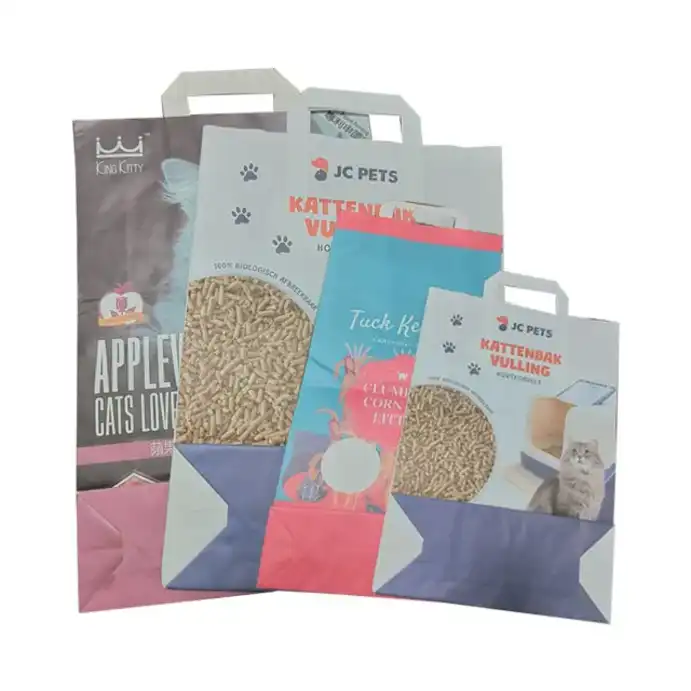
At the heart of modern industrial and retail packaging stands a family of rugged yet brand-friendly sacks known as BOPP Woven Bags. These solutions combine a biaxially oriented polypropylene film with a woven polypropylene fabric to produce a structure that is both visually refined and operationally resilient. The film protects high-fidelity graphics and moderates moisture; the woven substrate carries the mechanical load. In practice, this pairing translates into fewer tears, cleaner surfaces, and better stack behavior across rice and grains, pet food and animal feed, fertilizers and chemicals, seed and salt, minerals and resins. The premise is simple: protect the product, protect the brand, protect margins. The execution, however, requires a system mindset that spans materials, printing, lamination, and quality assurance.
Callout — Key aliases in global sourcing: buyers and engineers will frequently encounter BOPP Laminated Woven Bags, BOPP PP Woven Bags, BOPP Woven Sacks, Printed BOPP Woven Bags, Eco‑friendly BOPP Bags, and Laminated Woven Bags. While phrasing differs, the architectural principle remains stable: a printed BOPP film bonded to a PP woven fabric through an extrusion coating or tie layer.
If the description sounds straightforward, the reality of specification is not. Which fabric GSM suits a 25 kg fertilizer blend in a humid port? When should a matte film replace gloss? What laminate weight ensures bond integrity without inducing curl? And how much antiskid is enough for a 1.1‑meter pallet stacked six layers high? This article builds a coherent, audit-ready view of BOPP Woven Bags by breaking the subject into interlocking parts and then synthesizing an integrated bill of performance. The goal is practical clarity: not slogans, but settings; not hype, but habits that survive forklifts, monsoon seasons, and cross-ocean shipments.
Materials That Make the Difference: Film, Fabric, Tie, and Additives
Every performance feature in BOPP Woven Bags traces back to its materials. The woven fabric provides the backbone; the film confers print quality and surface hygiene; the tie layer unites them; and a cast of additives tunes friction, color, and outdoor life. Understanding each layer is the prerequisite to making defensible tradeoffs. Do we prioritize drop resistance or dart impact? Do we weight barrier over slip control? And can a mono-material structure still meet brand expectations under abrasive handling?
| Component | Typical Substance | Role in the System | Key Tunables |
|---|---|---|---|
| Woven substrate | Mono-axially stretched PP tapes | Carries tensile and tear loads; holds seams; defines bag geometry | Tape denier; ends/picks per inch; fabric GSM; UV stabilizer dose |
| Printable film | BOPP (clear, matte, or opaque) | Hosts reverse-printed graphics; provides gloss or matte finish; adds moisture moderation | Gauge; dyne level; finish; window size; ink system |
| Tie/coating | LDPE/PP or blends | Bonds film to fabric; supports heat sealing where specified | Coat weight; nip pressure; chill roll temperature |
| Additives | UV, antiskid, slip, antiblock, color masterbatch | Stability in sun; pallet friction; machinability; brand colors | Loadings; distribution; interaction with inks and varnishes |
| Optional liner | PE tube or gusseted insert | Elevates moisture barrier; controls fines; supports heat seal closures | Gauge; clarity; seal profile; odor constraints |
Tip for material buyers: the lowest-cost component is often a well-tuned fabric (right denier at the right ends/picks) rather than a heavier film. In other words, begin with the substrate; then let the film and tie layer complete the performance, not compensate for inappropriate GSM.
Key Features of BOPP Woven Bags: Strength, Surface, and Stack Behavior
What separates BOPP Woven Bags from ordinary sacks? Not merely a glossy photograph on the outside. It is the union of mechanical toughness, moisture moderation, and visual integrity that scales from five-kilogram retail formats to fifty-kilogram industrial workhorses. One can reduce the answer to bullet points, but the supply chain will test it in drop cycles, in forklift tines, and in stack pressure on hot afternoons. Consider the attributes below and how they interact.
Strength-to-weight: woven fabric delivers tensile and tear performance without bulk. Right-sized GSM outlasts paper in humid chains and resists corner splits when pallets shift.
Moisture control: a laminated BOPP skin reduces dusting and splash ingress; liners raise the barrier further for hygroscopic contents. Cleanable and less porous than paper.
Print fidelity: reverse-printed graphics are protected under the film, preserving brand value through transport. Gloss or matte finishes tune shelf presence and perceptual quality.
Stack stability: COF can be engineered with antiskid bands, matte zones, or formulation changes. Pallet behavior becomes a design variable, not a guess.
Outdoor life: UV packages in tapes or films maintain strength under sun. This is not optional for fertilizers or salts that live in open yards, even temporarily.
Hygiene: smooth, wipeable surfaces reduce cross-contamination in mills and plants. Less dust clings. Less dirt adheres. Less time is spent rebagging.
Rhetorical lens: Should packaging shout on the shelf or survive the yard? Why not both? With BOPP Laminated Woven Bags, print and performance reinforce each other—the film carries color; the fabric carries weight; the laminate carries the promise that trucks, tines, and rain will not erase the brand you paid to build.
From Resin to Ready-to-Fill: A Stepwise Manufacturing Map
The best ideas are only as good as the machines that make them repeatable. In this category, VidePak invests in world-class assets sourced from Austria and Germany—Starlinger for tape lines, circular looms, and lamination; Windmöller & Hölscher (W&H) for precision printing and conversion. The outcome is less about brand names and more about what they enable: stable gauge, accurate registration, resilient bonds, fewer breakages, tighter tolerances. So how does a roll of film and a pallet of resin become a pallet of BOPP Woven Sacks ready for filling? The map below connects the dots.
Incoming qualification: virgin PP and PE resins checked for melt flow index and moisture; BOPP film mapped for thickness and dyne; inks validated for adhesion and odor limits. Certificates of analysis are verified. Lots are barcoded for traceability.
Tape extrusion and stretching (Starlinger): PP melt is slit into tapes then oriented to raise tensile strength and control denier. Break-rate charts and tensile sampling keep the line within statistical limits.
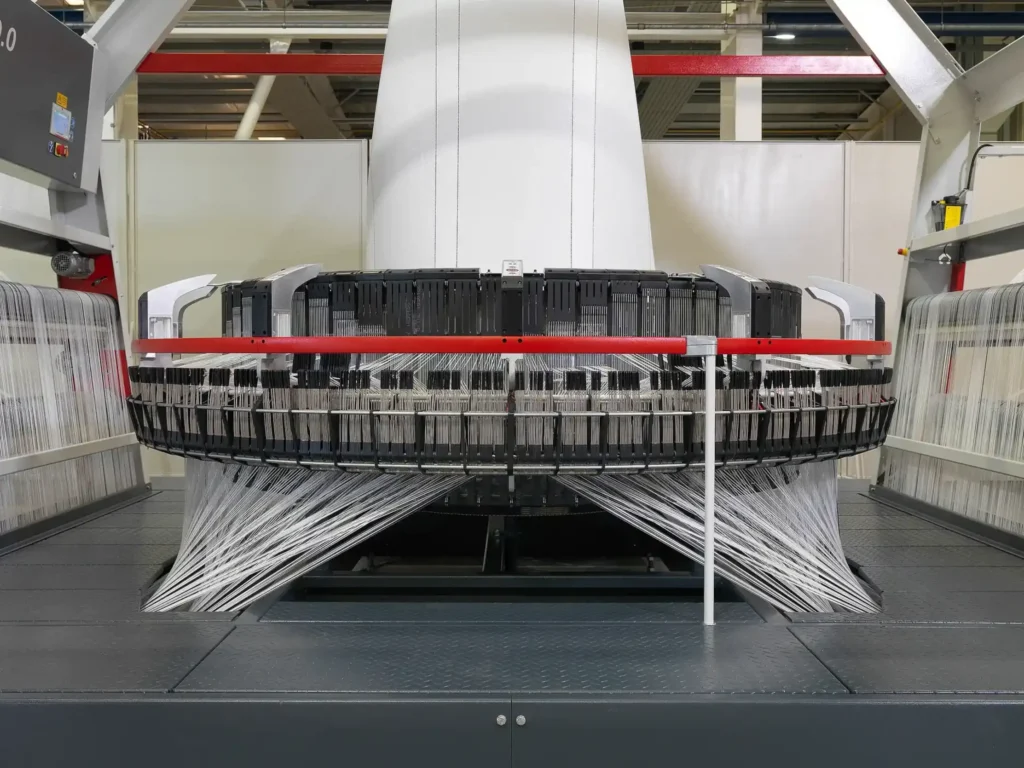
Weaving (Starlinger circular looms): warp and weft tapes form tubular or flat fabrics with target GSM and width. Inspection lights reveal holes or slubs; loom IDs and operator tags tie defects to cause.
Reverse printing (W&H): color separations are laid down on the back of clear BOPP film so that inks sit under laminate, shielded from abrasion. Spectrophotometer readings control delta-E drift; register cameras hold tight tolerances across long runs.
Extrusion lamination (Starlinger / W&H): molten tie resin bonds film to fabric at controlled nip pressure and chill roll temperature. Peel tests and caliper checks validate bond integrity in real time.
Conversion: tubing and gusseting define format; cutting sets length; sewing or valve formation determines closure. Optional easy-open tapes, micro-perforation for air release, and handle die-cuts complete the design.
Liner insertion (optional): tube or gusseted PE liners are inserted, cuffed, and heat-sealed if required for barrier. Burst and seal tests verify the liner’s contribution to the final system.
Final inspection and pack-out: 100 percent visual audits check print and seam quality; sampling validates COF, drop cycles, and tensile requirements. Pallets are wrapped to match COF targets, not fight them.
Why the machinery matters: consistent registration, lamination bond, and fabric dimensions are not negotiable for premium BOPP PP Woven Bags. Starlinger and W&H deliver process capability that downstream operators can trust, reducing variability that would otherwise appear as print misregister, delamination, or seam failures on your floor.
Applications and Use-Case Nuances: From Rice to Resins, From Yard to Aisle
The promise of BOPP Woven Bags becomes visible when mapped against real market patterns. A bag for ten-kilogram jasmine rice is not the same as one for fifty-kilogram fertilizer blend, even if both involve PP fabrics and BOPP films. What changes? Fabric GSM, COF targets, UV packages, liner strategy, and closures. Consider the following landscape and how each node reshapes the specification.
| Segment | Typical Bag Format | Design Focus | Risk Mitigation |
|---|---|---|---|
| Rice & grains (retail 5–10 kg) | Sewn open mouth, gusseted; clear window for grain visibility | High-gloss reverse print; clean look; comfortable carry | Edge scuff resistance; COF tuned for hand stack; optional easy-open tape |
| Pet food & animal feed (10–25 kg) | Sewn open mouth with optional liner | Odor management; shelf appeal; scuff resistance | Odor limits on inks/liners; rub resistance; pallet stability for tall stacks |
| Fertilizers (25–50 kg) | Valve or SOM; UV-stabilized fabric | Outdoor survival; seam strength; COF for rough yards | UV package in tapes/film; drop targets; antiskid zones |
| Cement & minerals (50 kg) | Block-bottom valve; matte finish for friction control | Clean filling; dust control; pallet stability | Valve design for fast fill; COF targets; abrasion-resistant film |
| Salts & chemicals | SOM with liner; glossy or matte film | Caking control; corrosion-aware cut/sew | Liner gauge and seal integrity; seam design; antiwick finishes |
Internal link for deeper context: for requirements around moisture defense and seam integrity in poly-woven formats, see Designing leak‑resistant PP woven bags. It dovetails with the barrier and sealing considerations discussed here for BOPP Laminated Woven Bags.
A Systems Approach: Breaking the Problem Down, Then Reassembling the Spec
Packaging fails for predictable reasons. Bags slip because COF was guessed. Seams tear because fabric GSM was down-specified to win a quote. Graphics scuff because inks sat on the surface rather than beneath film. These are not mysteries; they are mismatches between hazards and design. A systems approach anticipates and binds the chain: product, line, warehouse, transit, and market. Below is a map of the key subproblems for BOPP Woven Bags, with levers and measurable controls. Read it as a toolkit, not a checklist.
| Subproblem | Diagnose by Asking | Levers to Pull | Controls & Evidence |
|---|---|---|---|
| Load & handling | Net fill weight, conveyors, drops, forklifts, export? | Fabric GSM; seam design; corner reinforcements; drop targets | Seam pulls; drop cycles; tear energy; root-cause logs |
| Moisture & barrier | Hygroscopic? Monsoon season? Condensation risk? | Laminate weight; liner gauge; window size; seam sealing | WVTR targets; liner burst & seals; caking complaints |
| Outdoor exposure | Sun hours; latitude; open yard dwell time | UV stabilizers; lightfast inks; matte film | Accelerated UV tests; tensile retention; field returns |
| Brand & retail | Aisle visibility? Scuff zones? Window desirability? | Reverse print; varnish; gloss/matte zoning; window reinforcement | delta-E window; rub resistance; shelf audits |
| Filling line & palletization | Manual, semi‑auto, valve? Pallet height and wrap recipe? | COF tuning; valve type; gusset width; micro‑perfs for air | COF tests; line trials; compression tests; telemetry on slips |
Practical synthesis: begin with hazards, quantify them, and let them drive the spec. The result is not a generic bag but a tailored BOPP Woven Bag that behaves on your line and in your warehouse. Design is a promise; QC is the proof.
VidePak’s Quality Guardrails: Standards, Virgin Inputs, Best-in-Class Machines, Layered Tests
The supply chain remembers defects longer than discounts. VidePak therefore anchors BOPP Laminated Woven Bags in a set of guardrails: adherence to mainstream standards, insistence on virgin raw materials, use of Starlinger and W&H assets, and a layered inspection plan that catches, contains, and corrects deviations. The steps are simple to state and essential to implement, particularly when annual volumes and brand stakes are large.
Aligned with standards: production and verification reference widely recognized norms (e.g., ISO for system quality; ASTM analogs for film tensile, thickness, and friction testing; EN/JIS counterparts where specified).
Virgin inputs only: structural layers use new PP/PE and BOPP to ensure predictable melt flow, odor profile, and bond strength—critical for reverse-printed visuals and high-throughput filling lines.
Starlinger and W&H backbone: machines from Austria and Germany deliver gauge control, registration accuracy, and uptime that translate into measurable quality on your floor.
Layered tests: incoming checks, in-process SPC, and outgoing AQL sampling work together to detect defects early and verify fitness to ship. Traceability links pallets to resin lots, loom IDs, press jobs, and lamination lanes.
| Stage | Primary Checks | Why It Matters | Evidence of Control |
|---|---|---|---|
| Incoming | COA verification; MFI and moisture for resins; thickness & dyne for film; ink viscosity windows | Predictable processing, bond strength, and adhesion; odor control for food/feed use | Sampling logs; retained swatches; hold-and-release protocols |
| In process | Tape denier SPC; break-rate charts; fabric GSM audits; delta-E checks; bond peel; caliper control | Real-time correction; prevention of cascading defects | Control charts; machine settings capture; corrective actions |
| Outgoing | Dimensions; COF; drop tests; dart (if window); seam pulls; UV aging for outdoor SKUs | Fit to ship and fit to purpose, not merely fit to print | AQL sampling sheets; lot release signatures; pallet labels |
A note on evidence: numbers are trust. A drop test without height and cycle count is a story, not a result. Request, capture, and retain data that proves your BOPP Woven Bags meet the operating risks they will face.
Troubleshooting Atlas: Symptom → Probable Cause → Corrective Action
Even a well-made bag may fail if specification and reality fall out of sync. The atlas below maps common symptoms in BOPP PP Woven Bags and their likely roots, followed by corrective actions. Treat it as a living reference, meant to be annotated with field data and lessons learned.
| Symptom | Probable Cause | Corrective Action |
|---|---|---|
| Corner tears during palletization | Under-spec GSM; aggressive needle cuts; low seam allowance | Increase GSM; refine seam pattern; change needle; add corner reinforcement |
| Slippery pallets in tall stacks | COF too low; glossy film with no antiskid | Introduce antiskid band; specify matte zones; adjust wrap recipe |
| Graphics scuffing in transit | Surface print without protective varnish; insufficient lamination bond | Use reverse print under BOPP; upgrade varnish; verify peel strength |
| Caking from moisture ingress | No liner on hygroscopic product; pinholes; wicking seams | Add liner; raise coat weight; seal test; consider hot-air sealing |
| UV embrittlement in yard | Missing UV stabilizers; low lightfast inks | Add UV package; specify lightfast inks; rotate stock |
Remember: the fastest fix is often not material substitution but specification clarity. When BOPP Woven Bags fail, investigate context first—line speed, pallet height, humidity, turn radius for forklifts—then tune materials where they matter most.
Cost Engineering Without False Economies
There are two ways to save money: spend less today, or prevent losses tomorrow. Smart specification of BOPP Laminated Woven Bags seeks the second kind of saving. The adjustments below reduce cost while conserving outcomes—strength, graphics, and logistics stability—and they do so by balancing materials and process levers rather than by cutting corners.
Right-size GSM: optimize ends and picks before jumping to thicker films. Mechanical backbone carries drop energy more efficiently than a heavier decorative layer.
Reverse print economics: protecting inks beneath film cuts scuff-related rework and returns. If your brand invests in color, let the laminate carry the insurance.
Window moderation: clear windows sell product but reduce dart impact; choose strategic shapes and areas that communicate quality without compromising resilience.
COF by intent: spec a numeric coefficient of friction. Add antiskid bands when needed. Let friction be a design parameter rather than a prayer.
Sustainability in Practice: Mono-Material Logic and Operational Realities
Sustainability is not a slogan stapled to a datasheet. It is the consistent choice of materials and processes that reduce waste without sacrificing product protection. Eco‑friendly BOPP Bags aim for mono-material simplicity—PP/PP or PP with a thin PE tie—because it streamlines recycling in many markets. Light‑weighting through fabric optimization, clean ink systems that reduce odor and emissions, controlled regrind where allowed in noncritical layers: together, these make a measurable difference. But sustainability is also logistics: fewer breakages, fewer returns, fewer reworks. A strong bag is a sustainable bag when it prevents product loss.
| Vector | Tactic | Contribution |
|---|---|---|
| Mono-material | PP fabric + BOPP film with compatible tie | Simplifies recycling streams; reduces sorting complexity |
| Light-weighting | Optimize GSM and film gauge without sacrificing drop targets | Less resin per bag; same performance per pallet |
| Ink stewardship | Low-odor, efficient color systems with controlled VOCs | Improves worker environment; reduces off-odor risk |
| Waste reduction | Process capability to reduce rejects and rework | Less scrap; fewer returns; stronger sustainability math |
Specification Template: Turning Needs into Numbers
The best time to secure performance is before the first bag is made. A coherent template compresses learning into a page that procurement and operations can use together. Below is an illustrative, adaptable frame for BOPP Woven Sacks—not a law, but a conversation starter that turns preferences into measurable notes.
| Attribute | Specification | Rationale |
|---|---|---|
| Bag type | Sewn open mouth or block-bottom valve; gusseted | Aligns with filling line and product flowability |
| Size & volume | Length/width/gusset tuned to 5, 10, 25, or 50 kg formats | Optimizes pallet load and ergonomics |
| Fabric | 70–110 GSM; target tensile by warp/weft; UV as required | Balances strength and weight; outdoor resilience |
| Film | 20–30 µm BOPP; reverse print; matte/gloss zoning | Protects graphics; tunes COF; elevates visual impact |
| Tie/coating | 15–25 µm LDPE/PP; bond ≥ defined peel strength | Ensures laminate integrity and sealability |
| COF | 0.35–0.50 depending on pallet rules and wrap recipe | Designs stack safety into the spec |
| UV life | Target months of sun exposure without brittle failure | Matches yard reality; avoids surprise embrittlement |
| Liner | Tube or gusseted PE; 40–80 µm; seals validated | Raises barrier for hygroscopic or dusty products |
| QC markers | AQL plan; drop height & cycles; peel & COF thresholds | Makes pass/fail objective; speeds investigations |
Functional card—spec handoff: print this section to brief procurement and plant teams. Clear attributes reduce back-and-forth and lock quality goals before tooling and artwork.
Rhetoric and Reality: Style Meets Substance in Printed BOPP Woven Bags
Must a heavy-duty bag look heavy? Must a fertilizer sack carry only warnings? Can a bulk format be beautiful and still survive the yard? The answer, as branding teams have discovered, is yes—when inks live under film and when the laminate supports abrasion resistance, style begins to coexist with substance. Printed BOPP Woven Bags therefore become more than containers; they are billboards that move through the supply chain, from the mill to the truck to the aisle. What sells is not just colorfulness but credibility: the credibility that the package will arrive intact, legible, and clean.
Color discipline: agreeing on delta-E windows and verifying with spectrophotometers keeps hues consistent season to season. Shoppers notice drift even when they cannot name it.
Finish logic: matte zones reduce glare and invite touch; gloss zones broadcast vibrancy. Zoning is a design tool for both aesthetics and friction control.
Window honesty: clear windows that reveal product differentiate quality rice or seeds, but the shape and area must respect dart impact and crease behavior.
Integration Example: Building a Spec for 25 kg NPK Fertilizer in a Coastal Market
To see how parts become a whole, assemble a plausible case: a 25 kg NPK blend with modest dusting, filled on a semi-automatic line in a coastal climate with high humidity and sun exposure. The bag must tolerate open-yard dwell, ship by container, and present clean graphics on arrival. From subproblems to final spec, we proceed.
- Hazards: UV exposure (6–9 months), moisture, pallet slips, corrosion in salt air.
- Fabric: 90–100 GSM with UV stabilizer; seam pulls validated against drop targets.
- Film: 25 µm BOPP, reverse print; matte bands for COF; minimal windows to preserve dart.
- Tie: 20 µm LDPE/PP blend with peel threshold tuned to spec; avoid curl.
- Closure: valve bag for powdery flow, or SOM with liner if caking risk rises.
- COF: target 0.40–0.45; verify with friction tests and wrap recipe.
- QC: AQL plan; drop cycles and height; UV aging; dart impact if any window exists.
Outcome: a tailored BOPP Woven Bag that survives the yard, behaves on pallets, and protects brand assets in retail. There is nothing generic about it; it is specific by design.
Frequently Asked Questions with Straight Answers
Is a “BOPP PP Woven Bag” different from a “BOPP Laminated Woven Bag”? Terminology varies by region and converter practice. In most cases, both phrases describe the same laminate structure: printed BOPP film joined to woven PP fabric via an extrusion coating or tie layer.
Can these formats be recycled? Many markets accept polyolefin mono-material streams. Always validate local practices and ink/adhesive tolerances. Designing for PP/PP compatibility simplifies the path.
Valve or sewn open mouth? Fine, free-flowing powders on high-speed lines benefit from valve designs; coarser goods or flexible operations often prefer SOM construction. Let product physics and line constraints decide.
How do we prevent pallet slips? Specify a COF number, add antiskid where needed, and validate with your actual wrap recipe and stack height. Friction can be engineered.
Closing Reflection: Design as a Promise, Quality as the Proof
Consider what a package is asked to do: carry weight, inform users, survive weather, command attention, arrive intact. The humble sack shoulders all of this and more. When the sack is a BOPP Woven Bag, the path from resin to retail becomes a chain of accountable choices—materials that make sense, machinery that repeats success, and measurements that tell the truth. Whether your product is rice or resin, seed or salt, fertilizer or feed, the correct specification will read like a well-reasoned argument: each parameter supporting the next, each risk met by a countermeasure, each aesthetic flourish protected by engineering.
2025-10-25
In the ever-evolving packaging industry, BOPP Woven Bags have emerged as a popular choice due to their durability, versatility, and aesthetic appeal. As a product derived from the co-extrusion of Biaxially Oriented Polypropylene (BOPP) film and woven fabric, these bags are extensively used for packaging a wide range of products, from agricultural goods to industrial materials. This article will explore the common quality issues associated with woven bags, specifically focusing on BOPP Woven Bags, while emphasizing the comprehensive quality control measures implemented by our company.
What Are BOPP Woven Bags?
BOPP Woven Bags are made from polypropylene materials that have been woven together to create a robust structure. The addition of a BOPP film provides several advantages, including enhanced barrier properties, vivid printing capabilities, and greater resistance to wear and tear. These bags are ideal for bulk packaging, making them suitable for products like grains, fertilizers, chemicals, and pet food.
Key Characteristics of BOPP PP Woven Bags
- Strength and Durability: Laminated BOPP Woven Bags are designed to withstand heavy loads, making them suitable for various industrial applications.
- Customizability: These bags can be tailored to specific dimensions, thicknesses, and print designs, offering branding opportunities for companies.
- Eco-friendly Options: Many manufacturers are now producing eco-friendly BOPP bags that meet international sustainability standards.
Common Quality Issues in BOPP Woven Bags
Despite their many advantages, BOPP Woven Sacks can experience several quality issues that affect their performance. The most common problems include:
- Thickness Tolerance: The thickness of the bag plays a crucial role in its strength and durability. Variations beyond acceptable limits can lead to failures during transportation or storage.
- Uneven Cutting Edges: Bags must be cut evenly to ensure proper sealing and prevent leaks. Ragged or uneven edges can result in structural weaknesses.
- Color Variations: Color consistency is vital for branding. Any deviations in color can undermine the visual appeal of the product and negatively impact the brand image.
- Weight Variability: The weight of the bags should be consistent to ensure uniformity in packaging. Inconsistencies can lead to customer dissatisfaction.
- Tensile Strength: The stretching capacity of the woven fabric is critical for maintaining bag integrity under load. Low tensile strength can lead to tears or ruptures.
- Impact Resistance: BOPP bags must withstand physical impacts during handling and transportation. Poor impact resistance can lead to package failures.
- UV Resistance: Exposure to sunlight can degrade the bag material over time. Insufficient UV protection can shorten the lifespan of the packaging.
- Environmental Compliance: With rising awareness of environmental issues, bags must meet eco-friendly standards to appeal to environmentally conscious consumers.
Comprehensive Quality Control Measures
At our company, we understand the importance of maintaining the highest quality standards for our products. Therefore, we have implemented a rigorous quality control process that encompasses a wide range of testing protocols. Below is a detailed overview of the quality control measures we follow:
| Quality Parameter | Description | Testing Method |
|---|---|---|
| Thickness Tolerance | Measurement of bag thickness to ensure it meets specified standards. | Caliper measurement |
| Cutting Edge Uniformity | Inspection of bag edges to ensure they are smooth and even. | Visual inspection and edge testing |
| Color Consistency | Verification of color against specified standards to ensure uniformity. | Spectrophotometer analysis |
| Weight Consistency | Assessment of bag weight to confirm it meets specifications. | Scale measurement |
| Tensile Strength | Testing the strength of raw materials and finished bags under load. | Tensile testing machine |
| Impact Resistance | Evaluation of the bag’s ability to withstand impacts without failure. | Drop test method |
| UV Resistance | Testing for resistance to UV degradation over time. | UV exposure test |
| Environmental Compliance | Verification of the eco-friendliness of materials used in production. | Environmental impact assessments |
Testing Methods Explained
- Thickness Tolerance: We utilize precision calipers to measure the thickness of the bags, ensuring they meet our strict tolerance levels.
- Cutting Edge Uniformity: A visual inspection is conducted to identify any uneven or jagged edges, which could compromise the bag’s integrity.
- Color Consistency: A spectrophotometer is used to measure the color and ensure it matches the desired specifications accurately.
- Weight Consistency: Bags are weighed on calibrated scales to ensure they conform to the required weight specifications.
- Tensile Strength: A tensile testing machine measures how much force the bag can withstand before it breaks, ensuring that our bags have adequate strength for their intended use.
- Impact Resistance: Using a drop test method, we assess how well the bags can withstand impacts without compromising their structure.
- UV Resistance: UV exposure tests determine how the bags perform under sunlight over extended periods, ensuring they can maintain their integrity.
- Environmental Compliance: Our materials undergo thorough assessments to confirm they are eco-friendly, allowing us to produce Eco-friendly BOPP Bags that meet global standards.
Benefits of Rigorous Quality Control
Implementing these comprehensive quality control measures not only helps us produce high-quality BOPP Laminated Woven Bags but also provides several advantages:
- Enhanced Product Durability: By ensuring optimal thickness, tensile strength, and impact resistance, our bags can withstand the rigors of transportation and storage.
- Increased Customer Satisfaction: Consistency in quality translates to reliability for our customers, fostering trust and repeat business.
- Brand Integrity: Maintaining high standards for color consistency and overall appearance helps protect our customers’ brand images.
- Sustainability: By adhering to environmental standards, we contribute positively to the planet while meeting consumer demand for eco-friendly options.
Conclusion
BOPP Bags Wholesale and their derivatives, such as Eco-friendly BOPP Bags, offer numerous benefits for packaging various products. However, maintaining high-quality standards is essential for maximizing their effectiveness and meeting customer expectations. Our company is committed to rigorous quality control measures that address the most common quality issues, ensuring our customers receive only the best products. By prioritizing quality and sustainability, we position ourselves as leaders in the woven bag manufacturing industry, ready to meet the diverse needs of our clients.
As we continue to innovate and improve our production processes, we invite you to explore our extensive range of woven bags and discover how we can support your packaging needs effectively.
ppp