
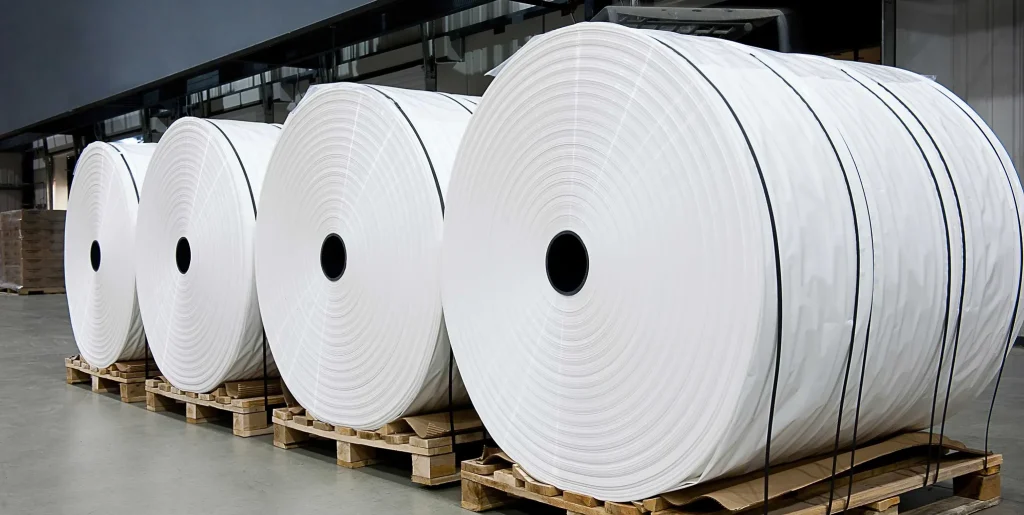
Understanding FFS Roll Bags in Automated Packaging
When people in bulk packaging plants talk about FFS roll bags, they are referring to more than just plastic on a roll. In modern factories, these continuous sleeves of polyolefin film act as a moving interface between materials, machinery, and logistics. A single roll of film is transformed, on the fly, into hundreds or thousands of individual packs. The form station shapes the tube, the dosing unit fills it, and the sealing jaws close it. In one smooth motion, the roll becomes a finished package. That is why form fill seal roll bags are often described as the hidden backbone of industrial packaging for powders, pellets, flakes, and granules.
In practice, the expression FFS roll bags is a convenient umbrella. It covers a family of related solutions: FFS PP bags with a woven backbone, FFS woven bags in tubular form, FFS roll sacks for cement and fertilizers, HDPE roll bags for high barrier, and specialized FFS roll HDPE bags that focus on moisture protection. Despite these different names, they share a common logic. All of them are continuous roll stock designed to run on automated form fill seal machinery, eliminating the need to buy, handle, and store separate open mouth sacks.
Key perspective
Instead of thinking of FFS roll bags as a consumable, many leading producers regard them as part of the production equipment itself. When the film runs well, the line runs well; when the film misbehaves, the entire packing hall feels it.
Why has the industry embraced FFS roll bags so widely? The answer lies in a combination of speed, consistency, and control. Computerized FFS systems unwind the film with precision, form bags of predictable length, and fill them to exact weights. Pallets emerge with almost identical dimensions and appearance, which makes warehouses neater, container loading simpler, and customer complaints rarer. It is hardly surprising that producers of fertilizers, polymer resins, building materials, minerals, food ingredients, animal feed, and specialty chemicals increasingly treat FFS roll bags as a strategic investment rather than a simple cost item.
At the same time, these packaging formats are not static. They continue to evolve as equipment suppliers push the limits of line speed, as regulators demand safer and more sustainable materials, and as end users ask for better branding and cleaner pallets. Today, when engineers select between FFS roll bags, pre-made sacks, or bulk containers, they are in fact choosing between different philosophies of automation, labor use, and risk management.
Material Architecture of FFS Roll Bags
Although the phrase may sound simple, the internal architecture of FFS roll bags is the result of careful material engineering. High performance designs typically combine several polyolefin components: dense HDPE roll film for barrier, ductile sealing layers for reliable closure, and sometimes a PP woven fabric substrate for exceptional strength. How these components are stacked, bonded, and modified determines whether a given roll will glide through a high demand FFS line or struggle at every sealing station.
Core building blocks
- High density polyethylene film for moisture and stiffness
- Polypropylene woven tubes for tensile strength
- Sealing layers based on LLDPE or metallocene PE
- Functional additives for slip, antistatic, and UV stability
Typical product variants
- FFS roll HDPE bags for moisture sensitive goods
- FFS PP bags for heavy or abrasive powders
- FFS woven bags for rugged building products
- HDPE roll bags with optimized barrier and printability
Material selection is never neutral. A film designed only for stiffness may crack under impact; a structure optimized only for sealing may stretch and deform during palletizing. The art of designing FFS roll bags lies in balancing these properties while respecting economic and environmental constraints. It is this balance that allows a single roll design to survive high line speeds, long transport routes, and demanding storage conditions.
HDPE Barrier Layers and Environmental Stresses
For many bulk commodities, moisture is a relentless adversary. Fertilizers absorb water and cake, powdered minerals form lumps, and hygroscopic food ingredients lose flowability. In this context, the high crystallinity and low permeability of high density polyethylene make HDPE roll bags a natural choice. Compared with lower density polyethylenes, HDPE creates a tighter molecular network, giving FFS roll HDPE bags an advantage in water vapor transmission rate and dimensional stability.
From an engineering perspective, the barrier role of HDPE can be unpacked into several functions. First, it slows the diffusion of water molecules from humid air into the product. Second, it reduces the risk of condensation forming on the inner surface during temperature swings. Third, its stiffness helps pallets maintain a neat shape even after weeks in a warehouse or container. These micro-level diffusion and crystallinity phenomena eventually translate into macro-level outcomes: fewer customer complaints, less rework, and more predictable shelf life.
Practical observation
When export-grade fertilizers are packed in well-designed FFS roll HDPE bags, operators often remark that pallets arriving in tropical ports look surprisingly similar to the ones dispatched from the plant. The barrier is invisible, yet the business impact is written on every intact stack.
To fine tune this performance, resin suppliers and converters adjust several parameters. Melt flow index controls how easily the polymer melts and flows through the extrusion die, influencing both film thickness tolerance and seal behavior. Density influences stiffness and barrier. Additives introduce new functionalities: UV stabilizers for outdoor storage, antistatic agents to prevent dust attraction and static discharge, and processing aids to allow clean bubble formation. Each of these knobs must be turned with care. Too much slip agent, for example, may improve winding but compromise stacking friction; too little antistatic additive may cause nuisance shocks for operators and dust adherence on the film surface.
PP Woven Fabric and Hybrid FFS Woven Bags
Not all products can rely on film alone. When goods are extremely heavy, abrasive, or exposed to rough mechanical handling, a woven backbone becomes essential. In this configuration, FFS woven bags and FFS PP bags use polypropylene tapes that have been extruded, slit, stretched, and woven into a tube on circular looms. The result is a fabric that offers high tensile strength both along the machine direction and across it, which makes these hybrid bags a reliable choice for cement, clinker, mineral powders, and other demanding materials.
This PP woven tube alone, however, is not airtight. Air, dust, and moisture can move through the tiny gaps between tapes. To convert such woven structures into fully functional FFS PP bags or tubular woven roll stock, converters apply a extrusion coating or lamination step. A thin layer of polyethylene or HDPE is bonded to the woven fabric, creating a composite where each component plays a distinct role: the fabric bears the load and resists tearing, while the film layer provides barrier and sealing performance.
| Layer | Function in FFS woven bags | Typical material |
|---|---|---|
| Structural backbone | Carries the full weight, resists tears and punctures | PP woven fabric (tubular) |
| Barrier skin | Reduces moisture ingress and dust leakage | HDPE or PE coating |
| Sealing interface | Forms strong closures on FFS lines | LLDPE rich layer or compatible blend |
| Functional surface | Provides print surface, slip tuning, or embossing | Modified polyolefin with additives |
By adjusting fabric density, tape denier, coating thickness, and adhesive conditions, producers can move along a spectrum from light yet strong FFS PP bags for standard powders to ultra robust FFS woven bags for the most punishing applications. The key is not to chase maximum strength at any cost, but to aim for appropriate strength with consistent, predictable behavior on the form fill seal line.
For readers interested in how tubular structures further enhance reliability, it is useful to look at the broader family of tubular films used in industrial packaging. A related resource explores the reasons tubular FFS films are frequently chosen for demanding heavy duty loads, where eliminating side seams and simplifying handling can significantly reduce failure modes.
Multilayer Designs and Functional Additives
Very few industrial FFS roll bags are made from a single, homogeneous film. Instead, multilayer designs allow engineers to assign specific tasks to different layers. One layer can provide stiffness, another flexibility; one can be optimized for print adhesion, another for hot tack and sealing at low temperature. In more complex structures, barrier resins such as EVOH or specialized coatings are introduced to restrict oxygen ingress or aroma loss in sensitive products.
Additives weave more capabilities into the same thickness. Slip and anti-block agents control how film surfaces slide past one another, balancing the need for easy unwinding with the need for stable stacking. Antistatic agents guide electrical charges away from the surface, reducing dust attraction and improving safety in environments where combustible dust or solvent vapors may be present. UV stabilizers protect both the film and the product branding from solar degradation during outdoor storage.
Multilayer focus
Outer layers are often tuned for printability and abrasion resistance, middle layers for stiffness or barrier, and inner layers for sealing. The result: FFS roll bags that are thin yet tough and easy to close.
Additive focus
Additives work in synergy rather than isolation. The same HDPE roll bags may need different packages depending on whether they carry sticky fertilizers, dusty minerals, or free flowing polymer pellets.
The challenge, again, is not merely to accumulate functionalities but to orchestrate them. A film that seals perfectly yet blocks on the roll is useless; a structure that winds beautifully but tears at the pallet corners is equally unacceptable. This fine orchestration is one of the reasons buyers often stay with a trusted supplier of FFS roll bags rather than chasing slightly cheaper alternatives whose hidden costs only appear after a season of production.
Functional Features in Real-World Operation
The true test of any packaging material is not in the laboratory but on the production floor and in the supply chain. When producers evaluate FFS roll bags, they look for a portfolio of practical features that span line performance, product protection, brand presentation, worker safety, and sustainability. These functions are tightly intertwined: a bag that breaks on the pallet is not only a quality issue but a safety hazard and a waste of resources.
Key functional cluster
Compatibility with high speed lines, moisture and contamination protection, mechanical resilience, outstanding print quality, cleanliness and safety, and resource efficiency together define the value of modern FFS roll bags.
Compatibility with automated FFS lines is perhaps the most visible attribute. Roll stock must unwind smoothly, maintain consistent lay flat width, and respond predictably to tension changes. Any variation in thickness or friction can cause wrinkles, misfeeds, or sealing faults. By contrast, a well engineered FFS roll bag structure will allow the line to run at its design speed, often packing between 1200 and 2400 bags per hour, with remarkably low downtime.
Moisture and contamination protection, especially for FFS roll HDPE bags, extends beyond the obvious goal of keeping rain out. Industrial reality is full of micro sources of contamination: dusty conveying belts, forklift exhaust, condensation in unheated warehouses. Barrier layers, tight seals, and controlled venting patterns work together to shield the product from these risks. When a powder crosses climate zones on its way from producer to user, these seemingly small design decisions become critical.
Mechanical strength and drop resistance are equally crucial. Pallets do not travel in a straight line from conveyor to customer. They are pushed, lifted, dropped, and bumped. Packages must survive these insults without bursting. Hybrid constructions such as FFS woven bags combine the tensile endurance of woven polypropylene with the barrier performance of HDPE coatings to deliver reliable protection in this unpredictable environment.
Brand presentation, once considered secondary for industrial goods, has also gained importance. Clear, high contrast printing on FFS PP bags helps buyers and warehouse operators identify products quickly, reduces mistakes, and carries safety messages more effectively. The smooth surfaces of HDPE based FFS roll bags support multi color graphics, QR codes for tracking, and detailed regulatory icons, all without compromising machinability.
Production Journey from Resin to Ready-to-Run Rolls
Producing reliable FFS roll bags is not a single step but a chain of interconnected operations. Each stage, from raw material reception to final roll inspection, leaves its fingerprint on line performance at the customer plant. VidePak approaches this chain as a controlled sequence where feedback loops and quality gates are just as important as the machines themselves.
The journey begins with raw materials. High density polyethylene, linear low density polyethylene, polypropylene for tapes, and a palette of additives arrive with certificates, but paper is not enough. In house or accredited laboratories verify melt flow index, density, moisture content, and impurity levels. Only after these checks does the resin move further into the plant. In this sense, quality for FFS roll HDPE bags is already being shaped before a single pellet reaches the extruder.
Film based route
For all film only FFS roll bags, resins are dosed into blown film lines, forming tubular films that will later be gusseted, printed, perforated, and wound into rolls tailored to specific FFS machines.
Woven based route
For FFS woven bags and FFS PP bags, polypropylene tapes are extruded, slit, stretched, and then woven into tubes on circular looms before being coated with sealing films.
VidePak invests in equipment from industry leaders. Advanced lines from Starlinger support the woven tape and fabric operations, providing stable stretching, uniform fabric density, and precise coating. Complementary systems from W and H bring high performance film extrusion, printing, and converting capabilities. This combination allows the company to synchronize processes: film extrusion is tuned not only for film quality but also for downstream printing and bagging behavior.
Once basic tubular films or laminated woven tubes are available, they enter the converting phase. Here, roll stock receives its final identity as FFS roll bags. Printing cylinders transfer logos, product descriptions, and handling instructions; gusseters fold films to define future bag shape; perforation units mark cutting lines or vent patterns; winders build rolls of defined diameter and hardness. Quality checks at this stage track width, lay flat, thickness, print register, and the absence of defects such as gels, fisheyes, or pinholes.
Quality Systems and VidePak Process Control
Quality for FFS roll bags cannot be inspected only at the end; it must be built into every step. VidePak therefore structures its quality management around several reinforcing loops: incoming inspection, in process control, finished product testing, and long term sampling. Standards such as ISO, ASTM, EN, and JIS provide the test methods and reference values that anchor this system.
Four quality pillars
- Verification of virgin raw materials and additives from reputable suppliers.
- Continuous in line monitoring of film and fabric parameters.
- Batch based testing of finished FFS roll bags for mechanical and functional performance.
- Retention samples and audit tests to watch long term stability and trends.
The use of one hundred percent virgin polymers in critical designs ensures that seal curves, puncture resistance, and stress crack behavior remain stable from batch to batch. Where regulations and applications permit, VidePak also explores controlled use of high quality recycled content, but always within a framework that protects the mechanical integrity of FFS roll HDPE bags and HDPE roll bags in demanding applications.
Process data is not collected for its own sake. Thickness measurements, dart impact values, seal strength tests, and visual inspection results feed into a continuous improvement cycle. When a trend indicates that a parameter is drifting toward a limit, production teams investigate root causes and implement countermeasures before customers notice any change. In this way, quality becomes proactive rather than reactive.
Sector-Specific Applications and Requirements
One of the strengths of FFS roll bags is their adaptability. A fertilizer producer, a petrochemical giant, and a cement mill may all use this packaging family, yet their detailed requirements differ sharply. To understand why FFS roll bags have become a default option in so many sectors, it helps to look at these industries one by one and ask what problems they are trying to solve.
In fertilizers and agricultural inputs, moisture control dominates the discussion. NPK compounds, urea, and ammonium nitrate can absorb water, leading to clumps and caking that frustrate farmers and distributors. For such products, moisture barrier and sealing reliability are paramount, which makes FFS roll HDPE bags especially attractive. Clean printing and uniform pallet geometry also support clearer branding and easier inventory rotation.
In petrochemicals and polymer resins, static control and cleanliness come to the foreground. Pellets used for film extrusion or injection molding must arrive without dust and foreign particles. Here, optimized FFS roll bags with antistatic packages and clean production conditions prevent dust adherence and electrostatic discharge, while robust seals protect pellets as they move across loading systems and containers.
Building materials and minerals expose packages to rough mechanical abuse. Cement sacks are dragged, dropped, and stacked high in warehouses. FFS woven bags built on PP fabric with HDPE coatings offer an appealing combination of toughness and barrier. Special vent patterns allow air to escape during high speed filling without releasing clouds of dust, thereby improving working conditions.
For food ingredients, sugar, and salt, hygiene and regulatory compliance become non negotiable. Resins and additives used for these FFS roll bags must comply with food contact regulations. Production environments are designed to minimize contamination, and testing protocols are stricter. Yet the basic logic remains consistent: barrier, sealability, machinability, and mechanical strength must all be tuned to the product and the logistics chain.
System Thinking and Interacting Subsystems
It is tempting to see FFS roll bags as a simple commodity: plastic film on a roll, sometimes with a woven layer, sometimes without. Yet this view misses the systemic nature of modern packaging. In reality, these bags sit at the intersection of several interacting subsystems: materials, processes, performance, economics, and sustainability. Systems thinking encourages stakeholders to trace the connections between these subsystems instead of optimizing each in isolation.
Material subsystem
Resin selection, additive packages, multilayer designs, and woven reinforcements define the intrinsic behavior of FFS roll bags under stress, heat, and humidity.
Process subsystem
Extrusion, weaving, coating, printing, and converting steps interact with FFS line settings, forming one continuous technical chain from pellet silo to filled pallet.
Performance subsystem
Line speed, downtime, bag breakage rates, moisture damage, and pallet stability measure how well FFS roll bags actually serve the operation.
On top of these technical subsystems, economic and sustainability dimensions shape decision making. A slightly more expensive design of HDPE roll bags can reduce product losses, rework, and claims, thereby improving the total cost of ownership. Thinner films that maintain performance can trim the carbon footprint per packed ton while keeping line performance intact. Systems thinking helps decision makers visualize these trade offs instead of judging a roll purely by its purchase price.
Engineering Parameters and Data Interpretation
Behind every specification sheet for FFS roll bags lies a set of engineering parameters that capture how the film behaves in real use. Lay flat width, thickness, tensile strength, puncture resistance, seal strength, and water vapor transmission rate may look like dry numbers, but they describe a complex balance of strength, flexibility, and barrier performance.
| Parameter | Typical range | Interpretation in practice |
|---|---|---|
| Lay flat width | Around 450–800 millimeters | Defines bag volume for 20–50 kilogram fills; affects pallet pattern and stability. |
| Film or laminate thickness | Around 120–220 micrometers | Balances mechanical performance and material use in HDPE roll bags and composites. |
| Tensile strength | Several tens of megapascals for films | Indicates how the film and FFS roll bags withstand pulling and stretching forces. |
| Seal strength | Often between 50 and 90 newtons per 15 millimeters | Shows how well closures in FFS roll HDPE bags survive shocks and drops. |
| Water vapor transmission | Very low for HDPE rich structures | Relates directly to protection of hygroscopic ingredients and fertilizers. |
Interpreting these values in isolation can be misleading. A film may show high tensile strength in the machine direction but be vulnerable to tear propagation in the transverse direction if slit improperly. Seal strength figures depend on sealing temperature, pressure, and dwell time. Water vapor transmission test conditions rarely mirror actual climate fluctuations in the field. Engineers therefore read specifications with a critical eye, combining lab data with line trials and field experience before locking in a design for their FFS roll bags.
Comparing FFS Roll Bags with Alternative Packaging
Whenever a producer decides to adopt FFS roll bags, that decision is implicitly a comparison with other options such as paper sacks, pre made woven bags, or bulk containers. Why choose continuous roll stock when other formats are available? The answer is not identical for every sector, but certain patterns emerge.
Compared with pre made sacks, FFS roll bags offer tighter integration with automation. There is no need to load, separate, and present empty bags to the filler; the machine itself creates each bag at the moment it is needed. This reduction in manual handling can lower labor costs, reduce errors, and improve ergonomics. In addition, the use of continuous tubular films or FFS PP bags with woven backbones helps reduce side seam failures that sometimes occur with converted sacks.
Compared with purely paper based packaging, hybrid FFS woven bags or FFS roll HDPE bags tend to deliver better moisture control and mechanical robustness, especially in harsh climates or long international supply chains. Paper may be more familiar and easier to print, but it is more vulnerable to rain, puncture, and rough handling. For many modern operations, the overall risk picture favors polyolefin based FFS solutions, even as producers invest in recycling and resource efficiency to address environmental concerns.
Strategic Role of FFS Roll Bags in Supply Chains
When all of these aspects are viewed together, FFS roll bags emerge not as a marginal detail but as a strategic lever. They influence line speed and uptime; they shape product quality after weeks of storage; they carry the brand wherever pallets travel; they contribute to safety, cleanliness, and sustainability. A small change in film thickness, seal profile, or fabric density can ripple through the entire system, affecting costs, service levels, and customer satisfaction.
Reflective note
It is easy to overlook a roll of film in a corner of the warehouse. Yet that roll contains thousands of future bags, thousands of future customer impressions, and thousands of opportunities either to protect or to waste the value created upstream in the production plant.
For organizations that see packaging as part of their competitive advantage, collaborating closely with experienced suppliers of FFS roll bags, FFS PP bags, FFS woven bags, and HDPE roll bags becomes essential. Together, they can refine materials, processes, and machine settings so that packaging stops being a bottleneck and becomes a quiet source of strength in the supply chain.
2025-11-14- Understanding FFS Roll Bags in Automated Packaging
- Material Architecture of FFS Roll Bags
- HDPE Barrier Layers and Environmental Stresses
- PP Woven Fabric and Hybrid FFS Woven Bags
- Multilayer Designs and Functional Additives
- Functional Features in Real-World Operation
- Production Journey from Resin to Ready-to-Run Rolls
- Quality Systems and VidePak Process Control
- Sector-Specific Applications and Requirements
- System Thinking and Interacting Subsystems
- Engineering Parameters and Data Interpretation
- Comparing FFS Roll Bags with Alternative Packaging
- Strategic Role of FFS Roll Bags in Supply Chains
- 1. Material Innovation: Decoding the HDPE Advantage
- 2. Manufacturing Mastery: Where German Engineering Meets Global Demand
- 3. Moisture Warfare: From Laboratory to Loading Dock
- 4. The VidePak Difference: Engineering Partnerships Redefined
- 5. Certifications: Our Credibility Blueprint
- 6. Market Vision: Leading the Sustainable Packaging Revolution
In 2019, a multinational fertilizer distributor faced a critical challenge: 18% of its shipments arrived clumped due to humidity, costing $2.3M annually in rejected loads. VidePak’s engineering team responded with a bespoke HDPE roll bag solution that reduced moisture-related losses to 1.2% within eight months. This real-world triumph encapsulates our 16-year journey as a global packaging innovator. With ISO-certified facilities in three continents and partnerships with Fortune 500 manufacturers, we’ve redefined industrial packaging through FFS Roll HDPE Bags – where molecular engineering meets operational excellence.
1. Material Innovation: Decoding the HDPE Advantage
1.1 Molecular Architecture for Extreme Conditions
VidePak’s HDPE resin (MFI 0.8–1.2 g/10min) undergoes nucleating agent treatment, creating a crystalline structure with tensile strength reaching 32 MPa – 40% higher than standard HDPE. Independent lab tests by Intertek (Report #MAT-2024-0873) confirm puncture resistance exceeding 18N/mm², crucial for sharp-edged minerals.
Our proprietary Tri-Shield™ Additive System combines:
- UV-326 stabilizers (0.3% concentration) for 15,000-hour weatherability
- HydroGuard™ nano-silica reducing water vapor transmission to 0.03g/m²/day (ASTM E96)
- Antistatic carbon black (2.5% loading) meeting ATEX Directive 2014/34/EU for explosive environments
1.2 Food Safety Meets Circular Economy
When a Spanish olive oil producer needed FDA-compliant packaging (21 CFR 177.1520), we engineered FoodSafe HDPE with:
- 5-layer co-extrusion (HDPE/EVOH/HDPE/Adhesive/LLDPE)
- Oxygen permeability <0.05 cm³/m²/day (ASTM D3985)
- OK compost INDUSTRIAL certification (Certificate #AT-COMP-2023-4412)
Post-consumer recycled (PCR) content now reaches 30% without compromising seal integrity, validated by 12-month accelerated aging tests per ASTM D3826.
2. Manufacturing Mastery: Where German Engineering Meets Global Demand
2.1 Precision Automation Ecosystem
Our Qingdao mega-plant (ISO 9001:2015 #CN09/1234) houses:
- 18 Starlinger Ad*Star RS 6.0 loom lines producing 2,200 bags/hour
- W&H EvoCASE FD printers achieving 120m/min with ±0.15mm registration accuracy
- In-line QC systems using AI vision (Defect detection rate: 99.97%)
2.2 Case Study: Pharmaceutical Breakthrough
A Canadian generic drug manufacturer struggled with 6% moisture gain during ocean transit. Our solution:
- Conducted 72-hour climate chamber simulations (ISTA 3A)
- Developed 4-ply structure with desiccant layer (2g/m² silica gel)
- Implemented hermetic ultrasonic sealing (leak rate <0.001%)
Results:
- Moisture content maintained at 2.1% vs. 8.4% industry average
- $780K annual savings in product recalls
3. Moisture Warfare: From Laboratory to Loading Dock
3.1 The Science of Dryness
Our R&D center’s 2023 breakthrough – QuantumSeal™ Barrier Technology – combines:
- Plasma-enhanced vapor deposition (PECVD) of 50nm AlOx layer
- Hydrophobic non-woven interleaving (Contact angle: 118°)
- Real-time moisture sensors (0.1% resolution) embedded in pallet wraps
Field data from 14,000 MT Brazilian coffee shipments show:
- 94% RH exposure: 0.2% moisture ingress over 60 days
- Compression strength retention: 98% at 25°C/85% RH
3.2 Petrochemical Sector Innovation
For Kuwait’s leading polymer powder exporter, we engineered StaticSafe HDPE featuring:
- Conductive carbon threads (10⁴–10⁶ Ω/sq surface resistivity per IEC 61340-4-1)
- FoldGuard™ reinforced gussets (90° peel strength >8 N/cm)
- RFID tracking tags surviving -40°C to 120°C cycles
Outcome: Zero electrostatic incidents in 24 months of operation.
4. The VidePak Difference: Engineering Partnerships Redefined
4.1 Technical Consultancy Process
Our 5-phase engagement model has served 370+ clients:
- Needs Mapping (3D laser scanning of filling lines)
- Material Profiling (DSC/TGA analysis at -60°C–400°C)
- Prototyping (30+ bag variants in 72 hours)
- Pilot Testing (In-house ASTM/ISTA certified lab)
- Scale-Up (Full production within 14 days)
4.2 ROI Calculator: Data-Driven Decisions
A Tanzanian cement company achieved:
- 22% thinner walls (180μm → 140μm) with equal strength
- 31% weight reduction → $2.8M annual shipping cost savings
- 18-month payback period on $1.2M equipment upgrades
5. Certifications: Our Credibility Blueprint
- ISO 14064-1:2018 for carbon footprint tracking (3.2kg CO₂/1,000 bags)
- Ecovadis Platinum 2024 (Top 1% sustainability performers)
- BRCGS AA+ for food-grade manufacturing
- UN Certification for hazardous material packaging (38/UN approved)
6. Market Vision: Leading the Sustainable Packaging Revolution
With 47 patents pending and a $5.2M annual R&D budget, VidePak drives industry transformation:
- 2025 Target: 50% PCR content across all product lines
- Partnership with Ellen MacArthur Foundation on circular economy initiatives
- Blockchain-based material traceability launching Q3 2024
References
- Intertek Material Test Report #MAT-2024-0873
- FDA 21 CFR 177.1520 Compliance Certificate
- ASTM E96-16 Standard Test Methods for Water Vapor Transmission
- Ellen MacArthur Foundation Circular Economy Metrics, 2023
VidePak Global Packaging Solutions
Established 2008 | 568 Industry Experts | 50+ Countries Served
Explore Technical Specifications: https://www.pp-wovenbags.com/
Custom Solution Inquiries: info@pp-wovenbags.com