
What are FFS Roll Bags and why do they matter now?
In the crowded arena of industrial packaging, FFS Roll Bags occupy a singular niche: they are formed, filled, and sealed in one continuous motion directly from rollstock on highly automated lines. The film becomes a tube, the tube accepts a measured dose of product, and the seals close the system—all in a choreography that looks effortless when tuned well and unforgiving when mis‑specified. At their best, FFS Roll Bags deliver consistent 15–50 kg sacks with reliable drop resistance, clean seals, and pallet stability. At their worst, they expose weaknesses elsewhere in the system—poor gauge control, mismatched sealing windows, or slip coefficients that sabotage pallets. The stakes are practical, not theoretical: cleaner warehouses, less rework, fewer claims, and more predictable logistics.
Is there a simple way to tell whether FFS Roll Bags are a fit? Ask three questions in succession: can the line exploit a broad hot‑tack window; is the product sensitive to moisture or dusting; and will pallet stability improve with a purposely tuned coefficient of friction. If the answers are yes, yes, and yes, then this platform is not just appropriate—it is advantageous.
Materials, layers, and what each one actually does
Although recipes vary, the backbone of FFS Roll Bags is polyethylene. Low‑density variants contribute easy sealing; linear and metallocene grades deliver toughness; high‑density grades add stiffness and creep resistance. Around these polymers, converters assemble a multi‑layer architecture—commonly 3 to 7 layers—where each layer has a job and every job has a measurement. The outer skin accepts ink and abrasion. The core carries loads and often hosts recycled content. The inner skin initiates seals quickly and holds them while still cooling. The nuance is not in the names; it is in the ratios and the interfaces.
Talk of materials is incomplete without cost. Polyethylene families price differently, and the cheapest gram is the gram you never buy. The true economy in FFS Roll Bags is achieved by systematic downgauging: architecting a film that maintains dart impact and tear while shaving microns. That requires metallocene LLDPE in the right places, tight gauge profiles, and interfaces that reject seal contamination. The outcome is resilient packaging at a lower mass per bag—and fewer carbon grams riding your pallet.
Feature set: mechanics, sealing behavior, and logistics reality
From resin to pallet: the production journey
The arc from raw resin to stacked pallets is a chain of dependencies. Change any link, and the whole chain shifts. The process is straightforward in outline—co‑extrude, treat, print, convert, bag, palletize—but the details decide performance.
- Resin selection & preparation: choose LDPE/LLDPE/HDPE portfolios and additive packages according to the product’s moisture sensitivity, particle size, and storage environment.
- Multilayer blown‑film co‑extrusion: maintain tight gauge control across the web; tubular formats dominate in 25 kg sacks because they minimize seam count.
- Surface preparation and conversion: achieve corona levels above typical print thresholds; introduce gussets, micro‑textures, and optional vent paths.
- Form‑fill‑seal operations: form the tube, meter product, seal top and bottom; self‑venting designs ensure sacks lie flat before palletizing.
- Quality assurance: validate dart impact, tear, hot‑tack, seal strength, COF by face, and drop performance; trend measurements over time to detect drift.
Use‑case map: where FFS Roll Bags outperform alternatives
Alternatives such as pre‑made woven sacks or paper‑poly laminates can be excellent in certain contexts. Yet when higher line speeds, precise dosing, and traceability converge, FFS Roll Bags tend to prevail: fewer manual steps, fewer variables, and fewer surprises.
From a headline to a plan: turning “Understanding the Future” into action
The phrase suggests vision; operations demand specifics. The future of FFS Roll Bags rests on four intertwined commitments: automation velocity, design‑for‑recycling, material efficiency through downgauging and recycled content, and robustness against powder realities. Each commitment has levers, counter‑measures, and metrics.
System thinking: breaking the choice into solvable modules
Treat the package, the machine, and the pallet as a single system. Then decompose. Then recombine. The moves are simple on paper and transformative on the floor.
- Performance targets: define drops, creep limits, moisture exposure, and acceptable seal morphology.
- Resin architecture: orchestrate sealant, core, and outer to balance toughness, stiffness, and sealing reality with dust.
- Machine fit: map seal temperature, dwell, and pressure; capture the as‑printed COF by face; specify tube layflat and camber.
- Claims and compliance: assemble design‑for‑recycling documentation and recycled‑content traceability.
- Economics and risk: calculate downgauging effects, OEE uplift, and claim reduction; confirm with pilot trials.
Reference specification you can tailor to your line
Format: tubular rollstock with side gussets; print ready up to eight colors.
Nominal thickness: 105–140 µm depending on product risk and drop targets; stepwise downgauging encouraged with validation.
Layer logic: HDPE‑rich outer for stiffness, PCR‑capable core for circularity, LDPE/mLLDPE sealant for low SIT and hot‑tack breadth.
Sealing: qualify on actual product with dust; log the coolest reliable seal and dwell; verify peel and destructive modes.
Surface: outer grip and inner glide; emboss where pallet safety is a concern.
Options: self‑venting for post‑fill degassing; UV package for outdoor storage; antistatic for dusty plants.
Key metrics and checkpoints (colored table set)
Behavior on real lines: what operators actually notice
Operators judge films with their hands and their time. They notice whether the seals open their jaws reluctantly, whether the roll fishtails at the former, whether the bags “pillow” before palletizing. In this vernacular, the best FFS Roll Bags are those that “run cool and run straight.” They seal at lower temperatures, they maintain layflat through the run, and they stay coherent when dust wants to sabotage the interface.
- Hot‑tack breadth and cool sealing reduce burn‑in on graphics, keep ink crisp, and lighten maintenance on sealing jaws.
- Seal‑through‑contamination keeps seams intact even when cement or salt fines ride into the seal area.
- COF split by face prevents pallet collapse while avoiding hang‑ups during filling.
- Self‑venting designs release trapped air so bags lie flat, stack dense, and survive long hauls.
From analysis to implementation: a phased roadmap
- Baseline: capture incumbent gauge, seal temperatures, drop performance, and pallet issues; freeze a golden roll.
- Pilot recipes: trial HDPE‑stiff, balanced, and toughness‑biased stacks at current gauge; evaluate seals with dust present.
- Downgauging: step down 10–15% when performance matches or improves; protect pallet creep with HDPE fraction.
- PCR integration: introduce recycled content in the core; re‑balance slip/anti‑block; confirm optics and seals.
- Recognition readiness: prepare documentation for design‑for‑recycling and recycled‑content claims; align inks/adhesives.
FAQ for 2025 buyers and plant leaders
Is mono‑polyethylene always the right answer? Often for FFS Roll Bags, yes—because it marries toughness with sealing simplicity and clear recycling pathways. Can recycled content be high? It can, if you protect seals and optics by confining PCR to non‑seal layers. How far can you downgauge? As far as your drop, tear, and pallet creep benchmarks allow. What about weather? Specify UV packages, validate creep at higher temperatures, and make peace with the reality that outdoor storage amplifies every weakness.
Annex: worked example and sourcing checklists
The work of optimizing FFS Roll Bags is never truly finished. Conditions change, inks change, products change; yet the discipline remains: tune materials, measure obsessively, and let real‑world performance—not assumptions—decide the next iteration.
- What are FFS Roll Bags and why do they matter now?
- Materials, layers, and what each one actually does
- Feature set: mechanics, sealing behavior, and logistics reality
- From resin to pallet: the production journey
- Use‑case map: where FFS Roll Bags outperform alternatives
- From a headline to a plan: turning “Understanding the Future” into action
- System thinking: breaking the choice into solvable modules
- Reference specification you can tailor to your line
- Key metrics and checkpoints (colored table set)
- Behavior on real lines: what operators actually notice
- From analysis to implementation: a phased roadmap
- FAQ for 2025 buyers and plant leaders
- Annex: worked example and sourcing checklists
- 1. The Rise of FFS Roll Bags: Market Trends and Drivers
- 2. Technological Edge: How FFS Roll Bags Outperform Traditional Solutions
- 3. VidePak’s Competitive Advantages
- 4. Sustainability: Beyond Greenwashing
- 5. Navigating Global Markets: Localized Strategies
- FAQs: Addressing Key Client Concerns
- 6. The Road Ahead: Innovation and Expansion
“Why should our company switch to FFS roll bags?” asked a logistics manager during a recent industry conference. “Because they’re not just bags—they’re a game-changer for efficiency, sustainability, and global market adaptability,” replied Ray, CEO of VidePak. This exchange encapsulates the transformative potential of Form-Fill-Seal (FFS) roll bags, a packaging innovation reshaping industries from agriculture to pharmaceuticals.
1. The Rise of FFS Roll Bags: Market Trends and Drivers
FFS roll bags, designed for automated packaging lines, integrate forming, filling, and sealing into a single process. Their adoption is accelerating due to three critical trends:
1.1 Automation and Efficiency
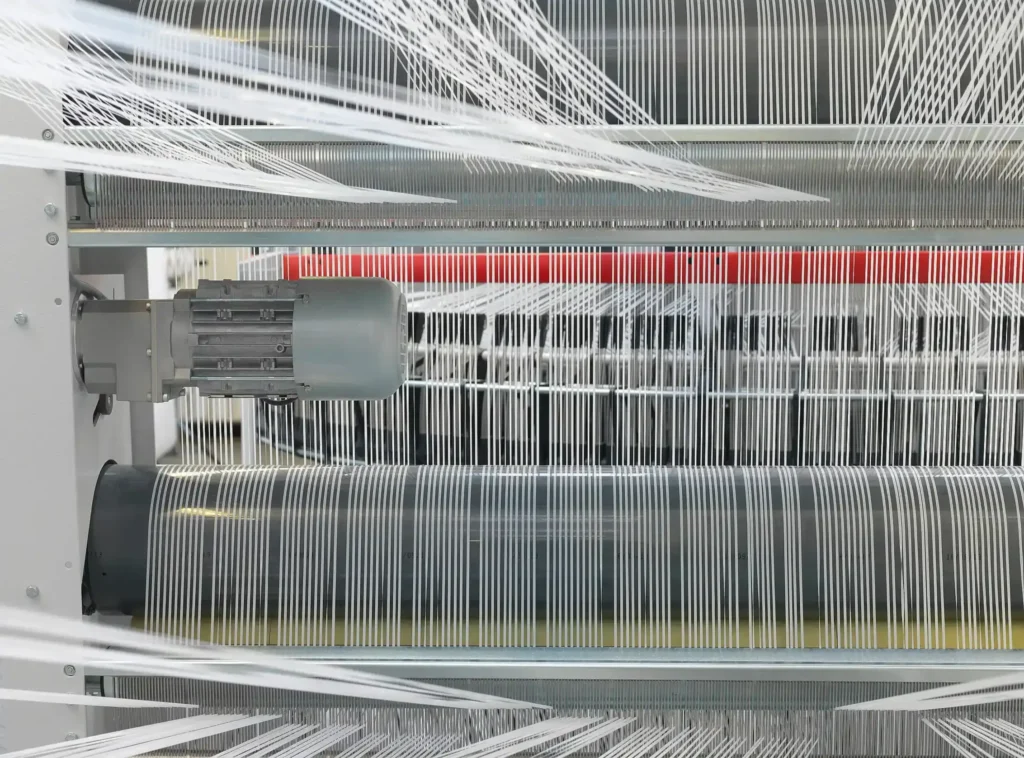
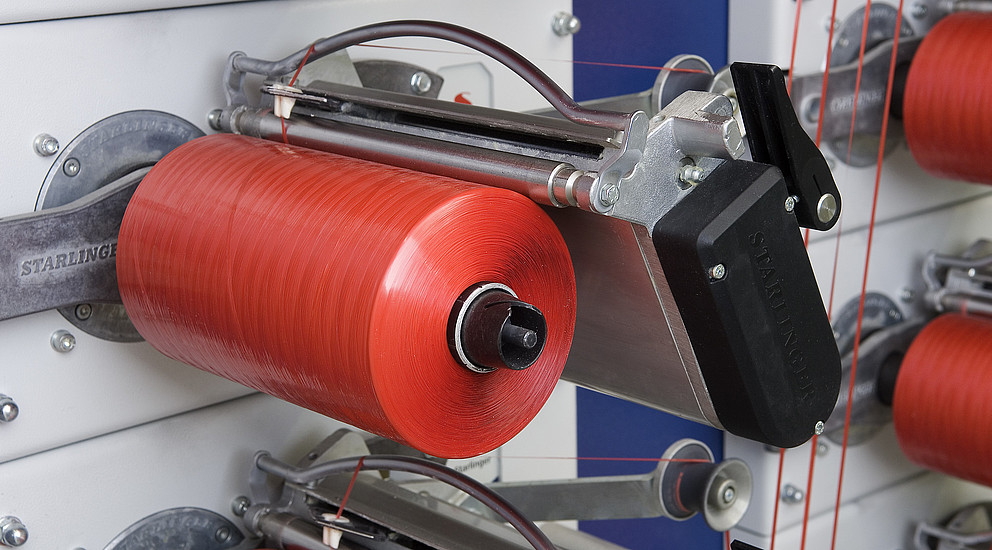
Automation is no longer optional in high-volume industries. FFS roll bags reduce labor costs by 30–40% compared to manual packaging, while increasing output speeds by up to 60%. For instance, VidePak’s Starlinger-powered production lines can produce 12,000 bags per hour, meeting demands for industries like pet food and construction materials.
1.2 Sustainability Imperatives
With the global biodegradable packaging market projected to reach $785 billion by 2030, FFS roll bags made from recyclable polypropylene (PP) align with regulatory and consumer demands. VidePak’s use of virgin PP ensures durability while supporting circular economy goals—40% of its clients now prioritize recyclable solutions.
1.3 Customization for Diverse Markets
Regional preferences vary drastically:
- Europe: Emphasis on ISO-certified, lightweight designs (e.g., <50g bags for retail).
- Asia: High-resolution printing for brand visibility in crowded markets.
- North America: Demand for FDA-compliant food-grade liners.
VidePak’s 16 extrusion lines and 30+ printing machines enable rapid customization, from UV-resistant coatings for Middle Eastern climates to anti-static layers for chemical transport.
2. Technological Edge: How FFS Roll Bags Outperform Traditional Solutions
A comparative analysis reveals why FFS roll bags dominate:
| Parameter | Traditional Bags | FFS Roll Bags |
|---|---|---|
| Production Speed | 5,000 bags/hour | 12,000 bags/hour |
| Material Waste | 8–12% | <3% |
| Customization Lead Time | 14 days | 5–7 days |
| Carbon Footprint | High (multi-step) | Reduced by 25% |
Example: A Brazilian fertilizer producer reduced downtime by 70% after switching to VidePak’s FFS bags, which seamlessly integrated with their existing filling systems.
3. VidePak’s Competitive Advantages
Founded in 2008, VidePak combines legacy expertise with cutting-edge technology:
3.1 Production Capacity
- 100+ circular looms and 30 lamination machines ensure scalability.
- Multi-color printing supports up to 10 Pantone shades, critical for brand differentiation.
3.2 Global Certifications
Compliance with ISO 9001, FDA, and EU REACH standards positions VidePak as a trusted partner for cross-border trade. For example, its BOPP laminated bags meet Japan’s stringent JIS Z 1707 requirements for moisture resistance.
3.3 Case Study: Tailoring Solutions for the Agri-Export Market
A Southeast Asian rice exporter needed bags that could withstand 60°C storage and 85% humidity. VidePak engineered a triple-layer PP-Kraft-PE composite with anti-fungal additives, reducing spoilage by 22%.
4. Sustainability: Beyond Greenwashing
VidePak’s FFS roll bags exemplify actionable sustainability:
- Material Innovation: 30% of raw PP is now sourced from post-industrial recycled content.
- Energy Efficiency: Solar-powered facilities cut CO₂ emissions by 1,200 tons annually.
- End-of-Life Solutions: Partnerships with recyclers like TerraCycle ensure 95% of bags are repurposed.
Industry Insight: The shift to recyclable PP bags mirrors trends in the anti-counterfeit packaging market, where traceability and eco-design converge.
5. Navigating Global Markets: Localized Strategies
VidePak’s success stems from hyper-localized approaches:
- Africa: Reinforced seams for rough handling during transit.
- Europe: Minimalist designs with eco-labels for conscious consumers.
- North America: RFID-enabled bags for Walmart’s supply chain mandates.
A distributor in Germany noted: “VidePak’s agility in adapting to EU’s Single-Use Plastics Directive saved us six months of redesign work.”
FAQs: Addressing Key Client Concerns
Q1: Are FFS roll bags suitable for food products?
Yes. VidePak’s food-grade liners meet FDA and EU 10/2011 standards, ideal for grains, spices, and pet food.
Q2: What’s the minimum order quantity (MOQ)?
MOQ starts at 20,000 bags, with flexible batch scheduling for SMEs.
Q3: How do FFS bags compare cost-wise to woven sacks?
While 15–20% pricier upfront, FFS bags reduce long-term costs via automation and waste reduction.
6. The Road Ahead: Innovation and Expansion
VidePak is piloting smart FFS bags embedded with IoT sensors for real-time tracking—a response to the growing demand for anti-counterfeit solutions. Additionally, collaborations with biopolymer startups aim to launch compostable FFS bags by 2026.
Conclusion
FFS roll bags are not merely packaging—they are a strategic asset for brands navigating efficiency, sustainability, and globalization. VidePak’s blend of scale, customization, and forward-thinking innovation positions it as a leader in this $8.3 billion market. As Ray aptly states: “In packaging, the future belongs to those who adapt faster. With FFS roll bags, we’re not just keeping pace—we’re setting the rhythm.”
This report integrates insights from IndustryARC’s Biodegradable Packaging Market Report and case studies from global packaging leaders to ensure accuracy and depth. For further details on automated solutions, explore our analysis of Form-Fill-Seal technology in modern packaging.