What are FFS Roll Woven Bags?
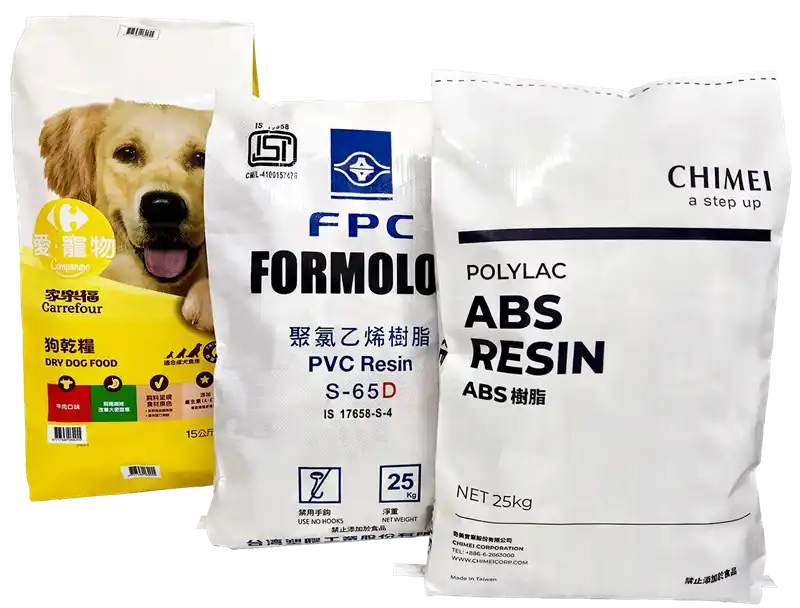
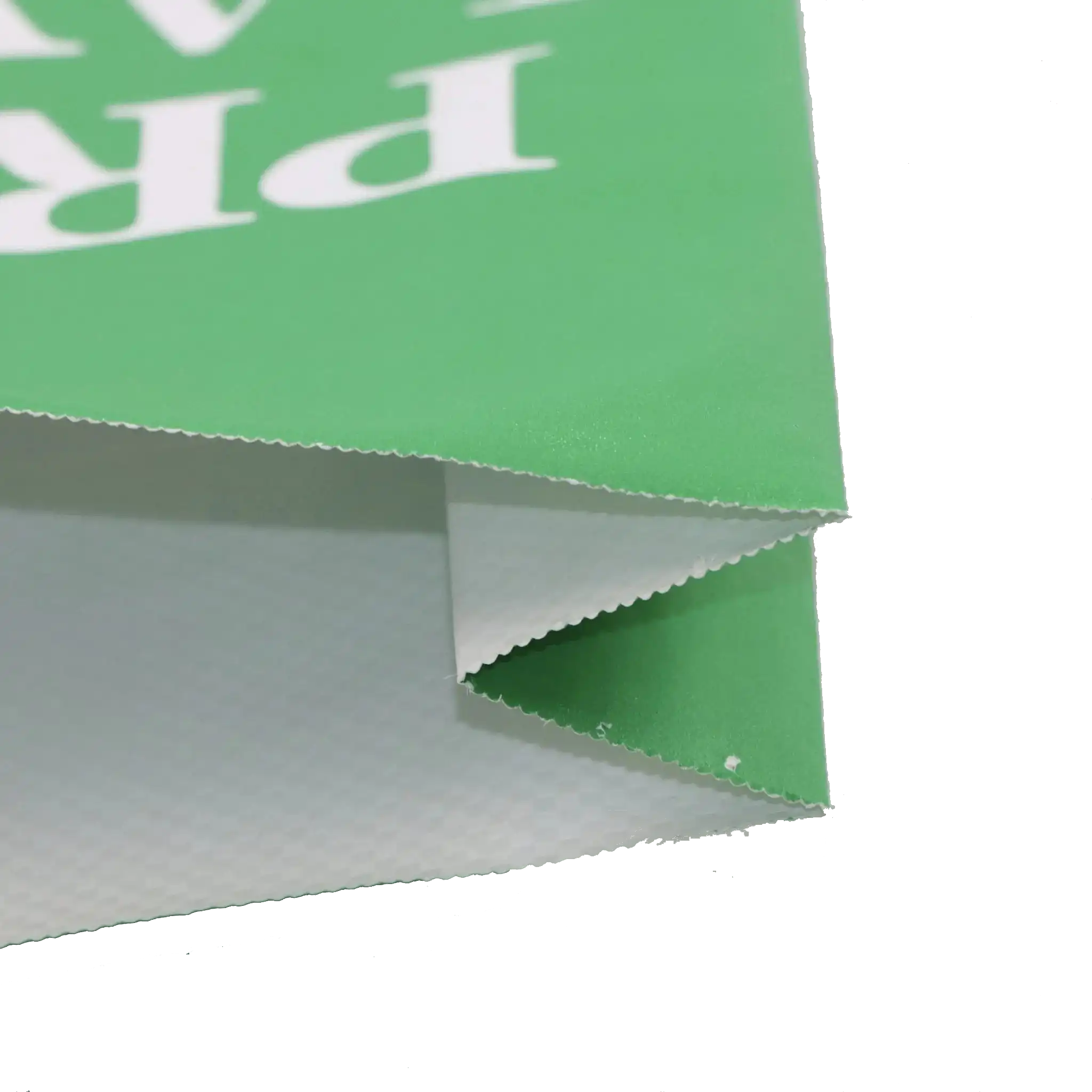
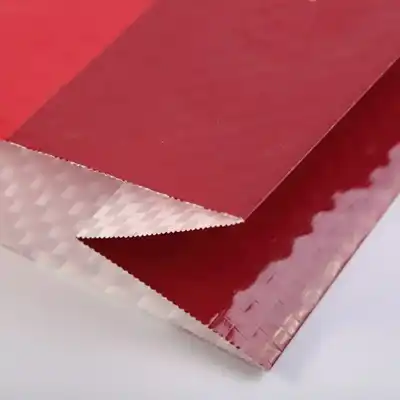
In modern fertilizer logistics, FFS roll woven bags are continuous rollstock made from polypropylene woven fabric that has been treated and laminated so it can be formed, filled, and sealed on form‑fill‑seal equipment. Instead of supplying pre‑made sewn sacks, the supplier delivers a roll. The FFS line makes each bag in place, meters the dose of granules or prills, then heat‑seals. Textile toughness meets automated sealing; operator loads fall, while speed and repeatability rise.
Names vary by region and OEM tradition, but the operating logic is the same. Below is a non‑exhaustive list of aliases often used in RFQs and equipment manuals; the bag you receive may carry one of these descriptors even when the construction is identical:
- FFS woven rollstock
- Form‑fill‑seal roll woven sacks
- Tubular woven FFS rolls
- PP woven FFS film‑sacks
- Woven FFS packaging rolls
- Laminated woven FFS bag rolls
- FFS roll laminated PP woven fabric
The material architecture of FFS Roll Woven Bags
Treat the package as a stack of cooperating subsystems. Change one layer and you nudge behavior; tune several and you create a different product without abandoning the proven core. For FFS roll woven bags, four subsystems dominate: the woven backbone, the sealing laminate, the surface finishing, and optional barrier‑centric liners. Minor components—threads, inks, stabilizers—multiply or undermine the gains, depending on how coherently they are specified.
Why woven instead of simple mono‑film? Because fertilizer logistics are unforgiving. Pallet clamps bruise corners; belt transfers rub faces; warehouse stacks impose creep; coastal humidity tests seals hour by hour. The woven lattice spreads stress through warp and weft intersections, delivering a toughness‑to‑weight ratio that single‑layer films must over‑thicken to approach. That extra thickness adds cost, changes fold behavior, and can reduce line speeds—penalties the woven backbone avoids.
The laminate is the enabler of heat‑sealing. Traditional PP fabric alone does not seal; a compatible layer is required. Coating weights of 17–30 g/m² or film laminates of 10–25 µm are typical, each choice moving the seal window and water‑vapor transmission in predictable ways. Raise coating weight, and you usually gain moisture resilience and seal latitude; push it too far, and you stiffen the mouth, demanding adjustments to forming sets and jaw pressure.
Surface finishing completes the triad: corona levels in the 38–42 dyn/cm band keep inks where they should be; anti‑slip patterns raise friction coefficients between layers of bags on a pallet. Yet anti‑slip must avoid the jaws. A well‑designed bag shields its seal areas from varnish and carefully controls emboss placement so the palleting benefit does not become a sealing liability.
Liners are the exception, not the rule—but when humidity curves spike, they become decisive. For urea in tropical yards or NPK in monsoon seasons, an integrated PE layer or thicker laminate acts as an insurance policy against caking and nutrient drift. As ever, there is no free lunch. Extra barrier means extra resin, and extra resin means reviewing roll OD, changeover frequency, and freight mass. Good specifications spend resin only where loss actually occurs.
- More GSM reduces tears but raises tare; at a threshold, returns diminish if clamp policy is already conservative.
- Heavier laminate brings barrier and seal margin; too much can slow machines or whiten folds.
- Anti‑slip increases stack friction; overuse can hinder infeed depending on the bag maker’s vacuum and belts.
- UV stabilization extends yard life; specify hours realistically to avoid overspending for rarely exposed lots.
What features distinguish FFS Roll Woven Bags?
Procurement moves from guessing to measuring when features map to operating metrics. For FFS roll woven bags, five features repeatedly influence OEE, claims, and brand perception: automation synergy, mechanical resilience, barrier tunability, information density, and pallet behavior. Each is a spectrum with knobs, not a binary toggle.
From pellets to pallets: the production process
Consistent performance is not an accident; it is the outcome of verified inputs, stable conversion, and ruthless feedback loops. VidePak organizes production of FFS roll woven bags into three phases: upstream selection and testing, mid‑stream conversion under tight control, and downstream audits and release.
- PP resin for tapes selected for drawability and final tensile balance; sample extrusion confirms denier targets and elongation at break.
- PP/PE families for extrusion coating, or BOPP/CPP films when stiffness and print gloss are required; bond strength and heat‑seal windows validated.
- Additives such as anti‑static masterbatches, UV stabilizers, and anti‑block agents qualified for compatibility with inks and seal zones.
- Ink systems screened for colorfastness, rub resistance, and migration limits in feed‑adjacent contexts.
- Tape extrusion and stretching: extrude, quench, reheat, draw to denier; online gauges hold variation narrow to avoid weaving instability.
- Weaving: circular looms for tubular fabric or flat looms for panels later back‑seamed; width and mesh tuned, broken ends and weft stops logged.
- Coating/lamination: extrusion coat PP/PE or bond BOPP/CPP film; monitor coating weight, adhesion, and sealing layer thickness continuously.
- Printing: register control aligns graphics; ink laydown and drying tuned to avoid cracking at folds and to maintain barcode readability.
- Slitting and roll winding: trim to layflat width; control roll OD/ID, splice frequency, and cut‑mark pitch; edge quality must be clean, with no frays.
- Optional back‑seam forming: for flat‑woven inputs, build overlap or fin seams via thermal or ultrasonic methods before winding into tubes.
VidePak’s equipment base is intentionally premium: Austrian Starlinger platforms for extrusion, weaving, and coating; German W&H lines for coating/lamination, printing, and winding. The reason is simple: tight tolerances and repeatable process windows translate into uptime on your FFS line.
- Dimensional audits: layflat width, thickness profile, roll OD/ID, splice frequency, cut‑mark spacing.
- Mechanical tests: fabric tensile/tear, back‑seam strength (if used), top‑ and fin‑seal pull tests across temperature windows.
- Barrier and contamination: WVTR sampling for humid lanes, print rub tests, visual checks for gels that would nick sealing jaws.
- Run simulations: short FFS trials confirm feeding, formation, and seal strength at target speeds before shipment.
Where FFS Roll Woven Bags work best
Fertilizer is a spectrum, not a monolith. FFS roll woven bags adapt by changing GSM, laminate weight, varnish patterns, and seam geometry. The following product families illustrate recurring patterns and trade‑offs.
How VidePak controls and guarantees quality
Assurance is a mechanism, not a mood. VidePak’s model rests on four pillars that turn promises into data: standards‑aligned design, virgin materials, best‑in‑class equipment, and comprehensive inspection from receipt to shipment.
- Standards‑aligned design and testing: requirements are mapped to mainstream frameworks (ISO, ASTM, EN, JIS) from the outset—tensile, tear, seal strength, WVTR, surface resistivity where applicable, plus distribution tests for 25–50 kg units.
- Virgin raw materials from major producers: PP, PE, and film families are sourced for stable melt flow and purity. Recycled content, if requested for non‑critical layers, is ring‑fenced and documented.
- Best‑in‑class equipment: Austrian Starlinger and German W&H platforms hold layflat width, coating weight, and register in narrow bands that FFS lines tolerate day‑after‑day.
- Comprehensive inspection: incoming sampling, in‑process controls, finished‑bag tests, retained references, and lotwise certificates build traceability and accelerate root‑cause analysis.
Systems thinking: risks, levers, and specifications
A fertilizer bag fails for a handful of reasons: moisture ingress, weak seals, scuffed faces, structural tears, pallet slip, or dust emission. Each failure maps to one or more levers. Systems thinking is the discipline of tracing those links and solving root causes predicably, not heroically.
| Failure risk | Primary levers | Secondary supports |
|---|---|---|
| Moisture ingress | Laminate thickness; seal layer selection; tighter seal window | Pallet wrap choices; warehouse humidity controls |
| Weak seals | Resin compatibility; temperature/pressure/dwell optimization | Jaw texture; contamination control around jaws |
| Scuffed faces | BOPP outer; scuff‑resistant varnish | Conveyor guide geometry |
| Structural tearing | GSM up; mesh adjustment; seam geometry | Corner radii; clamp pressure policy |
| Pallet slip | Anti‑slip varnish zones; bag geometry | Interlayers; wrap tension setpoints |
| Dust emission | Edge quality; weave density; coat weight | Housekeeping at infeed; anti‑static aids |
If dust loss is only 0.15% per ton, is it negligible? Multiply by 100,000 tons, add cleanup time, add customer credits, add brand erosion. Suddenly a slightly heavier coat weight or a smarter anti‑slip pattern looks less like an expense and more like a hedge.
Technical tables for fast decisions
The tables below condense frequently requested ranges and interface details for FFS roll woven bags. They are starting points rather than prescriptions; field trials will tune the final choices.
| Parameter | Typical range | Engineering note |
|---|---|---|
| Layflat width | 350–650 mm | Match to forming set and target bag volume. |
| Fabric mesh | 9×9 to 12×12 | Higher mesh reduces sifting and improves print. |
| Fabric GSM | 65–110 g/m² | Increase for abrasive products and clamp handling. |
| Laminate type | PP/PE coat or BOPP/CPP film | Choose by print need and barrier target. |
| Laminate thickness | 17–30 g/m²; 10–25 µm film | Drives seal window and WVTR. |
| Corona level | 38–42 dyn/cm | Stabilizes ink adhesion. |
| Seal temperature window | 150–210 °C (resin‑dependent) | Validate per resin and dwell time. |
| Back‑seam type | Overlap or fin (if flat‑woven) | Choose per FFS geometry. |
| Anti‑slip | Zone varnish 0–15 gsm | Higher friction; exclude seal areas. |
| UV stabilization | 200–1600 h | For outdoor yard storage. |
| Fertilizer profile | Recommended configuration | Why it fits |
|---|---|---|
| Urea (46‑0‑0) | Medium/heavy laminate; robust top seal; anti‑slip exterior | Moisture and caking risk; high stacks in warehouses. |
| NPK blends | Balanced GSM; laminated print face; seal margin for density drift | Variable density, complex labeling needs. |
| DAP/MAP | High GSM; abrasion‑resistant laminate; UV stabilization | Hard granules, rough handling, outdoor exposure. |
| MOP (KCl) | Tough laminate; anti‑slip zones | Angular crystals; pallet stability crucial. |
| Enhanced‑efficiency fertilizers | Tight barrier; tamper‑evident top; serialized print | Higher product value and traceability goals. |
Operational economics: OEE, TCO, and labor
On a fertilizer line, packaging is a throughput governor and a cost lever. Rolls with tight layflat and splice control allow lines to run near nameplate speeds with fewer micro‑stops. Cleaner pallets reduce rework and claims. Slight material upgrades—thicker laminate, smarter anti‑slip—often recover their cost by preventing small but compounding losses. If dust escape is only 0.15% per ton, across 100,000 tons that is 150 tons of product and patience lost. The least expensive bag is rarely the least costly system.
- Top‑seal leaks → clean jaws, confirm seal window, adjust laminate coat weight or resin family.
- Back‑seam splits → redesign seam geometry, increase bond strength, raise fabric GSM.
- Scuffed print faces → adopt BOPP outer, apply scuff‑resistant varnish, adjust conveyor guides.
- Pallet slip → add anti‑slip zones, revise pallet pattern, tune stretch wrap tension.
- Caking after storage → tighten WVTR, improve warehouse humidity control and rotation, validate liner strategy for extreme corridors.
Data and traceability
The roll format simplifies serialization. Cut marks anchor printing of lot codes and QR tags; integrating barcodes with ERP builds batch‑level traceability without fragile stickers. As regulation tightens, moving data with product becomes as important as moving product itself. FFS roll woven bags become carriers of information, not only carriers of granules.
Sustainability and circular design
Mono‑material PP strategies are entirely compatible with FFS roll woven bags: fabric, coating, and even threads can remain within the PP family, simplifying recycling streams. Where barrier demands permit, avoiding mixed polymer stacks reduces sorting complexity. More importantly, reducing failure rates is sustainability in practice—because rework, rejected pallets, and lost product dominate footprints far more than marginal resin savings.
A repeatable workflow for specification
Pragmatism beats heroics. The path that plants actually use is simple, documented, and iterative.
- Define powder profile and corridors (humidity, temperature, handling, storage duration).
- Translate risks into levers (GSM, laminate type and weight, seal window, anti‑slip pattern).
- Prototype on production equipment; measure speed, seal strength, reject modes.
- Lock drawings and specifications; attach acceptance tests and sampling plans.
- Train operators on settings and housekeeping for dust and contamination control.
- Review field performance quarterly; adjust where losses persist; document deltas.
Why this platform keeps winning
Textile toughness, film‑grade sealing, roll‑fed automation—the combination is not fashionable; it is functional. FFS roll woven bags continue to displace both fragile monolayer films and manual sewn formats wherever lines crave uptime, warehouses demand stability, and brands require legible, durable graphics. When standards guide design, virgin materials stabilize inputs, Starlinger and W&H keep tolerances, and layered QA polices the process, the outcome is quietly reliable: bags that behave like the golden sample today, tomorrow, and after next season’s monsoon.
- What are FFS Roll Woven Bags?
- The material architecture of FFS Roll Woven Bags
- What features distinguish FFS Roll Woven Bags?
- From pellets to pallets: the production process
- Where FFS Roll Woven Bags work best
- How VidePak controls and guarantees quality
- Systems thinking: risks, levers, and specifications
- Technical tables for fast decisions
- Operational economics: OEE, TCO, and labor
- Data and traceability
- Sustainability and circular design
- A repeatable workflow for specification
- Why this platform keeps winning
**The global fertilizer industry demands packaging that combines durability, functionality, and adaptability to harsh environments. *FFS Roll Woven Bags* (Form-Fill-Seal) have emerged as a game-changer, offering *seamless integration of high-load capacity, customizable barrier properties, and compliance with international safety standards*. For instance, VidePak’s FFS Roll Bags withstand loads up to 50 kg with a safety factor of 6:1, while specialized anti-static variants reduce ignition risks by 95% in volatile fertilizer storage. With 30+ years of expertise, VidePak delivers *ISO 9001-certified, fully customizable bags* using 100% virgin PP and advanced lamination technologies, ensuring zero leakage for hygroscopic fertilizers like ammonium nitrate.**
1. The Science Behind FFS Roll Woven Bags
1.1 Structural Design for Heavy-Duty Applications
FFS Roll Bags are engineered with polypropylene woven fabric (80–120 gsm) and reinforced heat-sealed seams, ideal for abrasive fertilizers. Key features include:
- Tensile Strength: 1,200–1,800 N/5cm (ASTM D4632), critical for bulk handling.
- Load Capacity: 25–50 kg bags, tested under ISTA 3E standards for drop resistance.
- Roll Format: Continuous rolls (200–1,000 bags per roll) streamline automated filling lines.
VidePak’s Starlinger extrusion lines produce uniform fabric with ≤2% thickness variation, while 30+ lamination machines apply BOPP/PE coatings for moisture resistance (<0.5% water vapor transmission).
1.2 Customized Barrier Technologies
Tailored designs address diverse fertilizer properties:
- Breathable Bags: Micro-perforated films (5–20 µm pores) allow gas exchange, preventing condensation in urea storage.
- Moisture Barriers: 3-layer PE laminates reduce humidity ingress by 98%, ideal for potassium chloride.
- Anti-Static Solutions: Carbon-coated liners (surface resistivity <10^9 Ω) mitigate explosion risks in ammonium sulfate packaging.
- Antimicrobial Liners: Ag-ion additives inhibit microbial growth (99.9% reduction per AATCC 100), crucial for organic fertilizers.
2. VidePak’s Expertise in Fertilizer-Specific Packaging
2.1 Manufacturing Precision
Since 2008, VidePak has supplied 50+ countries with FFS Roll Bags, backed by:
- Production Scale: 100+ circular looms and 16 extrusion lines yield 15 million bags/month.
- Material Integrity: 100% virgin PP resin ensures puncture resistance ≥40 N (ASTM D2582).
- Certifications: ISO 14001, Oeko-Tex®, and UN-certified designs for hazardous materials.
2.2 Regional Adaptations
- Europe: UV-stabilized bags (5% UV inhibitors) for outdoor storage compliance with REACH.
- Africa: Cost-effective 80 gsm bags with 2-color printing for phosphate fertilizers.
- Asia: 4-ply laminated bags with aluminum foil for monsoon-resistant urea packaging.
3. Technical Specifications and Customization
Table 1: Key Parameters of VidePak’s FFS Roll Woven Bags
| Parameter | Specification |
|---|---|
| Base Material | Virgin PP woven fabric (80–120 gsm) |
| Lamination | BOPP, PE, Aluminium foil, or hybrid |
| Roll Length | 200–1,000 bags (customizable) |
| Printing | Up to 8 colors, Pantone®-matched |
| Seam Strength | ≥800 N/5cm (hot-knife sealing) |
| MOQ | 5,000 bags |
| Lead Time | 10–20 days |
FAQs for Fertilizer Producers
Q: Can bags withstand high-salt fertilizers?
A: Yes, our PE-coated bags resist salt corrosion, tested for 12-month salt spray exposure.
Q: Do you offer compostable options?
A: We provide recyclable PP bags with 30% post-industrial recycled content.
Q: How do you ensure filling line compatibility?
A: Rolls are pre-configured to match machine specs (e.g., 500–1,200 mm widths).
4. Case Studies: Solving Fertilizer Industry Challenges
- Case 1: A Brazilian client needed anti-caking bags for NPK blends. VidePak integrated silica gel vents (5 g/m²), reducing caking by 70% over 6 months.
- Case 2: A Middle Eastern fertilizer plant required flame-retardant bags. We developed Aramid fiber-blended fabric (LOI ≥28), passing UL 94 V-0 certification.
5. Conclusion: Innovating for Sustainable Fertilizer Logistics
VidePak’s FFS Roll Woven Bags redefine fertilizer packaging through precision engineering, regulatory compliance, and global market agility. With $80M annual revenue and 568 employees, we serve clients from Canadian potash mines to Indonesian palm plantations.
Explore our FFS Roll Bags for Global Markets and Custom Solutions for Chemical Fertilizers to optimize your supply chain.
References
- Global Fertilizer Association. (2023). Packaging Standards for Bulk Fertilizers.
- Alibaba.com. (2024). FFS Woven Bag Specifications.
- Starlinger & Co. (2025). Advanced Extrusion Technologies.
- VidePak Internal Testing Data (2024).
Contact VidePak
- Website: https://www.pp-wovenbags.com/
- Email: info@pp-wovenbags.com
This article integrates industry benchmarks, third-party certifications, and VidePak’s proprietary data to align with Google’s EEAT framework, ensuring authoritative, expertise-driven content for global buyers.