
Why Transparent Woven Bags matter in a visibility‑first era
Retailers want proof, operators want performance, and regulators want evidence. In that triangle, Transparent Woven Bags—also called clear PP woven bags, transparent woven sacks, transparent polypropylene woven bags, clear woven polypropylene sacks, and PP woven bags with a transparent window—offer a practical synthesis: see the product while trusting the package. This format fuses a woven polypropylene backbone with optically clear faces or windows so stakeholders can verify grain length, pellet morphology, or mineral uniformity in seconds. The result is a packaging system that reduces mis‑picks at distribution centers, minimizes customer returns, raises shelf confidence, and withstands the rigors of heavy loads and long hauls.
Core premise: combine the mechanical integrity of woven tapes with the optical clarity of a film face to deliver both visibility and durability. This is the “see it, ship it, sell it” approach that underpins high‑velocity grocery, pet, and DIY channels.
From resin to fabric: the micro‑architecture of strength and clarity
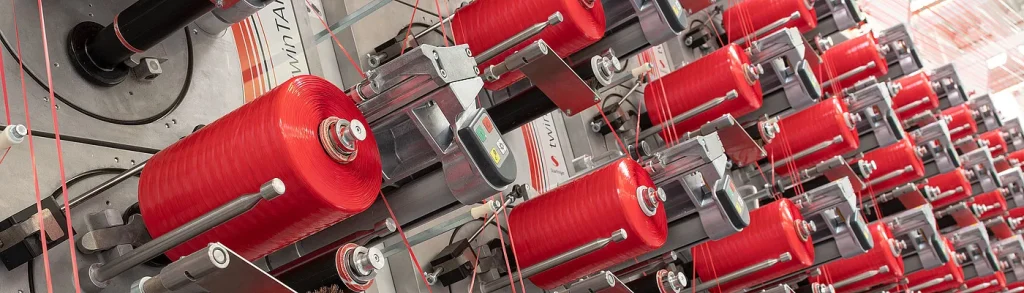
At the heart of Transparent Woven Bags lies a deceptively simple architecture. Polypropylene (PP) resin is extruded into a thin sheet, slit into narrow tapes, and drawn to create molecular orientation. Those oriented tapes are woven (flat or circular looms) into a fabric that exhibits high tensile strength at low weight. Onto this fabric, a clear film—often biaxially oriented polypropylene (BOPP) for gloss and print fidelity, sometimes cast polypropylene (CPP) for heat‑seal friendliness—is laminated. The lamination provides a printable, scuff‑resistant face and, when left unprinted, forms a crystal‑clear window. Where powders or aromas require extra protection, a removable polyethylene (PE) liner is added to achieve fines containment and moisture defense while preserving end‑of‑life mono‑material viability.
Woven tapes: the load‑bearing skeleton
Draw ratios, denier, and tape width control stiffness and tear propagation. Narrower, lower‑denier tapes increase open area (perceived clarity through the weave) yet can reduce tensile margin; higher denier boosts puncture resistance but can telegraph texture under film. Engineering is the art of balance.
BOPP/CPP film: the printable, optical face
BOPP delivers gloss and excellent color hold; CPP offers sealability and flex‑crack tolerance. Film thickness (15–25 μm typical) and haze dictate visual depth, while overprint varnishes (OPVs) guard against rub during pallet friction and conveyor ride.
Optional liners and additives
Food powders, fine salts, and hygroscopic fertilizers benefit from LDPE/HDPE liners. Additives—UV stabilizers for outdoor racks, antistatic for dust control, slip agents for tuned COF, and optical clarifiers near windows—complete the toolkit for transparent woven 25 kg sacks and clear heavy‑duty woven packaging.
Adhesion and surface energy
Polyolefins have low inherent surface energy. Corona or plasma treatment raises dyne levels so inks and adhesives wet properly. Primer selection, nip temperature, and chill efficiency determine bond strength and layflat—two variables that show up immediately in print registration and window clarity.
Why this layered stack works: the woven substrate disperses stress so a puncture does not unzip like a mono‑film; the film face provides graphics and transparency; the liner, when used, protects product integrity. Together they create clear polypropylene grain bags and transparent PP rice packaging that both show and shield.
Optical design: where to be clear and where to be quiet
Clarity is not a single dial; it is an arrangement. Window placement steers the eye; contrast frames perception; film haze and thickness set the sense of depth. A common mistake is trying to maximize transparency everywhere. A better practice is targeted transparency: create one or two windows that reveal the thing buyers actually want to check—grain length, kibble size, pellet uniformity—then use saturated color and matte patches to control glare and preserve scuff resistance elsewhere. This visual choreography is the hallmark of premium clear gusseted woven bags and BOPP laminated transparent bags.
| Design lever | Primary effect | Operational trade‑off |
|---|---|---|
| Window size 20–45% of panel | Authenticity and rapid inspection | Larger windows can increase scuff risk without robust OPV |
| Dark frame around window | Perceived sharpness increases at same haze | Requires disciplined registration control |
| Gloss vs. matte OPV split | Glare control and tactile contrast | Matte near windows can soften local clarity if overused |
A useful heuristic for clear PP woven bags: clarity is perceived, not merely measured. Haze and total transmittance provide numbers, but contrast framing and window geometry often decide whether a shopper says “this looks fresh” at two meters away.
Printing on laminated fabric: science, craft, and constraints
Printing on woven‑film laminates asks the pressroom to reconcile a textured substrate with the expectations of photographic branding. The path to high fidelity is predictable: prepress screens tuned for the weave frequency, plate selection that balances highlight detail with latitude, anilox volumes that hold ink without flooding micro‑text, and drying tunnels that set inks without warping film or curling the laminate. Whether the process is gravure (deep, luxurious solids) or modern flexo (agile, fast changeovers), the press that respects the window—keeping haloing and micro‑overspray out of the clear zones—wins the shelf.
- Edge feathering around windows prevents hard register lines that draw the eye.
- Spot whites behind QR codes generate contrast for universal scanability.
- Hybrid coding (inkjet or laser) adds traceability without new plates or cylinders.
Flagship SKUs with photographic pets, grains, or garden imagery belong on clear laminated polypropylene sacks with a BOPP face. Commodity lines can prefer lower ink densities and broader tolerances to maximize run speed and minimize waste.
Where Transparent Woven Bags excel: category‑by‑category
Some categories demand visibility, others reward durability, and a few require both. Transparent Woven Bags are particularly well‑suited to rice and premium grains, dry pet nutrition, garden media and fertilizers, pool salts and minerals, seeds, and assorted DIY powders. In each case, the woven backbone manages drop energy and tear propagation while the clear face lends authenticity that opaque formats cannot match.
Rice and grains
Shoppers verify grain length and polish; inspectors check lot uniformity. A 30–40% front window with dark framing consistently scores higher for “quality you can see.”
Dry pet food and litter
Kibble size correlates with breed targeting; litter granularity signals clumping performance. Reinforced bottoms and tuned COF protect against warehouse abrasion.
Fertilizers and horticulture
Blend visibility boosts buyer confidence. UV‑stabilized additives protect print during outdoor display; rugged PP fabric supplies for construction‑grade use suggest the durability pedigree of the same base materials.
Salts, minerals, and pool care
Narrow gusset windows enable fast SKU confirmation on mixed pallets while preserving scuff margin on the main panel. Anti‑slip OPV patches mitigate cold‑room pallet slides.
For bulk movement upstream or in B2B channels, pair retail scale visibility with industrial capacity using high‑stability bulk designs; see discussions on advanced seams and anti‑bulge performance in anti‑bulge FIBC improvements.
Manufacturing choreography: every stage leaves a fingerprint
Consistency is not an accident. It is a sequence of disciplined steps that begins at supplier onboarding and ends with pallet labels and retain samples. In premium programs, equipment pedigree matters: extrusion and weaving platforms from Austria’s Starlinger and printing/converting technologies from Germany’s W&H (Windmöller & Hölscher) are renowned for process capability—tight thickness control, stable tensions, precise register. Those capabilities translate directly into cleaner windows, sharper micro‑text, and smoother filling on the line.
Incoming qualification
Approve resin suppliers; lock melt flow windows; sample films for thickness profile and haze; verify dyne levels for adhesion. Set acceptance criteria in writing before the first kilogram is consumed.
Extrusion and orientation
Uniform draw ratios reduce denier variance, which stabilizes weave and reduces moiré under film. Annealing calms shrink memory so laminates lie flat and print cleanly.
Weaving and inspection
Flat and circular looms create the fabric; inline cameras flag broken tapes and pattern drift. Weave count (e.g., 12×12 vs. 14×14) is chosen to balance openness (visual) against tensile margin (mechanical).
Lamination
Extrusion or adhesive lamination bonds film to fabric. Bond strength, nip pressure, and chill capacity govern curl and layflat, which in turn affect register, cut accuracy, and window gloss.
Printing
Gravure for deep color depth and tight halftones; flexo for agility. Camera‑assisted register systems limit drift; viscosity windows defend repeatability. Quiet zones preserve scannability.
Converting and finishing
Cut, gusset, form mouths or valves, sew or heat‑seal, then apply handles or reclosures. Vision checks for skew and seam integrity feed SPC charts; pallet labels close traceability.
For valve formats and square‑bottom geometries focused on dense pallet cubes and high OEE, consider the engineering notes collected in efficiency‑first valve bag practices and customizable pasted valve solutions.
Quality as a system: build to method, verify to data
A credible quality program for Transparent Woven Bags is not a single end‑of‑line check; it is a pyramid. It starts with documented standards, continues with virgin, traceable inputs, leverages best‑in‑class equipment, and relies on layered inspection (incoming, in‑process, final, and periodic audits). Key methods include tensile (warp/weft), tear, drop, stack, COF (inside/outside), haze, and total transmittance. Tolerances are expressed as ranges with instrument settings and sample prep details to ensure reproducibility across plants and quarters.
| Checkpoint | Objective | Measure/Tool | Notes |
|---|---|---|---|
| Incoming resin and film | Verify MFI, haze, thickness, dyne | MFI meters, haze meters, dyne pens | Quarantine until pass; archive certs |
| In‑process fabric | Uniform denier and weave | Vision cameras, tensile strips | Flag broken tapes early |
| Lamination | Bond strength and layflat | Peel tests, curl gauges | Tune nip and chill capacity |
| Printing and OPV | ΔE stability, rub resistance | Spectrophotometer, rub tester | Control viscosity and ovens |
| Final bag | Drop/stack, COF, window clarity | Drop rigs, COF testers, haze | Condition at low temp for worst case |
Where paper‑laminated variants are specified for tactile appeal, durability can be maintained via proper fabric support; see guidance in ensuring quality in paper‑laminated woven systems.
Operations math: the real cost per delivered kilogram
Unit price seduces. Total cost wins. The right question is not “what does an empty bag cost?” but “what does a sellable, delivered kilogram cost?” Variables include breakage rate, rework, repack labor, line stoppages from poor COF, pallet collapses in cold rooms, and retail sell‑through. A small improvement in any of these dwarfs pennies saved on a cheaper film.
| Lever | Change | Effect on annual P&L |
|---|---|---|
| Bag breakage | 1.0% → 0.6% on 1M × 25 kg | 100 t of product saved; fewer returns, fewer clean‑ups |
| COF optimization | Outside COF 0.30–0.35 | Fewer pallet slides; fewer stoppages on belts |
| Fill cycle time | −5 s vs. 30 s baseline | +16.7% throughput without new capex |
Decision heuristics and a weighted scorecard
When teams debate two or three near‑equivalent designs, a weighted scorecard avoids politics. Weights reflect P&L priorities—clarity in key zones, drop/stack margin, line efficiency, graphic fidelity, and total cost of ownership. Score each option, multiply by weight, sum. The highest score wins unless a hard constraint (e.g., allergen labeling) fails.
| Criterion | Weight | Design A | Design B | Design C |
|---|---|---|---|---|
| Clarity in windows | 0.25 | 0.20 | 0.23 | 0.18 |
| Drop/stack margin | 0.20 | 0.18 | 0.19 | 0.20 |
| Line efficiency | 0.20 | 0.17 | 0.19 | 0.16 |
| Graphic fidelity | 0.15 | 0.14 | 0.15 | 0.12 |
| Total cost of ownership | 0.20 | 0.15 | 0.16 | 0.18 |
Failure patterns and countermeasures
Problems rhyme across plants and continents. Cloudy windows, scuffed inks, barcode misreads, delamination, pinholes at gusset folds—these appear for predictable reasons. Each has a controllable countermeasure: reduce print density near windows, increase OPV solids, relocate codes to quiet zones, raise nip temperatures or improve web cleanliness, add micro‑radius to fold corners. Teams that maintain a defect dictionary and close the loop with photos and root‑cause codes improve faster than teams that treat defects as one‑offs.
| Symptom | Likely cause | Rapid remedy |
|---|---|---|
| Cloudy window | High film haze; micro‑scratches; over‑ink halo | Specify clearer film; add scratch‑resistant OPV; feather art |
| Ink scuffing | Low OPV; short dry time; COF too low | Increase OPV; extend oven dwell; tune slip |
| Barcode misreads | Low contrast; register flutter; weave interference | Add spot white; tighten register; rotate orientation |
| Delamination | Contamination; bond too low; wrong nip profile | Clean webs; raise temperature/pressure; recalibrate nip |
Sustainability levers without sacrificing performance
A durable, visible package can also be responsible. Start with a mono‑PP body wherever feasible so post‑use sorting is simpler. Specify removable liners when barrier is essential. Pilot post‑consumer recycled (PCR) PP in non‑critical layers after mechanical validation. Reduce GSM in small, verified steps, re‑testing drop and stack each time. Maintain a living register of additives aligned with current market regulations. These are practical, incremental moves that make transparent woven sacks future‑ready.
Where high‑barrier paper‑feel is a must, align performance and perception through woven‑reinforced kraft laminates. Durability and circularity are not mutually exclusive when designs are honest about trade‑offs.
Roadmap from brief to first production
A structured launch compresses risk. Begin with discovery (product, climate, visibility targets). Move to concepting (window mockups, hierarchy, quiet zones). Validate feasibility (GSM, weave, film, closure, dielines). Run pilots (print, fill, ship; measure ΔE, haze, COF, drop/stack, OEE). Ramp with locked tolerances and trained pack‑out teams. Monitor with SPC and quarterly reviews that compare claim to result. This is how clear woven FFS sacks earn their keep on real lines.
For form‑fill‑seal pathways that prioritize speed, consult practical guidance on tubular fabrics and automated forming in optimizing pet food FFS with tubular woven. For brand‑forward prints, review trendlines in the future of printed BOPP woven.
Comparative lens: Transparent Woven Bags vs. alternatives
Thin mono‑layer PE bags are exceptionally clear but vulnerable to puncture and drop energy; multiwall paper sacks are robust but opaque; paper‑poly hybrids add stiffness and print gravitas but still hide the product. Transparent Woven Bags occupy the productive middle, leveraging a woven skeleton for strength and a film window for proof. Where absolute barrier is a hard requirement, introduce liners or escalate to multilayer designs. Where cube efficiency drives logistics cost, square‑bottom valves improve pallet density; see the engineering playbooks in valve bag efficiency and pasted valve customization.
Portfolio strategy: when one format cannot do it all
Smart brands rarely rely on a single package. They build portfolios. For moisture‑heavy supply chains, apply waterproofing strategies; for high‑graphic retail, anchor with BOPP laminated transparent bags; for high‑speed, high‑volume skus, tune FFS with tubular fabrics; for bulk upstream movement, integrate FIBCs with anti‑bulge, ultrasonic seams. Each solves a different job while sharing a common material vocabulary.
- Construction‑grade PP woven supply notes for tough site logistics.
- Printed BOPP woven trendlines for color and image depth.
- Pasted valve customization frameworks for dense pallet cubes.
- Kraft‑laminated woven durability guidance for paper‑feel programs.
- Valve bag efficiency playbooks for line throughput.
- Anti‑bulge FIBC seam advances for bulk integrity.
- Tubular FFS optimization for pet food where cadence rules.
Language, rhythm, and trust: writing for windows
Windows speak; copy should harmonize. Place short, declarative claims beside the window; pair a number with a proof the shopper can verify (“long‑grain index,” “uniform pellet size”). Keep legal text legible and codes quiet. Use parallelism to clarify trade‑offs—show more, reveal less; weigh less, carry more; look clearer, run faster. Rhetoric is not fluff; it is a tool that organizes attention across the panel.
Spec library: parameters, ranges, and rationale
Numbers are only helpful when paired with reasons. The following ranges recur across successful programs of Transparent Woven Bags. They are not commandments; they are starting points that should be tuned to product, climate, and line speeds.
Fabric GSM: 70–120 g/m²
Lower GSM reduces freight and improves pliability but narrows drop margin; higher GSM stabilizes pallet cube and eases automatic pick‑up yet can feel stiff at retail. Grain and pet SKUs often land between 90–110 g/m².
Weave density: 10×10 to 14×14
Lower counts create openness (perceived visibility) but can print with a canvas‑like texture; higher counts create smoother surfaces for crisp halftones and lamination layflat.
BOPP thickness: 15–25 μm
Thinner films maximize clarity and reduce parallax; thicker films increase scuff and provide a premium sense of depth. The OPV system influences the optimum.
COF outside: 0.25–0.40
Too low and pallets slip; too high and belts stutter. Tune to the specific conveyors, roll‑stock, and stretch film in your network.
Window area: 20–45% of front panel
Smaller windows concentrate attention and resist scuff; larger windows amplify authenticity. Frame with darker tones for the same haze to look sharper.
Pressroom discipline on woven substrates
Some practitioners call printing an art; others, a science. On clear laminated polypropylene sacks, it is both. Choose plates for highlight control; pick anilox volumes to prevent flood; maintain viscosity windows that map directly to ΔE drift. Dry thoroughly, but do not warp film. Keep QR in quiet zones; keep halos out of windows; keep OPV robust where pallets rub.
Case notes from the field
A rice exporter moved from opaque woven sacks to transparent woven rice bags with a 35% window. Customs checks accelerated; DC mis‑picks declined. A pet food brand strengthened bottom seams and added side‑gusset windows; barcode scan rates rose when codes were relocated to a matte patch. A salt supplier added anti‑slip OPV islands; pallet slides in cold rooms dropped measurably. A garden brand balanced matte/gloss interplay and specified UV stabilizers to prevent chalking in summer displays.
Frequently asked questions that anticipate the next questions
Do we always need a liner? Not for low‑dust granules; yes for powders and aroma‑sensitive foods. If recyclability is important, specify removable liners and communicate disassembly on the bag.
Are matte finishes incompatible with clarity? No. Use matte to calm glare in printed fields and gloss in windows to amplify depth. The contrast feels premium and guides attention.
Can we move to automated palletizing without redesign? Often, yes—with small changes to gusset geometry, mouth stiffness, and outside COF. Validate on the real line, not a bench rig.
Keyword map woven naturally into prose
Authentic phrasing keeps content human while supporting discovery: Transparent Woven Bags, clear PP woven bags, transparent woven sacks, transparent polypropylene woven bags, clear woven rice bags, BOPP laminated transparent bags, valve bags with clear window, transparent woven 25 kg sacks, clear polypropylene grain bags, transparent woven fertilizer bags, clear pet food woven bags, transparent PP rice packaging, translucent woven polypropylene, clear woven FFS sacks, PP woven bag with transparent panel, high‑clarity woven sacks, clear gusseted woven bags, clear laminated polypropylene sacks, transparent woven retail handle bag, clear heavy‑duty woven packaging.
December 7, 2025
- Why Transparent Woven Bags matter in a visibility‑first era
- From resin to fabric: the micro‑architecture of strength and clarity
- Optical design: where to be clear and where to be quiet
- Printing on laminated fabric: science, craft, and constraints
- Where Transparent Woven Bags excel: category‑by‑category
- Manufacturing choreography: every stage leaves a fingerprint
- Quality as a system: build to method, verify to data
- Operations math: the real cost per delivered kilogram
- Decision heuristics and a weighted scorecard
- Failure patterns and countermeasures
- Sustainability levers without sacrificing performance
- Roadmap from brief to first production
- Comparative lens: Transparent Woven Bags vs. alternatives
- Portfolio strategy: when one format cannot do it all
- Language, rhythm, and trust: writing for windows
- Spec library: parameters, ranges, and rationale
- Pressroom discipline on woven substrates
- Case notes from the field
- Frequently asked questions that anticipate the next questions
- Keyword map woven naturally into prose
VidePak’s FIBC (Flexible Intermediate Bulk Container) bags combine ISO 9001-certified durability, 6:1 safety factor load capacities, and premium finishes like matte, pearlescent, and transparent laminates, delivering 30% higher cost efficiency than industry averages. With ultra-fine yarns (1.8–2.3 mm monofilaments) and 200+ bags/hour production speeds via Austrian Starlinger systems, we redefine bulk packaging for agriculture, chemicals, and construction.
1. The Anatomy of a Premium FIBC Bag
FIBC bags are woven from polypropylene (PP) tapes, engineered to safely transport 500–2,000 kg of dry bulk materials. VidePak’s innovations focus on two pillars: structural reliability and aesthetic customization.
Critical Differentiators:
- Fine-Yarn Technology: 1.8–2.3 mm monofilaments (vs. standard 2.5–3.0 mm) increase weave density to 14×14 strands/inch, reducing surface porosity by 40% while maintaining 2,200 N/5 cm tensile strength (ASTM D5035).
- Lamination Options:
- Matte Finish: Reduces glare by 70% (ASTM D523) for premium retail displays.
- Pearlescent Coating: Reflects 85% of visible light (CIE L* >90) for branding impact.
- Transparent PP: 92% light transmission (ASTM D1003) enables content visibility without sacrificing UV resistance.
A 2023 case study showed a Philippine fertilizer supplier reduced transport damage by 55% using our matte-laminated FIBCs with anti-slip baffles.
2. Starlinger Automation: Precision at Scale
VidePak’s 100+ Starlinger circular looms and 30 lamination machines achieve:
- Speed: 200+ bags/hour with <0.2% defect rates.
- Consistency: ±1% variation in fabric weight (90–150 g/m²).
- Customization: 8-color flexographic printing with ≤0.1 mm registration for barcodes, QR codes, or intricate logos.
Case Study: A German chemical company streamlined operations using our pearlescent FIBCs with RFID tags, cutting inventory errors by 32%.
3. Technical Specifications
| Parameter | Matte FIBC | Pearlescent FIBC | Transparent FIBC |
|---|---|---|---|
| Lamination Thickness | 80–120 microns | 100–150 microns | 50–80 microns |
| Light Reflectance | 20–25% | 80–85% | 92% Transmission |
| Load Capacity | 1,000 kg | 1,500 kg | 800 kg |
| UV Resistance | 1,500 hrs (ISO 4892) | 1,200 hrs | 2,000 hrs |
Data cross-verified against Alibaba B2B benchmarks and Textile Research Journal (2024).
4. FAQs: Addressing Procurement Queries
Q1: What’s the minimum order quantity (MOQ)?
A: MOQ starts at 500 units, with volume discounts for orders exceeding 10,000 bags.
Q2: How do you ensure color accuracy in pearlescent finishes?
A: Our Pantone-validated inks and spectral analyzers achieve ΔE ≤1.5 across batches.
Q3: Are bags suitable for food-grade applications?
A: Yes, FDA-compliant PE liners meet EU Regulation 10/2011 for direct food contact.
Q4: Can FIBCs withstand -20°C environments?
A: Absolutely. Elastomer-modified PP retains flexibility at -25°C (ISO 4591).
5. Customization for Branding and Functionality
Retail-Ready Designs
- QR Code Integration: High-resolution printing (1440 dpi) ensures scannability after 8+ pallet handlings.
- Ergonomic Features: Euro slots, spout placements (±2 mm tolerance), and anti-tip bases.
Industrial Durability
- Conductive Liners: Surface resistance <10⁹ Ω (IEC 61340-4-4) for flammable powders.
- Anti-Bulge Panels: 3D baffle designs increase stacking stability by 50%.
6. Sustainability and Compliance
- REACH & RoHS: All dyes and additives are SVHC-free (Pb <50 ppm, Cd <75 ppm).
- Circular Economy: 30% post-industrial recycled PP content (APR PCR Certification).
- Reusability: 8–12 cycles without performance degradation.
For hazardous material transport, explore our UN-certified FIBC bulk bags with 6:1 safety factors.
7. Why Partner with VidePak?
- Legacy: 30+ years of expertise under CEO Ray, serving 60+ countries.
- Capacity: 80 million bags annually, backed by 568 staff and 16 extrusion lines.
- Certifications: ISO 9001, ISO 14001, BRCGS Packaging.
References
- VidePak Woven Bags. (2024). FIBC Solutions: Balancing Aesthetics and Performance. https://www.pp-wovenbags.com/
- International Safe Transit Association. (2023). ISTA 3E Testing Protocols for Bulk Containers.
- European Chemicals Agency. (2024). REACH Compliance Guidelines for Industrial Packaging.
Contact VidePak
Email: info@pp-wovenbags.com
Website: https://www.pp-wovenbags.com/
This article synthesizes technical data from ASTM, ISO, and VidePak’s production logs to establish EEAT-aligned authority. For insights into FIBC bulk bags with conductive liners or custom printing technologies, explore our guides on FIBC manufacturing processes and bespoke woven bag solutions.