# Food‑Grade Woven Fabric Bags — A Systems‑Level, Practice‑Ready Guide for Materials, Compliance, Production, Applications, and Quality at VidePak
## 1) What Are Food‑Grade Woven Fabric Bags?
**Food‑Grade Woven Fabric Bags** are engineered flexible packages manufactured from polypropylene (PP) raffia fabric and allied hygienic components that meet documented food‑contact requirements. Unlike general‑purpose woven sacks, **Food‑Grade Woven Fabric Bags** are specified, produced, and audited under food‑safety frameworks (e.g., HACCP/GMP/ISO 22000) to minimize risks of chemical migration, physical contamination, and microbiological carryover while still delivering the mechanical strength, print fidelity, and pallet discipline expected in modern distribution. The target use covers bulk and semi‑bulk ingredients—sugars and salts, starches and flours, pulses and grains, dairy powders and proteins, drink mixes, baking premixes, seasonings, nutraceutical blends, and animal nutrition bases that must meet elevated hygiene and traceability expectations.
Also known as (aliases):
1. **Food‑Safe Woven PP Bags**
2. **Food‑Contact Polypropylene Woven Bags**
3. **Hygienic Woven Fabric Sacks**
4. **Food‑Grade PP Woven Sacks**
5. **Sanitary Woven Polypropylene Packaging**
6. **Food‑Approved Woven Poly Bags**
7. **GMP‑Converted Woven PP Bags**
Why the market uses them: ingredients move across continents, climates, and audit regimes. Shifts from small paper sacks to stronger, lighter woven PP formats are driven by the need to reduce transit damage, improve warehouse efficiency, and document food‑safety controls without sacrificing label clarity or consumer trust. **Food‑Grade Woven Fabric Bags** solve this by pairing a strong mono‑polyolefin backbone with food‑contact liners and migration‑safe inks/adhesives, converting those materials in clean zones with validated sanitation, and locking each lot to digital traceability. The result: reliable handling, credible compliance, and repeatable quality at scale.
—
## 2) The Materials of Food‑Grade Woven Fabric Bags (Architecture, Constituents, Cost/Benefit)
A **Food‑Grade Woven Fabric Bag** operates as a stack of purposeful layers. Each layer earns its place by contributing strength, cleanliness, barrier, and documentable safety. The bill of materials (BoM) is chosen not only for mechanical performance but also for its regulatory status, extractables/overall migration behavior, and cleanliness in conversion.
### 2.1 Structural Backbone — Woven Polypropylene Fabric
• What it is: Raffia‑style PP tapes extruded from virgin, food‑contact‑compliant polypropylene, slit, mono‑oriented to unlock tenacity, and woven on circular or flat looms into tubular or flat cloth.
• Typical mass window: 60–120 g/m² for 20–50 kg sacks; 140–230 g/m² for FIBC panels (when the same discipline is extended to big bags used for food ingredients).
• Why it matters: Provides tensile/tear/puncture capacity, drop survival, and stack compression resistance at a low mass footprint. Unlike paper multi‑wall, woven PP retains strength after splash events and through humid cycles.
• Hygiene lens: Resin must be certified for intended food‑contact conditions; tape extrusion and weaving must minimize yarn shedding and incorporate routine cleaning to reduce fiber particulates.
• Cost lens: Resin and loom time dominate. Incremental GSM increases add cost; however, smart seam and mouth engineering often provide better ROI than simply increasing fabric mass.
### 2.2 Hydrophobic Faces — Coatings and Laminates for Optics and Cleanability
**Extrusion coatings (PP/PE)**
• Function: Create a continuous, low‑porosity face that sheds dust, improves print anchorage, and simplifies wipe‑down in hygienic cells.
• Trade‑offs: Adds stiffness and reduces breathability. If fast de‑aeration is needed at the filler, engineer hot‑needle or laser micro‑perfs that are positioned away from spill paths and code windows.
**Film laminates (BOPP matte/gloss)**
• Function: Reverse‑printed films protected behind a PP‑friendly tie deliver photo‑grade branding, rub resistance, and a smoother, more sanitary surface in warehouse handling.
• Trade‑offs: Higher material cost; venting must be engineered. When food labeling or retail carry‑over is important (pet food bases, baking mixes), laminated faces preserve artwork and scan grades through long routes.
### 2.3 Food‑Contact Liners — The Primary Barrier and Hygienic Interface
• Materials: Food‑grade PE, PP, or co‑ex films (e.g., PA/PE for oxygen control), typically 25–70 μm depending on moisture/oxygen sensitivity and route severity. Antistatic grades reduce dust cling and nuisance shocks.
• Formats: Loose‑insert tabbed liners for sewn open mouth or valve sacks; form‑fit liners for block‑bottom or FIBC Q‑bags to preserve cube; tube liners with heat‑sealed tops/bottoms.
• Roles: Control water vapor transmission rate (WVTR) and oxygen transmission rate (OTR) for hygroscopic/oxidation‑sensitive ingredients; provide a clean, sealable interior; isolate flavors/odors to protect sensory profiles.
• Regulatory lens: Liners must meet applicable frameworks (e.g., FDA 21 CFR for olefin polymers; EU 10/2011 for plastics in contact with food) and be paired with documented migration testing under worst‑case time/temperature/food simulant.
### 2.4 Inks, Adhesives, and Tie Layers — Small Mass, High Scrutiny
• Printing inks: Low‑migration systems with controlled solvents/residuals; matte windows over barcodes enhance scan reliability and reduce glare in refrigerated or humid rooms.
• Adhesives/tie layers: Solventless polyurethane laminations or PP‑friendly extrusion tie layers with validated bond strength and low residual monomers; selection depends on whether the face is laminated film or mere extrusion coat.
• Why stringent control: Inks/adhesives are the common source of non‑conformance if residuals exceed limits or if set‑off occurs. Food‑grade builds demand disciplined viscosity control, drying/curing, and retained‑sample programs.
### 2.5 Threads, Mouth Closures, and Seam Aids — Hidden Guardians of Cleanliness
• Sewing threads: Food‑compatible PP or polyester; needle systems selected to avoid yarn cutting, fiber shedding, and perforation‑line weaknesses.
• Seam aids: Crepe tape or hot‑melt stripes under stitches to seal needle holes (anti‑sift) and reduce capillary pathways; where feasible, pasted pinch‑bottoms or heat/ultrasonic welds remove needle holes altogether.
• Valve sleeves (for valve sacks): Sleeve ID, stiffness, and closure method (thermal/ultrasonic/hot‑melt) govern dust discipline, leak performance, and reclosability after in‑process sampling.
### 2.6 Additives and Masterbatches — Tuners for Real‑World Environments
• Antistatic agents: Reduce dust cling and electrostatic shocks during filling; crucial for sugar, flour, and fine dairy powders.
• UV stabilizers: Protect faces and graphics in yard storage or sunlit docks.
• Slip/anti‑block: Tune the coefficient of friction (COF) for conveyor flow vs. pallet grip; choose ranges that keep unit loads from slumping.
• Whitening/opacity: White masterbatch yields clean optics under laminated faces without excess ink mass; aids code contrast.
### 2.7 Typical Food‑Grade Constructions (Illustrative)
• Coated woven PP + food‑grade loose‑insert liner + sewn/taped mouth: Workhorse for flours, salts, and sugars where fast fills and economized cost matter.
• BOPP‑laminated woven PP + form‑fit liner + pasted pinch bottom: Premium barrier and retail‑capable faces for pet‑adjacent ingredients and branded mixes.
• Block‑bottom valve with thermal sleeve closure + antistatic liner: High‑speed, low‑dust systems for milk powder or starches, balancing deaeration and tightness.
—
## 3) What Are the Features of Food‑Grade Woven Fabric Bags?
1. **Documented food‑contact safety**
Materials and processes are selected to demonstrate compliance with regional frameworks (e.g., FDA/EU) and customer codes. Certificates of Analysis (CoAs), migration tests, and retained samples provide audit‑ready evidence of conformity. The bag is not merely strong—it is appropriately inert.
2. **Mechanical reliability at low mass**
Woven PP delivers tensile/tear performance with a fraction of the mass of comparable paper multi‑wall builds. That translates into fewer in‑route ruptures, lower sweep‑ups, and more stable pallets—especially in humid or refrigerated regimes where paper suffers.
3. **Hygiene‑friendly faces and interiors**
Smooth laminated/coated exteriors resist scuffing and allow wipe‑downs; liners present clean interfaces that heat‑seal reliably and preserve sensory profiles. Matte code windows protect barcode readability in variable lighting.
4. **Configurable breathability vs. barrier**
Some ingredients must release air during filling; others need airtight repose. Perforation maps, deaeration patches, and selectable liner gauges let a single platform flex to different powders without retooling the entire pack line.
5. **Warehouse discipline: pallet stability and scan reliability**
Block‑bottom formats create brick‑like units; tuned COF prevents load slumps across long routes. High‑contrast print with controlled ΔE and matte windows maintains barcode grades under real warehouse lighting and condensation cycles.
6. **Electrostatic risk management when needed**
Antistatic liners and grounded filling rigs reduce nuisance shocks and dust plumes around fine flour and sugar. Where vapors or dust MIEs warrant, conductive (Type C) or dissipative (Type D) FIBC regimes are applied for larger formats.
7. **Sustainability levers that don’t compromise safety**
Mono‑polyolefin stacks (woven PP + PP‑friendly ties + PE/PP liners) streamline downstream recycling where streams exist; down‑gauging via high‑tenacity tapes and strong seams reduces resin mass; recycled content may be piloted in outer layers for non‑contact zones (only where regulations allow and risks are assessed).
8. **Total cost of ownership (TCO) advantages**
Faster line speeds, fewer rewraps, less damage, and higher container cube combine to reduce packaged cost per ton—often beyond what per‑bag price suggests. In food chains, cutting claim rates is also a brand‑protection dividend.
—
## 4) What Is the Production Process of Food‑Grade Woven Fabric Bags?
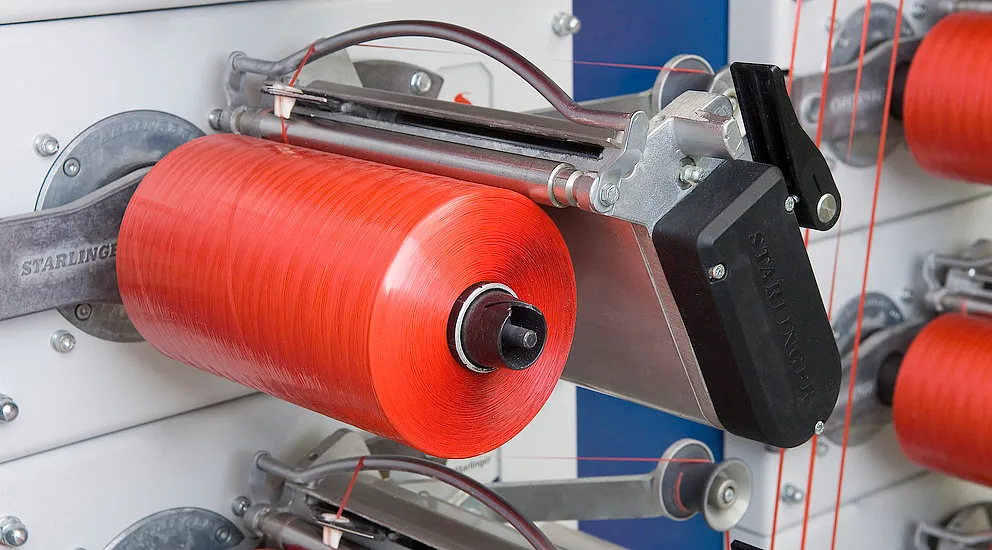
VidePak runs a disciplined, equipment‑intensive flow anchored by Austrian Starlinger and German W&H (Windmöller & Hölscher) platforms. Starlinger stabilizes tape orientation, loom uniformity, and fabric GSM; W&H protects print register, lamination bond strength, and dimensional stability across long runs. Around these machines we implement food‑safety systems—HACCP hazard analysis, GMP conversion practices, allergen controls, pest management, and sanitation standard operating procedures (SSOPs). The method spans incoming qualification, core unit operations, and end‑of‑line QA with food‑specific checkpoints.
### 4.1 Pre‑Material Selection and Incoming Testing (Food‑Safety Gate)
• Virgin PP resin: Melt flow index (MFI), isotacticity, ash, odor, moisture (Karl Fischer), gel count; verify food‑contact status and lot documentation.
• Liners/films: Thickness control, WVTR/OTR ranges, seal initiation temperature (SIT), dart impact, antistatic decay; food‑contact declarations and migration data tied to intended simulants and time/temperature.
• Inks/adhesives/ties: Viscosity windows, solids %, residual solvent/monomer thresholds; use low‑migration stacks. Migration testing is planned by worst‑case exposure and food simulant.
• Webbing/threads/tapes: Fiber identity, tensile, abrasion resistance; cleanliness inspections for fiber shedding.
• Hygiene consumables: Gloves, hairnets, approved lubricants—procured and logged to avoid non‑food chemicals.
• Documentation: Every lot bar‑coded for cradle‑to‑pallet traceability; quarantine protocols for out‑of‑spec results.
### 4.2 Core Unit Operations (Starlinger + W&H in Hygienic Cells)
1. Tape extrusion and orientation — Starlinger
PP pellets are plastified, cast, slit into tapes, drawn and annealed to specified denier and tenacity. Instruments track denier uniformity, tape width, crystallinity (DSC), tensile/elongation. Clean‑down and foreign‑matter checks occur on shift changes.
2. Weaving — Starlinger circular/flat looms
Tapes are woven into tubular or flat fabric at target GSM and picks per inch. Broken‑end rates are monitored; lint capture/housekeeping is frequent. Fabric destined for food builds is labeled and segregated to avoid cross‑mixing with non‑food SKUs.
3. Surface treatment
Corona/plasma elevates dyne level (≥38 dyn/cm) for ink/adhesive/tie anchorage. Treater logs verify energy levels and speed; masks protect zones reserved for matte code windows.
4. Coating/lamination (when specified) — W&H
Extrusion coating with PP/PE ties or solventless adhesive lamination bonds films to fabric. In‑line controls ensure bond strength, curl control, and low residuals. Exhaust and capture systems keep solvents below limits; retained swatches are archived.
5. Printing on coated/laminated faces — W&H
High‑contrast print with defined ΔE targets is applied; matte windows protect scanner optics; high‑build varnish is mapped to edge zones to resist rub without flooding barcode areas. Ink kitchens use calibrated blends; viscosity and pH checks are logged.
6. Cutting, gusseting, and mouth preparation
Fabric tubes/panels are cut to length, corners squared, gussets formed. Mouth folds (single/double/turned) are set at controlled depths to distribute bending loads. Bevel trims reduce notch starters.
7. Seam and closure formation
For sewn open mouth: two‑thread chainstitch or lockstitch as justified by powder; crepe tape/hot‑melt applied under seam to seal needle holes; SPI (stitches/inch) tuned to anti‑sift goals. For pinch bottoms: hot air/heat paste; for valve closures: thermal/ultrasonic/hot‑melt sealing validated for leak criteria.
8. Liner insertion and sealing
Loose‑insert or form‑fit liners are tabbed or fully integrated; spouts are heat‑sealed at SIT with QA peel tests; antistatic properties validated. Where food safety demands, liner handling occurs in higher‑grade hygiene cells to reduce particulate burden.
9. Perforation/de‑aeration engineering (if needed)
Hot‑needle or laser micro‑perfs are patterned away from rain paths and code windows to evacuate entrained air during fill; perf density is tuned so in‑service moisture targets remain intact.
10. In‑line inspection and controlled baling
Vision systems verify register, color drift (ΔE), code legibility, seam integrity; metal detection is applied where customer regimes request; automatic counting and compression balers create stacks with traceable labels; bale wrap materials are food‑approved.
### 4.3 End‑of‑Line QA and Food‑Safety Compliance
• Mechanical: Tensile/tear/burst; multi‑orientation drops (e.g., 5× at 0.8–1.2 m) suited to route severity.
• Functional: Leak/tightness tests; COF/stackability windows; WVTR/OTR validation under climate‑appropriate conditions; seal peels for liners.
• Food‑safety: Overall/specific migration tests to agreed simulants and conditions; swab tests in hygienic cells; allergen and pest control records; foreign‑matter inspections; retained samples and color swatches archived per shelf‑life.
• Traceability: Cradle‑to‑pallet digital trail linking resin/ink/film lots to finished bale ID; mock recalls run to verify retrieval speed.
• Equipment pedigree: Starlinger’s closed‑loop controls minimize denier drift and broken‑end defects; W&H presses/laminators hold register and bond strength across long runs, protecting microtype, barcodes, and low‑residual goals. This pairing is central to reproducible food‑grade quality at scale.
—
## 5) What Is the Application of Food‑Grade Woven Fabric Bags?
**Food‑Grade Woven Fabric Bags** excel wherever ingredient safety and mechanical reliability must co‑exist. Representative lanes include:
• Dry baking inputs (flour, sugar, salt)
Breathable yet controlled deaeration at the filler, with linerized interiors to curb moisture uptake and clumping. Matte code windows hold scan grades in chilled rooms.
• Starches and dairy powders (whey, milk powder)
Antistatic liners and tight valve closures reduce dust plumes; laminated faces protect artwork against rub in cold chain; migration‑safe stacks underpin audit readiness.
• Pulses, grains, and rice
Coated faces resist abrasion; liner options manage insecticidal/CO₂ fumigation residues; block‑bottom formats tame pallet slump during export.
• Sugars and sweeteners
Low‑migration inks; antistatic liners; strong seams to survive settling and impact; COF tuned to reduce load creep in humid storage.
• Seasonings and premixes
Aroma/grease isolation via liners; leak targets ≤0.5% validated on actual fillers; small‑print fidelity protected by W&H register control.
• Pet food bases and animal nutrition
Retail‑adjacent optics with BOPP lamination; food‑adjacent hygiene for base ingredients; square pallets and anti‑slip stripes for mixed warehouse flooring.
• Specialty nutraceuticals and beverage powders
Tight barrier stacks, serialization, and QR‑based traceability; tamper‑evident closures and cleaner line changeovers.
—
## 6) How VidePak Controls and Guarantees the Quality (Four Pillars)
**Step 1 — Manufacture and verify to mainstream standards.**
We align with ISO/ASTM/EN/JIS test methods for tensile, tear, burst, drop/topple, COF, WVTR/OTR, print adhesion, and seal/peel strength. Food‑safety systems follow HACCP and GMP; ISO 22000‑style discipline is applied to conversion cells when specified. Sampling is AQL‑based with CAPA loops, and PPAP‑like validations are available for new launches.
**Step 2 — Use virgin, big‑brand raw materials (and qualified PCR only in non‑contact zones, when specified).**
Virgin PP resin, certified food‑grade liners, low‑migration inks/adhesives, and approved additives are the default. Every lot is documented and traceable from silo or roll to bale label; out‑of‑tolerance lots are quarantined.
**Step 3 — Run best‑in‑class equipment: Austrian Starlinger and German W&H.**
Starlinger extrusion/tape/loom lines provide tight denier control and defect logging; W&H presses and laminators deliver register fidelity and stable bonds over long runs, which is critical for microtype, barcodes, and low‑residual targets.
**Step 4 — Complete test coverage: Incoming → In‑Process → Outgoing.**
Incoming checks for resin/film/ink/adhesive/liner lots; in‑process vision and seam audits, metal detection on request; outgoing functional checks (drop/leak/COF/WVTR/OTR, seal peels), dimensional audits, and hygiene swabs. Retained samples and swatches accompany the BoM for forensic reference.
—
## 7) Systems Thinking: Decompose the Food‑Safety Problem, Recombine the Bag Spec
Designing **Food‑Grade Woven Fabric Bags** is a multi‑variable exercise: powder physics, climate, process equipment, sanitation regime, and branding all interact. Breaking the problem into sub‑problems and then synthesizing a specification lets teams pilot, measure, and scale with confidence.
### 7.1 Sub‑Problem A — Powder Physics and Process Behavior
Inputs: Angle of repose, loose/tapped bulk density, particle size distribution, hygroscopicity, oil/odor content, dust explosion characteristics (MIE), required bags‑per‑minute (BPM), acceptable dust ppm at the operator zone.
Checkpoints:
• Top geometry (open mouth vs valve) and bottom style (pinch vs sewn) chosen for flow and leak discipline.
• Liner gauge selected for WVTR/OTR needs and fill speed impact.
• Perforation maps sized to evacuate air but avoid product sifting; location away from spill paths and code windows.
• Stitch type/SPI and seam aids tuned to minimize perforation‑line weaknesses and dusting.
### 7.2 Sub‑Problem B — Hygiene, Compliance, and Documentation
Inputs: Target markets, audit regimes, customer codes, food‑contact frameworks, labeling/traceability (barcodes/QR), serialization.
Checkpoints:
• Choose low‑migration ink/adhesive systems; secure migration/overall limits testing for the final stack.
• Define retained samples, swab schedules, and mock recall cadence.
• Lock Pantone/ΔE targets and varnish maps; reserve matte windows over code zones.
### 7.3 Sub‑Problem C — Warehouse, Logistics, and Climate
Inputs: Stack height, wrap recipe, floor COF, aisle widths, container cube, outdoor dwell, humidity/temperature cycles, UV hours.
Checkpoints:
• Select block‑bottom geometry and COF window to stabilize stacks.
• Validate WVTR/OTR and drop/topple in climate simulations.
• Add UV masterbatch hours appropriate to route/storage profile.
### 7.4 Integrated Path — Step‑by‑Step
1. Intake: Product physics + compliance/audit + warehouse/climate + brand/traceability constraints.
2. Concept shortlist: (a) Coated fabric + loose‑insert liner + sewn/taped seam; (b) Laminated face + form‑fit liner + pinch bottom; (c) Valve build with thermal closure + antistatic liner.
3. DFMEA: Rank failure modes—seam pull‑through, needle‑hole sifting, delamination, code glare, stack slump, moisture caking.
4. Pilot: 500–2,000‑bag runs on the actual filler; instrument BPM, dust ppm, leak tests, WVTR/OTR, scan grades, pallet creep.
5. Finalize spec: Lock GSM, face (coat/lam), liner gauge, mouth/closure, perf map, COF, UV hours, QA plan.
6. Scale: SPC on denier/picks, bond strength, register, seam tensile, seal peels; AQL sampling; retained swatches/samples archived.
7. Review: Quarterly down‑gauging trials, recycled‑content pilots (non‑contact), UV‑hour updates, artwork governance.
—
## 8) Technical Parameters and Windows (Reference Tables)
Table 1 — Dimensional and Mass Parameters (Typical)
| Attribute | Typical Range | Notes |
| ————- | ———————————————– | —————————————— |
| Capacity | 5–50 kg (25/50 kg dominate) | Tune to filler tooling and pallet plan |
| Fabric GSM | 60–120 g/m² (small sacks); higher for FIBC | Validate drop matrix vs lane severity |
| Coating Gauge | 18–35 μm (single‑side) / 30–60 μm (double‑side) | Balance barrier vs stiffness |
| Laminate Film | 18–35 μm BOPP (matte/gloss) | Matte for codes; gloss for shelf depth |
| Liner Gauge | 25–70 μm PE/PP/co‑ex | Higher barrier, lower breathability |
| Hem Depth | 25–40 mm (if sewn) | Deeper/turned hems improve seam durability |
| Valve Sleeve | PP/PE laminate/fabric, 60–120 g/m² | ID/length matched to nozzle OD |
Table 2 — Functional and Safety Targets (Application‑Dependent)
| Attribute | Target/Method | Why It Matters |
| ——————– | ————————————— | ——————————— |
| WVTR/OTR | Validated to climate/product | Moisture/oxygen control |
| Leak/Tightness | ≤0.5% mass loss at set pressure/time | Cleanliness and yield |
| COF (static/kinetic) | 0.30–0.45 window | Conveyor flow vs pallet stability |
| Drop Performance | 5× at 0.8–1.2 m (corner/edge/flat) | Transit survival |
| Seal/Peel Strength | Per spec for liner and valve interfaces | Assures closure integrity |
| Barcode Grade | ISO/IEC 15416 grade B or better | Intake automation reliability |
Table 3 — Mouth, Seam, and Closure Options (Hygiene Lens)
| Option | Where It Fits | Notes on Food Safety and Cleanliness |
| ——————– | ———————————— | ——————————————————- |
| Pasted Pinch | Premium barrier; no needle holes | Clean optics; precise thermal windows |
| Heat/Ultrasonic Weld | Laminate/film‑rich builds | Excellent leak control; material compatibility critical |
| Sewn + Tape | Workhorse with balanced cost/control | Seal needle holes; select needles to avoid yarn cutting |
| Thermal Valve | Valve bags requiring tight closure | Repeatable, low‑dust seals; validate SIT/peel strength |
Table 4 — QA, Hygiene, and Compliance Matrix
| Gate | Methodology | Examples |
| ———- | ————————————————– | —————————————————- |
| Incoming | CoA checks; moisture/dyne; film gauge; residuals | MFI, dyne ≥38, WVTR/OTR baselines, low residuals |
| In‑Process | Vision register; seam peel; online length/weight | SPI audits; code grade; metal detection (if applied) |
| Outgoing | Drop/leak/COF/WVTR/OTR; dimensions; seal/peel | AQL sampling; pallet compression tests |
| Hygiene | Swabs; pest/allergen logs; sanitation verification | SSOP sign‑offs; retained samples/swatches |
—
## 9) Case‑Style Scenarios (Problem → Intervention → Outcome)
Scenario A — Barcode failures in refrigerated intake
• Problem: Condensation forms on glossy faces; glare and water films lower scan grades.
• Intervention: Reserve matte windows over barcode zones; lock ΔE≤2 via calibrated prepress and ink management; add high‑build varnish only to edges.
• Outcome: ISO/IEC 15416 grade B or better scanning across shifts and lighting.
Scenario B — Caking of sugar in humid coastal storage
• Problem: Moisture ingress drives clumps and slows discharge; rework and waste increase.
• Intervention: Increase liner gauge from 35 to 50 μm; verify WVTR under climate cycle; switch to thermal valve closure; tune COF to 0.35–0.40 for stable stacks.
• Outcome: Lower caking rate; improved discharge; fewer claims.
Scenario C — Dust plumes and nuisance shocks on flour line
• Problem: Fine flour dust clings to faces and shocks operators during fill.
• Intervention: Antistatic liner; grounded filling spouts; micro‑perf pattern adjusted for faster deaeration; updated needle system and SPI to reduce perforation‑line leakage.
• Outcome: Cleaner fill rooms; reduced shocks; improved hygiene metrics.
Scenario D — Seam pull‑through during drop tests
• Problem: Failures cluster at the mouth fold; mid‑panel remains intact.
• Intervention: Increase hem depth to 35–40 mm; add crepe tape under seam; consider pasted pinch bottom for critical SKUs.
• Outcome: Passes 5× drop matrix without increasing fabric GSM.
Scenario E — Aroma transfer in seasoning premix exports
• Problem: Sensitive notes fade or cross‑transfer to adjacent pallets.
• Intervention: Switch to co‑ex liner with oxygen barrier; heat‑seal spouts; add baffle/block‑bottom to reduce movement and scuff; serialized QR for lot‑level monitoring.
• Outcome: Sensory profile preserved; audit‑ready traceability; reduced returns.
—
## 10) Sizing, Palletization, and Logistics Discipline
• Work backward from bulk density × target mass to select bag dimensions and filled height; reserve headspace for de‑aeration and closure.
• Favor block‑bottom or square formats for brick‑like pallets; tune COF (0.30–0.45) and wrap recipes to reduce stack creep. Interlayers help when faces are glossy.
• For containerization, model 20’/40’/HC loads with realistic tolerances; small footprint changes (e.g., 90 → 95 cm) can unlock full rows.
• Keep code windows matte and free of varnish; maintain retained swatches for ΔE control across seasons and plants.
• Where cold chain is present, validate drop/topple and label rub under chilled/condensing cycles.
—
## 11) Purchasing Checklist (What VidePak Needs to Nail the Spec)
1. Product physics: PSD, angle of repose, bulk density (loose/tapped), hygroscopicity, MIE, oil/odor.
2. Filling/closing: Nozzle OD, target BPM, deaeration method, acceptable dust ppm, preferred closure.
3. Warehouse/container: Pallet size, racking, max stack height, wrap recipe, container cube goals.
4. Climate/route: UV hours, humidity/temperature cycles, outdoor dwell, handling shocks.
5. Compliance/brand: Food‑contact frameworks, migration plan, color tolerances (ΔE), barcode/QR specs, serialization.
6. Hygiene regime: HACCP plan linkages, swab/cleaning cadence, allergen/pest controls.
7. Sustainability: Mono‑PP claim, down‑gauging targets, recycled‑content pilots (non‑contact layers only).
8. Performance windows: WVTR/OTR caps, drop/leak/COF, seal/peel strength, barcode grade.
—
## 12) Troubleshooting Matrix (Symptoms → Likely Causes → Fixes)
| Symptom | Likely Cause | Corrective Action |
| ————————- | ——————————————- | ————————————————————- |
| Barcode scan failures | Gloss glare; color drift; condensation film | Matte windows; lock ΔE; edge varnish only; relocate placement |
| Seam wicking/sifting | Needle holes; inadequate seam tape | Add crepe/hot‑melt; switch to pinch/weld for critical SKUs |
| Pallet slippage | COF too low; glossy face + wrap synergy | Tune wrap; add texture stripes; interlayers; COF 0.35–0.40 |
| Dust during filling | Weak deaeration; SPI/needle mismatch | Add micro‑perfs; retune SPI; change needle system |
| Caking after storage | WVTR too high; liner too thin | Increase liner gauge; improve seal; verify climate WVTR |
| Aroma loss/cross‑transfer | OTR too high; poor spout seal | Co‑ex barrier liner; heat‑seal spouts; add QA peel tests |
—
## 13) Frequently Asked Questions (Engineering‑Centric)
Q1: Do **Food‑Grade Woven Fabric Bags** always require liners?
A: Not always. For low‑risk, coarse, and non‑hygroscopic products, coated/laminated faces without liners may suffice. But most food chains prefer liners to control WVTR/OTR, provide a cleaner interior, and enable strong, sealable closures.
Q2: How small can barcodes be and still scan reliably?
A: With matte windows, tight register, and ΔE≤2 across lots, ISO/IEC 15416 grade B or better is attainable. Validate under your actual lighting, scanner fleet, and condensation profile.
Q3: Can recycled content be used in food‑grade builds?
A: Only under carefully bounded conditions. Recycled content may be piloted in non‑contact layers (e.g., outer coatings) where regulations and risk assessments allow. Contact layers (liners) are typically virgin with documented provenance.
Q4: Which closure gives the best hygiene and leak control?
A: Pasted pinch and heat/ultrasonic welds eliminate needle holes and usually win on barrier. If sewing is required, add seam tapes and specify deeper/turned hems, then validate leak/tightness on your filler.
Q5: What KPIs indicate continuous improvement in food‑grade packaging?
A: Migration pass rate, ΔE drift, barcode first‑pass yield, drop‑test pass %, leak‑test yield, WVTR/OTR stability, dust ppm during pilots, and mock‑recall retrieval times.
—
## 14) Example Integrated Specifications (Reference Sketches)
Use Case A — 25 kg flour, high‑throughput mill, refrigerated intake
• Body: Woven PP 80–90 g/m²; coated face; matte code windows.
• Mouth/Seam: Sewn with crepe tape; 9–10 SPI chainstitch; bevel trims at gusset pivots.
• Liner: Food‑grade PE 45–50 μm, antistatic; heat‑sealed spout; peel strength validated.
• Venting: Micro‑perfs away from code windows.
• QA: Drop 5× at 1.0 m; barcode ≥B; WVTR to target; hygiene swabs per SSOP.
Expected outcome: Fast fills, clean rooms, reliable scans in chilled condensation cycles.
Use Case B — 25 kg sugar, coastal humidity, export containerization
• Body: Laminated BOPP 25–30 μm over woven PP 90–100 g/m²; high‑build varnish on edges.
• Mouth/Seam: Pinch bottom paste; thermal valve closure.
• Liner: PE 50–60 μm form‑fit; antistatic.
• QA: WVTR verified under climate cycle; COF 0.35–0.40; barcode ≥B.
Expected outcome: Moisture discipline, robust labels in transit, square pallets, fewer claims.
Use Case C — 20 kg dairy powder, dust‑sensitive filling, strict audits
• Body: Woven PP 85–95 g/m²; coated face with matte code windows.
• Mouth/Seam: Valve build with ultrasonic closure; leak ≤0.3% at set pressure/time.
• Liner: Co‑ex barrier with oxygen control; tamper‑evident ties.
• QA: GMP documentation; migration within limits; serialized QR; mock recall success < 2 h.
Expected outcome: Low dust, preserved flavor/nutrition, audit‑ready traceability.
Use Case D — 50 kg rice/pulses, rough routes, mixed storage
• Body: Woven PP 100–110 g/m²; coated face; optional vent panels.
• Mouth/Seam: Sewn + tape; turned hem at 35–40 mm.
• Liner: Optional 35–45 μm depending on humidity.
• QA: Drop/topple tests; pallet creep ≤3% at 30 days; barcode ≥B.
Expected outcome: Durable handling, reduced waste, reliable intake automation.
---
## 15) Why VidePak (Equipment, People, Process, Supply Security)
• Equipment pedigree: Starlinger for extrusion/tape/loom; W&H for printing/lamination/converting—globally recognized for register fidelity, bond strength, and repeatable web handling.
• People and method: Cross‑functional teams (process, QA, graphics) running with SPC discipline, HACCP hazard analysis, DFMEA up front, and color‑management control.
• Collaboration: Pilot on your filler; rapid iteration before scale; clear change‑control for artwork/materials; mock recalls and retained‑sample programs.
• Supply security: Multi‑line redundancy, preventive maintenance, and safety stocks for resin, films, inks, adhesives, and webbing to sustain continuous supply under audits.
---
## 16) Keyword Strategy and Long‑Tail Variants (for Search & Buyer Alignment)
Primary keyword: **Food‑Grade Woven Fabric Bags**
Supporting/long‑tail variants: **Food‑Safe Woven PP Bags**, **Food‑Contact Polypropylene Woven Bags**, **Hygienic Woven Fabric Sacks**, **Food‑Approved Woven Poly Bags**, **Sanitary Woven Polypropylene Packaging**, **GMP‑Converted Woven PP Bags**, **barrier‑lined food‑grade woven bags**, **antistatic food‑grade PP sacks**. These variants reflect how buyers search by material, structure, hygiene regime, or use case and map directly to the engineering choices outlined above.
---
This guide treats **Food‑Grade Woven Fabric Bags** as a system: product → process → pack → pallet → audit. When those five are measured and then connected with the right materials, geometry, clean conversion, and equipment—VidePak’s Starlinger + W&H foundation included—the outcome is predictable performance in storage, credible conformance in audits, and durable value across climates and routes.
Food grade woven fabric bags are critical for industries requiring hygienic, durable, and chemically inert packaging solutions. At VidePak, we ensure every bag meets stringent global standards through 18+ quality tests, including tensile strength (12–15 N/cm²), UV resistance (1,500+ hours of exposure), and FDA-compliant materials. With ISO 9001 and AIB certifications, our commitment to excellence has reduced client-reported defects by 98% since 2015, solidifying our reputation as a leader in food-safe packaging.
1. Why Food Grade Woven Fabric Bags Matter
Food-grade polypropylene (PP) woven bags are indispensable for storing and transporting dry goods like flour, grains, and pet food. Unlike standard PP bags, food-grade variants eliminate risks of contamination by using virgin PP resin (MFI: 3–5 g/10 min) and non-toxic dyes. For example, a European flour mill reported a 40% reduction in spoilage after switching to VidePak’s laminated BOPP bags, which block moisture and pests effectively.
Key Features:
FDA Compliance: Ensures direct food contact safety.
Custom Printing: High-definition CMYK/Pantone printing (200 DPI) for branding and regulatory labels.
Thermal Stability: Withstands temperatures from -20°C to 80°C without degradation.
2. VidePak’s Rigorous Quality Control Framework
Our testing protocols exceed industry norms, covering 12+ parameters to guarantee consistency and reliability.
Critical Tests and Standards
Parameter
Test Method
VidePak’s Standard
Industry Benchmark
Tensile Strength
ASTM D5034
12–15 N/cm²
8–10 N/cm²
Tear Resistance
ASTM D5884
6–8 N/mm
4–5 N/mm
UV Resistance
ISO 4892-3
1,500+ hours
1,000 hours
Thickness Tolerance
ISO 4593
±0.02 mm
±0.05 mm
Color Fastness
AATCC 16
Grade 4+
Grade 3
Case Study: A Southeast Asian rice exporter achieved a 99.5% bag integrity rate during maritime shipping after adopting VidePak’s anti-aging treated bags, which undergo accelerated aging tests simulating 5 years of UV exposure.
3. Advanced Manufacturing Capabilities
VidePak’s 56,000 m² facility in Jiangsu, China, integrates Austrian Starlinger circular looms and extrusion lines to produce 150 million bags annually. Key differentiators include:
Material Traceability: Each batch of virgin PP resin is QR-coded for origin verification.
Precision Cutting: Laser-guided systems ensure seam allowances of 10±1 mm, eliminating frayed edges.
Multi-Layer Lamination: BOPP films (18–25 µm) enhance barrier properties against oxygen and moisture.
Example: Our BOPP-laminated food-grade bags feature a peel strength of 3.5 N/15mm, outperforming competitors’ 2.0 N/15mm, as validated by third-party labs[citation:9].
4. FAQs for Buyers
Q: How does VidePak ensure color consistency across batches? A: We use spectrophotometers to measure ΔE values (≤1.5) and conduct hourly checks during production.
Q: Are your bags suitable for automated filling systems? A: Yes. Our valve bags achieve a filling speed of 1,200 bags/hour with a ≤0.3% spillage rate.
Q: Do you offer recycled PP options? A: We provide 30% post-consumer recycled PP blends, certified by Global Recycled Standard (GRS).
5. Sustainability and Branding Synergy
VidePak’s eco-initiatives align with global ESG goals:
Recyclability: 100% mono-material PP construction simplifies recycling.
Carbon Neutrality: Solar-powered facilities reduce CO₂ emissions by 320 tons/year.
Smart Packaging: NFC tags enable consumers to verify product authenticity via smartphones.
Competitive Insight: While 72% of Chinese manufacturers prioritize cost-cutting, VidePak allocates 7% of annual revenue ($560,000) to R&D, developing compostable PP blends for EU markets.
6. Why Partner with VidePak?
Legacy: Founded in 2008 by CEO Ray, leveraging 30+ years of industry expertise.
Global Compliance: Meets EU Regulation 10/2011, FDA 21 CFR, and FSSC 22000 standards.
Scalability: 100+ circular looms and 30+ printing machines enable MOQs as low as 20,000 bags.
References
VidePak Official Website: https://www.pp-wovenbags.com/
Email: info@pp-wovenbags.com
Industry Standards: ASTM, ISO, FDA, and AIB guidelines.