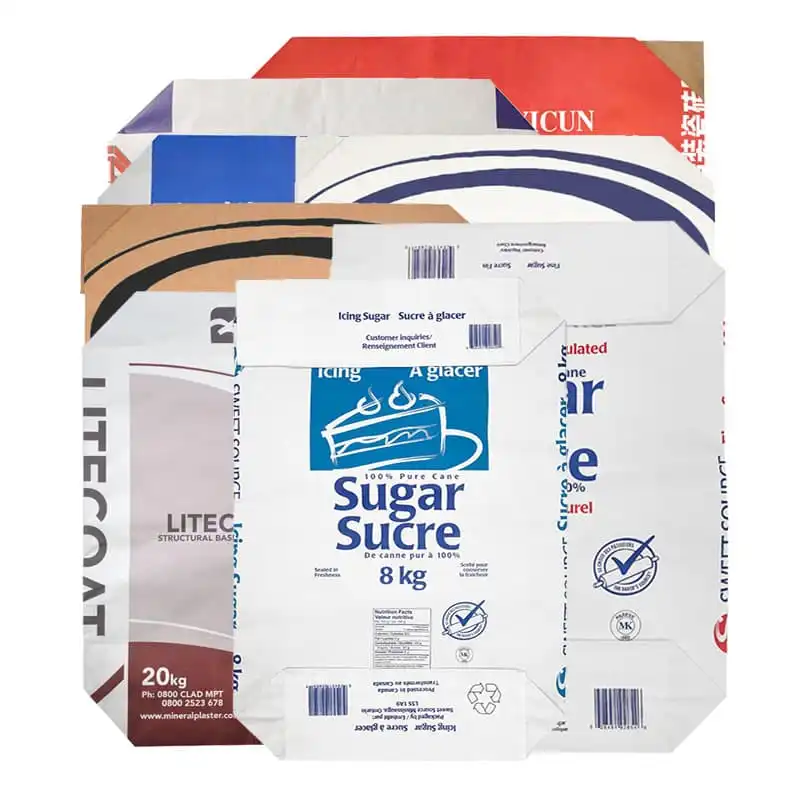
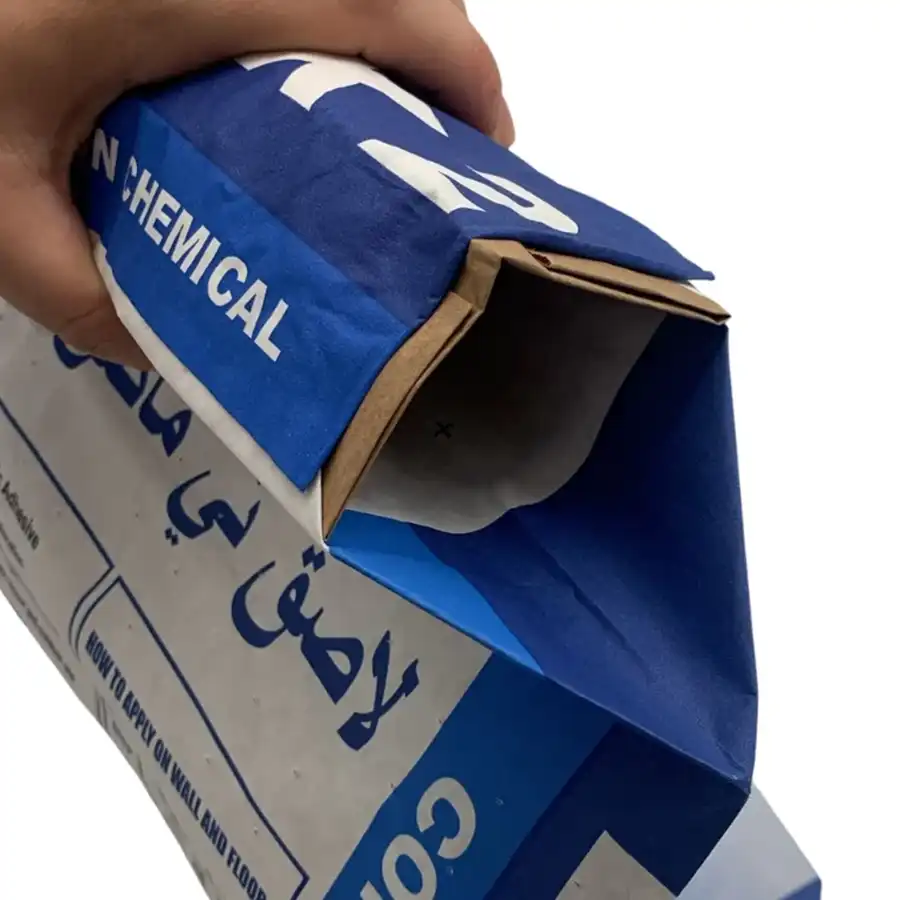
What Are Pasted Valve Bags?
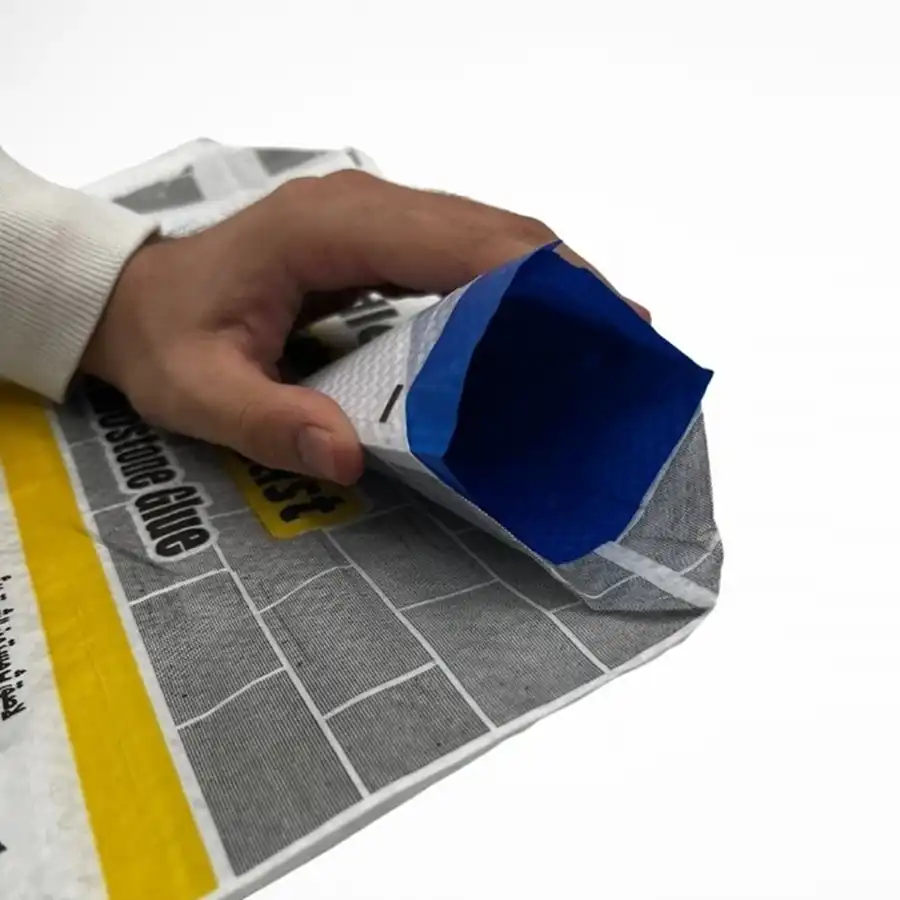
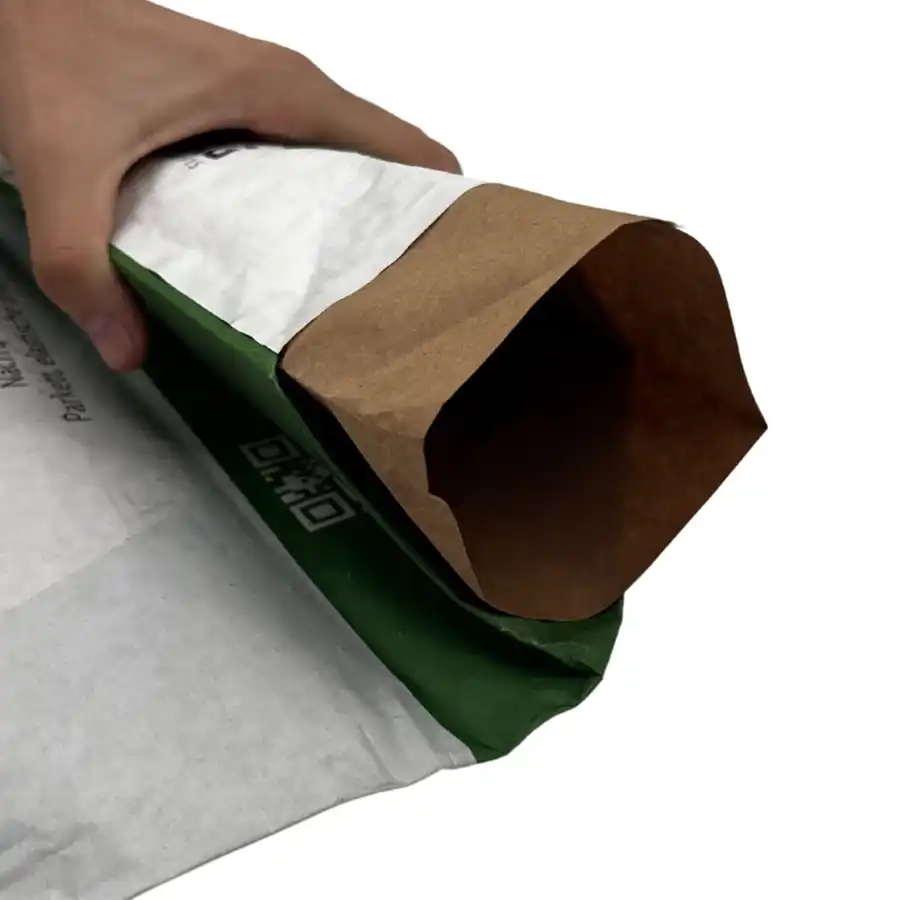
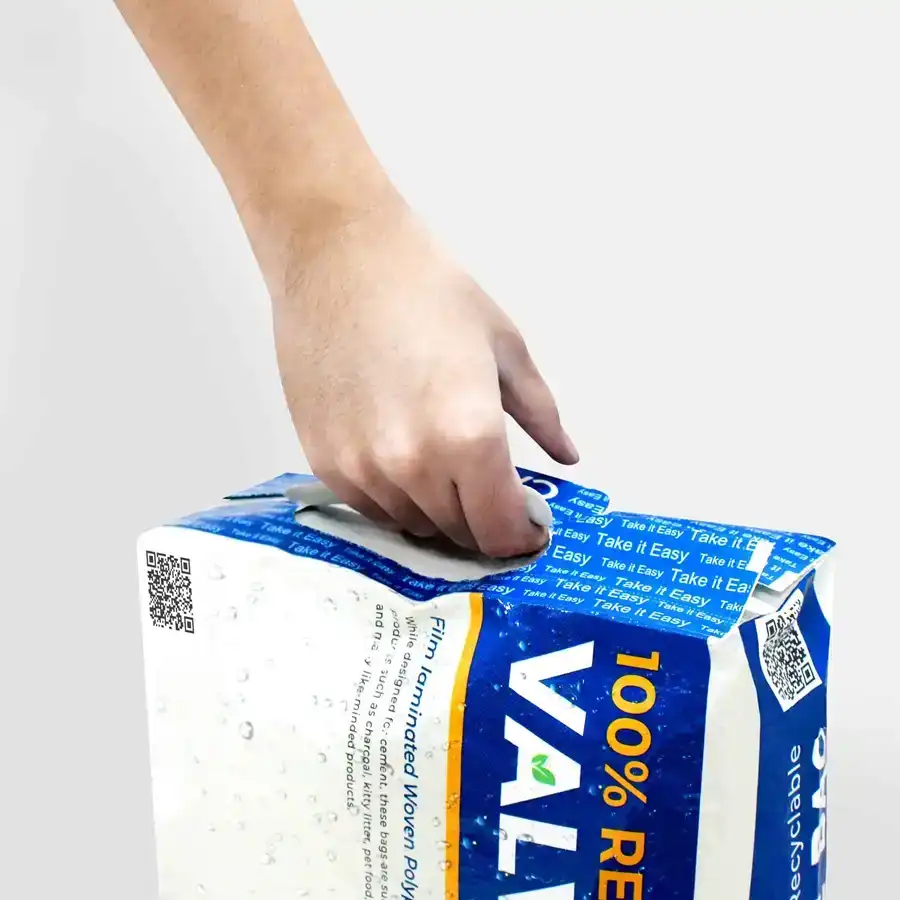
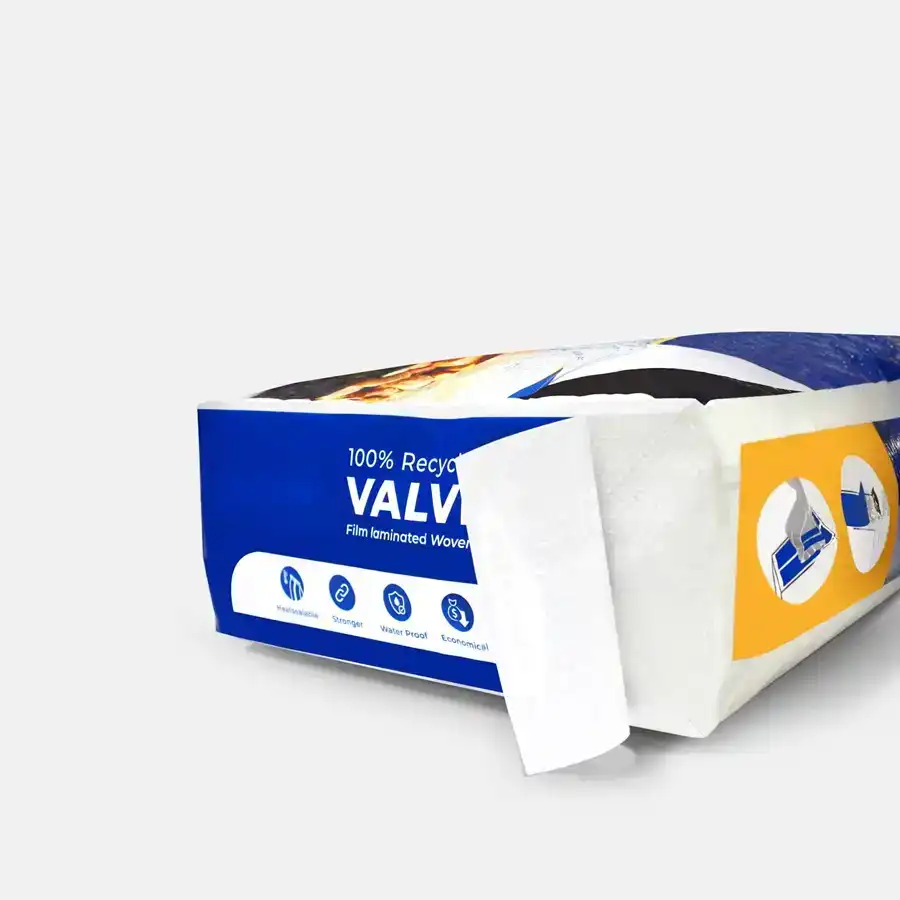
Pasted Valve Bags are pre‑formed, multi‑ply industrial sacks designed for fast, clean filling of fine powders, blended minerals, and granular products through a small inlet valve that closes automatically as the bag releases from the spout. The body of the bag is built as a tubular sleeve (paper plies, polymer films, or composite laminates), and both ends are folded and pasted—sealed by adhesive—to create leak‑resistant bottoms and tops. A reinforced valve patch or sleeve is integrated near one corner, allowing the filler spout to enter, vent trapped air, and then seal without a secondary operation. Because the platform is modular, the number of plies, basis weights, barrier layers, venting patterns, valve geometry, exterior finishes, and print routes are adjusted to the product’s physics, the filler’s demands, and the route‑to‑market.
Aliases and near‑synonyms that plants and buyers commonly use for Pasted Valve Bags (each name spotlights a specific conversion detail):
- multi‑ply valve sacks
- paper valve bags
- block‑bottom valve sacks
- pinch‑valve industrial bags
- BOPP‑laminated valve bags
- film‑reinforced valve packaging
- moisture‑barrier valve sacks
- valve‑patch bags
- kraft pasted valve sacks
- high‑speed valve bags
The strongest business cases for Pasted Valve Bags are the situations where line speed, dust control, pallet stability, and graphic durability must be achieved at once—cement and white cement, dry mortar and gypsum, calcium carbonate and talc, fertilizers and salts, specialty starches and sugar, animal feed and premixes, pigments, and selected petrochemical powders. Over the last year, operators have emphasized the same trade‑offs repeatedly: rapid de‑aeration versus moisture defense, robust closures versus openability at use, vivid graphics versus abrasion resistance, and low unit price versus low total applied cost. A well‑specified bag reconciles those tensions through material science and process control rather than guesswork.
The Materials of Pasted Valve Bags: Layer‑by‑Layer, Function by Function
A modern Pasted Valve Bags construction is a stack of purpose‑built layers. Each layer carries a job description—mechanical spine, barrier, print face, hygiene, sealing—and each introduces cost, risk, and opportunity. Understanding the stack makes specification rational and improvable. Below, materials are explained with their physics, where they go in the bag, how they change outcomes, and what they typically cost in relative terms.
Sack Kraft Paper — Breathable Strength
Long‑fibered, highly oriented sack kraft (commonly 70–100 gsm per ply) remains the workhorse substrate for Pasted Valve Bags. It resists tear, tolerates folding, and presents a surface that handles printing well. Its natural micro‑porosity allows controlled de‑aeration during pneumatic fills, so bags don’t balloon or under‑weigh. White or bleached kraft boosts color fidelity for premium brands; natural kraft emphasizes rugged utility and scuff tolerance. Basis weight selection follows product density and drop tolerance—dense minerals and cement push toward heavier outer plies, while lighter feeds can run lower grammages.
Cost logic: fiber prices track pulp and energy markets. Using a heavier outer ply for scuff resistance while keeping inner plies lighter can optimize cost. Where venting is crucial, an intermediate ply may be micro‑perforated only near the valve panel to protect the global barrier.
Biaxially Oriented Polypropylene (BOPP) — The Durable Print Face
BOPP films in the 15–30 μm range are frequently laminated to the outer ply to deliver scuff resistance, weather splash defense, and photo‑quality graphics. Artwork is reverse‑printed on the film’s inner face and then bonded to paper, so the ink sits under the film and is shielded from conveyors and pallet rub. Matte BOPP hides scuffs and glare; glossy BOPP intensifies color. Film faces also reduce water vapor transmission rate (WVTR), which helps with caking‑prone powders.
Cost logic: film lamination increases unit cost yet often lowers total applied cost by cutting scuff‑related rejects and preserving barcodes. For outdoor yard storage, UV‑stabilized film packages prolong life. For indoor, short routes, coated paper without film can be adequate.
Valve Patch & Sleeve — The Precision Interface
The valve assembly is the heart of Pasted Valve Bags. A reinforced patch—paper/film laminate or mono‑film—forms a slit or sleeve for the spout. Self‑sealing designs use elastomeric lips or heat‑activatable films that close as the bag is released. Sleeve diameter, patch angle, and lip length are matched to spout size, aeration, and target fill rate. Correct fit curbs blowback and dust, while localized micro‑perfs around the patch accelerate de‑aeration without undermining global barrier.
Adhesives & Pasting — The Hidden Structure
High‑shear, quick‑setting pastes secure tube seams, valve patches, and bottom folds. Starch‑based pastes dominate paper‑to‑paper bonds; hotmelts and solventless polyurethane adhesives manage film‑to‑paper and film‑to‑film bonds. Glue line placement governs squareness and bottom integrity; the cure profile determines early handling strength and line speed.
Optional Liners — Moisture & Hygiene
LDPE/LLDPE liners (25–60 μm) can be loose, tab‑attached, or tacked at the mouth. Vented liners employ wicket holes above the product headspace to reconcile fast fills with humidity control. For aroma or oxygen management, EVOH‑containing co‑extrusions are used with clear trade‑off labeling for end‑of‑life.
Surface Finishes & Additives — Runnability & Safety
Slip‑tuned coatings set face coefficient of friction (COF) to stabilize pallets while avoiding conveyor snags. Anti‑static treatments reduce dust ignition risk. UV packages on film faces extend outdoor life. These small inputs shape a large share of line performance.
| Layer | Typical Material | Primary Function |
|---|---|---|
| Outer face | BOPP 20 μm or bleached kraft 80–90 gsm | Scuff resistance, print quality, rain splash defense |
| Intermediate ply | Natural kraft 70–90 gsm | Mechanical spine, controlled porosity for venting |
| Inner ply / liner | Kraft 70–80 gsm or PE 30–40 μm | Clean contact surface, moisture barrier |
| Valve patch/sleeve | Paper/film laminate or mono‑film | Filler interface, self‑closing behavior, dust control |
Related reading: a broader context for valve‑style packaging is summarized under valve bags, which include paper, poly, and hybrid constructions allied to Pasted Valve Bags.
Features of Pasted Valve Bags That Change Plant Outcomes
Features are only meaningful if they move the metrics that matter: throughput, housekeeping, pallet stability, claim rate, and brand legibility. The following attributes are organized by those outcomes and framed as practical levers a packaging engineer can tune.
High‑Speed Filling
Valve sleeves sized to the spout allow fast ingress of aerated powders. Self‑closing lips cut a secondary seal step. Operators get earlier pallet release and fewer dust alarms.
Cleanliness & Dust Control
Localized micro‑perfs near the patch vent trapped air while preserving global barrier. Correct sleeve friction reduces blowback, improving housekeeping and worker exposure numbers.
Square, Stable Stacks
Block‑bottom geometry squares bags for tall pallets. Face/gusset COF zoning prevents slip on the stack while keeping conveyors smooth.
Graphic Durability
Reverse‑printed film faces protect artwork and barcodes. Paper faces can be varnished to resist scuff. Legibility is preserved from the filler to the jobsite.
Versatile Material Stack
Paper‑only builds emphasize breathability; film‑reinforced builds raise barrier; optional liners add humidity resilience. One converting line can serve cement today and salts tomorrow.
Credible End‑of‑Life Options
Paper‑forward builds map to fiber recovery where infrastructure exists; poly‑forward builds fit flexible polyolefin pathways where those systems operate. Clear on‑bag guidance reduces ambiguity.
Plant tip: validate COF at two zones—panel center and gusset. A mix of higher face COF and lower gusset COF stabilizes pallets without hurting conveyor flow.
Production Process of Pasted Valve Bags: From Tube to Pallet
Understanding the manufacturing choreography is the fastest route to diagnosing defects. When a valve leaks or a bottom opens, the root cause is almost always upstream. The sequence below identifies the stages, the variables that dominate each outcome, and the checks that keep a process inside its window.
- Paper & Film Preparation. Slit to precise widths; condition paper moisture to limit curl and memory; corona‑treat films for print and bond.
- Tubing. Overlap plies and paste into a continuous tube; control registration so valve and bottom folds align in later steps.
- Valve Patch Insertion. Cut and paste patches with tight angle and position tolerances; validate sleeve length against spout diameter and target flow curve.
- Bottom Formation. Fold and paste ends on block‑bottom machines; place glue lines precisely to square the bag. Pinch variants activate thermoplastic layers by heat/pressure.
- Perforation & Venting. Apply micro‑perfs near the valve or selected panels. Placement matters more than raw hole count.
- Printing & Varnishing. Reverse‑print film before lamination; direct flexo on paper after pasting; apply abrasion‑resistant varnish where needed.
- Inspection & Testing. Bond strength checks, valve leak tests, drop and stacked‑creep trials, COF measurements, barcode verification, WVTR checks for moisture‑sensitive goods.
- Palletization. Square stacks, slip sheets or stretch hoods as specified, corner protection, defined stack heights and wrap recipes.
Application Map: Where Pasted Valve Bags Win
Because Pasted Valve Bags are a configurable platform rather than a single recipe, the same converting line can serve multiple sectors by tuning plies, faces, and valve geometry. The cards below explain why certain combinations dominate in common industries.
Cement & Construction Powders
Valve sleeves matched to spout diameter and micro‑perfs near the patch deliver fast, clean fills. Matte film or coated paper faces resist scuff on rough jobsites. Moisture control is decisive for white cement and gypsum.
Fertilizers & Agrochemicals
Film‑reinforced bags counter abrasion from prills and aggression from salts. Optional liners stabilize hygroscopic blends. Antistatic measures and tuned COF improve plant safety and pallet stability.
Food & Ingredients
Where regulations permit, paper plies with compliant barriers and clean valve designs protect sugar, flour, starch, and salt. Reverse‑printed film supports retail‑adjacent branding.
Salts, Minerals & Additives
High puncture resistance and block‑bottom geometry protect tall stacks in warehouses and on trucks. For deliquescent salts, add liners and higher coat weights.
Selection note: if your product is coarse and free‑flowing, an open‑mouth format may suffice; if it is fine and aerated, Pasted Valve Bags with tuned venting almost always raise throughput and cleanliness.
“Pasted Valve Bags: Meeting Diverse Market Needs with Quality and Innovation” — Framing the Mindset
Quality is a system, not a slogan. Innovation is disciplined change, not random novelty. The headline above invites a practical operating model that plants can actually run. Start with the outcomes customers measure—delivered condition per metric ton, dust levels at the filler, barcode readability, pallet integrity after transport—then design the bag backwards from those targets.
Outcome: Mechanical Integrity
Background. Impacts during handling and transit are absorbed by ply stretch, adhesive bonds, and bottom geometry.
Levers. Ply gsm and count, glue line placement, crease memory, corner stability, tube width tolerance.
Practice. Set filled drop targets (1.0–1.5 m), audit seam efficiency, run stacked‑creep tests reflecting your dwell time.
Outcome: Clean Fills & Low Dust
Background. Pneumatic filling traps air; crude venting creates dust clouds.
Levers. Sleeve diameter vs spout OD, perf zoning, liner venting, spout pressure profile.
Practice. Localize venting near the valve; match sleeve friction to spout; monitor dust extraction loads before/after trials.
Outcome: Communication That Survives
Background. Artwork scuffs on conveyors and when pallets rub in transit.
Levers. Reverse‑printed film, varnish on paper, COF zoning to limit bag‑to‑bag abrasion.
Practice. Grade barcodes; run scuff cycles; validate color fastness after exposure to rain splash and dust.
Outcome: Runnability & Throughput
Background. The right bag removes the filler as a bottleneck.
Levers. Valve style, sleeve diameter, tube squareness, COF targets, pallet recipe.
Practice. Pilot variants at production speed; confirm that the first pallet layer squares without manual massage.
Outcome: Responsible End‑of‑Life
Background. Design choices shape recovery options.
Levers. Paper‑forward vs film‑forward stacks, ink coverage, separable liners, on‑bag guidance.
Practice. Align to regional infrastructure; document materials; choose simpler stacks where possible.
Outcome: Cost per Ton Delivered
Background. Unit bag price is a weak proxy for value.
Levers. Claim rate, line OEE, pallet stability, graphic survival, moisture damage.
Practice. Track cost per metric ton delivered intact and clean; let that KPI steer material choices.
System Map & Selection Logic for Pasted Valve Bags
Systems thinking breaks complexity into tractable parts and then recombines the answers. The grid below captures sub‑problems, the physics that drive them, and practical spec cues that engineers turn into drawings and purchase orders.
| Sub‑Problem | Physics & Stakes | Primary Levers | Actionable Spec Cue |
|---|---|---|---|
| Drop robustness | Impact energy shared by plies, folds, glue seams | Ply gsm, glue lines, block‑bottom creases | Target 1.0–1.5 m filled drop; validate on real product |
| Moisture defense | WVTR and rain splash define caking risk | Film face, coat weight, optional liner | WVTR < 6 g/m²·day @ 38 °C/90% RH for hygroscopic goods |
| Fill speed & dust | Trapped air vs sifting and emissions | Valve sleeve, perf map, liner venting | Perf density 120–200 holes/m² localized near valve |
| Pallet stability | Friction vs shingling and wrap recipe | Face/gusset COF zoning, square bottoms | Face COF 0.35–0.40; gusset COF 0.20–0.30 |
| Graphic survival | Scuff on conveyors and in transit | Reverse print, varnish, matte/gloss selection | Scuff cycles > 500 without barcode grade loss |
Parameters & Practical Ranges for Pasted Valve Bags
| Parameter | Typical Range | Why It Matters |
|---|---|---|
| Outer ply (paper) | 70–100 gsm | Scuff resistance, print base, rain splash |
| Film face (BOPP) | 15–30 μm | Abrasion resistance, color fidelity, WVTR |
| Intermediate ply | 70–90 gsm | Mechanical spine and controlled porosity |
| Inner ply / liner | 70–80 gsm kraft or 30–40 μm PE | Product contact, moisture barrier |
| Valve sleeve diameter | Typically 38–60 mm (match spout) | Fill rate and dust control |
| Perf density (localized) | 120–200 holes/m² near valve | De‑aeration without global barrier loss |
| Face COF (outer) | 0.35–0.40 | Pallet stability vs conveyor flow |
Troubleshooting & Continuous Improvement for Pasted Valve Bags
| Symptom | Probable Cause | Countermeasure |
|---|---|---|
| Valve leak or blowback | Sleeve too loose; poor patch angle; over‑pressure | Match sleeve to spout; recalibrate angle; tune pressure profile |
| Delamination after rain | Low bond strength; inadequate coat weight | Raise coat weight; validate adhesive; add primer |
| Pallet leaning or slip | COF too low/high; wrap inconsistency | Re‑tune COF; zone faces vs gussets; standardize wrap recipe |
| Scuffed artwork | Direct print without protection; rough conveyors | Reverse print under film; add varnish; inspect conveyor wear |
Remember: measure what matters. Cost per bag is easy to track; cost per metric ton delivered intact, clean, and on time is the true scoreboard.
Keyword Weaving for Pasted Valve Bags (Variants & Long‑Tail Phrases)
To reflect how practitioners write RFQs and how buyers search, this article intentionally includes semantically related descriptors alongside the canonical term Pasted Valve Bags: laminated valve sacks, kraft pasted valve bags, paper valve sacks with film reinforcement, moisture‑barrier valve bags, block‑bottom valve sacks, pinch‑valve industrial bags, self‑sealing valve packaging, BOPP‑laminated valve sacks, cement valve bags, fertilizer valve packaging, high‑speed valve sacks. These are not buzzwords; they are operational shorthand mapping to specific stacks and outcomes.

- What Are Pasted Valve Bags?
- The Materials of Pasted Valve Bags: Layer‑by‑Layer, Function by Function
- Features of Pasted Valve Bags That Change Plant Outcomes
- Production Process of Pasted Valve Bags: From Tube to Pallet
- Application Map: Where Pasted Valve Bags Win
- “Pasted Valve Bags: Meeting Diverse Market Needs with Quality and Innovation” — Framing the Mindset
- System Map & Selection Logic for Pasted Valve Bags
- Parameters & Practical Ranges for Pasted Valve Bags
- Troubleshooting & Continuous Improvement for Pasted Valve Bags
- Keyword Weaving for Pasted Valve Bags (Variants & Long‑Tail Phrases)
- Introduction: Bridging Market Demands with Technical Precision
- 1. The Science of Flat Yarn: Defining Fine and Coarse Filaments
- 2. Machinery Innovation: The Role of Starlinger and W&H Equipment
- 3. Market-Driven Applications and Sustainability
- 4. Addressing Industry Queries: FAQs and Technical Insights
- 5. Future Directions: Automation and Customization
- Conclusion
Introduction: Bridging Market Demands with Technical Precision
“How can a manufacturer balance cost efficiency and durability in pasted valve bags while catering to industries as diverse as construction and food packaging?” This question, raised by a logistics manager at a recent trade expo, captures the core challenge of modern packaging solutions. For VidePak, the answer lies in mastering the science of polypropylene (PP) flat yarn production, optimizing filament width for specific applications, and leveraging advanced European machinery like Starlinger and W&H to ensure precision and scalability.
Founded in 2008 and led by Ray, VidePak operates with a workforce of 526 employees and generates $80 million annually. Equipped with over 100 circular looms and 30+ printing machines, the company specializes in producing high-performance pasted valve bags tailored for industries ranging from agriculture to chemicals. This report explores how VidePak’s technical expertise in filament engineering and machinery innovation addresses global market needs.
1. The Science of Flat Yarn: Defining Fine and Coarse Filaments
1.1 Filament Width Standards
In PP woven bag production, filament width is categorized as follows:
- Fine Filaments: 10–15 denier (0.1–0.15 mm thickness), ideal for lightweight, high-flexibility applications.
- Coarse Filaments: 20–30 denier (0.2–0.3 mm thickness), preferred for heavy-duty, high-strength requirements.
Table 1: Performance Comparison of Fine vs. Coarse Filaments
| Parameter | Fine Filaments | Coarse Filaments |
|---|---|---|
| Tensile Strength | 18–22 MPa | 25–30 MPa |
| Surface Smoothness | High (ideal for printing) | Moderate |
| Weight per Unit Area | 70–90 g/m² | 100–130 g/m² |
| Cost Efficiency | 15–20% lower | Higher due to material |
| Primary Applications | Food, retail packaging | Construction, chemicals |
1.2 Technical Advantages and Trade-offs
- Fine Filaments:
- Pros: Superior surface smoothness enables vibrant multi-color printing (critical for branding), lighter weight reduces shipping costs, and enhanced flexibility suits automated filling systems.
- Cons: Lower puncture resistance (e.g., 400N vs. 600N for coarse filaments) limits use in abrasive environments.
- Coarse Filaments:
- Pros: Higher tensile strength and abrasion resistance (tested up to 1,000 cycles in ASTM D4884 standards), ideal for transporting sharp-edged materials like construction debris.
- Cons: Rougher texture complicates high-resolution printing and increases material costs by 25–30%.
2. Machinery Innovation: The Role of Starlinger and W&H Equipment
VidePak’s investment in Austrian Starlinger circular looms and German Windmöller & Hölscher (W&H) extrusion lines ensures unparalleled control over filament production:
- Precision Weaving: Starlinger’s CT-iQ Series looms adjust weaving density dynamically, achieving up to 120 rpm while maintaining filament alignment within ±0.05 mm tolerances. This minimizes defects like “gauge bands,” which reduce bag strength by 15–20%.
- Material Consistency: W&H’s extrusion technology ensures uniform PP melt distribution, reducing thickness variation to <5% across batches. For example, VidePak’s coarse filaments exhibit a tensile strength CV of just 3.2%, outperforming industry averages of 8–10%.
Case Study: In 2024, VidePak partnered with a European cement producer to develop valve bags with coarse filaments (25 denier) and anti-static coatings. The bags achieved a 99.5% retention rate for 50kg loads over 1,000 transport cycles, validated by third-party ISO 2244 testing.
3. Market-Driven Applications and Sustainability
3.1 Sector-Specific Solutions
- Construction: Coarse-filament bags with laminated PE coatings (e.g., 120 g/m²) withstand UV exposure and moisture, critical for outdoor storage of sand and aggregates. VidePak’s collaboration with a U.S. waste management firm reduced bag failure rates by 40% using this design.
- Food Packaging: Fine filaments (12 denier) combined with FDA-approved PP resins ensure breathability and contamination resistance. For instance, VidePak’s rice packaging bags maintain <0.5% moisture ingress, complying with EU Regulation 10/2011.
3.2 Circular Economy Integration
VidePak’s “Recycle-Ready” initiative uses mono-material PP structures, simplifying recycling streams. A 2023 pilot with a German recycler achieved 85% material recovery efficiency, reducing carbon footprints by 35% compared to mixed-plastic alternatives.
4. Addressing Industry Queries: FAQs and Technical Insights
FAQ 1: How does filament width affect printing quality?
Fine filaments (10–15 denier) provide a smoother surface, reducing ink spread by 20–30% and enabling 1200 dpi resolution. VidePak’s 30+ printing machines use spectral sensors to maintain color accuracy within ΔE < 1.5.
FAQ 2: Can coarse filaments be used for food-grade bags?
Yes, but require additional coatings. VidePak’s food-safe laminates (e.g., BOPP films) isolate coarse filaments from direct contact, meeting FDA 21 CFR 177.1520 standards.
5. Future Directions: Automation and Customization
- AI-Driven Production: VidePak is piloting machine learning algorithms to predict filament breakage, aiming to reduce downtime by 15% by 2026.
- Smart Bags: QR-code traceability systems, integrated during lamination, enable real-time monitoring of bag conditions during transit.
External Resources:
- For insights into high-performance valve bag solutions, explore how Starlinger technology enhances durability.
- Learn about PP filament innovations in modern packaging.
Conclusion
VidePak’s mastery of filament engineering and machinery precision positions it as a leader in the pasted valve bag market. By aligning filament properties with application-specific demands—whether lightweight flexibility for retail or rugged durability for construction—the company delivers solutions that marry innovation with sustainability. As Ray notes, “Every filament tells a story of technical rigor and market insight.”
This report integrates data from industry whitepapers, polymer science studies, and VidePak’s operational data.