
In the world of packaging, Poly-paper Bags have emerged as a versatile and effective solution for various applications. Combining the durability of polypropylene with the eco-friendliness of kraft paper, these bags are increasingly becoming a preferred choice across industries. This article delves into the history, evolution, and current trends of poly-paper bags, and explores how companies like VidePak are leading the way with innovative solutions.
The Origins and Evolution of Poly-Paper Bags
What is Poly-Paper Bags?
Poly-Paper Bags are engineered composite sacks that merge a fiber-based paper layer with a polymer component—commonly a woven polypropylene foundation, a thin polyethylene liner, or both—into a single, high‑function packaging system. Designed for dense powders and granular solids, these hybrid bags serve cement, dry‑mix mortar, calcium carbonate, fertilizers, animal feed, resin pellets, minerals, and food ingredients where print aesthetics, stacking stability, and line speed must coexist. The paper face contributes stiffness, print fidelity, and high pallet friction; the polymer layer delivers tensile strength, tear resistance, puncture control, and moisture moderation. Two materials, one purpose: predictable performance on high‑throughput filling equipment.
- Paper–poly composite bags
- Kraft paper laminated woven PP bags
- Paper–polypropylene valve sacks
- Block‑bottom paper/PP composite sacks
- Pinch‑bottom paper–poly bags
- Sewn open‑mouth paper–poly sacks
- Paper‑laminated woven polypropylene bags
- Paper–polyethylene lined multiwall bags
- Paper–poly pinch‑bottom valve bags
- Kraft/PP laminated industrial sacks
- Paper–poly block‑bottom valve bags
- Composite paper‑polymer sacks for dry bulk
Language varies by plant and industry; the engineering intent does not. Whether specified as paper/PP woven, paper with PE liner, or paper‑poly composites, Poly-Paper Bags are built to survive drops, resist sifting, stack square, run fast, print clean, and stay within a defensible cost envelope.
The Material System of Poly-Paper Bags
Every composite succeeds or fails at the interfaces—where paper meets polymer, where coatings meet fibers, where seams meet stresses. In Poly-Paper Bags, three pillars carry the design: a printable paper web, a polymer reinforcement or liner, and a bonding method that keeps the laminate flat, strong, and stable under heat and pressure. Around these pillars orbit features—valve sleeves, anti‑slip zones, easy‑open tapes, micro‑perforations, print systems, and track‑and‑trace marks—that transform a stack of layers into a reliable packaging instrument.
Functional features are not decorations; they are operational levers. Valve sleeves tuned for ultrasonic or thermal sealing drive line speed. Micro‑perforations let air escape during fast fills while resisting dust plumes. Anti‑slip stripes keep layers from skating in transit. Easy‑open tapes reduce knife use. Traceable codes (QR/GS1) bind packaging to batch records—useful for audits, invaluable during recalls.
Features of Poly-Paper Bags
Why pick Poly-Paper Bags over single‑material formats? Because the composite unlocks a property set that few alternatives match across the same mass, cost, and speed.
Production Process of Poly-Paper Bags
From pellets and paper to pallets and product, the path is a sequence whose discipline shapes outcome. When one link loosens—tape draw ratio, laminate flatness, pinch geometry—the reject curve tells the story. Keep each step inside its window.
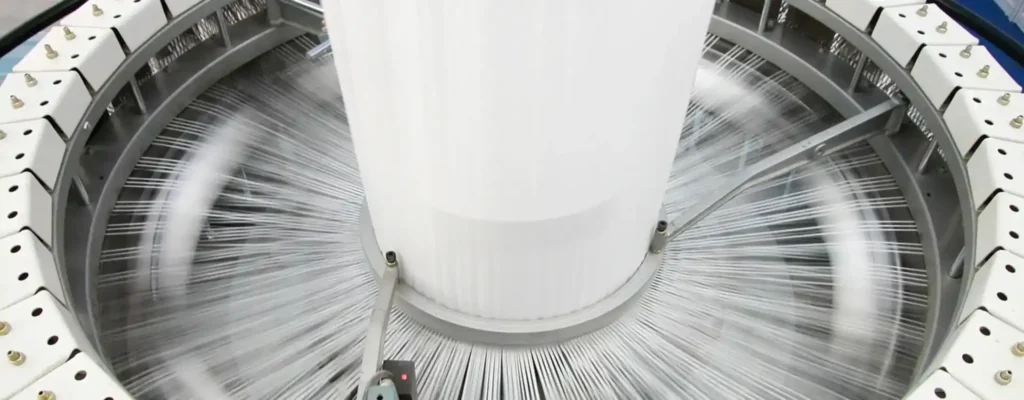
- Woven fabric making: PP granules become slit tapes, drawn to aligned molecules, and woven to the specified GSM and width. Some lines coat the fabric thinly to stabilize and ease bonding.
- Paper preparation: Choose basis weight, shade, and sizing to balance stiffness, scuff resistance, and print fidelity. Treat or prime surfaces as needed for adhesion and ink anchorage.
- Lamination or coating: Extrusion lamination drops a melt curtain (PE/PP tie) between paper and fabric; adhesives bond at lower heat for specialty papers. Bond strength, curl, and layflat are monitored in‑line.
- Printing: Water‑based flexographic inks, 1–8 colors typical. Registration marks and color bars enable vision inspection downstream.
- Tubing and forming: The laminate becomes a tube (overlap or fin seam). Block‑bottom or pinch‑bottom folds are set; valve sleeves inserted where applicable.
- Closure after fill: Pinch tape activation, heat sealing, sewing with hot‑melt tapes, or ultrasonic sealing for certain valves—depending on format and product.
- Quality checks: Dimensions (layflat, gusset, cut length), seam pull, tensile, dart; COF for pallet grip vs. conveyor flow; Cobb for paper; WVTR where liners are used.
- Palletization: Patterns reflect COF targets. Corner guards and stretch‑wrap recipes lock stacks without deforming faces.
- Store seal maps by SKU (temperature × dwell × pressure) on the HMI.
- Measure COF at receipt and again after 48–72 hours to capture slip migration if polymer coatings are present.
- Tune micro‑perf patterns to balance air egress and dust containment.
Applications of Poly-Paper Bags
Markets select formats for reasons that are measurable. Poly-Paper Bags win when a brandable, tactile exterior must coexist with a durable core and fast closures.
For a primer on the polymer backbone that underpins many designs, see woven polypropylene bags—a helpful adjacent reference when contrasting all‑paper, paper‑poly, and pure woven formats.
Poly-Paper Bags: History, Evolution, and Trends in China’s Market
The adoption arc of Poly-Paper Bags in China follows the country’s broader packaging maturation: rapid scaling, accelerated learning, and recent governance‑centric refinements. Early composites solved visible pain points—multiwall paper’s humidity fatigue and woven PP’s COF/print limitations. Growth came from construction and agriculture, where throughput and robustness trumped all else. Standardization emerged as large buyers instituted qualification programs, normalizing tensile, seam pull, dart screening, and bags‑per‑minute metrics across supplier lists.
Two present‑day currents shape the category. First, compliance tightening around food‑adjacent adhesives and printing has elevated documentation from courtesy to requirement. Second, cross‑industry sustainability signals—less mass, more recycled content where properties allow, clearer recovery instructions—are penetrating B2B packaging just as they did consumer formats years prior. Neither current mandates a single structure; both reward recipe discipline, supplier transparency, and line‑integrated quality control.
Systematic Analysis: Sub‑Problems and Integrated Solutions
Complexity yields to structure. Break the operating question—“What should our Poly-Paper Bags look like for this product, this line, this climate, this customer?”—into solvable parts, then recombine the answers.
Objective: remove grams per bag without inviting splits or slump. Levers: raise woven GSM only to the extent abuse demands; keep paper grammage where stiffness and scuff require; adjust gusset geometry; deploy tougher coatings where line speed is punitive. Evidence: stable dart results, no corner splits at defined drop heights, creep within acceptance after 8–12 weeks.
Objective: control WVTR for hygroscopic goods while avoiding overly complex, unrecoverable structures. Levers: specify a thin PE liner only where moisture truly drives quality loss; restrict ink coverage; favor peelable interfaces where end‑users can separate paper from polymer. Evidence: target WVTR achieved, labels legible post‑storage, recovery guidance actually followed.
Objective: sustain high bags‑per‑minute with dusty powders. Levers: select valve sleeves compatible with ultrasonic or thermal sealing; tune micro‑perfs to vent air without dust plumes; add powder deflectors or air knives to protect seal zones. Evidence: reject rates drop; seals hold at speed; dusting at the mouth ceases.
Objective: meet adhesive and printing standards for food‑contact or feed‑adjacent products without eroding margins. Levers: consolidate color palettes; standardize adhesives across SKUs; bulk‑qualify suppliers with COAs and migration plans. Evidence: faster audits, fewer retests, predictable lead times.
Objective: dual‑source materials without changing performance. Levers: define recipe windows (paper grammage bands; fabric GSM ranges; adhesive coat‑weight ranges) and insist on SPC. Evidence: supplier switches occur smoothly; no HMI recipe changes required when certified inputs rotate.
Technical Tables and Practical Targets
Failure Modes and Preventive Tactics
Every plant has legends: the corner split that humbled a night shift; the pallet that bulged after a heat wave; the seal that leaked when a formulation got dustier. Each failure is a map with a highlighted route to prevention.
- Corner splits — Add toughness in coatings, verify uniform gauge near gussets, align gusset boards, check die lip wear.
- Top‑seal leakers — Increase dwell or pressure; deploy powder deflectors; specify seal chemistry that tolerates fines.
- Pallet creep and bulging — Bias the structure toward woven backbone and paper stiffness; tune static COF for interlayer grip; raise gauge slightly for tall stacks.
- Roll blocking — Increment antiblock, lower winding hardness, add cooling before winding.
- Warehouse slippage — Reduce slip agent at the surface; add anti‑slip stripes or texture; confirm static COF on actual floor materials.
- Print adhesion loss — Treat to target dyne; match ink to additive package; consider primerless ink systems if compatible.
Experimentation: Designing for Downgauging and Recycled Content
To remove mass and add recycled content without losing performance is to manage interaction terms. The recipe that flies on one line may stumble on another; thus the method: screen, model, confirm, and only then scale.
Screen with a fractional factorial design to eliminate weak factors; fit response surfaces for the survivors; confirm with ton‑scale plant trials. Codify the winners as recipe libraries tied to specific abuse profiles—Powder‑High‑Risk, Pellet‑Standard, Outdoor‑Stack, and so on—so operators choose by context, not guesswork.
Operational Playbook for Buyers and Fillers
- Draft a one‑page abuse profile per SKU (drop heights, climate zone, pallet height, floor material).
- Select structure via decision tree: woven backbone for abuse; liner for barrier; both for dual‑risk cases.
- Negotiate recipe windows (paper grammage, woven GSM, adhesive coat‑weight) with suppliers to allow dual‑sourcing without requalification.
- Bind COA data to HMI presets; let machines, not memory, set seals and pressures.
- Measure COF at receipt and post‑aging; adjust anti‑slip stripes if stacks grow taller.
- Publish recovery guidance on pack art; minimize ink coverage; declare recycled content where credible.
Vocabulary and Long‑Tail Phrases
To match how engineers and buyers search, this article intentionally rotates among synonyms and near‑synonyms for Poly-Paper Bags: paper–poly composite sacks, kraft laminated woven PP bags, paper‑polypropylene valve sacks, block‑bottom paper/PP composites, pinch‑bottom paper–poly bags, sewn open‑mouth paper–poly sacks, paper‑laminated woven polypropylene bags, paper–polyethylene lined multiwall bags, paper–poly pinch‑bottom valve bags, and kraft/PP laminated industrial sacks.
What is Poly-Paper Bags?
At their core, Poly-Paper Bags are composite sacks in which a brandable paper shell is paired with a functional polymer layer to create a single, workhorse package. The fiber face brings print fidelity, stiffness, and friction; the poly layer contributes moisture moderation, sealability, and toughness. Between those two worlds—paper’s tactile legitimacy and polymer’s pragmatic resilience—lies a versatile carrier for powders, pellets, granules, and even food-adjacent materials.
Formats vary—sewn‑open‑mouth, pasted valve (including block‑bottom), pinch‑top heat‑seal, SOS (self‑opening square)—but the throughline is the union of paper’s printable exterior with a poly liner, coating, or film tuned to the product and route. In the Chinese market vernacular, Poly-Paper Bags often includes multiwall paper sacks with a poly liner as well as single‑wall kraft with bonded poly film—an umbrella term for fiber‑plus‑film hybrids used in heavy‑duty packaging.
Materials and layered architecture of Poly-Paper Bags
A good laminate is not a pile of layers; it is a set of roles executed cleanly. In Poly-Paper Bags, the outer paper, inner polymer, and the bond between them each carry distinct responsibilities. The aim is performance at minimal mass—strong where stressed, compliant where regulated, and attractive where sold.
Machine‑finished kraft—natural or bleached—typically 60–120 g/m² per ply for heavy‑duty sacks. Long‑fiber softwood provides tensile backbone; hardwood blends fine‑tune surface. Paper stiffens panels, lifts print clarity, and raises friction for stack stability. Brown grades hide scuffs and cost less; white grades win in brightness and color accuracy.
LDPE/LLDPE liners, PP films, or coextrusions (e.g., PE/EVOH/PE) supply moisture and oxygen control, sifting reduction, and heat‑seal functionality. Thickness and composition are tailored: a 40–80 μm liner for hygroscopic powders; a thin extrusion coat (10–25 g/m²) when weight economy and telegraphing control take priority.
Extrusion‑coated polyolefin tie layers or water‑based adhesives create durable peel adhesion, smooth woven/film micro‑topography, and add incremental barrier. Too little bond invites delamination; too much raises stiffness and fold stress.
Water‑based flexo inks sit on paper and can be guarded with OPV for rub resistance; anti‑slip panels tune outer COF without sacrificing legibility. Finishes double as safety devices: the right varnish saves digits and cartons in a tall, jostled stack.
- Paper / extrusion coat / poly film or liner (outer paper focus with inner barrier).
- Paper / adhesive / poly film / adhesive / paper (dual‑paper print platform with captive film).
- Multiwall paper shell + free tubular liner (independent liner for maximum barrier and seal control).
Capabilities that differentiate Poly-Paper Bags in the field
No single headline feature explains the preference for Poly-Paper Bags. Instead, a portfolio of attributes quietly decreases the total cost of failure across the route from filler to pallet to customer.
- Durability under impact and abrasion. Tough polymer layers—whether liners or coats—absorb shocks and resist cuts beyond paper‑only designs, improving drop performance without excessive mass.
- Moisture and oxygen moderation. MVTR can be tuned via liner gauge; EVOH coex adds oxygen control for sensitive ingredients; valve heat‑sealing constrains sifting.
- Print and identification. Paper facings carry graphics, barcodes, and compliance symbols with clarity, crucial for export flows and regulated markets.
- Handling and pallet safety. Paper’s friction and block‑bottom geometry reduce slippage; anti‑slip stripes raise static COF where tall stacks are unavoidable.
- Configurable compliance. With the right resins, inks, and adhesives, constructions can fit food‑adjacent or purely industrial requirements.
- Material efficiency. Compared with heavier multiwall paper equivalents, a right‑sized polymer often reaches targets at lower total grams per bag.
Manufacturing path: from pulp and pellets to finished sacks
While specifics differ—liner vs. laminate, sewn vs. pinch—the choreography behind Poly-Paper Bags tends to follow a recognizable rhythm.
Kraft rolls are unwound, moisture‑conditioned, and printed by water‑based flexo. Registration must be guarded tightly; small drift becomes large misalignment once the tube is formed and the bottom is pasted.
Liner‑based designs extrude LDPE/LLDPE tubular film to target gauge; laminate designs slit and treat films; extrusion coaters condition pellets and masterbatches and meter coatweight carefully.
Extrusion coating lays a molten curtain between paper and film; adhesive lamination marries treated surfaces under pressure; liner insertion nests a separate tube inside the paper shell for maximum barrier control.
Printed webs become tubes; bottoms are pasted for block‑bottom geometry, pinch‑sealed for hermetic formats, or left open for SOM sewing. Valve sleeves and patches are inserted; micro‑perfs vent air at high fill speeds.
SOM is sewn—often over crepe tape to limit sifting. Valve builds may be heat‑sealed post‑fill if a sealant surface is present. Pinch‑top designs rely on controlled dwell/time/pressure windows.
Grammage, dimensions, peel adhesion, burst and tensile, drop trials, outer COF, print‑rub, porosity (for valve sacks), valve leak tests, and pallet simulations round out the dossier that follows each lot.
Applications and line‑fit: where Poly-Paper Bags shine
The utility of Poly-Paper Bags shows up where unit value is high or failure costs multiply—dusty yards, humid warehouses, busy conveyors, bright retail aisles.
- Cement, minerals, building materials. Block‑bottom valve sacks endure abrasive products and repeated drops while preserving label legibility.
- Fertilizers and agrochemicals. UV‑stabilized films and robust OPV help bags survive outdoor storage and odor scrutiny.
- Animal feed and pet food. Liners resist fats and oils; paper exteriors carry premium graphics that matter at retail.
- Sugar, grains, starches. Barrier‑managed structures guard against moisture; paper improves pallet friction and label adhesion.
- Industrial chemicals and resins. Polymer components tolerate many salts and solvents; optional oxygen barrier serves sensitive additives.
- Postal/logistics. Abrasion‑tolerant laminates and reinforced seams handle conveyors and repetitive handling cycles.
- Retail & e‑commerce sack packs. Display‑friendly block‑bottom geometry meets rugged transit needs.
For format context, see kraft paper sacks, which share paper‑forward aesthetics but differ in barrier and seal strategies when compared with polymer‑assisted hybrids.
System thinking: decompose risks, compose answers
The best specification for Poly-Paper Bags is the one tuned to the actual hazards in your chain. The following playbook breaks the challenge into sub‑problems and offers practical levers.
- Strength vs. weight. Outer paper 70–90 g/m²; add plies only when stiffness or opacity dictates; size the liner or coat to deliver toughness and sifting control; reinforce locally at bottoms and valves.
- Bond integrity & sifting. Aim for 10–25 g/m² adhesion layers; ensure proper surface treatment; use crepe tape under sewing; validate by peel and sifting tests on filled samples.
- Moisture & odor. Use 40–80 μm liners or coex with EVOH where oxygen control matters; heat‑seal valves post‑fill; avoid finishes that crack at folds.
- Print fidelity & telegraphing. Calibrate coatweight and nip; specify calendered or clay‑coated paper; apply matte OPV for rub resistance without glare.
- Pallet safety. Target static COF ≥ 0.35; add patterned anti‑slip stripes; keep block‑bottom geometry tight to avoid leaning stacks.
- Compliance & traceability. Map each SKU to standards and declarations; place durable lot codes in low‑scuff zones.
Colored specification tables for quick reference
| Parameter | Typical Target/Range | Method Notes | Why It Matters |
|---|---|---|---|
| Outer paper ply | 70–100 g/m² (brown/white) | Gravimetric; caliper | Print fidelity, friction, scuff resistance |
| Inner paper ply (opt.) | 60–90 g/m² | As above | Stiffness, opacity, anti‑telegraphing |
| Poly layer | 40–80 μm liner; or 10–25 g/m² coat | Film gauge; peel adhesion | Moisture/odor control; bond integrity |
| Valve sleeve | Paper/film laminate; heat‑sealable | Dwell/time/pressure window | Sifting control; hygiene |
| Outer COF | ≥ 0.35 (0.35–0.55 with anti‑slip) | Static/kinetic COF tester | Pallet stability and safety |
| Drop test | 5–10 drops at 1.0–1.2 m (filled) | Buyer protocol | Impact robustness |
| Print rub | Pass brand spec | Sutherland rub | Warehouse abrasion survival |
| Porosity (valve) | Tuned micro‑perfs | Air permeability | De‑aeration with minimal product loss |
| UV stabilization | As needed | Accelerated weathering | Outdoor storage survival |
| Cost Driver | Lever | Trade‑offs |
|---|---|---|
| Paper grade | Brown vs. white; basis weight | Aesthetics vs. scuff; stiffness vs. mass |
| Poly selection | LLDPE vs. LDPE vs. PP; coex with EVOH | Sealability vs. stiffness; barrier vs. cost |
| Lamination method | Extrusion coat vs. adhesive | Capital vs. formulation flexibility |
| Format | SOM vs. pasted valve vs. pinch | Line speed, hermeticity, equipment fit |
| Print/OPV | Colors, coverage, varnish | Brand impact vs. rub/COF |
China’s market: history, evolution, and current signals
The phrase Poly-Paper Bags has traveled a long road in China’s packaging vocabulary. Early adoption surfaced as a pragmatic patch for humid, high‑throughput routes where multiwall paper alone struggled. Over time, investment in extrusion coaters, high‑register flexo, and bottoming automation reframed the format from a workaround into a configurable platform. Presently, the signal is clear: performance right‑sizing, compliance documentation, valve optimization, pallet safety, and credible sustainability claims are shaping procurement language and plant floors alike.
- Performance right‑sizing. Tune poly gauge and adhesion instead of adding paper plies; hit MVTR and drop targets with fewer grams.
- Compliance packaging. Migration data for liners and coatings, GMP evidence, and lot‑coded traceability are increasingly standard asks.
- Valve optimization. Heat‑sealable valves with defined dwell/time windows curb sifting and improve hygiene in dense hubs.
- Pallet safety. Outer COF specifications migrate from “nice‑to‑have” to contract language as warehouses build upward.
- Sustainability claims. Scrutiny rises on recycled content assertions and certified pulp; design‑for‑recycling stresses mono‑polyolefin inner structures and delamination‑friendly bonds.
Procurement checklist and RFQ snippets for Poly-Paper Bags
- Declare fill mass and product class (cement, fertilizer, starch, feed, resin).
- Select format: pasted valve block‑bottom or SOM or pinch; define valve sleeve type; specify any heat‑seal need.
- Set pallet pattern, stack height, and required outer COF; request anti‑slip panels if loads are tall.
- Choose paper (brown/white), ink coverage, and OPV; define rub‑resistance targets.
- Specify liner thickness and polymer; set MVTR/OTR targets for sensitive products.
- Codify tests: drop height/cycles, peel adhesion minima, seam/bottom strength, porosity allowances, UV exposure where relevant.
- Require declarations for food‑contact components where appropriate; insist on lot traceability.
Explore related materials such as woven polypropylene when comparing hybrid paper‑poly options with fabric‑reinforced sacks.
Troubleshooting field issues before they scale
| Failure mode | Likely cause | Effect | Action |
|---|---|---|---|
| Delamination at folds | Low coatweight; poor surface treatment | Open seams; scuffing | Increase coat; improve corona; alter fold geometry |
| Valve leakage | Tolerance drift; inadequate heat‑seal | Sifting and loss | Tighten sleeve; optimize seal window; air‑leak tests |
| Low outer COF | Glossy varnish; smooth paper | Pallet slippage | Anti‑slip stripes; specify COF; choose rougher kraft |
| Print rub‑off | Ink/OPV mismatch; poor drying | Illegible branding | Higher‑rub OPV; extend drying; reduce nip glossing |
| UV embrittlement | Unstabilized films; light‑sensitive pigments | Cracking outdoors | UV stabilizers; lightfast pigments; protective OPV |
Implementation roadmap for a new Poly-Paper Bags line
Equipment. Flexo press; extrusion coater or laminator; tuber and bottomer; valve applicator; sewing/heat‑seal stations; QC lab for peel, COF, drop, rub, porosity.
Skills. Coating/lamination process techs, print operators skilled in register and ink‑water balance, QA engineers for peel/COF/seam testing, and maintenance for heaters and drives.
First‑article approval. Submit a dossier with material certificates, migration documents (if applicable), test records, pallet simulation results, and marked retain samples for traceability.
Putting the elements together without over‑engineering
Design Poly-Paper Bags by working backward from the real hazards: choose polymer architecture for barrier and sealability, select paper for appearance and friction, specify lamination for adhesion and telegraphing control, and then validate by the numbers—drops, peels, rubs, and COF—on filled product in the intended climate. Done with care, these hybrids routinely outperform heavier paper‑only constructions while stacking straighter, scuffing less, and communicating more.
Poly-paper Bags trace their origins back to the modern textile industry and the plastic polymer revolution of the late 20th century. The journey of these bags begins with the development of woven polypropylene (PP) and kraft paper, two materials that, when combined, created a robust and versatile packaging solution.
1. The Birth of Modern Packaging:
The modern textile industry laid the foundation for woven bags with the advent of synthetic fibers. Polypropylene, introduced in the 1950s, revolutionized the packaging world due to its strength, flexibility, and resistance to moisture and chemicals. This material quickly found applications in various sectors, including agriculture and industrial packaging.
Kraft paper, known for its durability and eco-friendliness, became popular in the early 20th century. It was used extensively for packaging goods due to its strength and biodegradability. The combination of kraft paper and polypropylene led to the creation of poly-paper bags, which offered both the strength of synthetic materials and the environmental benefits of paper.
2. Expanding Applications:
As the market for packaging evolved, so did the applications of poly-paper bags. Initially used for bulk commodities, these bags soon found applications in a wide range of sectors, including agriculture, food, and industrial packaging. The development of advanced laminating technologies allowed for the production of multi-wall kraft paper woven bags that could withstand various environmental conditions and transportation stresses.
Poly-paper bags are now used to package a diverse array of products, including seeds, grains, nuts, rice, soybeans, wheat, corn, coffee beans, starch, and processed agricultural products. Their versatility makes them suitable for different markets and applications, reflecting the industry’s ongoing adaptation to changing needs.
3. Growth and Innovation in China:
China’s role in the global packaging industry has grown significantly, particularly in the production of poly-paper bags. The country’s packaging industry has expanded rapidly due to its ability to produce high-quality, cost-effective solutions. Chinese manufacturers, particularly those from Wenzhou, have played a crucial role in popularizing poly-paper bags, leveraging local expertise and resources to drive innovation.
However, the rapid growth has also led to challenges. Many manufacturers have struggled with issues related to brand building, technology updates, and adapting to diverse market demands. In response, the industry is increasingly focusing on sustainability, quality, and meeting the evolving needs of consumers.
Selecting the Right Poly-Paper Bag for Various Applications
Poly-paper Bags are versatile and can be customized to meet specific needs. Here’s how different product parameters impact their use in various applications:
1. Thickness and Weight:
The thickness and weight of poly-paper bags play a crucial role in their performance. For instance, when packaging seeds or grains, the bag’s strength and ability to withstand rough handling are essential. Thicker bags with higher grammage are preferred for bulkier items to ensure durability and prevent damage.
2. Size and Type:
The size of the bag should match the quantity and type of product being packaged. For larger items like rice or feed, bigger bags are required. Additionally, the type of bag—whether it has a block bottom or a valve for easy filling—can affect the efficiency of the packaging process. Poly-paper bags with valve openings facilitate faster filling and are often used for bulk products.
3. Lamination and Inner Linings:
Lamination enhances the bag’s durability and moisture resistance. For products sensitive to environmental factors, such as starch or powdered substances, laminated poly-paper bags are preferred. The addition of inner linings can also offer extra protection, especially for products that require a barrier against contamination.
4. Customization Options:
Poly-paper bags can be customized with various printing techniques to include branding, product information, and logos. Modern printing technologies, provided by leading equipment manufacturers like Starlinger, ensure high-quality, clear, and vibrant prints. Customers can choose between matte and glossy finishes based on their aesthetic preferences and functional needs.
VidePak’s Commitment to Quality and Innovation
VidePak has been a leader in the packaging industry for over 20 years, consistently delivering high-quality solutions and setting industry standards. Here’s how VidePak stands out in the poly-paper bag market:
1. Advanced Manufacturing Processes:
VidePak employs cutting-edge technology from Starlinger, a renowned manufacturer of packaging machinery. The use of state-of-the-art equipment ensures precise production, high efficiency, and consistent quality. The company’s facilities are equipped with advanced laminating and printing machines that meet international standards.
2. Commitment to Sustainability:
VidePak is committed to environmental sustainability. The company prioritizes the use of recyclable materials and adheres to stringent environmental standards. This commitment is evident in their use of eco-friendly raw materials and their efforts to reduce waste in the production process.
3. Quality Control:
Quality control is a cornerstone of VidePak’s operations. The company conducts rigorous testing of raw materials, including mechanical properties and consistency checks. This thorough approach ensures that every poly-paper bag meets high standards of strength and reliability.
4. Custom Solutions:
Understanding the diverse needs of its clients, VidePak offers customized poly-paper bags tailored to specific applications. Whether for agricultural products or industrial use, the company provides solutions that meet precise requirements, including size, thickness, and printing specifications.
Future Trends in Poly-Paper Bags
The future of Poly-paper Bags is expected to be shaped by several trends:
1. Increased Focus on Sustainability:
With growing environmental concerns, the demand for eco-friendly packaging solutions is rising. Poly-paper bags are expected to incorporate more sustainable materials and technologies, such as biodegradable coatings and recyclable components.
2. Technological Advancements:
Ongoing advancements in manufacturing technologies will likely enhance the functionality and performance of poly-paper bags. Innovations in materials science and machinery will lead to more efficient production processes and improved product features.
3. Customization and Market Adaptation:
As markets become more diverse, the need for customized packaging solutions will increase. Poly-paper bags will continue to evolve to meet specific industry requirements, offering tailored solutions for various products and applications.
4. Brand Building and Quality Assurance:
As competition intensifies, companies will need to focus on brand building and maintaining high quality. VidePak’s commitment to quality control and innovation sets a benchmark for the industry, demonstrating the importance of investing in technology and sustainability.
In summary, Poly-paper Bags represent a significant advancement in packaging technology, combining the best of both paper and plastic materials. Their evolution reflects broader trends in the industry, including a focus on sustainability and technological innovation. As companies like VidePak continue to lead the way with high-quality, customizable solutions, the future of poly-paper bags looks promising, catering to an increasingly diverse and demanding market.