
Introduction
What Are Polypropylene Bags?
Polypropylene Bags are engineered sacks manufactured primarily from polypropylene polymers and tailored for high-volume movement of powders, granules, and agricultural goods. The core is a woven, high‑tenacity fabric; the surfaces may be laminated for print or friction control; liners can be added for moisture moderation; and closures are selected for speed, cleanliness, and safety. In modern supply chains, Polypropylene Bags operate as subsystems within a larger logistics architecture: they engage filling machines, interact with palletizers, tolerate container loads, and ultimately enter material recovery streams where design allows.
Also known as (aliases):
- PP woven bags
- Polywoven sacks
- BOPP‑laminated woven bags
- Block‑bottom valve bags
- Paper‑laminated woven sacks
- FFS‑compatible woven tubes
- Recyclable mono‑PP bags
The Materials of Polypropylene Bags (what they are, why they’re chosen, how the stack is built)
Think of Polypropylene Bags as deliberate stacks of functions. One layer bears load, another carries print, a third moderates moisture, a fourth allows sealing, a fifth adjusts friction. Tuning these layers—rather than chasing a mythical “best material”—is how engineers reconcile performance, cost, and end‑of‑life goals.
What it is. Polypropylene pellets are melted, cast as an ultra‑thin film, slit into narrow tapes (often 600–1,200 denier), then drawn to orient polymer chains. Those tapes are woven on circular or flat looms to form a light, high‑tenacity fabric. Typical body weights for 25–50 kg sacks: roughly 80–115 g/m², with heavier bases or corner patches used when drop heights are high or contents are angular.
Why it’s chosen. Oriented tapes deliver exceptional tensile and tear strength at very low tare. Woven fabrics resist conveyor abrasion, absorb negligible water, and—with UV stabilizers—tolerate outdoor staging better than paper. The weave flexes without cracking, so bags survive the micro‑bending of real supply chains.
Cost levers. Resin index (virgin vs. recycled blends), tape denier (yield), pick density, loom efficiency, fabric GSM, and additive packages (UV, antistatic, slip). Higher GSM improves drop survival and puncture resistance but adds mass; the optimum depends on product density, route roughness, and stack height.
BOPP laminate. A thin biaxially oriented PP film (often 18–35 µm) bonded to the weave for high‑fidelity print and a splash barrier. Gloss highlights color; matte or textured faces raise bag‑to‑bag friction and protect print from scuffing.
Kraft paper ply. A tactile paper face (60–100 g/m²) laminated to woven PP when higher surface friction or a paper aesthetic is needed. It stacks “squarer” and accepts labels well, but complicates plastic‑only recycling unless fiber‑plastic separation exists.
Cost levers. Film gauge and ink color count (BOPP); basis weight and varnish (paper); one‑sided versus two‑sided lamination. Matte coatings add cost yet reduce stretch‑wrap later by improving COF.
What they are. LDPE/LLDPE liners (25–80 µm) or extrusion coatings; liners can be loose (inserted) or attached (tacked at alignment points). For highly hygroscopic or odor‑critical goods, thicker or co‑extruded liners are selected; antistatic packages are used where dust clouds and ignition sources can coexist.
Why they’re chosen. Liners moderate moisture vapor transmission (lower MVTR), contain fines that might otherwise sift through pores, and enable hermetic closures (skirted or duffle mouths) when sewing holes would wick moisture.
Cost levers. Resin choice and gauge, anti‑block/slip and antistatic additives, loose versus attached versus form‑fit geometry. Loose liners reduce bag price but add labor; attached liners speed lines and improve hygiene.
Self‑closing PP/PE valve sleeves dominate for mineral powders; ultrasonic‑sealable valves are preferred where humidity or sift‑leak control is paramount. Open‑mouth bags can be sewn (double‑fold with tape‑over) or heat‑sealed. Dust skirts and petal closures are added where cleanliness and odor control matter. Sleeve gauge, length, and alignment drive performance and cost.
- UV stabilizers protect tapes in sunlight during field staging.
- Anti‑slip textures raise bag‑to‑bag friction, cutting wrap and pallet creep.
- Micro‑perforations accelerate de‑aeration at the filler while balancing MVTR.
- Antistatic masterbatch in liners or faces reduces nuisance shocks and ignition risk.
- Easy‑open tear tapes improve ergonomics on sites and farms.
What Are the Features of Polypropylene Bags?
Features only matter when they change outcomes—throughput, payload, safety, waste. The following characteristics of Polypropylene Bags connect directly to measurable plant and warehouse metrics.
- Form stability and cube utilization. Square conversions keep dimensions close to nominal after filling; edges stay within the pallet footprint; containers hit payload before running out of grid. In commodity lanes, cube alone often pays the format premium.
- High strength at modest tare. Oriented tapes deliver tensile and tear performance without the mass penalty of rigid containers. Reinforced bottoms and corner patches resist puncture from angular media; drop test passes rise accordingly.
- Moisture moderation and shelf‑life. Laminates and liners lower humidity ingress; sealed valves and heat‑sealed tops remove stitch‑hole wicking—an under‑appreciated moisture path in wet seasons.
- Print fidelity with scuff control. BOPP faces support dense regulatory text and machine‑readable codes; paper faces increase friction and legibility under rough handling. Matte finishes keep labels readable after conveyor rub.
- Pallet stability with less wrap. Tuned COF and square geometry reduce layer creep, enabling taller stacks with fewer topple events and reduced stretch‑film usage.
- End‑of‑life pathways by design. Mono‑PP stacks (woven PP + BOPP + PP valves/liners where feasible) map to PP recycling streams; paper‑laminated hybrids fit regions with fiber‑plastic separation. Clear disposal marks reduce downstream ambiguity.
- Safety add‑ons when needed. Antistatic liners and static‑safe handling practices reduce ignition risk with combustible dusts; clear markings minimize operator error.
How Polypropylene Bags Are Produced (with modern automation)
Production blends materials science and mechatronics. The best plants build quality in, rather than sorting it out. Below is a current-state journey from pellet to pallet.
- Tape extrusion and drawing. Polypropylene pellets plus masterbatches (UV, color, antistatic) are melted and cast into a film, slit into tapes, and drawn to align polymer chains. Real‑time controls regulate melt temperature and draw ratio. Scrap is captured and routed to in‑house recycling. Denier drift now becomes seam failure later—so automation watches it now.
- Weaving on circular or flat looms. Tapes become fabric. Next‑gen looms run high weft insertion with closed‑loop tension, low noise, and smart drives. Auto‑doffing and weft‑break detection reduce stoppages; dashboards visualize OEE and pick‑rate deviations.
- Coating or lamination. Woven fabric receives extrusion coating (PP/PE) to curb sifting and create weldable interfaces, or an adhesive‑bonded BOPP film for print/barrier performance. Automatic die‑bolt control holds thickness; thermal profiling reduces curl; corona pretreat ensures ink adhesion.
- Printing and marking. Rotogravure or flexo systems print artwork and regulatory text on film or paper webs before lamination for highest fidelity. Camera‑guided registration maintains plate alignment; viscosity loops avoid color drift. Quiet zones are reserved for QR/datamatrix codes.
- Tube forming and block‑bottom conversion. Laminates are formed into tubes, gusseted, and creased. Square bottoms are created with overlapping or folded panels and then welded or stitched. Position sensors verify creases; servo axes hold repeatability; valve sleeves are inserted and aligned, with ultrasonic options for hermetic closure.
- Liner fabrication and fitment. Tubular, gusseted, or form‑fit liners are extruded and either attached (tacked) or inserted. For odor‑critical or hygroscopic goods, skirted mouths are added; antistatic or conductive liners are oriented correctly and verified.
- Inspection, testing, pack‑out. Vision systems check seam alignment, print registration, and valve placement. Rejection is automatic for off‑specs. Routine tests cover seam strength, drop survival, compression dwell, COF, print rub, seal integrity, and dimensions. Stacks are counted, wrapped, and labeled with traceability codes.
- Drop tests across orientations at target temperature.
- Compression dwell at intended stack height and time.
- Seam strength (sewn or welded) against program targets.
- MVTR coupons and, where relevant, odor checks under humidity.
- COF and print rub after simulated conveyor cycles.
Applications — where the format earns its keep
Polypropylene Bags serve categories where density is high, dust is abrasive, and stacks are tall:
- Cement and blended cement. Fast impeller filling, clean valve closure, high stack integrity, excellent container cube. Coastal lanes typically specify sealed valves and liners for humidity control.
- Dry mortar, tile adhesive, construction powders. Angular fillers punish weak faces; matte BOPP or paper faces with higher GSM bottoms survive. Sleeve geometry is tuned for impeller flow to protect speed.
- Fertilizers and soil amendments. Hygroscopic content argues for attached liners and sealed valves in humid climates; square geometry stabilizes tall pallets.
- Salt, minerals, and crystals. Abrasive particles drive scuff‑resistant faces and reinforced corners; square geometry reduces pallet creep.
- Livestock feed and seed. When legibility, speed, and pallet stability trump unit price, valve formats often outperform sewn open‑mouth sacks; open‑mouth remains effective on slower, flexible lines.
- Sugar and staples. Durable print zones resist smears; liners moderate humidity for granulated sugars.
Polypropylene Bags: Understanding Innovations in Automated Production
Automation is more than a robot arm; it is measurement plus feedback. The recent wave of innovation is an orchestration of faster looms, tighter laminators, smarter vision, sealed‑valve conversion, and connected dashboards. Each lever is modest alone, transformative together. Below, the innovations are grouped by the type of constraint they alleviate.
- High‑speed circular looms with closed‑loop tension and low‑noise drives keep GSM and pick density on target so conversion does not fight geometry drift.
- Servo‑guided block‑bottom/valve conversion holds creases and sleeve alignment; ultrasonic tabs seal valves for hermetic closure where needed.
- Energy‑smart tape lines with adaptive control reduce kWh/kg and stabilize draw ratios; auto‑trim recovery cuts scrap.
- Precision laminators emboss matte textures in‑line to hit bag‑to‑bag COF targets and stabilize bond strength.
- Vision inspection detects seam misalignment, print drift, valve misplacement, and surface defects at line speed; data archives support root‑cause analysis.
- Predictive maintenance uses vibration and torque signatures to schedule service before a failure—raising OEE while shrinking unplanned downtime.
- Digital traceability ties resin, liners, plates, and sleeves to pallet IDs; complaint resolution times drop from days to hours.
- Recycled PP (rPP) blends are feasible in non‑critical layers when tensile targets are validated; filtration and narrow MFI bands stabilize tape draw.
- Mono‑material design aligns woven PP, BOPP faces, and PP‑based valves/liners for PP‑stream recycling; clear marks guide disposal.
- Antistatic packages stabilize print and reduce dust attraction in low humidity environments.
System thinking — decompose the decision, then recombine
Treat Polypropylene Bags as a node in a network: product → line → warehouse → route → end‑of‑life. Solve tractable sub‑problems, then stitch the answers into a coherent specification.
Problem. Hygroscopic products cake; stitch holes wick; fines contaminate adjacent lots.
Levers. Choose laminate/liner stacks for your MVTR target; prefer sealed valves or heat‑sealed tops in wet seasons; size venting for peak fill without blowing MVTR.
Metrics. Lump counts, moisture gain, sift‑loss per thousand, housekeeping hours.
Problem. End‑drops split bottoms; angular media scuff faces; stacks lean.
Levers. Raise GSM at bottom; add corner wear patches; adopt block‑bottom geometry; tune COF via matte faces and anti‑slip varnish; validate stack height with compression dwell tests.
Metrics. Drop pass rate, compression deflection, leaning returns, wrap per pallet.
Problem. Mouths collapse; spouts mis‑seat; dust alarms trip.
Levers. Match valve and spout diameters; pre‑crease mouths; use micro‑perfs or vent windows; add skirts; integrate vision inspection at conversion.
Metrics. Sustained bags per minute, mean time between reseats, dust extractor load, reject rate.
Problem. Ambiguous labels and SOPs derail audits.
Levers. Dedicate high‑contrast panels to regulatory text; verify rub resistance; align SOPs to current standard language; keep static class and handling pictograms visible and durable.
Metrics. Audit pass rate, barcode scan success after conveyor cycles, static incident logs.
Problem. A bag can be strong, fast, and out of step with tomorrow’s rules.
Levers. Closed‑loop reuse at 6:1 or 8:1; mono‑PP where reuse is impractical; rPP in non‑critical layers; clear end‑of‑life marks.
Metrics. Reuse cycles, kilograms of virgin PP avoided, recycling acceptance, CO₂e per tonne transported.
Problem. The lowest unit price can hide the highest system cost.
Levers. Model avoided losses, wrap savings, payload gains, and labor; standardize footprints and plates across SKUs for scale.
Metrics. Landed cost per tonne, claim rate, wrap per pallet, container payload.
Color table — starter specifications
Process & quality windows — colorful summary
Comparative positioning — alternatives and trade‑offs
Versus multi‑wall paper. Paper sacks offer tactile grip and established recycling pathways, but struggle when wet and on abrasive lines. Polypropylene Bags add a safety margin against rupture and scuff; with liners and sealed closures, they also restrain humidity more effectively.
Versus heavy‑duty PE film valve bags. PE film can be hermetic and increasingly recyclable; puncture resistance against angular media often demands thick films. Woven PP delivers abrasion resistance without heavy mass and, with matte faces, better friction for pallet stability.
Versus FIBCs (one‑ton bulks). Upstream logistics love FIBCs, but 25–50 kg sacks remain practical units in many retail or job‑site markets. Most networks run both intentionally: FIBCs inbound to depots, Polypropylene Bags outbound to distributors and sites.
Worked scenarios — where automation pays for itself
- Valve‑bag cement line on the coast. Switching from sewn open‑mouth to block‑bottom valve with ultrasonic sealing cut dust at spouts, allowed higher stack heights, and raised container payloads. The unit premium was offset by lower wrap, fewer claims, and reduced housekeeping.
- Dry‑mortar plant with chronic lean. Adopting matte faces (higher COF) and tightening conversion tolerances reduced pallet creep by double digits and yielded one more layer per pallet within compression dwell limits.
- Feed mill with seasonal humidity. Attached liners and heat‑sealed tops reduced caking in monsoon storage; auto‑register kept labels readable despite dust. Complaints fell as quickly as cleanup hours.
Risk register — symptom → likely cause → corrective action
- Leaning pallets → bag‑to‑bag COF too low; bulge outside pallet edge; wrap recipe off → add matte faces or anti‑slip varnish; adopt block‑bottom geometry; adjust wrap and corner boards; validate fill height vs. base.
- Sifting at seams/valves → stitch pitch wide; no tape‑over; valve gap; undersized vent → add tape‑over or switch to sealed valves; improve spout clamping; increase vent area on the opposite panel.
- Caking after coastal export → MVTR too high; liner too thin; too many micro‑perfs; sewn wicking → specify attached liner; sealed closures; reduce perfs; add pallet/container desiccants.
- Label smudge → incomplete ink cure; low rub resistance; high‑gloss in text zones → add matte or over‑varnish in text panels; extend cure; verify adhesion with rub tests.
- Baffle or bottom blowouts → stitch density low; GSM under‑spec → increase stitch density; raise base GSM; add corner wear pads.
- Static nuisance trips at filler → poor ground clamp (Type C); wrong static class → use monitored grounding; clean contact points; consider Type D where grounding is unreliable; control humidity.
Ready‑to‑use RFQ checklist
- Format: Polypropylene Bags — open‑mouth gusseted / block‑bottom valve / FFS tube.
- Size: L × W × H: ____ × ____ × ____ mm; nominal capacity ____ kg; target fill height ≤ 2 × shortest base dimension.
- Body fabric: ____ g/m²; bottom: ____ g/m²; UV package ____ hours.
- Exterior face: BOPP gloss/matte or paper‑laminated; anti‑slip yes/no; target COF ____.
- Valve sleeve: inner/outer; sleeve length ____; sealing method (self‑closing/ultrasonic) ____; vent channels yes/no.
- Liner: loose/attached/form‑fit; gauge ____ µm; mouth (plain/duffle/skirted); antistatic yes/no.
- Venting: micro‑perf density ____; vent patch yes/no.
- Printing: ____ colors; quiet zone for QR/batch code yes/no; rub‑resistant varnish yes/no.
- Tests: drop; seam strength; compression dwell; valve leak; MVTR coupon; print rub; (if applicable) static verification.
- End‑of‑life: mono‑PP design where possible; recycling marks; rPP content target ____% (where allowed).
Frequently asked technical questions
- Do seven‑layer liners always outperform simpler liners? Not always. They add barrier (oxygen, moisture), puncture resistance, and functional layers (antistatic or conductive), but the value depends on the product. For inert minerals, a simpler antistatic PE liner may suffice; for oxygen‑sensitive powders or odor‑critical pellets, complex co‑extrusions pay for themselves.
- Are baffle or block‑bottom builds heavier than pillow sacks? Some mass is added by panels and seams, yet optimized GSM and modern conversion keep tare close while space utilization, pallet stability, and filling speed improve materially.
- How do Type C and Type D choices affect operations? Type C requires a reliable ground during fill and discharge; where discipline is strong, it’s cost‑effective. Type D dissipates charge without a ground, useful for mobile setups; both raise safety and stabilize line speed when combustible dusts are present.
- Can bags be reused safely? Constructions at 6:1 or 8:1 safety factors can be reused in controlled loops after inspection and cleaning. Single‑trip 5:1 models should not be reused. Life limits depend on UV, abrasion, and chemicals.
- Do paper‑laminated faces undermine recyclability? In polymer‑stream markets, mono‑polyolefin faces are generally cleaner for recycling. Paper‑laminated variants make sense where fiber‑plastic separation exists or where extra friction is critical. Label disposal clearly and confirm acceptance locally.
A compact buyer’s map
Product behavior → climate and dwell → geometry and mouth → fabric GSM and reinforcements → exterior friction and print durability → liner barrier and electrostatics → de‑aeration plan → stack and wrap recipe → end‑of‑life. Pause. Measure. Iterate. Then standardize. That is how Polypropylene Bags stop being a commodity and become a lever for throughput, safety, and cost.
Polypropylene bags are a staple in various industries due to their durability, versatility, and cost-effectiveness. These bags are widely used for packaging everything from agricultural products to industrial materials. Recent advancements in manufacturing technology, particularly with the integration of Starlinger’s latest equipment and 3D weaving techniques, have significantly enhanced the production quality and efficiency of polypropylene bags. This article explores the characteristics of polypropylene bags, the role of automated production, and the impact of cutting-edge technology on the industry.
What Are Polypropylene Bags?
Polypropylene bags, also known as PP bags, are made from polypropylene, a type of thermoplastic polymer. These bags are valued for their strength, resistance to chemicals and moisture, and their lightweight nature. They are commonly used in various applications, including:
- Agriculture: For packaging grains, animal feed, and fertilizers.
- Industrial: For handling bulk materials like chemicals, sand, and construction materials.
- Retail: For packaging consumer goods.
Characteristics of Polypropylene Bags
- Strength and Durability:
- Tensile Strength: Polypropylene bags exhibit high tensile strength, making them suitable for heavy-duty applications.
- Resistance: They are resistant to moisture, chemicals, and UV rays, which extends their usability.
- Versatility:
- Variety of Types: Includes woven polypropylene bags, laminated bags, and multi-wall bags.
- Customizable: Can be tailored to specific needs in terms of size, design, and printing.
- Cost-Effectiveness:
- Economical: Affordable compared to other packaging materials like paper or metal.
- Recyclable: Polypropylene is recyclable, which adds to its environmental benefits.
Advances in Production Technology
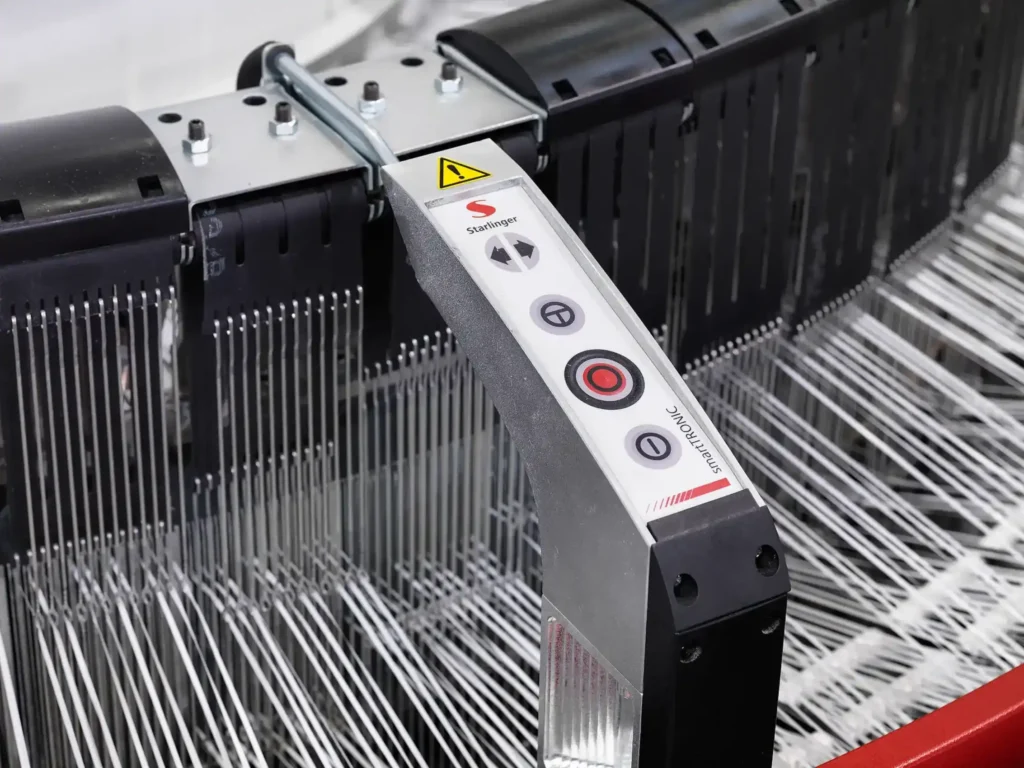
The production of polypropylene bags has seen significant advancements with the advent of automated and mechanized processes. One notable development is the use of Starlinger’s state-of-the-art equipment, which integrates 3D weaving technology and automation.
Mechanical and Automated Production
- Starlinger’s Latest Equipment:
- High Efficiency: Starlinger’s machinery enhances the efficiency of the production process by reducing manual labor and increasing output.
- Precision: The equipment ensures high precision in bag dimensions and quality control, minimizing defects.
- 3D Weaving Technology:
- Enhanced Strength: 3D weaving techniques improve the structural integrity of polypropylene bags by creating a more interlocking weave.
- Better Performance: Provides better load-bearing capacity and resistance to tearing compared to traditional 2D weaving.
- Automated Production:
- Consistency: Automation ensures consistent quality and uniformity in the production of polypropylene bags.
- Reduced Waste: Automated systems are designed to minimize material waste and enhance resource efficiency.
Key Benefits of Modern Production Techniques
The integration of advanced machinery and automation in the production of polypropylene bags offers several benefits:
| Benefit | Details |
|---|---|
| Increased Efficiency | Higher production rates and reduced manufacturing time. |
| Enhanced Quality | Consistent bag dimensions and superior strength. |
| Cost Savings | Reduced labor costs and material waste. |
| Environmental Impact | Improved recycling processes and reduced emissions. |
| Customization | Greater flexibility in design and functionality. |
Increased Efficiency:
- Modern production lines can produce polypropylene bags at a faster rate, meeting high demand without compromising on quality.
Enhanced Quality:
- With advanced technology, bags are manufactured with precise specifications, ensuring reliability and durability in various applications.
Cost Savings:
- Automation reduces the need for manual labor and minimizes material wastage, leading to lower production costs.
Environmental Impact:
- The use of recyclable materials and efficient manufacturing processes contribute to a lower environmental footprint.
Customization:
- Advanced technology allows for a wide range of customization options, including size, color, and printed designs, catering to specific customer requirements.
Applications of Polypropylene Bags
Polypropylene bags are utilized in diverse sectors, each with its unique requirements. Here’s a closer look at how different industries benefit from these bags:
- Agricultural Sector:
- Grain and Seed Storage: Durable polypropylene bags protect seeds and grains from pests and moisture.
- Animal Feed: Ensures the feed remains fresh and uncontaminated during storage and transport.
- Industrial Sector:
- Chemical Handling: Resistant to chemical reactions, making them suitable for packaging various chemicals.
- Construction Materials: Used for packaging sand, cement, and other bulk materials.
- Retail Sector:
- Consumer Goods: Polypropylene bags are used for packaging a wide range of retail products, from food items to household goods.
Selecting the Right Polypropylene Bag
When choosing polypropylene bags, several factors should be considered to ensure they meet the specific needs of the application:
- Load Capacity:
- Strength and Size: Ensure the bag can handle the weight and volume of the materials being packaged.
- Environmental Conditions:
- Moisture and Chemical Resistance: Select bags that offer adequate protection based on environmental exposure.
- Custom Features:
- Printing and Design: Consider options for custom printing and design to enhance brand visibility and functionality.
- Recyclability:
- Sustainable Options: Opt for bags made from recyclable polypropylene to support environmental sustainability.
Conclusion
Polypropylene bags have become a versatile and reliable choice for bulk packaging across various industries. The advancements in automated production, particularly with Starlinger’s latest equipment and 3D weaving technology, have significantly improved the efficiency, quality, and customization of these bags. By understanding the benefits and selecting the appropriate features, businesses can optimize their packaging solutions to meet specific requirements and enhance operational efficiency.