
What Are FIBC Bags and Why Do They Matter?
In contemporary bulk materials logistics, FIBC Bags (Flexible Intermediate Bulk Containers) function as the agile backbone between small sacks and rigid bins. They are flexible, collapsible, fabric-based containers designed to carry dense powders, fine granules, irregular pellets, and blended formulations in unitized loads typically from 500 kilograms to 2,000 kilograms and sometimes beyond. When a plant needs to ship pigment without dusting, store starch without caking, or dose polymer pellets without contamination, FIBC Bags become a practical, economical, and repeatable choice. Their promise is simple yet profound: move more material, with fewer handoffs, under safer controls.
Because the industry spans safety-critical chemicals, tightly regulated food and pharma, rugged mining sites, and clean plastics converting, FIBC Bags have collected many everyday names. Buyers and operators often speak in synonyms, yet they point to a very similar family of woven polypropylene containers. Common aliases include:
- Bulk bags
- Big bags
- Jumbo bags
- Super sacks
- Ton bags
- Container bags
- PP jumbo sacks
Are these labels perfectly precise? Not always. In North America, “super sack” often suggests a four‑loop, corner‑lift construction with a circular or U‑panel body. In parts of Asia, “jumbo bag” is a broad umbrella for any high‑capacity woven PP container. Yet under the jargon, the engineering foundations are shared: oriented PP tapes, woven into strong fabric, shaped into safe lifting geometry, and finished with spouts, duffles, or liners that match the material being moved.
From Resin to Fabric: The Materials That Shape FIBC Bags
At the core of every high-performing unit is the fabric. But fabric is not a monolith; it is a system of polymer choice, orientation, weave geometry, coatings, and optional liners. When we say that FIBC Bags “carry a ton,” what we mean is that countless micro-decisions in materials engineering coalesce into reliable macroscopic strength.
What makes PP attractive here? It combines a low density with a surprisingly high tensile-to-weight profile once oriented, and it resists many salts and chemicals that would degrade cellulosic or biodegradable options. Cost matters too: PP provides robust performance without asking for exotic resin budgets. And recyclability matters: mono-material PP constructions ease reprocessing where regulations and quality allow.
Character and Capability: The Features That Define FIBC Bags
When a container must be light yet strong, flexible yet stable, economical yet safe, the resulting engineering is never accidental. The hallmark features of FIBC Bags reflect both their materials and the reality of loading docks, silos, and mixer rooms.
- Payload-to-weight advantage: A few kilograms of fabric lift more than a ton of material, reducing the packaging mass per delivered ton and lowering freight emissions relative to many alternatives.
- Handling modularity: Four-loop and cross-corner loop geometries accept forklift tines, spreader bars, and hoists; baffled bodies hold their cube for tight palletization and stable truck stacks.
- Safety engineering: SWL is selected against product density and volume, then verified with proof and cyclic testing under appropriate safety factors. For combustible dusts, ESD-safe Types (C or D) mitigate ignition risk during filling and discharge.
- Protection of goods: Coatings, barrier liners, and dust-proof seams reduce sifting, moisture uptake, and oxygen ingress. UV packages preserve residual strength during outdoor storage windows.
- Cleanliness and traceability: Food and pharmaceutical programs rely on virgin resins, clean sewing rooms, metal detection, and lot-level labeling so every bag tells its story when audited.
- Print and instruction clarity: Multicolor flexographic prints on coated fabric communicate handling icons, SWL/SF, and product identifiers that help humans do the right thing under pressure.
- Pathways to sustainability: Mono-material PP bodies simplify recycling; 6:1 reusability policies extend life; and take-back baling consolidates post-use streams where regulations allow.
How FIBC Bags Are Actually Made: The Production Roadmap
Every reliable container is a story of controlled variation. A resin lot with the right melt flow index, a draw ratio that locks in strength, a loom that holds pick density hour after hour, a coater that does not pinhole, a printer that keeps register when the night shift is tired, a sewing team that respects stitch density and seam allowances—this is what separates a nominal design from an operationally trustworthy bag.
- Virgin PP and PE lots arrive with certificates for melt flow, density, and ash; incoming checks confirm processability for the intended draw ratios.
- UV and ESD masterbatches are qualified for dispersion and long-term aging; small-scale extrusion strips are pulled and tested for tensile and elongation.
- Where food or pharma contact is expected, suppliers provide contact declarations and migration test compliance; segregation and cleanroom protocols apply downstream.
- Sewing threads, webbing, and document pouches are sampled for tensile and inspected for frays, inclusions, and dimensional consistency.
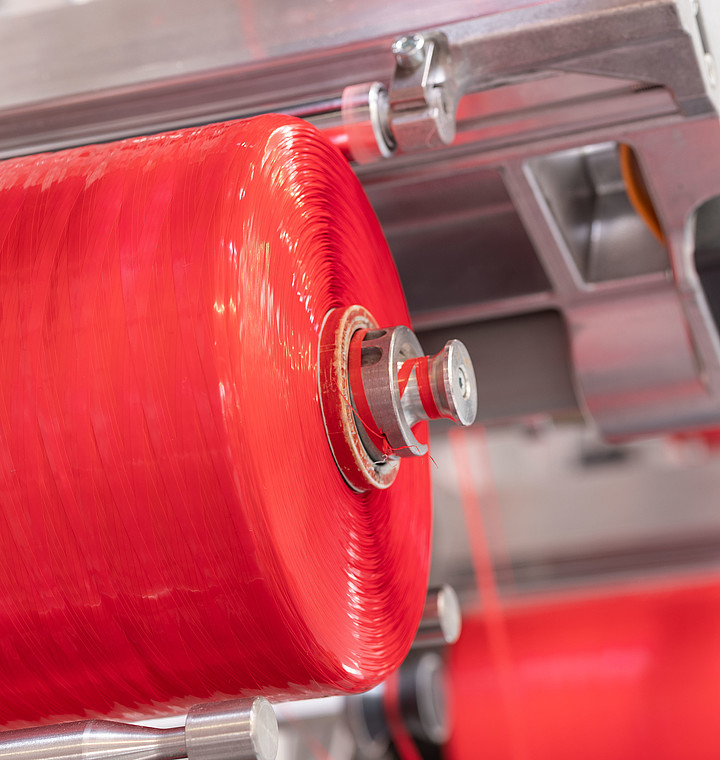
- Tape extrusion and orientation: PP sheets are slit into tapes and drawn to align molecules. Draw stability keeps denier variation low so looms can run faster without fabric defects.
- Weaving: Circular looms form tubular bodies; flat looms produce panels for U‑panel, 4‑panel, or baffled designs. Sensors stop looms on broken ends and log defect maps for repair or rejection.
- Coating/lamination: Extrusion coaters apply PP/PE layers that block sifting and support print. Targets for thickness and adhesion are verified with peel tests and surface energy checks.
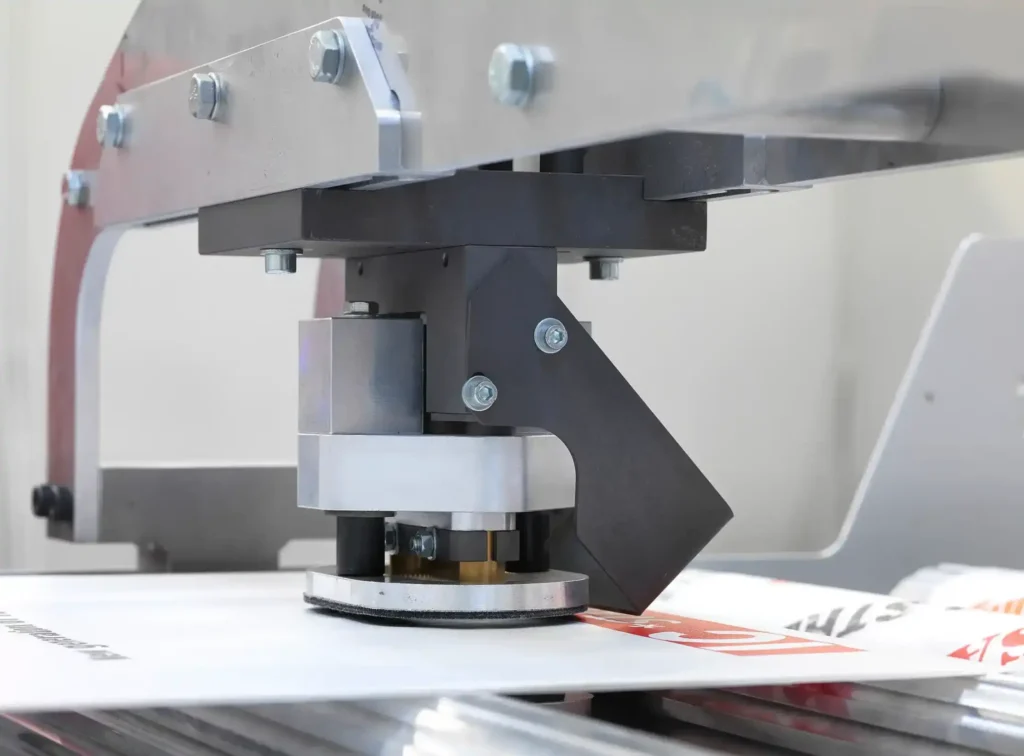
- Printing and converting: Coated fabric receives flexographic prints; register control, anilox selection, and quick-change doctor blade systems maintain clarity of handling icons and brand elements.
- Cutting and sewing: CNC cutters ensure tight panel tolerances; sewing teams attach lift loops, add filler cords for dust-proof seams, integrate spouts and duffles, and assemble baffles when cube stability is mandatory.
- Liner fabrication and insertion: Blown-film lines produce liners to gauge; form-fit styles are shaped to preserve cube geometry and anchored with tabs or adhesives that do not impede discharge.
- Finishing: Metal detection, label application (with SWL/SF and lot IDs), bale compression, and palletization close the loop; cleanroom protocols apply as required.
- In-process checks: fabric GSM, tape tensile/elongation, seam peel/tear coupons, coating thickness, print rub resistance.
- Load testing: top-lift proof and cyclic fatigue to validate safety factor claims under realistic handling patterns.
- Function checks: baffle alignment, spout diameters, loop spacing, and discharge trials for hang-up-free flow.
- Electrostatic performance (where applicable): continuity verification for Type C; charge dissipation behavior for Type D.
- Stack stability: filling height versus footprint confirmed against internal rules that favor safe, repeatable stacking.
- Documentation: every lot ships with a test dossier that ties incoming checks to process charts and final certificates, enabling confident traceability.
Why dwell on the machinery? Because consistent denier, controlled loom tension, pinhole-free coating, and stabilized register do not happen by accident. They are the output of robust tape lines, reliable looms, and precise presses. Plants that invest in world-class equipment observe a practical truth: scrap shrinks, changeovers accelerate, and the probability of safety incidents falls.
Where FIBC Bags Excel: Sector-Specific Use Cases
Look across industries and a pattern emerges. The more a site moves bulk solids and the more it values cleanliness and safe handling, the more likely it is to standardize on FIBC Bags. Consider the following cross‑section.
- Combustible dust pigment: choose Type C (grounded) or D (dissipative), coated fabric, antistatic or conductive liner, baffled body; train operators on earthing and housekeeping.
- Hygroscopic starch: coated body plus form‑fit liner at appropriate gauge, dust‑proof seams, and UV stabilization for outdoor storage buffers.
- Seed packaging: baffled bodies for stable stacks, wide inlet spout for gentle flow, and traceable labels for varietals and lots.
- Remote mineral sites: heavier GSM, abrasion-resistant seams, open-top for loader fills, often single-trip to simplify logistics.
- Pellet discharge: antistatic surfaces to reduce cling, lined interiors for cleanliness, four-loop geometry aligned to standard forklift tines.
A Five-Point Quality Program: How VidePak Builds Confidence into FIBC Bags
Quality is not an add‑on; it is architecture. VidePak structures its assurance around standards alignment, material discipline, equipment pedigree, layered inspection, and continuous improvement.
- Standards-driven design and verification: Designs are mapped to widely used packaging and safety frameworks; that means choosing SWL and SF from risk assessments, then validating with proof, cyclic, tear, drop, and stability tests documented in batch certificates.
- 100% virgin raw materials from tier‑1 suppliers: Lots are checked for MFI, density, and ash; antistatic/conductive and UV packages come from audited sources with known performance.
- European machinery pedigree: Robust tape lines, high‑availability looms, and precise flexographic presses stabilize process windows and shorten changeovers, yielding predictable field performance.
- Layered inspection: Incoming checks, in‑process fabric and seam sampling, ESD verification for Type C/D, top‑lift proof tests, dimensional audits, and—where required—cleanroom controls and metal detection.
- Continuous improvement: Statistical sampling (AQL), retained reference samples, and capability studies on GSM, seam strength, and loop tensile feed corrective and preventive actions.
Reasoning from the Title: Understanding the Production and Quality Control of FIBC Bags
Take the words seriously: production and quality control. Production is the choreography of people, machines, materials, and measurements that produces fabric and form. Quality control is the discipline that proves what production claims. Without the first, there is nothing to test; without the second, there is nothing to trust. When both are strong, FIBC Bags become more than fabric—they become a shared language between buyer and maker.
- Materials system: PP grades, masterbatches, liners, accessories.
- Mechanical system: tape extrusion, weaving, coating, printing, cutting and sewing, liner insertion.
- Controls system: process setpoints, sensors, SPC charts, interlocks.
- Quality system: standards, test methods, documentation, release criteria.
- Safety system: SWL/SF discipline, electrostatic type selection and training, labeling, visual controls.
- Sustainability system: mono-material designs, energy use, waste recapture, end‑of‑life strategy.
- Tape denier drift → tight MFI windows and closed-loop draw control.
- Broken ends and dropped picks → loom stop‑motions and preventive maintenance.
- Coating pinholes or poor adhesion → thickness checks and peel testing.
- Register drift and ink scuffing → pre‑register systems and rub resistance validation.
- Seam weakness or sifting → documented seam designs, filler cords, stitch density checks.
- Liner roping or puncture → form‑fit designs, corner reliefs, puncture tests.
- Electrostatic hazard → continuity tests (Type C), dissipation checks (Type D), operator training.
- Stack instability → fill height discipline versus footprint and pallet specification.
Synthesis follows: materials enable strength; mechanical steps shape function; controls reduce variation; quality proves outcomes; safety formalizes practice; sustainability widens responsibility. Put together, the program yields FIBC Bags that are lighter, stronger, safer, and easier to audit.
Design Trade-offs and Operating Rules that Keep FIBC Bags Honest
- Body architecture versus cube efficiency: circular bodies minimize seam length but round out under load; panel styles and baffles maintain geometry for pallets and trucks.
- Loop geometry and sling angle: smaller angles raise loop tension; specify loop height and use spreaders for crane lifts to keep angles safe.
- Seam design and dust control: chain lock stitches plus filler cords block sifting; stitch density and bite depth are work‑instruction items, not suggestions.
- Coating thickness and fold behavior: thicker coatings lower WVTR but must retain flexibility; measure dyne level for ink anchorage and avoid over‑inking woven valleys.
- Liner behavior during discharge: loose liners are versatile but can rope; form‑fit designs preserve cubic flow and reduce hang‑ups.
- UV stabilization: specify packages for likely sun‑hours; white pigments can reduce heat build‑up in hot climates.
- Reuse policies: 5:1 is generally treated as single‑trip; 6:1 enables controlled multi‑trip cycles with inspection logs.
- Hygiene and micro‑shedding: lint‑minimized threads and vacuum/air‑shower protocols improve outcomes; metal detection is common in high‑risk lines.
- Sustainability tactics: favor mono‑material designs; engineer liner detachment where barrier is unavoidable; plan take‑back baling.
Control Plan and Measurement Windows for FIBC Bags
Buyer’s Working Checklist — Selecting the Right FIBC Bags for Your Line
- Environment: any chance of combustible dust or solvent vapors? If so, choose the appropriate electrostatic type and train operators accordingly.
- Payload: set SWL from bulk density times volume; align with single‑use or multi‑trip policy.
- Geometry: choose body style for cube efficiency; add baffles when stacking is critical.
- Containment: coatings and liners for moisture and dust control; specify liner gauge and whether form‑fit is needed.
- Interfaces: match inlet and outlet to filler heads and discharge frames; set loop height to expected sling angles.
- Labeling: require SWL, SF, electrostatic type, relevant standards, and lot ID on each bag.
- Testing evidence: ask for proof and cyclic test reports, ESD certificates (if applicable), and print rub results.
- Hygiene: for food and pharma, require virgin resin declarations, cleanroom workflow, and metal detection logs.
- Sustainability: plan mono‑material preferences and take‑back baling; explore reuse programs where policy allows.
- Supplier capability: look for stable tape and loom lines, precise printing, documented SPC, and preventive maintenance schedules.
Keywords and Language Patterns that Naturally Surround FIBC Bags
To speak in the vocabulary of practitioners is to blend core terms with long‑tail descriptors that reflect real purchasing and safety decisions. This narrative therefore distributes expressions such as bulk bags, big bags, jumbo bags, super sacks, ton bags, container bags, PP jumbo sacks, baffle bags, form‑fit liners, antistatic liners, conductive designs, SWL proof testing, safety factor selection, UV stabilization, flexographic printing on coated woven PP, and stack stability rules. These are not buzzwords; they are the handles engineers use to pull on real problems.
October 22, 2025
- What Are FIBC Bags and Why Do They Matter?
- From Resin to Fabric: The Materials That Shape FIBC Bags
- Character and Capability: The Features That Define FIBC Bags
- How FIBC Bags Are Actually Made: The Production Roadmap
- Where FIBC Bags Excel: Sector-Specific Use Cases
- A Five-Point Quality Program: How VidePak Builds Confidence into FIBC Bags
- Reasoning from the Title: Understanding the Production and Quality Control of FIBC Bags
- Design Trade-offs and Operating Rules that Keep FIBC Bags Honest
- Control Plan and Measurement Windows for FIBC Bags
- Buyer’s Working Checklist — Selecting the Right FIBC Bags for Your Line
- Keywords and Language Patterns that Naturally Surround FIBC Bags
“How can manufacturers ensure FIBC bags meet both durability and customization demands?” asks a logistics manager at a global agricultural conference. “By integrating precision engineering with color-coded labeling systems and rigorous ISO-certified quality checks, VidePak’s FIBC solutions achieve 99.8% defect-free rates while enhancing warehouse efficiency,” replies a VidePak technical director. This exchange highlights the dual priorities of modern bulk packaging: structural reliability and operational intelligence.
As a leader in woven packaging since 2008, VidePak combines 30+ years of industry expertise, Austrian Starlinger machinery, and global ISO 9001-certified production lines to deliver FIBC (Flexible Intermediate Bulk Container) bags that redefine industrial logistics. This report explores the technical intricacies of FIBC production, quality assurance protocols, and innovative customization features tailored for optimized warehouse management.
1. Production Process: From Raw Materials to Finished Bags
Material Selection and Extrusion
VidePak’s FIBC bags begin with virgin polypropylene (PP) granules, chosen for their tensile strength (≥35 MPa) and UV resistance. Using 16 extrusion lines, PP is melted and drawn into fine tapes (2–3 mm width), which are then woven into fabric via 100+ circular looms at speeds of 150 rpm. For hazardous material handling, anti-static carbon filaments (5–8% blend) are integrated to reduce surface resistivity to ≤10^8 Ω/sq, preventing spark risks.
Lamination and Printing
A 5-layer lamination process bonds PP fabric with BOPP (biaxially oriented polypropylene) or PE coatings using solvent-free adhesives. This enhances moisture resistance (WVTR <5 g/m²/day) and allows 8-color HD flexographic printing. VidePak’s color-band system uses blue, red, green, and yellow stripes to categorize contents:
- Blue: Food-grade materials (e.g., flour, grains)
- Red: Hazardous chemicals (UN-certified designs)
- Green: Agricultural products (e.g., fertilizers)
- Yellow: Construction aggregates (e.g., sand, cement)
Case Study: A European chemical distributor reduced mislabeling incidents by 40% after adopting VidePak’s color-coded FIBCs.
Assembly and Testing
Bags are assembled with polyester lifting loops (SWL: 500–2,000 kg) and subjected to:
- Load Testing: 5:1 safety factor (e.g., a 1,000 kg bag withstands 5,000 kg static load).
- Drop Testing: 8–10 drops from 1.5 meters (ISTA 3A standard).
- Seam Integrity Checks: Ultrasonic sensors detect stitching gaps ≥0.2 mm.
2. Quality Control: Ensuring Compliance and Safety
VidePak’s 3-stage QC protocol aligns with global standards:
| Stage | Parameters Tested | Compliance Standard |
|---|---|---|
| Raw Material | Melt flow index, UV stability | ASTM D1238, ISO 4892-2 |
| In-Production | Fabric density, print adhesion | ISO 9001, BRCGS AA+ |
| Post-Production | Load capacity, electrostatic discharge | UN 13H2, IEC 61340-4-4 |
Key Innovations:
- AI-Driven Optical Sorting: Detects weaving defects (e.g., misaligned threads) with 99.5% accuracy.
- Traceability QR Codes: Laser-engraved tags link to production batch data, enabling recalls in <24 hours.
3. Customization for Warehouse Efficiency
Color-Coded Labeling
Beyond safety, VidePak’s SmartBand™ system uses colored stripes to streamline inventory management:
- RFID Integration: Scannable tags automate stock tracking, reducing manual checks by 70%.
- Dynamic Reusability: Removable Velcro bands allow bag reuse across product categories.
Ergonomic Design Features
- Stackable Grid Patterns: Anti-slip PE coatings enable 8-meter stacking without deformation.
- Foldable Side Panels: Reduce storage space by 30% when empty.
- Quick-Discharge Options:
- Spout Bottom: For granular materials (e.g., grains).
- Full Drop Bottom: For powders (e.g., cement).
Table 1: Customization Options and Applications
| Feature | Industry Application | Benefit |
|---|---|---|
| UV-Resistant Printing | Agriculture | Prevents color fading in sunlight |
| Anti-Static Liners | Electronics | Protects sensitive components |
| Insulated Layers | Pharmaceuticals | Maintains temperature-sensitive drugs |
4. FAQs: Addressing Client Concerns
Q: Can FIBC bags be recycled?
A: Yes. VidePak’s mono-material PP construction achieves 95% recyclability, with 30% post-industrial recycled content in non-food applications.
Q: How long does custom order production take?
A: 12–15 days for batches ≥5,000 units, including 3D mockup approvals.
Q: Are your bags compliant with EU chemical regulations?
A: Absolutely. We hold REACH, UN 13H2, and FDA certifications for global shipments.
5. VidePak’s Market Leadership
With 30+ lamination machines and annual production of 3 million FIBC bags, VidePak dominates 15% of the European market. Recent investments in IoT-enabled production lines have reduced energy consumption by 25%, aligning with the EU’s Circular Economy Action Plan.
External Resources
- Explore advancements in FIBC manufacturing processes and automation.
- Learn how quality assurance protocols ensure FIBC reliability.
6. Industry Trends and Data Insights
The global FIBC market, valued at $6.1 billion in 2024, is projected to grow at 6.3% CAGR, driven by e-commerce and agrochemical demand. VidePak’s R&D in biodegradable PP blends and AI-powered defect detection positions it to capture 20% of this growth by 2027.
Conclusion
FIBC bags are not just containers—they are strategic assets in modern supply chains. VidePak’s fusion of Austrian engineering precision, smart customization, and relentless quality control ensures that every bag enhances operational efficiency while minimizing environmental impact. As industries prioritize automation and sustainability, partnering with a certified innovator isn’t optional—it’s essential.
Word count: 1,180