
In the agricultural industry, packaging plays a crucial role in preserving the quality and extending the shelf life of various products. Breathable Woven Bags are an essential component in this process, especially for packaging seeds, nuts, grains, rice, soybeans, wheat, corn, coffee beans, starch, and processed crops. This article will explore the unique requirements for packaging different agricultural products and how Breathable Woven Sacks meet these needs.
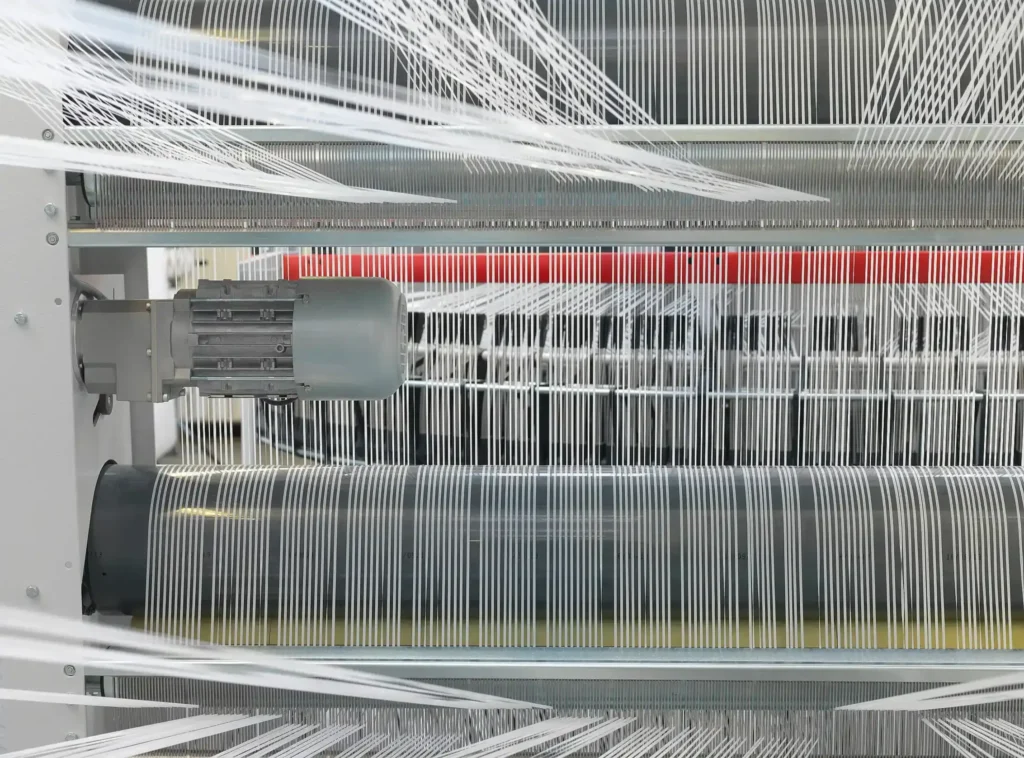
What are Breathable Woven Bags? Definition, Scope, and Useful Aliases
Breathable Woven Bags are ventilated packaging formats engineered from interlaced polymer tapes—predominantly polypropylene (PP)—to form a tough yet permeable textile. Their core mission in agriculture and food logistics is deceptively simple: hold produce securely while enabling continuous air exchange and moisture equilibration. That combination curbs condensation, spreads heat more evenly, and mitigates the microclimates that push fresh crops toward spoilage. Unlike tight monolayer films that can trap humidity, the open architecture of Breathable Woven Bags behaves like a regulated airflow shell: strong enough for field-to-warehouse handling, porous enough for respiration and evaporative relief.
Also known as (aliases):
- Ventilated woven polypropylene bags
- Leno mesh produce sacks
- Raschel mesh agricultural bags
- Breathable PP mesh packaging
- Open‑weave farm produce bags
- Airflow‑optimized woven sacks
- Vent mesh bags for horticulture
Key idea: In agricultural packaging, ventilation isn’t a decorative feature; it’s a physiological requirement. Breathable Woven Bags allow crops to continue low‑level respiration while preventing moisture pockets that trigger rot, mold, and off‑flavors.
The Materials of Breathable Woven Bags: Polymers, Additives, and Architecture
Performance in Breathable Woven Bags arises from three interacting domains: the polymer family, the strand/fabric architecture, and the finishing system. Each domain behaves like a design lever with practical consequences for strength, permeability, cost, and end‑of‑life pathways.
1) Base Polymers
Polypropylene (PP) homopolymer. The default resin for woven and mesh packaging in agriculture. After extrusion and orientation, PP achieves a high modulus‑to‑density ratio, creating excellent specific strength at low mass. It resists many fertilizers, moisture, and common cleaners, and its global availability stabilizes costing.
PP copolymers (random/impact). Chosen when low‑temperature toughness or repeated flexing is expected—cold warehouses, high‑altitude transport, or reusable routes. These grades trade a touch of stiffness for notably better crack resistance in seams and hems.
HDPE blends (targeted use). Small additions of high‑density polyethylene can harden surfaces and bias tear paths, sometimes specified for abrasive cargos such as root vegetables or firewood. Blends must be calibrated to keep heat‑seal windows and recyclability in PP‑forward streams.
2) Strand Formation: Slit‑Film Tapes vs. Monofilaments
Slit‑film PP tapes. A cast PP sheet is slit into narrow ribbons (often 2.5–5.0 mm) and drawn (stretched) to align polymer chains. The result is a tough, oriented tape with high tensile strength. Tapes are the norm in leno weaves used for cost‑efficient produce sacks.
PP monofilament. A single, round strand extruded and drawn to final denier. Monofilaments yield smooth, dimensionally stable meshes with helpful abrasion resistance, popular in Raschel knits for retail‑facing packs. They may cost more but elevate hand‑feel and clarity.
3) Textile Architectures and Their Implications
Leno weave. Pairs of warp yarns cross or twist to lock the weft in place, creating stable, open apertures with minimal weft slippage—ideal for onions, potatoes, and citrus. Leno’s stability turns into predictable percent open area and reliable airflow.
Raschel warp‑knit. Guide bars lay monofilaments into a net that balances flexibility and dimensional stability. Raschel meshes drape around irregular produce, reduce snagging, and often feel softer—valuable where consumers carry bags directly from shelf to car.
Hybrid constructions. Mesh bodies with solid reinforcement panels (for labeling or machine vision), leno tubes with Raschel collars for drawstring performance, or mesh windows integrated into denser woven panels for hybrid breathability. These hybrids let teams add stiffness or print real estate without smothering airflow where produce needs it most.
4) Additives and Colorants
UV stabilizers (HALS). Essential for outdoor exposure in farm stands, field bins, and transit yards. They protect polymer chains from sunlight so seam lines and handles don’t embrittle prematurely.
Pigments and masterbatches. Category cues—purple for onions, red for citrus, yellow or green for potatoes—help merchandising and quick recognition. A managed color library (with ΔE tolerances) keeps categories consistent across shifts and plants.
Antistatic agents. Reduce cling during automated opening/filling and minimize dust attraction in packing sheds and coolers.
Slip/anti‑block. Tune surface friction to balance easy forming and case‑packing with pallet stability in tall stacks.
Design takeaway: Think in levers. Choose polymer grade for toughness, architecture for airflow and drape, and finishing for handling and branding. The right triad converts grams of PP into weeks of stable storage and cleaner pallets.
Features of Breathable Woven Bags: From Material Choices to Outcomes
A) Ventilation and Moisture Management
High percent open area (20–60% depending on mesh and aperture) allows continuous airflow. That airflow spreads temperature, wicks residual wash water, and prevents the droplets that amplify microbial growth. For ethylene‑active crops, lower boundary‑layer resistance supports off‑gassing, countering the stale pockets that undermine flavor and firmness.
B) Strength‑to‑Weight Efficiency
Drawn PP tapes and monofilaments deliver high tensile at low basis weight (often 35–90 g/m²). The lattice localizes damage so a snag becomes a blemish rather than a failure. With correct seams and hems, Breathable Woven Bags maintain drop tolerance—an indispensable trait across forklifts, conveyors, and curbside loading.
C) Visibility and Merchandising
See‑through panels let buyers verify grade, size, and freshness at a glance. Color‑coded meshes function as category beacons. The net effect: faster decisions, fewer returns, and less time in QA inspection.
D) Handling and Ergonomics
Raschel’s soft drape conforms to odd shapes (e.g., squash, firewood billets). Drawstrings deliver quick closure and easy carry; hem reinforcement prevents cut‑through. Where automated pick‑and‑place is used, consistent lay‑flat widths stabilize uptime.
E) Circularity and Resource Use
All‑PP designs align with PP recycling where available; lightweighting reduces resin intensity per unit; and durable meshes enable local reuse loops. As a policy, clarity beats claims: convey disposal or collection routes via on‑pack text and QR so operators and consumers act on the right information.
Production of Breathable Woven Bags: From Polymer to Pallet
- Resin handling and compounding. PP pellets are conditioned; masterbatches for UV, color, slip, and antistatic are dosed. Melt filtration suppresses gels that would otherwise seed weak points.
- Strand formation. Slit‑film route: cast sheet → slit ribbons → multi‑stage draw → relaxation → wind. Monofilament route: filament extrusion → quench → draw → anneal → wind.
- Textile formation. Leno weaving locks the weft with warp cross‑overs; Raschel knitting uses guide bars to form elastic‑controlled nets. Optional heat‑setting stabilizes apertures and limits shrink.
- Conversion. Hot‑knife cutting seals edges; seams are stitched (chain/overedge) or ultrasonically welded. Drawstrings and hems are formed; patch handles can be added for consumer packs.
- Labeling and panels. Solid PP film or coated paper panels are stitched or welded on, with placements that preserve airflow and scanability.
- Finishing and QA. Bundles are counted and palletized. QA covers tensile, seam strength, tear propagation, open‑area %, UV aging, and ΔE for color stability.
Callout: Ultrasonic seams eliminate needle holes and can reduce fines leakage in dusty environments—useful when packing soil‑clung root vegetables or kiln‑dry kindling that sheds chips.
Applications of Breathable Woven Bags: A Field‑to‑Market Map
Fresh Produce and Horticulture
Onions, potatoes, garlic, shallots, apples, and citrus are mainstays. Airflow reduces rot risks through diurnal swings. Visibility accelerates inspection at pack‑sheds and reassures buyers in aisle.
Aquaculture and Shellfish
Mussels, clams, and oysters depend on drainage and air contact. Mesh allows seawater egress and supports rinse cycles without pooling.
Forestry and Fuel
Firewood and kindling dry during storage; UV‑stabilized grades survive outdoor yards. Patch handles and heavier hems withstand rough handling and splinters.
Retail, Household, and Back‑of‑House
Laundry and sports gear avoid odor build‑up; mesh windows in hybrid bags pair strength with visibility. In club‑store multipacks, mesh carries value perception without obscuring the product.
Construction, Remediation, and Waste
Dewatering nets retain solids and shed liquid—useful in site cleanup and certain agricultural runoff controls.
Strategic Framing: Why Breathable Woven Bags Matter in Agricultural Packaging
The phrase “Understanding Their Role in Agricultural Packaging” pushes us to think like system designers. Where in the chain do Breathable Woven Bags change outcomes? Four interlocking roles stand out: microclimate management, logistics reliability, retail presentation, and after‑use practicality.
- Microclimate managers. Open architecture evens temperature and vents humidity, reducing condensation blooms that fast‑track decay.
- Logistics stabilizers. Seams and hems survive forklifts, bins, conveyors, and stacking—holding cube efficiency and lowering write‑offs.
- Visual communicators. Transparency builds trust; color cues accelerate choice; patch panels carry traceability and instructions.
- Resource‑lean tools. High specific strength and lightweighting shrink resin intensity; reuse loops multiply value in local circuits.
Keyword Plan and Long‑Tail Variants
Primary keyword: Breathable Woven Bags.
Natural variants: ventilated woven polypropylene bags; leno woven produce sacks; breathable PP mesh packaging; Raschel mesh agricultural bags; airflow‑optimized woven sacks; open‑weave farm produce bags; ventilated mesh produce bags; ventilating polyolefin nets for produce; agricultural breathable packaging bags.
Internal reference: For background on base substrates used in many breathable builds, see this primer on polypropylene woven bags, which contextualizes material families and weaving approaches that underpin mesh solutions.
Systems Thinking: Decompose the Spec, Recombine the Solution
Sub‑Problem A — Ventilation vs. Containment
Question: How open can the mesh be before small produce escapes or bruises from movement?
Levers: mesh count, aperture geometry, strand width/denier, optional inner liners, label placement.
Resolution: Pack the smallest caliber SKU; simulate shocks; measure moisture and temperature gradients across the pallet. Tune to the minimum grammage that meets airflow and containment targets.
Sub‑Problem B — Strength vs. Weight
Question: Where does failure start: strand break, seam cut‑through, or pullout?
Levers: draw ratios, tape vs. monofilament selection, stitch density and pattern, ultrasonic welding, edge reinforcement.
Resolution: Move failure away from the seam with reinforcement or ultrasonic. Match stitch density to yarn denier. Validate at low and high temperatures.
Sub‑Problem C — Ergonomics vs. Throughput
Question: Can teams load and close quickly without repetitive‑strain risk while meeting BPM targets?
Levers: standardized lay‑flat widths, quick‑pull drawstrings, semi‑automated openers, handle geometry.
Resolution: Consolidate openings across the SKU family; adopt semi‑automated baggers on top‑volume lines; confirm grip comfort with pilot operators.
Sub‑Problem D — Visibility vs. Branding Real Estate
Question: How large should labels be without suffocating airflow or occluding produce?
Levers: PP‑film label with rounded corners, weld or stitch patterns that resist peel, barcode/QR placement, matte coatings to defeat glare at scanners.
Resolution: Keep labels concise in low‑airflow‑impact zones. Standardize data hierarchy and scan targets; verify at harsh lighting angles.
Sub‑Problem E — Sustainability vs. Performance
Question: Can mono‑materiality be preserved while meeting UV life and abrasion goals?
Levers: all‑PP builds, recycled PP content where optics allow, low‑migration additives, modular reinforcement panels.
Resolution: Publish grams‑per‑bag and recycled content by SKU; run accelerated UV testing; align claims to local PP recovery realities.
Technical Tables: Parameters, Targets, and Trade‑Offs
Table 1. Representative Constructions and Use‑Cases
| Construction | Strand Type | Architecture | Basis Weight (g/m²) | Typical Aperture | Closure | Primary Uses | Notes |
|---|---|---|---|---|---|---|---|
| Leno mesh, commodity | Slit‑film PP tape | Leno weave | 35–55 | Medium (produce) | Drawstring | Onions, potatoes | Cost‑efficient; color‑coded |
| Leno mesh, reinforced hems | Slit‑film + heavier hems | Leno with reinforced edges | 55–75 | Medium | Drawstring + stitched hem | Citrus, squash | Added abrasion life |
| Raschel premium | PP monofilament | Warp‑knit (Raschel) | 50–80 | Medium‑fine | Drawstring or handle | Retail‑facing produce | Smooth hand‑feel, clarity |
| Heavy‑duty utility | PP monofilament | Warp‑knit | 70–100 | Medium | Sewn top + patch handle | Firewood, shellfish | UV‑stabilized; tough seams |
| Hybrid mesh‑panel | Slit‑tape + film panel | Mesh body + solid label zone | 55–85 | Medium | Label stitched/welded | Branded multipacks | Visibility/branding balance |
Table 2. Performance Metrics to Specify
| Metric | Typical Target Guidance | Why It Matters |
|---|---|---|
| Tensile strength (warp/weft) | Scaled to product mass; verify at min/max temps | Prevents tears during lifts and drops |
| Seam strength | ≥ defined fraction of body tensile | Moves failure away from seam |
| Tear propagation | Controlled, not catastrophic | Localizes damage |
| Percent open area | 20–60% depending on crop | Airflow, drying, condensation control |
| UV stability (accelerated aging) | Pass for specified outdoor days | Outdoor storage endurance |
| Color tolerance (ΔE) | Within category spec | Aisle recognition; cross‑plant consistency |
Table 3. Automation and QA Parameters
| Station | Control Parameter | Typical Range / Note |
|---|---|---|
| Cutting | Hot‑knife temperature | Seal edges without inducing shrink |
| Sewing / Ultrasonic | Stitch density / weld energy | Avoid cut‑through; match needles to yarn |
| Drawstring insertion | Tension and knot spec | Prevent pull‑out and fray |
| Label application | Adhesion / sew pattern | Rounded corners; scuff‑resistant |
| Vision inspection | Mesh defect detection | Broken picks/guides flagged; rolls marked |
| Bundling | Count accuracy | Cross‑check by weight |
Production Economics: Looking Beyond Purchase Price
Focusing narrowly on unit price obscures the economics that matter in real operations. Resin grams, uptime, ergonomics, damage rates, freight cube, and in‑aisle conversion determine total cost. With Breathable Woven Bags, lightweighting via controlled draw and mesh counts compounds savings at scale. Stable lay‑flat widths and consistent apertures hold FFS uptime; seam reliability keeps pallets in column and chargebacks at bay; color‑stable meshes protect category cues and speed decisions.
Resin & Energy
Down‑gauging grams per bag reduces upstream emissions and stabilizes cost against resin volatility.
Uptime & OEE
Consistent apertures and drawstrings cut jams and changeovers, protecting output in peak harvest windows.
Damage Avoidance
Controlled tears and stronger hems translate into fewer write‑offs, less rework, and cleaner warehouses.
Practical Guidance for Specifiers and Buyers
- Start with airflow targets. Define moisture removal or temperature equalization times; translate to percent open area and mesh count.
- Engineer the seam. Choose stitch or ultrasonic after failure analysis; set allowances that prevent cut‑through; validate at cold and hot extremes.
- Standardize openings. Keep lay‑flat widths consistent across SKUs to ease training and support semi‑automation.
- Lock color libraries. Align mesh pigments with category cues; enforce ΔE tolerances across plants and suppliers.
- Instrument the line. Use vision and weigh‑checks; connect defects to maintenance and supplier feedback.
- Align end‑of‑life. Favor all‑PP builds and clear guidance; where recovery is limited, emphasize reusability and grams‑per‑bag disclosure.
Extended Examples: Linking Choices to Outcomes
Example 1 — Onions for Temperate Export
Problem: Condensation during overnight swings causing neck rot. Spec: Leno weave, 45 g/m² with ~35% open area; UV‑stabilized PP; drawstring; low‑airflow label. Outcome: Fewer moisture pockets; improved pallet stability; lower rejection rates at destination.
Example 2 — Citrus for Club‑Store Displays
Problem: Scuffing and label peel in high‑touch aisles. Spec: Raschel monofilament 60 g/m²; matte PP film label with rounded corners; orange‑tinted mesh; reinforced hems. Outcome: Cleaner displays through longer rotations; reliable QR and barcode performance; sturdier carries for consumers.
Example 3 — Firewood in Outdoor Yards
Problem: UV embrittlement and seam failure after months in the open. Spec: Monofilament Raschel 80 g/m²; HALS UV package; patch handle; heavy overedge seam. Outcome: Integrity over full season; fewer returns and labor hours tied to rebagging.
Risk Register and Mitigations
- Seam cut‑through at high loads. Increase seam allowance; change needle spec; consider ultrasonic for fine meshes.
- Over‑open mesh with egress of small produce. Reduce aperture; add light inner liner for the smallest calibers.
- Color drift confusing category cues. Enforce ΔE monitoring; use approved pigment sets; add incoming QA for colored strands.
- Pallet slippage in high‑bay storage. Specify anti‑slip coatings; adjust stretch‑wrap pattern; add corner boards on tall stacks.
- UV‑driven brittleness during long storage. Upgrade UV stabilizers; rotate stock; prefer shaded storage wherever possible.
Frequently Asked Technical Questions
Are Breathable Woven Bags food‑contact compliant? PP meshes can be formulated to meet regional food‑contact frameworks with appropriate additive controls and declarations.
Do they eliminate the need for refrigeration? No. They complement the cold chain by reducing condensation and enabling more uniform temperature distribution.
Can they be recycled? All‑PP constructions are compatible with PP recycling where collection/sortation exists; access is highly market‑dependent.
What about compostable options? Niche compostable meshes exist but often trade off durability, cost, and supply reliability; vet carefully for your route‑to‑market.
One‑Page Spec Template (Starter)
Product: Breathable Woven Bags, commodity leno for onions
Size & lay‑flat: 460 × 760 mm (±5 mm)
Fabric: PP slit‑film, 45 g/m², ~35% open area, red masterbatch, UV stabilized
Seam: Overedge chain, 4.5 SPI, 12 mm allowance, PET thread Tkt 40
Closure: PP drawstring, color‑matched
Label: 120 × 60 mm PP film, rounded corners R6, stitched on long side
QA: Tensile ≥ X N warp/≥ Y N weft; seam ≥ Z% of fabric tensile; ΔE ≤ 2.0; UV accelerated aging pass
Palletization: 100 bags/bundle; 20 bundles/carton; anti‑slip sheet top/bottom
What Are Breathable Woven Bags?
Breathable Woven Bags are designed with materials and structures that allow air to circulate through the bag. This breathability helps to prevent moisture buildup and reduce the risk of mold and spoilage, which is crucial for many agricultural products. These bags are typically made from woven polypropylene (PP) or polyethylene (PE), providing strength and durability while maintaining breathability.
Key Features of Breathable Woven Bags
- Material: Made from woven PP or PE, these bags have small openings or are constructed in a way that allows air to flow through.
- Durability: Designed to handle the weight of agricultural products and withstand the rigors of transport and storage.
- Customizability: Available in various sizes, thicknesses, and styles to meet specific packaging needs.
- Breathability: Ensures air circulation to prevent moisture buildup and spoilage.
Packaging Requirements for Different Agricultural Products
Different agricultural products have specific requirements when it comes to packaging. Here’s a breakdown of how Breathable Woven Bags can be tailored to meet these needs:
1. Seeds
Seeds require packaging that protects them from moisture while allowing air circulation to prevent mold growth.
- Thickness and Weight: Generally, a moderate thickness is used to provide protection while allowing some breathability.
- Size: Bags are sized according to seed volume, with smaller bags for retail and larger ones for bulk storage.
- Inner Linings: Sometimes, a PE liner is added to enhance moisture protection.
2. Nuts
Nuts are sensitive to moisture and need packaging that prevents any buildup while maintaining freshness.
- Thickness and Weight: Slightly thicker bags with good durability are preferred.
- Size: Bags are typically designed to be airtight to preserve the nuts’ freshness.
- Coating: Some nuts may benefit from a coating to improve the bag’s moisture resistance.
3. Grains
Grains like rice, wheat, and corn are often packaged in breathable bags to maintain their quality and prevent spoilage.
- Thickness and Weight: Thicker and stronger bags are required due to the bulk and weight of grains.
- Size: Bags are available in various sizes, from small retail to large bulk bags.
- External Coating: Often covered with a UV-resistant coating to protect against sun damage.
4. Rice
Rice packaging needs to balance breathability with protection from pests and moisture.
- Thickness and Weight: Moderate thickness to protect rice from external elements while allowing some air flow.
- Size: Bags are designed to hold large quantities, often with reinforced seams.
- Inner Linings: Some bags come with inner liners to prevent rice from coming into contact with moisture.
5. Soybeans and Other Legumes
Legumes need packaging that prevents spoilage and maintains freshness.
- Thickness and Weight: Similar to grains, these bags require durability and moderate thickness.
- Size: Bags are often large and capable of holding substantial quantities.
- Ventilation: Good breathability is crucial to avoid condensation inside the bag.
6. Coffee Beans
Coffee beans require careful packaging to preserve their flavor and aroma.
- Thickness and Weight: Bags must be sturdy and protect against external elements.
- Size: Typically smaller bags for retail and larger for bulk.
- Laminated Layers: Sometimes, a laminated layer is used to enhance aroma preservation.
7. Starch and Processed Crops
Starch and processed crops require packaging that maintains quality and prevents contamination.
- Thickness and Weight: Generally thicker to ensure product integrity.
- Size: Varies based on the type of product and storage requirements.
- Inner Bags: Often include inner bags to prevent contamination and moisture ingress.
Customization and Production Features
Breathable Woven Bags can be customized to meet the specific needs of different agricultural products:
- Product Thickness: Can be adjusted based on the type of product being packaged. Thicker bags are used for heavier products, while thinner ones may be sufficient for lighter items.
- Product Weight: The weight of the bag itself is an important consideration, as it affects the overall cost and efficiency of packaging.
- Bag Size: Available in various sizes to accommodate different quantities, from small retail sizes to large bulk bags.
- Bag Types: Options include plain woven, laminated, or coated bags depending on the product’s needs.
- External Coatings: Can be added to enhance the bag’s resistance to environmental factors such as UV light, moisture, and pests.
- Inner Bags: Some products benefit from additional inner linings to provide extra protection.
VidePak’s Innovations in Breathable Woven Bags
VidePak is at the forefront of manufacturing high-quality Breathable Woven Bags and has made significant contributions to the field:
1. Advanced Production Technology
VidePak uses state-of-the-art equipment from Starlinger, known for its efficiency and precision in producing woven bags. This technology ensures consistent quality and high production standards.
2. Customization Capabilities
VidePak offers extensive customization options for Breathable Woven Sacks, including various sizes, thicknesses, and printing options. This allows clients to receive tailored packaging solutions that meet their specific needs.
3. Quality and Sustainability
The company emphasizes the use of high-quality, recyclable materials in its packaging solutions. VidePak is committed to sustainability and works towards reducing the environmental impact of its products.
4. Innovative Solutions
VidePak is continuously exploring innovative solutions to improve the performance and functionality of its woven bags. This includes developing new materials and technologies to enhance breathability and product protection.
Future Trends in Breathable Packaging
The future of Breathable Woven Bags is focused on enhancing performance and sustainability:
1. Sustainable Materials
There is a growing trend towards using more eco-friendly and biodegradable materials in packaging. Innovations in this area aim to reduce the environmental impact while maintaining product protection.
2. Advanced Breathability
Developments in materials and manufacturing processes are enhancing the breathability of woven bags, providing better protection against moisture and spoilage.
3. Customization and Innovation
Continued advancements in customization options and packaging technology will allow for even more tailored solutions to meet the diverse needs of agricultural products.
In summary, Breathable Woven Bags play a vital role in the packaging of various agricultural products by offering protection, durability, and breathability. VidePak’s commitment to quality and innovation highlights its leadership in this field, setting the standard for future developments in agricultural packaging.