

What is the core idea behind utilizing kraft paper bags laminated with woven fabric for building materials?
At its essence, utilizing kraft paper bags laminated with woven fabric for building materials means specifying a composite sack that marries a printable kraft outer with a load‑bearing woven polypropylene interior and a bonding layer between them. The goal is straightforward yet demanding: keep dense, abrasive, and sometimes hygroscopic powders intact and legible from the plant to the job site, while running fast on fillers and stacking square on pallets. The approach is pragmatic rather than theoretical; it treats packaging as an engineering system across materials science, mechanical design, operations, and policy.
This platform exists because single‑material answers rarely satisfy the conflicting demands of modern construction supply chains. Paper alone grips and prints well but suffers when wet and abraded. Films alone seal beautifully but scuff and puncture sooner than operators like. Woven alone is strong but needs a printable, weather‑tolerant skin. By combining their strengths—and dampening their weaknesses—this laminated paper‑poly concept earns its place in cement, gypsum, lime, dry mortar, and tile adhesive lines.
Also known as (aliases):
- paper‑poly bags
- paper laminated woven sacks
- paper‑laminated PP woven valve bags
- paper woven block‑bottom bags
- paper‑poly AD‑STAR‑type valve sacks
- kraft‑laminated woven cement bags
Materials, composition, and how each layer earns its place
The anatomy of utilizing kraft paper bags laminated with woven fabric for building materials can be read from the outside in: a paper face that prints and grips, a tie layer that bonds and sometimes seals, a woven scaffold that bears load, and, where needed, a liner that moderates moisture and contains fines. The art is not in adding layers; the art is in deciding which ones to keep, which to thin, and which to remove for a particular lane and climate.
Woven polypropylene fabric Polypropylene resin is melted, cast as a film, slit into tapes, and drawn to orient polymer chains. Woven on circular or flat looms, the fabric’s basis weight for 25–50 kg sacks commonly sits between 75 and 115 g/m². Heavier GSM at the bottom fold resists impact; lighter faces promote flexibility and mouth formation. Compared with multi‑wall paper alone, woven PP offers a higher strength‑to‑weight ratio, excellent flex‑crack endurance, and better abrasion tolerance against angular fillers.
Kraft paper outer Unbleached or bleached kraft, typically 60–100 g/m² for construction sacks, supplies a tactile, familiar look and raises surface friction for pallet stability. Paper accepts flexographic inks crisply, enabling dense, legible regulatory panels and barcodes that survive conveyors with appropriate varnishes. Paper also helps a sack “stand square,” supporting block‑bottom conversions.
Tie layer / lamination An extrusion‑coated poly layer (PP or PE) or solvent‑free adhesive bonds paper to the woven. Extrusion contributes to moisture splash resistance and may enable heat sealing at the mouth; adhesive systems can deliver flat lay and controlled bond strengths. Either way, uniformity of the bond is the hinge between day‑one aesthetics and day‑thirty durability.
Optional liners Loose or attached LDPE/LLDPE liners (25–80 µm) or co‑extruded tubes lower water vapor transmission and contain fines. Liners are common for coastal export, monsoon warehousing, or especially hygroscopic plasters. Use them where the route demands; omit them where turnover is quick and climate is dry.
Functional finishes Anti‑slip varnishes, UV stabilizers for tapes staged outdoors, micro‑perforations for de‑aeration at speed, antistatic measures in dry air, and easy‑open features for job‑site ergonomics. Each finish is a dial; over‑turn it and you invite side effects, under‑turn it and you invite complaints.
Feature set that operators notice, buyers value, and auditors verify
Features are not decorations; they are engineered responses to recurring problems. In practice, the following attributes of utilizing kraft paper bags laminated with woven fabric for building materials map directly to fewer returns, cleaner docks, faster lines, safer handling, and clearer labels.
- Strength at modest tare Oriented woven tapes deliver high tensile and tear resistance without excessive mass. Translation: better performance in drops and on rough docks, less waste, fewer complaints.
- Moisture moderation The laminate and optional liners hold humidity at bay long enough for real‑world storage intervals. Not a submarine—just a reliable umbrella.
- Print fidelity and rub resistance Paper accepts fine text and compliant graphics; varnishes curb smearing after miles of conveyors and dozens of human touches.
- Closure versatility Sewn, heat‑sealed, or valve. Hermetic options remove stitch perforations that can wick; sewn remains forgiving and cost‑effective.
- Palletization geometry Block‑bottom forms stack square and cube trucks; gussets help pillow styles behave. Anti‑slip finishes keep layers from shearing.
- Line compatibility Micro‑perfs vent during fast fills; mouth stability reduces snags; pre‑creased panels help robots achieve tight, repeatable cubes.
- Recyclability pathways Mono‑PP options fit PP streams where they exist; paper‑poly hybrids see recovery in markets with separation capacity. Design and labeling must follow the local reality.
To compare related constructions and print surfaces, see kraft paper bags and align finish choices with filler speed, pallet geometry, and humidity exposure.
From pellets and reels to pallets: a process that tames variation
A high‑performing sack is born of a process that respects tolerances. Variation is the enemy; consistency is the ally. The journey from resin pellets and paper reels to a square, printable, dust‑tight bag follows a sequence whose weak links are predictable—and therefore addressable.
- Tape extrusion and drawing Melt, cast, slit, draw. Draw ratio governs strength; non‑uniform draw produces weak tapes that later betray themselves in drop tests and along seams.
- Weaving Set GSM and picks per inch according to target load and puncture risk. Tighter meshes reduce sifting but can impede venting unless compensated elsewhere.
- Paper printing Lay down flexographic or offset inks on the kraft web. Choose ink systems with rub resistance and set quiet zones for batch codes and hazard icons.
- Lamination Extrusion‑coat or adhesive‑bond paper to woven. Measure bond strength, coefficient of friction, and curl. Poor lamination shows up later as edge peel and scuffed text.
- Converting and block‑bottom forming Cut, gusset, crease, and form square bottoms. Insert a valve sleeve where specified; geometry matters here more than almost anywhere else for pallet stability.
- Mouth finishing Prepare for sewing or heat sealing; integrate easy‑open features for job‑site ergonomics when appropriate.
- Quality control Tensile, tear, seam strength, free‑fall drops in multiple orientations, stack compression dwell, WVTR coupons, COF windows, ink rub, and dimensional checks. Validate against the harshest lane you actually run, not the easiest one you wish you had.
Applications: where this platform earns trust bag after bag
The gravitational center is construction, but the logic generalizes wherever mass is high, surfaces are abrasive, and humidity is not hypothetical. Typical fills are 20, 25, 40, or 50 kg, but geometry and closures scale.
- Portland cement and blends Prefer block‑bottom valve sacks for speed, cleanliness, and stack stability. Moisture is the enemy; sealed valves and liners are common for coastal and monsoon routes.
- Gypsum and plaster Fine, dusty, occasionally static‑prone. Use antistatic measures, place perfs away from likely rain splash, and protect text blocks from scuff.
- Dry mortar and tile adhesive Angular fillers punish weak exteriors; matte paper and scuff‑resistant coatings help. Reinforce bottom folds and validate valve sleeves at peak throughput.
- Hydrated lime, engineered sands, premixed grouts Hygroscopic behavior varies; specify liners selectively and adopt easy‑open features for job‑site convenience.
- Adjacent categories Fertilizers, animal feeds, salt, and resins borrow the same logic when moisture moderation, print clarity, and abrasion resistance matter together.
System thinking: six subsystems that clarify trade‑offs
Packaging is not a part number; it is a system. Alter one dial and others move. Frame decisions under six subsystems and the trade‑offs come into focus rather than hiding in anecdotes.
Integrity Moisture, caking, and dust. Lower WVTR with laminates and liners, prefer sealed closures in wet seasons, and position perfs where they vent during fill but do not face weather.
Mechanics Drops, stack compression, puncture. Tune GSM and denier, reinforce the bottom fold, pick block‑bottom geometry for tall pallets, and add anti‑slip finishes to raise COF.
Operations Throughput and housekeeping. Stabilize mouths, match valve sleeves to spouts, set perf density to peak rather than average speed, and specify inks that do not smear on rollers.
Compliance Clarity and traceability. Reserve high‑contrast zones for regulatory text and codes; protect them with matte or over‑varnish surfaces; verify QR readability after conveyor exposure.
Sustainability Recovery pathways differ by region. Mono‑PP designs fit PP streams; paper‑poly hybrids can work where fiber‑plastic separation is real. Label end‑of‑life instructions and validate claims with local partners.
Cost Unit price matters, but total cost of ownership decides the year. Model avoidance of breakage, caking, sift leaks, leaning pallets, rework hours, and claims—not just bag price deltas.
Material mapping: aligning chemistries, climates, and closures
A mapping exercise turns generalities into choices. Use the table below as a starting point and validate against your lanes, speeds, and storage climates.
| Material category | Default bag format | Fabric GSM (start) | Paper face | Liner / barrier | Closure | Notes |
|---|---|---|---|---|---|---|
| Portland cement (export) | Block‑bottom valve | 95–110 g/m² | Matte (higher COF) | Attached LLDPE 40–60 µm | Ultrasonic‑sealable valve | Desiccants at pallet/container; UV‑stabilize if staged outdoors |
| Portland cement (domestic) | Block‑bottom valve | 85–100 g/m² | Matte paper | Optional seasonal loose liner | Self‑closing valve | Micro‑perfs tuned to filler airflow |
| Dry mortar and tile adhesive | Block‑bottom valve | 95–115 g/m² | Matte, scuff‑resistant | Optional liner in humid seasons | Ultrasonic valve | Reinforce bottom fold; manage angular filler abrasion |
| Gypsum / plaster | Open‑mouth gusseted | 80–95 g/m² | Smooth for microtext | Attached co‑ex tube | Heat‑sealed top | Antistatic package in dry conditions |
| Hydrated lime | Block‑bottom valve | 90–105 g/m² | Matte paper | Attached liner if humid | Sealed valve | Validate WVTR targets for long dwell |
Seams, perforations, valves: fault lines where design wins or loses
Many failures happen where materials meet—along a seam, across a valve sleeve, around a micro‑perf row. Treat these interfaces casually and they will dominate complaint logs; treat them carefully and they disappear into the background.
- Sewn seams Economical and tolerant of variability, but stitch perforations can wick moisture and sift fines. Tape‑over reduces both risks; double‑row chain stitches add redundancy.
- Heat‑sealed seams Hermetic and tidy. They require stable film stacks at the seam and validated windows of temperature, dwell, and pressure.
- Micro‑perforations Vent trapped air at speed. Too many raise WVTR; too few balloon bags and slow palletizing. Locate away from likely rain splash.
- Valve geometry Self‑closing is simple and fast; ultrasonic‑sealable sleeves suppress sift leaks. For fine powders, filter sleeves and vent channels tame end‑of‑fill pressure burps.
Quality control that predicts field behavior, not just records it
Testing is successful only when it forecasts what will happen in the lane you actually run: the wet season you cannot avoid, the rough dock you cannot redesign, the forklift driver you cannot retrain. Anchor labs to reality and variability becomes manageable.
- Incoming materials Certificates for resin and films; paper basis weight and moisture; liner gauge; COF windows; ink adhesion baselines.
- In‑process controls Tape denier and draw ratio, fabric GSM and picks, lamination bond strength and curl, print registration and rub resistance.
- Finished bag tests Dimensions and gusset accuracy; seam strength; free‑fall drops in multiple orientations; stack compression for 72 hours; WVTR coupons; UV aging if outdoor staging is routine.
- Line trials Bags per minute at slow, nominal, and peak; de‑aeration settle time; pallet stability under the intended wrap recipe; spout fit and valve closure behavior.
- Stability holds Accelerated humidity and heat exposure on retains to screen caking and label legibility over relevant intervals.
Sustainability routes without performance amnesia
Sustainability without performance is theater; performance without sustainability is short‑lived. The credible path balances recyclability, recycled content, and operational eco‑wins without forgetting the product’s integrity.
- Mono‑PP direction Where PP streams exist, mono‑PP designs make sorting simpler. Marking and instructions matter; infrastructure matters more.
- Paper‑poly separation In markets with fiber‑plastic separation, adopt paper‑laminated woven constructions with adhesives and coat‑weights that facilitate delamination; label end‑of‑life clearly.
- PCR integration Introduce post‑consumer recycled PP carefully in non‑food lines; validate tensile and seal performance across lots.
- Operational wins Block‑bottom geometry improves cube utilization, often reducing wrap consumption; fewer failures mean less spilled cement and lower wash‑down water use.
Implementation roadmap: from specification to standard work
A specification is only as good as its adoption. Translate choices into routines, routines into habits, and habits into metrics.
- Requirements capture Inventory SKUs, climates, storage periods, and label variants. Replace vague words with numbers.
- Down‑selection Choose valve versus open‑mouth early; pick paper basis weight and finish; select liner strategy by lane humidity and dwell.
- Pilot trials Run across seasons. Measure breakage, caking, sift leaks, OEE, and pallet leaning. Iterate perf density, seam method, and valve type.
- Artwork and traceability Freeze regulatory blocks; reserve clean batch‑code zones; verify QR readability after conveyor exposure.
- Scale‑up and continuous improvement Standardize footprints and plates; train operators on valve alignment and spout fit; audit recovery claims with local partners.
Comparative positioning: choosing the right tool, not the fashionable one
Clarity comes from comparison. When utilizing kraft paper bags laminated with woven fabric for building materials is the right tool, it looks not just attractive but appropriate.
- Versus multi‑wall paper Tactile, familiar, widely recycled—but vulnerable in wet, abrasive handling. The woven interior of laminated sacks adds a safety margin at similar tare.
- Versus BOPP‑laminated mono‑PP woven Mono‑PP improves design‑for‑recycling in PP streams and can reach low WVTR with liners. Paper‑laminated woven wins where pallet friction, tactile appearance, and legible paper labels are prioritized.
- Versus PE valve film bags Highly hermetic but scuff‑prone unless thickened; lack the grip many handlers expect. Woven adds abrasion resistance without heavy mass.
- Versus FIBCs One‑ton bulks excel upstream; 25–50 kg sacks remain the job‑site unit for many channels. Most networks use both on purpose.
Specification matrix: quick decisions with explicit trade‑offs
| Parameter | Why it matters | Typical options | Selection tips |
|---|---|---|---|
| Fabric GSM & denier | Drop/stack survival, puncture resistance | 75–115 g/m²; 700–1,200 denier | Heavier at bottom fold; match to drop and stack targets |
| Paper basis weight | Print legibility, COF, scuff | 60–100 g/m² | Matte for friction; MG for gloss; add varnish for rub resistance |
| Lamination system | Bond durability, barrier | Extrusion PE/PP; solvent‑free PU adhesive | Extrusion adds sealability; adhesive yields flatter lay |
| Liner strategy | Moisture and fines control | Loose PE; attached PE; co‑ex tube | Attached improves hygiene and sealing; choose by lane humidity |
| Closure | Sifting and moisture | Sewn with tape‑over; heat‑sealed; ultrasonic valve | Sealed options for humid/coastal lanes; sewn for forgiving lines |
| Geometry | Pallet stability and cube | Pillow; gusseted; block‑bottom | Block‑bottom for tall stacks; gussets for conventional fillers |
| Micro‑perfs | Fill speed versus WVTR | None; low‑density; high‑density | Tune to peak throughput; locate away from weather |
| UV package | Outdoor staging endurance | 200–800 h UV | Scale to staging exposure and label fading tolerance |
| Compliance and brand clarity | 2–6 color flexo on paper | Reserve high‑contrast code zones; validate rub after conveyors |
Risk register: symptom → likely cause → corrective action
- Pallets lean or collapse Low COF; out‑of‑square geometry; pallet overhang; wrap recipe off → Add anti‑slip varnish; adopt block‑bottom; right‑size footprints; adjust wrap and use corner boards.
- Sifting at seams Stitch pitch too wide; no tape‑over; mouth deformation at speed → Add stitch tape or switch to sealed closures; improve spout clamping; relocate venting to side gussets.
- Caking after coastal export WVTR too high; liner too thin or absent; too many micro‑perfs; sewn wicking → Specify attached liner; use sealed valves; reduce perf density; add pallet/container desiccants.
- Smudged labels Incomplete ink cure; low rub resistance; glossy text zones → Add over‑varnish or matte in text panels; extend cure; confirm adhesion standards.
A numerical lens: when a five‑cent delta is cheap insurance
Consider two options for a 50 kg dry‑mix at two million units per year. Option A: paper‑only sewn open‑mouth. Option B: utilizing kraft paper bags laminated with woven fabric for building materials with an attached 50 µm liner and a sealed valve. If B costs five cents more yet cuts breakage and caking returns from 1.8 percent to 0.6 percent, the avoided loss at a conservative twelve dollars per bag equals 0.144 dollars per unit—nearly three times the price delta, before counting housekeeping labor and brand impacts. That arithmetic does not need a spreadsheet to persuade.
Questions engineers ask on the floor, with answers that fit reality
Do all cement SKUs need liners? Not always. Inland, dry routes with fast turnover may run tight laminates without liners. Coastal export or monsoon warehousing tilt the decision toward attached liners and sealed valves.
Block‑bottom or pillow? Block‑bottom improves stacking and cube, especially on tall pallets. Pillow is cheaper and flexible but may lean and demand more wrap.
Will paper‑laminated woven be recycled? In markets with fiber‑plastic separation, yes. Elsewhere, recovery varies; design for the best local pathway and label clearly.
Are heat‑sealed seams always superior? They remove stitch perforations and improve humidity control, but they demand stable film stacks and tight seal windows. Sewing remains robust and forgiving; tape‑over works.
Design decision map: from symptoms to specs
If pallets lean raise COF with matte paper or anti‑slip varnish, switch to block‑bottom geometry, and eliminate pallet overhang.
If labels smear specify rub‑resistant inks and over‑varnish in text zones; route conveyors gently at corners; keep text away from high‑scuff edges.
If bags balloon at fill add micro‑perfs away from rain exposure; confirm venting for peak, not average, throughput.
If caking increases after export lower WVTR with attached liners and sealed valves; deploy desiccants; review storage stack heights and warehouse humidity.
- What is the core idea behind utilizing kraft paper bags laminated with woven fabric for building materials?
- Materials, composition, and how each layer earns its place
- Feature set that operators notice, buyers value, and auditors verify
- From pellets and reels to pallets: a process that tames variation
- Applications: where this platform earns trust bag after bag
- System thinking: six subsystems that clarify trade‑offs
- Material mapping: aligning chemistries, climates, and closures
- Seams, perforations, valves: fault lines where design wins or loses
- Quality control that predicts field behavior, not just records it
- Sustainability routes without performance amnesia
- Implementation roadmap: from specification to standard work
- Comparative positioning: choosing the right tool, not the fashionable one
- Specification matrix: quick decisions with explicit trade‑offs
- Risk register: symptom → likely cause → corrective action
- A numerical lens: when a five‑cent delta is cheap insurance
- Questions engineers ask on the floor, with answers that fit reality
- Design decision map: from symptoms to specs
Opening Dialogue
Client: “We need packaging solutions for construction materials like cement and aggregates that can withstand moisture and rough handling. What makes your laminated kraft paper bags different?”
VidePak Product Manager: “Our kraft paper-woven fabric composite bags reduce moisture absorption by 70%, achieve tear resistance up to 1,500 N/5 cm, and comply with ISO 21898 standards for heavy-duty transport—all while lowering packaging costs by 18% through bulk customization. Let’s explore how these innovations align with global construction and agricultural needs.”
1. Market Demand and Technical Advantages
The global construction packaging market, valued at $32.1 billion in 2024, increasingly adopts kraft paper laminated with polypropylene (PP) woven fabric (KPWF) for its hybrid durability and eco-friendliness. These bags combine the tensile strength of PP (1,200–1,800 N/5 cm) with kraft paper’s moisture resistance, making them ideal for cement, sand, and gypsum packaging. For agricultural products like seeds and grains, KPWF bags balance breathability and pest resistance—critical for maintaining seed viability and preventing fungal growth.
2. Application-Specific Requirements
2.1 Building Materials
- Moisture Control: Cement bags require PE-coated liners (30–50 µm) to limit moisture ingress to <5%, preventing clumping.
- UV Resistance: BOPP-laminated outer layers block 99% of UV rays, essential for outdoor storage in regions like the Middle East.
- Load Capacity: 150 GSM PP fabric with block-bottom designs supports 50 kg loads, reducing transport damage by 40%.
2.2 Agricultural Products
| Product | Key Requirement | VidePak Solution |
|---|---|---|
| Seeds | Breathability (15–20 CFM airflow) | Uncoated 90 GSM PP with micro-perforations |
| Coffee Beans | Aroma retention, UV protection | BOPP-laminated KPWF + aluminum foil inner layer |
| Grains (Rice/Wheat) | Insect resistance | PE-coated PP with permethrin-treated liners |
| Starch | Airtight sealing | 5-layer laminated PP/PE composite |
3. Technical Parameter Optimization
3.1 Material Selection Guide
- Fabric GSM: 80–100 GSM for lightweight seeds; 120–150 GSM for heavy grains and cement.
- Coatings: PE for moisture barriers; BOPP for UV protection and print clarity.
- Inner Liners: Food-grade PE for direct contact; desiccants for hygroscopic feeds.
3.2 Cost-Benefit Analysis
- Construction Sector: KPWF bags cost $0.35–$0.60/unit vs. $0.90 for FIBC jumbo bags, saving $5,500 per 10,000-unit order.
- Agriculture: Antimicrobial coatings add $0.05/unit but reduce spoilage losses by 30%.
4. VidePak’s Competitive Edge
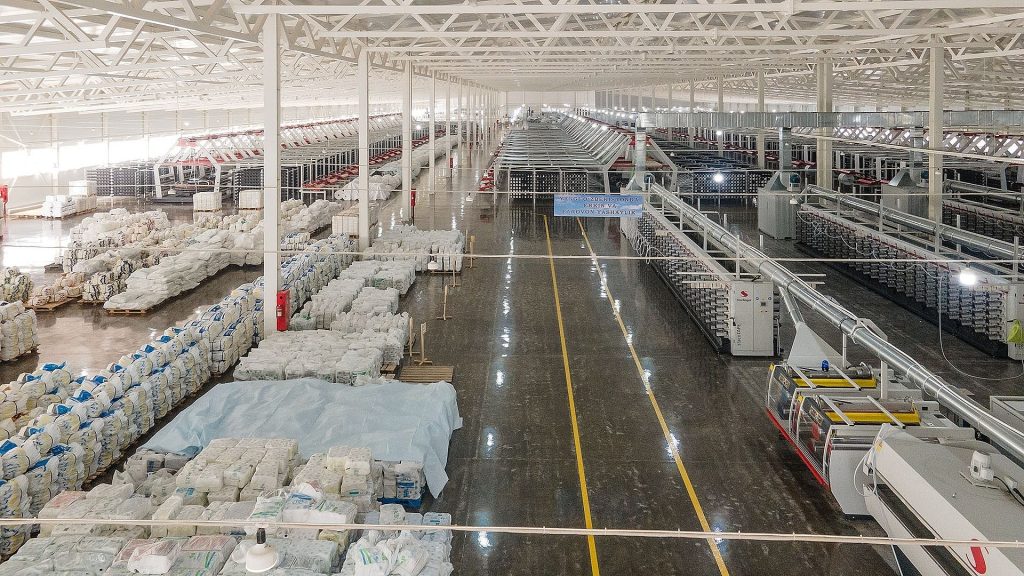
- Production Capacity: 100+ Starlinger circular looms and 30 lamination machines enable 120 million bags/year output, with 20-day lead times.
- Sustainability: 100% recyclable PP aligns with EU Circular Economy targets, cutting landfill fees by 15%.
- Certifications: ISO 9001, FDA 21 CFR, and EU 10/2011 compliance ensure global market access.
5. Global Market Strategies
- Asia-Pacific: 50 kg PE-coated cement bags dominate, priced at $0.25/unit (15% below competitors).
- Europe: RFID-tagged, BPA-free designs meet traceability laws (e.g., Germany’s VerpackG).
- Africa: UV-stabilized bags (1,500+ QUV hours) withstand harsh climates.
6. FAQs
Q1: How does lamination affect breathability in seed packaging?
A: Uncoated 90 GSM PP allows 15–20 CFM airflow, maintaining seed germination rates >90%.
Q2: Are these bags reusable for multiple transport cycles?
A: Reinforced stitching and anti-abrasion coatings enable 3–5 reuses, reducing costs by 35%.
Q3: Can we print safety warnings on construction bags?
A: Yes. VidePak’s 8-color HD printers support OSHA-compliant labels in 6 languages.
7. Conclusion
Kraft paper-woven fabric bags redefine packaging efficiency across construction and agriculture. VidePak’s integration of Starlinger technology, rigorous quality control, and global compliance expertise positions these bags as indispensable tools for sustainable logistics.
External Links
- Optimize construction logistics with FFS roll bag solutions.
- Explore moisture-proof innovations for humid climates.
Report generated on 2025-02-25. Data sourced from industry reports and VidePak’s operational metrics.