
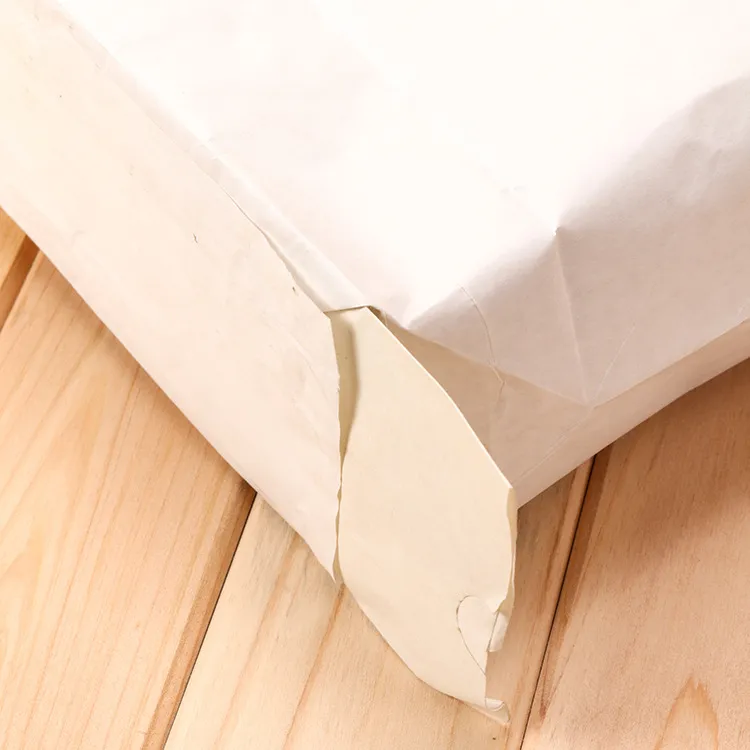
Choosing the right valve bag for industrial packaging can be challenging. Each material—whether it’s robust woven polypropylene, reliable multi-layer kraft paper, or modern polyethylene film—has its own advantages and disadvantages. Valve bags are featured by a built-in valve opening in one corner, which serves as both a filling port and automatically seals under product pressure (requiring no sewing or external sealing). This allows for faster filling, less dust, and neater bag stacking.
However, not all valve bags are created equal. They use different materials and valve closure methods, each with its own unique advantages. Woven polypropylene valve bags offer excellent tear resistance and low cost; kraft paper valve bags offer good printability and high friction (ideal for stacking); polyethylene (PE) valve bags offer excellent moisture protection and can be optionally sealed. To make an informed choice, we need to understand the differences in construction, performance, and suitability of these different types of valve bags.
Let’s first categorize valve bags by material, then compare their performance, applications, costs, and design differences. Finally, we’ll explore how to choose the right valve type for a specific product. After reading this article, you will have a clearer understanding of which valve bag best suits your needs—not by choosing the best product, but by understanding the differences between them.
Types of Valve Bags by Material
Valve bags can be classified by the material of their construction, which influences both the bag’s properties and the valve mechanism used. The three main categories are:
1. Woven Polypropylene (PP) Valve Bags
Woven PP valve bags are made from interwoven polypropylene tapes, creating a fabric-like shell that is light yet incredibly tough. The bag is typically formed with a block bottom (squared base) for stability. PP valve bags often include a thin laminated coating of PP or PE on the inside to seal the weave’s small gaps and improve moisture resistance. The valve on a PP bag is usually an internal sleeve made of plastic film (often polyethylene) that extends into the bag. When the bag is filled, this sleeve collapses under the product’s weight, automatically sealing the opening. This self-closing valve is popular because it doesn’t require any manual or heat-sealing steps—fill it, and it seals itself.
Other valve options for PP bags exist as well. Some designs feature an extended external sleeve that protrudes for filling and can be tucked in manually (though this is less common for polywoven sacks). There are also versions with valves that can be ultrasonically or heat sealed if a completely airtight closure is needed (for example, to absolutely prevent any dust from leaking out). Overall, PP valve bags are known for the highest strength-to-weight ratio and low cost among valve bag types. They are the workhorses often used for cement, fertilizers, and other heavy, abrasive materials that demand tough packaging.
2. Pasted Kraft Paper Valve Bags (Multi-Wall Paper)
Multi-wall paper valve bags (often called pasted valve sacks) are the traditional choice for many powders and dry goods. They are made of several layers of kraft paper (typically 2–4 plies of heavy paper) glued together, with a stepped-end construction forming the valve opening. Despite being made of paper, these bags are engineered for strength: they use high-quality kraft paper with long fibers for tear resistance, and the paper allows a bit of breathability to vent excess air during filling.
The valve on a paper sack can be configured in a surprisingly large number of ways. Commonly, a paper tube sleeve or a poly-coated paper sleeve is inserted in the corner as the valve. When filling is complete, the internal pressure helps press this sleeve shut, effectively self-sealing the bag. Some paper valve bags use a tuck-in sleeve – a portion of the paper sleeve extends out so an operator can fold it inward to close the bag securely (a bit like tucking in an envelope flap). For automated lines, there are heat-sealable valve sleeves as well: typically a polyethylene film or a plastic-coated layer is included in the sleeve, so that after filling, a quick application of ultrasonic or heat sealing equipment melts the sleeve closed for a tight, sift-proof seal. Paper valve bags can even be fitted with specialized sleeves for extra protection – for example, double-trap valves with dual flaps to block leaks, or reduced-diameter valves that minimize powder backflow during filling.
In short, pasted kraft valve bags provide versatility. They are prized for their excellent printing surface (high-quality logos and text, with a low-glare finish that’s ideal for barcode scanning) and their high-friction exterior (paper against paper creates grip, so sacks stay put in a stack). These bags are widely used for food ingredients (flour, sugar, starch), animal feed, minerals, cement, and construction materials. While not as puncture- or tear-resistant as plastic-based bags, multi-wall paper sacks can be augmented with internal plastic liners or even a paper/poly laminate layer when extra moisture protection is needed.
3. Polyethylene (PE) Valve Bags
PE valve bags are a newer, high-performance option made entirely from polyethylene film. They are essentially heavy-duty plastic bags that mimic the shape of a paper sack – often produced as a tubular film that is cut and heat-welded into a block-bottom bag with a valve in the corner. Because they are monolithic plastic, PE valve bags have no woven texture; instead, they have smooth walls typically composed of multiple layers of co-extruded PE for strength. A PE valve bag usually has a back seam (where the film tube is sealed) but still achieves a squared bottom for stability.
The valve in a PE bag can take forms similar to those in paper bags. In fact, the available valve types on a PE valve bag mirror those of a paper bag: you can have a standard internal self-sealing sleeve, an extended tuck-in sleeve for manual closure, a sonic-seal (heat seal) sleeve for automated sealing, or even a reduced-size valve to limit the opening. One advantage is that the all-plastic construction allows very secure bonding—many PE valve bags use heat-sealed valves to achieve a hermetic seal, which is valuable for moisture-sensitive products.
PE valve bags are exceptionally good at moisture and dust control. They are naturally waterproof (polyethylene film doesn’t let water or vapor through) and can be sealed tightly, making them ideal for products like fine chemicals, resins, filter media, specialty food additives, or any powder that absolutely must stay dry and contained. Manufacturers can also add special features to PE bags; for example, an anti-slip surface (by embossing or a “sanded” finish) can be applied to counter the smoothness of the plastic, or the film recipe can be adjusted to make low-melt bags (so that an entire bag can be tossed into a mixer and will melt and integrate with the product). The main trade-offs for PE valve bags are cost and breathability. They are generally more expensive than either paper or woven PP bags, and the film does not breathe at all (so micro-perforations are usually required to allow air to escape during filling). But for those willing to invest a bit more, these bags offer top-tier performance in protecting and preserving the product inside.
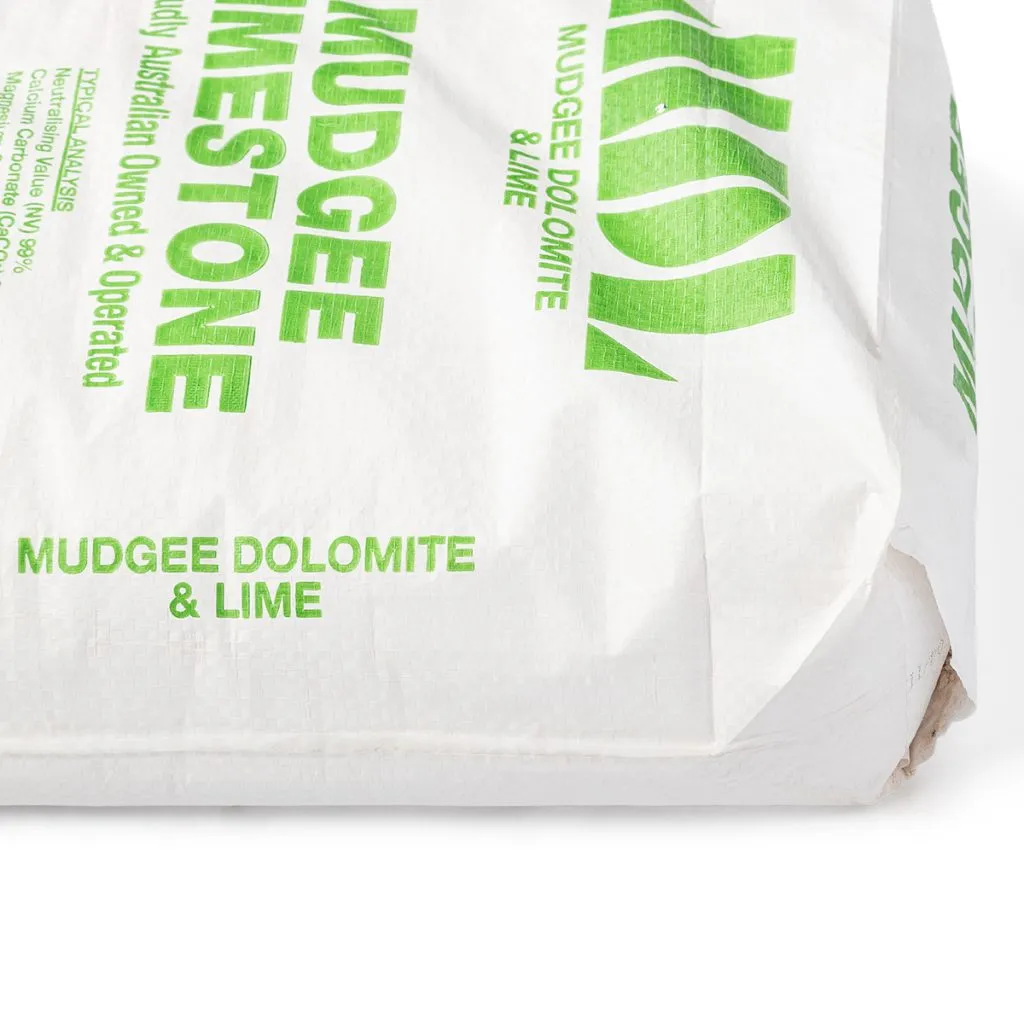
Type of Valve Top by different designs
- Paper Insert: An integrated reinforced paper sleeve inside the valve maintains a stable opening during filling and ensures reliable self-closing after filling. Simple, proven, and highly compatible. Ideal for standard powders and granules, especially suitable for applications requiring high machine filling consistency and cost-effectiveness.
- Ultrasonic Sealing:The valve area is formed using an ultrasonic (sonic) sealing process, creating a highly repeatable, precision fusion structure. Cleaner edges and a tighter seal. Ideal for fine powders and high-speed production lines where dust control and process consistency are critical.
- Tuck-In: The valve is designed to fold and tuck into the bag after filling, protecting the valve opening from abrasion and accidental opening during handling. Practical, highly protective, and convenient for logistics. Commonly used in applications where packaging bags must withstand rough handling, frequent stacking, or long-term storage.
- Poly-Lock: This polymer-based locking device enhances the valve’s self-sealing performance, facilitating rapid closure and maintaining a closed position under vibration and movement. A more robust closing mechanism and superior spill prevention. Suitable for demanding distribution environments and products requiring strict leakage risk control.
To better illustrate the differences, the tables below compare paper, woven polypropylene, and polyethylene valve bags across key parameters:
| Aspect | Multi-Wall Paper Valve Bag | Woven PP Valve Bag (Polywoven) | PE Valve Bag (Polyethylene Film) |
| Bag Construction | Multiple layers of kraft paper glued together (stepped ends); no back seam. Valve is formed by a pasted paper or paper/film sleeve in one corner. Generally a block-bottom design for stacking. | Woven PP fabric (flat or tubular weave) with a laminated PP or PE coating; seamless tubular body (no back seam) and a block bottom. Valve sleeve is usually a plastic film inserted into one corner. | Co-extruded PE film (typically 3–5 layers) formed into a tube and heat-sealed into a block-bottom sack; has a back seam. Valve is an integrated plastic sleeve in the top corner. |
| Tensile Strength & Durability | Moderate strength – can tear if handled roughly or if the paper is punctured (especially when wet). Not ideal for very sharp or very heavy contents without reinforcement. | Very high strength – excellent tear and puncture resistance thanks to the woven structure. Withstands rough handling and heavy, dense products with minimal risk of bursting or splitting. | High strength and good durability – resists most punctures and drops. However, a severe puncture could tear the film (no fiber weave to stop a rip). Still extremely sturdy for almost all typical uses, just slightly less tear-proof than woven fabric under extreme conditions. |
| Moisture Resistance | Low – paper absorbs moisture; contents can clump or be ruined if the bag gets wet. (Adding an inner plastic liner can help, but the outer paper will still weaken with water.) | Moderate – polypropylene is hydrophobic and the woven bag is usually coated, so it sheds light moisture. However, it’s not completely waterproof due to tiny gaps or seams. | Excellent – polyethylene film is waterproof. The bag provides a true moisture barrier (unless intentionally perforated for venting). Ideal for keeping contents dry even in humid or wet environments. |
| Dust/Sift Leakage | Moderate – fine powders can leak if no special valve or liner is used. Many paper bags include internal flaps or double sleeves to reduce sifting, but a small amount of dust may escape if the valve area isn’t sealed (e.g. no heat seal). | Low – the laminated coating and tight valve sleeve prevent most leakage. The weave is sealed by the coating, and a properly designed valve keeps dust in. Only minimal “puff” of dust during filling if not enough venting. | Minimal – the film construction plus the option to heat-seal the valve can virtually eliminate sifting. Suitable for very fine powders that demand zero leakage. |
| Air Release (Filling) | Good – paper is slightly breathable, allowing air to escape through the bag itself. Often no perforations are needed, which helps achieve fast, smooth filling with less rebound. | Fair – without venting, trapped air can slow filling. Usually micro-perforations are added near the valve or across the bag to let air out. Once properly vented, filling is efficient and the bag compacts well. | Poor (without designed vents) – plastic film won’t breathe at all. These bags must be engineered with small vent holes to release air during filling. With sufficient micro-perforations, they can be filled as quickly and densely as the others. |
| Stacking & Slip | High friction – the paper exterior is rough and “grippy,” so bags stack neatly and resist sliding. Pallets of paper sacks are very stable (but must be kept dry). | Medium friction – smoother than paper, so stacked bags can slide on each other unless treated. Manufacturers often add anti-slip coatings or strips to improve grip. Once treated, stacks are stable. The bags themselves are very robust under stacking weight (they won’t split). | Low friction – a pure poly film surface is slick, so bags will slide easily if untreated. To counter this, PE sacks can be made with a textured or matte surface. With such treatments, they can stack securely. The bags are structurally strong under load, but care is needed to prevent sliding. |
| Printability | Excellent – very print-friendly. Paper accepts ink well, enabling multi-color designs, clear text, and even photographic images. The printed graphics are sharp, and the matte surface avoids glare. Ideal for branding and detailed product info. | Good – can be printed in multiple colors, especially if using a BOPP laminated layer for a smooth print surface. Graphics can be vibrant, though without lamination the woven texture limits detail. Glossy finishes are possible (which look high-end but can glare under light). | Good – supports multi-color printing (usually flexographic). The smooth film surface yields crisp images and text, comparable to paper in clarity. Typically has a semi-gloss look. High-quality branding is achievable, though very fine details or certain ink types might adhere better to paper. |
| Aspect | Multi-Wall Paper Valve Bag | Woven PP Valve Bag | PE Valve Bag |
| Typical Applications | Dry powders and granular products such as cement, plaster, flour, sugar, starch, animal feed, and seeds. Often chosen where moderate strength is sufficient and low cost is a priority. Best kept in dry conditions (since paper is vulnerable to moisture). | Heavy-duty materials like cement, fertilizer, plastic pellets, sand, minerals, and industrial chemicals. Chosen for applications requiring rough handling, high drop strength, or outdoor storage. Common in construction, agriculture, and other industrial bulk uses where strength and tear resistance are crucial. | High-value or moisture-sensitive products such as specialty chemicals, resins, filter media, fine powders (e.g. carbon black, titanium dioxide), and food/pharma ingredients that need extra protection. Often used when packaging must endure harsh transit conditions or long storage, and when the product’s value justifies a premium bag. |
| Relative Cost | $ – Generally the lowest cost option. Paper bags use widely available materials and straightforward manufacturing, keeping unit cost low. Ideal for high-volume, price-sensitive needs. | $ – Low to moderate cost. Woven PP bags are very cost-effective and often comparable to paper in price. They offer excellent value due to their strength and durability per dollar. | $$$ – Highest cost. PE valve bags are a premium product and typically cost significantly more (50–100% more per bag than paper or PP). Usually used only when their performance benefits (superior protection, etc.) are worth the extra expense. |
| Environmental Factors | Made from renewable resources (paper). Easily recyclable and biodegradable if not coated with plastic. Generally has a lower environmental impact unless it has plastic liners, which complicate recycling. | Made from polypropylene plastic. Reusable and recyclable (#5 plastic), but not biodegradable. Often lighter in weight than multi-layer paper, which can mean less material per bag. Requires proper recycling channels to minimize environmental impact. | Made from polyethylene plastic. 100% plastic construction is recyclable (#4 plastic) and avoids mixed-material issues. Not biodegradable. Sometimes chosen for “batch inclusion” (the entire bag can be melted into the product, leaving no waste). Eco-friendliness depends on recycling; otherwise it contributes to plastic waste. |
Looking at these differences, it’s clear that each valve bag material has its niche. A paper valve sack might be perfect for a dry product that will be kept indoors and needs a cost-effective, well-branded package. In contrast, a woven PP valve bag offers a tough, all-weather solution for heavy industrial goods. Meanwhile, a PE valve bag is the high-performance choice—delivering the best moisture and dust protection for sensitive materials, albeit at a higher price point.
None of these bags is universally better than the others; rather, each is better suited to certain conditions. If you need maximum strength at low cost, PP woven bags are likely to shine. If print clarity and stackability are top priorities, paper bags may be ideal. If moisture control or product purity are big concerns, the polyethylene bag could be worth the investment. The choice often comes down to balancing these trade-offs against the requirements of your product and supply chain.
Choosing the Right Valve Bag for Your Needs
So, how should you go about selecting the optimal valve bag and valve type? It boils down to analyzing your product requirements and priorities. Consider the following factors when making your decision:
- Product Characteristics: What exactly are you packing? If it’s a fine, dusty powder, prioritize a design that minimizes sifting (for example, an internal self-closing sleeve or a heat-sealed valve). If it’s a very heavy or abrasive product, favor a bag with high tear strength (woven PP excels here). For food or pharmaceutical products, you may lean toward a material that ensures a clean, contaminant-free package (often a PE bag) or one that meets specific regulatory requirements for food safety.
- Moisture & Environment: Will the filled bags be exposed to rain, humidity, or outdoor conditions? If weather exposure or high moisture is likely, you can probably eliminate unlined paper bags right away – they could fail or break apart when wet. A plastic-based bag (PP or PE) would be more reliable in that scenario. Conversely, if the product actually benefits from a bit of breathability or will only be stored in dry, indoor conditions, a paper sack is perfectly adequate and avoids unnecessary plastic. Also consider storage duration: for long-term storage or export shipping (where bags might face months of heat, cold, and moisture changes), the extra barrier protection of a PE bag might pay off by safeguarding the product.
- Filling Process & Equipment: What filling equipment will you use, and at what speed? For fully automated filling lines, a self-closing internal valve or a sonic-seal valve is preferable so that each bag seals itself without manual intervention. If you use ultrasonic sealing equipment, you can opt for a heat-sealable valve to achieve an airtight closure. With a manual or semi-automatic process, a tuck-in valve might be workable – simple but slower and not as tight as other methods. Always match the valve style to your operations: high-speed packers favor valves that close instantly and cleanly, whereas slower manual filling can accommodate a flap that needs folding.
- Stacking & Handling: Consider how the bags will be stacked on pallets, transported, and handled at their destination. If bags will be stacked high in a warehouse, stack stability is key – paper’s natural friction helps here, but plastic bags can be made just as stable with the right anti-slip measures. If bags are likely to be dragged, dropped, or thrown around (as often happens on construction sites or in warehouses), then durability becomes critical – a woven PP or a robust PE bag will handle abuse far better than paper.
- Branding & Appearance: Will the packaging be seen by customers or serve a marketing purpose, or is it strictly industrial? For retail-facing or consumer products, the print quality and overall appearance of the bag may sway your choice toward multi-wall paper or a laminated woven bag that allows high-resolution graphics. If appearance is less important than sheer performance (say, for a chemical being used in a factory), you might prioritize durability over looks, and a plain poly bag will do the job just fine.
- Cost Constraints & Volume: Finally, budget is always a factor. For large volumes of low-margin product, the cheapest bag that meets requirements (often paper or standard woven PP) is typically the smart choice. The premium cost of a PE film bag needs to be justified by significant benefits like preventing product spoilage or enabling more efficient handling. In some cases, spending more per bag pays off (for a high-value or hygroscopic product, the reduction in losses might more than cover the bag’s cost). In other cases, it’s not worth over-engineering the package for a commodity product. Always ask: Is the extra protection or efficiency gained worth the extra cost per bag? For some products the answer will be yes, for others a simpler solution is best.
Ultimately, the right valve bag will keep your product safe while meeting your efficiency and budget requirements. By weighing the factors above—product type, environmental conditions, operational needs, and cost—you can choose a valve bag that delivers your product in optimal condition and optimizes your packaging process. When you strike that balance, you know you’ve made the correct choice.