
Definition, Scope, and Everyday Names of Woven Poly Bags
Woven Poly Bags are flexible sacks built from interlaced polyolefin tapes—predominantly polypropylene—that distribute stress along warp and weft to achieve high tensile strength at comparatively low mass. They are not simple film pouches and not paper sacks in disguise; they are engineered textiles that behave like lightweight trusses. In procurement and retail, the same concept travels under a handful of aliases: woven polypropylene bags, PP woven sacks, BOPP‑laminated woven poly bags, laminated woven sacks, slit‑flat woven bags, tubular woven poly bags, and occasionally simply “woven poly.” Whatever the label, the intent is consistent: carry heavy loads without tearing, keep pallets square and stable, showcase graphics cleanly, and—where needed—add barriers or sealability without crippling line speed.
Why does this matter in retail and storage? Because real warehouses and store backrooms ask packaging to do contradictory things at once: slide through forming collars and conveyor guides yet resist pallet creep; breathe enough to avoid condensation yet block ambient humidity; survive fork bumps yet look clean on the shelf. Woven Poly Bags stand out precisely because they reconcile these demands by design, not by luck: the woven skeleton provides strength and puncture resistance; the optional film face protects prints and moisture; the seam architecture converts local thread load into global fabric strength.
Material Architecture and Layer Logic of Woven Poly Bags
Packaging works when functions cooperate. Woven Poly Bags are not a single substance; they are a set of layers that trade grams of polymer for hours of uptime and square meters of safe storage. The following material families are the usual suspects—and the levers you can tune.
1) Structural fabric — the skeleton
The load‑bearing shell is woven polypropylene (PP) raffia made from drawn tapes. Homopolymer PP grades deliver stiffness and a higher melting point; impact copolymer PP adds low‑temperature toughness for winter handling. Basis weights range from ~65–120 g/m² for small retail formats to ~120–220 g/m² for 10–50 kg sacks. Circular‑woven (tubular) bodies remove two side seams and reduce sift paths; 4‑panel and U‑panel bodies provide flatter billboards and precise gusset control. Coated shells improve dust‑tightness and print laydown; uncoated shells breathe and shed entrained air faster.
2) Laminations & coatings — the face and the lungs
To raise moisture protection and print fidelity, converters add BOPP (biaxially oriented polypropylene) on the outside and/or an extrusion‑coated PP/PE skin on the inside. BOPP delivers photographic graphics, rub resistance, and a controllable gloss/matte face. PE‑rich inner layers enable heat sealing on form‑fill‑seal lines and create dust‑tight closures. Micro‑perforations are introduced selectively where air must escape without surrendering barrier.
3) Seams, stitches, and reinforcements — the tendons
High‑tenacity PP or polyester threads form lock‑stitch, chain‑stitch, and safety‑stitch patterns. Stitch length and density are process parameters, not afterthoughts; they determine seam efficiency relative to parent fabric strength. Sift‑resistant constructions add filler cords and felt in the stitch valley to block powder leakage. Hem belts under the top edge diffuse loop loads into the wall for heavy formats.
4) Liners & membranes — hygiene and hazard control
Loose, tab‑bed, or form‑fit liners in LDPE/LLDPE safeguard cleanliness and moisture control. Where static hazards exist, antistatic or conductive liners are specified. For aroma or oxygen sensitivity (premium foods), coextruded films with EVOH barriers are deployed, with a clear view of recycling trade‑offs.
5) Additives & finish — finesse for the real world
UV stabilizers protect outdoor‑stored inventory; slip/antiblock packages tune the coefficient of friction (COF) for the twin realities of forming and stacking; antistatic packages tame dust cling; primers and corona treatment anchor inks; matte varnishes provide grip and hide scuffs on retail faces.
Putting it together
The purposeful cross‑section reads: Outside → print/varnish → BOPP or coated PP (optional) → woven PP fabric (load carrier) → inner seal layer (optional) → product. Each layer exists to move a KPI—COF, dust‑tightness, stack stability, print grade—toward its target band.
Key Features of Woven Poly Bags — Outcomes You Can Measure
Features are the fingerprints of physics. The following characteristics are not slogans but line‑level, pallet‑level, and ledger‑level outcomes that Woven Poly Bags routinely deliver.
High strength at sensible mass
Drawn tapes act like micro‑beams, spreading load through the fabric lattice. For a given puncture target, woven constructs typically consume less polymer than monolithic films. The win is twofold: lower resin exposure per packaged kilogram and a wider safety margin against edge cuts or spike impacts.
Moisture & dust governance
Uncoated shells breathe—useful for potatoes, onions, or soils—while laminated faces and inner seal layers block ambient humidity and suppress dusting for pet food, sugar, or fine granulates. Airflow and barrier cease to be enemies; they become dials you can set.
Brand panels that survive the journey
BOPP and robust varnishes keep graphics legible after conveyors and stacking. Barcodes and QR codes maintain grade; hazard or compliance marks stay in frame rather than wrapping into unreadable arcs.
Geometry discipline on pallets
Stiffer faces and controlled friction lead to flatter layers and fewer telescope events. Wrap usage drops, trailer cube rises, and robotic depalletizers see expected shapes.
Two tensions deserve honesty. First, laminated faces increase aesthetics and barrier but add heat on forming collars; COF must be tuned deliberately. Second, breathable shells handle entrained air beautifully but concede some scuff resistance; prints and coatings must be chosen with that reality in mind.
Production Process of Woven Poly Bags — Where Quality Is Created
Great packaging is not born at inspection; it is made upstream. The journey from polymer pellets to a printed, stack‑worthy bag passes through a set of controls that decide line speed, leak rate, and pallet stability.
- Tape extrusion & drawing. PP is melted, cast into a film, slit into tapes, reheated, and drawn to align molecules. Draw ratio and anneal profile set tensile and diagonal‑tear behavior; quench conditions influence crystallinity. Quality checks: melt flow index, tape tensile, width, and denier.
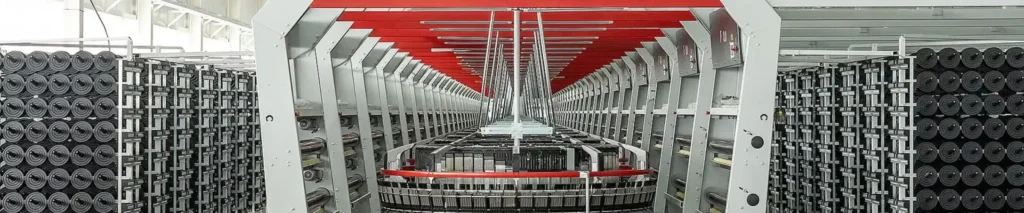
- Weaving. Tapes interlace on circular or flat looms to achieve a target pick count. Tubular fabric reduces side seams; panel builds enable precise gusseting. Weave density shapes porosity, stiffness, and print laydown.
- Coating & lamination. Extrusion coaters apply PP/PE skins; laminators add BOPP print films. Corona/primers elevate surface energy for durable inks. Inner seal layers define the seal window on FFS lines.
- Printing. Flexo or rotogravure systems lay down artwork and data. Registration marks match photo eyes on bagmakers/FFS units. Over‑varnish guards rub zones and stabilizes COF.
- Cutting, gusseting, sewing. CNC tables cut panels; hems and bases are sewn per stitch maps. Sift‑resistant seams integrate filler cords/felt where powders flow; hem belts diffuse loop loads in heavy formats. Easy‑open, handles, zippers, or valve features are added as required.
- Liner insertion (if specified). Loose, tab‑bed, or form‑fit liners are installed; antistatic grades mitigate nuisance cling; barrier coex versions serve aroma/oxygen constraints.
- QA & release. Bags undergo tensile/seam checks, COF screens (bag‑to‑bag and bag‑to‑metal), rub tests, and—where relevant—film dart impact. Food‑contact declarations and migration results are filed for regulated articles. Incoming inspection checklists mirror the spec windows rather than a single magic number.
Control: COF harmony
The same exterior must slide through a forming collar and then lock on a pallet. Define a μ band (e.g., 0.45–0.60) and tune varnish/slip to land there under your humidity and temperature. Measure at the film face for laminated formats.
Control: seam efficiency
Seam strength should track a high fraction of parent fabric tensile. Use stitch maps with lock + chain combinations and safety rows where cyclic loads concentrate. For fine powders, embed filler cords and felt.
Control: barrier vs breathability
Uncoated fabric breathes; laminated faces resist humidity. Choose based on product rheology and climate. Where both are needed, deploy micro‑perfs and controlled deaeration at fill.
Applications of Woven Poly Bags — Retail & Storage That Work
Different aisles, different hazards, different design levers. The strength of Woven Poly Bags is not that they fit everywhere as‑is but that the platform tunes easily.
Grocery & pet food
Laminated faces protect prints; inner seal layers preserve freshness; base seams with filler cords keep fines inside. Carry handles and easy‑open features improve shopper ergonomics without sacrificing strength.
Produce & garden
Breathable shells prevent condensation; micro‑perfs modulate airflow; UV‑stabilized exteriors endure yard exposure. Soil and fertilizer sacks profit from woven puncture resistance and tuned COF for stacked pallets.
Hardware & building supply
Edge‑cut resistance and seam efficiency matter for screws, fasteners, and powders. Matte varnish helps with pallet grip; reinforced bases resist drop shock.
E‑commerce & omnichannel
Predictable friction and stiff faces aid conveyors and robotic gripping. High‑contrast codes remain readable after rub cycles; laminated faces resist tunnel scuffs.
From Theme to Specification: Versatility and Benefits of Woven Poly Bags
The prompt suggests a path: demonstrate versatility; quantify benefits; bind them to retail and storage realities. That path becomes practical when you translate it into questions engineers can answer and buyers can verify.
- Versatility for what? For a packaging team, versatility means one platform that serves onions and kibble, soil and sugar, with minimal line disruption. The woven base stays constant; surfaces, seams, and liners change to fit.
- Benefits measured how? In KPIs: fewer sweep‑ups, fewer pallet topple events, higher trailer cube, faster scans through wrap, stable seal windows at temperature and humidity. Track those numbers and you will see the gains.
- Retail & storage constraints? Food‑contact documentation, label legibility, safety in high‑bay stacks, and design‑for‑recycling pressures. Woven Poly Bags meet the moment by using familiar olefin chemistries, printable faces, and tunable friction.
Systems Reasoning for Woven Poly Bags: Break Down, Solve, Recombine
Instead of “the perfect bag,” pursue “the perfect window.” System thinking decomposes the choice into smaller problems, solves each, and then integrates answers into a bounded spec.
- Product rheology and hazard. Are particles cohesive? Do they cling electrostatically? Does moisture migrate? Choose breathability/lamination, antistatic options, and seam designs accordingly.
- Distribution & climate. Drop heights, vibration profiles, and temperature/humidity shape gsm windows, UV packages, and exterior finishes. Outdoor exposure demands stabilizers and matte faces for grip.
- Line interface. Open‑mouth vs FFS; forming collar geometry; seal jaw windows. The inner face and COF are dialed to this reality.
- Brand & data. Photographic art vs utilitarian marks; barcode/QR placement and rub resistance. Flatter panels and robust varnishes help scanners first time.
- Compliance & end‑of‑life. Food‑contact DoCs, polymer rules, and design‑for‑recycling criteria. Mono‑PP stacks simplify sorting; heavy ink loads require care.
Integration: Write toleranced ranges—gsm, lamination thickness, COF, stitch density, liner thickness—and tie each to a measurable acceptance test. The result is a resilient spec that survives resin and weather variability.
Standards, Certifications, and Documentation Touchstones for Woven Poly Bags
Credibility is paperwork plus performance. The following touchstones recur in retail and storage programs, especially for food or consumer goods.
- Polymer food‑contact (U.S.). Olefin polymers (PP/PE) fall under 21 CFR 177.1520. Resin suppliers issue letters of guarantee citing exact subsections and conditions of use. Inks/adhesives must be cleared separately or shielded by functional barriers.
- Polymer food‑contact (EU). The consolidated plastic materials framework (Regulation (EU) No 10/2011) as amended in 2025 tightens purity and documentation. Declarations of Compliance must match the actual grades used.
- Woven PP sack product standard. An international standard defines characteristics and test methods for woven PP sacks used with foodstuffs/dry bulk. Many RFQs cite this document to harmonize tensile, seam, and dimensional checks.
- Friction and toughness screening. COF (e.g., ASTM/ISO methods) and dart impact of film skins are used as process screens for laminated faces; they correlate with line scuffing and shock behavior when test conditions are controlled.
- Packaging policy horizon (EU). The new packaging regulation sets design‑for‑recycling and reuse objectives that favor mono‑material constructions and clear labeling across 2025–2030. Preparing now avoids relabeling later.
Engineering Tables for Woven Poly Bags Specifications
Use these as copy‑paste starting points. Adjust numbers to your lanes and lines.
Table — Component → Function map
Table — KPI windows (validate on your line)
Table — Risk → mitigation
Case Study — From Paper to Woven Poly Bags in Pet Food
A regional brand selling 10–15 kg kibble SKUs grappled with pallet instability and print damage in humid months. Incumbent: multi‑wall paper sack with a thin PE liner. Issues: scuffed, unreadable lot codes after long conveyors; edge tears from minor bumps; humidity‑wrinkled panels that distorted barcodes. Trial: laminated Woven Poly Bags with a PP fabric core, external BOPP print, inner PE‑rich seal layer, and two COF bands via varnish.
Results: pallet topple incidents fell markedly at the higher COF band; barcodes held A/B grades after standardized rub cycles; wrap usage dropped by double‑digit percent without rising shifts; sweep‑ups (sift/damage) fell; line speed held after switching to matte varnish and landing μ around 0.58. Piece price rose slightly, but net delivered cost decreased once damage, dunnage, and rework were included. Marketing valued the photographic panels. The program scaled.
Implementation Roadmap for Woven Poly Bags (90 Days)
- Weeks 1–2 — Define constraints. Product family, food‑contact status, climate, pallet pattern, scan expectations, line limits (seal temps, dwell, fill rate). Set target bands for COF, print grade, rub resistance, seam efficiency, and documentation.
- Weeks 3–4 — Lab screens. Build A/B prototypes (unlaminated vs laminated; gloss vs matte; two COF bands; two stitch densities). Run tensile, seam, rub, and COF tests; execute dart impact on film skins if used. Assemble preliminary DoCs where relevant.
- Weeks 5–6 — Line trials. Verify form/settle/seal at speed; tune COF; measure code grades after rub cycles; confirm pallet creep via inclined plane tests. Adjust varnish/slip or seam bulk as needed.
- Weeks 7–8 — Logistics pilot. Track trailer cube, shift incidents, and return conditions (if reuse). Audit barcode readability through wrap at receiving.
- Weeks 9–10 — Freeze & file. Lock the windowed spec (gsm, lamination, COF, stitch maps, liner, marks). Bundle resin letters, DoCs, COF and rub reports, and receiving checklists into the supplier quality pack.
Frequently Asked Questions About Woven Poly Bags (Engineer’s Cut)
Is “poly” always polypropylene? In most woven industrial and retail sacks, yes. The descriptor can be ambiguous, so state PP explicitly in RFQs and artwork proofs.
Do laminated faces recycle? Mono‑PP stacks (fabric + PP lamination + PP thread) are accepted by many programs; mixed films complicate sorting. Design to the scheme that governs your market.
How do I specify friction without dictating chemistry? Write the band and the method: “bag‑to‑bag COF 0.45–0.60 at 23 °C, 50% RH.” Let converters choose varnish and slip to hit it.
Are film tests valid for laminated wovens? As process screens, yes. COF and dart impact correlate with forming and shock behavior when tested consistently. They do not replace filled‑bag drop or stack tests.
- Definition, Scope, and Everyday Names of Woven Poly Bags
- Material Architecture and Layer Logic of Woven Poly Bags
- Key Features of Woven Poly Bags — Outcomes You Can Measure
- Production Process of Woven Poly Bags — Where Quality Is Created
- Applications of Woven Poly Bags — Retail & Storage That Work
- From Theme to Specification: Versatility and Benefits of Woven Poly Bags
- Systems Reasoning for Woven Poly Bags: Break Down, Solve, Recombine
- Standards, Certifications, and Documentation Touchstones for Woven Poly Bags
- Engineering Tables for Woven Poly Bags Specifications
- Case Study — From Paper to Woven Poly Bags in Pet Food
- Implementation Roadmap for Woven Poly Bags (90 Days)
- Frequently Asked Questions About Woven Poly Bags (Engineer’s Cut)
“Why are woven polypropylene (PP) bags becoming indispensable for packaging chemicals like fertilizers, plastic pellets, and activated carbon while dominating retail storage solutions?”
The answer lies in four critical advantages: unmatched durability-to-weight ratios, compliance with global safety standards (EU REACH, FDA), customizable leak-proof designs, and cost-effective scalability. For VidePak, a global leader with 30+ years of expertise and 800+ million annual bag production capacity, these attributes address $1.3 billion in annual logistics losses caused by substandard chemical packaging.
1. Material Engineering for Chemical and Industrial Applications
1.1 PP and PE Blends: Tailored for Hazardous and Hygroscopic Materials
VidePak’s woven PP bags integrate high-tenacity polypropylene fabrics (≥25 N/mm² tensile strength, ISO 527-2) with polyethylene (PE) liners (80–120 µm) to address diverse chemical properties:
- Fertilizers: Moisture-sensitive urea granules require BOPP-laminated bags (20–50 µm) to block 99% humidity and UV radiation, reducing clumping by 73% in tropical climates.
- Activated Carbon: Micro-perforated PP layers (≤2 mm pores) prevent dust leakage while maintaining airflow for adsorption efficiency.
- Plastic Pellets: Anti-static PE liners mitigate explosion risks during pneumatic filling, as demonstrated in a 2024 trial with a German polymer supplier, reducing electrostatic incidents by 90%.
1.2 Compliance with Global Standards
VidePak’s bags adhere to:
- EU REACH: Limits phthalates and heavy metals in PE liners to <0.1% (tested via GC-MS).
- FDA 21 CFR: Certifies food-grade safety for cross-contamination-sensitive products like disinfectants.
- ISO 22000: Ensures traceability in agrochemical supply chains via QR-code-enabled printing.
2. Technical Parameters for Optimal Packaging
Selecting the right specifications ensures performance alignment with chemical properties and regulatory demands:
| Parameter | Function | VidePak’s Recommendations |
|---|---|---|
| Grammage | Balances cost and load capacity | 120–150 g/m² (50 kg chemical loads) |
| Laminate Thickness | Moisture/UV resistance | 50–120 µm BOPP for corrosive acids |
| Valve Design | Spill prevention vs. filling speed | 50–80 mm diameter for slow-fill solvents |
| Inner Liner | Static control or moisture barrier | PE for hygroscopic powders |
3. Case Studies: Solving Industry-Specific Challenges
3.1 Fertilizer Logistics in Southeast Asia
A Thai agrochemical firm reduced spoilage by 40% using VidePak’s 120 g/m² PP bags with PE liners and UV-resistant coatings. The bags’ 8 N/mm² seam strength endured 3,000 km monsoonal transport, maintaining ≤0.5% moisture content.
3.2 Pharmaceutical-Grade Activated Carbon
A U.S. manufacturer achieved 98% dust containment with micro-perforated PP bags (1.8 mm pores), complying with FDA’s ≤0.01% particulate leakage threshold.
4. VidePak’s Competitive Edge
4.1 Starlinger’s Automated Production Lines
With 100+ circular looms and 30 lamination machines, VidePak achieves a 48-hour turnaround for custom orders. A 2024 project delivered 2 million anti-static FIBC bags for a Brazilian fertilizer supplier within 30 days.
4.2 Sustainability Alignment
VidePak’s recyclable PP/PE blends reduce landfill waste by 60%, aligning with the EU’s Circular Economy Package. A 2024 lifecycle analysis showed 40% lower CO₂ emissions vs. multi-material alternatives.
FAQs
Q1: How do BOPP laminates enhance chemical resistance?
A: BOPP coatings block 99% UV rays and reduce oxidation in agrochemicals, extending shelf life by 6 months. Explore VidePak’s moisture-proof solutions.
Q2: Can PP bags withstand -30°C storage?
A: Yes, cold-chain optimized PP retains flexibility at -35°C, ideal for liquid fertilizers.
Q3: What’s the ROI of anti-static liners?
A: A 2024 study showed a 35% reduction in repackaging costs for explosive powders.
5. Global Market Trends and Strategic Insights
The global PP packaging market is projected to grow at 4.8% CAGR (2024–2030), driven by e-commerce and tightening safety regulations. Key trends include:
- Smart Coatings: Antibacterial nano-films for pharmaceutical logistics.
- Lightweighting: 70 g/m² bags with ultrasonic seams for cost-sensitive markets.
For industries prioritizing automation, consider VidePak’s FFS roll bags, achieving 1,200 bags/hour throughput.
Conclusion
In the $110 billion global packaging sector, woven PP bags are redefining safety and efficiency. As VidePak CEO Ray states: “Every innovation we deliver isn’t just about containment—it’s about ensuring chemicals reach their destination as potent as they left the factory.” By merging Austrian engineering, adaptive design, and rigorous compliance, VidePak empowers businesses to thrive amid escalating regulatory and consumer demands.