

- Understanding Kraft Paper Valve Bags: structure, purpose, and value
- Alternate names used in procurement and specs
- Key features that distinguish the format
- From substrate to shipment: the production flow
- Where they work best: application clusters and lane risks
- Parameter summary and compliance map
- Setting the Stage: Why Kraft Paper Valve Bags Anchor Modern Powder Logistics
- Architecture and Method: How Kraft Paper Valve Bags Control Failure Modes
- Where Kraft Paper Valve Bags Excel: Mapping Applications to Lane Risks
- Numbers That Matter: Specification Anchors for Kraft Paper Valve Bags
- Case Narrative I: Dry Mix Mortar Meets Humidity and Vibration
- Case Narrative II: Milk Powder to Ocean Freight with Audit Scrutiny
- Side‑by‑Side Study: Kraft Paper Valve Bags vs. Sewn Open‑Mouth
- Environmental and Compliance Logic: Making Claims You Can Defend
- A Stepwise Template: Specifying Kraft Paper Valve Bags Without Guesswork
- Parameter and Feature Table: Quick Reference for Kraft Paper Valve Bags
- Horizontal and Vertical Thinking: Seeing the Forest and the Grain
- Risk Register for Kraft Paper Valve Bags and Practical Mitigations
- Extending the Environmental Story: From One‑Way to Second‑Life
- Outlook: Where Kraft Paper Valve Bags Are Heading Next
- Framing the Core Questions Around Kraft Paper Valve Bags
- Is There a Minimum Order Quantity for Wholesale Kraft Paper Valve Bags?
- How to Choose the Right Kraft Paper Valve Bags for Your Product and Route
- The Basics of Valve‑Mouth Mechanics in Kraft Paper Valve Bags
- Components That Matter Inside Kraft Paper Valve Bags
- Common Applications of Kraft Paper Valve Bags and Their Lane Risks
- Types of Kraft Paper Valve Bags You Can Specify
- Setting Up Filling and Closure for Kraft Paper Valve Bags on Your Line
- Benefits of Upgrading to Kraft Paper Valve Bags from Less Controlled Formats
- Keeping Kraft Paper Valve Bags in Top Shape Through Operations
- How to Improve the Performance of Kraft Paper Valve Bags Without Over‑Engineering
- What is the Purpose of the Valve in Kraft Paper Valve Bags?
- A Practical Sourcing Anchor for Kraft Paper Valve Bags
- References
Understanding Kraft Paper Valve Bags: structure, purpose, and value
Kraft Paper Valve Bags integrate a multi‑ply paper body with a pre‑formed valve mouth to enable fast, clean filling of powders and granulates. The body provides stacking stiffness and print surface; the valve mates with automated packers to control dosing, air evacuation, and closure. By combining breathable plies, tuned micro‑perforations, and pasted‑valve sealing, the format minimizes dust, shortens cycle time, and stabilizes pallets in transit. It is not simply a bag, but a small engineered system: paper mechanics manage drop and tear; adhesives manage closure integrity; surface friction manages unit‑load stability; optional dispersion barriers or localized polymer patches manage moisture and grease without compromising recyclability ambitions.
The value proposition becomes clearer when viewed through risk. Moisture ingress cakes hygroscopic powders; oxygen ingress stales lipids; loose dust contaminates warehouses; high residual air creates “breathing” pallets that lean and topple. Kraft Paper Valve Bags address each vector: paper strength and crease memory contain drops and handling; the valve design closes sift paths; breathability bleeds air at the right rate; anti‑slip top‑coats keep stacks coherent under braking and cornering. The result is a quiet improvement in every department—operations, QA, logistics, and brand.
Alternate names used in procurement and specs
- Pasted‑valve paper sacks
- Valve‑mouth paper bags
- Valve sacks (block‑bottom)
- Paper valve bags for powders
- Pinch or pasted valve sacks (region dependent)
Terminology shifts by region and converter, but the functional architecture is consistent: multi‑ply kraft body, valve opening sized to the packer nozzle, controlled de‑aeration, and a pasted or self‑closing valve that resists sifting under compression.
Key features that distinguish the format
Valve interfaces with automated packers; micro‑perfs and breathable plies vent air to cut cycle times and reduce dust plumes during high‑throughput fills.
Block‑bottom geometry and controlled residual air create flat tops; anti‑slip outer coats hold pallets steady through vibration, braking, and cornering.
Pasted valves using water‑based or hot‑melt adhesives are tuned for peel and compression resistance, shutting down sift paths that stitched mouths leave behind.
All‑paper bodies align with paper‑stream recycling; dispersion barriers and localized polymer patches preserve performance while respecting repulpability tests.
Each feature is a lever; together they form a choreography that converts messy powders into quiet pallets.
From substrate to shipment: the production flow
Manufacture proceeds through conditioning, lamination or ply assembly, valve forming, printing, cutting, and conversion into block‑bottom sacks. Paper arrives, equilibrates to plant RH to stabilize curl and crease memory; plies are assembled with water‑based pastes; the valve mouth is formed to match the packer nozzle; graphics are printed with controlled dot gain; stacks are cut and folded to shape; bottom patches are pasted; quality checks verify drop, compression, COF, and dust‑leak performance. Where food ingredients are involved, material mappings are documented: papers to 21 CFR 176.170/176.180, adhesives to 21 CFR 175.105, coatings to 21 CFR 175.300; in the EU, Regulation (EC) No 1935/2004 and 2023/2006 govern framework and GMP, while any polymer contact layer references EU 10/2011 migration limits.
Stabilize moisture to control register and fold; reference ISO 287 for conditioning protocols.
Assemble 2–4 plies (70–120 g·m⁻²) with water‑based paste; tune orientation for MD/CD strength balance per ISO 1924‑2.
Form and pre‑paste the valve mouth; match geometry to the packer nozzle to minimize spillage and speed closure.
Print graphics with controlled dot gain; cut stacks to dimension; verify surface energy for ink adhesion.
Fold to block‑bottom; paste seams and bottom patches; integrate micro‑perfs; add anti‑slip coats.
Drop (ISO 8351‑1), compression (ASTM D4577), COF (ASTM D1894), dust leakage (internal), and food‑contact mapping captured in Declarations of Compliance.
Where they work best: application clusters and lane risks
Use cases concentrate where powders and granulates demand speed, cleanliness, and stability. Construction mixes benefit from rapid valve packing and strong pasted closures; industrial minerals push anti‑sift features and abrasion‑tolerant papers; food ingredients require clean pastes and controlled barriers; animal nutrition values grease resistance and odor control. In each cluster, the pattern repeats: fast fill, flat stack, fewer leaks. And as lanes differ—tropical ports vs. temperate warehouses—micro‑perfs, coating schemes, and COF targets shift accordingly.
Cement, mortar, tile adhesive: prioritize breathability for de‑aeration and COF 0.40–0.60 for pallet stability.
Fine powders need tight valve pasting and anti‑sift tapes; optional PE patches localize barrier without multi‑material bodies.
Map materials to 21 CFR 176.170/176.180 and 175.105/175.300; verify migration if polymers are present per EU 10/2011.
Grease resistance and odor containment with dispersion barriers and clean pastes; retain recyclability where possible.
Parameter summary and compliance map
Need a starting point for specs or samples? Explore: Kraft Paper Valve Bags.
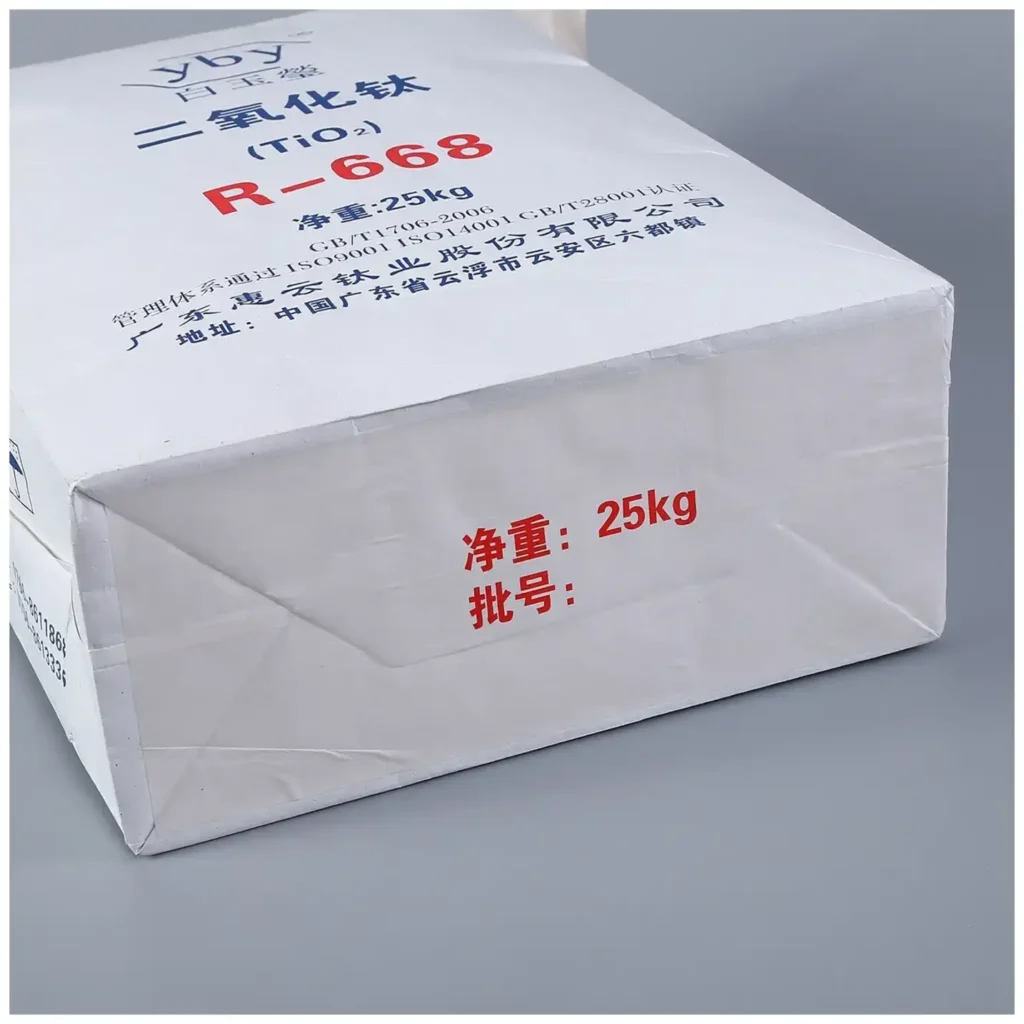
Setting the Stage: Why Kraft Paper Valve Bags Anchor Modern Powder Logistics
Packaging for powders and granulates is an exercise in probability management. Moisture spikes, oxygen creep, scuff abrasion, pallet slip, valve contamination—each risk is small in isolation yet compounding in the real world. Kraft Paper Valve Bags emerged not as an aesthetic fad but as a structural response to these overlapping stresses. They move quickly on valve packers, settle low by evacuating air, hold square on pallets, and exit the supply chain aligned with paper‑stream recovery where infrastructure exists. What persuades plants to standardize on this format? The numbers do. The human experience does. The regulatory math does. And the quieter evidence—the reduction in customer tickets and warehouse chatter—does as well.
The thesis is practical: design Kraft Paper Valve Bags from the risk backward. Start with the product’s chemistry and particle profile, layer in the realities of the route, then tune ply grammage, valve geometry, de‑aeration patterns, and outer‑surface friction. This article walks that logic in full, not as a list of features but as a linked chain of cause and effect. Along the way we pair horizontal comparisons—across materials science, logistics, branding, and policy—with vertical analysis from fiber structure to fleet outcomes. The tone is intentional: concrete, evidence‑tolerant, and allergic to hand‑waving.
Architecture and Method: How Kraft Paper Valve Bags Control Failure Modes
The construction reads simple; the consequences are not. Multi‑ply sack kraft builds the backbone; a shaped valve mates to the packer nozzle; pastes close the mouth with a predictable peel window; micro‑perforations or breathable plies bleed air to lower stack height; block‑bottom geometry stabilizes the unit load.
- Body plies as structural levers. Typical designs deploy two to four plies in the 70–120 g·m⁻² range. Machine‑direction tensile defends against drop shock; cross‑direction tensile defends against side abrasion and clamp pressure. ISO 536, ISO 534, ISO 1924‑2, and ISO 2758 provide the metrology; TAPPI T 414 and ISO 1974 (Elmendorf) shape tear behavior so openings are controlled, not catastrophic. Each gram per square meter you add buys margin in one failure mode and steals money from another outcome. Kraft Paper Valve Bags make these bargains measurable.
- Valve geometry and pasting chemistry. The mouth size, flap stiffness, and paste rheology collaborate to prevent sifting and channeling. Water‑based or hot‑melt systems that comply with 21 CFR 175.105 (adhesives) and are produced under Regulation (EC) No 2023/2006 (GMP) close the loop on food‑adjacent safety. The closure is not merely shut; it is engineered to stay shut under cyclic compression—think stacked pallets breathing under truck vibration. Why risk the slow leak that no one sees until the receiving dock? Because someone under‑specified the paste, that’s why. Kraft Paper Valve Bags erase that risk when paste windows are mapped and verified.
- De‑aeration as a throughput governor. Air is the invisible saboteur of pack height and pallet stability. Micro‑perforation patterns and breathable papers let air escape during and after fill. Too little breathability? Bags pillow and topple. Too much? Dust can migrate. The art lies in pairing micro‑perf density with particle size distribution and line speed so that Kraft Paper Valve Bags settle flat without forfeiting cleanliness.
- Bottom geometry and crease memory. Block bottoms make pallets behave like bricks rather than balloons. Crease memory in kraft, side‑seam pasting accuracy, and bottom‑patch alignment determine whether stacks stay square after a day on a humid dock. The difference is felt in forklift confidence and in the number of corner‑guard purchases you suddenly stop making.
- Optional liners and coatings as targeted tools. Hygroscopic powders and fatty foods sometimes need more than paper. Dispersion barrier papers, PE valve patches, or full liners can be added—with the understanding that each addition changes recyclability claims. The policy lens is clear: if you add polymers, you should test repulpability using CEPI’s harmonized method or PTS‑RH 021/97, and you should communicate honestly per the FTC Green Guides (16 CFR Part 260).
This structure yields a package that can be tested rather than admired. ISO 8351‑1/‑2 set the drop vocabulary; ASTM D4577 covers compression; ASTM D1894 speaks to coefficient of friction; ISO 287 governs conditioning; internal dust‑leak protocols complete the picture. Kraft Paper Valve Bags live in that laboratory grammar and then prove it on the floor.
Where Kraft Paper Valve Bags Excel: Mapping Applications to Lane Risks
Industries converge on this format not because their products look alike but because their risks rhyme.
- Construction mixes (cement, mortar, tile adhesive). Heavy, abrasive, dusty. Fast valve fills, strong pastes, breathable plies, and COF‑tuned exteriors keep stacks calm. No romance; just physics. Kraft Paper Valve Bags show up with square shoulders and leave without dust trails.
- Industrial minerals and pigments (calcium carbonate, silica, masterbatch). Fine particles seek every exit. Tight valve pasting and anti‑sift tapes close microscopic paths. Optional PE patches localize barrier without turning the entire body into a multi‑material headache. Antistatic awareness around the line contains risk that packaging alone cannot.
- Food ingredients (sugar, flour, semolina, milk and whey powders, starches). Hygiene narrows the material palette. Papers align with 21 CFR 176.170/176.180; adhesives with 21 CFR 175.105; coatings with 21 CFR 175.300. In the EU, Regulation (EC) No 1935/2004 and EU 10/2011 define documentation and migration limits when polymers are present. For infant‑grade dairy, moisture and oxygen discipline rule. Kraft Paper Valve Bags adapt via dispersion barriers and carefully limited valve patches to conserve recyclability.
- Animal nutrition (premixes, additives). Grease management and odor control matter, as does worker exposure during fill. Dispersion coats and paste discipline reduce smudging and sifting. Result: fewer complaints, steadier lines, cleaner pallets.
Different products, same refrain: clean fills, low breathing, reliable closure. That is the pattern Kraft Paper Valve Bags repeat.
Numbers That Matter: Specification Anchors for Kraft Paper Valve Bags
Engineering hates adjectives. It trusts thresholds. These are credible starting numbers that turn conversations productive:
- Paper grammage and strength. 2–4 plies at 70–120 g·m⁻²; MD tensile ≥ 6.0 kN/m; CD tensile ≥ 3.0 kN/m (ISO 1924‑2). Increase grammage for drop abuse; increase ply count for tear path management.
- Valve paste peel. ≥ 3.0 N/15 mm at 23 °C/50 % RH, no channeling after 24 h under 150 N compression. Log results per lot; paste is a process, not a prayer.
- Drop performance. ≥ 10 passes at 0.8 m, mixed orientations, per ISO 8351‑1 Method A. Raise height for aggressive networks.
- Outer surface COF. 0.40–0.60 (ASTM D1894). Too slick and pallets skate; too sticky and line accumulation misbehaves. Kraft Paper Valve Bags let you dial this with anti‑slip coats.
- Dust leakage. ≤ 0.1 % mass loss in a standardized rotation/agitation drum meant to simulate handling. Measure, don’t guess.
- Moisture management (when barriers are used). ≥ 50 % WVTR reduction vs. uncoated reference at 38 °C/90 % RH (ASTM F1249 on laminate specimens). For all‑paper ambitions, verify repulpability (CEPI/PTS‑RH/Aticelca) before you print the recycling logo.
Numbers like these do not lock creativity; they liberate it by making trade‑offs explicit. The only unacceptable state is a specification that hopes things will work out.
Case Narrative I: Dry Mix Mortar Meets Humidity and Vibration
Context. 25 kg sacks traverse tropical ports and inland warehouses with no climate control. Historical pain: slumped stacks, dust trails, abrasion holes.
Design shift. Two‑ply unbleached kraft (90 + 80 g·m⁻²), micro‑perf density tuned via pilot runs, pasted valve matched to nozzle geometry, anti‑slip topcoat to target COF 0.50, reinforced gussets. No polymer liner.
Outcome. Drop passes jump from 6 → 11 at 0.8 m. Dust loss 0.32 % → 0.06 %. Pallet leaning incidents −47 %. Customer complaints −58 %. Anecdote becomes KPI: forklift drivers mention calmer loads; planners note fewer write‑offs.
Takeaway. Small, coordinated changes beat single, heroic changes. Kraft Paper Valve Bags enable those coordinated nudges: breathability here, friction there, paste discipline everywhere.
Case Narrative II: Milk Powder to Ocean Freight with Audit Scrutiny
Context. 20–25 kg whole‑milk powder bound for export lanes; shelf‑life target ≥ 18 months; auditors who read the fine print.
Design shift. Three‑ply bleached kraft with an internal dispersion‑barrier paper; thin PE patch at the valve for hygiene; adhesives and papers mapped to 21 CFR; production under ISO 22000/FSSC 22000; EU 10/2011 migration checks on polymer elements.
Outcome. Water activity remains within ±0.02 over accelerated storage at 30 °C/65 % RH; oxygen uptake slows; drop performance unchanged; sifting complaints vanish across 200 shipments.
Takeaway. Barrier need not bulldoze recyclability. Localizing polymer near the valve and using dispersion barriers compatible with repulping keeps environmental claims credible. Kraft Paper Valve Bags strike that balance when designed intentionally.
Side‑by‑Side Study: Kraft Paper Valve Bags vs. Sewn Open‑Mouth
Hypothesis. For fine powders, pasted valves should outperform sewn open‑mouth on dust, speed, and closure reliability, while SOM may retain an edge with ultra‑coarse aggregates.
Method. Same products, same packers, alternating runs. Measure fill rate (bags/min), dust loss (%), closure time (s), pallet incidents per 1,000, and rework rate (%).
Findings. Fill rate +12–18 % for pasted valves; dust −60–80 %; closure time −35–50 %; pallet incidents −25–40 %; rework −30–45 %. SOM regains relevance for very coarse spouts, but powders reward the valve.
Implication. Portfolio logic emerges: reserve SOM for rocks; standardize Kraft Paper Valve Bags for powders and blends. Simpler training, fewer SKUs, tighter spare‑parts inventories.
Environmental and Compliance Logic: Making Claims You Can Defend
Environmental stories endure when they match lab results and legal texts.
- Recycling alignment. All‑paper Kraft Paper Valve Bags (paper plies + water‑based pastes) can enter paper streams where systems accept them. ISO 18604 offers a design framework for material recycling. If you add coatings or patches, test repulpability with CEPI’s harmonized method, PTS‑RH 021/97, or Aticelca 501 and translate the verdict faithfully on pack per local rules and the FTC Green Guides.
- Policy targets. The EU Packaging and Packaging Waste Directive (94/62/EC, amended by (EU) 2018/852) raises expectations—paper and board recycling rates approaching 85 % by 2030. Designing out unnecessary multi‑material laminates and favoring separable constructions supports compliance strategies for European lanes.
- Food‑contact rigor. When ingredients are involved, map papers to 21 CFR 176.170/176.180, adhesives to 21 CFR 175.105, and coatings to 21 CFR 175.300. In the EU, the triad is 1935/2004 (framework), 2023/2006 (GMP), and 10/2011 (plastics migration). Keep your Declaration of Compliance in order; keep your migration reports current. Kraft Paper Valve Bags simplify the conversation by minimizing polymer contact layers unless truly necessary.
- Re‑use pilots. Strong sacks invite second lives in controlled settings—on sites, in farms, in returnable loops for clean streams. ISO 18602 (optimization) gives teams a place to document re‑use trials without greenwashing.
In this arena, restraint beats rhetoric. Quote the method; show the data; publish the scope. Kraft Paper Valve Bags reward that discipline by being easy to explain.
A Stepwise Template: Specifying Kraft Paper Valve Bags Without Guesswork
Systems thinking turns broad goals into specific levers.
- Define chemistry and particle profile: water activity, lipid content, d50, abrasiveness. Map to breathability and barrier.
- Map logistics envelope: hottest hold, dampest dock, longest dwell, worst forklift habits. Derive drop heights and COF targets.
- Choose body plies: counts and grammage (e.g., 90 + 80 g·m⁻²), bleached vs. unbleached, ply orientation. Cite ISO 536/534/1924/2758.
- Specify valve: mouth dimensions vs. nozzle, paste type, coat‑weight, peel tests, compression‑leak screens.
- Tune de‑aeration: micro‑perf density/patterns, breathable ply combos, acceptance criterion for settled height after 24 h.
- Decide coatings/liners: none (recyclability priority), dispersion barrier (grease/moisture), local PE patch at valve, or liner for demanding foods with EU 10/2011 plan.
- Lock QA: ISO 8351‑1 drops, ASTM D4577 compression, ASTM D1894 COF, dust drum limits, ISO 287 conditioning. Tie to AQLs.
- Document environmentals: CEPI/PTS/Aticelca tests, ISO 18604 link, labeling rules, and any EPR reporting fields.
This is not bureaucracy; it is choreography. When every dancer knows the steps, Kraft Paper Valve Bags perform the same way on Monday and on Friday.
Parameter and Feature Table: Quick Reference for Kraft Paper Valve Bags
| Attribute | Typical Target / Option | Method / Standard | Notes |
|---|---|---|---|
| Sack format | 20–25 kg block‑bottom, pasted valve | ISO 6591‑1 description | Valve matches packer nozzle |
| Body plies | 2–4 plies at 70–120 g·m⁻² | ISO 536, ISO 534 | Bleached or unbleached kraft |
| MD/CD tensile | ≥ 6.0 / ≥ 3.0 kN/m | ISO 1924‑2 | Adjust by ply orientation |
| Burst strength | ≥ 8.0 kPa·m²/g (indicative) | ISO 2758 | Correlates with drop survival |
| Internal tear (Elmendorf) | Project‑specific | ISO 1974 | Balance openability vs. containment |
| Valve paste peel | ≥ 3.0 N/15 mm | Internal; 21 CFR 175.105 mapping | Water‑based or hot‑melt |
| Drop test | ≥ 10 passes @ 0.8 m | ISO 8351‑1 | Mix flat/edge orientations |
| Outer COF | 0.40–0.60 | ASTM D1894 | Anti‑slip coat as needed |
| Dust leakage | ≤ 0.1 % mass loss | Internal drum | Represents handling agitation |
| De‑aeration | Patterned micro‑perfs | Internal spec | Settled height after 24 h |
| Food‑contact mapping | 21 CFR 176.170/176.180; 175.105; 175.300 | DoC; EU 10/2011 if polymer present | Dairy/ingredient lines |
| Recyclability eval | CEPI / PTS‑RH / Aticelca | Lab report | Align with local MRFs |
| Site certifications | ISO 22000 / FSSC 22000 | Certificate | GMP per EC 2023/2006 |
Horizontal and Vertical Thinking: Seeing the Forest and the Grain
Horizontal parallels. Food science prioritizes water‑activity stability; logistics prioritizes pallet stability and low residual air; brand design prioritizes matte warmth, legibility, and crease discipline; policy prioritizes mono‑material recovery and honest claims. The synthesis? A high‑strength all‑paper body with breathable plies and a pasted valve, optionally finished with anti‑slip coats, and polymers kept local when absolutely necessary. That is the median optimum for Kraft Paper Valve Bags across categories.
Vertical telescoping. Begin with fleet outcomes (lower complaints, fewer toppled pallets). Step down to bag metrics (drop passes, dust loss, COF). Step further to layer metrics (tensile, burst, tear). Land at fiber formation and sheet moisture. This drill‑down prevents expensive features that do not move outcomes and highlights cheap adjustments that do.
Risk Register for Kraft Paper Valve Bags and Practical Mitigations
- Powder on valve flaps causing weak pastes.
Mitigation: dust knives, vacuum assists, and paste rheology aligned to flap stiffness; tighter tolerances on flap cuts; routine peel checks. - Residual air making stacks springy.
Mitigation: raise micro‑perf density; adjust aeration on packers; implement hold time before wrapping so Kraft Paper Valve Bags settle. - Pallet slip during braking/cornering.
Mitigation: COF control via anti‑slip coats; EUMOS‑guided wrap recipes; edge protection for column stacking. - Humidity ingress in monsoon seasons.
Mitigation: dispersion coats on outer plies; warehouse hygiene (off‑floor storage, rotation discipline); targeted liners only for the most hygroscopic SKUs. - Over‑stated recyclability.
Mitigation: lab tests first, labels second. Publish CEPI/PTSRH/Aticelca results and scope conditions; avoid blanket claims.
Extending the Environmental Story: From One‑Way to Second‑Life
Robust sacks invite re‑use in controlled channels—temporary on‑site storage, segregated waste streams, farm feed storage—especially when clean fills are involved. While mass re‑use is not trivial, pilot programs can be documented under ISO 18602 (optimization) to show material efficiency gains. In parallel, downgauging each ply by 5–10 g·m⁻² across a high‑volume fleet can save significant tonnage without harming drop performance if ply orientation and paste windows are tuned. The pattern remains: less mass, equal function.
Outlook: Where Kraft Paper Valve Bags Are Heading Next
Automation wants predictability; policy wants recoverability; brands want authenticity. Kraft Paper Valve Bags happen to sit at that intersection. Expect to see dispersion barriers that pass repulpability with better grease/water resistance, bio‑based chemistries that respect GMP, and valves that integrate traceability (tamper patterns, scannable marks) without losing closure integrity. Expect more explicit COF specs baked into RFQs. Expect fewer heroic liners and more clever paper. And expect documentation packs—Declarations of Compliance, migration reports, recyclability certificates—to become sales prerequisites, not afterthoughts.
For teams ready to specify or source at scale, start with an explicit anchor and expand from there: Kraft Paper Valve Bags. Use this as the springboard for barrier targets, paste windows, micro‑perf densities, and COF ranges. The technology is mature; the craft lies in the combinations you choose and the discipline with which you validate them.

Framing the Core Questions Around Kraft Paper Valve Bags
Every packaging decision is a bet on physics, behavior, and policy. When powders and granulates travel through hot docks, damp warehouses, and impatient filling lines, small risks multiply: moisture creep, air entrapment, dust plumes, pallet slip, and slow closures. Kraft Paper Valve Bags exist to compress those risks. This section lays out the central questions we will answer: What order quantities make sense for scalable sourcing? How do we select the right structure for a given chemistry and route? Which components inside the bag’s architecture truly matter? Where do these bags shine in daily applications? And finally—what operating practices keep performance high over time? Our approach follows a closed loop—introduction, method, results, discussion—while applying both horizontal comparisons (materials science, logistics, brand design, regulation) and vertical analysis (from fiber to pallet, from lab metric to customer outcome).
Is There a Minimum Order Quantity for Wholesale Kraft Paper Valve Bags?
Wholesale economics are shaped by setup times, changeovers, and printing processes. Plate‑based printing favors larger runs because plates, ink matching, and registration checks remain fixed costs. Digital printing relaxes this constraint but typically carries a higher per‑unit price at volume. For Kraft Paper Valve Bags, MOQs commonly start in the low thousands per SKU when multi‑color flexo is specified, and can drop below that for single‑color or digital pilots. Why? Because ply assembly, valve forming, and block‑bottom conversion require stable machine settings; each reset consumes materials and time. Horizontally, the logic mirrors other print‑converted goods (labels, folding cartons): the more setup‑intensive the process, the higher the MOQ. Vertically, MOQs connect to risk—smaller batches reduce inventory exposure for artwork changes but increase unit cost. The method is to segment SKUs: lock structure and graphics for core, high‑velocity items to harvest scale, while using short digital runs for market tests. The result is a portfolio with both cost discipline and agility.
How to Choose the Right Kraft Paper Valve Bags for Your Product and Route
Selection begins with chemistry and ends with climate. Hygroscopic powders (starches, milk, whey) push you toward dispersion barriers or localized polymer patches near the valve. Lipid‑rich blends raise oxidation concerns, so you’ll favor cleaner closures and reduced headspace oxygen through better de‑aeration. Abrasive minerals demand tougher outer plies and crease patterns that resist scuff. The horizontal lens compares disciplines: food science (water activity, oxidation kinetics) sets barrier intent; logistics (vibration, drop orientation) sets mechanical intent; brand design (matte warmth, legibility) sets print and varnish intent; regulatory context (21 CFR 176.170/176.180, 175.105/175.300; EU 1935/2004; 2023/2006; EU 10/2011 if polymers are present) sets documentation intent. The vertical lens drills down: from pallet behavior to bag geometry, from valve adhesion to paste rheology, from ply grammage to fiber formation. Practically, a four‑step method works well: (1) define product sensitivity and route extremes; (2) pick body plies (2–4 at 70–120 g·m⁻²) and valve geometry to match the packer; (3) set de‑aeration via micro‑perforations and breathable papers; (4) lock outer COF at 0.40–0.60 with anti‑slip coats. The result is Kraft Paper Valve Bags that run fast, close clean, and stack square.
The Basics of Valve‑Mouth Mechanics in Kraft Paper Valve Bags
A valve is not an afterthought; it is the interface between powder physics and plant tempo. The mouth must fit the packer nozzle with minimal clearance to prevent back‑spray and dust entrainment. Flap stiffness must harmonize with paste viscosity so the closure resists channel formation during cyclic compression. Breathability around the mouth allows trapped air to escape without carrying fines through the seal. Some plants add anti‑sift tapes or PE patches at the valve to tighten the barrier locally without turning the entire body into multi‑material construction. Horizontally, this echoes engineered closures in other packaging (spouts, zippers): the best ones are tuned systems, not generic parts. Vertically, good valve behavior propagates upward—faster fill, lower residual height, calmer pallets.
Components That Matter Inside Kraft Paper Valve Bags
The bag’s performance emerges from the orchestra of its parts:
- Body plies: define tensile and tear behavior. More plies offer controlled tear paths and better drop survival; heavier grammage buys margin at the cost of mass.
- Valve paste: determines peel and compression resistance; water‑based or hot‑melt solutions must map to 21 CFR 175.105 for food‑adjacent uses.
- De‑aeration patterns: micro‑perfs and breathable plies expel air; the density should match particle size distribution to avoid dust migration.
- Bottom patch and fold accuracy: set the “brick” geometry that stabilizes unit loads; poor crease memory inflates stack height and invites scuff.
- Outer surface chemistry: anti‑slip coats control COF to 0.40–0.60 (ASTM D1894), balancing stack friction and conveyor flow.
- Optional barriers: dispersion coats, repulpable barriers, or localized PE at the valve improve moisture and grease resistance with mindful recyclability.
Treat each component as a lever tied to a defined risk and test. The discipline turns anecdotes into parameters.
Common Applications of Kraft Paper Valve Bags and Their Lane Risks
Construction mixes (cement, mortar, tile adhesive) reward the format’s breathability and closure strength. Industrial minerals and pigments, with their fine particles, push for tight valve pastes and anti‑sift features. Food ingredients—flour, sugar, semolina, milk powder—require clean pastes and documented material mappings to 21 CFR and EU frameworks. Animal nutrition blends value grease resistance and odor control without losing recyclability. Across all these, the lane risk matrix—tropical humidity vs. temperate dryness, long ocean freight vs. short regional runs—drives micro‑perf density, ply combinations, and COF targets. The method is to mirror lanes in pilots, then freeze settings.
Types of Kraft Paper Valve Bags You Can Specify
There is no single template. Choices include 2–4 ply bodies in bleached or unbleached kraft; block‑bottom or pinch‑style geometry; valves sized to different nozzles; breathable vs. low‑breathability designs; anti‑sift tapes; optional dispersion barriers; localized polymer patches at the valve; graphic treatments from single‑color linework to high‑coverage flexo. Horizontally, this diversity mirrors modular design in other packaging families; vertically, each choice maps to a risk vector (dust, moisture, stack stability, or branding). The best practice is to start simple—high‑strength all‑paper—and add only the features that move outcomes.
Setting Up Filling and Closure for Kraft Paper Valve Bags on Your Line
Controllability beats speed—until controllability enables speed. Begin by mapping the sealer or pasting window: temperature profile for hot‑melt or viscosity and open time for water‑based pastes. Maintain flap cleanliness with dust knives or vacuum assists. Match valve geometry to the nozzle to minimize bounce and back‑spray. Validate de‑aeration by measuring settled height after 24 hours under typical top‑loads. Test COF of the outer surface and adjust anti‑slip dosing to keep pallets steady without jamming conveyors. Document all of it: drop tests (ISO 8351‑1), compression (ASTM D4577), friction (ASTM D1894), and dust loss (internal drum). The result is a line recipe that travels from shift to shift, plant to plant.
Benefits of Upgrading to Kraft Paper Valve Bags from Less Controlled Formats
Upgrades show up as fewer complaints and calmer dashboards. Operators see shorter cycle times and less housekeeping dust. QA sees tighter distributions on peel and drop results. Logistics sees fewer leaning pallets and better cube efficiency. Marketing sees cleaner print on natural paper with credible recycling narratives. Finance sees lower shrink and more lane flexibility (slow ocean freight becomes viable for moisture‑sensitive goods when closures and breathability are disciplined). Behind the scenes, documentation improves: Declarations of Compliance that reference 21 CFR 176.170/176.180, 175.105, 175.300; EU 1935/2004 and 2023/2006 GMP; migration checks to EU 10/2011 when any polymer touches product.
Keeping Kraft Paper Valve Bags in Top Shape Through Operations
Performance degrades when little controls slip. Paper must be conditioned per ISO 287 to prevent curl and mis‑register. Pastes must be viscosity‑checked at line temperature. Micro‑perf tools wear; replace on schedule to avoid blocked venting or oversized holes. Anti‑slip coat application should be audited to keep COF in the 0.40–0.60 band. Palletizing recipes should follow EUMOS 40509 guidance for transport stability. Warehouse hygiene matters: keep pallets off damp floors; rotate stock through humid seasons faster; avoid over‑wrapping that traps moisture. Small routines, big effects.
How to Improve the Performance of Kraft Paper Valve Bags Without Over‑Engineering
Simplicity is a strategy. Before adding liners or heavier plies, fix the fundamentals: nozzle‑to‑valve fit, paste window mapping, residue‑free flaps, and de‑aeration patterns matched to particle size. If dust persists, consider anti‑sift tapes or localized PE only at the valve. If pallets still lean, raise COF with a light anti‑slip coat, then tune stretch‑wrap. If moisture claims appear in humid lanes, try dispersion barriers compatible with CEPI repulpability before moving to full liners. Each step trades mass and complexity for measurable outcome shifts. In short: make Kraft Paper Valve Bags precise before you make them heavy.
What is the Purpose of the Valve in Kraft Paper Valve Bags?
The valve exists to reconcile two opposing needs: an opening wide enough for rapid product flow and a closure tight enough to prevent sifting and air re‑ingress. During fill, it creates a low‑loss pathway; during compression and transport, it behaves like a one‑way door. Paste chemistry, flap design, and surrounding breathability turn that metaphor into mechanics. Treat the valve as the bag’s “throttle body,” and you will design it with the respect it deserves.
A Practical Sourcing Anchor for Kraft Paper Valve Bags
To move from concept to specification, start with a trusted scope and iterate: Kraft Paper Valve Bags. Use it to frame RFQs with explicit targets—ply counts and grammage; valve dimensions; peel thresholds; drop orientation counts; de‑aeration patterns; outer COF ranges; food‑contact documentation; recyclability test methods (CEPI/PTSRH/Aticelca). When vendors quote against the same grammar, pilots move faster and surprises vanish.
References
- ASTM D1894 — Standard Test Method for Static and Kinetic Coefficients of Friction of Plastic Film and Sheeting.
- ISO 8351‑1/‑2 — Packaging — Sacks — Drop test methods.
- ASTM D4577 — Standard Test Method for Compression Resistance of a Container Under Constant Load.
- ISO 287 — Paper and board — Determination of moisture content of a lot — Oven‑dry method.
- ISO 536 / ISO 534 — Paper and board — Grammage and thickness.
- ISO 1924‑2 — Paper and board — Determination of tensile properties — Constant rate of elongation method.
- ISO 2758 — Paper — Determination of bursting strength.
- ISO 1974 — Paper — Determination of tearing resistance (Elmendorf method).
- Regulation (EC) No 1935/2004 — Materials and Articles Intended to Come into Contact with Food.
- Regulation (EC) No 2023/2006 — Good Manufacturing Practice for Materials and Articles Intended to Come into Contact with Food.
- Commission Regulation (EU) No 10/2011 — Plastic materials and articles intended to come into contact with food.
- 21 CFR 176.170 / 176.180 — Paper and paperboard components in contact with aqueous and fatty foods.
- 21 CFR 175.105 — Adhesives; 21 CFR 175.300 — Resinous and polymeric coatings.
- CEPI Harmonised Recyclability Test Method; PTS‑RH 021/97; Aticelca 501 — Repulpability and recyclability assessments for paper‑based packaging.