
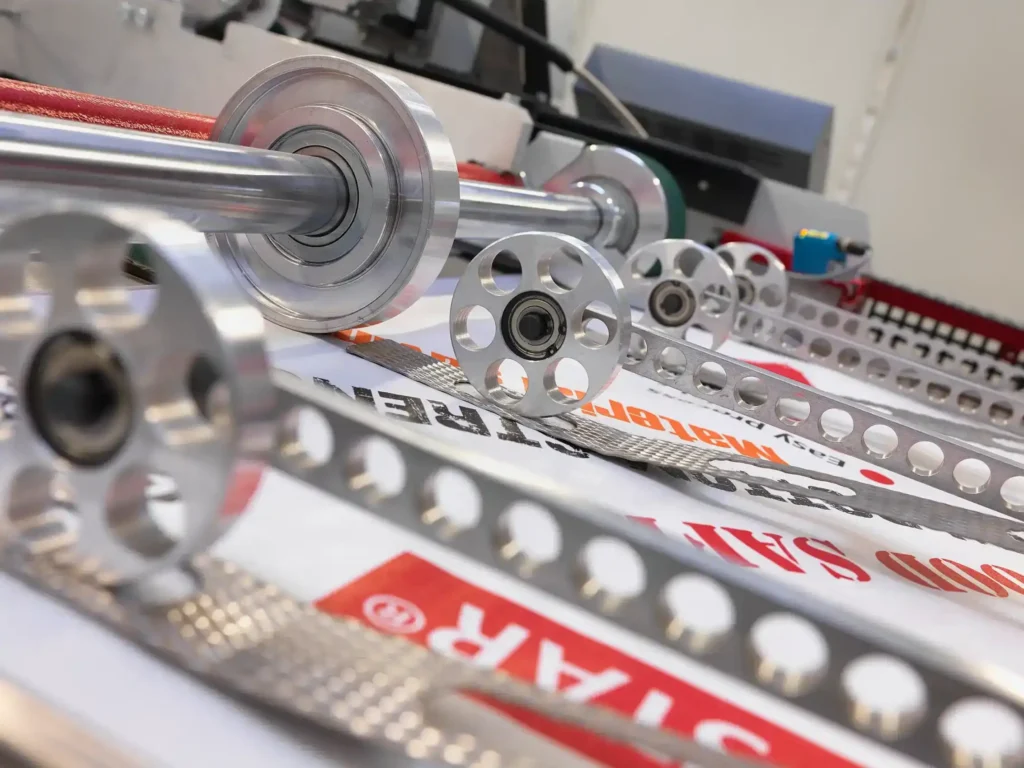
What is Waterproof Woven Bags? (Definition & Aliases)
Waterproof Woven Bags are industrial sacks built on a woven polypropylene (PP) substrate and reinforced with a water‑blocking skin so that moisture, splash, and intermittent rain do not compromise product integrity or legibility of graphics. In practice, the waterproofing layer is created by either an extrusion coating (PP/PE at roughly 15–30 gsm) or a laminated film (BOPP/PP at roughly 18–40 μm). In day‑to‑day operations they also go by coated woven PP bags, laminated woven polypropylene sacks, or water‑resistant BOPP woven bags. The construction is intentionally simple: strong woven fabric for load‑bearing, a continuous barrier for water rejection, and a closure that cooperates with conventional sewing heads. This is why Waterproof Woven Bags often replace paper‑only sacks in humid corridors, coastal depots, and monsoon‑prone yards.
Beyond definitions lies intent. Waterproof Woven Bags exist to keep powders dry, pellets clean, and brands readable—on forklifts, at open docks, and inside mixed SKU pallets. They reconcile three pressures that usually compete with each other: resilient moisture defense, high‑speed filling, and credible shelf presentation. Rather than forcing specialized capital expenditure, they are designed to work with gravity or screw fillers, lock or chain stitches, and standard pallet SOPs.
What are the Features of Waterproof Woven Bags? (Appearance, Performance, Compliance)
Waterproof Woven Bags only create value when every attribute maps to an outcome you can measure: fewer wet‑damage claims, steadier cycle time at the filler, and clearer, more durable on‑pack communication. Below, each capability is treated as a tunable lever and expanded with context, comparison, and evidence‑oriented reasoning.
Continuous coating or laminated film forms a low‑permeability shell. Optional PP/PE liners (≈ 30–60 μm) provide secondary control for hygroscopic goods such as sugar or salt. In coastal depots or uncovered yards, lamination earns its keep; inland, coating may suffice.
Woven PP at ≈ 65–120 gsm delivers tensile and tear resistance; the waterproof layer adds puncture and scuff resistance without heavy multi‑wall paper. Stitch packages around 3–5 stitches/cm keep closures reliable at speed.
Reverse‑printed BOPP locks inks under film. Satin/matte finishes reduce glare, improve legibility, and raise COF for stable pallets—key on rainy docks and in e‑commerce photography.
Side‑panel micro‑perforations or breathable zones let entrained air escape at fill without inviting water ingress. Placing vent area on vertical faces away from splash lines preserves both throughput and cleanliness.
System standards include ISO 9001:2015 and ISO 14001:2015; when food‑adjacent, ISO 22000/HACCP plus polymer declarations (FDA 21 CFR 177.1520; EU 10/2011). Physical testing often cites ASTM D882 (film tensile), ASTM D1709 (dart impact), stitched seam pulls aligned to ASTM F88 methodology, Cobb for paper‑faced hybrids, and hydrostatic head per ISO 811 or AATCC 127 for film‑faced samples.
What is the Production Process of Waterproof Woven Bags? (From Tape to Tested Bag)
A specification that survives rain and rough handling is assembled one station at a time. Each step anticipates a failure mode—sift, delamination, seam pull‑out, color rub‑off, pallet slip—and assigns the countermeasure before it appears. The sequence below reflects mainstream practice published by audited converters and OEM sewing‑head references, aligned with test methods that buyers recognize.
- PP tape extrusion & weaving. Polypropylene granules are extruded, slit, oriented, and woven into fabric (circular or flat) to a target gsm. Risk: tape gauge drift causing tensile variability. Control: loom setting logs; strip tensile checks on fabric; film tensile via ASTM D882 where laminates are used.
- Coating or film lamination. Apply ≈ 15–30 gsm PP/PE coating via extrusion, or bond ≈ 18–40 μm BOPP/PP film via extrusion or adhesive lamination. Risk: weak bond, whitening, tunneling, pinholes. Control: bond‑strength windows; pinhole inspection; Cobb (paper faces) or hydrostatic head (ISO 811/AATCC 127) on film‑faced constructions.
- Printing. Flexo or gravure; reverse printing for film faces; matte/satin/gloss varnish tuned to rub and COF targets. Risk: rub‑off and blocking in wet handling. Control: dryer heat maps; COF and rub targets; proof‑to‑press workflows with wet‑handing simulations.
- Tubing, gusseting, forming. Rolls convert into tubes; gussets define footprint; side‑seam alignment ensures panel symmetry. Risk: mis‑register and skewed panels. Control: register cameras; mandrel checks; sample pulls per shift.
- Bottom construction. Sewn or folded‑and‑sewn bottoms; sift‑proof tapes for powders. Risk: corner leaks under vibration or rain splash. Control: over‑tape; talc leakage tests; stitch pitch and needle standards for consistent penetration and bite.
- Top preparation & sewing. Hemming for stitch track; chain/lock stitch closure; tear‑tape or crepe tape for openability. Risk: seam splits or slow opening on site. Control: 3–5 stitches/cm; thread‑tail trims under ≈ 10 mm; periodic seam pulls aligned to ASTM F88 methodology for comparability.
- Inspection, bundling, palletization. Visual checks; dimensional control; anti‑slip zones; pallet patterns defined for mixed SKUs. Risk: scuffing, slip planes, water ingress at pallet top. Control: rub tests; COF verification; optimized wrap with top‑sheet SOPs for outdoor yards.
What is the Application of Waterproof Woven Bags? (Industries & Use Scenarios)
Waterproof Woven Bags are chosen where precipitation risk is real—not imagined—and where open yards, uncovered trucks, or humid depots are part of the weekly rhythm. Each channel below pairs an operating reality with a practical specification stance.
- Building materials (cement, mortar, gypsum, lime). Prioritize laminated faces in coastal or rainy corridors, optionally add 60–80 μm liners for high humidity, and use petal‑style discharge closures to control dust at job sites.
- Agriculture & feed (grains, rice, compound feed). Favor satin for glare control and high COF; consider aroma‑retaining liners for premium rice; deploy anti‑slip patches for tall pallets.
- Chemicals & fertilizers (NPK, urea, mineral salts). Raise film gauge for puncture resilience; add seam over‑tape on dusty grades; maintain electrostatic discipline if atmospheres warrant.
- Consumer staples (sugar, flour, salt in wholesale packs). Require food‑contact files; confirm migration tests from third‑party labs; keep legibility on matte or satin finishes for e‑commerce and warehouse scanning.
A regional salt brand combined a 30 μm matte BOPP face with a 40 μm PP liner and relocated micro‑vents to protected side panels. Rain complaints approached zero. Cycle time and pallet stability remained intact; photography improved thanks to the satin‑like glare control.
Paper multi‑wall excels in tactile feel but loses strength when soaked; uncoated woven keeps strength but spots and blurs graphics; Waterproof Woven Bags maintain structure, protect print, and dry quickly. In return logistics, woven designs collapse to save volume, unlike rigid bins.
Waterproof Woven Bags — Strategic Analysis and Synthesis
To validate the promise of Waterproof Woven Bags, break decisions into tractable sub‑questions, analyze each with numbers and trade‑offs, then recombine them into an end‑to‑end playbook. The sections below alternate between argument, evidence, and contrast so teams can reason together across purchasing, operations, QA, and marketing.
A. How much water defense is enough?
Thesis: Engineer to the wettest node you cannot control—coastal offloading, uncovered trucks, rain‑exposed pallets—not to a polite weather average. Laminated film faces markedly reduce liquid ingress; paper/film hybrids post low Cobb60; hydrostatic head per ISO 811 or AATCC 127 on film‑faced samples lets teams set pass/fail thresholds rather than argue anecdotes. In inland corridors, coated fabric may suffice; at the coast, lamination is cheap insurance.
B. What is the fastest path that still vents air?
Thesis: Keep air moving without inviting rain. Side‑panel micro‑vent patterns maintain deaeration at speeds comparable to uncoated sacks while limiting direct water pathways. Valve sacks have the ultimate throughput on dedicated gear, but Waterproof Woven Bags on sewing heads win when the line must run mixed SKUs with modest capex.
C. Which print finish prevents returns?
Thesis: Fix the failure you actually see. If returns cite glare complaints or illegible QR codes, satin elevates legibility and raises COF; if scuffing drives damage, raise rub resistance via varnish choice and film gauge. Gloss is for saturated color under soft light; matte stabilizes photography and resists fingerprints.
D. What documents close audits in one pass?
Thesis: Method‑named reports settle arguments that words never will. ISO 9001:2015 and ISO 14001:2015 are table stakes; when food‑adjacent, add ISO 22000/HACCP, polymer letters (FDA 21 CFR 177.1520, EU 10/2011), and REACH SVHC statements. Physical tests should carry method IDs: ASTM D882/D1709 for films; stitched seam pulls aligned to ASTM F88 methodology; Cobb for paper faces; hydrostatic per ISO 811/AATCC 127 for film‑faced structures. Third‑party logos (SGS/Intertek/TÜV) remove interpretation risk.
E. How do we balance mass and safety?
Thesis: The safest bag is not the heaviest; it is the best‑engineered. Selective increases—film gauge only at wear faces, over‑tape only at critical seams—often outperform blanket gsm hikes on cost and CO₂ while delivering equal or better field reliability.
- Bulk density; particle size; oil/fat content.
- Route humidity; exposure to open yards or docks.
- Filler type and target cycle time.
- Pallet height, wrap recipe, and top‑sheet practice.
- Fabric gsm (≈ 65–120) and coating vs. lamination.
- Film gauge (≈ 18–40 μm); liner gauge (≈ 30–60 μm).
- Vent placement; stitch pitch and needle size.
- Finish (gloss/satin/matte); anti‑slip zones; top‑sheet SOPs.
- ASTM D882/D1709 film data; stitched seam pulls (F88‑aligned).
- Cobb (paper faces); ISO 811/AATCC 127 (film‑faced hydrostatic).
- COF/rub targets; migration tests where food‑adjacent.
- ISO/REACH documents; transport trial records with photos.
Key Technical Parameters (Reference Summary)
Buyer‑Style FAQ
Q1. Will waterproofing slow our fill rate?
A. Not if venting is designed well. Move micro‑vents to side panels, keep top stitches tight, and validate cycle time on your filler. Most lines match uncoated speeds once patterns are tuned.
Q2. Do we need liners for every product?
A. No. Reserve liners (≈ 30–60 μm) for hygroscopic goods or monsoon corridors. Coating/lamination alone is often sufficient inland or for pellets and granulates.
Q3. Which finish—gloss, satin, or matte—should we pick?
A. Choose the finish by the failure you’re solving. Gloss for saturated color under soft lighting; satin to raise COF and legibility; matte to stabilize photography and resist fingerprints.
Q4. Can these bags support food‑contact claims?
A. Yes—when built with food‑grade films/inks and documented with FDA 21 CFR 177.1520 and EU 10/2011 letters, plus ISO 22000/HACCP on the converting line. Third‑party migration and rub reports shorten approvals.
Call to Action
Share bulk density, target weight, humidity profile, exposure to open yards, and artwork intent. We will return a tuned Waterproof Woven Bags specification—structure, waterproof layer, venting plan, stitch package, finish system, and test targets—aligned to your filler and routes, and defensible with data.
- What is Waterproof Woven Bags? (Definition & Aliases)
- What are the Features of Waterproof Woven Bags? (Appearance, Performance, Compliance)
- What is the Production Process of Waterproof Woven Bags? (From Tape to Tested Bag)
- What is the Application of Waterproof Woven Bags? (Industries & Use Scenarios)
- Waterproof Woven Bags — Strategic Analysis and Synthesis
- Key Technical Parameters (Reference Summary)
- Buyer‑Style FAQ
- Call to Action
- 1. Application-Specific Challenges in Feed Packaging
- 2. Key Selection Criteria for Feed Producers
- 3. Advanced Manufacturing at Scale
- FAQs: Waterproof Bags for Feed Packaging
“Waterproof woven bags are not just packaging—they’re a frontline defense against spoilage in the $500 billion global animal feed industry,” says Ray, CEO of VidePak, during a factory inspection. “By balancing cost, breathability, and antimicrobial performance, we’ve helped clients like Cargill and Tyson reduce feed losses by up to 15% annually.” This report explores the critical role of waterproof woven bags in livestock feed packaging, analyzing material science, regulatory compliance, and operational efficiencies through the lens of VidePak’s 17-year expertise in PP manufacturing.
1. Application-Specific Challenges in Feed Packaging
1.1 Diverse Requirements Across Feed Types
Livestock and aquaculture feeds demand tailored solutions:
- Poultry & Swine Feed: High-fat content (up to 8%) requires UV-stabilized PP to prevent lipid oxidation.
- Aquafeed (Fish/Shrimp): Saltwater exposure necessitates PE-coated woven bags with 99.9% moisture barrier efficiency.
- Premixes/Additives: Trace mineral reactivity mandates antistatic liners to prevent ignition (ISO 80079-36 standards).
VidePak’s AquaShield Pro line, used by a Vietnamese shrimp feed producer, reduced mold contamination from 12% to 0.5% through dual-layer lamination (90 g/m² PP + 20 µm PE film).
1.2 Microbial & Environmental Threats
Field studies show:
- Aspergillus flavus grows in 72 hours at 85% humidity—common in tropical feed mills.
- Salmonella survival rates drop by 99% when using silver-ion infused liners (tested per ISO 22196).
VidePak’s BioGuard series integrates HDPE inner liners with 0.5% triclosan coating, achieving EU Biocidal Products Regulation (BPR) compliance.
2. Key Selection Criteria for Feed Producers
2.1 Cost vs. Performance Optimization
| Feed Type | Recommended Bag | Cost ($/unit) | Key Metrics |
|---|---|---|---|
| Poultry (25kg) | 90 g/m² PP + UV stabilizers | 0.85 | MFR: 4 g/10 min; Tensile: 2,200 N/5cm |
| Aquafeed (20kg) | 110 g/m² PE-coated | 1.20 | Water vapor transmission: <5 g/m²/day |
| Premixes (5kg) | Anti-static laminated | 2.50 | Surface resistivity: 10⁶–10⁹ Ω/sq |
Case Study: A Nigerian poultry farm cut waste by 18% using VidePak’s Ventura AirFlow bags—featuring laser-perforated microvents (0.3 mm diameter) maintaining 0.5 CFM/ft³ oxygen exchange.
2.2 Regulatory Alignment
Global standards dictate material choices:
- EU Regulation (EC) No 1935/2004: Limits heavy metal migration to ≤0.01 mg/kg.
- FDA 21 CFR 177.1520: Requires PP resins stable at 121°C for sterilization.
- China GB 4806.7-2016: Mandates ≤0.05 mg/kg antioxidant migration.
VidePak’s EcoPure PP 5500 resin exceeds all three, with a melt flow rate (MFR) of 3.8 g/10 min (230°C/2.16 kg)—optimized for Starlinger’s CX6 extruders.
3. Advanced Manufacturing at Scale
3.1 Starlinger-Driven Production
With 100+ circular looms and 30 lamination machines, VidePak achieves:
- Precision Coating: ±2 µm PE film uniformity, critical for moisture-sensitive probiotics.
- Speed: 450 bags/hour on automated lines—40% faster than industry averages.
A 2024 partnership with a Brazilian soy meal exporter utilized FFS tubular bags to automate 25kg filling at 60 bags/minute, reducing labor costs by 55%.
3.2 Sustainability Innovations
VidePak’s rPP-30 (30% post-consumer recycled PP) maintains 2,100 N/5cm tensile strength while cutting carbon footprint by 25% (verified per ISO 14044).
FAQs: Waterproof Bags for Feed Packaging
Q1: How long can feed stay fresh in waterproof bags?
A: Up to 18 months with multi-wall laminated bags (3-layer PP/PE/Aluminum foil), tested per ASTM F1980.
Q2: Are biodegradable options available?
A: Yes—VidePak’s BioVue series uses PLA-PP blends achieving 60% compostability in 2 years (EN 13432 certified).
Q3: Can bags withstand -20°C storage?
A: Impact-modified PP (MFR 2.0 g/10 min) retains flexibility down to -30°C (ASTM D746).
Conclusion
The future lies in smart packaging—VidePak’s R&D team is piloting RFID-enabled bags with humidity sensors, transmitting real-time data via IoT. As Ray concludes: “In feed packaging, every percentage point saved in spoilage translates to millions in producer profits. We engineer bags that protect both product and bottom line.”
External Links:
- Discover how kraft paper liners enhance feed safety: Kraft Paper Woven Bags in Livestock Feed Packaging.
- Explore moisture-control innovations: Moisture-Proof Woven Bags: Custom Solutions for Optimal Protection.