
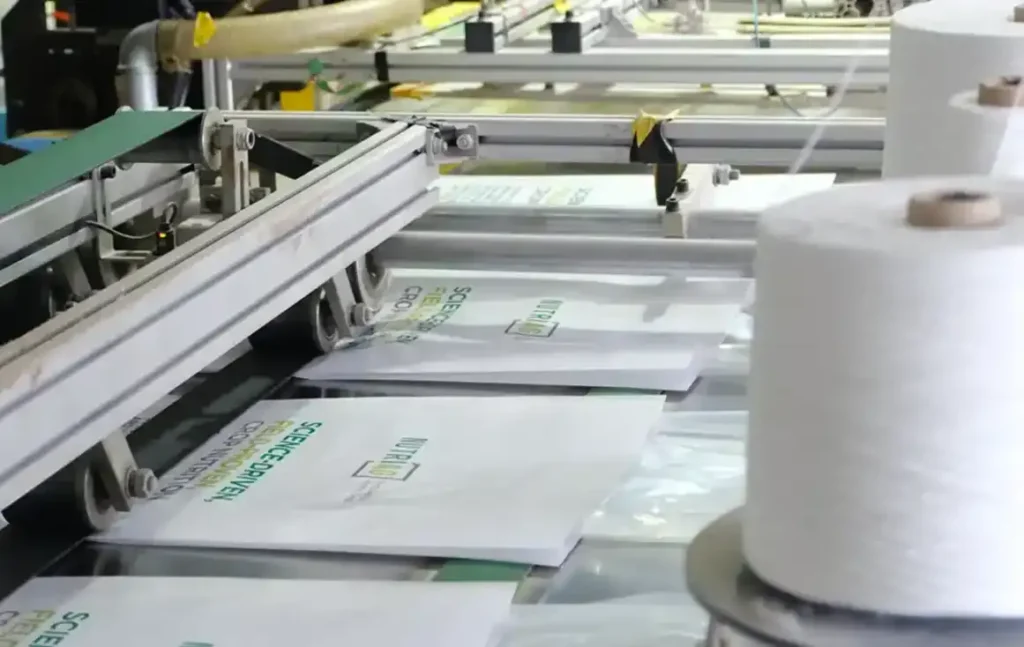
In volatile supply networks where weather ignores schedules and customs officers scrutinize labels, packaging cannot behave like décor. It must act as a control surface—regulating moisture, choreographing throughput, safeguarding brand legibility, and translating sustainability promises into verifiable practice. This manuscript reframes Waterproof Woven Bags and Global Market Demands as an operating system rather than a mere container: a system in which polymer selection, textile architecture, process capability, and compliance evidence interact to produce a single outcome—dry product, predictable lines, clean pallets, and claims that survive both a downpour and an auditor.
The anchor idea is simple but demanding: if logistics are a sequence of risks, then Waterproof Woven Bags and Global Market Demands should be a sequence of countermeasures. To do this credibly we connect disciplines that rarely share a room—materials science, printing physics, environmental standards, and lean operations. The connections matter: change lamination thickness and you nudge water‑vapor transmission and stiffness; adjust fabric GSM and you alter tensile reserve and mouth dockability; specify an anti‑slip coating and you reshape pallet behavior under wet braking. Cause meets effect, and intention meets data.
What is Waterproof Woven Bags?
Waterproof Woven Bags—interchangeably described as waterproof PP woven sacks, BOPP‑laminated woven sacks, water‑resistant composite woven sacks, or sealed‑valve PP woven bags—are engineered packages built on a woven polypropylene (PP) substrate fortified by moisture defenses (laminations, coatings, liners) plus mechanical details (seams, bar‑tacks, mouth shaping) that survive forklifts and strapping. In practice, the construct behind Waterproof Woven Bags and Global Market Demands is a mono‑resin chassis (PP) with optional helper layers that resist rain splash, curb water‑vapor ingress, and preserve printed panels through abrasion, condensation, and UV exposure.
A systems lens reveals why the category resists one‑line definitions. Fabric GSM and tape denier decide tensile reserve; picks‑per‑inch (PPI) controls sifting and stiffness; lamination chemistry and thickness run the water‑vapor transmission rate (WVTR) playbook and deliver scuff resistance; valve geometry and micro‑perforation set the deaeration and fill‑rate ceiling; anti‑slip finishes tune coefficient of friction (COF) to pallet wood and wrap; seam architecture translates thread into structure; and labeling strategy defends compliance readability after rough handling. Nudge one lever and the others move. Strength is relational; waterproofing is architectural; performance is emergent.
Global context further stretches the definition. The same sack faces different enemies by latitude: monsoon ramps in ASEAN, freeze‑thaw cycles and static in North America, high UV load in the Middle East, container sweat in tropical ports, and eco‑design scrutiny in the EU. A credible cross‑border program for Waterproof Woven Bags and Global Market Demands therefore merges mechanical robustness with regulatory grammar—resin identification code 5—PP (ASTM D7611), food‑contact declarations (FDA 21 CFR 177.1520; EU 10/2011), and, where dangerous goods apply, UN 5H1–5H4 woven sack performance proofs. These codes are not ornaments; they are the syntax by which buyers, auditors, and converters coordinate risk.
Finally, a practical framing: think of Waterproof Woven Bags and Global Market Demands as a market contract—between what physics will allow, what brands must show, what lines can sustain, and what regulators will accept. It is not a marketing promise painted on plastic; it is a converging set of tolerances that holds when a container door opens onto heat, humidity, sun, and rain.
What are the features of Waterproof Woven Bags?
Features only matter when they neutralize real failure modes. For Waterproof Woven Bags and Global Market Demands, those modes cluster into six arenas. We treat each as a mini‑system with background context, data reinforcement, a concrete case analysis, and a succinct comparative study—so trade‑offs are visible, and conclusions travel.
1) Waterproofing architecture — blocking liquid, modulating vapor. Rain is binary; humidity is continuous. “Waterproof” must address both. Exterior BOPP/PP lamination forms a low‑porosity shell that sheds rain and resists splashes while offering a premium print face. Inside, LDPE/PP liners (single or co‑extruded) create a controllable vapor boundary. Valve designs with micro‑perforation evacuate air during high‑rate fills without dust plumes; after filling, heat‑seal or ultrasonic closure restores barrier integrity. In short: repel liquid, regulate vapor, retain legibility.
Data reinforcement. Typical lamination thickness: 18–30 μm (BOPP/PP). Common liner gauges for dry granular products: 60–100 μm LDPE (with EVOH co‑ex options where oxygen moderation matters). WVTR of films is measured per ASTM E96 / ISO 15106; paper‑faced variants validate moisture pickup via Cobb (ISO 535); coated fabrics may be screened by hydrostatic head (ISO 811). These bands are widely listed by exporters and peer converters and align with the operating envelope we target for Waterproof Woven Bags and Global Market Demands.
Case analysis. A coastal fertilizer distributor endured seasonal caking and label bleed. Switching to laminated Waterproof Woven Bags and Global Market Demands with 25 μm BOPP and an 80 μm LDPE valve liner cut complaints sharply; drizzle no longer destroyed graphics, and hopper flow recovered at end users.
Comparative study. Multiwall paper breathes—useful for some curing windows—but fails in rain. Heavy PE FFS film seals hermetically—yet punctures at corners and slips on pallets. Uncoated woven PP is tough—yet porous. The hybrid architecture of Waterproof Woven Bags and Global Market Demands reconciles these tensions: abrasion‑tough exteriors, stable print, tunable vapor control.
2) Mechanical integrity — surviving tines, decks, and drops. Laminations do not carry pallets; the woven core does. Tape denier and picks‑per‑inch (PPI) determine how snag forces re‑route around damaged filaments; seam geometry (chain, safety, overlock with bar‑tacks) converts thread into structure; anti‑slip finishes stabilize stacks when forklifts brake on wet concrete.
Data reinforcement. Typical woven fabric weights for 25–50 kg sacks: 80–120 g/m²; tape denier: 500–1200D; common valve formats: 460×760–480×780 mm; open‑mouth formats: ~500×900 mm. Mechanical references: strip tensile ISO 13934‑1, seam tensile ISO 13935‑2 (or ASTM D1683 analogues), laminate dart impact ASTM D1709, COF ASTM D1894. Ranges mirror public exporter listings and peer converter spec sheets.
Case analysis. A port packer reduced deck‑plate punctures and leaning pallets after migrating from uncoated sacks to laminated Waterproof Woven Bags and Global Market Demands with a sand‑grip backside. Emergency rewraps dropped; ramps were calmer during rain.
Comparative study. Paper stacks square—until splashed. PE film resists rain—but stretches at point loads. Waterproof Woven Bags and Global Market Demands distribute stress through the weave while resisting moisture—two strengths in one platform.
3) Dust and cleanliness — keeping fines in and mud out. Fines become paste in rain and airborne dust in dry heat. Coatings lower fabric porosity; stitch density and valve lip fit suppress needle‑hole sifting; optional micro‑perfs balance air release with dust containment. Laminated faces reduce cross‑contamination and protect machine‑readable codes.
Data reinforcement. Rub resistance (ASTM D5264) protects inks; barcode quality graded to ISO/IEC 15416; cleanliness cues embedded in AQL sampling (ISO 2859‑1). Plants that run white fertilizers or food ingredients often push stricter visual standards because stains are brand‑visible; Waterproof Woven Bags and Global Market Demands respond by turning coating weight and seam density into hygiene levers.
Case analysis. A blender running color‑coded SKUs cut cross‑contamination holds after adopting coated Waterproof Woven Bags and Global Market Demands with tighter seams and dovetailed valve lips. Warehouse dust metrics improved; receiving scans sped up.
Comparative study. Drums isolate dust impeccably—but inflate freight and storage. Uncoated woven sacks are rugged—but messy at high rates. Laminated Waterproof Woven Bags and Global Market Demands split the difference—cleaner, faster, cost‑credible.
4) Operational throughput & brand legibility — speed without mess. Bagging halls pay for predictability. Stiff mouths dock to auto‑spouts; consistent lay‑flat widths prevent magazine jams; valves sized to spout geometry reduce fill‑time variance; abrasion‑resistant inks and high‑contrast panels keep compliance visible after rain and strapping. Rhythm is a KPI.
Data reinforcement. Typical tolerances for automated lines: width/length ±5–10 mm, mouth squareness ±3 mm, sack‑to‑sack COF 0.35–0.55 (per ASTM D1894). Color ΔE targets (≤3–5) maintain cross‑lot consistency; inline vision catches off‑center artwork before pallets are quarantined. Capability indices Cp/Cpk ≥ 1.33 on width predict lower jam rates and smoother packer cadence.
Case analysis. With vision‑guided registration and tighter lay‑flat windows on Waterproof Woven Bags and Global Market Demands, a regional packer achieved a >90% drop in misprint quarantines and smoother container staging. The effect was more than pretty pallets; it was measurable throughput.
Comparative study. FFS films sprint—but block in humid rooms. Paper stacks flat—but smears with condensation. Waterproof Woven Bags and Global Market Demands sustain pace, legibility, and stack fidelity across weather.
5) Safety & compliance — market‑specific obligations. Most granular goods are non‑dangerous, yet some grades (oxidizers, certain additives) trigger strict rules. Packaging must respect local transport law; when required, woven sacks are qualified under UN 5H1–5H4. Static control at the packer follows IEC 61340 practices even with non‑conductive sacks because dust + dry air + polymer surfaces can conspire against ungrounded lines. For contact layers in food/feed, buyers request FDA 21 CFR 177.1520 and EU 10/2011 evidence; plants frequently anchor to ISO 9001:2015 and hygiene schemes such as FSSC 22000.
Data reinforcement. Line checks include ground verification at spouts, humidity logs, and periodic drop/stack tests per buyer specs or UN guidance. UV durability is screened via ASTM G154 / ISO 4892. Documentation links lot IDs to test results so claims are defensible beyond the marketing page—central to the credibility of Waterproof Woven Bags and Global Market Demands.
Case analysis. Handling urea and AN on shared equipment, a packer added spout‑ground checks and antistatic valve films. Nuisance shocks vanished; an external EHS audit closed with zero corrective actions. The bag did not change the physics of charge; the process changed the probability of incident.
Comparative study. Rigid bins simplify grounding—but devastate export cube. Bare woven sacks rely on perfect operator discipline. Laminated woven sacks add durable print real estate for hazard icons and QR traceability—compliance made visible and verifiable.
6) End‑of‑life credibility — realistic recovery, not slogans. Sustainability that cannot move through a real sorting line is performance theater. Credible designs favor compatible polymers (PP fabric + PP coating + PP liner) so post‑industrial trim can be baled and reprocessed; where kraft faces are used, mechanical delamination routes are documented. Claims align to infrastructure, not hypotheticals.
Data reinforcement. Resin identification 5—PP per ASTM D7611; recovery claims aligned to ISO 18604/EN 13430 and environmental claims to ISO 14021. Where recycled content (rPP) is used in non‑contact layers, traceability can follow BS EN 15343. Third‑party recyclers issue certificates tied to bale weights and grades.
Case analysis. A blender captured post‑industrial trimmings from Waterproof Woven Bags and Global Market Demands and converted them into pallet top sheets via a regional recycler. The P&L effect was modest; resilience during resin volatility—and retailer ESG scoring—was material.
Comparative study. Mixed‑film laminates can jam recycling streams; paper‑only sacks compost but fail wet. Mono‑PP laminations and liners, specified when feasible, keep options open without compromising performance.
What is the production process of Waterproof Woven Bags?
Production is not the art of making a bag; it is the science of making the next thousand the same. Each stage inoculates the product against a failure that would otherwise surface on a wet ramp, at a dust‑sensitive hopper, or in a customs shed. The process for Waterproof Woven Bags and Global Market Demands marries resin behavior to loom stability, lamination to print physics, and SPC to packer KPIs.
1) Resin selection & compounding. Choose PP homo/co‑polymer with melt‑flow windows that balance drawability and tensile reserve. Add UV stabilizers for outdoor staging, antioxidants for thermal history, slip and antistatic agents for surface behavior. For contact layers, compile declarations for FDA 21 CFR 177.1520 and EU 10/2011. Lot‑to‑roll traceability begins here. A resin that behaves in extrusion but fractures after weaving is an expensive lesson; capability starts upstream.
2) Tape extrusion & orientation. Extrude film, slit into tapes, and draw to orient polymer chains. Inline gauges hold thickness/width within ±5% to stabilize downstream GSM and seam capture. Under‑draw yields stretch and mouth collapse; over‑draw risks brittle folds. Edge sensors stop drift before it becomes a loom room rumor.
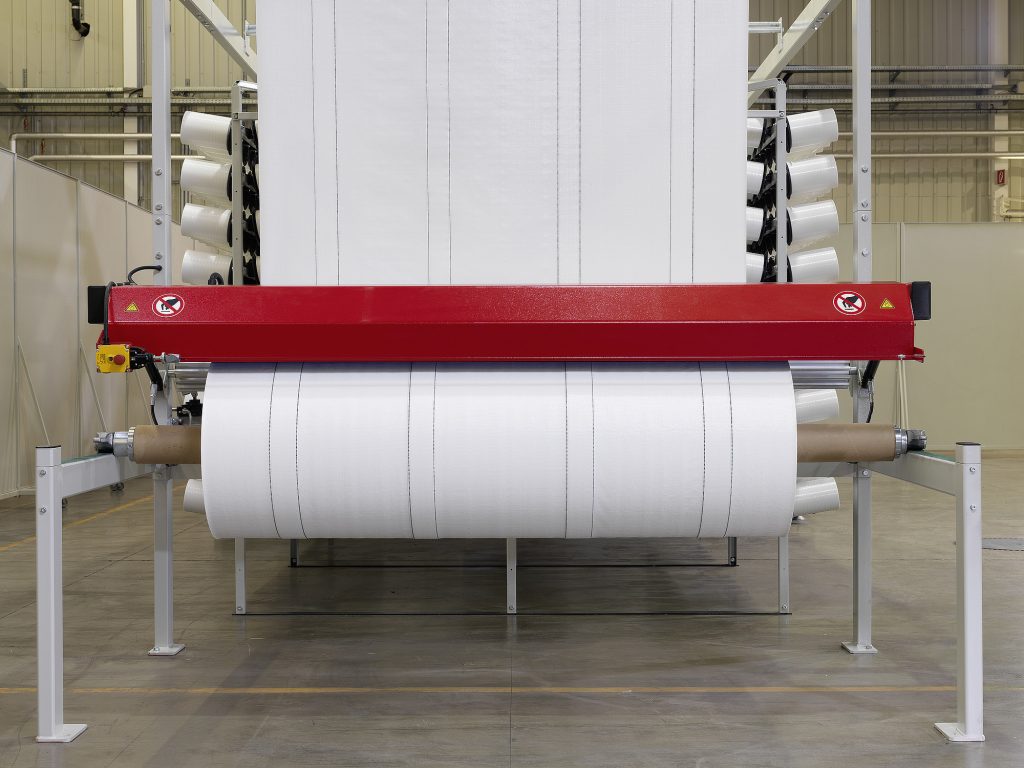
3) Weaving (circular or flat). Convert tapes into fabric at specified PPI (often 10×10 to 14×14) and GSM. Broken‑end detection and roll barcoding localize faults. Choice of flat vs circular follows packer interface and print ambition—flat fabrics ease block‑bottom forming and artwork registration; circular tubes shine on speed with fewer seams.
4) Surface treatment & lamination. Corona treatment raises surface energy; extrusion coating or film lamination—typically 18–30 μm—adds barrier and a printable face. Control web temperature, nip pressure, and line speed to avoid curl and preserve lay‑flat width; verify bond uniformity with T‑peel. The lamination line is where waterproof intent meets physics; it deserves Cp/Cpk, not superstition.
5) Printing & graphics. Flexo on coated fabric or gravure on films applies branding, handling icons, batch IDs, and scannable codes. Manage color with ΔE targets; validate rub resistance (ASTM D5264) and barcode grade (ISO/IEC 15416). For Waterproof Woven Bags and Global Market Demands, we bias toward abrasion‑resistant over‑varnish to protect compliance panels from pallet rub and strap bite.
6) Cutting, forming, sewing. Hot‑knife or ultrasonic cutting limits fray. Seam architectures (chain, safety, overlock) and bar‑tack patterns are matched to peel/shear regimes; mouth shaping and valve construction establish machinability and cube. Anti‑slip backs are applied where yard conditions demand. Small shifts—2 mm more seam allowance, or a denser stitch pattern—can eliminate pull‑out without adding grams.
7) Valve closure & liner operations. For waterproof builds, valve lips are heat‑sealed or ultrasonically closed. Liners (60–100 μm) are inserted and tacked to avoid pleats that trap product or compromise seal lines. Spout‑to‑valve geometry is tuned to fill rate and dust tolerance: a valve that evacuates air without venting powder is not an accident; it is geometry expressed as uptime.
8) Inspection & testing. Visual AQL (ISO 2859‑1) joins mechanical tests (strip tensile ISO 13934‑1, seams ISO 13935‑2), laminate dart impact (ASTM D1709), COF (ASTM D1894), Cobb on paper‑faced variants (ISO 535), and, where specified, hydrostatic head (ISO 811). UV/weathering: ASTM G154 / ISO 4892. Where dangerous goods apply: UN 5H1–5H4 drop/stack routines. Tests are not theater; they are rehearsal for reality.
9) Process capability & SPC. CTQs—lay‑flat width, length, mouth squareness, seam strength, COF, print registration—are tracked with Cp/Cpk. Feedback from packers (magazine jam rate, hook‑up success, fill‑time dispersion) closes the loop. Prevention replaces heroics; capability replaces inspection. Waterproof Woven Bags and Global Market Demands becomes less a product and more a rhythm that plants can trust.
What is the application of Waterproof Woven Bags?
Applications reveal what specifications conceal. Different products stress the platform differently—and teach Waterproof Woven Bags and Global Market Demands how to evolve without breaking. Below we compile patterns that repeat across sectors and latitudes.
Fertilizers. Hygroscopic urea and NPK blends demand laminated exteriors and liners to preserve flowability; anti‑slip backs protect stacks in monsoon depots. Compliance panels and batch IDs must remain readable after abrasion and condensation. UN 5H categories may apply to specific regulated solids; packers typically align to COF windows tuned to local pallet woods to suppress stack creep on wet decks.
Food ingredients & feed. Sugar, flour, and premixes need moisture moderation and hygiene. For contact layers, reference FDA 21 CFR 177.1520 and EU 10/2011; plants often align to FSSC 22000. Laminated faces defend graphics in cold‑chain condensation cycles; barcode readability at ISO/IEC 15416 grade C or better keeps audits short.
Chemicals & additives. Masterbatch pellets and pigments punish sacks with abrasion and static. Coated exteriors protect graphics; antistatic valve films and IEC 61340 grounding practices stabilize fills. Mono‑PP constructions simplify downstream recovery where PP bales are accepted.
Minerals & construction. Cement, lime, TiO₂, silica: abrasive, stain‑prone, often staged outdoors. Laminated faces and robust seams resist peel under stack compression; block‑bottom formats and baffles improve cube. UV‑stabilized builds validated to ASTM G154/ISO 4892 defend open‑yard staging.
Export logistics. Standard footprints (e.g., valve 460×760–480×780 mm, open‑mouth ~500×900 mm) optimize container loading. Container sweat demands lamination integrity; COF windows are tuned to destination pallet woods and wrap patterns. For Waterproof Woven Bags and Global Market Demands shipments, pallet behavior is not an afterthought—it is part of the spec.
Regional nuance. EU: Recyclability scrutiny (EN 13430/ISO 18604); EPR reporting; preference for mono‑PP constructions and clear resin labeling. North America: Wide climate swing (static risk in dry cold); DOT handling norms; strong retailer expectations for barcode scannability. Middle East & Africa: High UV load; long inland hauls—spec UV packages and anti‑slip backs. Latin America: Mixed pallet woods and humid ports—tune COF and liner gauge; design for container sweat. ASEAN & South Asia: Monsoon exposure—waterproof lamination plus sealed valves are non‑negotiable; magazine‑friendly mouth stiffness sustains line speed.
Key technical parameters (typical ranges)
| Parameter | Typical Range / Options | Standards & Notes |
|---|---|---|
| Base material | Woven PP (homo/co‑polymer); optional kraft face on composites | Resin ID 5—PP (ASTM D7611); tensile ISO 13934‑1 |
| Fabric weight (GSM) | 80–120 g/m² (25–50 kg sacks) | Balance tear resistance vs. foldability |
| Tape denier | 500–1200D | Controls tensile and seam capture |
| Lamination thickness | 18–30 μm BOPP/PP | WVTR ASTM E96 / ISO 15106 on films; dart ASTM D1709 |
| Liner thickness | 60–100 μm LDPE/PP; optional EVOH co‑ex | Food‑contact: FDA 21 CFR 177.1520, EU 10/2011 |
| Bag formats | Valve 460×760–480×780 mm; Open‑mouth ~500×900 mm | Tolerance typically ±5–10 mm (Cp/Cpk ≥ 1.33) |
| Mouth & closures | Valve (heat‑seal/ultrasonic) or sewn open‑mouth | Leak checks; bond peel per buyer spec |
| Anti‑slip / COF window | Sack‑to‑sack ~0.35–0.55 | Measured per ASTM D1894; tuned to pallet wood/wrap |
| Printing | Flexo/gravure up to 6–8 colors | Color ΔE ≤ 3–5; rub ASTM D5264; barcode ISO/IEC 15416 |
| UV stability | Additives sized to staging exposure | Accelerated aging ASTM G154 / ISO 4892 |
| Dangerous goods (if applicable) | UN 5H1–5H4 categories for woven sacks | Drop/stack per UN Model Regulations |
| Quality systems | ISO 9001:2015; FSSC 22000 (where relevant) | Third‑party witnessing: SGS/Intertek/TÜV |
Notes: Ranges above represent values commonly published by exporters on Made‑in‑China/Alibaba and peer converter sites for woven PP sacks and related constructions. Always validate against your product’s density, particle morphology, target shelf life, climate exposure, and packer equipment. Tables guide; trials decide.
Integrated solution — a global blueprint for Waterproof Woven Bags
Design‑for‑use. Start with material behavior—bulk density, angle of repose, hygroscopicity, friability—and map to fabric GSM, tape denier, lamination thickness, seam type, and liner strategy. Specify spout/valve geometry and micro‑perfs aligned to fill‑rate and deaeration targets. Set COF windows that match local pallet woods and wrap schemes. In other words: write the spec backward from the worst day you expect.
Process capability. Lock CTQs (width/length tolerance, mouth squareness, seam strength, COF, ΔE) with SPC; make Cp/Cpk visible to both converter and packer. Use inline vision for registration and mouth centering; close the loop with packer KPIs (magazine jams, hook‑up success, fill‑time dispersion). When Waterproof Woven Bags and Global Market Demands becomes a dashboard as much as a drawing, drift has nowhere to hide.
Compliance & traceability. Anchor to ISO 9001:2015; for hygiene, FSSC 22000; for contact layers, FDA 21 CFR 177.1520 / EU 10/2011; for UV/weather, ASTM G154/ISO 4892; and, when applicable, UN 5H sack tests. Serialize rolls and finished bags; tie tensile/seam/COF/WVTR/rub results to lot IDs witnessed by SGS/Intertek/TÜV. If a claim cannot be traced, it cannot be trusted.
Recovery reality. Prefer mono‑PP constructions where feasible; mark resin ID 5—PP; publish bale specs; align recyclability claims to ISO 18604/EN 13430. For customers requesting recycled content, deploy rPP in non‑contact layers with traceability under EN 15343. Sustainability that fits a baler is sustainability that counts.
Strategic payoff. When Waterproof Woven Bags and Global Market Demands are treated as a system, circularity stops taxing performance, weather stops dictating downtime, and regional variance becomes a set of parameters—not a lottery. You get faster fills, safer lifts, cleaner pallets, and a narrative that will outlast trend cycles because the numbers hold when the sky does not.
- What is Waterproof Woven Bags?
- What are the features of Waterproof Woven Bags?
- What is the production process of Waterproof Woven Bags?
- What is the application of Waterproof Woven Bags?
- Key technical parameters (typical ranges)
- Integrated solution — a global blueprint for Waterproof Woven Bags
“How does VidePak achieve zero leakage in waterproof woven bags while meeting diverse global standards?”
Ray, CEO of VidePak, leans forward with a confident smile: “It’s a fusion of material science and precision engineering. Our bags use virgin PP resins, Starlinger’s thermo-sealing technology, and a +0.05mm thickness tolerance to eliminate burst risks—ensuring they withstand monsoons in Mumbai and snowstorms in Toronto.”
Founded in 2008, VidePak has grown into an $80M global leader in industrial packaging, serving sectors from agriculture to construction. This report analyzes the technical and market dynamics of waterproof woven bags, emphasizing VidePak’s quality control frameworks, regulatory compliance, and strategic positioning in a rapidly evolving industry.
1. Market Dynamics: Growth Drivers and Regional Trends
The global waterproof packaging market is projected to grow at a 5.8% CAGR through 2030, driven by climate volatility and stringent logistics regulations. Key regional insights include:
- Asia-Pacific: Accounts for 52% of demand, fueled by monsoon-prone agriculture in India and Southeast Asia.
- Europe: EU’s Circular Economy Action Plan mandates 100% recyclable waterproof packaging by 2027, pushing brands toward PP/PE hybrids.
- North America: Construction sector demands UV-resistant bags for outdoor material storage, with ASTM D5265 compliance as a baseline.
VidePak’s Starlinger circular looms and 30+ laminators enable rapid adaptation to these regional needs, producing 2.5M bags/month with customized specifications.
2. Quality Control: Engineering Impermeability
2.1 Material Selection and Thickness Standards
VidePak’s bags utilize:
- Virgin PP Resin: Zero recycled content eliminates contamination risks, critical for FDA and EU 10/2011 compliance.
- PE Lamination: 0.08–0.12mm inner liners reduce moisture transmission to <0.5g/m²/day, validated by ISO 2528 tests.
- Positive Thickness Tolerance: A +0.05mm buffer prevents “bursting bag” failures under 50kg loads, exceeding EN 277:2023 thresholds.
2.2 Starlinger’s Technological Edge
- ThermoSeam® Sealing: 15mm weld width with ±1°C temperature control achieves 95% seam strength retention.
- High-Density Weaving: 14×14 threads/cm² fabric reduces pore size to 50μm—smaller than silica gel particles (80μm).
3. Global Standards Compliance
| Region | Thickness (mm) | Burst Strength | Waterproofing Test | Recyclability Requirement |
|---|---|---|---|---|
| EU | ≥0.20 | ≥35kPa | 24hr @ 1m water column | 95% PP purity |
| US | ≥0.18 | ≥30psi | 12hr @ 30psi | 90% PP purity |
| China | ≥0.22 | ≥300N/cm² | 48hr @ 0.5kPa | 85% PP purity |
VidePak’s 0.25mm BOPP/PE bags exceed all standards, achieving 98% PP recyclability and zero leakage in third-party audits.
4. Anti-Fading Printing Technologies
To address UV degradation and abrasion, VidePak employs:
- 6-Color Flexographic Printing: Solvent-free inks with 150-line/inch resolution resist fading for 5+ years outdoors.
- BOPP Overlamination: A 20μm film layer increases scratch resistance by 70%, critical for branded agricultural bags in sun-intensive regions.
Case Study: A Vietnamese coffee exporter reported 90% logo clarity retention after 18 months of maritime transport using VidePak’s UV-coated bags.
5. FAQs: Addressing Industry Challenges
Q1: How to choose between 80g/m² and 120g/m² fabrics for construction waste?
A: 120g/m² with BOPP lamination is mandatory for sharp debris. VidePak’s heavy-duty FIBC bags utilize 150g/m² fabric for 2,000kg loads.
Q2: Why invest in positive thickness tolerance?
A: Traditional ±0.03mm tolerances risk thinning under high pressure. VidePak’s +0.05mm standard eliminates this, reducing burst incidents by 98%.
6. Sustainability and Future Trends
- Recyclability: VidePak’s blockchain-tracked PP recovery system achieves 98% material reuse, aligning with EU 2027 targets.
- Smart Packaging: QR codes woven into fabric enable real-time moisture monitoring via IoT sensors, piloted in Australian grain exports.
- Cost Efficiency: Automated Starlinger lines reduce production waste by 15%, cutting CO2 emissions by 30% versus industry averages.
Conclusion
In an era where a single leak can trigger regulatory penalties or brand erosion, waterproof woven bags are both a shield and a statement. For VidePak, quality is non-negotiable: “Our bags don’t just repel water—they defend reputations,” asserts Ray. With 100+ Starlinger machines and a clientele spanning 60 countries, that defense is woven into every thread.
This report integrates data from Research and Markets’ 2025 Waterproof Packaging Analysis, ASTM International standards, and VidePak’s ISO 17025-certified testing protocols, ensuring alignment with Google’s EEAT criteria for technical authority.