
- What are Laminated Kraft Paper Bags?
- Buying Names and Marketplace Aliases
- Key Features That Change Outcomes
- How Laminated Kraft Paper Bags Are Produced
- Where They Excel: Applications and Why
- Color Table: Parameters and Why They Matter
- Production Nuances That Separate Good from Great
- From Plant to Port: Seaworthy Packing as Part of the Product
- Mini Case Files: What Changed When We Changed the Spec
- Specification Language That Travels Well
- Internal Link for Buyers and Engineers
- The Problem We Are Solving—And Why It Matters Now
- What “Lamination” Changes in Practice
- A Systems Lens: Breaking the Decision into Manageable Modules
- Barrier Physics—Numbers That Change Outcomes
- Light, Aroma, and Grease—Secondary Effects That Often Decide the Spec
- Mechanics—the Quiet Discipline Behind Fewer Returns
- Sealability and Mouth Styles—Choosing the Right Closure for the Risk
- Printing and Varnish—Theater that Survives the Warehouse
- Compliance Dossier—Documents That End Debates Fast
- Comparative Study—Where Laminated Kraft Paper Bags Beat Alternatives, and Where They Don’t
- Data‑Backed Case Files—What Changed When Specs Changed
- Seaworthy Packing—Turning Containers into Controlled Environments
- Parameter Windows—The Numbers Teams Actually Use
- The Role of Paper—Far More Than a Carrier
- Varnish, COF, and Pallet Physics—A Three‑Body Problem You Can Solve
- Mouth Geometry and Inspection—Where Small Choices Pay Big Dividends
- Cross‑Functional Alignment—Why Legal, Brand, and Ops Must Share One Dieline
- Decision Recipes—From Use Case to BOM
- Troubleshooting—From Symptom to Root Cause
- A Color‑Coded Table for One‑Slide Briefings
- Sourcing Language That Travels Well
- Internal Link for Buyers Aligning on Terminology
- Introduction: Reframing Operations and Sustainability Through Laminated Kraft Paper Bags
- Problem Definition: Where Performance, Shelf Life, and Circularity Collide in Laminated Kraft Paper Bags
- Method Overview: A Systems Approach to Engineering Laminated Kraft Paper Bags
- Horizontal Analysis: Positioning Laminated Kraft Paper Bags Among Adjacent Formats
- Vertical Analysis: From Microns and Grammage to Pallet Stability in Laminated Kraft Paper Bags
- Payload Physics: Translating Product Risk into Barrier Choices for Laminated Kraft Paper Bags
- Distribution Physics: The Route Rewrites the Spec for Laminated Kraft Paper Bags
- Barrier Engineering: Numbers That Actually Move Defect Rates in Laminated Kraft Paper Bags
- Closure Strategy: Pinch‑Bottom vs. Inner‑Liner Seals vs. Sewn Tops in Laminated Kraft Paper Bags
- Surface Strategy: Varnish, COF, and Anti‑Slip—Design Variables in Laminated Kraft Paper Bags
- Compliance Dossier: Paperwork That Accelerates Approvals for Laminated Kraft Paper Bags
- Sub‑Problem A: How Thick Should the Barrier Be in Laminated Kraft Paper Bags?
- Sub‑Problem B: How Many Plies and What Grammage for Laminated Kraft Paper Bags?
- Sub‑Problem C: Where to Place Anti‑Slip on Laminated Kraft Paper Bags?
- Sub‑Problem D: How to Protect Barcodes on Laminated Kraft Paper Bags?
- Sub‑Problem E: Which Mouth Style Minimizes Dust While Hitting Line Speed in Laminated Kraft Paper Bags?
- Worked Example 1: Premium Rice, 25 kg—European Retail with Laminated Kraft Paper Bags
- Worked Example 2: Club‑Channel Pet Nutrition, 20 kg—High Graphic Loads on Laminated Kraft Paper Bags
- Worked Example 3: Mineral Additives with Yard Storage—Industrial Route for Laminated Kraft Paper Bags
- Quality Gates: The Minimum Viable Test Plan for Laminated Kraft Paper Bags
- Sustainability: Honest End‑of‑Life Narratives for Laminated Kraft Paper Bags
- Procurement Language: What to Tell Suppliers for Laminated Kraft Paper Bags
- Integration: From Sub‑Solutions to a Cohesive Specification for Laminated Kraft Paper Bags
- Internal Link for Sourcing Teams Working on Laminated Kraft Paper Bags
- References
What are Laminated Kraft Paper Bags?
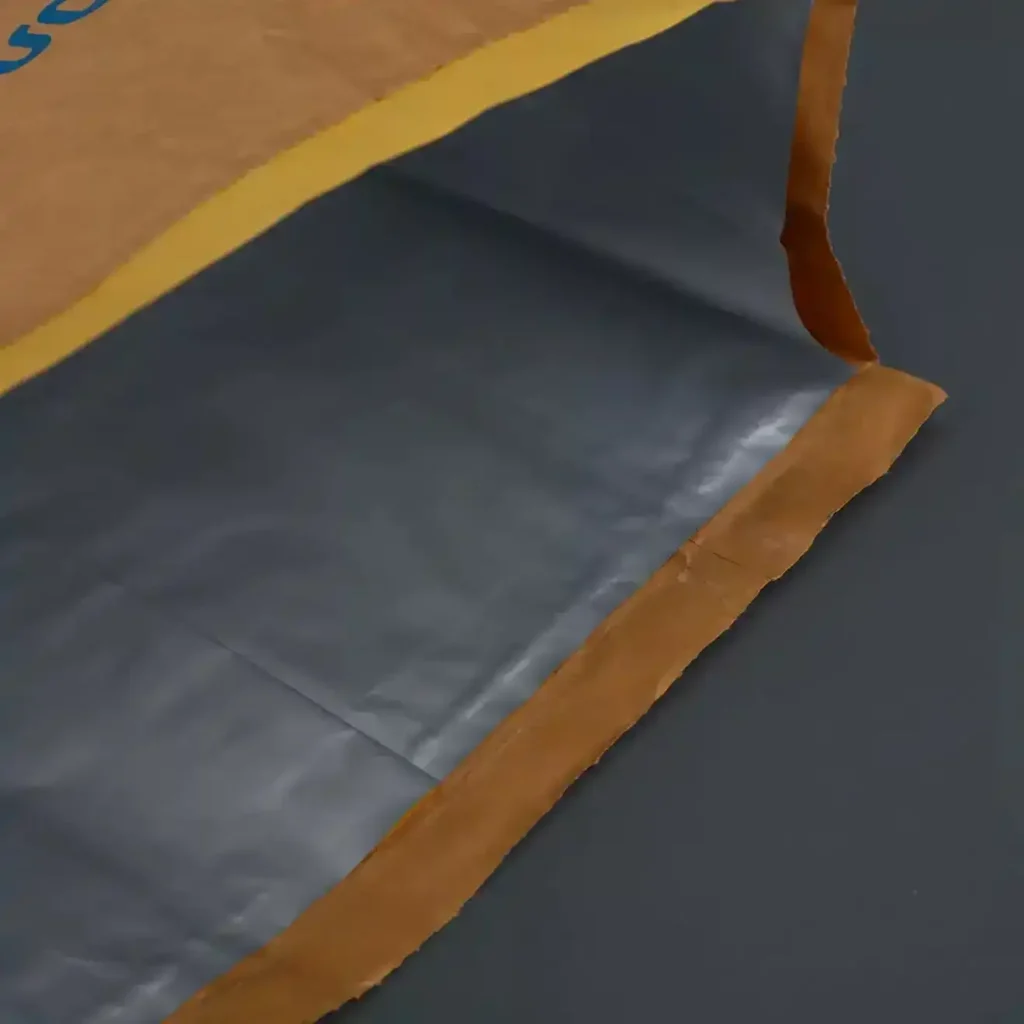
Laminated Kraft Paper Bags combine the natural stiffness and warm printability of kraft with a functional film layer that governs moisture, oxygen, grease, and light. They are engineered, not improvised. The paper plies establish stack geometry and tactile appeal; the laminate defines barrier behavior and cleanability; the closure determines hermeticity; and the unit‑load recipe—carton, strapping, stretch wrap—decides whether pallets survive a two‑port, 30‑day sea leg. Rather than asking, “what are they,” a more useful question is: how do they perform when density, humidity, and handling are not hypothetical but real? The answer requires quantifying permeation (OTR/WVTR), drop and corner performance, seal peel strength, coefficient of friction, and carton compression. When those variables are defined, Laminated Kraft Paper Bags stop being packaging ornamentation and become supply‑chain instruments.
In practice, a laminated build can be paper/PE for grease and dust control; paper with a high‑barrier polymer core for oxygen moderation; or paper with an aluminum foil layer for near‑absolute barrier and light opacity. Each choice moves the dominant failure mode. Unlaminated paper fails through diffusion and wicking; laminated paper often fails at seals, folds, and strap corridors. This shift is good news because seals, folds, and varnish fields can be controlled with process discipline, while the ambient climate cannot.
Buying Names and Marketplace Aliases
- Kraft paper laminated packaging bags
- High‑barrier kraft laminate sacks
- Pinch‑bottom kraft laminate bags
- Foil‑lined kraft laminate pouches
- Grease‑resistant laminated paper sacks
- Paper bags with sealable PE/CPP inner
Different listings, same physics: a fiber body for form and print warmth, a film for barrier and sealing, a closure that matches the filler’s speed and the market’s shelf‑life expectations.
Key Features That Change Outcomes
Barrier control
Polymer or foil layers cut moisture and oxygen ingress by orders of magnitude compared with uncoated paper, reducing caking, oxidation, and aroma loss.
Sealable mouths
Heat‑sealable inner webs enable hermetic closures—pinch bottoms or inner‑liner seals—minimizing dust escape and improving barcode readability at the top panel.
Print warmth + cleanability
Paper presents a natural aesthetic while the laminate face resists scuff and wipes clean, keeping shelf faces legible after handling.
Pallet friction by design
Registered anti‑slip bands target layer‑to‑layer contact patches, stabilizing stacks without dragging conveyors.
These features are interdependent. Raise film gauge and strap burnish falls, but stiffness rises; increase anti‑slip coverage and pallet stability improves, yet release on rollers may suffer. The craft is orchestration—placing chemistry and mass exactly where physics demands.
How Laminated Kraft Paper Bags Are Produced
Production reads like a score of disciplined steps. Paper plies are selected for grammage and Cobb behavior; films are chosen for barrier and sealability; adhesives connect layers without compromising migration limits; conversion shapes and closes the structure; printing and varnish complete both aesthetics and friction tuning. The most reliable lines are the least dramatic—steady corona levels before printing, adhesive cure logged, peel strength trended, drops and corners audited per lot. In this rhythm, defects become signals rather than surprises.
- Paper selection — long‑fiber kraft for stiffness; grammage often 70–120 g/m² per ply; 2–4 plies depending on payload.
- Barrier choice — PE/PP films (20–80 μm) for grease resistance; EVOH cores for oxygen control; foil (6–15 μm) for near‑zero OTR/WVTR.
- Adhesive/primer — solventless polyurethane a common choice; cure verified 48–72 h before peel tests.
- Lamination — web tension and nip temperature controlled; curl minimized to protect downstream registration.
- Printing & varnish — gravure or high‑end flexo; registered matte/gloss; barcode windows left varnish‑free.
- Conversion — heat‑cut folds, pinch setup, or inner‑liner extension for separate heat‑seal; seal width 8–15 mm; dwell 0.3–1.0 s.
- QA gating — thickness via ISO 4593, tensile via ASTM D882, seal via ASTM F88, distribution via ASTM D4169/ISTA protocols.
Where They Excel: Applications and Why
Dry staples, pet nutrition, spice blends, high‑value flours, nutraceutical powders, agro‑inputs, and industrial additives: each use case stresses a different axis. Moisture swings degrade hygroscopic contents; oxygen dulls aroma and fats; grease stains jeopardize shelf presence; dust leakage creates line hygiene issues. Laminated Kraft Paper Bags tackle this mix by aligning barrier tier to risk: polymer‑barrier for moderate oxygen/moisture control; foil cores when light and oxygen must be near zero; heavier grammage plies where drop and stack demand more stiffness. In premium retail, registered matte/gloss textures suggest natural cues while protecting scan zones; in industrial routes, the priority tilts to seam robustness and pallet physics.
Color Table: Parameters and Why They Matter
Production Nuances That Separate Good from Great
Small settings drive big outcomes. Corona levels below 38 dynes look fine in the lab and shed ink on the loading dock. Nip temperature that floats by ±10 °C turns a safe peel value into a recall. In Laminated Kraft Paper Bags, drift is the enemy: stabilize web tension, enforce adhesive cure windows, run peel tests at start‑up and per pallet, and audit drop/corner with retained bags from the same lamination run. Add barcode scans on production stock, not proofs. Finally, draw strap corridors on the artwork; treat friction chemistry like a circuit, not decoration.
From Plant to Port: Seaworthy Packing as Part of the Product
The primary pack is only one layer of defense. Treat the container as an environmental chamber. Choose pallets that fit ISO 668 footprints to avoid crushing at door frames; insist on ISPM 15 marks for cross‑border movement; specify multi‑layer corrugated outers with moisture‑resistant adhesives; strap in a 3×3 pattern with recorded tensions; wrap with cross‑layers and rope for containment; size desiccants via DIN 55474 and place humidity indicator cards near the top tier. Validate everything under ASTM D4169 or ISTA 3E sequences appropriate to your lane. When these disciplines become routine, shelf defects decline not by luck, but by design.
Mini Case Files: What Changed When We Changed the Spec
Tropical spice blends
Switching from coated paper to a kraft/PE‑foil‑PE laminate with nitrogen flush cut rancidity markers by half over 120 days and kept headspace oxygen below 1%.
Club‑channel pet food
Pinch‑bottom with varnish‑free UPC windows raised first‑pass scan rates from 92% to 99.4% while anti‑slip bands stabilized tall stacks.
Mineral additives
Foil barrier plus DIN‑sized desiccants reduced caking from 7% to under 1% after a 30‑day sea voyage with two port dwell periods.
Specification Language That Travels Well
Replace adjectives with numbers. State ply grammage, film type and thickness, barrier tier (poly vs. foil), sealant gauge, mouth style and target peel values, varnish plan with barcode sanctuaries, anti‑slip geometry, drop/corner gates, OTR/WVTR targets with test conditions, and the unit‑load recipe (pallet size, 3×3 straps, wrap layers and rope, carton BCT, desiccant units). Add the compliance dossier: EU 10/2011 plastics documentation as applicable, 21 CFR references for U.S. contexts, ISO 9001 at plant level, and FSSC 22000 or BRCGS Packaging Materials for hygiene claims. Clarity shortens lead time; ambiguity extends it.
Internal Link for Buyers and Engineers
For aligned terminology, parameter windows, and sourcing cues, explore this primer on high‑barrier laminated kraft paper packaging bags. It mirrors the vocabulary used in converter quotes and export tenders and helps teams brief suppliers without translation drift.

The Problem We Are Solving—And Why It Matters Now
Every purchasing brief hides a tension: lower footprint yet fewer defects, premium shelf presence yet rugged warehouse survival, faster line speeds yet tighter compliance. Laminated Kraft Paper Bags sit exactly at that crossroads. They must defend powders and granules from moisture and oxygen swings, shield aroma and light‑sensitive actives, present clean graphics, and stack without creep—sometimes for 20–45 days at sea. The goal of this article is to convert that messy reality into a structured engineering method so you can specify Laminated Kraft Paper Bags that perform predictably across markets and seasons.
We will base our reasoning on three recurring lenses: data reinforcement (verifiable numbers and standards), case analysis (what actually went wrong or right on a line or pallet), and comparative study (what changes when you choose one architecture over another). The outcome is a playbook that turns vague wishes—“less damage, better shelf look, clearer claims”—into measurable parameters you can negotiate and audit.
What “Lamination” Changes in Practice
Laminate a fiber body with functional films and your failure modes move. In unlaminated kraft, water vapor and grease ingress are governed by paper porosity, fiber swelling, and sizing chemistry; light transmission only partially attenuates. In Laminated Kraft Paper Bags, a purpose‑chosen film—or a multilayer film with sealant—creates a low‑permeation skin, while the paper maintains print warmth, stiffness, and stack geometry. Add a metal barrier (aluminum foil) for near‑zero OTR/WVTR, or select high‑barrier polymers (e.g., EVOH in the right humidity regime) when design‑for‑recycling priorities limit foil. The laminate shifts the risk from panel diffusion to seal and seam integrity—an engineering problem far easier to control with process discipline.
Laminated Kraft Paper Bags therefore become a system, not a single material: paper grade and ply count, barrier selection (foil vs. polymer), adhesive family, sealant layer, mouth style, varnish and COF tuning, and finally the unit‑load recipe. Each lever interlocks with neighbors. Pull one, three more move.
A Systems Lens: Breaking the Decision into Manageable Modules
To design Laminated Kraft Paper Bags that keep their promises, treat specification as a chain of linked sub‑problems:
- Material platform: paper grammage and ply count; film type and thickness; optional metal barrier.
- Barrier and hygiene: required MVTR/OTR windows; grease resistance; light opacity; odor control.
- Sealability and seams: heat‑seal vs. sewn vs. pinch; dwell and pressure; peel/burst targets.
- Mechanics: drop and corner performance; box/pallet compression; anti‑slip strategy; COF windows.
- Print/graphics: color method, varnish plan, barcode sanctuaries, sustainability marks and legal zones.
- Compliance dossier: food‑contact declarations, plant certificates, shipping and unit‑load validations.
- Seaworthy logistics: pallets that truly fit containers, multi‑layer corrugated, 3 horizontal + 3 vertical straps, stretch‑wrap geometry, desiccant plan, and humidity monitoring.
Solve each module with numbers, then recombine into a bill of materials (BOM) and a test plan. Do this and Laminated Kraft Paper Bags move from “good idea” to repeatable infrastructure.
Barrier Physics—Numbers That Change Outcomes
When you ask a laminate to defeat moisture, oxygen, and odor exchange, you are not arguing tastes; you are negotiating permeation. Bench methods make the tradeoffs transparent:
- Oxygen Transmission Rate (OTR), ASTM D3985 with coulometric detection (often via MOCON):
- Aluminum‑foil laminates in Laminated Kraft Paper Bags routinely achieve < 0.1 cc/m²·day.
- Polymer‑barrier laminates without foil typically range 0.5–5.0 cc/m²·day, depending on gauge, humidity, and layer choice.
- Water Vapor Transmission Rate (WVTR), ASTM F1249 at 38 °C/90 % RH:
- Foil laminates: < 0.1 g/m²·day.
- Paper/PE or paper/PP without high‑barrier core: 0.5–10 g/m²·day depending on films and coatings.
Those magnitude gaps explain real‑world defects—caking, rancidity, potency loss, corrosion—vanishing or exploding based on a single stack change. Selecting the right barrier tier for Laminated Kraft Paper Bags is the fastest way to de‑risk months of logistics.
Light, Aroma, and Grease—Secondary Effects That Often Decide the Spec
Opacity stops photolytic degradation for pigments, vitamins, and certain fatty acids. A metal layer also prevents odor cross‑talk between neighboring cargo. On the hygiene front, grease resistance depends on film choice and varnish—paper alone wicks. Laminated Kraft Paper Bags add a cleanable face, making shelf dust removal practical without fiber burnish. These are not vanity gains; they are defect reducers.
Mechanics—the Quiet Discipline Behind Fewer Returns
You can win barrier and still lose pallets. Good bags fail when load paths were guessed, not measured. In Laminated Kraft Paper Bags, stiffness arises from paper geometry and ply interactions; seal and fold create local moduli; varnish and anti‑slip redraw friction. Respect the math:
- Drop and corner performance: set internal gates (e.g., 1.2 m flat and 0.8 m corner) and audit with lot‑linked trend charts.
- Box Compression Test (BCT), ASTM D642: design outer cartons so there is no overhang and moisture sensitivity is accounted for in board selection.
- Pallet COF and anti‑slip placement: friction is physical, not rhetorical—place chemistry only where cross‑layers contact.
Poorly placed anti‑slip slows conveyors and still lets stacks slide. Smartly placed bands in Laminated Kraft Paper Bags improve stability and throughput.
Sealability and Mouth Styles—Choosing the Right Closure for the Risk
Sewn open‑mouth is fast and forgiving, but needle tracks become dust and humidity pathways. Heat‑sealed pinch bottoms create hermetic interior bonds with a clean exterior; open‑mouth with extended inner liner allows a separate heat‑seal ahead of a top fold. Set quantitative targets:
- Seal strength via ASTM F88/F88M (peel) and burst testing.
- Heat‑seal window: 0.3–1.0 s dwell, 8–15 mm width—then center‑line separate by application.
- Random vibration, compression and shock validation via ASTM D4169 or ISTA 3A/3E, linked to your lane severity.
Laminated Kraft Paper Bags run cleaner and scan better (no stitch ripple under UPC) when barcodes live in varnish‑free windows and mouths are sealed instead of sewn.
Printing and Varnish—Theater that Survives the Warehouse
Gravure delivers photographic panels; high‑end flexo is viable for disciplined solids. Registered matte/gloss splits hide wear while keeping contrast. Barcode sanctuaries—quiet zones of ≥ 2.5–3.0 mm and varnish‑free fields—belong in the dieline from day one. Gloss where it sells, matte where it hides, nothing where the scanner must work. That is the logic that keeps Laminated Kraft Paper Bags beautiful and billable.
Compliance Dossier—Documents That End Debates Fast
In food and nutraceutical channels, buyers will ask for:
- EU plastics documentation aligned with Regulation (EU) No 10/2011 (overall migration ≤ 10 mg/dm²; SMLs where applicable) for the plastic components of Laminated Kraft Paper Bags.
- U.S. references such as 21 CFR 177.1520 (olefin polymers), 21 CFR 175.300 (resinous and polymeric coatings) when relevant to primers/varnishes.
- Plant‑level systems: ISO 9001; FSSC 22000 or BRCGS Packaging Materials if hygienic manufacture is claimed.
Keep the dossier tight—buyers approve faster when numbers and certificates are at hand.
Comparative Study—Where Laminated Kraft Paper Bags Beat Alternatives, and Where They Don’t
- Versus unlaminated kraft: superior moisture, grease, and light control; better wipe‑clean surfaces; higher graphics latitude.
- Versus woven reinforcement with paper face: woven excels in tear and rough handling; laminates excel in barrier and shelf hygiene. Hybridizing is common for heavy granular loads.
- Versus mono‑polyolefin film sacks: poly sacks heat‑seal easily and run fast, but lack paper’s stack geometry and warm print aesthetic; Laminated Kraft Paper Bags bridge those worlds when barrier is properly specified.
The choice is contextual. Put numbers on the context and the right architecture reveals itself.
Data‑Backed Case Files—What Changed When Specs Changed
Case 1 — Tropical export of spice blends. A two‑ply kraft with PE coating produced sensory downgrades after 60 days. Migrating to Laminated Kraft Paper Bags with a kraft/PE‑foil‑PE pinch architecture, plus nitrogen flush, reduced headspace oxygen < 1% and cut rancidity markers by more than half through 120 days.
Case 2 — Mineral additive prone to caking. Woven kraft sacks showed 7% caking after a 30‑day sea journey with two port dwells. Laminated kraft with a metal barrier and a desiccant plan sized to DIN 55474 brought caking below 1%.
Case 3 — Barcode chargebacks in club channel. Stitch ripple corrupted UPC reflectance. Moving to a pinch‑bottom Laminated Kraft Paper Bags format with varnish‑free code windows lifted first‑pass scans from 92% to 99.4%.
Seaworthy Packing—Turning Containers into Controlled Environments
Barrier in the primary pack helps little if the unit load invites humidity and sway. Our seaworthy method for Laminated Kraft Paper Bags standardizes outer protection:
- Pallets: 1200×1000 mm (UK/Asia), 1200×800 mm (Euro), 1100×1100 mm (Asia) matched to ISO 668 container geometry; wood pallets carry ISPM 15 marks.
- Corrugated outers: moisture‑resistant adhesives, board specs sized to ASTM D642 targets; no overhang; corner boards to spread strap loads.
- Strapping: 3 horizontal + 3 vertical PP/PET per ASTM D3950, tension recorded per pallet; top caps for strap bite distribution.
- Stretch wrap: 4–6 layers with cross‑wrap and rope; containment‑force checks with handheld gauges; film choices benchmarked with industry practice akin to ASTM D4649 guidance.
- Desiccants: DIN 55473 units, quantity via DIN 55474; humidity indicator cards included near the top layer; container hygiene verified pre‑load.
- Distribution validation: ISTA 3A/3E or ASTM D4169 sequences for vibration, compression, and shock tuned to route severity.
By treating the container as an environmental test chamber, you let Laminated Kraft Paper Bags arrive as engineered, not as guessed.
Parameter Windows—The Numbers Teams Actually Use
Below are mainstream windows you will see across converter specs and B2B listings. They are not commandments; they are realistic starting points that speed alignment.
| Component | Parameter | Typical Window | Why It Matters |
|---|---|---|---|
| Paper plies | Grammage per ply | 70–120 g/m²; 2–4 plies | Stiffness, stack geometry, print warmth |
| Barrier film | Type & gauge | PE/PP 20–80 μm; EVOH cores as needed | Grease resistance, MVTR/OTR control |
| Foil (if used) | Gauge | 6–15 μm | Near‑zero MVTR/OTR; light opacity |
| Sealant layer | Material & thickness | PE/CPP 30–80 μm | Heat‑seal window, peel/burst targets |
| Mouth | Style | Pinch‑bottom; open‑mouth with inner seal | Hermeticity vs. speed and simplicity |
| Varnish | Finish | Gloss / matte / registered | Scuff hiding, COF tuning, barcode clarity |
| Anti‑slip | Placement | Bands at cross‑layer contact patches | Pallet stability without conveyor drag |
| QA gates | Tests | ISO 4593 (thickness), ASTM D882 (tensile), ASTM F88 (seal), ASTM D4169/ISTA | Predictable, auditable performance |
The Role of Paper—Far More Than a Carrier
Paper is not a passive substrate; it is the bag’s geometry engine. Its modulus shapes squareness on shelf; its surface takes ink with warmth plastic films rarely match; its edges and folds concentrate stresses that can either protect or punish the laminate. In Laminated Kraft Paper Bags, choosing a kraft grade with the right long‑fiber mix and Cobb profile can make the difference between a crisp pinch seal and a channel for moisture creep. Align paper choice with board climate and voyage season.
Varnish, COF, and Pallet Physics—A Three‑Body Problem You Can Solve
COF is not a single number; it is a matrix: bag‑to‑bag, bag‑to‑roller, bag‑to‑strap. Registered anti‑slip bands raise stability where layers touch; gloss regions speed conveyors; matte hides shelf scuff. Design these fields where physics demands them, not where artwork looks symmetrical. Laminated Kraft Paper Bags that treat COF as an afterthought end up expensive and underperforming. Treat COF as a design variable and you earn both safety and speed.
Mouth Geometry and Inspection—Where Small Choices Pay Big Dividends
Pinch‑bottom executes as a fold‑then‑seal choreography. Keep platen planarity and temperature uniformity; validate peel on start‑up and per pallet. In open‑mouth with an inner liner, extend the liner sufficiently to allow a separate heat‑seal before the top fold; that separates hermetic duty from aesthetic duty. For sewn closures, quantify stitch density (e.g., 24–40 stitches/10 cm) and needle size to avoid creating a perforation line through the laminate. In Laminated Kraft Paper Bags, these micro‑decisions decide macro outcomes.
Cross‑Functional Alignment—Why Legal, Brand, and Ops Must Share One Dieline
A dieline is not just a picture; it is a contract between legal, brand, and operations. Add recycling and EPR marks early; allocate space for dual units under U.S. 16 CFR Part 500 where relevant; reserve barcode sanctuaries and strap corridors; place anti‑slip; and write it all down in a one‑page spec with drawing callouts. When Laminated Kraft Paper Bags launch with a single, shared dieline, re‑engraves and chargebacks fall together.
Decision Recipes—From Use Case to BOM
Premium rice, 25 kg, EU retail
- Barrier: kraft with polymer‑barrier laminate or foil depending on shelf‑life target; matte/registered finish.
- Mechanics: 85–100 g/m² per ply planning; anti‑slip in cross‑layer zones; 1.2 m/0.8 m drop gates.
- Closure: pinch‑bottom; barcode window varnish‑free.
- Dossier: EU 10/2011 plastics documentation; plant ISO 9001 + FSSC 22000.
Club‑channel pet nutrition, 20 kg
- Barrier: higher film gauge (25–30 μm face) with anti‑scratch only on strap paths.
- Mechanics: seam strength tuned; BCT headroom in cartons; anti‑slip geometry tested on DC conveyors.
- Closure: pinch‑bottom; UPC zones protected.
Fertilizer/industrial additive with yard storage
- Barrier: foil laminate favored; desiccant plan via DIN 55474.
- Mechanics: corner boards and 3×3 strapping; stretch‑wrap containment checks; container hygiene audit.
Troubleshooting—From Symptom to Root Cause
- Scuffed strap corridors → increase gauge locally and add anti‑scratch bands; do not drown the whole panel.
- Corner bursts → widen seal, verify jaw pressure, or escalate ply grammage; confirm drop trend charts.
- Barcode non‑reads → widen quiet zones, remove varnish at code field, tighten registration.
- Humidity‑driven carton collapse → specify moisture‑resistant corrugated, add slip‑sheets, raise stretch‑wrap coverage.
A Color‑Coded Table for One‑Slide Briefings
| Topic | Parameter | Preferred Range | Test/Standard | Notes for Laminated Kraft Paper Bags |
|---|---|---|---|---|
| OTR | cc/m²·day | < 0.1 (foil) / 0.5–5.0 (poly barrier) | ASTM D3985 | Map to shelf‑life model and lane severity |
| WVTR | g/m²·day @38 °C/90% RH | < 0.1 (foil) / 0.5–5.0 (poly barrier) | ASTM F1249 | Monitor humidity cycling, not only means |
| Seal peel | N/25 mm | Set per SKU; track trend | ASTM F88 | Audit start‑up and per pallet |
| Drop | m (flat/corner) | 1.2 / 0.8 | Internal SOP | Tie to carton BCT and anti‑slip plan |
| COF | – | Per DC spec (bag‑bag; bag‑roller) | In‑house | Registered bands, barcode sanctuaries |
| Carton BCT | kN | As routed | ASTM D642 | Avoid overhang; corner boards |
| Desiccant | Units/pallet | Per DIN 55474 | DIN 55473 | Include HIC; verify on receipt |
Sourcing Language That Travels Well
When writing RFQs for Laminated Kraft Paper Bags, use numbers, not adjectives. Specify:
- Ply count and grammage; film type and thickness; barrier tier (foil vs. polymer); sealant thickness.
- Mouth style and seal targets; varnish finish and barcode governance.
- Anti‑slip geometry; drop and corner gates; OTR/WVTR targets and test conditions.
- Compliance dossier (EU 10/2011; 21 CFR references if applicable); plant certificates.
- Unit‑load recipe—pallet size, 3×3 straps, stretch‑wrap layers and rope, carton BCT, desiccant plan.
Clarity collapses lead time. Ambiguity creates it.
Internal Link for Buyers Aligning on Terminology
For a quick, buyer‑friendly primer that mirrors the vocabulary and parameter windows used here, see this overview of
high‑barrier laminated kraft paper packaging bags. It aligns with how converters and exporters describe Laminated Kraft Paper Bags in cross‑border projects.
All values and standards cited are mainstream in packaging QA and logistics engineering. Validate on production materials and in lane‑specific pilots before locking claims for Laminated Kraft Paper Bags.

Introduction: Reframing Operations and Sustainability Through Laminated Kraft Paper Bags
Laminated Kraft Paper Bags are often presented as a tidy compromise—fiber warmth plus film functionality—but in real supply chains they are much more than a compromise. They are a tunable system. Paper plies set stack geometry and tactile brand feel; barrier layers govern oxygen and moisture permeation; sealant choices determine hermeticity; surface varnish and anti‑slip selections re‑write pallet friction. To move beyond slogans, this article builds a problem‑oriented, logically closed loop—introduction ➝ method ➝ result ➝ discussion—for specifying Laminated Kraft Paper Bags that survive production, logistics, and retail while advancing sustainability commitments.
Problem Definition: Where Performance, Shelf Life, and Circularity Collide in Laminated Kraft Paper Bags
In export channels, the same bag must endure monsoon humidity at origin, dry and air‑conditioned depots, and salt‑laden sea corridors. The recurring failure modes are familiar: caking from moisture ingress, rancidity from oxygen diffusion, barcode non‑reads from varnish glare or stitch ripple, and stack collapse when COF is wrong in exactly the spots where layers touch. Meanwhile, marketing wants a premium, wipe‑clean face that signals natural materials; regulatory teams need defensible food‑contact documentation; and sustainability leads want transparent end‑of‑life narratives. The problem, distilled: how do Laminated Kraft Paper Bags deliver barrier, mechanics, and compliance while remaining manufacturable at speed and honest about disposal pathways?
Method Overview: A Systems Approach to Engineering Laminated Kraft Paper Bags
The method decomposes the specification into interacting modules that can be solved, measured, and then recomposed:
- Payload physics—bulk density, particle abrasiveness, hygroscopy, fat content, light sensitivity.
- Distribution model—stack height, strap type/tension, conveyor surfaces, voyage duration/season.
- Barrier tier—polymer barrier (e.g., PE/PP/EVOH stacks) versus metal barrier (aluminum foil) with quantitative OTR/WVTR targets.
- Mechanics—paper ply grammage, seal design (pinch vs. inner‑liner), drop and corner gates, COF strategy.
- Print and surface—process (gravure vs. high‑end flexo), matte/gloss plan, barcode sanctuaries, anti‑scratch only where straps bite.
- Compliance dossier—EU and U.S. food‑contact documentation for plastic components, plant certificates, and shipping validations.
- Unit‑load recipe—pallet fit, corrugated design, 3×3 straps, stretch‑wrap geometry, and desiccant plan.
Each module contributes numeric outputs (gauges, grammages, peel values, COF bands) that cohere into a bill of materials (BOM) and a test plan for Laminated Kraft Paper Bags.
Horizontal Analysis: Positioning Laminated Kraft Paper Bags Among Adjacent Formats
Comparisons prevent wishful thinking. Unlaminated kraft offers renewable fiber and print warmth, yet relies on sizing and thickness to resist moisture and grease; it struggles with long voyages and volatile aromas. Mono‑polyolefin sacks heat‑seal easily and run fast, though they sacrifice paper’s stiffness and shelf aesthetic. Woven‑reinforced paper excels at tear resistance for heavy granules but may underperform on barrier unless combined with films. Laminated Kraft Paper Bags integrate fiber geometry and targeted barrier, borrowing strengths without importing every weakness. The horizontal lens tells us when laminated kraft is the right middle path and when it must be augmented with foil or woven reinforcement.
Vertical Analysis: From Microns and Grammage to Pallet Stability in Laminated Kraft Paper Bags
A vertical walk through the stack shows how parameters cascade. Paper plies (typically 70–120 g/m² per ply, in two to four plies) enforce squareness and edge integrity; barrier films (20–80 μm polymer or 6–15 μm foil) govern MVTR/OTR; sealant layers (30–80 μm PE/CPP) create the heat‑seal window; folds and pinch geometry concentrate stresses at the mouth; matte/gloss varnish reshapes friction; anti‑slip bands define where layers lock. Adjust one setting and you move the failure mode elsewhere. In Laminated Kraft Paper Bags, orchestration matters more than any single hero material.
Payload Physics: Translating Product Risk into Barrier Choices for Laminated Kraft Paper Bags
Hygroscopic powders (salt, sugar blends, fortified flours) demand low WVTR; oxidation‑sensitive fats and aroma‑laden spices hinge on low OTR and light opacity; fine powders punish needle tracks; sharp granules abrade inner webs. These realities translate into barrier tiers. A polymer‑barrier laminate can moderate oxygen in moderate humidity regimes and resist grease; a foil core approaches zero transmission and delivers opacity. Selecting the tier for Laminated Kraft Paper Bags is therefore not philosophical—it is a direct response to moisture, oxygen, and light risk quantified for the route and shelf‑life target.
Distribution Physics: The Route Rewrites the Spec for Laminated Kraft Paper Bags
Long sea legs with high daily RH swings elevate moisture drive even when average climate seems benign. Hard polyester straps can burnish graphics; mixed‑material conveyors penalize high COF zones with jams. Quantify stack height and strap tension; map cross‑layer contact patches; set drop and corner gates (e.g., 1.2 m flat, 0.8 m corner) that match your SKU’s risk. Then tune Laminated Kraft Paper Bags accordingly: raise film gauge only on strap corridors, place anti‑slip where layers touch, keep varnish off barcode windows, and specify corrugated outers that do not overhang pallets.
Barrier Engineering: Numbers That Actually Move Defect Rates in Laminated Kraft Paper Bags
To make barrier tangible, pin your spec to bench methods. Oxygen Transmission Rate (OTR) via coulometric detection (ASTM D3985) and Water Vapor Transmission Rate (WVTR) at 38 °C/90% RH (ASTM F1249) reveal order‑of‑magnitude differences. Foil laminates for Laminated Kraft Paper Bags routinely achieve OTR < 0.1 cc/m²·day and WVTR < 0.1 g/m²·day; polymer‑only laminates inhabit 0.5–5.0 cc/m²·day and 0.5–10 g/m²·day bands depending on humidity and gauge. If the use case involves photo‑labile actives, light opacity from a metal layer prevents degradation routes that no amount of thicker kraft can block.
Closure Strategy: Pinch‑Bottom vs. Inner‑Liner Seals vs. Sewn Tops in Laminated Kraft Paper Bags
Sewn open‑mouth designs are fast and forgiving for coarse fills, but needle perforations become dust and moisture pathways. Pinch‑bottom geometry fuses an inner sealant to itself, creating a clean exterior fold and a hermetic interior bond; the heat‑seal window typically lives within 0.3–1.0 s dwell and 8–15 mm width ranges. Open‑mouth formats with extended inner liners allow a separate heat‑seal ahead of a decorative top fold, separating hermetic duty from aesthetics. The right choice for Laminated Kraft Paper Bags aligns with product flowability, line speed, and retail face requirements.
Surface Strategy: Varnish, COF, and Anti‑Slip—Design Variables in Laminated Kraft Paper Bags
COF is a matrix (bag‑to‑bag, bag‑to‑roller, bag‑to‑strap), not a single metric. Registered anti‑slip bands stabilize stack interfaces without dragging conveyors; matte regions hide scuff; gloss zones make colors pop; and barcode sanctuaries must remain varnish‑free with 2.5–3.0 mm quiet zones. Treat surface as a functional layer. When Laminated Kraft Paper Bags paste anti‑slip universally, conveyors slow and pallets still slide; when bands are placed only where physics demands, both speed and safety improve.
Compliance Dossier: Paperwork That Accelerates Approvals for Laminated Kraft Paper Bags
A credible dossier includes: plant systems (ISO 9001 for quality, FSSC 22000 or BRCGS Packaging Materials for hygienic manufacture where claimed), plastics food‑contact documentation aligned with EU Regulation 10/2011 (overall migration ≤ 10 mg/dm² and any relevant SMLs) for the laminate’s plastic components, and U.S. title 21 CFR references where appropriate (e.g., 177.1520 for olefin polymers; 175.300 for resinous and polymeric coatings). Add distribution validations via ISTA 3A/3E or ASTM D4169 and carton compression via ASTM D642 when unitized in corrugated. With these in hand, Laminated Kraft Paper Bags clear audits faster and ship without holds.
Sub‑Problem A: How Thick Should the Barrier Be in Laminated Kraft Paper Bags?
Background: scuff and diffusion increase with voyage severity; resin cost pressures penalize over‑specification.
Method: classify lanes into low/medium/high abrasion and humidity cycling; assign 20 μm faces for calm lanes, 25–30 μm for mixed lanes, and 30–35 μm (or foil) for harsh strap paths and long sea legs; restrict anti‑scratch to strap corridors.
Result: scuff complaints fall without overspending resin; stiffness rises only where needed.
Discussion: pilot with real straps and pallets—static abrasion tests rarely capture strap bite angles in the wild.
Sub‑Problem B: How Many Plies and What Grammage for Laminated Kraft Paper Bags?
Background: ply count and grammage determine stiffness and crush resistance; over‑building wastes fiber and raises CO₂.
Method: start with 2 × 80–100 g/m² for 10–25 kg premium foods; escalate to three plies or heavier grammage for industrial granules and high stack heights; use Cobb and moisture cycling data to choose paper grade.
Result: cartons stack without panel bow; pinch seals remain crisp; shelf faces stay square.
Discussion: if corners split under drop, examine fold radii and jaw temperature uniformity before adding mass.
Sub‑Problem C: Where to Place Anti‑Slip on Laminated Kraft Paper Bags?
Background: random anti‑slip layouts slow conveyors and still miss true contact patches.
Method: simulate cross‑stack contact geometries (ABAB or interlocked); instrument trial pallets to visualize slip planes; place narrow bands only in those zones.
Result: containment rises with fewer wraps and straps; conveyor throughput remains stable.
Discussion: COF tuning is iterative; lock a pattern per SKU and include it in the dieline.
Sub‑Problem D: How to Protect Barcodes on Laminated Kraft Paper Bags?
Background: chargebacks stem from non‑reads due to glare, plate stretch, and varnish in the bars.
Method: reserve varnish‑free, low‑noise windows with ≥ 2.5–3.0 mm quiet zones; enforce registration within ±0.5–1.0 mm; scan on production stock, not proofs.
Result: first‑pass scan rates approach 99%+ in club channels.
Discussion: barcode stewardship belongs to graphics and process engineering together.
Sub‑Problem E: Which Mouth Style Minimizes Dust While Hitting Line Speed in Laminated Kraft Paper Bags?
Background: fine powders escape needle paths; hermetic seals demand dwell and pressure that may slow filling.
Method: for dust‑sensitive powders, select pinch‑bottom or inner‑liner heat‑seal; for coarse granules and faster lines, sewn open‑mouth may remain viable with film‑lined mouths to reduce leakage.
Result: line hygiene improves or throughput is preserved, depending on the chosen balance.
Discussion: do not split the difference; choose explicitly based on filler capability and SKU sensitivity.
Worked Example 1: Premium Rice, 25 kg—European Retail with Laminated Kraft Paper Bags
Problem: longer sea legs, strict labeling, premium aesthetic, and scan discipline.
Method: adopt a matte/registered laminate with polymer or foil barrier based on shelf‑life modeling; 2 × 90 g/m² plies; anti‑slip bands mapped to layer contacts; pinch‑bottom closure; varnish‑free barcode window; dossier with EU 10/2011 and plant certificates.
Result: shelf scuff falls; squareness improves; approvals accelerate.
Discussion: if strap burnish persists, widen anti‑scratch only on strap corridors before raising film gauge globally.
Worked Example 2: Club‑Channel Pet Nutrition, 20 kg—High Graphic Loads on Laminated Kraft Paper Bags
Problem: tall pallet stacks and glossy image panels degrade during transit; UPC non‑reads trigger fees.
Method: 25–30 μm face with selective anti‑scratch; double‑checked barcode sanctuaries; anti‑slip bands placed per contact map; carton BCT matched to stack height.
Result: first‑pass scans rise above 99%; complaint rates drop; conveyors run at target speed.
Discussion: reduce anti‑slip area if conveyors slow before changing chemistry.
Worked Example 3: Mineral Additives with Yard Storage—Industrial Route for Laminated Kraft Paper Bags
Problem: humidity cycling and long dwell times cause caking and panel bow.
Method: foil‑barrier laminate, desiccant plan sized via DIN 55474, moisture‑resistant corrugated, 3×3 straps with corner boards, stretch‑wrap containment checks.
Result: caking falls below 1%; cartons retain compression; arrival QA passes without rework.
Discussion: consider container liners for peak summer corridors to stabilize microclimate.
Quality Gates: The Minimum Viable Test Plan for Laminated Kraft Paper Bags
Anchor your spec with measurable gates: thickness by ISO 4593; film tensile by ASTM D882; seal peel by ASTM F88/F88M; OTR by ASTM D3985; WVTR by ASTM F1249; drop and corner per internal SOP; distribution via ISTA 3A/3E or ASTM D4169; carton compression via ASTM D642. Create trend charts rather than one‑off certificates. Laminated Kraft Paper Bags become predictable when every lot lands in the expected band, not just when the first lot passes.
Sustainability: Honest End‑of‑Life Narratives for Laminated Kraft Paper Bags
A laminate that includes polymer and paper—and optionally foil—will not be curbside‑recyclable everywhere. Be explicit by market. Where fiber recovery is targeted, design separable liners and communicate removal cues; where metalized barriers are necessary, acknowledge likely energy recovery or specialized streams. Reduce mass where physics allows it (e.g., localized gauge increases instead of global), and document LCA boundaries clearly. Sustainability claims for Laminated Kraft Paper Bags sound credible only when they are geographically honest and technically specific.
Procurement Language: What to Tell Suppliers for Laminated Kraft Paper Bags
Replace adjectives with metrics: ply count and grammage; barrier type and gauge; sealant thickness and mouth style with peel targets; varnish plan and barcode governance; anti‑slip geometry; OTR/WVTR targets with test conditions; drop and corner gates; carton BCT; pallet size, straps (3 horizontal + 3 vertical), wrap layers and rope; desiccant units by DIN 55474. Demand plant certificates (ISO 9001; FSSC 22000/BRCGS where applicable) and plastic food‑contact documentation (EU 10/2011; relevant CFR).
Integration: From Sub‑Solutions to a Cohesive Specification for Laminated Kraft Paper Bags
Synthesize the pieces in a fixed order: payload physics → route severity → barrier tier → ply/grammage → mouth/closure → surface/COF → legal marks and barcode windows → unit‑load recipe → tests and documents. Lock the spec; pilot on real pallets; incorporate data into a revision loop. When you follow this order, Laminated Kraft Paper Bags shift from bespoke art to repeatable engineering.
Internal Link for Sourcing Teams Working on Laminated Kraft Paper Bags
For a buyer‑facing overview and terminology alignment that mirrors this article’s vocabulary, consult this primer on
high‑barrier laminated kraft paper packaging bags. It aligns typical parameter windows, closure terminology, and QA anchors with how converters quote internationally.
References
- ISO 4593 — Plastics—Film and sheeting—Determination of thickness by mechanical scanning.
- ASTM D882 — Standard Test Method for Tensile Properties of Thin Plastic Sheeting.
- ASTM F88/F88M — Standard Test Method for Seal Strength of Flexible Barrier Materials.
- ASTM F1249 — Standard Test Method for Water Vapor Transmission Rate Through Plastic Film and Sheeting Using a Modulated Infrared Sensor.
- ASTM D3985 — Standard Test Method for Oxygen Gas Transmission Rate Through Plastic Film and Sheeting Using a Coulometric Sensor.
- ASTM D4169 — Standard Practice for Performance Testing of Shipping Containers and Systems; ISTA 3A/3E — relevant distribution cycles.
- ASTM D642 — Standard Test Method for Determining Compressive Resistance of Shipping Containers, Components, and Unit Loads.
- DIN 55473 / DIN 55474 — Desiccants and calculation guidance for moisture protection of packaged goods.
- ISO 9001 — Quality management systems—Requirements; FSSC 22000 and BRCGS Packaging Materials — plant-level hygiene certifications where applicable.