
What Are Woven Bags with PE Liner: A Perfect Blend of Durability, Versatility, and Aesthetic Excellence?
Woven bags with PE liner—also known as PP woven sacks with inner liner, lined woven polypropylene bags, or BOPP laminated woven bags with PE liner—combine the tensile strength of woven PP fabric with a moisture‑blocking polyethylene (PE) liner. The result is packaging that resists tearing, protects against humidity and dust, and presents high‑quality graphics when paired with BOPP lamination and multicolor printing. At VidePak (est. 2008), our core team brings 30+ years of packaging expertise to engineer lined woven solutions that are rugged in transit and refined on shelf.
Features of Woven Bags with PE Liner: A Perfect Blend of Durability, Versatility, and Aesthetic Excellence
The PE liner acts as an internal barrier for moisture and fine powders, while the woven PP fabric provides high tensile and puncture strength. Optional BOPP lamination delivers vivid, scuff‑resistant graphics and shelf appeal. We support multi‑color flexographic or rotogravure printing, easy‑open tape or hemmed tops, anti‑slip or glossy finishes, UV stabilization, micro‑perforation (when needed), and side gussets for better filling. The combination creates a versatile package for feed, grains, fertilizer, resin, pet food, seed, sugar, and more.
Production Process of Woven Bags with PE Liner: A Perfect Blend of Durability, Versatility, and Aesthetic Excellence
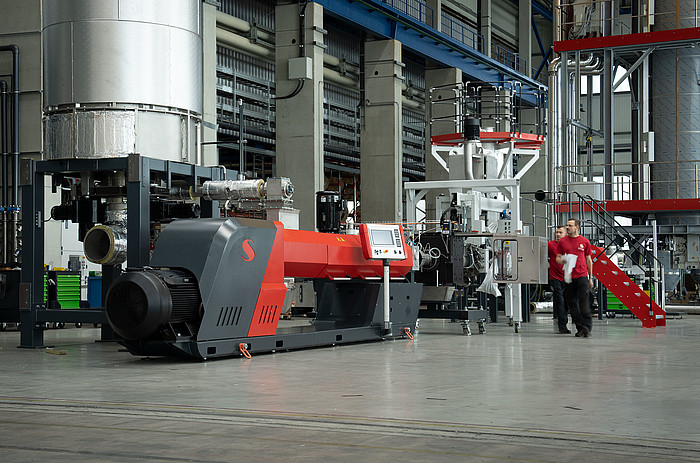
We start with 100% virgin PP for tape extrusion and stretching, weave tapes on >100 circular looms, and (as needed) apply PP coating or BOPP lamination using a fleet of 30+ lamination and printing machines. The PE liner—typically LDPE—comes from high‑precision blown‑film extrusion, then is inserted and stitched or sealed inside the woven shell on automated lines. Our plant runs 16 extrusion lines and advanced equipment from W&H (Windmöller & Hölscher) and Starlinger to ensure dimensional stability, seam integrity, and consistent print registration. Quality checks include fabric GSM, mesh uniformity, seam strength, drop tests, and liner continuity.
Applications of Woven Bags with PE Liner: A Perfect Blend of Durability, Versatility, and Aesthetic Excellence
From agriculture (rice, flour, pulses, seed, animal feed, sugar) to industrial (fertilizer, masterbatch, resins, minerals) and construction powders (mortar, tile adhesive), VidePak designs liners and closures to match product flow and protection needs. With global reach across the USA, Europe, Brazil, South America, Southeast Asia, Japan, Korea, Central Asia, MENA, East & South Africa, we customize bag formats—tubular or back‑seamed, open mouth or valve (block‑bottom)—to line speeds and pallet patterns. Our annual sales exceed USD 80 million, reflecting stable capacity and delivery.
Technical Specifications — Woven Bags with PE Liner (Typical Ranges)
| Item | Typical Options / Range | Notes |
|---|---|---|
| Material (Outer) | 100% virgin PP woven fabric | High tensile, low stretch; optional UV treatment |
| Fabric Mesh / Denier | 7×7 to 14×14; 650D–2000D | Selected by load & print detail |
| Fabric Basis Weight (GSM) | 40–140 gsm | Balances strength vs. cost/flexibility |
| Outer Finish | Plain/Coated PP or BOPP laminated | Matte or glossy; scuff‑resistant graphics |
| Printing | Flexo/Rotogravure up to 10 colors | High‑resolution branding, barcodes, QR |
| Structure Options | Tubular (circular) or back‑seam; side gusset optional | For better filling & palletization |
| Top / Bottom | Heat‑cut or hemmed top; single/double fold stitch; easy‑open optional | Tailored to filling line |
| Inner Liner | PE (LDPE) 20–80 μm thickness | Moisture barrier, food‑grade options |
| Common Sizes | 30×45 cm, 40×58 cm, 50×80 cm, 60×90 cm (custom) | Width ≥23 cm typical; custom lengths |
| Typical Fill Weights | 5–50 kg (e.g., 25 kg fertilizers, feed) | Verified against seam & drop tests |
Other VidePak Solutions: BOPP Woven Bags, Valve Bags (block‑bottom), Kraft Paper Woven Bags — all available with or without PE liners, custom graphics, and accessories.
Why VidePak
- Experience & Scale: Founded 2008; 568 employees; core team with 30+ years in woven packaging.
- Equipment: Industry‑leading lines from Germany’s W&H and Austria’s Starlinger for stable quality and repeatability.
- Capacity: >100 circular looms, 16 extrusion lines, 30+ lamination/printing machines for large‑volume, fast turnaround.
- Materials & Compliance: 100% new raw materials, food‑grade options, RoHS/REACH‑aligned inputs.
- Global Coverage: USA, Europe, Brazil & South America, Southeast Asia, Japan, Korea, Central Asia, MENA, East & South Africa.
- Brand‑Ready: Multicolor high‑fidelity printing, gloss/matte finishes, anti‑slip textures, and retail‑grade visuals.
Tell us your product, filling line, and target market—VidePak will tailor a lined woven bag that protects, performs, and sells.
- What Are Woven Bags with PE Liner: A Perfect Blend of Durability, Versatility, and Aesthetic Excellence?
- Features of Woven Bags with PE Liner: A Perfect Blend of Durability, Versatility, and Aesthetic Excellence
- Production Process of Woven Bags with PE Liner: A Perfect Blend of Durability, Versatility, and Aesthetic Excellence
- Applications of Woven Bags with PE Liner: A Perfect Blend of Durability, Versatility, and Aesthetic Excellence
Woven bags with PE liners are a top choice across diverse industries due to their superior durability, versatility, and aesthetic appeal. They offer unparalleled protection for goods, excellent customization options, and enhanced branding opportunities, making them indispensable in agriculture, retail, and industrial sectors. This report explores the science behind woven bags, examining the role of filament types, PE liners, and cutting-edge manufacturing technologies that elevate these bags to industry standards.
The Foundation of Woven Bags: Filament Types
The performance of woven bags is largely determined by the type of polypropylene (PP) filament used. Filaments are categorized as fine or coarse, each offering unique advantages depending on the application.
Fine Yarns (2.5 mm – 3.5 mm)
- Strengths: Smooth surface finish, lightweight, and ideal for high-quality printing.
- Applications: Best suited for retail and agricultural packaging, where branding and visual appeal are critical.
- Limitations: Lower tensile strength and abrasion resistance compared to coarse yarns.
Coarse Yarns (Above 3.5 mm)
- Strengths: Exceptional durability, high tensile strength, and excellent abrasion resistance.
- Applications: Perfect for industrial use, such as storing construction materials or bulk chemicals.
- Limitations: Heavier and less cost-effective for lightweight applications.
| Aspect | Fine Yarns | Coarse Yarns |
|---|---|---|
| Flexibility | High | Moderate |
| Surface Smoothness | Excellent | Moderate |
| Strength | Moderate | High |
| Cost Efficiency | Cost-effective for light loads | High cost for heavy-duty use |
Role of PE Liners
PE liners add significant value by protecting the contents against moisture and contaminants, enhancing the bag’s functionality.
- Moisture Resistance: Critical for food and agricultural products, preventing spoilage during storage and transportation.
- Compatibility: PE liners are compatible with sealing technologies, offering airtight and leak-proof protection.
- Versatility: Applicable for powders, grains, liquids, and sensitive goods requiring extra care.
Technology at the Forefront: Starlinger and W&H Equipment
The reliability of woven bags stems from the precision and quality ensured by advanced manufacturing equipment from Austria’s Starlinger and Germany’s W&H.
Starlinger’s Weaving Technology
- Delivers high-speed production of consistent fabric density.
- Ensures the seamless integration of fine and coarse yarns for specific market needs.
W&H Printing Systems
- Supports full-color, single-color, and multi-color designs.
- Offers high-definition graphics with matte or glossy finishes.
- Enables full-surface coverage, enhancing branding opportunities.
Automated Quality Control
- Real-time defect detection minimizes waste and ensures premium product quality.
- Guarantees compliance with international standards for safety and durability.
Applications Across Industries
1. Agriculture
- Usage: Storage of grains, seeds, and fertilizers.
- Benefits: PE liners ensure protection from moisture, while customizable printing aids in branding.
2. Retail
- Usage: Ideal for pet food, gardening supplies, and consumer goods.
- Benefits: High-definition graphics elevate product appeal in competitive markets.
3. Industrial
- Usage: Heavy-duty storage of chemicals, sand, and construction materials.
- Benefits: Coarse yarns and PE liners provide the durability required for demanding environments.
Sustainability: The Future of Woven Bags
Sustainability is at the core of modern manufacturing trends, and woven bags with PE liners align with global ESG standards:
- Recyclable Materials: The PP and PE combination allows for straightforward recycling processes, reducing environmental impact.
- Solar-Powered Manufacturing: VidePak employs solar energy in its facilities, promoting clean and sustainable production methods.
For more insights on industrial woven packaging and eco-friendly initiatives, explore our resources.
FAQs
Q: What types of printing are available for woven bags?
A: Our bags support single-color, multi-color, and full-color printing. Designs can be customized using CMYK, Pantone, or RAL color systems.
Q: How does the PE liner improve bag performance?
A: PE liners provide moisture resistance, prevent contamination, and enable airtight sealing, making them ideal for sensitive goods.
Q: Are these bags recyclable?
A: Yes, all woven bags with PE liners are made from recyclable materials, promoting sustainable practices.
Q: What finishes are available?
A: We offer matte and glossy finishes to suit different branding and functional requirements.
Conclusion
Woven bags with PE liners offer a compelling solution for industries requiring durable, customizable, and visually appealing packaging. The synergy of advanced filament technology, PE liners, and top-tier manufacturing equipment ensures that these bags meet the highest quality and sustainability standards. VidePak’s commitment to innovation, precision, and environmental stewardship positions it as a leader in the woven packaging industry, catering to the diverse needs of global markets.