
What is Woven Recyclable Bags? (Definition & Aliases)
In the pet food supply chain, Woven Recyclable Bags signify a mono‑material packaging architecture built mainly from polypropylene (PP): a woven PP tape fabric that carries load, plus PP‑based facings and accessories that deliver graphics, barrier, and openability. The objective is simple to state and hard to achieve: keep performance high while enabling compatibility with polyolefin recycling systems where they exist. Industry aliases include mono‑PP woven bags, recyclable PP woven sacks, and recyclable laminated woven bags. The format thrives where three demands collide—durability, retail storytelling, and credible end‑of‑life—because it treats appearance as function, and function as brand.
What are the Features of Woven Recyclable Bags? (Appearance, Performance, Compliance)
Features matter when they translate into choices operators can make and risks buyers can mitigate. For Woven Recyclable Bags, three clusters dominate: appearance that survives handling, protection that answers humidity and grease, and compliance that closes audits. To avoid abstraction, each claim below is paired with practical lenses—data reinforcement, a case narrative, and a comparative angle—so decisions are grounded, not guessed.
Reverse‑printed PP facings (e.g., BOPP/CPP) place inks behind the film, enabling rich color at ≈60–120 lpi while protecting against rub. Satin or matte finishes reduce glare and often raise friction for pallet stability.
Woven PP fabric 65–100 gsm carries tensile and tear loads. PP films 20–40 μm, plus optional PP liners 30–60 μm, moderate moisture ingress and aroma loss without abandoning mono‑material intent.
Chain or lock stitch with over‑tape; micro‑perforation for deaeration at fill; anti‑slip patches for pallet stability. Each parameter is a knob you can tune to line speed, powder fineness, and route risks.
ISO 9001:2015 (quality), ISO 14001:2015 (environment), ISO 22000/HACCP (food lines), FDA 21 CFR 177.1520 (polyolefins), EU 10/2011, and REACH SVHC. Physical tests typically cite ASTM D882 (tensile), D1709 (dart), and seam checks aligned to F88 methodology or pull tests.
Mainstream specs published by converters show fabric 65–100 gsm, films 20–40 μm, liners 30–60 μm, and pet food sizes from 1–25 kg (10–20 kg most common). These numbers represent readily purchasable configurations.
Versus paper multi‑wall: better wet‑route durability. Versus unlaminated woven: higher print retention and lower dust pickup. Hybrids can serve paper‑tactile markets, but mono‑PP structures align with polyolefin streams.
What is the Production Process of Woven Recyclable Bags? (From Yarn to Bag)
Process discipline decides outcomes. Each station in Woven Recyclable Bags manufacturing anticipates a different failure and invites a different test. Knowing which defect belongs to which station shortens debugging and prevents expensive rework.
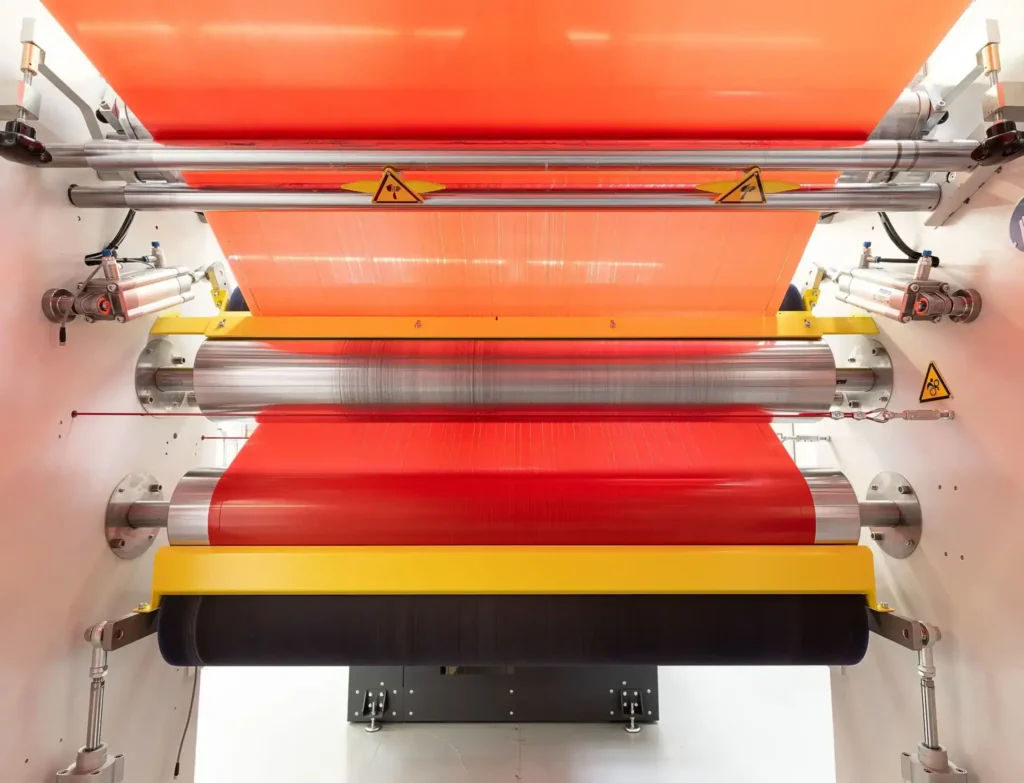
- PP tape extrusion & weaving: PP granules → tapes → loom → woven fabric at target gsm. Tighter tape gauges improve tensile uniformity and reduce tube variation.
- Reverse printing & surface prep: PP films (BOPP/CPP) printed via gravure or flexo; corona or primer ensures bond strength post‑lamination and protects inks under the film.
- Lamination with mono‑material intent: Extrusion lamination (PP tie layers) or qualified adhesives bond film to fabric; bond windows tuned to avoid whitening or tunneling and to support recyclability claims.
- Conversion & bottoms: Tubing, gusseting, and folded‑and‑sewn or bonded bottoms are set for sift behavior. Micro‑perforation balances deaeration at fill with dust control during transit.
- Top prep & closure: Hemming stabilizes stitch tracks; chain/lock stitch or heat/ultrasonic bonding closes the mouth; tear‑tape standardizes opening forces.
- Inspection & palletization: Register checks, rub tests, seam checks, and bundling; anti‑slip patches or slipsheets finalize stack stability.
Lamination settings shape scuff behavior and stiffness; stitch pitch and needle size define sift paths; bonded bottoms help with ultra‑fines but change end‑of‑life pathways depending on adhesive choices.
Quantify with ASTM D882 (tensile), D1709 (dart), seam pulls or F88‑aligned methods; add drop and pallet compression tests. Log lamination temperature, nip pressure, stitch pitch/needle, and perforation density.
What is the Application of Woven Recyclable Bags? (Industries & Use Cases)
Pet food drives the brief, but the playbook generalizes across dry goods. Specifications should follow product rheology and route realities, not assumptions.
Prioritize satin finishes for legibility, rub life, and photo‑friendliness; specify liners for humidity events; standardize seam packages to limit dust.
Openability and reclose options (PP‑based zippers/labels where compatible) sit alongside precise print for regulatory text blocks.
Gusset stability and pallet friction dominate; anti‑slip patches can reduce wrap and prevent inter‑layer shear.
Rice, fertilizers, resins: adjust gsm and liner strategy to abrasion and humidity; keep mono‑PP intent where local recovery streams exist.
Woven Recyclable Bags: Revolutionizing Pet Food Packaging
Revolution is a strong word. It earns its place when trade‑offs soften and results harden. Woven Recyclable Bags do that by turning a design triangle—brand, protection, end‑of‑life—into a cooperative. When finish becomes friction control, when lamination becomes ink armor, when seams become dust policy, packaging stops being a static container and starts acting like an operational tool.
Fabric 65–100 gsm, film 20–40 μm, liner 30–60 μm, print 4–8 colors at ≈60–120 lpi—values widely listed by converters and distributors, and directly purchasable.
A DTC pet brand moved to satin‑finished Woven Recyclable Bags, saw clearer product photos and fewer scuff returns, and maintained line speed after seam standardization and thread‑tail trimming.
Versus paper/PE hybrids: better yard durability in wet climates; versus unlaminated woven: improved brand surfaces and dust control; versus valve formats: lower capex where sewing lines already exist.
Integrating Disciplines: Materials, Mechanics, Printing, Logistics
The value of Woven Recyclable Bags appears when materials science (WVTR, surface energy), mechanical engineering (seam strength, load paths), printing technology (adhesion, rub, COF), and logistics design (pallet compression, wrap tension) operate as one system. Ask paired questions: glare vs. grip? venting vs. dust? speed vs. neatness? The smartest specs answer with “both” through tuned parameters—satin varnish for legibility and friction; micro‑perforation density that vents at fill yet seals dust; chain stitch paced for speed with over‑tape for cleanliness.
Cost, Value, and Trade‑offs
Unit price tempts; system cost rules. Small choices ripple: a 40 μm liner reduces humidity claims; a stitch pitch change lowers housekeeping; anti‑slip patches cut wrap usage. The ledger is practical—less damage, fewer returns, faster audits—and it belongs next to the quote when Woven Recyclable Bags are specified.
| Decision | Immediate Effect | Downstream Impact |
|---|---|---|
| Adopt satin finish | Lower glare; better rub life | Clearer photos; fewer pallet slips; fewer re‑wraps |
| Tighten stitch pitch | Reduced sift risk | Cleaner warehouses; shorter changeovers |
| Specify 30–60 μm liner | Improved humidity resilience | Lower caking claims; more stable shelf life |
Risk Registers and Quality Gates
Build explicit checkpoints when specifying Woven Recyclable Bags: incoming basis weight and tensile checks, lamination bond sampling, register and rub targets, seam pulls per shift, drop tests on sewn ends, pallet compression trials at target stack heights. They read like chores; they pay like insurance.
- Certificates: ISO 9001:2015, ISO 14001:2015, and ISO 22000/HACCP if food‑contact applies.
- Declarations: FDA 21 CFR 177.1520 (polyolefins), EU 10/2011, and REACH SVHC screening.
- Performance tests: ASTM D882 tensile, ASTM D1709 dart, seam pulls or F88‑aligned methods; add rub and compression tests.
- Process records: lamination temperature, nip pressure, stitch package (needle/pitch/thread), micro‑perforation density.
Human Factors: Ergonomics and Openability
A bag that fights the user never wins. Woven Recyclable Bags should specify tear‑tape for predictable opening, thread tails trimmed under 10 mm to avoid snags, and visual cues for hand placement. Small frictions multiply across thousands of interactions; reducing them is a quiet profit center.
Sustainability Without Slogans
Credibility outruns claims. For Woven Recyclable Bags, design‑for‑recycling means mono‑PP where possible, mass minimization without sacrificing performance, and transparent documentation. Recovery pathways are local; specifications should name materials and gauges plainly so downstream systems can sort and process them.
Specification Blueprint: Inputs, Decisions, Proof
Move from requirement to approved file with a tight feedback loop. Decisions on fabric gsm, film gauge, liner, seam package, finish, and perforation density each echo through filling speed, pallet behavior, and end‑of‑life claims. Keep the loop short and the records long.
- Inputs: bulk density, particle sizes (d50/d90), oil/fat content, target shelf life; humidity/temperature along routes; filler type/speed.
- Decisions: fabric 65–100 gsm; film 20–40 μm; liner 30–60 μm; chain vs. lock vs. bonded closures; micro‑perforation density; satin vs. gloss finish; anti‑slip strategy.
- Proof: targets for D882/D1709, seam pulls or F88‑aligned methods, rub and COF windows; FDA/EU 10/2011 declarations; ISO certificates; REACH statement.
- Roll‑out: pilot one SKU, run transport and pallet trials, refine, freeze spec, archive process windows for replication.
Key Technical Parameters (Reference Summary)
| Parameter | Mainstream Options / Ranges | Notes |
|---|---|---|
| Fabric basis weight | 65–100 gsm PP woven | Raise gsm for heavy/abrasive contents |
| Film thickness (PP face) | 20–40 μm; matte or gloss | Reverse printed; gravure/flexo |
| Optional liner | 30–60 μm PP | Humidity & aroma management |
| Capacity | 1–25 kg (10–20 kg common) | Verify filler jaws & pallet patterns |
| Printing | 4–8 colors; ≈60–120 lpi | Photographic imagery feasible |
| Deaeration | Micro‑perforation as required | Balance venting vs. dust control |
| Bottom construction | Folded‑and‑sewn or bonded | Sift‑proofing for fine powders |
| Closure | Chain/lock stitch or heat/ultrasonic | Tear‑tape for openability (if sewn) |
| Tests | ASTM D882/D1709; seam strength | Add drop/rub/compression |
| Compliance | ISO 9001:2015; ISO 14001:2015; ISO 22000/HACCP; FDA 21 CFR 177.1520; EU 10/2011; REACH SVHC | Provide certificates/DoCs |
Buyer‑style FAQ
- How do we enable reclose while staying recyclable‑minded? Consider PP‑based zippers or labels that maintain mono‑material alignment where compatible with local guidance; name materials and gauges in the spec.
- What cuts moisture‑driven product loss? Specify an inner PP liner 30–60 μm, audit warehouse humidity, and run seasonal transport trials.
- How do we reduce dust complaints? Tighten stitch pitch, select a smaller needle, add over‑tape, and perform talc leak tests before batch release.
- Will satin finishes hurt shelf impact? Often the opposite: they improve legibility and photo quality, while raising friction for pallet stability.
In recent years, sustainability has become a central theme across various industries, including packaging. Among the most notable advancements in eco-friendly packaging is the rise of Woven Recyclable Bags. These bags are not only designed to be more environmentally friendly but also offer practical benefits for a range of applications, including pet food packaging. This article explores the advantages of Woven Recyclable Bags and their specific applications in the pet food sector, such as for dog food and cat food.
Understanding Woven Recyclable Bags
Woven Recyclable Bags are made from polypropylene (PP) or polyethylene (PE) fibers that are woven together to create a strong, durable fabric. These bags are designed to be recyclable, providing an eco-friendly alternative to traditional packaging materials. The key benefits of using recyclable woven bags include:
- Environmental Impact: Unlike conventional plastic bags, which contribute to landfill waste, Woven Recyclable Bags can be processed and reused. This reduces the overall environmental footprint and supports a circular economy.
- Durability and Strength: These bags are known for their durability and strength, making them suitable for a variety of applications. They can withstand the rigors of transportation and handling, ensuring that the contents remain secure.
- Customizability: Woven Recyclable Bags can be customized with various printing options, sizes, and features. This flexibility allows brands to create eye-catching designs that enhance product visibility and brand recognition.
Application in Pet Food Packaging
The pet food industry is a significant sector where the benefits of Woven Recyclable Bags can be fully realized. Pet food packaging, including bags for dog food and cat food, requires robust and reliable materials to ensure the safety and freshness of the product. Here’s how Woven Recyclable Bags address these needs:
1. Durability and Protection
Pet food packaging needs to protect the product from moisture, pests, and contamination. Woven Recyclable Bags provide excellent protection due to their strong woven structure. This durability ensures that the pet food remains fresh and free from external contaminants throughout its shelf life. The strength of these bags also prevents tearing or puncturing during handling and transportation.
2. Eco-Friendly Packaging
As consumers become more environmentally conscious, the demand for sustainable packaging solutions is rising. Woven Recyclable Bags meet this demand by offering a recyclable option that reduces waste and supports recycling programs. Brands that use these bags can highlight their commitment to sustainability, appealing to eco-conscious customers.
3. Customizable Design
Pet food brands often seek to differentiate their products through unique packaging designs. Woven Recyclable Bags offer a high degree of customizability, allowing brands to incorporate vibrant colors, logos, and product information. This not only enhances the visual appeal of the packaging but also helps in establishing a strong brand identity. The ability to print high-quality graphics on these bags makes them a popular choice for pet food packaging.
4. Cost-Effectiveness
While sustainability is a priority, cost-effectiveness remains a crucial factor for many businesses. Woven Recyclable Bags offer a balance between durability and affordability. Their strength and recyclability provide long-term value, making them a cost-effective choice for pet food packaging. The ability to recycle these bags further reduces overall waste disposal costs.
Benefits for Pet Food Manufacturers
For pet food manufacturers, incorporating Woven Recyclable Bags into their packaging strategy offers several advantages:
- Enhanced Brand Image: Using eco-friendly packaging aligns with growing consumer preferences for sustainable products. It enhances the brand’s image as a responsible and environmentally conscious company.
- Compliance with Regulations: As regulations around packaging waste become stricter, using recyclable materials helps manufacturers stay compliant with environmental standards and regulations.
- Customer Loyalty: Offering products in Woven Recyclable Bags can attract customers who are committed to reducing their environmental impact. This can lead to increased customer loyalty and positive brand recognition.
Market Trends and Future Outlook
The trend towards sustainability in packaging is expected to continue growing. As more consumers and businesses prioritize environmental responsibility, the demand for Woven Recyclable Bags is likely to increase. Innovations in recycling technology and materials will further enhance the effectiveness and appeal of these bags.
In the pet food industry, the shift towards recyclable packaging is already gaining momentum. Companies that adopt Woven Recyclable Bags early can establish themselves as leaders in sustainable packaging and capitalize on the growing consumer demand for eco-friendly products.
Conclusion
Woven Recyclable Bags represent a significant advancement in sustainable packaging solutions. Their application in pet food packaging addresses key requirements such as durability, protection, and eco-friendliness. As the market continues to evolve, the use of recyclable woven bags will likely become more prevalent, driven by consumer preferences and regulatory pressures. For pet food manufacturers, adopting Woven Recyclable Bags not only supports environmental goals but also enhances brand image and customer loyalty. By embracing these innovative packaging solutions, companies can contribute to a more sustainable future while meeting the needs of their customers.