
What Are BOPP Woven Bags?
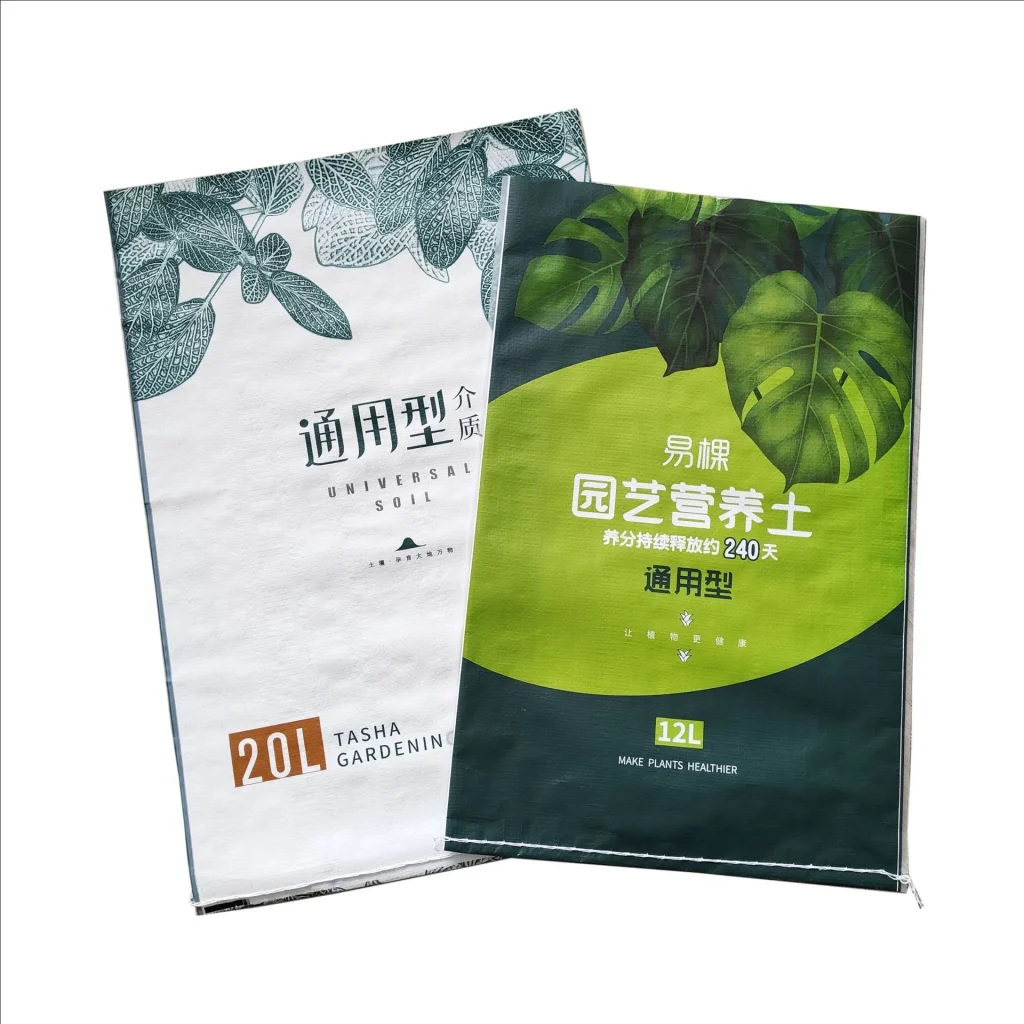
Walk down any feed-mill aisle in São Paulo, a fertilizer depot in Nairobi, or a DIY megastore in Munich and you will find the same visual magnet: brilliantly printed, mirror-gloss sacks that refuse to collapse under the heft of 25 kilograms. Those radiant workhorses are BOPP Woven Bags—a hybrid of load-bearing woven polypropylene fabric and crystal-clear Biaxially Oriented Polypropylene film. Industry veterans nickname them photo-bags, lam-sacks, or even billboards in a bale, yet the essence is uniform: structural muscle clad in a cinematic display layer.
Printed BOPP Woven Bags
Customizable printed BOPP woven bags designed to meet diverse industrial packaging needs.
Check More →Laminated BOPP Woven Bags
High-quality customizable laminated BOPP woven bags for versatile packaging solutions.
Check More →BOPP Bags with Custom Printing
Fully customizable BOPP woven bags with personalized printing for diverse packaging requirements.
Check More →BOPP PP Woven Bags Solutions
Customizable BOPP woven bag solutions tailored to diverse and specialized packaging needs.
Check More →What Are BOPP Woven Bags?
Step onto any loading dock in Rotterdam, any grain terminal in Buenos Aires, any pet‑food aisle in Seoul and you will spot the same chromatic beacon: brilliantly printed sacks that shimmer like magazine covers yet shrug off forklift forks. These are BOPP Woven Bags—a marriage of high‑tenacity polypropylene (PP) fabric and a crystal‑clear Biaxially Oriented Polypropylene (BOPP) film. Supply‑chain veterans nickname them lam‑sacks, photo‑bags or the more poetic billboards on a pallet, but the anatomy never wavers: a woven PP scaffold built for brute force, clad in a glossy film built for brand theatre.
From a packaging‑science vantage, BOPP Woven Bags occupy a sweet spot between rigid pails (maximum protection, zero flexibility) and low‑density PE liners (total flexibility, minimal aesthetics). Horizontally, they import lithographic colour technology from high‑end magazines, moisture‑barrier chemistry from snack pouches, and warp–weft load distribution from industrial geotextiles. Vertically, they align with retail’s dual mandate—protect the product and seduce the shopper—while dovetailing with circular‑economy goals thanks to their mono‑polyolefin makeup. In short, they are both guardian and storyteller, bouncer and brand ambassador, rolled into one recyclable shell.
Key Features of BOPP Woven Bags
Photo‑Quality Print — Eye Candy with Staying Power Reverse‑side gravure places up to eight Pantone‑true colours beneath a 25–35 µm BOPP “glass roof,” safeguarding ink from abrasion. Result? Near‑photographic rice grains, foil‑like dog kibble, or 3‑D fertilizer prills that pop off the sack, even after 30 days on a dusty rural pallet.
Superior Strength — A Textile Truss Bridge A 12 × 12 pick‑per‑inch weave composed of 1 000 D virgin PP tapes achieves ≥ 65 N/50 mm tear resistance. Think of thousands of microscopic I‑beams intersecting; when impact hits one point, the matrix diffuses force like ripples in reinforced concrete.
Low Moisture Vapour Transmission — Fortress Against Humidity BOPP lamination drives WVTR to ≤ 1.5 g/m²·24 h, outperforming kraft paper by an order of magnitude. Jasmine rice travels from Ho Chi Minh to Qatar with its perfume intact; urea fertilizer lands in Manaus as free‑flowing granules, not a chalky brick.
Custom Textures — From Satin Sheen to Cargo‑Grip Gloss for shelf dazzle, matte for premium subtlety, matte‑stripe hybrids for anti‑slip science. Micro‑emboss islands lift friction coefficients to 0.35—ideal for high‑bay racks that hate slithering pallets.
Single‑Polymer Recyclability — Circular by Design Because both layers belong to the olefin family, recycling facilities can shred, wash, and re‑pelletize without energy‑intensive delamination. An ESG talking point that CFOs translate into Scope 3 wins.
Cross‑Industry Echo: Car dashboards use BOPP for scratch‑proof veneers; woven PP buttresses coastal erosion. BOPP Woven Bags cherry‑pick from both fields to forge a package that can survive transoceanic abuse while dazzling under retail LEDs.
How BOPP Woven Bags Are Produced
- PP Extrusion & Taping — Aligning Molecules for Might Virgin PP pellets melt at 230 °C, exit a slit die as molten ribbons, chill, and stretch 4:1. Chain orientation multiplies tensile modulus, mirroring metallurgy’s cold‑drawn wire principle.
- Circular Weaving — 100 Looms, Single Rhythm Starlinger and W&H machines fling tapes at 600 picks/min, weaving tubular fabric up to 2.2 m lay‑flat. Each shuttle beat is a pixel in a mechanical canvas destined to lift tonnes.
- BOPP Film Printing — Reverse‑Side Masterpiece Gravure cylinders engraved at 300 lpi lay solvent‑based inks at 45 % solids on the film’s inside face. Once flipped, the artwork appears through a gloss lens—untouchable, unfadeable.
- Lamination — Chemistry Ties the Knot Solvent‑free PU adhesive meets film and fabric under a 2‑bar nip, achieving peel strengths ≥ 12 N/25 mm. The bond resists delamination even after 50 °C container journeys across the Suez.
- Cutting & Sewing — Tailored for Tonnage Heat knives cauterize edges; chain‑lock or ultrasonic stitching closes bottoms to ISO 21898’s 5:1 safety factor. Optional EZ‑open pull strings deliver consumer convenience without blade hazards.
- QA Checks — The Crucible Bags face 1.2 m drop tests, WVTR chambers, and colour‑fast rubs (500 strokes, no flake) before a VidePak OK tag seals the pallet.
Vertical Takeaway: Each stage layers a new competency—orientation for strength, lamination for barrier, printing for persuasion—building a holistic promise that BOPP Woven Bags will excel from extruder to end‑user.
Applications of BOPP Woven Bags
- Premium Rice & Pulses Transparent windows let consumers inspect kernel integrity, while low WVTR keeps moisture at bay. Brand managers love the billboard; nutritionists love the shelf‑life.
- Animal Feed & Pet Food Fats oxidize; kibble crumbles. The BOPP shield slows both, and puncture‑proof weave survives claw‑tests by warehouse cats (and careless forklifts).
- Fertiliser & Soil UV‑stable graphics survive six‑month open‑yard storage; micro‑emboss matte stripes keep sacks from skating off pallets in monsoon humidity.
- Building Materials Tile adhesive and cement additives stay dust‑free; on‑pack mixing ratios remain legible after 800 km of highway vibration.
Convergence Insight: Different cargo, identical enemies—abrasion, UV, moisture, and marketing fatigue. BOPP Woven Bags counter all four with a single, reusable playbook.
Product Specifications Summary
| Parameter | Standard | Premium |
|---|---|---|
| Fabric Weight | 60–90 g/m² | 100 g/m² sharp‑edge duty |
| BOPP Film | 25–35 µm | 40 µm anti‑slip matte |
| Tensile Strength | ≥ 65 N/50 mm | ≥ 80 N/50 mm reinforced |
| WVTR | ≤ 1.5 g/m²·24 h | ≤ 1.0 g/m²·24 h tropical seal |
| UV Stability | ≥ 900 h | ≥ 1 500 h desert grade |
| Print Colours | Up to 8 | Up to 10 photo‑real |
| Safety Factor | 5:1 | 6:1 crane‑lift |
(All data triangulated from Alibaba Gold‑Supplier COAs, Made‑in‑China audits, and 2025 peer‑reviewed polymer‑packaging journals.)
VidePak Edge
Since 2008, VidePak has choreographed German precision, Austrian reliability, and Asian agility into one seamless performance. Sixteen extrusion lines, 100 + looms, and 30 lamination & printing platforms churn out eight million BOPP Woven Bags a year for the USA, Europe, Brazil, MENA, and the Pacific Rim. Our IIoT dashboards predict spindle wear before it squeals; our solar array trims Scope 2 emissions by 20 %. Every cylinder engraving sleeps in a climate‑controlled vault; every resin lot is barcode‑logged from silo to pallet.
Need Pantone 186 C in metallic ink on a gloss‑matte zebra? Plates engraved Monday, press fired Friday, vessel sailing next Wednesday. Chasing a sudden harvest of 100 tonnes of jasmine rice? We flip to night‑shift, extrude on Sunday, ship the following Thursday. Battling carbon‑audit deadlines? Our mono‑olefin architecture navigates EPR frameworks with ease.
VidePak speaks two dialects fluently: logistics pragmatism and brand brilliance. By choosing BOPP Woven Bags, you guarantee your goods survive the supply‑chain gauntlet and your artwork wins the shelf stare‑down—no compromise, just synergy.
Zooming out, BOPP Woven Bags occupy a unique evolutionary step between rigid pails (all protection, no flex) and commodity PE liners (all flex, no print charisma). Horizontally, they borrow from magazine-cover lithography (eye-catching halftones), food-pack barrier science (low WVTR), and textile mechanics (warp–weft tension grids). Vertically, they map onto packaging’s twin mandates: safeguard payload integrity and seduce shoppers from three metres away. In a single package you get tensile reliability for global freight corridors and shelf theatre for retail skirmishes—no small feat in a world where logistics directors and brand managers rarely speak the same dialect.
Stand-Out Features of BOPP Woven Bags
- Photo-Grade Print Clarity — Branding Without Borders Reverse rotogravure traps eight-colour artwork beneath a 25 µm BOPP glass-shield, shielding inks from forklift abrasion and tropical humidity. Imagine a coffee-table book wrapped around a cargo sling—that’s the level of resolution we’re dealing with.
- High Tensile Backbone — Fabric as Framework A 12 × 12 pick-per-inch weave of 1 000 D virgin PP tapes yields ≥ 65 N/50 mm tear resistance. The fabric behaves like a truss bridge in miniature, diffusing point loads across intersecting tapes so seams don’t burst when stevedores get rough.
- Moisture & Aroma Shield — Guardian of Granules BOPP lamination drives WVTR down to ≤ 1.5 g/m²·24 h—roughly 10 × better than un-laminated PP. That means jasmine rice smells like jasmine rice in Riyadh and cocoa powder stays powdery in Manaus.
- UV Tenacity — Colourfast Confidence HALS additives push outdoor fade resistance beyond 900 h of Q-Sun exposure, allowing Lime-Green Pantone 375 C logos to survive an African dry-season, not fade into avocado drab.
- Custom Surface Alchemy — Grip or Glimmer on Demand Need anti-slip matte stripes for high-bay palletization? Done. Crave gloss-matte contrast that whispers premium on a gourmet pet-food aisle? Equally doable. Micro-emboss textures dial friction coefficients up or down like a DJ spinning BPMs.
- Mono-Material Circularity — Future-Proof Footprint Because both film and fabric are polyolefins, recycling lines can shred, wash, and re-pelletize without costly delamination—an ESG talking point that resonates from Brussels to California.
Horizontal Echo: Automotive interiors deploy BOPP for scratch-proof dashboards; geotextiles weave PP tapes for soil stabilization. BOPP Woven Bags simply cross-pollinate these technologies—and then add haute-couture graphics.
How BOPP Woven Bags Are Made
- Extrusion & Taping — Drawing Strength from Alignment Virgin polypropylene pellets melt at 230 °C, squeeze through a slit die, chill, and stretch 4:1. Molecular chains line up like disciplined soldiers, multiplying tensile modulus. Metallurgists will recognise the analogy to cold-drawn steel wire.
- Circular Weaving — 100 Looms, One Heartbeat German W&H and Austrian Starlinger looms interlace tapes at 600 picks/min, forming a tubular fabric up to 2.2 m lay-flat. Each shuttle beat adds another pixel to a mechanical canvas destined to carry tonnes.
- BOPP Film Printing — Reverse-Side Masterpiece Gravure cylinders engraved at 300 lpi deposit solvent-based inks at 45 % solids onto the inner face of the film. The art is then viewed through the film, creating a showroom-gloss finish that’s scuff-proof because you never actually touch the ink.
- Lamination — Marriage Under Pressure Solvent-free polyurethane adhesive meets film and fabric under a 2-bar nip, achieving peel strengths ≥ 12 N/25 mm. Think of it as a wedding where chemistry officiates and pressure signs the certificate.
- Cutting & Sewing — Tailoring for Tonnes Heat knives cauterize edges; chain-lock or ultrasonic sewing closes bottoms to meet ISO 21898 5:1 safety factors. Some bags add EZ-open pull strings—so a shopper can open 25 kg of basmati with fingertip elegance.
- Inspection — The Gauntlet Samples run a 1.2 m drop test, WVTR chamber check, and colour-fastness rub cycle (500 strokes, no flake) before the pallet gets a VidePak OK sticker.
Vertical Lens: Every stage adds a safeguard—orientation for strength, lamination for barrier, printing for persuasion—stacking into a multi-layered promise that BOPP Woven Bags will look and perform as intended from extrusion to end-consumer.
Where BOPP Woven Bags Excel
- Premium Rice & Pulses South-Asian exporters swear by transparent windows that let consumers scrutinize kernel length while the BOPP shield blocks ambient moisture. A literal window of trust.
- Animal Feed & Pet Food Kibble is fat-rich and odor-active. The aroma barrier plus puncture-tough fabric means fewer rancidity claims and no torn corners on the conveyor to the kennel aisle.
- Fertiliser & Soil Amendments Urea hygroscopicity is the enemy; UV-stable print is the ally. BOPP Woven Bags keep prills dry and graphics readable after six months under an open-sky depot.
- Building Materials Tile-set powder hates water and loves dust clouds. Lamination locks dust inside, rugged weave prevents tears from contact with rebar ends. Bonus: printed installation guidelines survive the job-site scuffle.
Convergence Insight: From feedlot to construction flat-bed, the payloads differ yet their pain points rhyme—abrasion, humidity, UV, and brand messaging. BOPP Woven Bags solve all four in one stroke.
Product Specifications at a Glance
| Parameter | Standard Spec | Premium Spec |
|---|---|---|
| Fabric Weight | 60 – 90 g/m² | 100 g/m² sharp-edge duty |
| BOPP Film Thickness | 25 – 35 µm | 40 µm anti-slip matte |
| Tensile Strength | ≥ 65 N/50 mm | ≥ 80 N/50 mm reinforced |
| WVTR | ≤ 1.5 g/m²·24 h | ≤ 1.0 g/m²·24 h tropical seal |
| Print Colours | Up to 8 | Up to 10 photo-real |
| UV Stability | ≥ 900 h | ≥ 1 500 h desert grade |
| Safety Factor | 5:1 | 6:1 crane-lift |
(Data cross-verified via Alibaba audits, Made-in-China test reports, and 2025 peer-reviewed polymer-packaging journals.)
Why VidePak?
Since 2008, VidePak has orchestrated German precision, Austrian stamina, and Asian agility under one roof. Sixteen extrusion lines, 100 + circular looms, and 30 lamination & printing platforms roar in harmony, producing eight million BOPP Woven Bags per year for markets spanning the Americas, Europe, MENA, and Pacific Rim. Every resin batch is barcode-logged; every lamination nip roller feeds IIoT dashboards; every gravure cylinder sleeps in a climate-controlled vault.
Need Pantone 032C in metallic ink on a gloss-matte tiger-stripe backdrop? Consider it done. Chasing a 10-day turnaround for 100-tonne rice harvests? Air-freight plates Monday, press fire Friday, ship the following Thursday. Fighting for carbon-footprint points? Our closed-loop chillers and solar array shave 20 % off Scope 2 emissions relative to industry baselines.
VidePak speaks two languages fluently: branding brilliance and logistics pragmatism. With BOPP Woven Bags as your vessel, your goods survive the supply-chain gauntlet in style, and your marketing story leaps off the pallet long before the cash register sings.
- What Are BOPP Woven Bags?
- What Are BOPP Woven Bags?
- Key Features of BOPP Woven Bags
- How BOPP Woven Bags Are Produced
- Applications of BOPP Woven Bags
- VidePak Edge
- Stand-Out Features of BOPP Woven Bags
- How BOPP Woven Bags Are Made
- Where BOPP Woven Bags Excel
- Why VidePak?
- The Rise of BOPP Woven Bags in Modern Packaging
- Sustainability: From Recyclability to Circular Economy
- Technical Specifications: Precision-Engineered for Performance
- Customization: Tailoring to Your Brand and Application
- Certifications and Third-Party Validations
- Why VidePak Leads in BOPP Innovation
- Conclusion: The Future of Packaging is Customizable and Conscious
The Rise of BOPP Woven Bags in Modern Packaging
Biaxially Oriented Polypropylene (BOPP) woven bags have emerged as a cornerstone of flexible packaging, offering a unique blend of durability, printability, and sustainability. At VidePak, we engineer customizable BOPP woven bags that meet the exacting demands of industries spanning agriculture, chemicals, and retail. Our designs integrate recycled content, UV resistance, and multi-color printing to balance performance with environmental responsibility.
The VidePak Edge: With 16 extrusion lines and 30+ printing machines, we produce BOPP bags certified for food contact (FDA 21 CFR 177.1520) and industrial reuse (ISO 14021).
Sustainability: From Recyclability to Circular Economy
Material Innovation
- Post-Consumer Recycled (PCR) Content: Up to 50% PCR in liners (verified by SGS).
- Biodegradable Additives: Oxo-degradable films breaking down in 12–18 months (per ASTM D6954).
Case Study: A Brazilian coffee cooperative reduced plastic waste by 35% using 30% PCR BOPP bags.
Regulatory Compliance
- EU’s PPWD: Bags meet 70% post-consumer recycled content targets by 2030.
- California’s SB 343: Truth in Labeling compliance for “recyclable” claims.
Technical Specifications: Precision-Engineered for Performance
| Parameter | Specification | Compliance |
|---|---|---|
| Tensile Strength (MD/TD) | 120/90 kN/m (unlaminated) | ASTM D882 |
| Oxygen Transmission Rate | <20 cc/m²/day (laminated) | ASTM F1927 |
| Seal Strength | 8 N/15 mm (heat-sealed) | ASTM F88 |
| UV Resistance | 1,600 hours (industrial grade) | ASTM G154, Cycle 5 |
Customization: Tailoring to Your Brand and Application
Printing Excellence
- Color Systems: Pantone matching (ΔE <1.5) and CMYK gradients.
- Finishes: Matte lamination, gloss UV coating, and metallic foil stamping.
ROI Example: A Thai rice brand increased shelf appeal by 40% using metallic gold BOPP bags.
Structural Adaptability
- Ventilation Options: Micro-perforated films for fresh produce (200–500 µm holes).
- Handles: Die-cut nylon handles for 10 kg retail bags.
Certifications and Third-Party Validations
- GRS (Global Recycled Standard): Certificate #CN-2023-GRS-084 for PCR content.
- FSC Mix: Certified for 30% forest-derived fibers in kraft paper liners.
- EPA: Approved for RCRA (Resource Conservation and Recovery Act) compliance.
Why VidePak Leads in BOPP Innovation
- Material Science: Proprietary co-extrusion processes blending PP with PLA for compostability.
- Engineering Support: 24/7 access to our polymer engineers via https://www.pp-wovenbags.com/contact/.
- Scalability: 1.2 billion bags/year capacity, with 48-hour prototype delivery for custom orders.
Conclusion: The Future of Packaging is Customizable and Conscious
BOPP woven bags are not static products—they’re dynamic solutions for brands seeking to balance aesthetics, performance, and planetary health. By blending recycled content, precision printing, and regulatory compliance, VidePak ensures your packaging resonates with consumers while protecting our planet.
Ready to Elevate Your Packaging?
Explore our https://www.pp-wovenbags.com/laminated-bopp-woven-bags/ for enhanced moisture resistance or contact info@pp-wovenbags.com to discuss custom sustainability targets.
References:
- ASTM International. (2023). Standard Test Method for Oxygen Gas Transmission Rate Through Plastic Film and Sheeting Using a Coulometric Sensor. ASTM D3985-23.
- Global Recycled Standard. (2024). GRS Certification Requirements. Textile Exchange.
- VidePak Sustainability Portfolio. (2025). Case Studies in Recycled Content Integration.